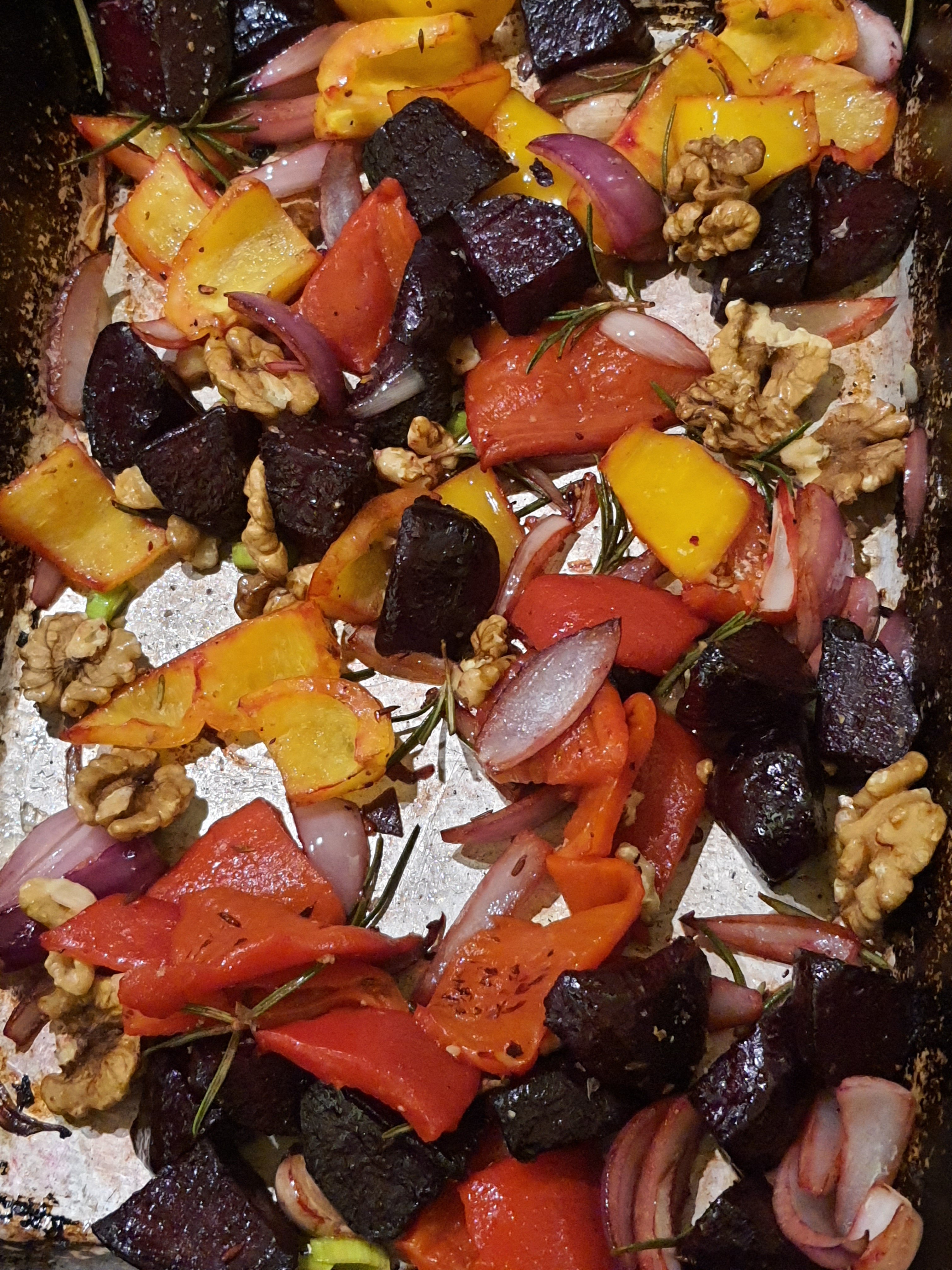
365 Plant Challenge – as yet a moveable feast

Catch up day … continuing on from January 1-31 … Days 32 and 33

So this challenge of mine is evolving.  From 31 vegetables in January to 365 Plants in 2021. The rules of the challenge are still rather fluid. I decided to write down every plant I could think of, to get some sort of seasonal structure in place – and was astounded exactly how many 365 really was!  After much searching and seeking of advice I have come up with a list from which to draw inspiration.  A vague plan for seasonality, planting, foraging and when it’s acceptable (in my head) to buy air-freighted exotic fruit, vegeables and spices. I suspect my rules are entirely a ‘moveable feast’.

Do I allow different varieties of potato or apples … can I use the flower of a plant, the body of the same plant and its seeds on the separate days over the year … does it have to have a separate scientific name (I’ve used three variations of brassica oleracea already!). They I decided perhaps they could have a separate entry if they would be labelled differently at the supermarket – except perhaps for something with a flower that is edible and I enjoy both flower and plant – and then maybe root …

It’s all rather Mad Hatter’s Tea Party!

*Rules to be concluded on 31/12/21*

I’ve been posting daily on Facebook all year, but now I’m intending to venture into the worlds of Twitter and Instagram! It’s all rather exciting. Every day starts with “what’s today about?” On Friday “today’s plant” swapped at 4pm when I decided the quince I was cooking with wasn’t that exciting. I had an old quince that wasn’t even turning pink with poaching- so perhaps it would be better to wait for the autumn and the quince’s season.

Day 32 – Bergamot orange

Citrus bergamia.
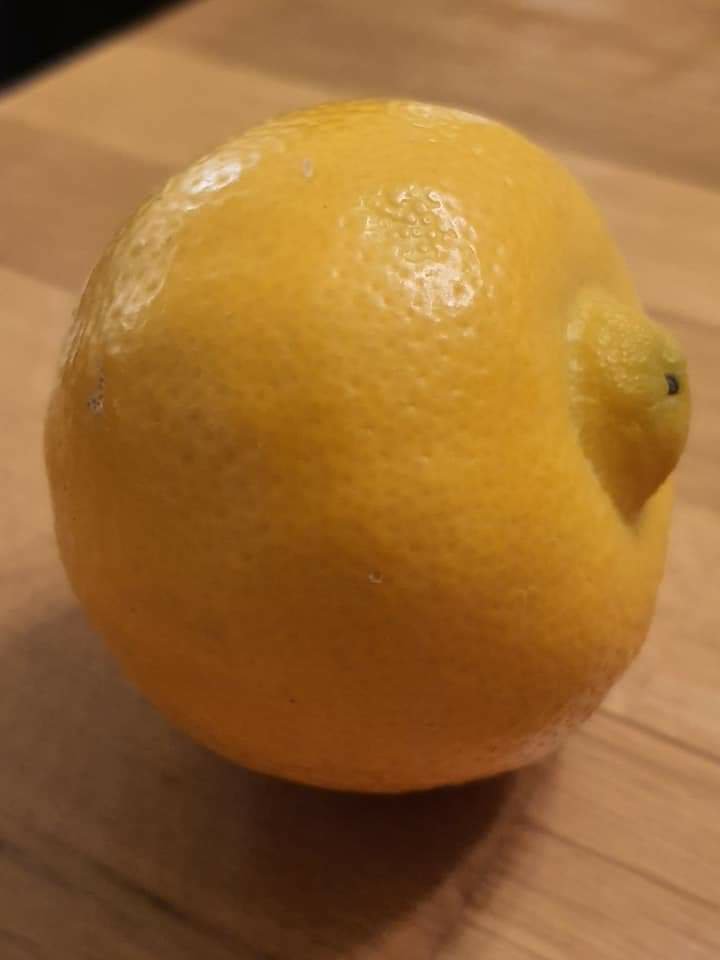
Zest and juice, as a hot drink.
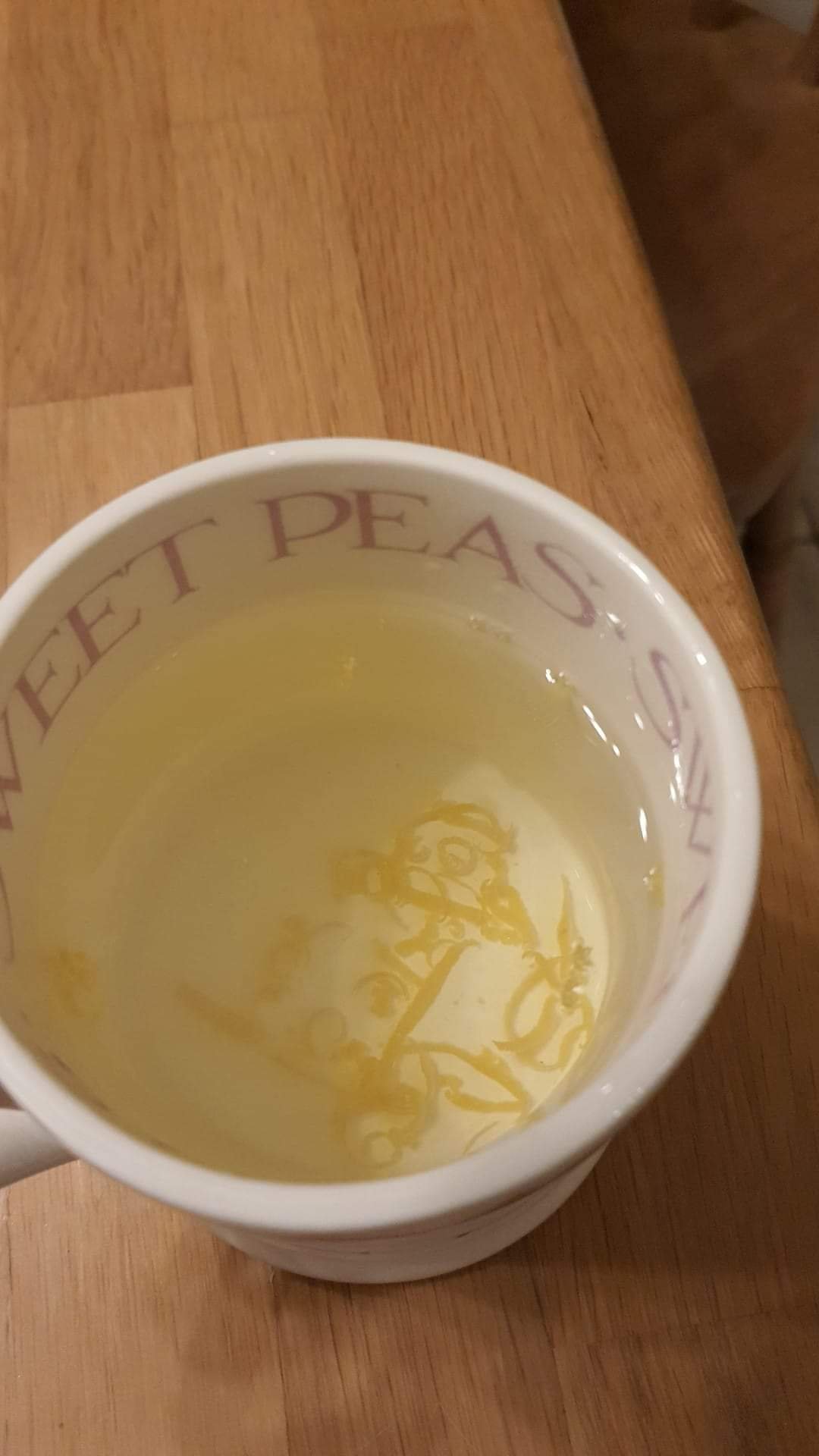
One of the delights of cold winter months, as in season November-February. Smells amazing. I first came across them 5+ years ago.

Due to its bitterness, the fruit of the bergamot itself is not generally used directly in cooking, but rather the rind or the juice as flavouring.  The moment you release the oils in the zest, the scent evokes Earl Grey tea (a black Chinese tea leaves from the Camellia sinensis flavoured with bergamot oil).  The actual origin of Earl Grey tea are a little hazy but Howick Hall tell the story the tea was a custom blend by a Chinese mandarin to compliment the 2nd Earl Grey’s well water on his estate, Howick. Accordingly, the tea master used bergamot in the recipe to soften the taste of lime that was in the water. The Earl’s wife, Lady Grey, began serving the Chinese tea master’s new recipe exclusively when she entertained as a political hostess. This was quickly followed by her asking British merchants in London if it could be recreated and marketed to London society who adored the recipe and then made it famous

I was rather interested in this research to learn how often the perfume industry also uses the essential oil of bergamot. In fact it is a key ingredient in Eau de Cologne – a spirit-citrus perfume launched in Cologne in 1709 by Giovanni Maria Farina, an Italian perfume maker from Santa Maria Maggiore Valle Vigezzo. In 1708, Farina wrote to his brother Jean Baptiste: “I have found a fragrance that reminds me of an Italian spring morning, of mountain daffodils and orange blossoms after the rain”. He named his fragrance Eau de Cologne, in honour of his new hometown.

Bergamot is a citrus fruit mostly grown in orchards that lie on the Ionian coast in the province of Reggio Calabria in the south of Italy. The fruit grown in this microclimate has been awarded Protected Designation of Origin status (PDO) and it is where around 80% of all bergamot oranges are grown. How the first bergamot trees arrived in Italy is shrouded  in speculation – possibly originally brought over from Persia by traders in the 1400s. Other scholars believe that the home of bergamot is China or Spain or Greece or even the city of Pergamum in Asia Minor from which the name of the plant would derive and now nearby to the modern city of Bergama, Turkey. Some think that the most likely origin of its name is “beg – armundi”, a Turkish word meaning ” Lord’s pear”, due to the pear-like shape of the bergamot fruit. It is thought to have been a hybrid of the bitter orange and lime.  It grows green and then turns yellow as it ripens. 

The bergamot orange is still grown in Turkey, in Antalya in southern Turkey for its marmalade and also in southern France and the Ivory Coast for the essential oil.  The fruit is not generally grown for juice consumption. However, in Mauritius where it is grown on a small-scale basis, it is largely consumed as juice by the locals.

Which rather intrigued me and lead me to convoluted speculation in the small hours. In short, could my great great great great grandfather James Duncan of Aberdeenshire (who worked as a gardener at Howick Hall in Northumberland for the 2nd and 3rd Earl Grey before being recommended by the 3rd Earl Grey to the British Governor of Mauritius to take up the role of Director of the Royal Botanic Gardens, Pamplemousses in 1849 – restoring the former French garden glory and creating one of the largest and most important botanic gardens in Asia – strategic to the British Empire as a place to grow a spare plant route home from exploration in Asia)  … possibly have anything to do with the small scale farming of bergamot oranges in Mauritius considering his connection with Earl Grey …

But then, to my delight and surprise, to discover yet again another plant with magical properties!! The very bitter flavour of bergamot is the natural compound citrus polyphenol, which has been shown to benefit the cardiovascular system when taken in high doses. Two compounds in bergamot, brutieridin and meltidin, have been studied for their statin-like effects. Both are classified as flavone glycosides, a group of natural antioxidant compounds that typically occur in small amounts in various plants, from fruits and vegetables to herbs. As a class, the flavone glycosides show a lot of beneficial activity; some are known to fight cancer, others appear to enhance brain function. This category of natural compounds is attracting increasing scientific attention.

“Statin-like Principles of Bergamot Fruit (Citrus bergamia): Isolation of 3-Hydroxymethylglutaryl Flavonoid Glycosides”
The American Chemical Society and American Society of Pharmacognosy
J. Nat. Prod. 2009, 72, 7, 1352–1354

Day 33 – Capers

Capparis spinosa
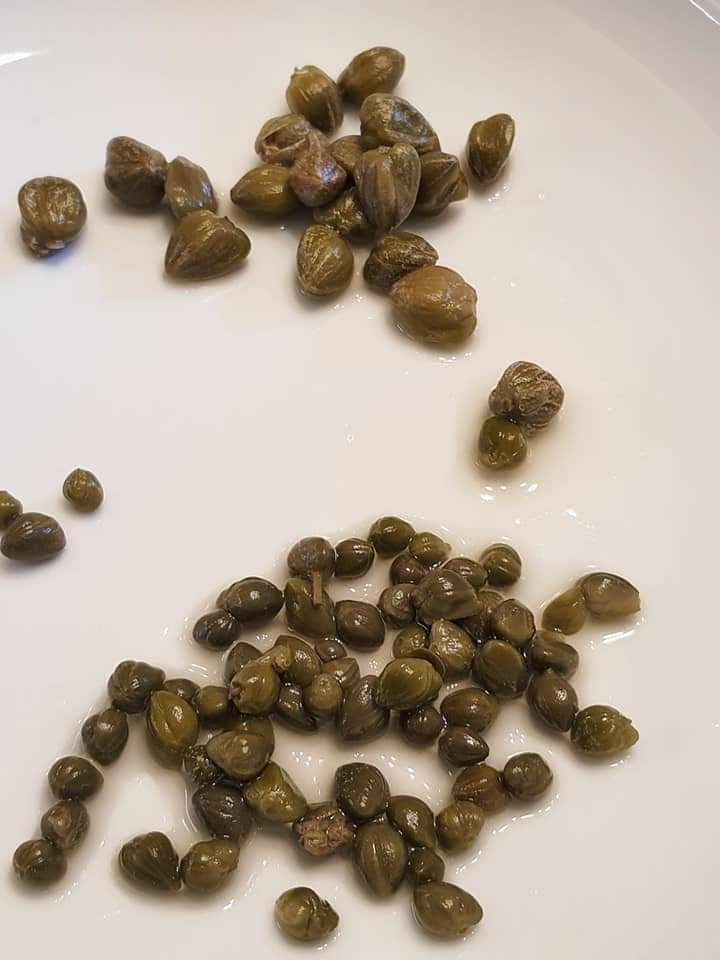
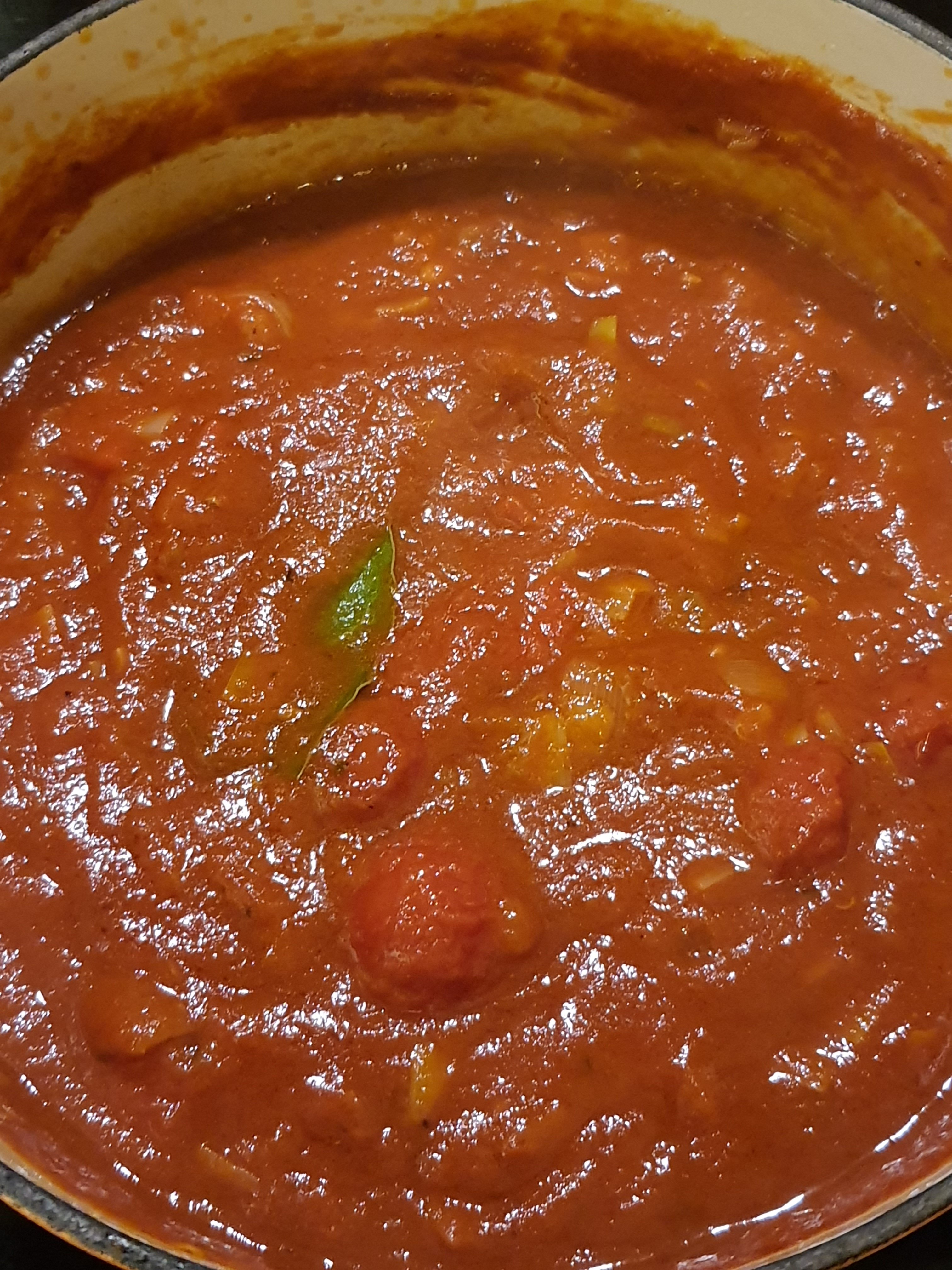
Linguine alla puttanesca. 
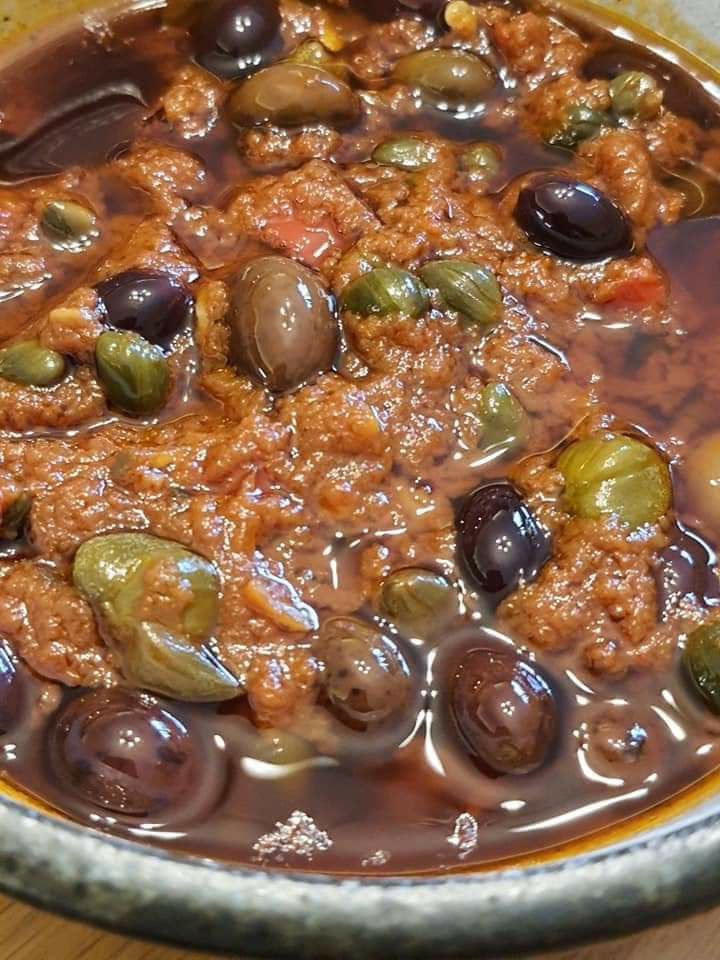
To caper” is defined in the Cambridge dictionary as “to run and jump about in an energetic, happy way”… the zing of pungent yet sprightly capers!

Capers are the pickled small flower buds of the Capparis shrub, also know as Flinders rose, which grows wild in the Mediterranean region and some parts of Asia. They are cultivated in many countries including France, Spain, Italy, Morocco, Algeria as well as in Asia and Australia.  The Capparis shrub is a prickly perennial plant that bears rounded, fleshy leaves and large white to pinkish-white flowers. It grow vigorously in poor, rocky, well-drained soil – in hot, arid or semi-arid areas that provide plenty of sun (usually on the sea coast).They find a home in the cracks and crevices of stone pathways and walls (such as in the Wailing Wall in Jerusalem!).

The immature flowers buds are the most valuable part of the plant.  Buds must be handpicked and harvested just before blooming.They’re too small and delicate to be plucked by machine, so they’re harvested individually; the bushes visited every 10 to 12 days to catch the individual flower buds in the optimum stage of ripeness – which is what makes them so expensive. After being picked, they are washed and sun-dried, then pickled in vinegar, brine, oil, wine, or coarse sea salt. These curing processes not only preserve capers but brings out their flavour. Like olives, capers are unpalatable fresh, so they need to be cured to be enjoyed.

Smaller flower buds have a better flavour and they are more expensive than large, more strongly flavoured flower buds. French capers are said to have a more peppery flavor and are most frequently cured in vinegar. Sicily is considered to produce the best capers in the world; prized for having superior flavour and texture attributed to the rich volcanic soil in which they grow. On the southern Italian islands famous for their capers, such as Pantelleria and Salina, capers are cured exclusively in sea salt.
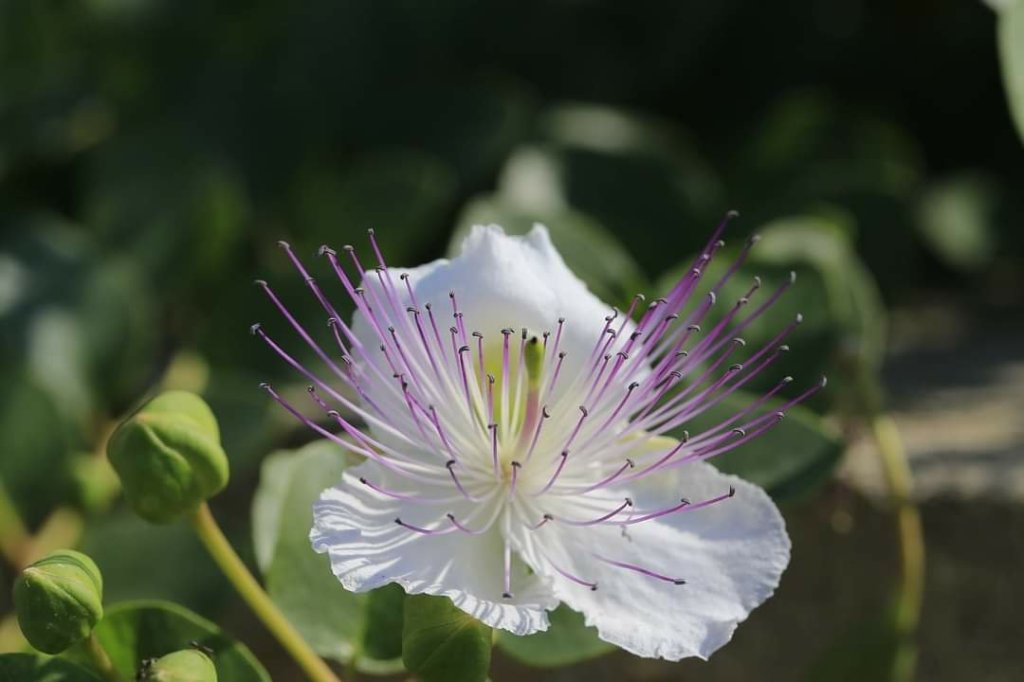
Caper flowers are beautiful with delicate white petals that surround an eruption of purple stamens but are short-lived, lasting only a few hours on the vine before wilting. When the immature bud is not picked, it eventually develops into the caperberry fruit. The berry is larger than the biggest caper, about the size of an olive, and attached to a long, cherry-like stem. Caperberries are an olive green. Each berry contains 200 to 300 tiny seed. They are often presented alongside cured meats or fish on a tapas plate in Spain.

Capers are categorized and sold by their size, defined as follows, with the smallest sizes being the most desirable: non-pareil (up to 7 mm), surfines (7–8 mm), capucines (8–9 mm), capotes (9–11 mm), fines (11–13 mm), and grusas (14+ mm). Larger capers are stronger in flavour and more acidic.

Capers are most often associated with Mediterranean cuisines, but enjoyed worldwide for the distinctive piquant burst of flavour and texture. They are added to a great variety of recipes, including pasta, stews and sauces (such as the very necessary tartare sauce). They’re also cooked with roasted vegetables (Ottolenghi does a lovely one) and a variety of main dishes and as a pizza topping. The burst of salt and acid is a great complement to fish, especially rich ones such as salmon, as well as lamb.

Its culinary use dates back thousands of years, where it’s mentioned as a food in the Sumerian Epic of Gilgamesh, (possibly the oldest written story known, which was found on ancient Sumarian clay tablets and which date back to c. 2700 B.C.). They are also mentioned by Apicus, a Roman who is said to have written the very first cookery book in the 1st Century and by Dioscorides (c.40-90 AD), a pharmacologist who served as a surgeon in Nero’s armies as a “marketable product of ancient Greeks”.

The caper bush is distantly related to the cabbage family and has its pungent sulphur compounds. Capers contain iso­thiocyanates, the compound that gives cress, mustard and horseradish its bite and they share the same peppery, mustardy flavor.  Capers are one of the highest plant sources of flavonoid compounds rutin (or rutoside) and quercetin. These, amongst other compounds isolated from immature buds of the Caparis shrub, have anti-bacterial, anti-inflammatory and analgesic properties. The spicy buds contain healthy levels of vitamins such as vitamin-A, vitamin-K, niacin, and riboflavin. Furthermore, minerals like calcium, iron, and copper are present in sufficient amounts in them.  Capers have numerous health benefits and have been valued for these properties since ancient times. Ancient Romans and Greeks used tea made of stem and root of the caper bush in treatment of fibromyalgia and rheumatism. Caper are said to aid in digestion and reduce flatulence and have been used to treat anemia and improve the skin.

It’s just you’d have to eat quite a lot of them to get significant benefits, they are definitely an ingredient to be used in moderation (especially considering the about of salt used in the curing process!)

Capers are a distinctive ingredient in Italian cuisine, especially in Sicilian, Aeolian and southern Italian cooking. Which is why I chose to make one of my favourite pasta sauces – puttanesca. I’ve included 2 recipes below, but there are many to choose from. If you use tinned tomatoes it takes longer than the pasta cooking time to reduce, so I like to use my pre-made sofrito or passata and tomato paste. I don’t always use anchovies.
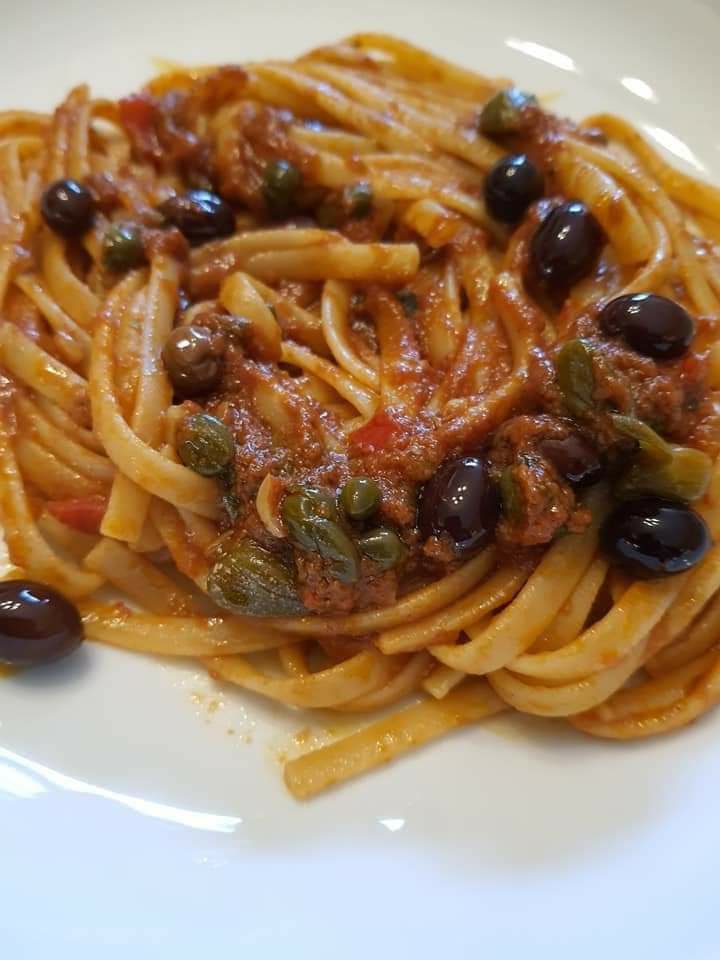
https://www.buonissimo.it/lericette/5778_Sugo_alla_puttanesca/amp/
https://www.theguardian.com/lifeandstyle/wordofmouth/2014/sep/25/how-to-cook-perfect-pasta-puttanesca-recipe

Postscript
https://www.theguardian.com/lifeandstyle/wordofmouth/2014/jun/19/how-to-make-the-perfect-tartare-sauce-fish-chips

Tartare sauce has been found in cookbooks since the 19th century. The name derives from the French sauce tartare, named after the Tatars (Ancient spelling in French of the ethnic group: Tartare) from the Eurasian Steppe, who once occupied Ukraine and parts of Russia. Although it is unlikely that the Tatars ever made or consumed Tartar sauce, the actual origin of the sauce is found East of France. But I did also read that the name probably appeared as a reference to the coarse texture of the sauce—since the Tatars were known for their barbarian behaviour!  The sauce was also initially served as an accompaniment to steak tartare, which is made with finely chopped raw beef or horse meat, and the dish probably influenced the origin of the name. Sauce tartare is usually served with fried fish or seafood, meat, and other types of fried dishes.

I don’t like to go on holiday without a pot of superior tartare sauce, which I present as we sit on the beach (or damp car) somewhere, eating fresh local fish and chips. I could quite probably eat the whole pot!

Resources:
https://foodprint.org/real-food/capers/p
https://www.loveandlemons.com/what-are-capers/
https://www.thespruceeats.com/what-are-capers-1807002#varieties
31 Vegetable Challenge – completed. And why eating a wide range of plants each week is so good for you.

Horray. January is completed. I’ve purchased, cooked (mostly), eaten and researched 31 different vegetables. And I feel all the better for it. I had to take a double course of antibiotics in the autumn. This January I feel that I have gone some way to restoring the health of my microbial community and some of the damage that was done by the antibiotics.

The 31 Vegetables of January:

Day 1 – Calabrese broccoli
Day 2 – Celariac
Day 3 – Winter squash
Day 4 – Radicchio
Day 5 – Brussels sprouts
Day 6 – Fennel
Day 7 – Aubergine
Day 8 – Celery
Day 9 – Onions
Day 10 – Mushrooms
Day 11 – Red Cabbage
Day 12 – Carrot
Day 13 – Swede
Day 14 – Romano Pepper
Day 15 – Cauliflower
Day 16 – Cavolo Nero (Black Kale)
Day 17 – Parsnip
Day 18 – Beetroot
Day 19 – Tomato
Day 20 – Romaine Lettuce
Day 21 – Sweet Potato
Day 22 – Potato
Day 23 – Rocket
Day 24 – Savoy Cabbage
Day 25 – Leek
Day 26 – Daikon radish or Mooli
Day 27 – Cucumber
Day 28 – Jerusalem Artichokes
Day 29 – Pak Choi
Day 30 – Pea
Day 31 – Spinach

Here’s a link to two podcasts with Tim Spector, about the health of the microbial community within our gut (the microbiome) and our general health and well-being.

On BBC Sounds – Helen Lewis interviewing Tim Spector about his recent book Food Myths – The Spark (here)

On YouTube – interview with Rangan Chatterjee “Why Everything You’ve Ever Been Told About Food is Wrong” – here

And now?

365 Plant Challenge –

#365PlantChallenge on Facebook

I’ll post here periodically. BUT my challenge is to consume 365 different plant based foods, in some form, by 31/12/21.

Day 29-31 of 31 Vegetable Challenge.

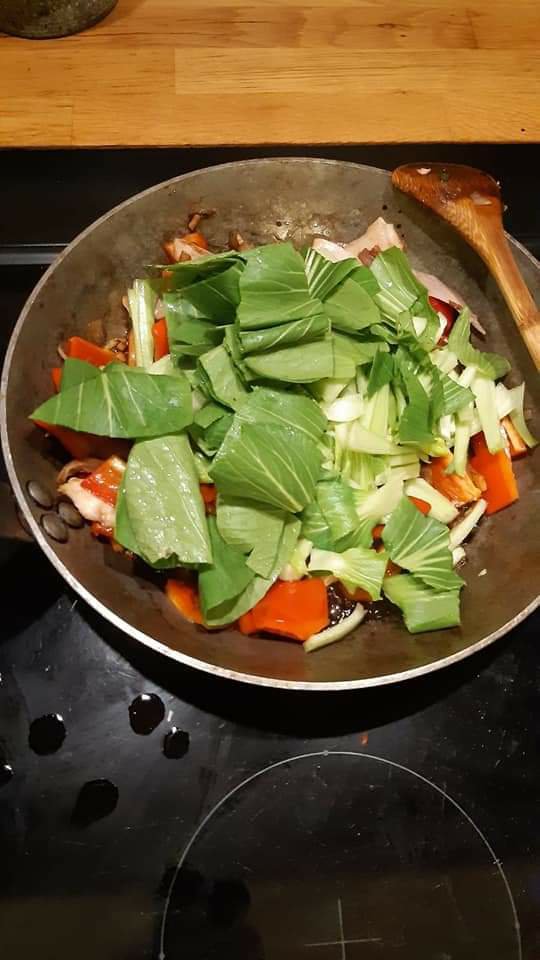
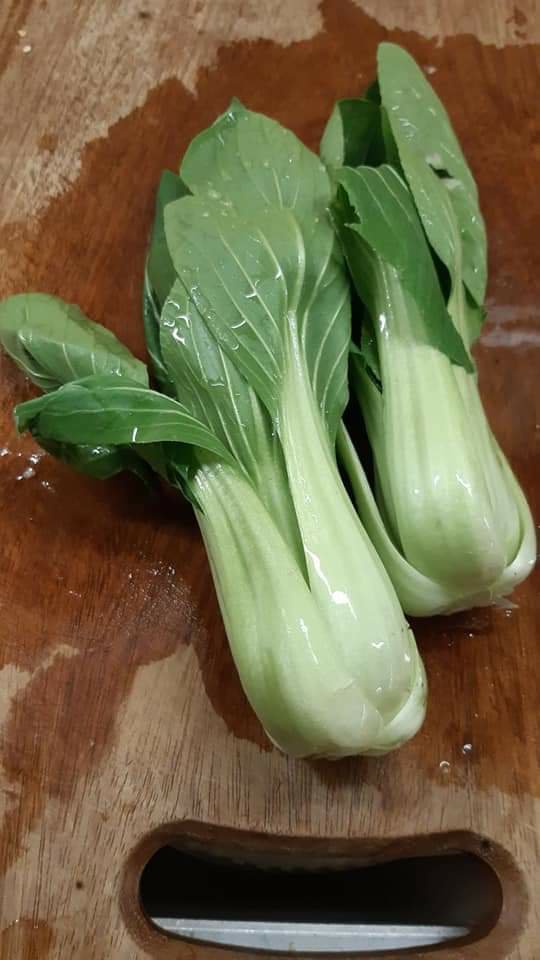
Day 29 – PAK CHOI – Brassica rapa chinensis

A sweet leafy green most commonly used in stir-fries, the pak choi is a relative of the cabbage (also know as: bok choy, horse’s ear, Chinese celery cabbage and white mustard cabbage). Its flavour is somewhere between mild cabbage and spinach. It’s used abundantly in Asian cuisine.

Pak choi is native to China.  Archeologists have discovered 6,000-year-old Chinese cabbage seeds in China’s Yellow River Valley. In the 14th century, Pak choi was transported via trade routes to Korea during the Joseon Dynasty, where it would become a key ingredient in kimchi. To this day it remains one of Asia’s most important vegetables, often pairing with flavours like ginger, garlic, soy sauce, chilli and sesame. But its also got wonderful, succulent crunch that goes well in salads, or can be cooked as a spinach-like side dish.

Wash. If you like you can cut the leaves from the stems, as they cook at different speeds – the leaves cook much quicker, so you could add just towards the end of cooking. Alternatively, if you want to put leaves and stems in the pan at the same time, cut the stems into wide strips and the leaves into finer strips. Very young pak choi can be left whole, or halved or quartered.

And wow, yet another super veg – pak choi is packed with vitamins A and C. 100g of raw pak choi provides more than 75% of the recommended dietary allowance (RDA) of carotenoids (vitamin A), and 75% of C, 57%  Vit K and 16% the RDA of folate. With just 19 cal in a usual 100g serving!  In fact it’s one of the highest nutritionally ranked vegetables, providing high amounts of more than 21 nutrients, including a wide range of other phytonutrient antioxidants, like quercetin, kaempferol, and isorhamnetin. Some say more micro-nutrient dense than broccoli or kale!!

We made Stir fried Pak Choi with Chicken, and we ate it with Thai Black Rice – which i bought in lockdown the first, because it was the only rice on the shelf. Both were totally delicious. With extra ginger too. I love the crunch of Pak Choi (so important in a meal) and the black rice has a great texture – somewhere softer than wholegrain basmaeti but much more texture than white refined rice.

Day 30 – PEAS – Pisum sativum

It is believed that field peas were one of the first crops to be cultivated by man. There has been evidence found by archaeologists of wild pea consumption by humans as far back as 9750BC. The Romans understood the beauty of this ingredient as Apicius (born 25BC) published nice recipes for how to cook dried peas.

Freshly picked garden peas and petits pois are frozen by Birdseye within two and a half-hours of being picked, (retaining all the fresh peas nutrition and preventing sugars being converted to starches).  The first peas ever to be frozen commercially were by Clarence Birds Eye who invented the ‘plate froster’ to preserve foods in the 1920s.  And in 1969, the first television commercial broadcast in colour was for Birds Eye frozen peas.

Peas are very nutritious. They are a good source of vitamin A, vitamin C, folate, thiamine (B1), iron and phosphorus. They are also rich in protein, carbohydrate and fibre and low in fat. Just one serving of freshly frozen peas contains as much vitamin C as two large apples, more fibre than a slice of wholemeal bread and more thiamine than a pint of whole milk.

The Italians are credited with breeding what became known as “piselli novelli” or new peas, the small peas most of us today call petits pois (little peas), which are sweeter and have softer skins and I think are most definitely superior.

Gregor Johann Mendel (1822-1884), an Austrian monk, worked with peas in laying the foundation of the modern science of genetics.

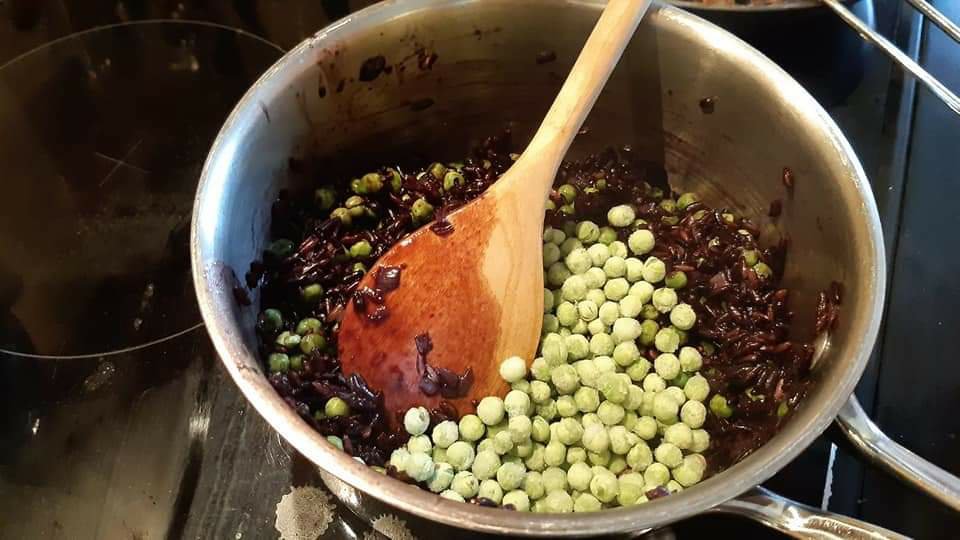
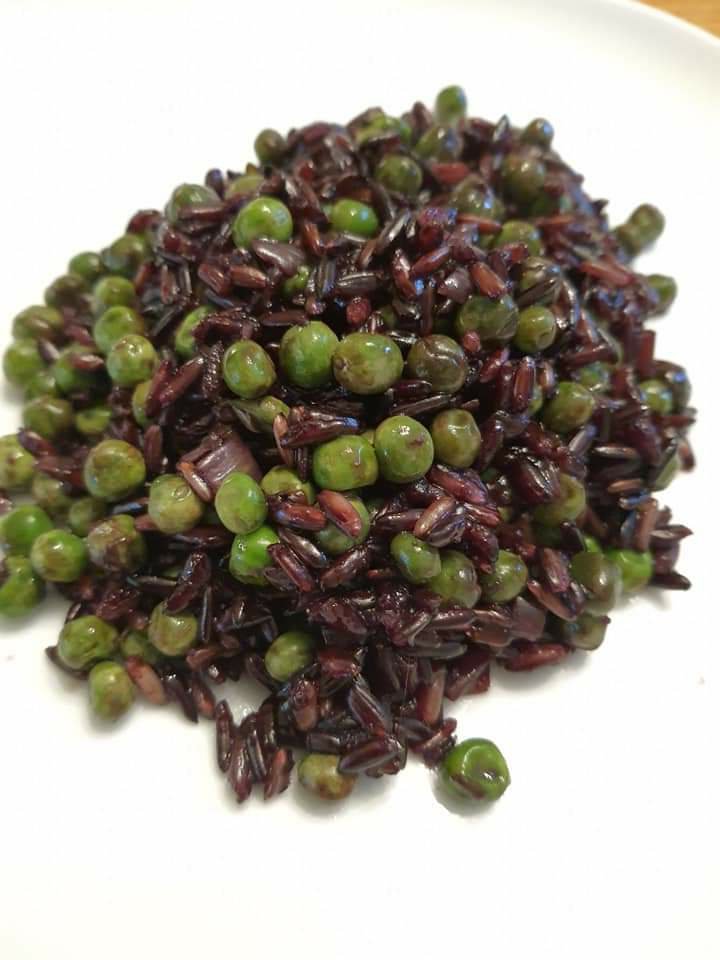
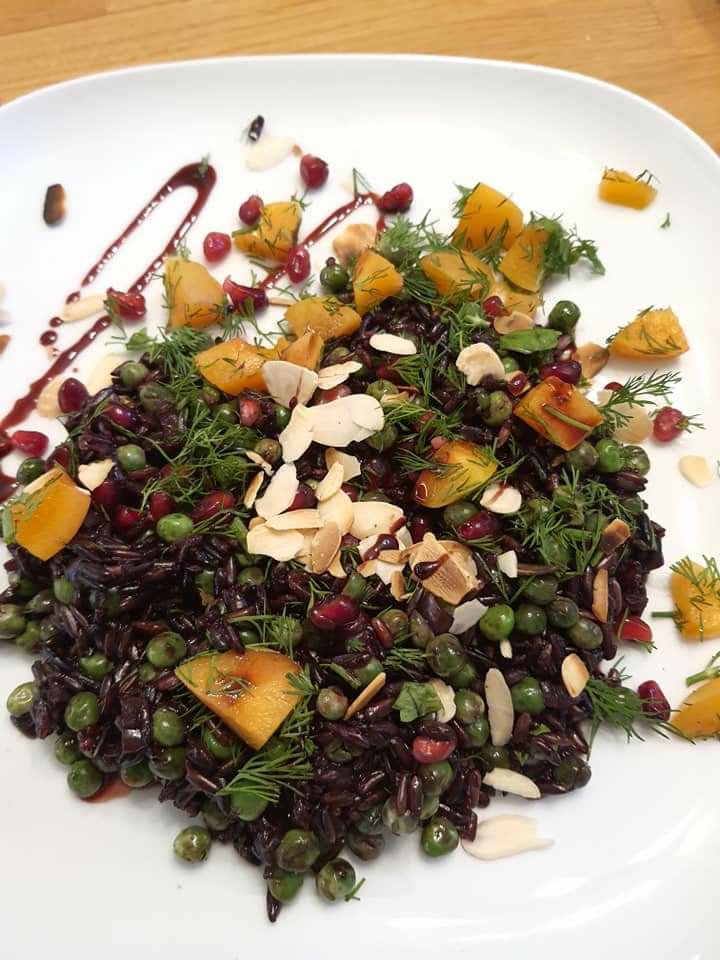
We made a pea risotto using some more of this delicious and highly nutritious black rice I bought in a panic last lockdown in March. Black rice, also called forbidden rice or “emperor’s rice,” –  was once reserved for the Chinese emperor to ensure his health and longevity, and forbidden to anyone else. It is a whole-grain rice, rich in anthocyanins, which are pigments that give the rice its unusual color.

But we didn’t use parsley, but dill and mint.  And added pomegranate seeds, apricots and toasted almonds – with a drizzle of pomegranate molasses – to offset the sweetness.  Got the idea from a interesting blog: https://blog.foodpairing.com/2013/06/foodpairing-dishes-pea/ and other such finds on the internet!!

Day 31 – Spinach
Spinacia oleracea

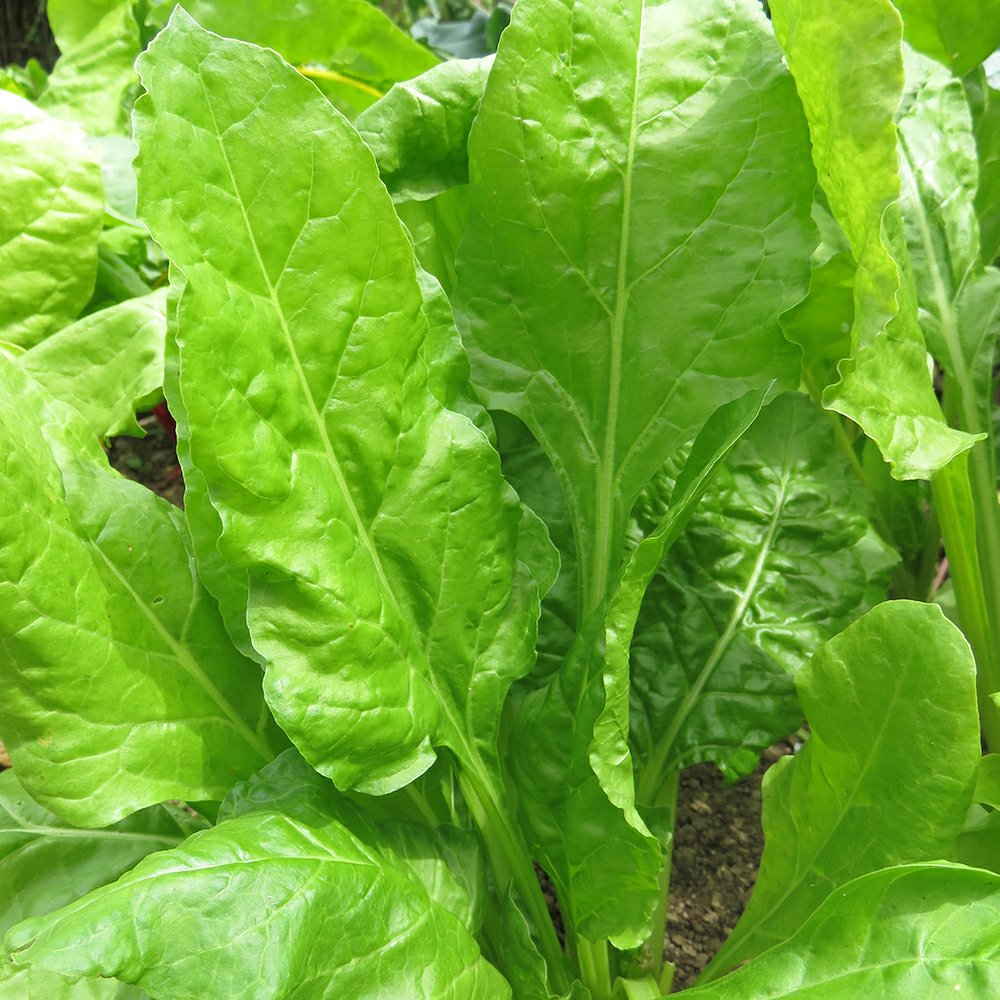
Rocket Garden – Perpetual Spinach Plants

Spinach belongs to the amaranth family and is related to beets and quinoa. Sweet, tender and really rather good for you. Popeye was right!

It’s loaded with nutrients and antioxidants – it is one of the best vegetable sources of iron, an excellent source of calcium, folic acid, fibre, protein, calcium and vitamins A, C and K. Interestingly I read that half of the major nutrients are lost by the eighth day after harvest – so frozen while fresh is rather better for you than most supermarket bought leaves. But home grown or market garden bought must be best. Apparently cooked spinach provides better bioavailability of some the nutrients than raw spinach.

Thylakoids of the spinach cells are what give spinach its green color. These have been found to help satiate appetites, which can help in weight loss.

Spinach is a native plant of Persia (Iran). Arab traders carried spinach into India and then later introduced into China in the 7th century. It was most probably brought to Europe in about the 12th century. Spinach is still widely known in China as “the Persian Green”.

During her reign as queen of France, Catherine de Medici enjoyed spinach so much, it was served at every meal. To this day, dishes made with spinach are known as “Florentine” reflecting Catherine’s birth in Florence.

Medieval artists extracted green pigment from spinach to use as an ink or paint.

March 26th is National Spinach Day.

Goes well with:
Asian flavourings (Chilli, Ginger, Sesame, Soy sauce)
Cheese (especially ricotta and feta)
Cured pork Dairy Dried fruit Garlic Lemon Mustard Olives and olive oil Spices (Cayenne, Chilli, Mace, Nutmeg, Paprika).

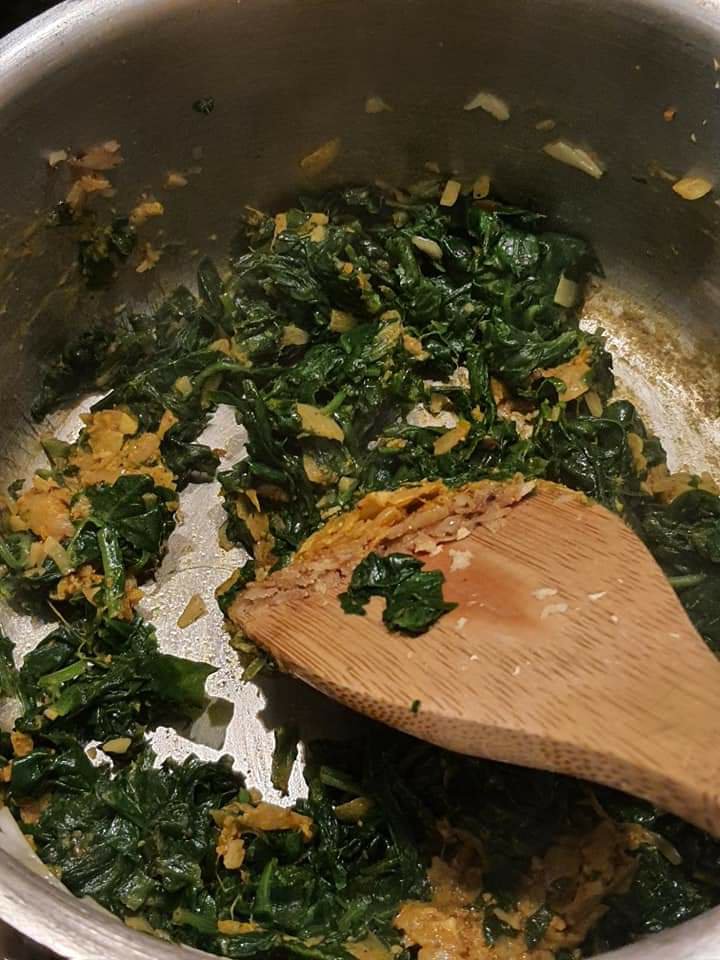
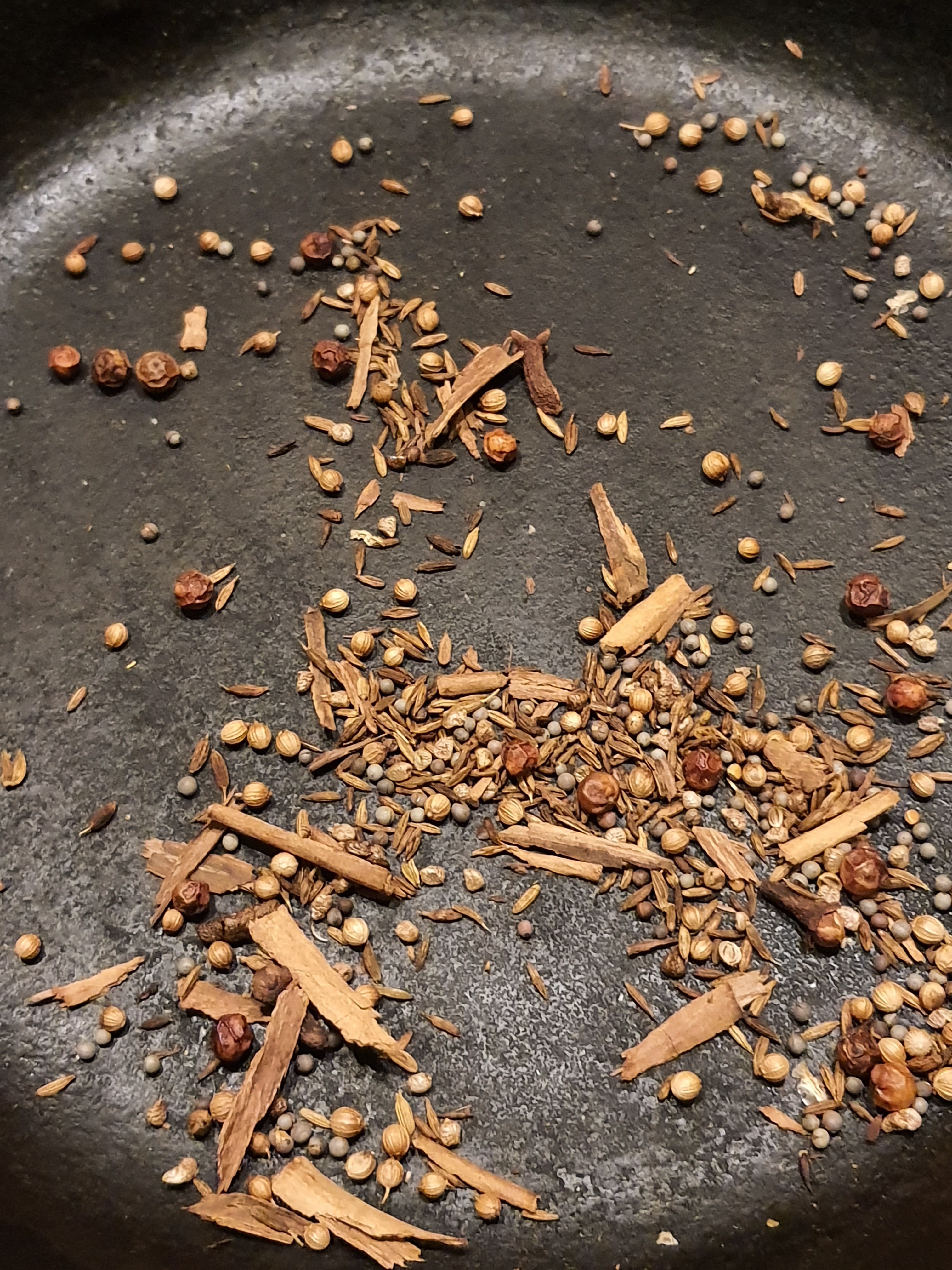
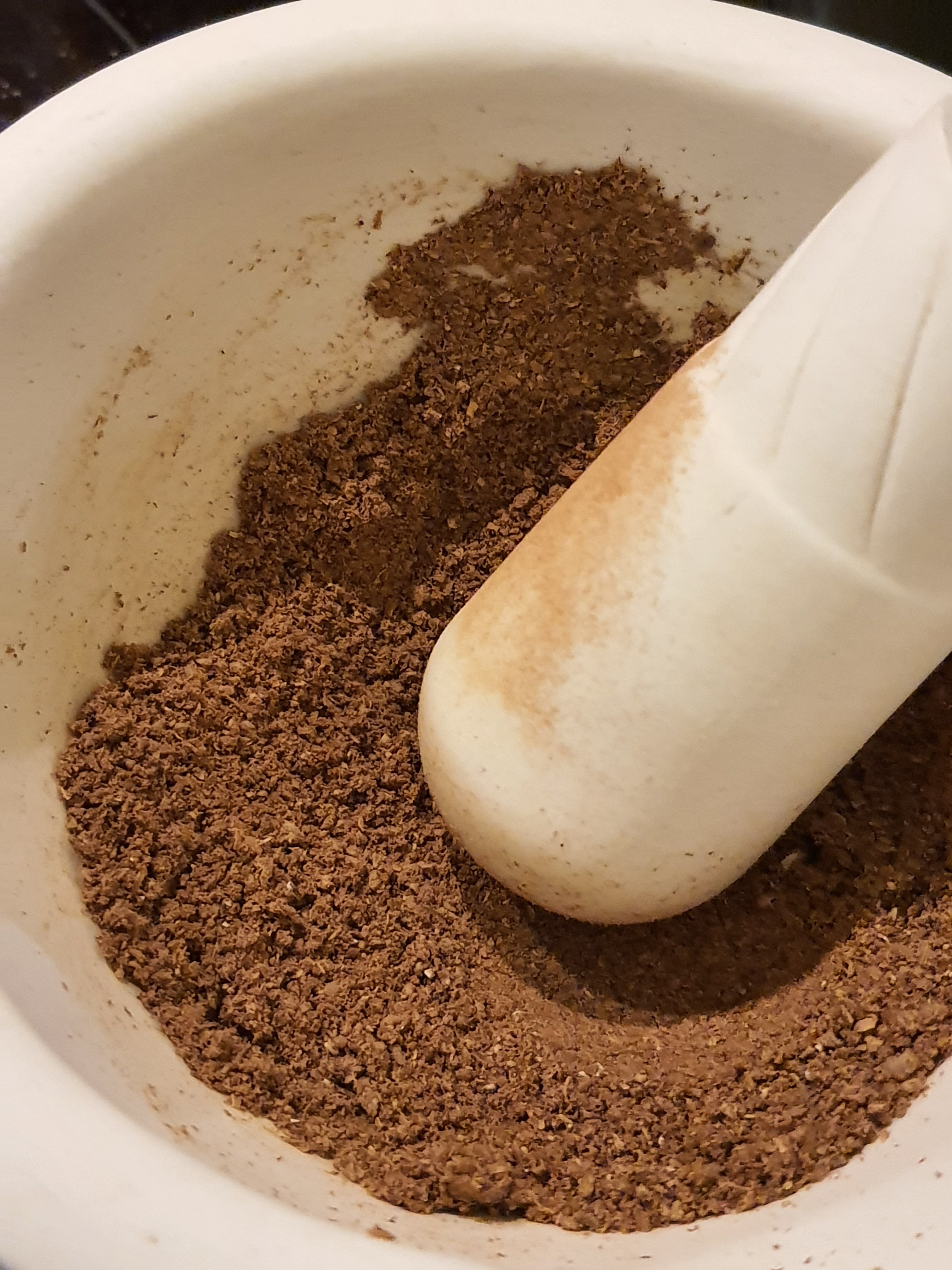
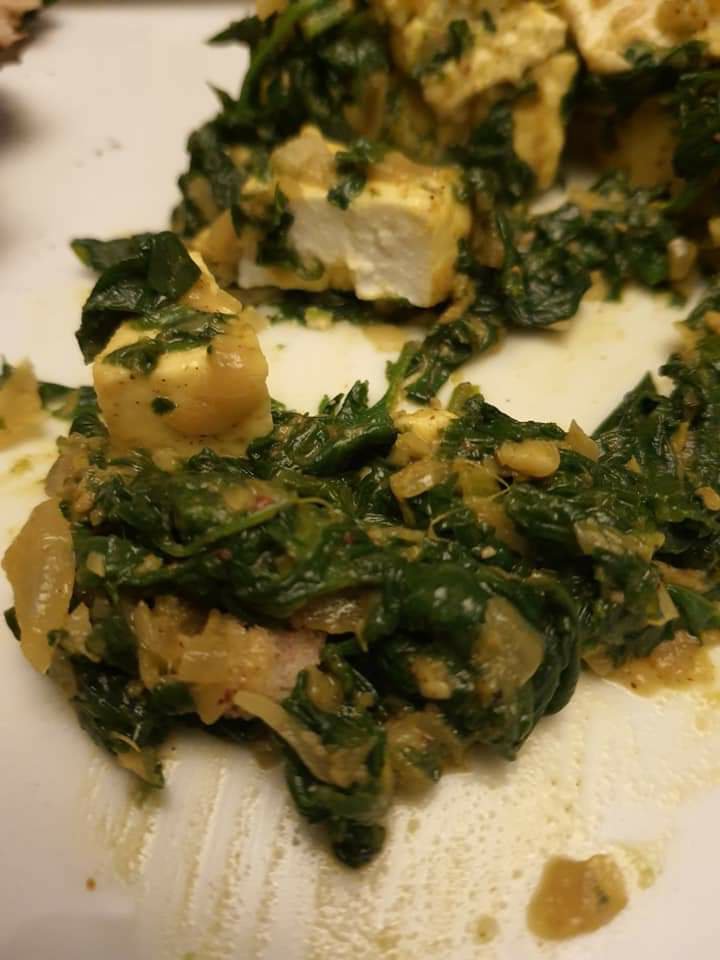
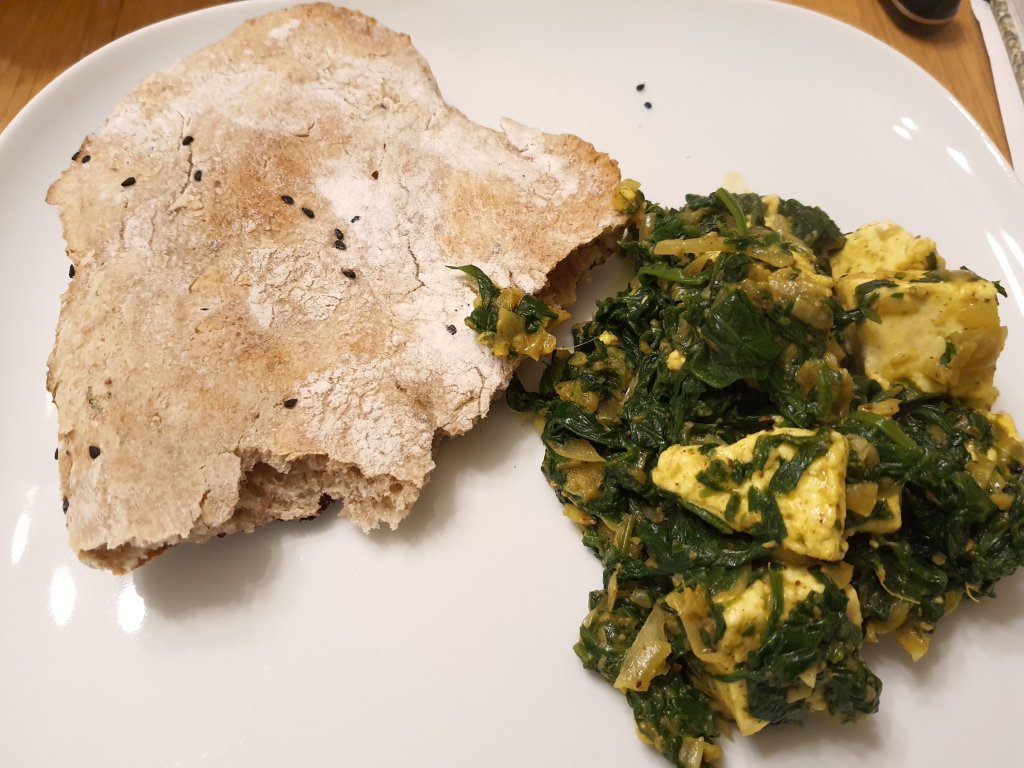
I made Saag Paneer (but not enough, so I will have to make it again very very soon).

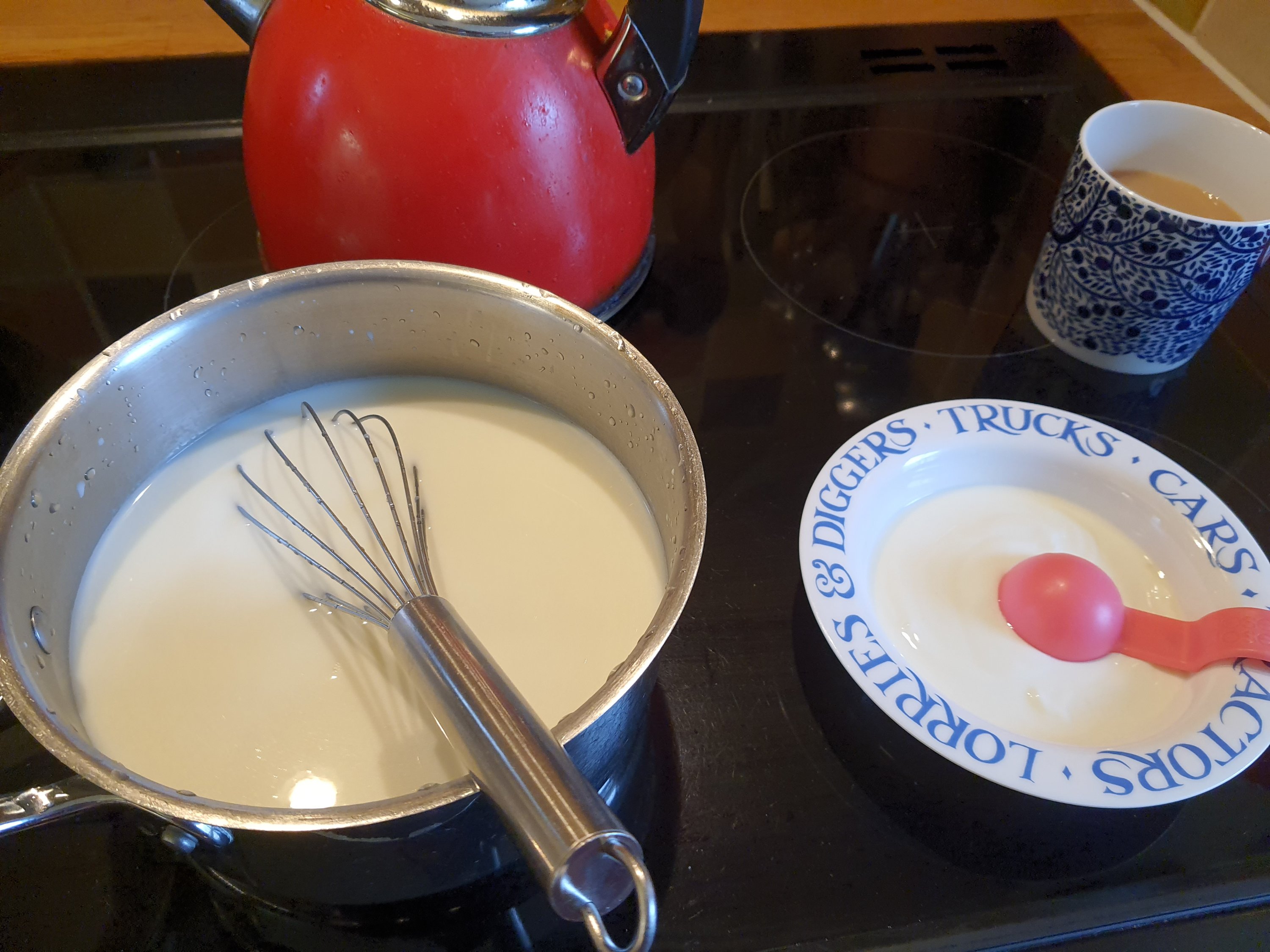
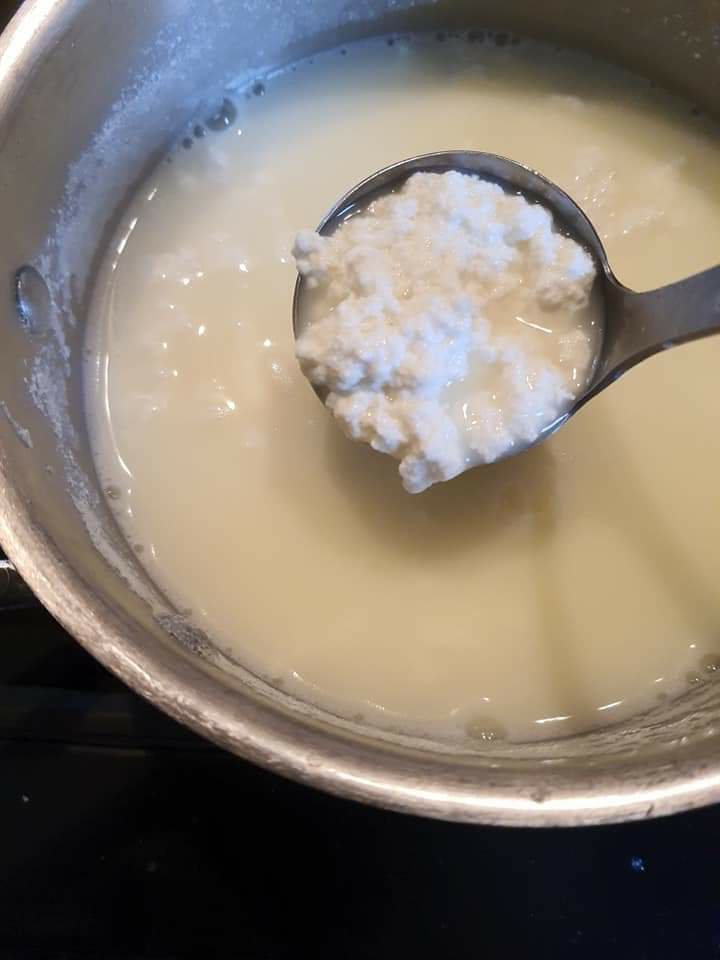
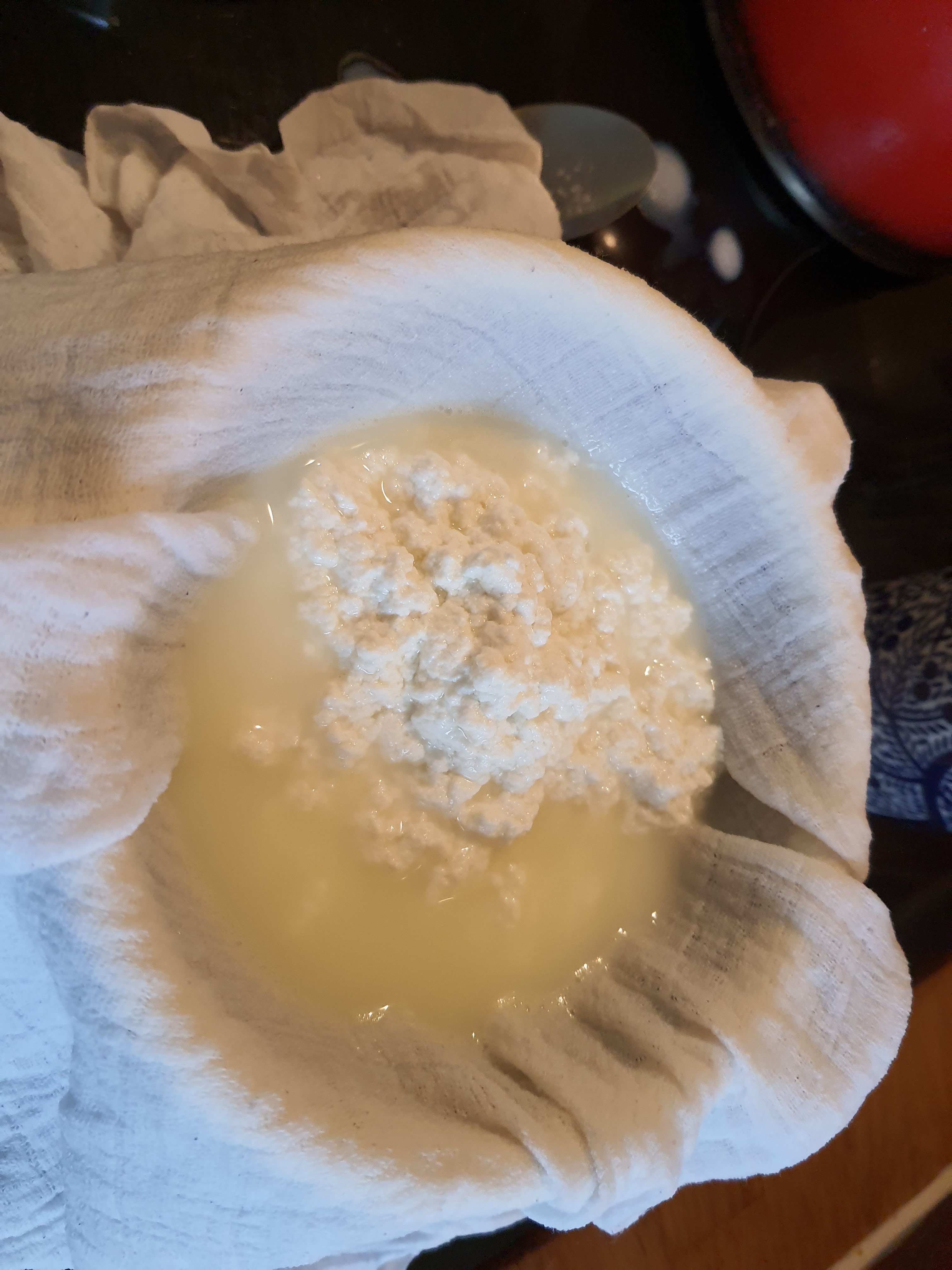
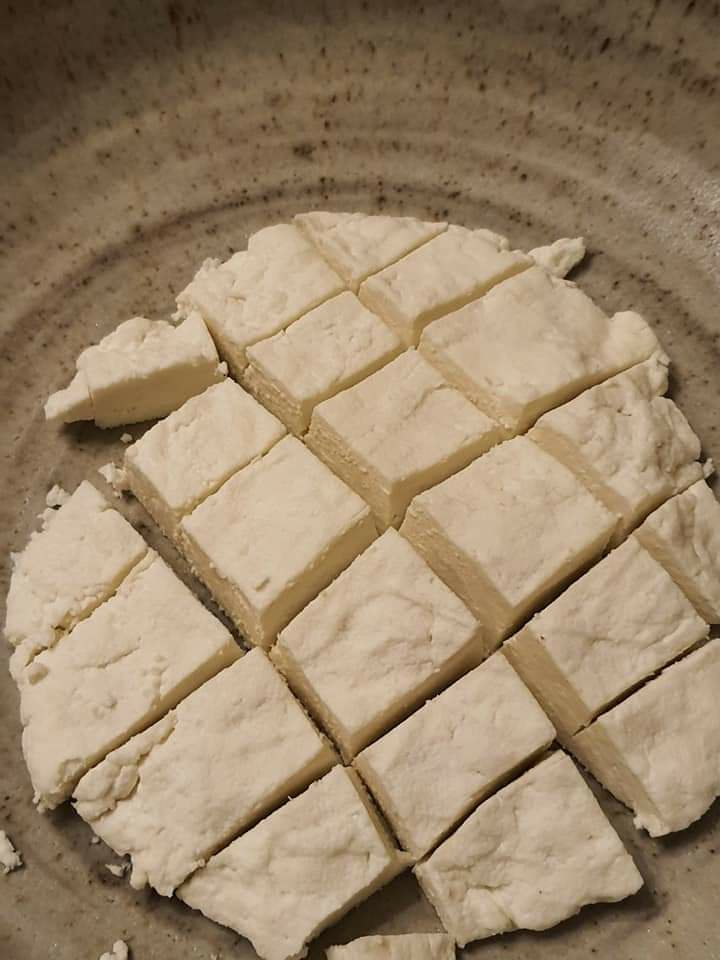
I also made my own paneer. I had no idea that making paneer cheese was so easy. Just need to think ahead as required a few hours draining – but very little effort and much more tasty than shop bought.

I used a combination of a few different recipes for the Saag Panner, here are two:

How to make the perfect Saag Paneer
and Asma Khan’s Saag Paneer

I kept the spinach slightly wetter than was suggested and didn’t fry the paneer. I just had a 200g bag of spinach and 150g paneer but I thought that was a tasty ratio – just wished there had been double that.

Naan recipe here:
Madhur Jaffrey inspired me. What I make is slightly different than this but this is a great place to start:

Day 11-28 of 31 Vegetable Challenge, hope for a sourdough starter and Seville Orange and Cardamom Gin kit

So, finally I’ve got around to an update on my 31 Vegetables Challenge for January on this blog. Sometimes life gets in the way of the best laid plans … so I’ve not done very well documenting this challenge on here, because it’s taken me rather a long time to prepare and cook a new vegetable every day!  I realised that I had largely got stuck in a rut with my cooking of late. Although I use a wide range of vegetables, as I have a Riverford Organic Box delivered weekly, they often end up as mixed roasted vegetables …and that’s not very exciting to photograph.  So I’ve had numerous of my cookery books down from the shelves to pour over and scoured the internet for recipes containing the ingredients I’d already got in the fridge. But it turns out, as I’ve reviewed this as a list this morning, that I still roasted many of the vegetables … but perhaps a little more creatively!! 

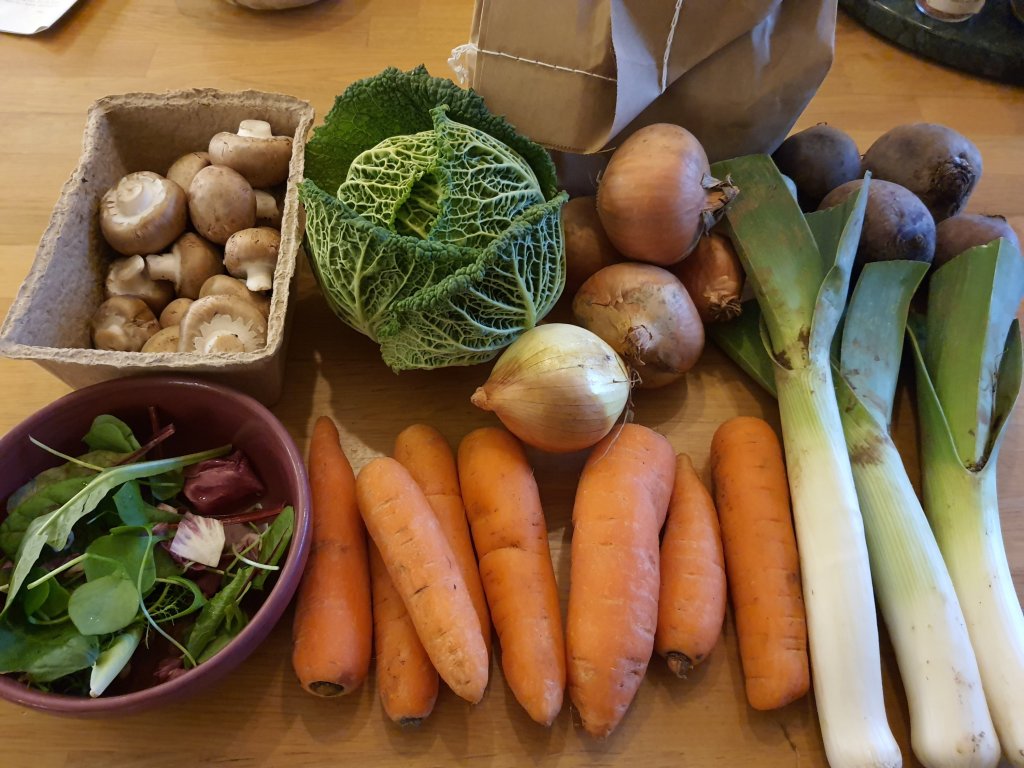
Contents of a Riverford Organic Farmers veg box

AND I have not missed a day so far this month – the whole story has all been documented on Facebook at #31vegetablechallenge – Stephanie Day Rhodes

So to summarise, since I last posted I have cooked and eaten the following vegetables: (recipe in the photo caption – although most often I modified slightly, which of you are interested is documented in the FB posts – and there are links to each Facebook post under each vegetable’s photograph)

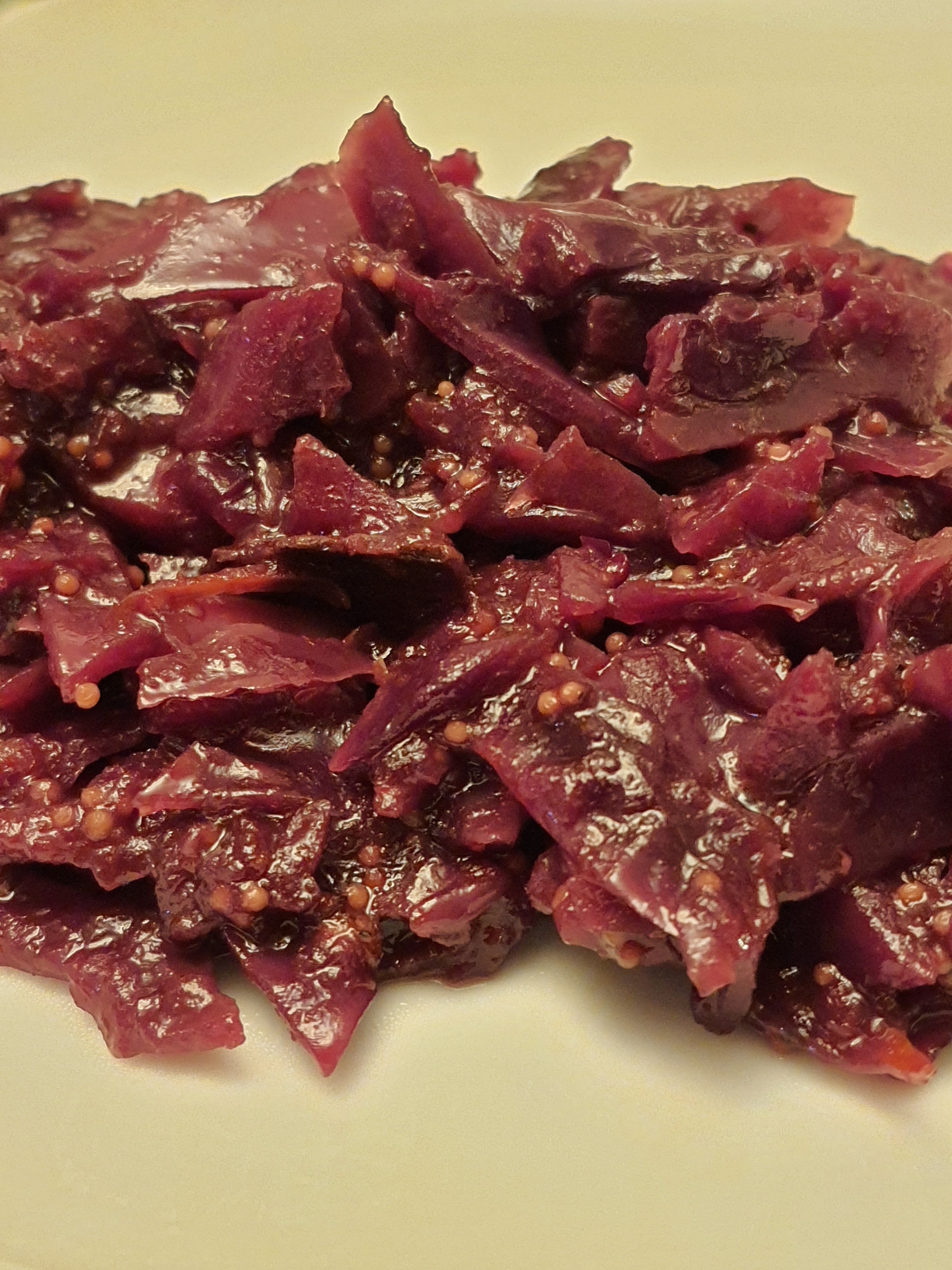
Day 11 – Red Cabbage

Day 12 – Carrot

Day 13 – Swede

Day 14 – Romano Pepper

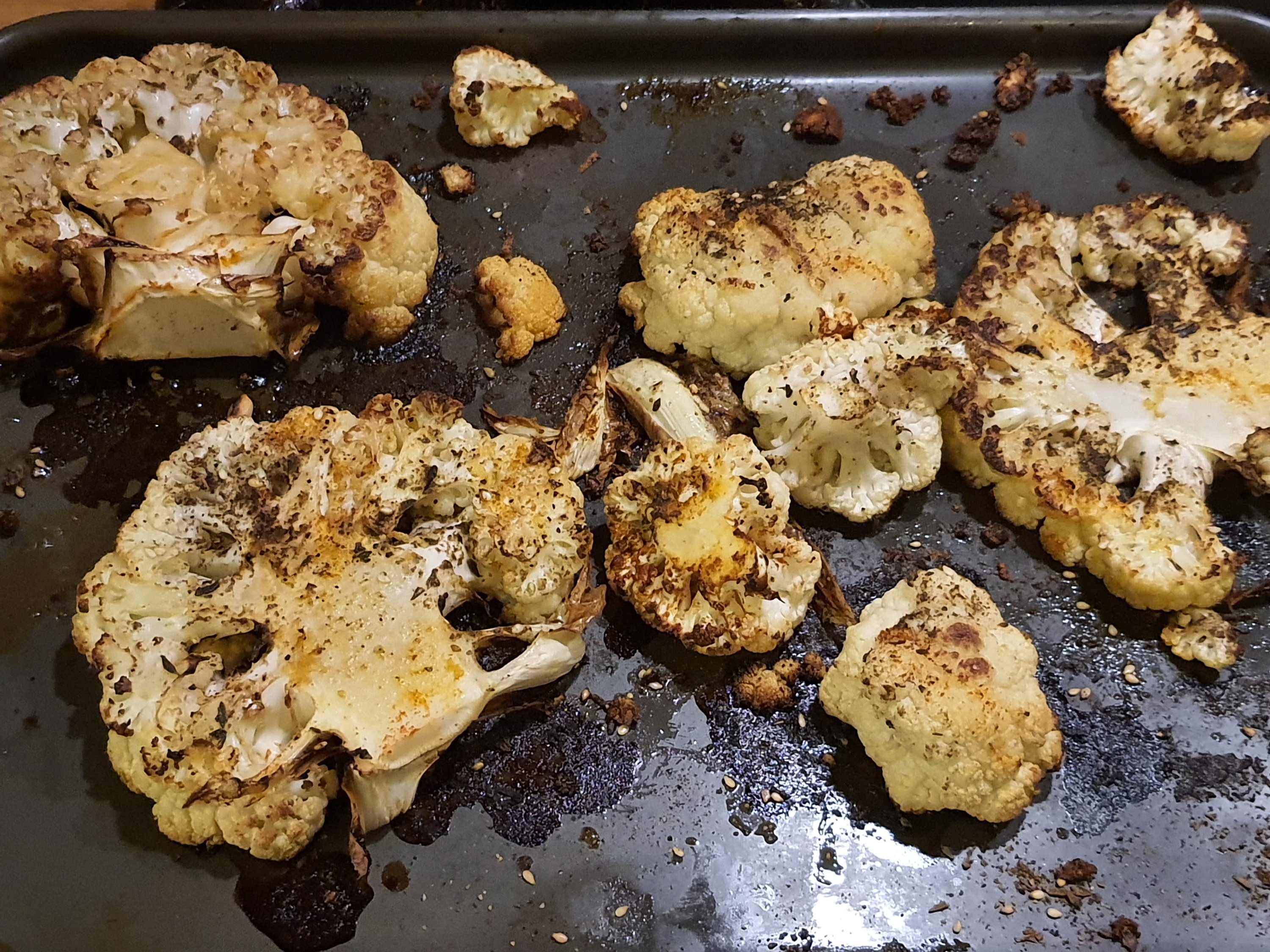
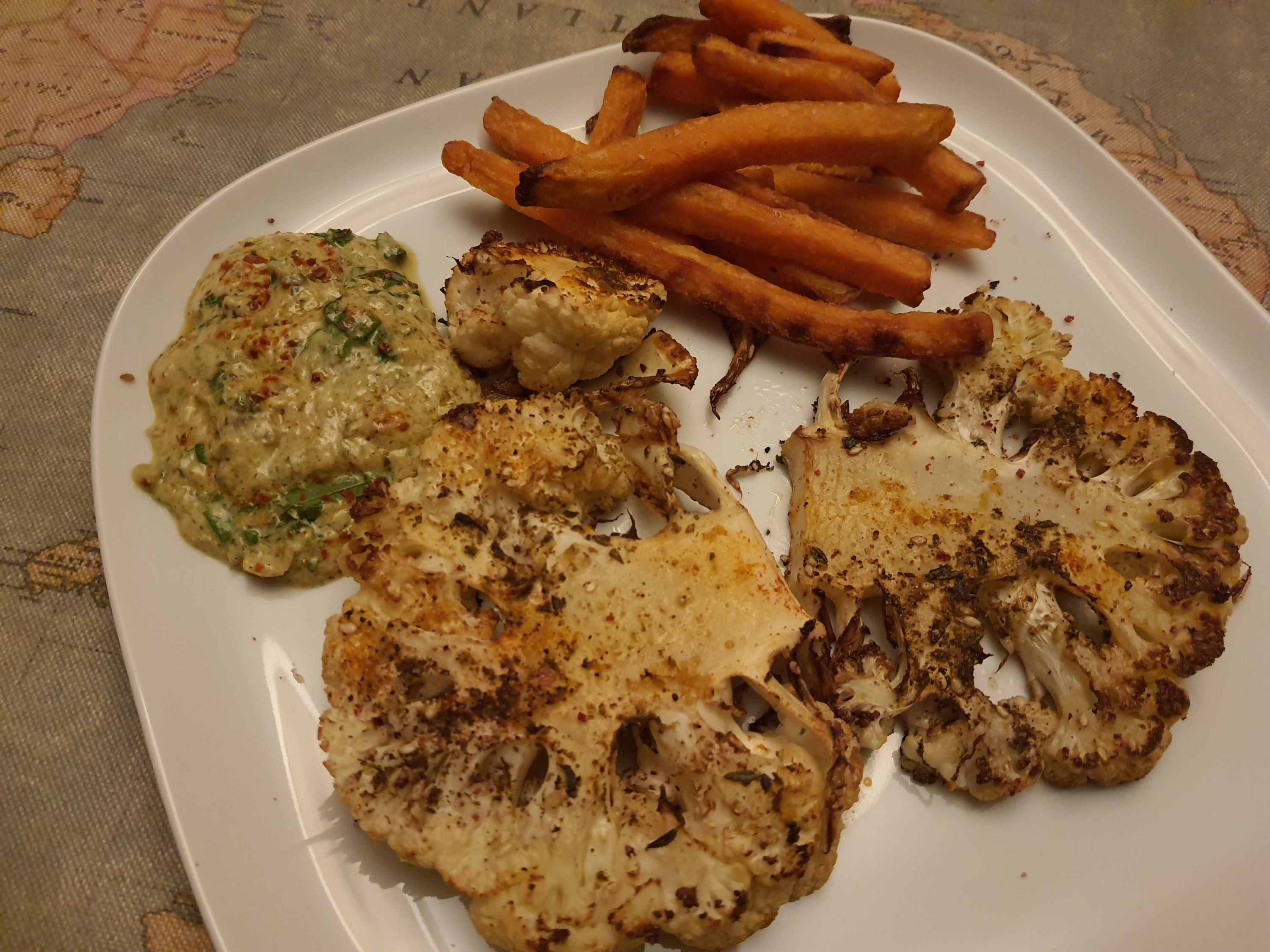
Day 15 – Cauliflower

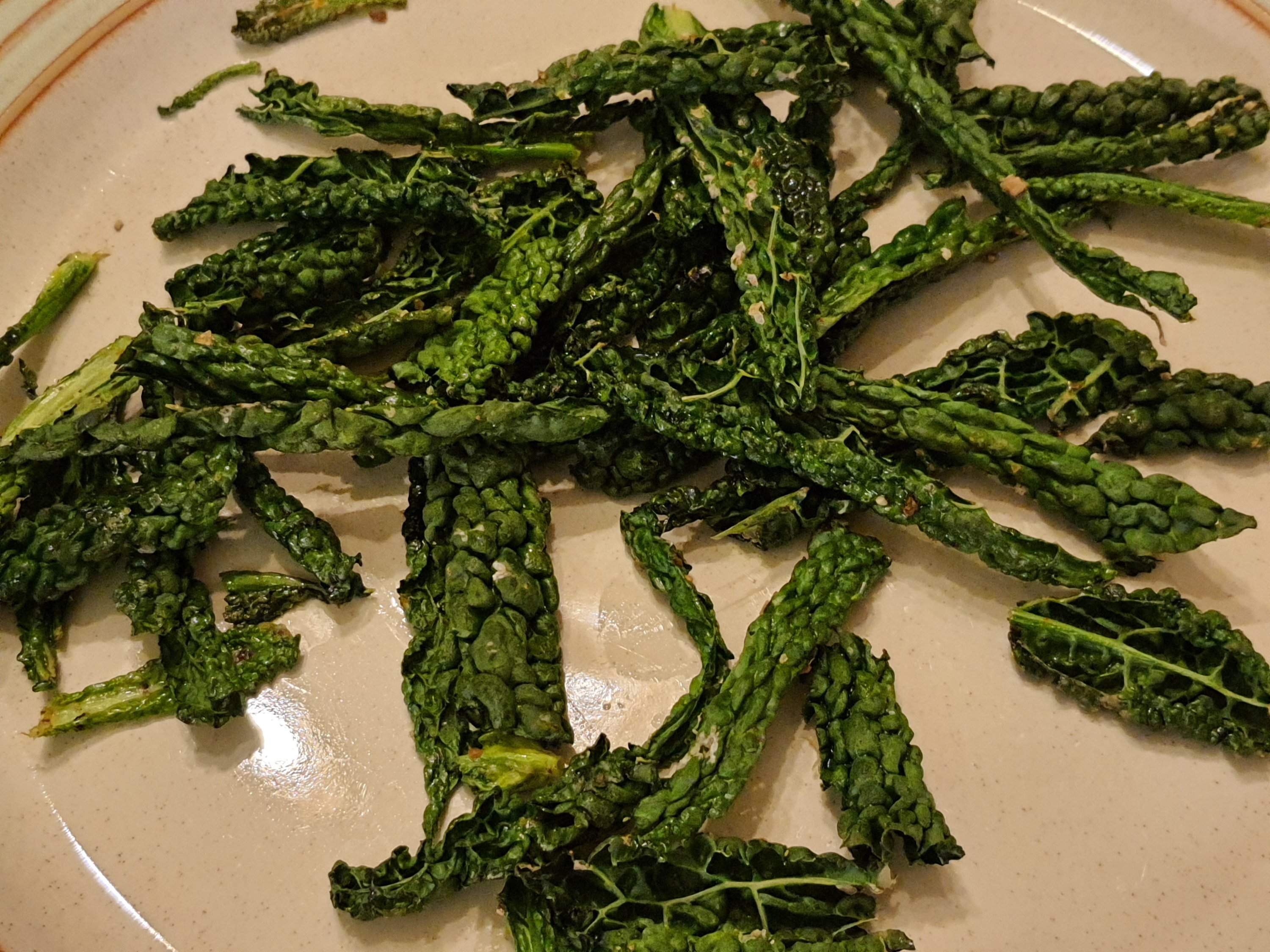
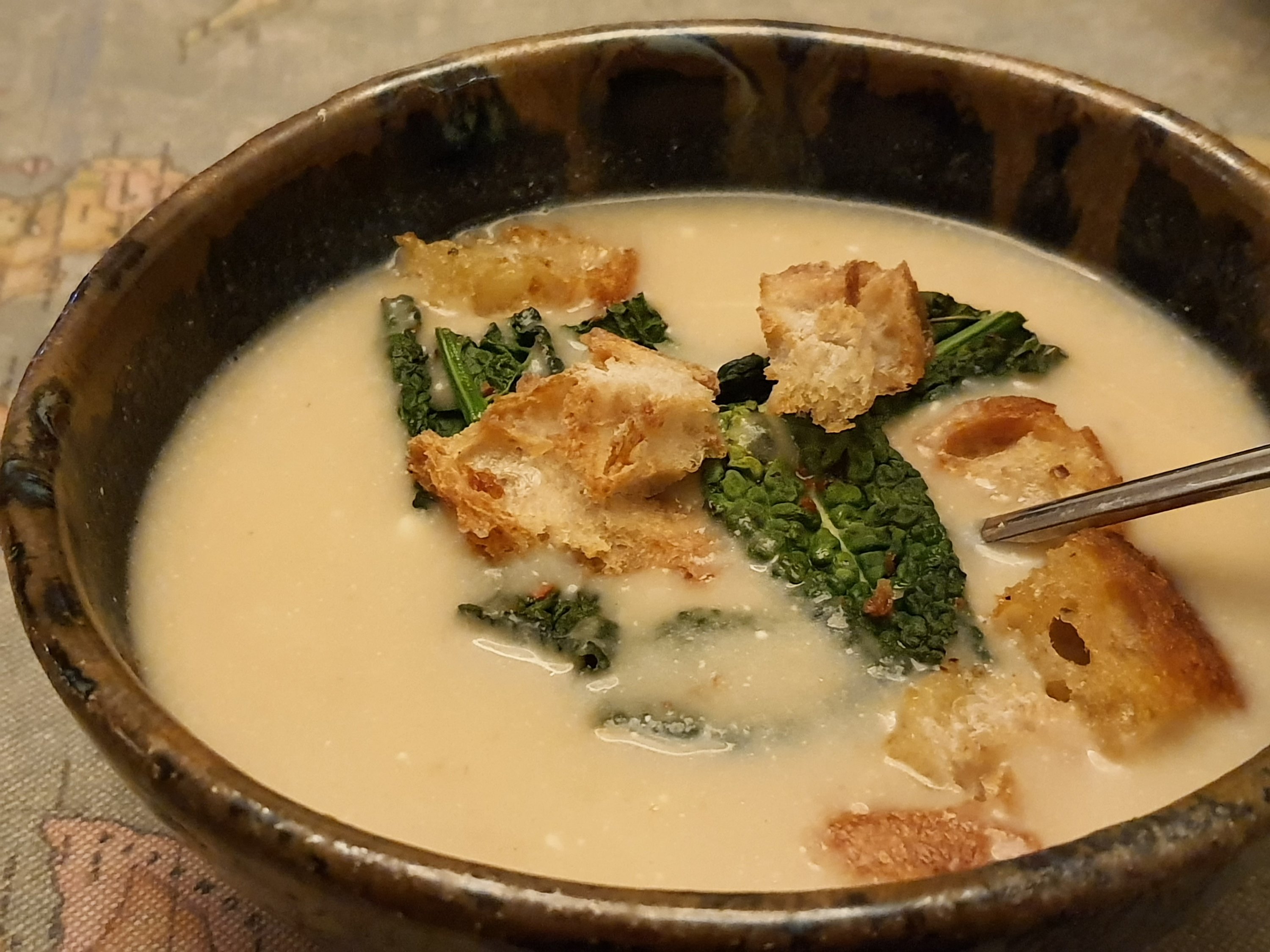
Day 16 – Cavolo Nero (Black Kale)

Day 17 – Parsnip

Day 18 – Beetroot

Day 19 – Tomato

Day 20 – Romaine Lettuce

Day 21 – Sweet Potato

Day 22 – Potato

Day 23 – Rocket

Day 24 – Savoy Cabbage

Day 25 – Leek

Day 26 – Daikon radish or Mooli

Day 27 – Cucumber

Day 28 – Jerusalem Artichokes

Day 29 ….

… I’m still debating what will be today’s vegetable. But having decided to carry on for the rest of the year with a lesser challenge – 365 different plants eaten – it feels less of a finale.

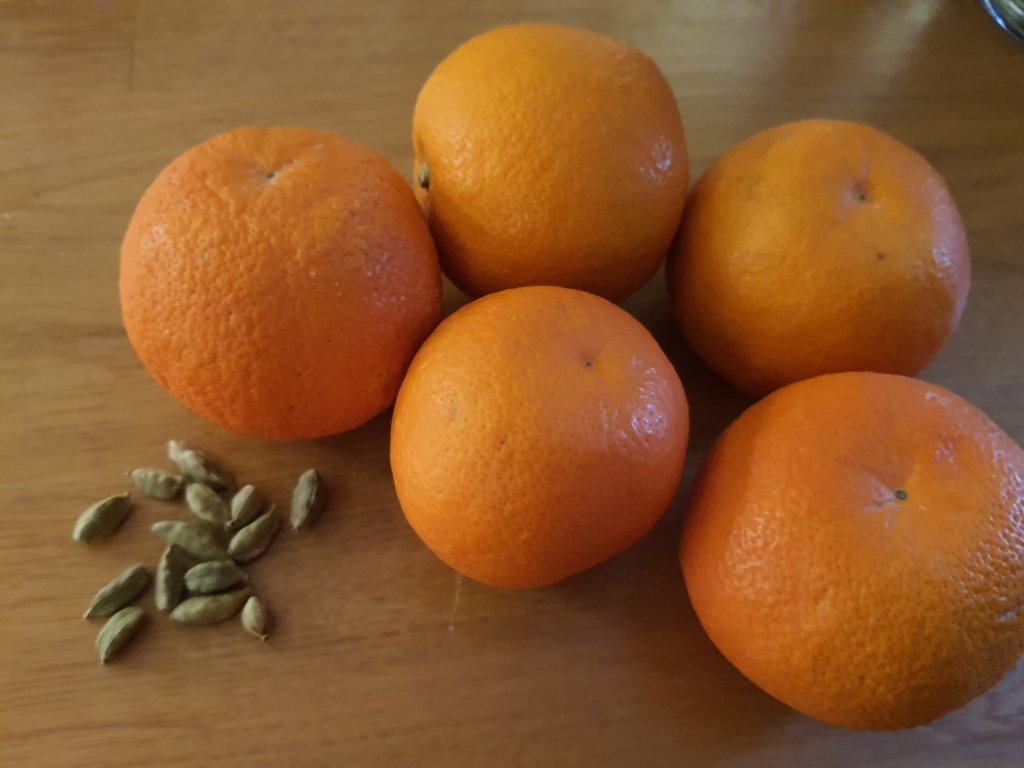
Besides, it can’t be too involved as this evening I’m planning on making my first batch of Sevile Orange and Cardamom Gin which is a recipe I’ve had my eye on for months, since I received “Sour” by Mark Diacono for my birthday in June. You have a proper seasonal wait for Seville Oranges which makes it all the more exciting.

Just need get the gin out now. The smell is amazing!

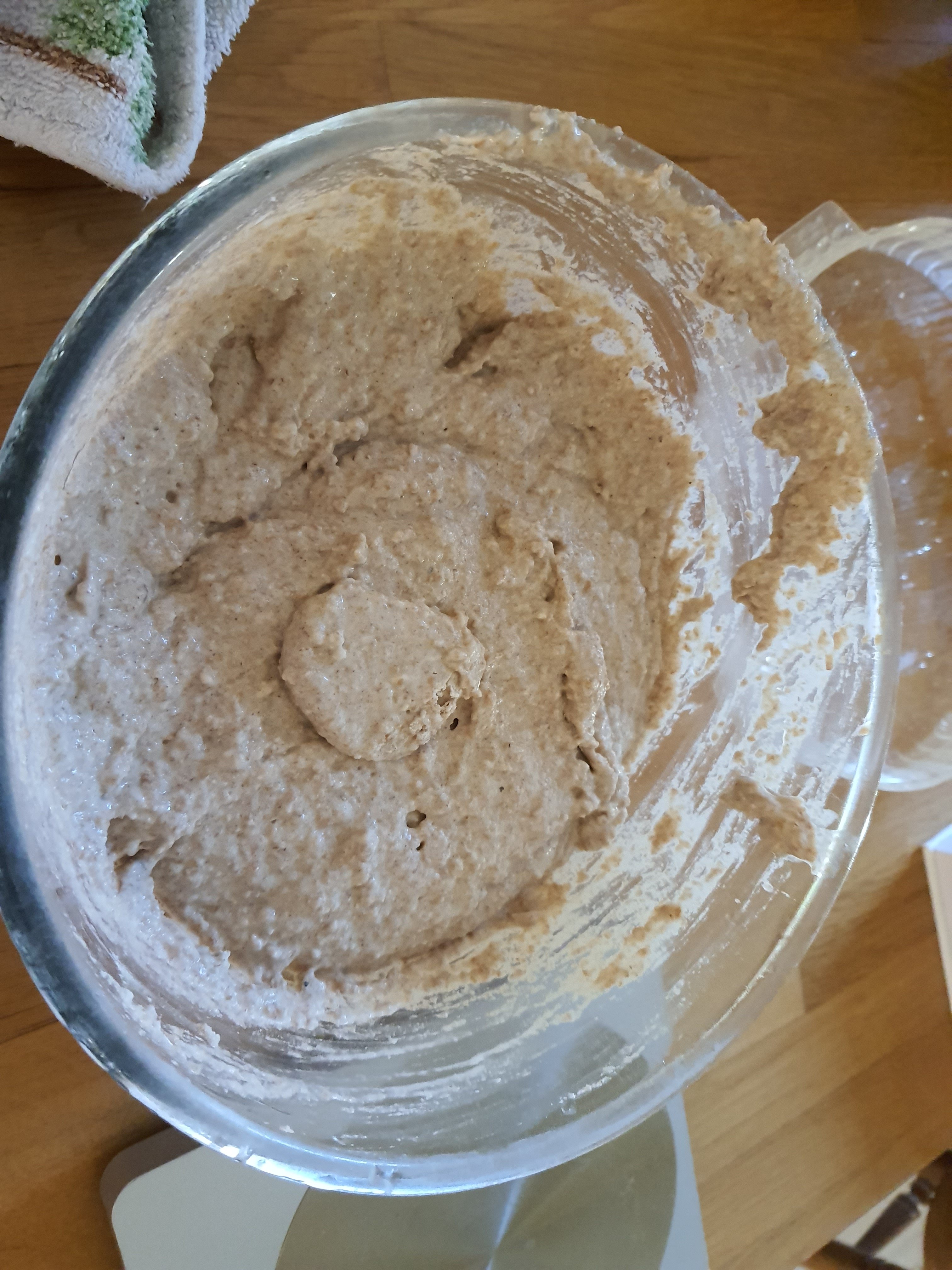
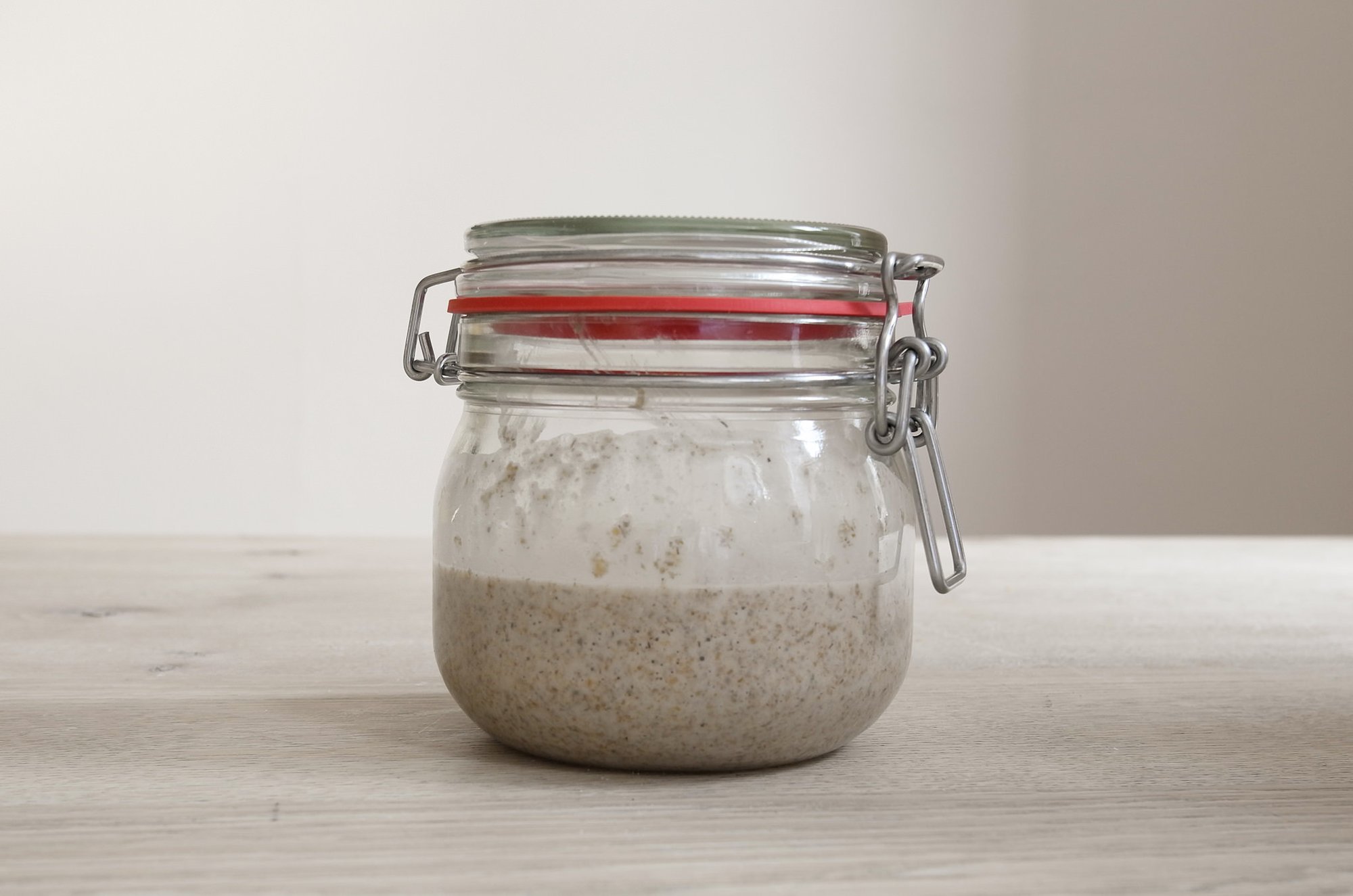
And my sourdough starter purchase from Hobbs House Bakery is hopefully getting active this afternoon. It’s part of a batch that’s been on the go for 65 years, but has sat in my fridge unopened since before Christmas. It said on the leaflet that would be OK so fingers crossed. Hobbs House Bakery bread is available online and is amazing. Worth the delivery charge if you have a freezer or eat a lot of bread and sourdough keeps very well. I decided their bread was so good, and my starter at home so unsuccessful, I’d invest in some of their magic. The older the starter the more stable it is. Here’s hoping.

Continue reading “Day 11-28 of 31 Vegetable Challenge, hope for a sourdough starter and Seville Orange and Cardamom Gin kit”

Latest research on the microbiome & Joys and Perils of a daily eating challenge.

This week Tim Spector, alongside a group of international researchers with whom he’s been collaborating, have published an article in the journal “Nature Medicine”.

Microbiome connections with host metabolism and habitual diet from 1,098 deeply phenotyped individuals

Tim is a Professor in Epidemiology and a health writer at King’s College, London. I’ve mentioned him in earlier posts and in the resource section of the blog. He is also now more widely known in the UK through his development of the COVID19 app – and the discovery that loss of smell and taste are diagnostic signs of the disease.

You can read a comprehensive summary of these latest research findings here but I’ve quoted from their summary below:

Professor Tim Spector:

“When you eat, you’re not just nourishing your body, you’re feeding the trillions of microbes that live inside your gut. However, until now we have lacked large-scale, high-resolution studies linking these outcomes to individual microbes or to the specific foods we eat. Now, for the first time, we have discovered strong associations between the makeup of an individual’s gut microbiome—more specifically, the presence or absence of “good” and “bad” species—with specific nutrients, foods, food groups, and overall dietary pattern”.

“When we look at the gut microbiome at a strain level, it’s clear that no two people have exactly the same bugs living in their gut. The unique nature of the gut microbiome, combined with the fact that each of us can experience very different blood fat and blood sugar responses after meals, means that there really is no “one-size-fits-all “best” diet that works for everyone.  The good news is that our findings point to the gut microbiome as a key target that can be modified through diet to improve our health”… “We have more control over our health and weight than we think, and are not prisoners of our genes!”

It’s very exciting stuff.  Eventually we’ll be able to take an easy test and know and understand the profile of our own gut – PREDICT is just being launched in the US.  (You have been able to have your microflora analysed for a while, but not at the genetic level of the microbes – and it had its limitations as many of them can’t be cultured outside of the gut). Most significantly, through machine learning and understanding other aspects of our personal health profile (such as BP and blood sugar management etc) we will be able to have advice about cultivating or modifying our specific microbial community.

And when it gets cheap enough and quick enough, it will revolutionise medicine. 

It’s very exciting.

Check out their website to register for their latest updates. 

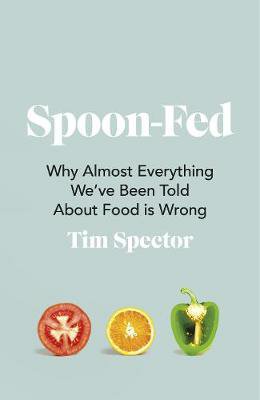
Tim Spector has also recently written another book called “SpoonFed”

“We are all bombarded with advice about what we should and shouldn’t eat, and new scientific discoveries are announced every day. Yet the more we are told about nutrition, the less we seem to understand… Tim Spector has been shocked to discover how little good evidence there is for many of our most deep-rooted ideas about food. In a series of short, myth-busting chapters, Spoon-Fed reveals why almost everything we’ve been told about food is wrong. Spector explores the scandalous lack of good science behind many medical and government food recommendations, and how the food industry holds sway over these policies and our choices”.

It wasn’t ground breaking to me, as I have been an avid follower of his work for a few years, alongside others of his ilk. But if you’ve not read widely about the (lack of) science behind “food facts” and the what motivated (often politically / economics) the advice that has stuck with us for so long.  Then I heartily recommend it. 

And alongside another of my heroes, Tim is Spector in conversation with Dr Rangan Chatterjee. #feelbetterlivemore. See it here:

https://youtu.be/xKZiI3XGmGI

The Joys and Perils of a daily blog post, documenting what I’ve eaten every day.

Joys

I’m eating and creating loads of fabulous foods; mostly new recipes. My 8 year old has tried some new foods.  I’m rediscovering all my cookery books, some which haven’t been opened for months.

Perils

Every post takes considerable time to research, before and after I’ve made and eaten the food. Days 1-11 sometimes I didn’t get to bed until 2am!!

So instead of daily, I’ve decided to blog a couple of times a week, although I am briefly documenting on a daily basis at:

Facebook #31vegetablechallenge & #365plantchallenge

AND I’ve also upped the challenge!

My intention is now to eat 365 different plants, in some form – at some point in the day, for the whole of 2021.

There’s still time if you’d like to join me in either challenge.  Still 350 days left of 2021 and 16 in January.

I’ll blog tomorrow on:  Carrots, Swede, Romano Peppers and Cauliflower.

Day 10 of 31 Vegetable Challenge

Mushrooms

https://rurallivingtoday.com/gardens/growing-mushrooms-at-home/

MUSHROOM

Agaricus bisporus

Mushrooms are the fleshy, spore-bearing fruiting body of a fungus.

I realise that mushrooms aren’t plants.  In fact, they are more like humans than plants.  “Animals and fungi share a common ancestor and branched away from plants at some point about 1.1 billion years ago. It was only later that animals and fungi separated on the genealogical tree of life, making mushrooms more closely related to humans than plants.” John Staughton.

But in cooking we use them as we would a vegetable, so for the purpose of this blog they are included alongside the other culinary “vegetables”, in all their guises! 

It’s a little daunting writing about mushrooms.  People dedicate their whole life to the study of them. I’ve chosen a few facts and some recipes.  But I have to say I’m now drawn to know more and intend to read the two books listed below.  I hope you’ll find it interesting.  But for me, not only have we had two good meals, but my 8 year old son (who is really quite a restricted eater – although he is strangely drawn to bitter and sour flavours) is engaged and encouraging of my “31 Vegetable Challenge”, came with me to the greengrocer, choose all the mushrooms we bought and then helped me cook and then ate some chestnut mushrooms for the first time.  He loved them and has eaten further times since.  Mushrooms and omlette – two lockdown food successes in our house.  And worth the time spent planning a menu and writing this blog!

The Agaricus bisporus is actually the most widely cultivated mushroom, the white button mushroom is its most common form  – and seen across the world. The word “mushroom” is most often applied to those fungi that have a stem (stipe), a cap (pileus), and gills (lamellae) on the underside of the cap.  However the culinary “mushroom” also describes a variety of other gilled fungi, with or without stems, therefore the term ” “mushroom” is also used to describe the fleshy fruiting bodies of some Ascomycota (such as morels, truffles or the lobster mushroom).

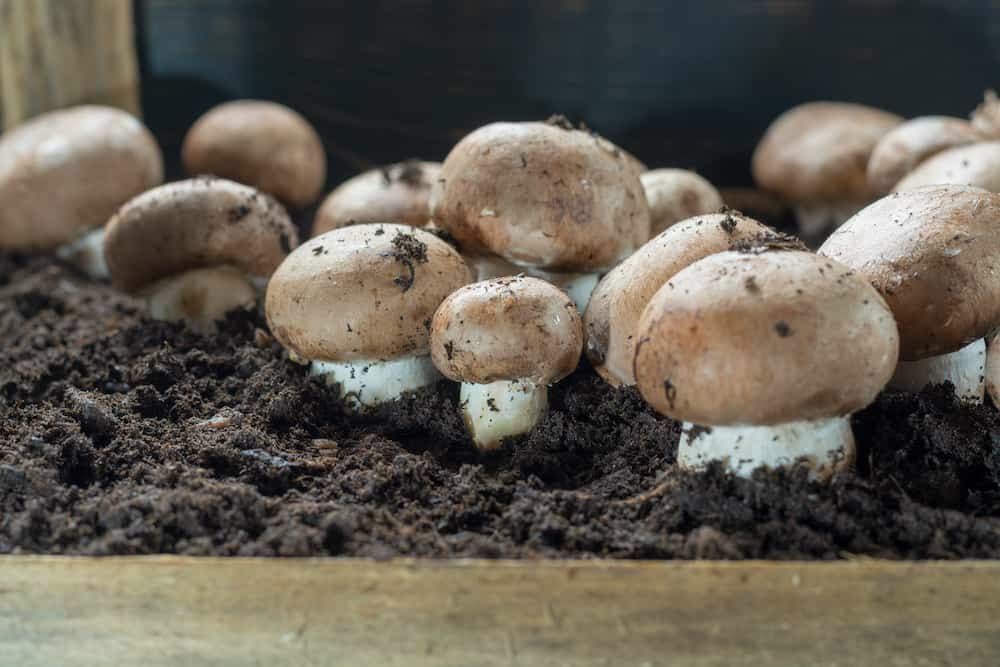
Commerially mushrooms are often grown in the dark (sometimes in caves and in recent times frequently with UV light to increase the level of Vitamin D within the mushroom), but there are also many locally grown or wild foraged mushrooms available to buy, which grew outdoors in soil or on another food source.  You can even find your own mushroom inoculated log kits to grow your own mushrooms at home. 

“Earthy and savoury, mushrooms add a special depth and heartiness to your dishes”. Riverford A-Z veg.

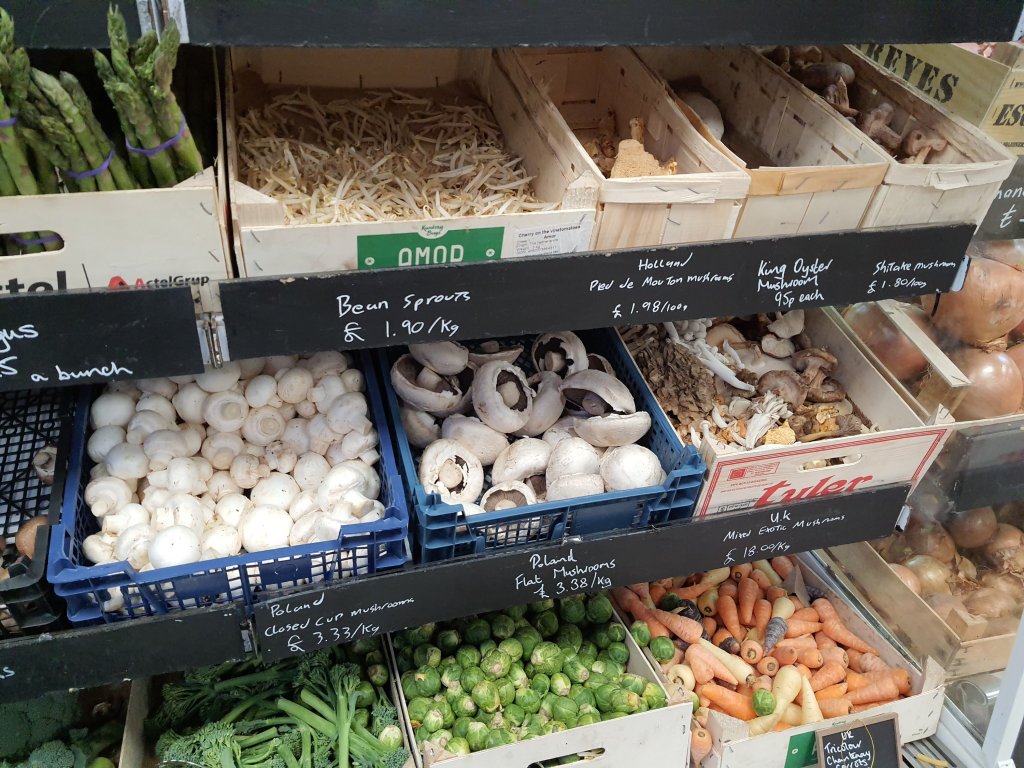
Mushrooms on sale at Hoole Food Market, Chester

An eclectic mix of mushroom information

  • According to an ancient Greek myth, Perseus on his way back from a journey, to drink the water of a river, used the “hat” of a mushroom. For that reason he founded a colony in that same spot and called it Mycene, which is the Greek word for “mushroom”.
  • Hieroglyphics found in the tombs of the Pharaohs suggest that the ancient Egyptians believed the mushroom to be “the plant of immortality.” The mushroom’s distinct flavor so intoxicated these demi-gods, that they decreed mushrooms to be food for royalty alone, and prohibited any commoner from handling the delicacies.
  • Just as animals, mushrooms take in oxygen for their metabolism and “exhale” carbon dioxide as a waste product. And as in humans, they can produce Vitamin D upon exposure to sunlight and UV radiation.
  • Mushrooms grow from spores, not seeds, and a single mature mushroom will drop as many as 16 billion spores.
  • All mushrooms are fungi but not all fungi are mushrooms.  And not all mushrooms are edible.  The Kingdom of Fungi also includes yeasts, slime molds, rusts and several other types of related organisms. There are an estimated 1.5 to 2 million species of fungi on planet Earth, of which only about 80,000 have been properly identified.  Theoretically, there are 6 species of fungi for every 1 species of green plants.
  • The study of mushrooms is Mycology, the person who studies mushrooms is a Mycologist while the person who loves and eats Mushrooms is a Mycophagist. The production of food from fungi is called Fungicultutre.
  • Button mushrooms are actually the same as Portobello mushrooms at just a different stage of maturity: button mushrooms, which are white, are the toddlers; cremini mushrooms, which are brown, are the teenagers; and portobellos, which are brown and much larger versions of their younger selves, are the adults.
Mushrooms from the tombs. https://commons.m.wikimedia.org/wiki/File:Documentation_of_mushroom_in_ancient_Egypt.jpg

Mushrooms, the taste of unami.

Umami is the fifth taste (unami alongside the sweet, sour, bitter, and salty taste buds). Scientists identified umami taste receptors on the human tongue in 2002; umami is an inherent taste universally enjoyed.  Umami, which literally means “essence of deliciousness” in Japanese, was actually first named by Japanese scientist Dr. Kikunae Ikeda in 1908, while enjoying a bowl of kelp broth called kombu dashi.

Unami has also been described as ‘brothy’ or ‘meaty’ – or ‘true savoriness’.

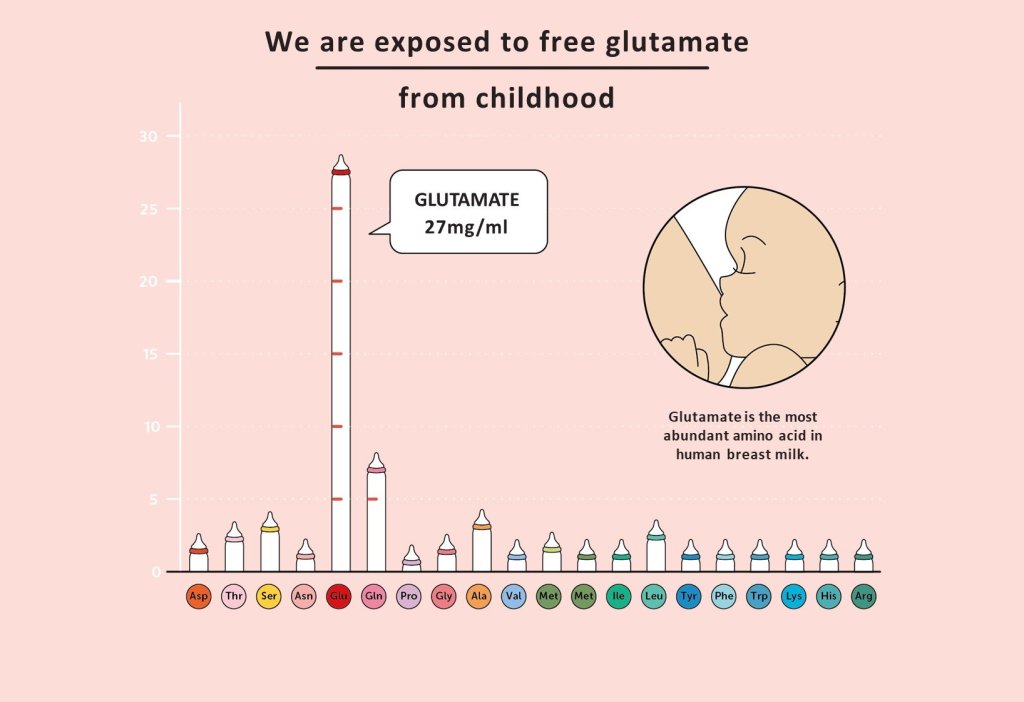
When you taste umami, you taste the amino acid glutamate – part of a string of amino acids found in all proteins. Foods that contain a high level of glutamate include: mushrooms, aged cheese (eg Parmesan), marmite, tomatoes, seaweed, fermented foods such as miso or soy sauce and roasted meats – to name a few. 

“Umami is everywhere; it’s not some crazy Japanese idea.  You love umami and you crave umami, whether you know it or not. The foods you love, the foods that you think of as comfort foods, more often than not they are loaded with umami.” David Kasabian, “The Fifth Taste: Cooking with Umami”.

The use of glutamate in cooking has a long history. Fermented fish sauces, which are rich in glutamate, were used widely in ancient Rome. Glutamate-rich fermented barley sauces were used in medieval Byzantine and Arab cuisine, and fermented fish sauces and soy sauces have histories going back to the third century in China.

Interestingly the amniotic fluid surrounding a developing baby in utero (and by around week 16, the growing baby has developed taste receptors which allow it to sample various tastes from the mother’s amniotic fluid) as well as breast milk, both have very high levels of glutamate. So unami is significant flavour compound experienced from the very beginning!

https://www.ajinomoto.com/aboutus/umami/umami-and-infants

Mushrooms have a high level of glutamate. Shitake mushrooms containing one of the highest levels, especially in their dried form  at 1060mg/100g whilst common Mushrooms (agaricus bisporus), the most cultivated fungus in the world, contain 40-110 mg/100g. The umami scores in foods are found to increase due to maturation. Tomatoes and cured ham are typical of this. Due to maturation, the glutamate in tomatoes increases and reaches its highest when tomatoes turn very red. https://www.umamiinfo.com/richfood/foodstuff/mushroom.html

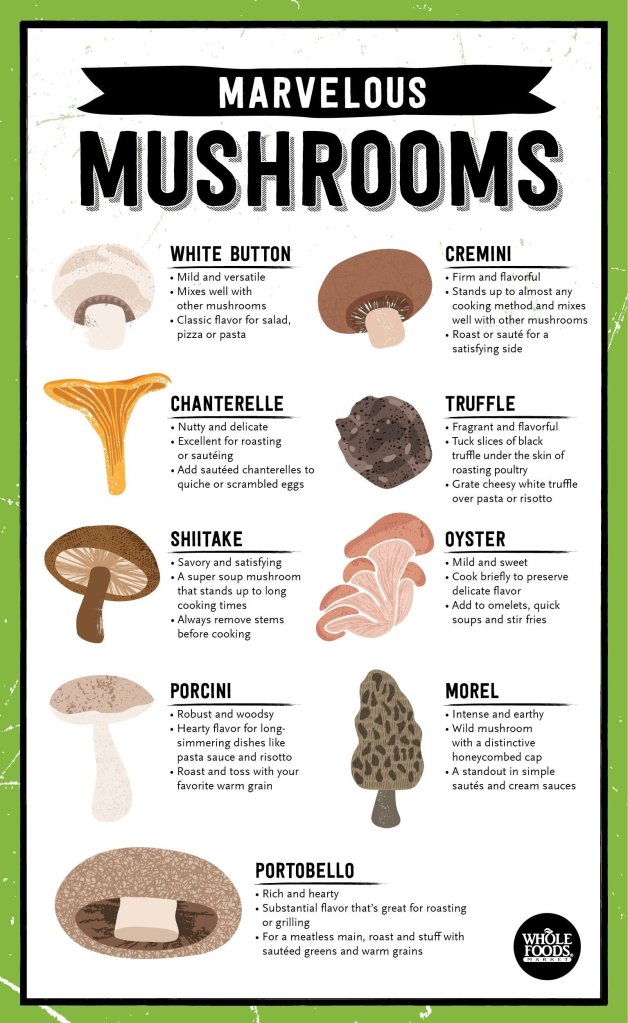
15 Different mushrooms and how to cook with them

This chart comes from an excellent webpage, highlighted above, written by Peter Basildon, with some great information and photographs to identify what you have just bought at the shop!

15 Different mushrooms and how to cook with them by Peter Basildon in Fine Dining Lovers

Recipes

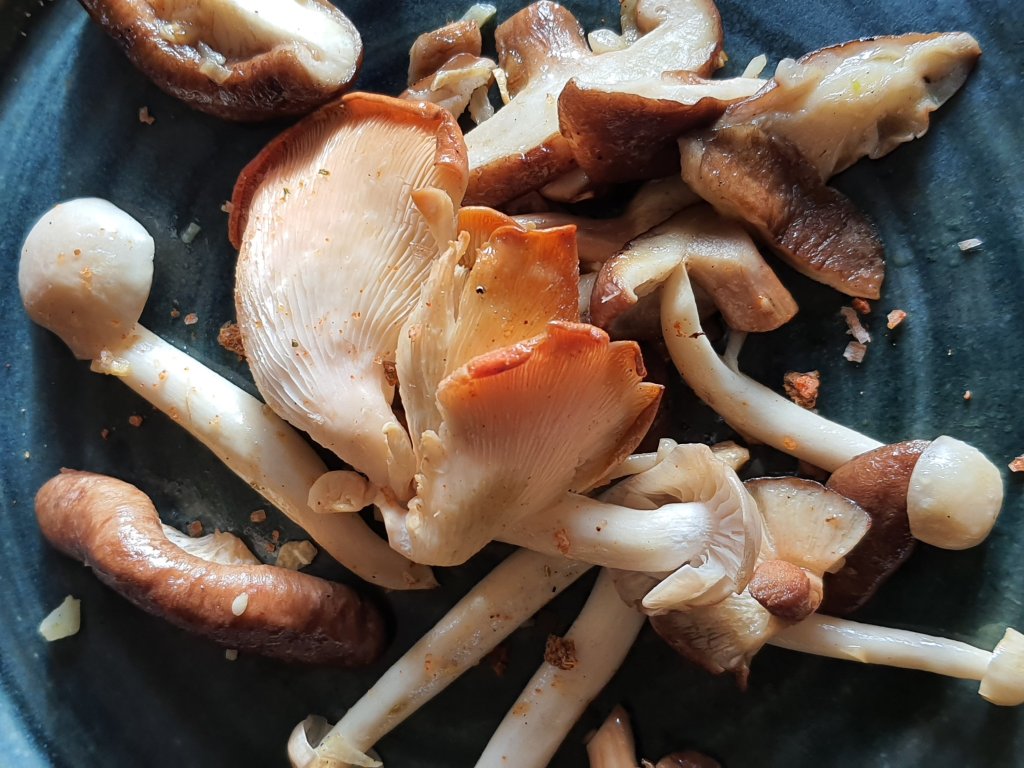
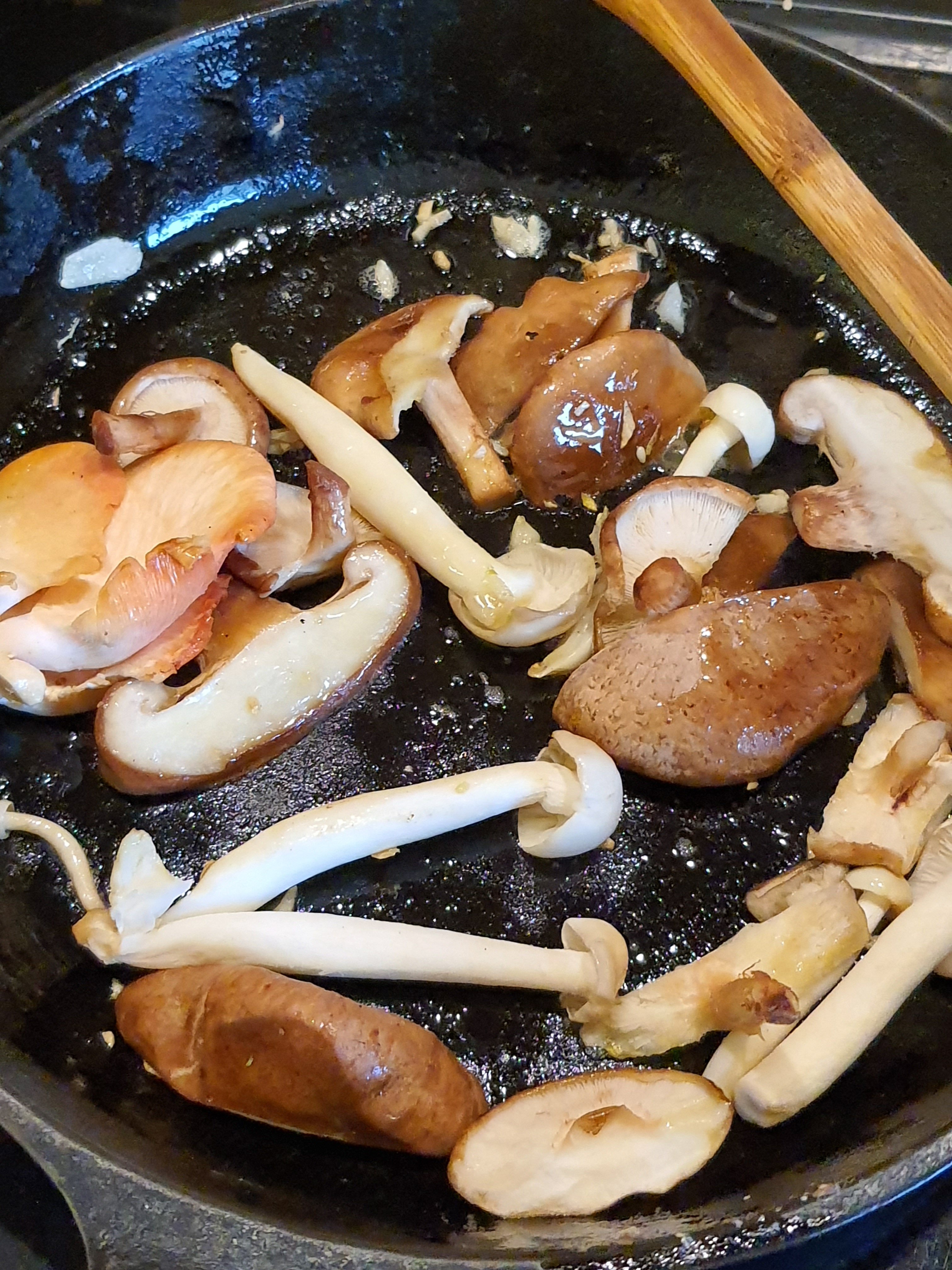
Stir fried mixed exotic mushrooms, in butter and garlic

The simplest and quickest of lunches. Or to snack on with a cold glass of tonic water whilst another other mushroom dish is cooking!

Heat oil in pan and add chopped garlic.  Fry for a minute.  Add mushrooms and a little butter and black pepper to taste, possibly thyme.  Fry, turning carefully – i have wooden tongs which I’m very pleased with) until cooked to your liking.  Sprinkle with small amount of salt to taste.

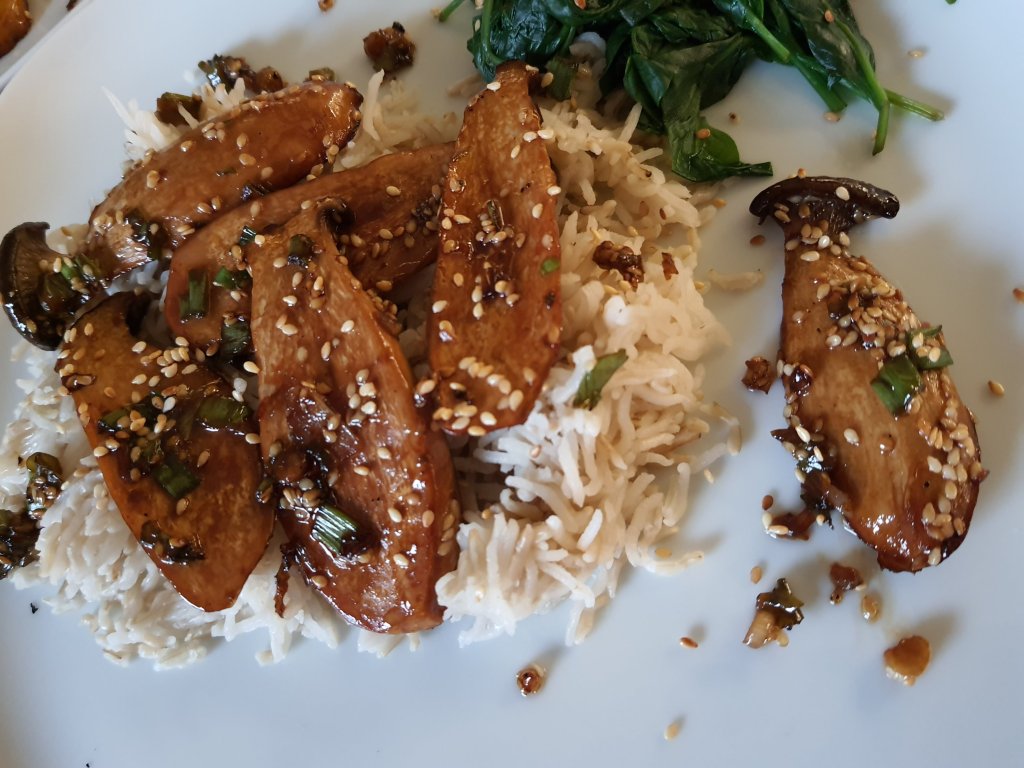
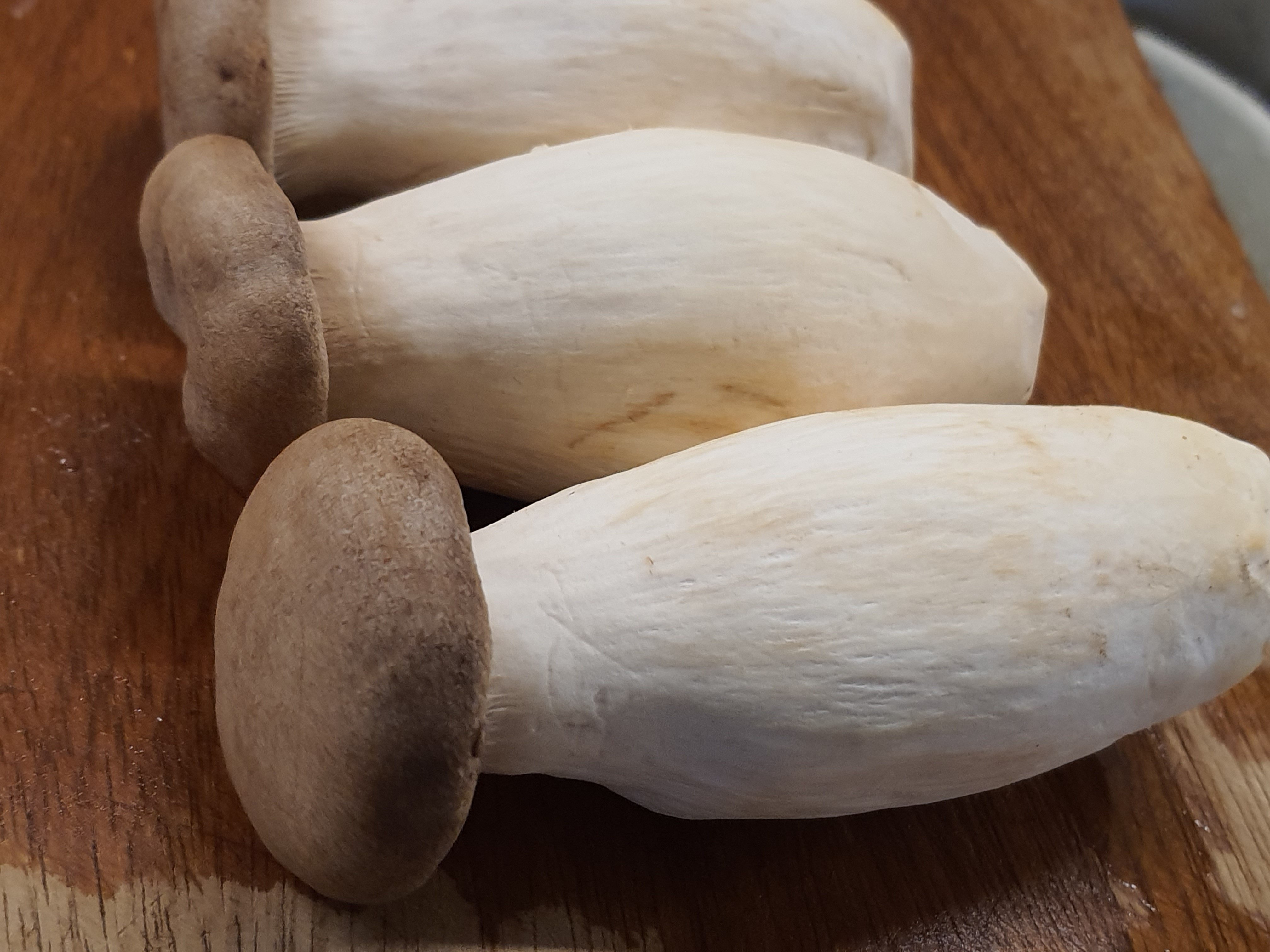
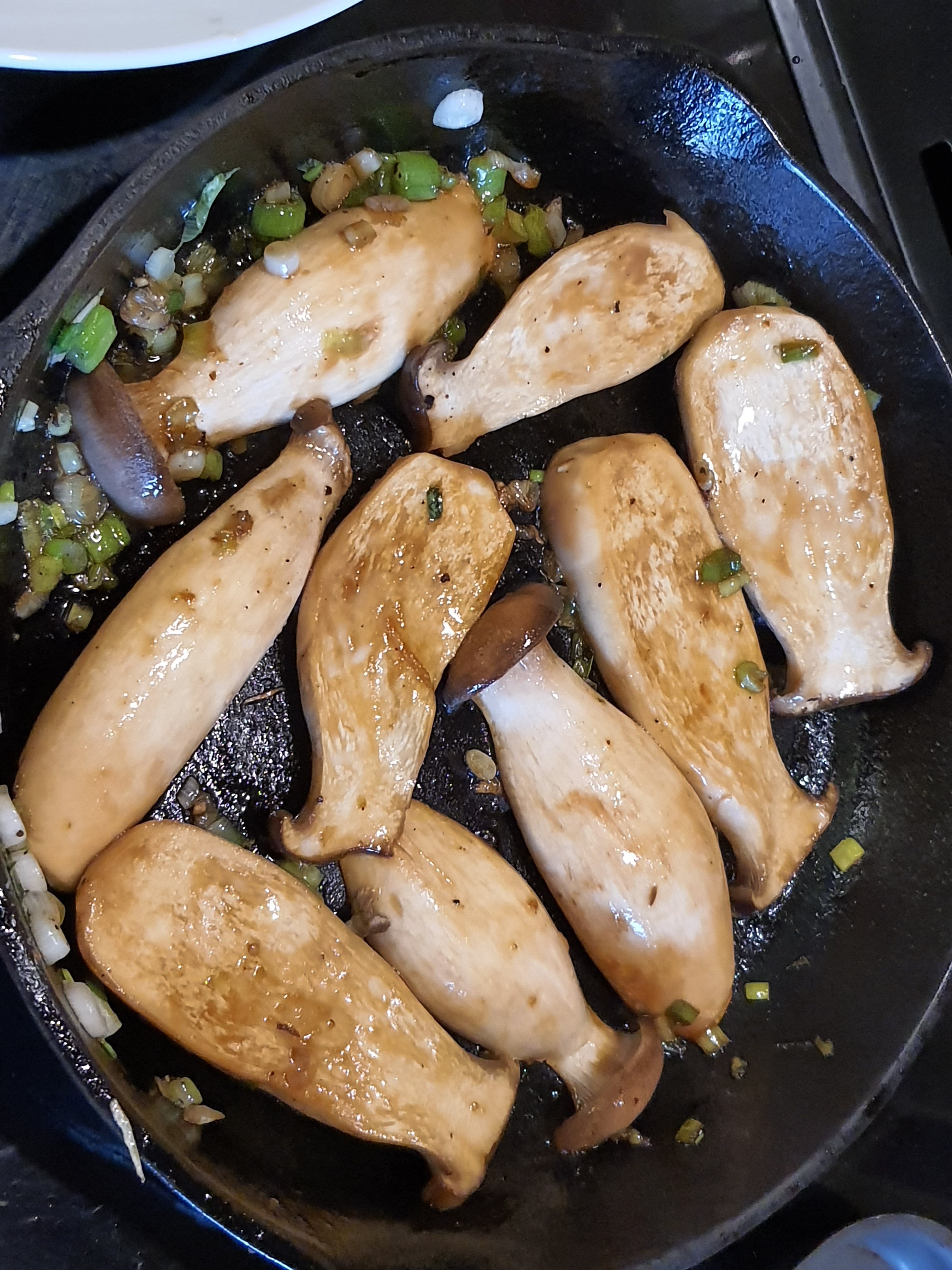
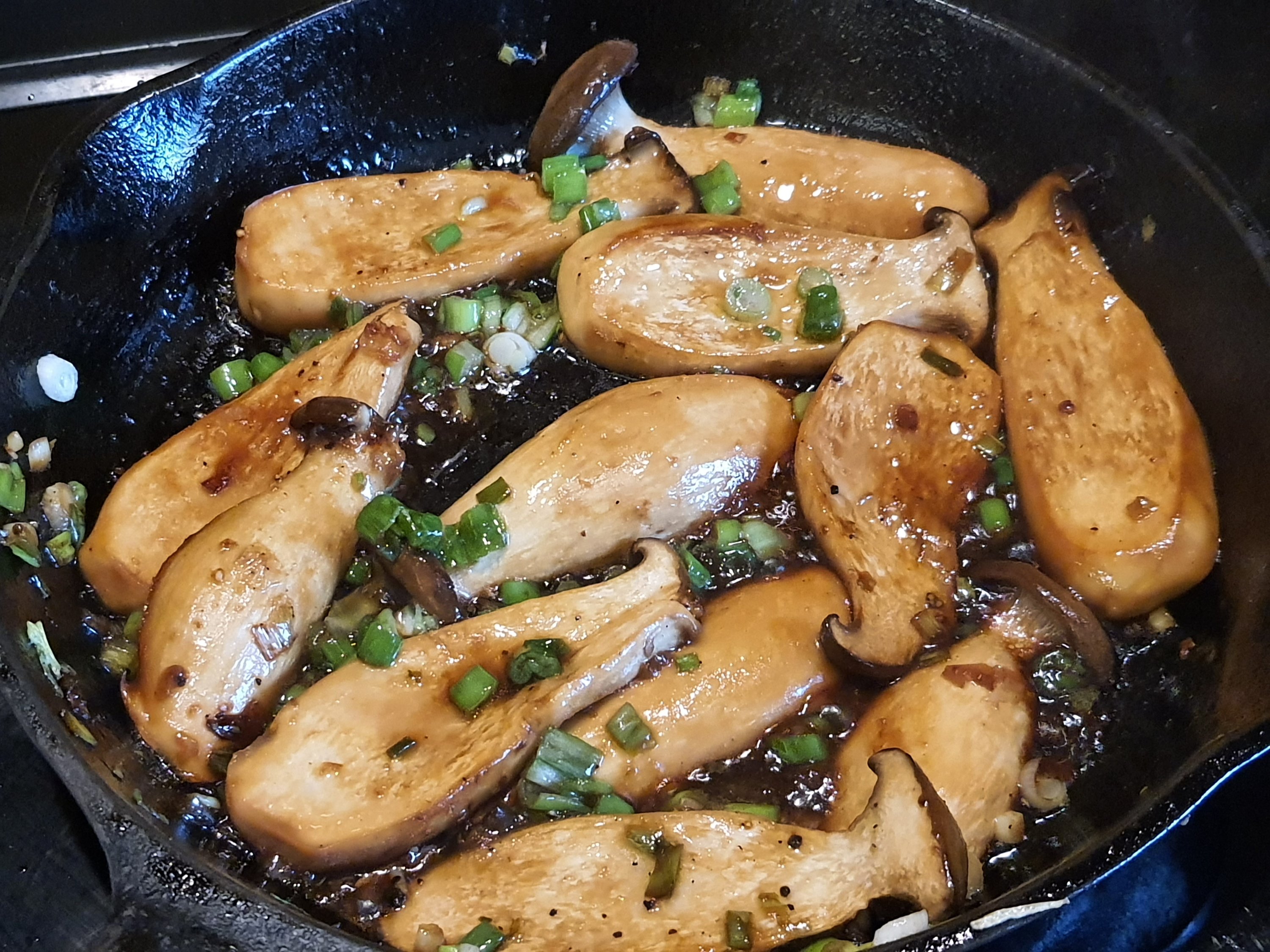
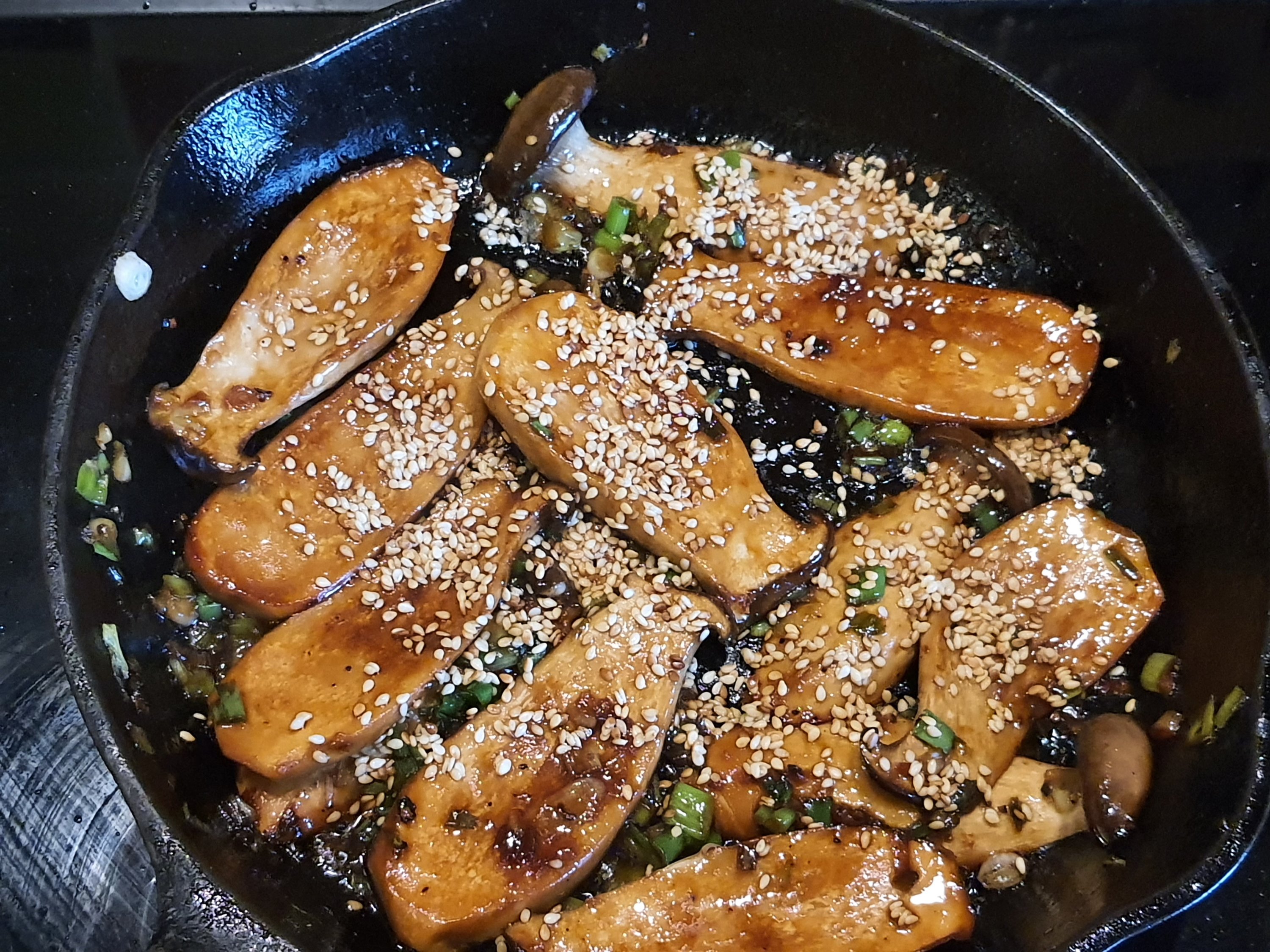
Teriyaki King Oyster Mushroons

These were what we had for lunch today and they were completely delicious.  Really meaty but entirely vegan. That’s the magic of unami. The recipe is web-linked from the title above.

I used a shop bought teriyaki sauce.  I wish I’d been a little more patient and fried a little longer and that I had bought black sesame seeds and jasmine rice for a more authentic experience – but it was still very tasty and I’ll make them again soon.  

In fact, so far so good  – that’s ten of ten days of new recipes and I’d happily make them all again.

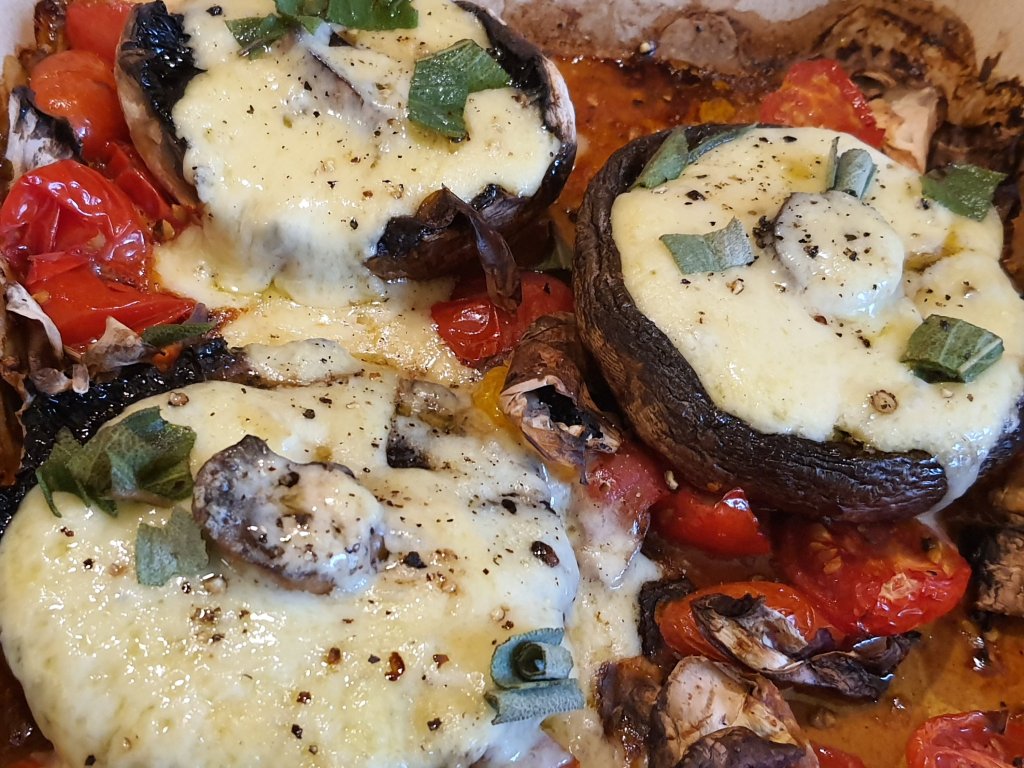
Baked Garlicky Mushrooms

Lunch a few days ago.  I peeled 2 and didn’t the other. Interestingly the peeled one was more moist and flavoursome, as it absorbed the tomato juices.

Ingredients (serves

  • 4 cloves of garlic
  • bunch of fresh sage
  • 350 g ripe mixed-colour cherry tomatoes
  • 4 large portobello mushrooms
  • 40 g Cheddar cheese (I used Lanacshire)

Method

  1. Preheat the oven to 200ºC/400ºF/gas 6.
  2. Peel and very finely slice the garlic. Pick the sage leaves. Halve the cherry tomatoes.
  3. Peel the mushrooms, reserving the peel. Place it all (peel included) in a 25cm x 30cm roasting tray and drizzle with 1 tablespoon each of olive oil and red wine vinegar. Add a pinch of sea salt and black pepper and toss together.
  4. Pick out 12 perfect garlic slices and sage leaves for later, and sit the mushrooms stalk side up on the top. Bake for 10 minutes.
  5. Remove the tray from the oven, crumble the cheese into the mushroom cups and sprinkle over the reserved garlic and sage.
  6. Return to the oven for 15 more minutes, or until the cheese is melted and everything’s golden, then dish up.

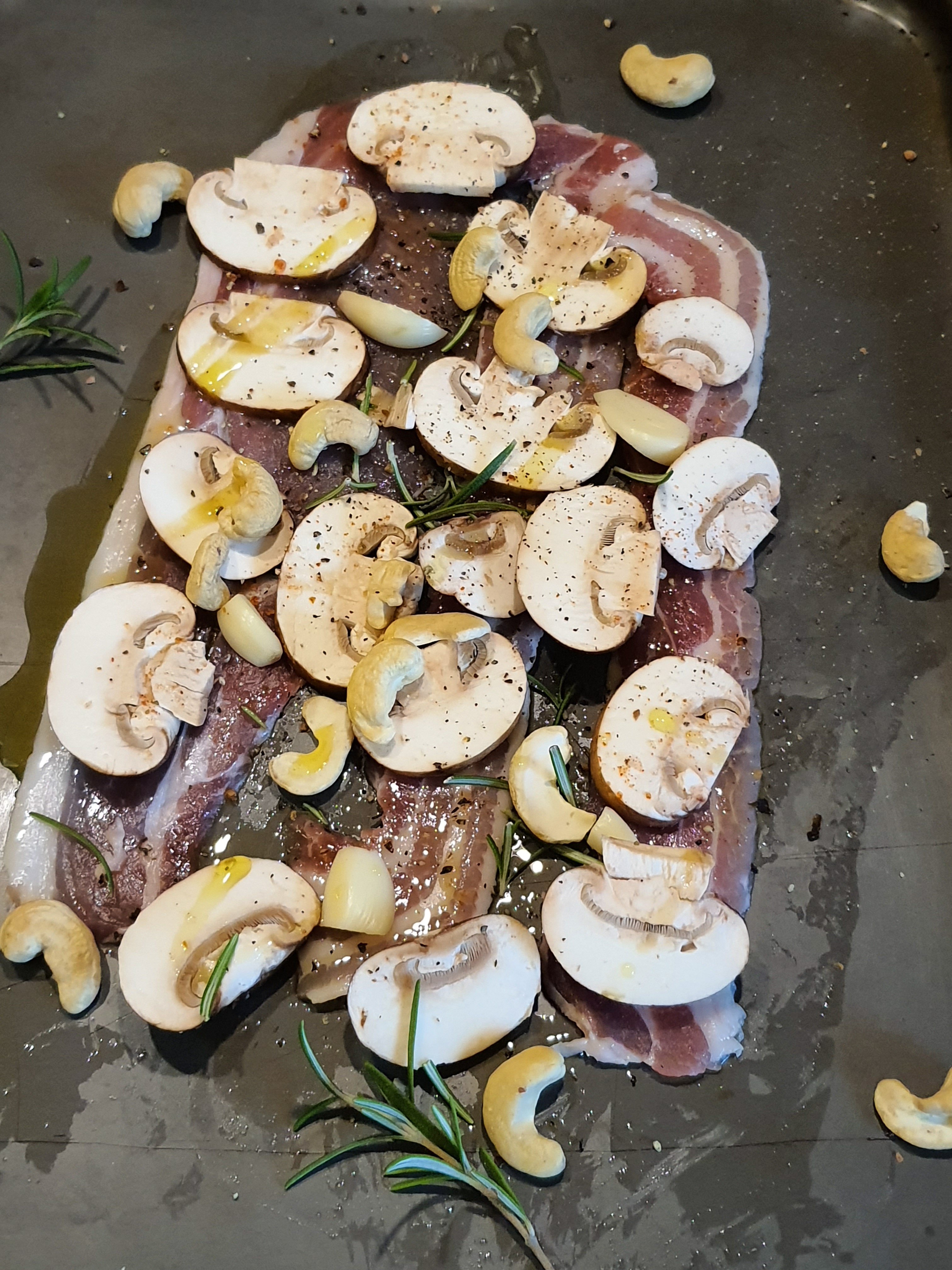
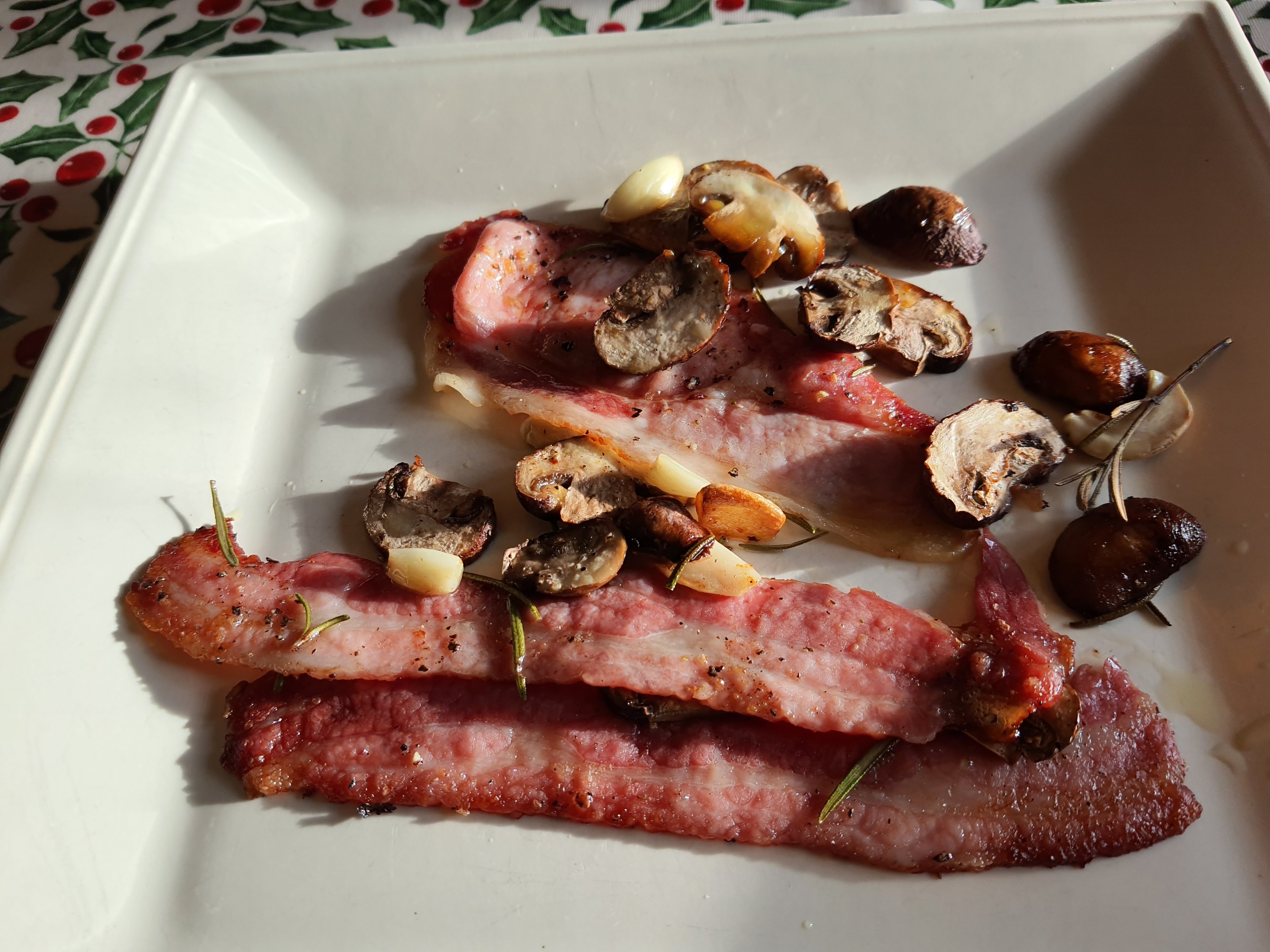
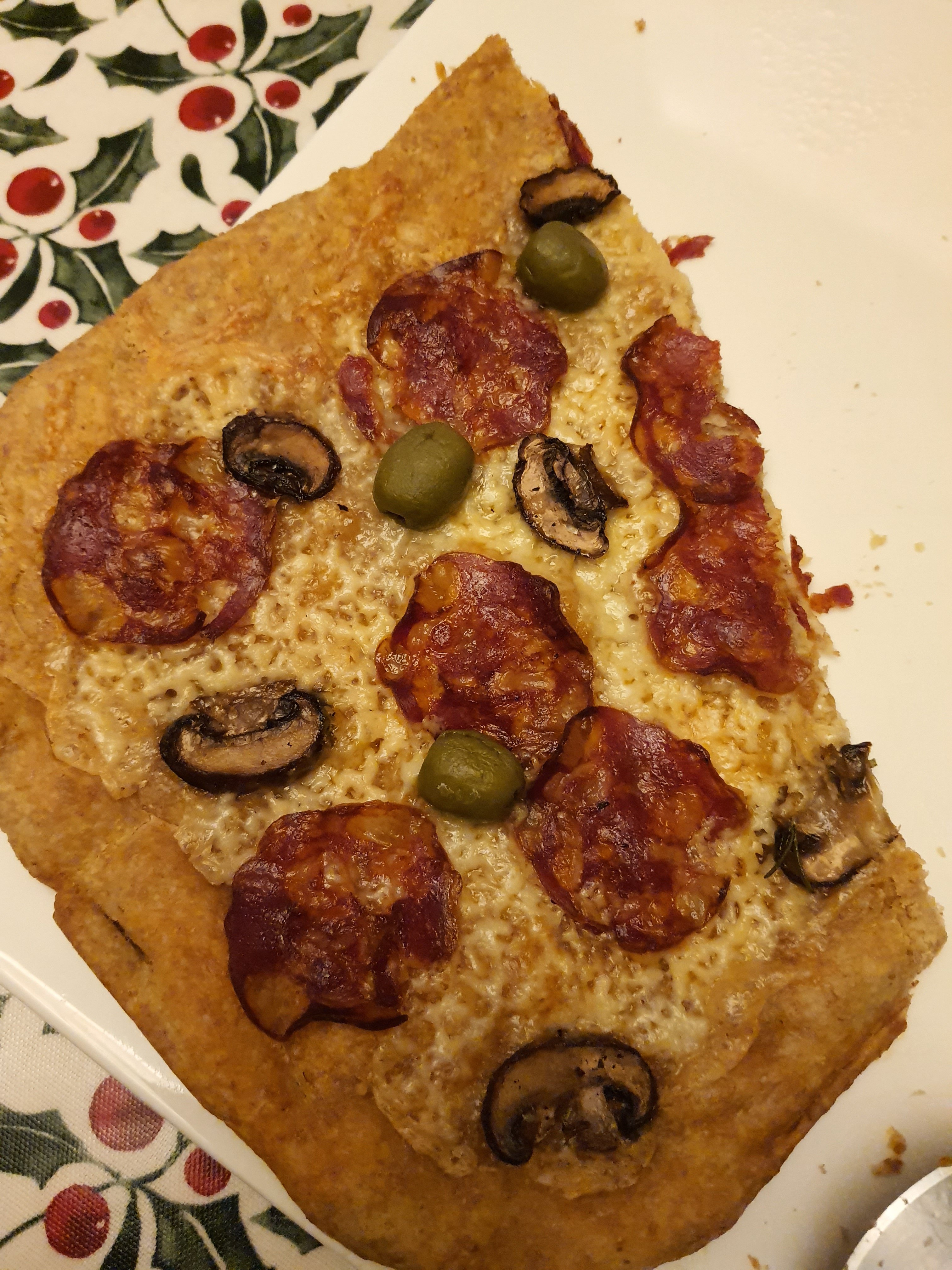
Baked mushroom … on a pizza with truffle oil or on bacon with garlic, cashews and rosemary

Both of these popular with my son – favourites for last week’s lockdown lunches!

Interestingly Reading

Two authors, both mycologists. About perhaps how mushrooms might change our view on the world … and maybe even save it from destruction. I shall be looking in the library for these when lockdown is over. And thirdly chapter 19 “Gathering: The Fungi,” in an excellent book, that I would highly recommend. “The Omnivore’s Dilema – A Natural History of Four Meals”, by Michael Pollan.

Mycelium Running by Paul Stamets. “A manual for the mycological rescue of the planet – growing more mushrooms may be the best thing we can do to save the environment.  Apparently Microscopic cells called “mycelium”–the fruit of which are mushrooms–recycle carbon, nitrogen, and other essential elements as they break down plant and animal debris in the creation of rich new soil. What Stamets has discovered is that we can capitalize on mycelium’s digestive power and target it to decompose toxic wastes and pollutants (mycoremediation), catch and reduce silt from streambeds and pathogens from agricultural watersheds (mycofiltration), control insect populations (mycopesticides), and generally enhance the health of our forests and gardens (mycoforestry and myco-gardening).”

And refered to by Michael Pollan, in his book How to Change Your Mind: What the New Science of Psychedelics Teaches Us About Consciousness, Dying, Addiction, Depression, and Transcendence: “Fungi constitute the most poorly understood and underappreciated kingdom of life on earth. Though indispensable to the health of the planet (as recyclers of organic matter and builders of soil), they are the victims not only of our disregard but of a deep-seated ill will, a mycophobia that Stamets deems a form of “biological racism.” Leaving aside their reputation for poisoning us, this is surprising in that we are closer, genetically speaking, to the fungal kingdom than to that of the plants. Like us, they live off the energy that plants harvest from the sun. Stamets has made it his life’s work to right this wrong, by speaking out on their behalf and by demonstrating the potential of mushrooms to solve a great many of the world’s problems”.

Entangled Life by Merlin Sheldrake: “In this captivating adventure, Sheldrake explores the spectacular and neglected world of fungi: endlessly surprising organisms that sustain nearly all living systems. They can solve problems without a brain, stretching traditional definitions of ‘intelligence’, and can manipulate animal behaviour with devastating precision. In giving us bread, alcohol and life-saving medicines, fungi have shaped human history, and their psychedelic properties, which have influenced societies since antiquity, have recently been shown to alleviate a number of mental illnesses. The ability of fungi to digest plastic, explosives, pesticides and crude oil is being harnessed in break-through technologies, and the discovery that they connect plants in underground networks, the ‘Wood Wide Web’, is transforming the way we understand ecosystems. Yet they live their lives largely out of sight, and over ninety percent of their species remain undocumented.  Entangled Life is a mind-altering journey into this hidden kingdom of life, and shows that fungi are key to understanding the planet on which we live, and the ways we think, feel and behave. The more we learn about fungi, the less makes sense without them”.

Gathering: The Fungi” Michael Pollan continues his exploration of the personal food chain, in which he attempts to prepare a meal made from ingredients he has directly and independently collected. Pollan has already shared his hunting experiences, and he now sets out into the forest to collect mushrooms. Although Pollan is a gardener, he discovers that there are many surprising differences between gardening and mushroom gathering. He also shares the unique characteristics of mushrooms…Mushroom hunting involves a great deal of mystery. For example, it is difficult to find mushrooms, and mycophiles (lovers of mushrooms) must develop an eye for finding fungus—or “get their eyes on”—before they will be able to worry about identification. In fact, finding mushrooms can be so difficult that most mushroom hunters prefer to keep their mushroom locations a secret. Pollan admits that he struggled to find a guide before Angelo Gallo agreed to take him along on a hunt for chanterelles”. https://www.enotes.com/topics/the-omnivores-dilemma/chapter-summaries/chapter-19-summary

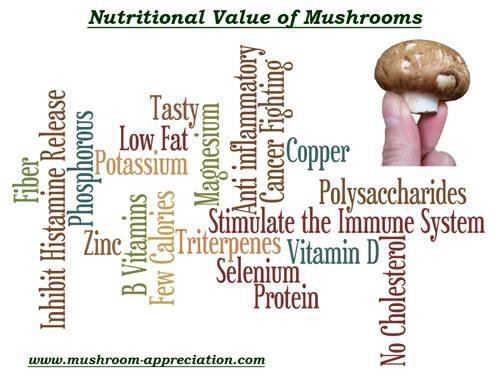
Nutritional information

Splendid chart from an interesting website, Mushroom appreciation, and of course every type of mushroom has a specific nutritional profile.

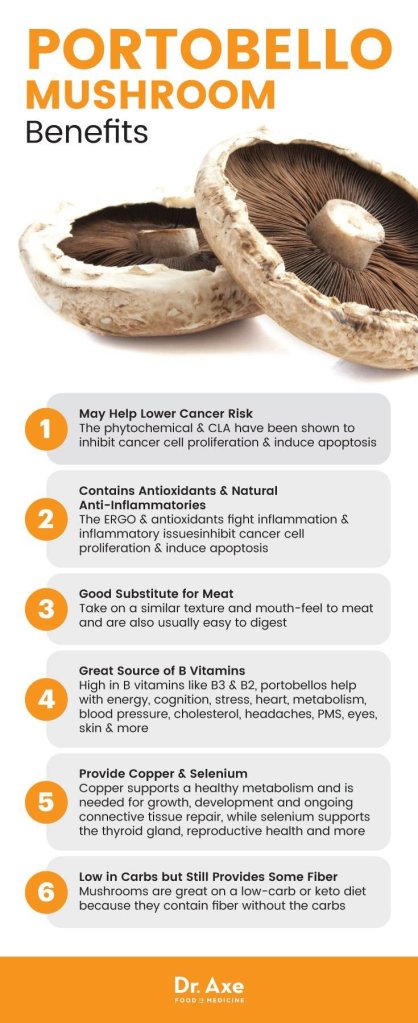
Possible health benefits

https://draxe.com/nutrition/mushroom-nutrition-benefits/

Goes well with:

Asparagus
Bacon
Beef Dairy (Butter, Cream, Cheese – in almost all its forms)
Earthy spices (Cumin, Nutmeg, Carraway, Black pepper)
Eggs – fried, scrambled, poached
Game
Garlic and onions
Herbs (Rosemary, thyme, sage, parsley, dill, chervil. Chives and coriander make a perfect garnish.)
Lemon – a small squeeze is the perfect finish
Asian flavourings (Miso, soy, chilli)
Nuts (Hazelnuts, Walnuts)
Potatoes
Toast

SOURCE:  https://www.sciencekids.co.nz/sciencefacts/food/mushrooms.html#:~:text=A single Portabella mushroom can,meat” of the vegetable world.
https://www.anticorestaurant.com/10-mushroom-fun-facts/
https://mobile-cuisine.com/did-you-know/mushroom-fun-facts/
http://www.foodreference.com/html/a-mushrooms-ff0408.html
http://www.thepretendchef.com/mushroom-health-benefits-facts/0i
https://www.bbcgoodfood.com/howto/guide/health-benefits-mushrooms

Tally for the month

Main Vegetables: aubergine,broccoli (calabrese), Brussels sprouts, butternut squash, celeriac, celery, fennel, mushroom, onion, radicchio.

Subsidiary Vegetables: onion, shallots, garlic, leek, celery, potato, rosemary, carlin peas, chick peas, kale, chilli, dill, cucumber, mushroom, ramiro pepper, peanuts, corriander, ginger, tamarind, spinach, carrots, green beans, rice, sweet potato, spring onion.

Subsidiary Fruit and Nuts: lemon, fig, walnuts, pomegranate seeds, lime, sesame seeds.

Day 9 of 31 Vegetable Challenge

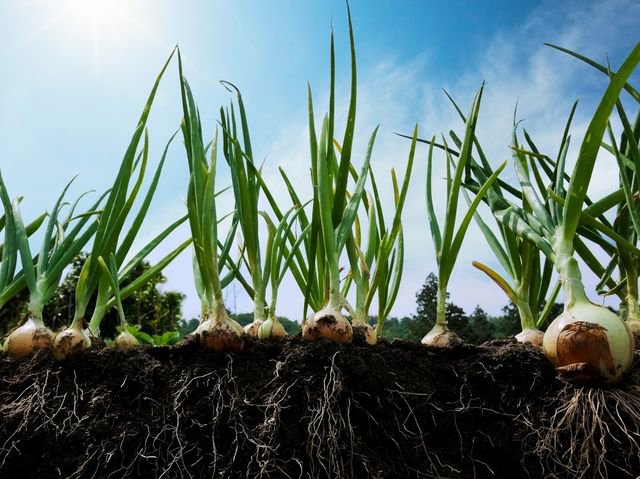
Onions

https://www.countryliving.com/gardening/a19805904/how-to-grow-onions/

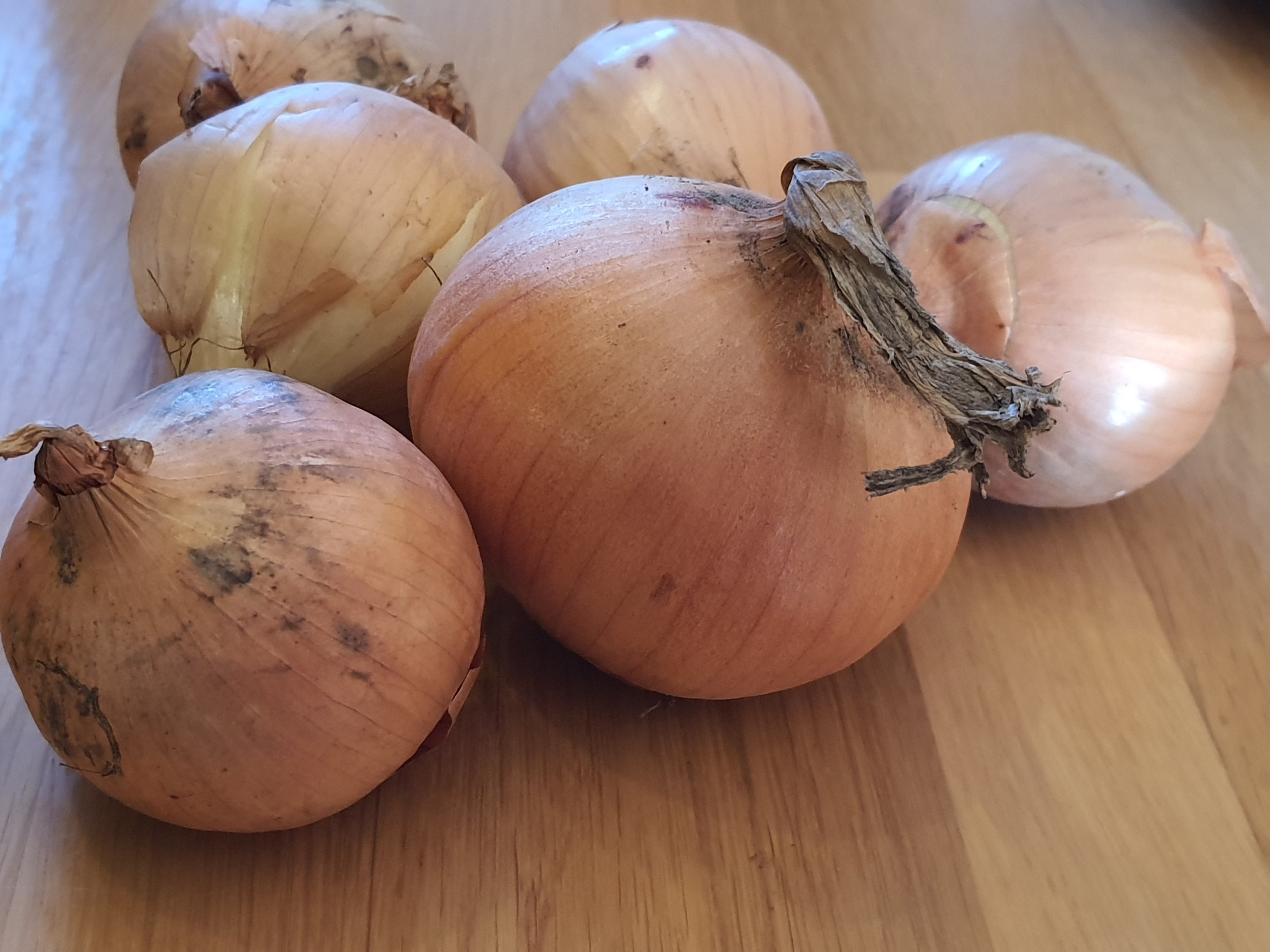
ONIONS

Allium cepa

“A humble vegetable, but a very important one – almost every meal begins with the peeling of an onion”
Riverford A-Z Veg.

The common onion is the most widely cultivated species of the genus Allium. Close relatives include: garlic, scallion, shalot, leek, chives, Chinese onion and Walking onions (also known as Egyptian Tree onions).

Interesting facts:

They’re ancient:
Onions have been a part of the human diet for more than 7,000 years. Archeologists have discovered traces of onions dating back to 5000 B.C., found alongside stones from figs and dates in settlements from the Bronze Age. Ancient Egyptians worshipped onions, believing their spherical shape and concentric circles within symbolized eternity.

They’re useful:
In the Middle Ages, onions were an acceptable form of currency, and was used to pay for rent, goods and services — and even as gifts! And apparently sliced onion can sooth insect bites and burns on the skin. In addition, when combined with crushed aspirin and little water, slices of onion are also used as a folk treatment to cure warts.

Why the way you cut them matters to the flavour:
Cutting an onion from pole to pole rather than along the equator influences flavour. Specifically, cutting an onion from pole to pole will result in a less pungent taste/odour and more mild and sweet flavour. That’s because cutting an onion releases flavour compounds, and how you slice—with or against the grain—releases more or fewer compounds.


Also the choping style itself depends on which dish you’re cutting them for:

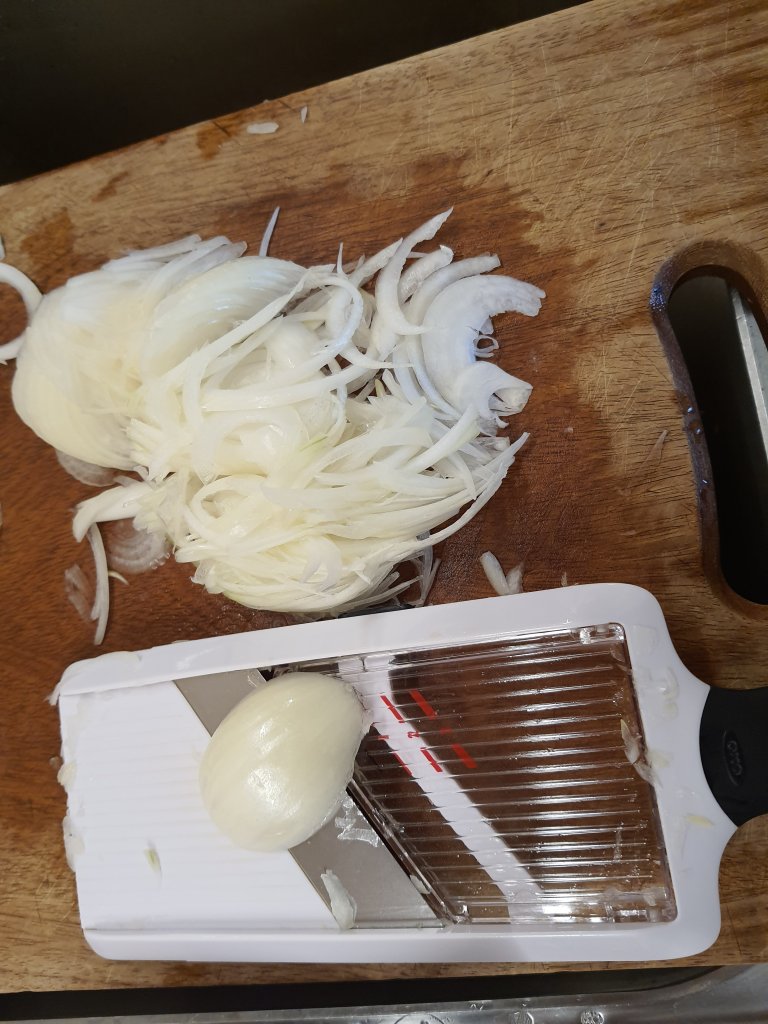
I love my mandolin. Even after it chopped a bit of one. It’s important to stay vigilant!!

There is some good advice on this link – How to cut an onion 🌰

I’ve had a little less time for research today (or the late nights researching are catching up on me!). I may add some more information later in the month.

Recipe

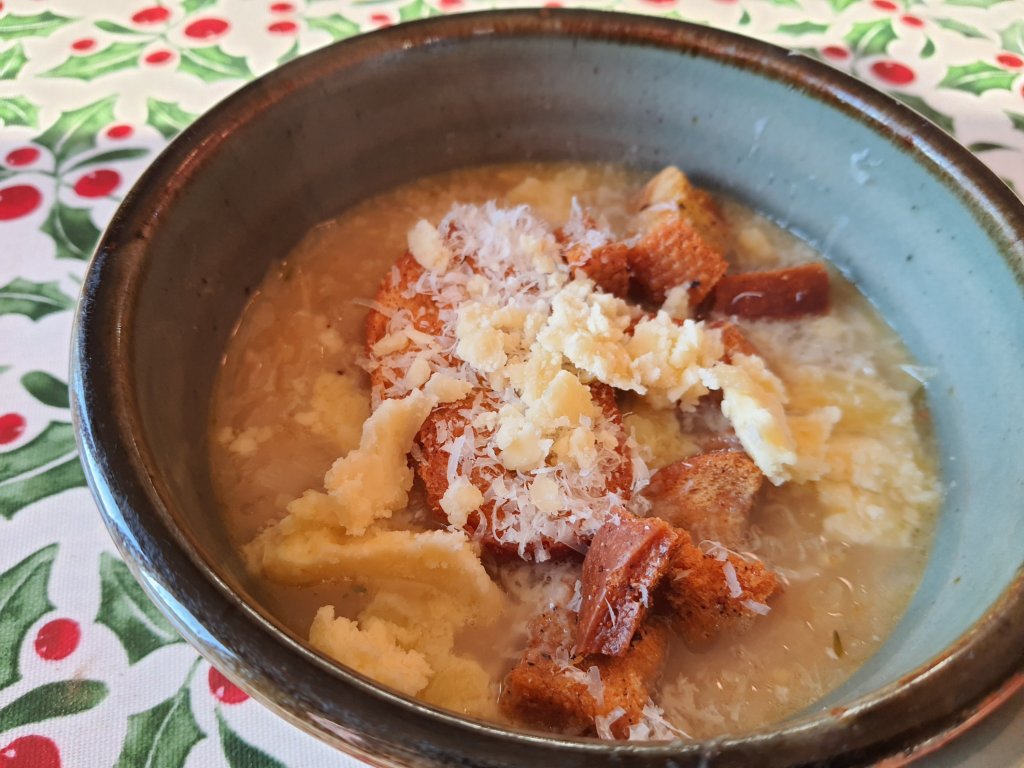
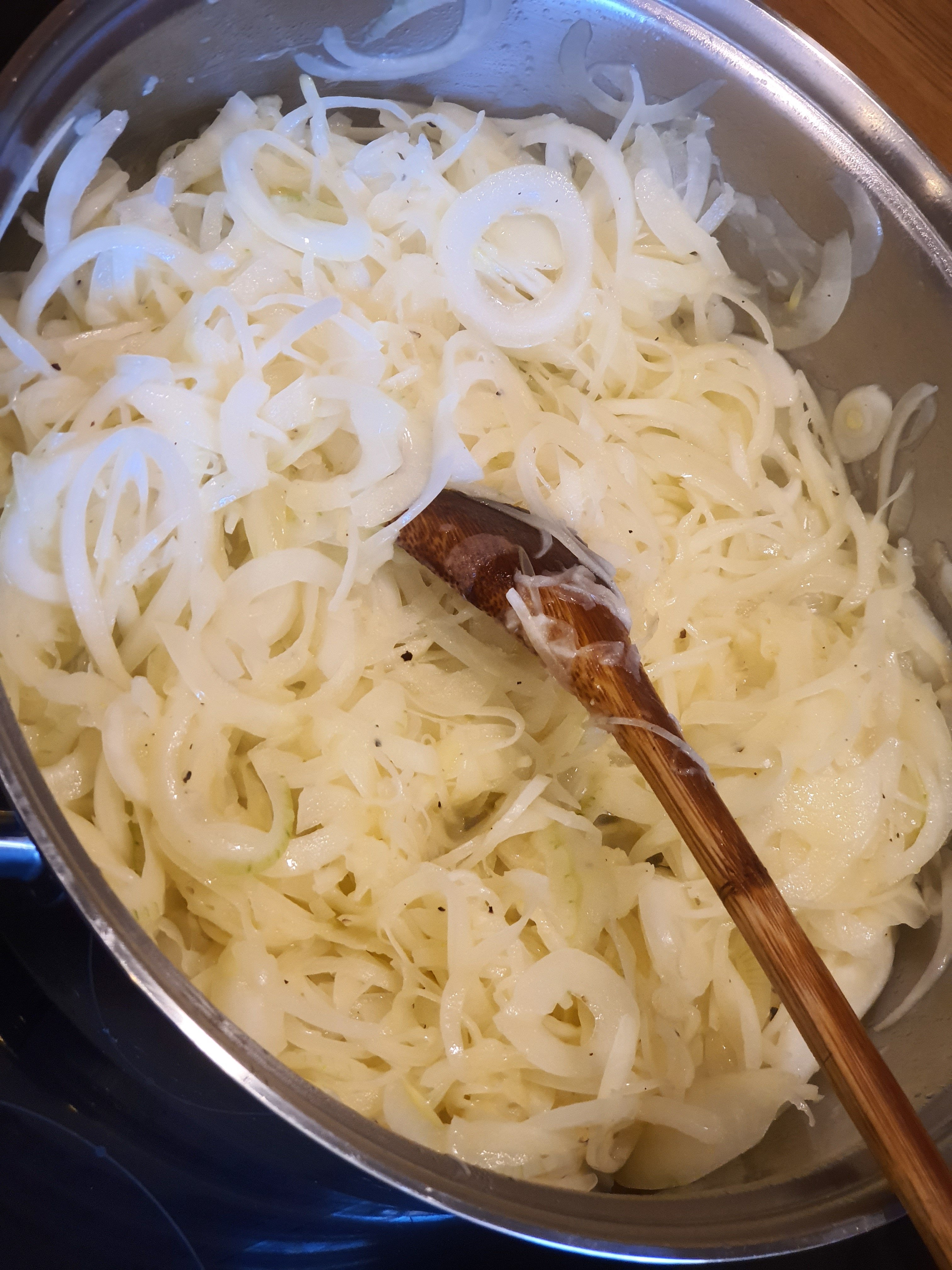
I made Delia Smith’s French Onion Soup with my pile from the fridge, and with more of the huge Christmas Lancashire cheese on the crouton.


It was pretty good and sweet with the long sticky caramalisation (and the cheese with it was excellent combination) but perhaps too much stock (or was it the wine) and perhaps a longer (or stronger) reduction needed.

Sources:
https://www.foodnetwork.ca/fun-with-food/photos/cool-facts-about-onions/
https://www.riverford.co.uk/a-to-z-of-veg/onions
https://www.tastingtable.com/cook/national/how-to-cut-onion-flavor

Day 8 of 31 Vegetable Challenge

Celery

https://www.motherearthnews.com/organic-gardening/vegetables/all-about-growing-celery-zm0z11zkon

CELERY

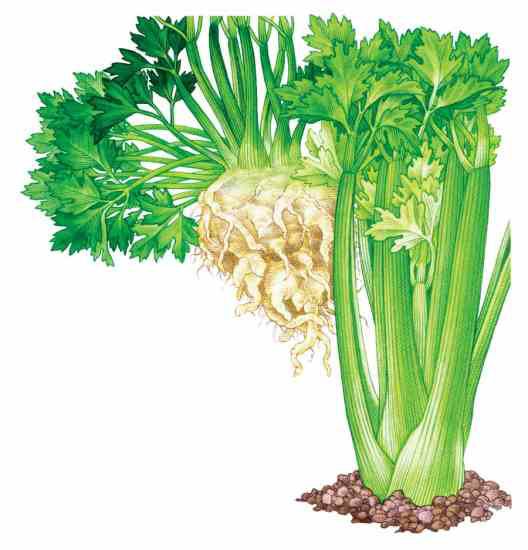
Apium graveolens var. rapaceum

Celery (Apium graveolens) is a marshland plant in the family Apiaceae. It is an umbellifer (which are characterised by their disc-shaped umbels, which are made up of many tiny flowers held on short flower stalks), celery is cousin to carrots, fennel, cumin, caraway, celeriac, parsnips, dill, parsley, anise, cow parsley and poison hemlock. Celery flowers attract many pollinators.

Cultivation of celery is believed to have started 3000 years ago in the Mediterranean region. It was considered a holy plant in the classical period of Greece and was worn by the winners of the Nemean Games, similar to the use of bay leaves at the Olympic Games. But it was the Italians who domesticated celery as a vegetable in the 17th century resulting in the solid leaf stems we know today.

Our word “celery” comes from the French celeri, which is derived from the ancient Greek word selinon, mentioned in Homer’s Odyssey about 850 B.C.

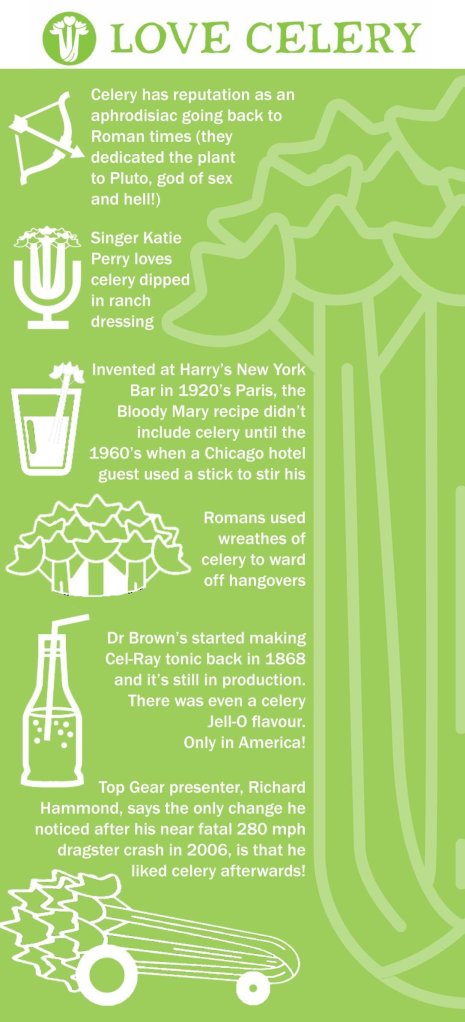
Selinon was ascribed to Seilenus, the son of a nymph and lustful Pan. Silenus, constantly drunk and lecherous, is depicted as pot-bellied with a beefy bald head and often with the ears, tail, and legs of a horse. He was the leader of the lustful horde of satyrs as well as the teacher and companion of Dionysus, the god of inebriation. Half human, half horse, Dionysus symbolizes, among other things, the powerful animal drive. The association of this satyr with celery, emphasizes the plant’s use as an effective agent of sexual potency. So celery is considered an aphrodisiac!!

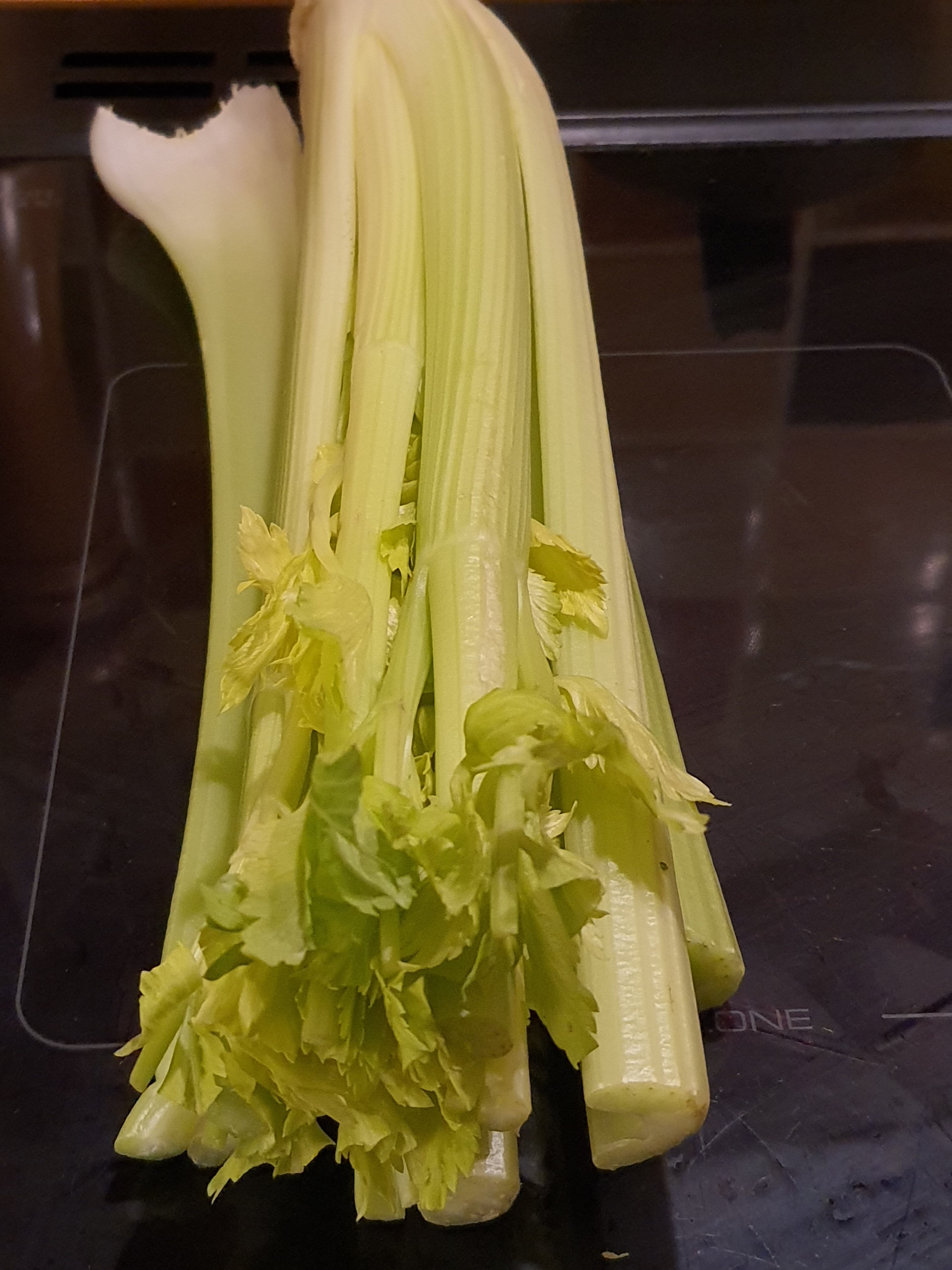
Celery has a long fibrous “stalk” tapering into leaves. Its petioles (or leaf stems), leaves or hypocotyl (part of the stem, beneath the stem of the seed leaves and directly above the root) are eaten and used in cooking. Celery seed is also used as a spice and its extracts have long been used in herbal medicine.

Fun Facts

Goes well with:

Apple
Bacon and ham
Carrot
Cheese (Blue cheese, Cheddar, Brie)
Chicken
Cream
Grapes
Mayonnaise
Nuts (Hazelnuts, Walnuts)
Onion
Parsley
Salad leaves
Tarragon
Tomato

Easy ideas (from Riverford)

1. Raw – Try a Waldorf inspired salad of diced celery, apple and walnuts. Throw some angled slices into a winter slaw with some carrot, fennel, red cabbage and shallots. A cold celery stick dipped in a little flaked sea salt or with crumbs of sharp cheddar. The tender central stalks are best for uncooked consumption.

2. Braised – Cook it in large pieces with some butter, white wine and light stock until tender and giving, about 40 mins; delicious as a side. You’ll get the same effect by using it as a trivet for sitting a roasting joint on: it will soak up all the roasting juices, serve it rather than discarding. Braised celery is also good baked with a little cream, parmesan and breadcrumbs as a gratin.

3. Soup – Celery soup is simple and comforting. Finely dice it and sweat it down with some onion, garlic and simmer in good stock. Liquidise well to remove any stringiness. Finish with a little cream if you care to, maybe some finely diced apple to garnish

4. Soffritto – meaning “fried slowly” and which is a prime ingredient for an Italian aromatic mix; the base for many sauces, soups, stews and braises in Italian cuisine. Most often a ratio of 2:1:1 of onion, carrot and celery.

Recipes:

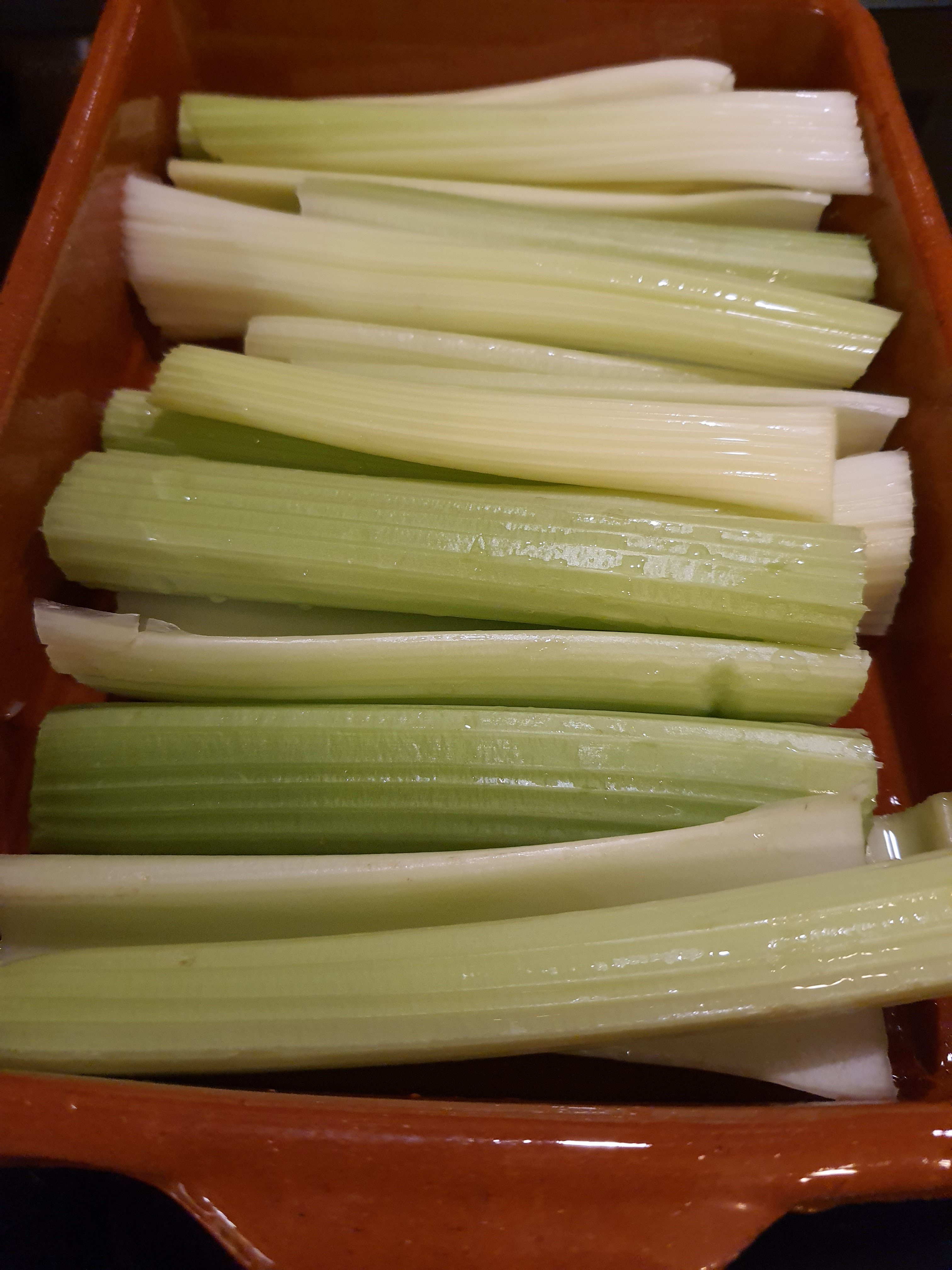
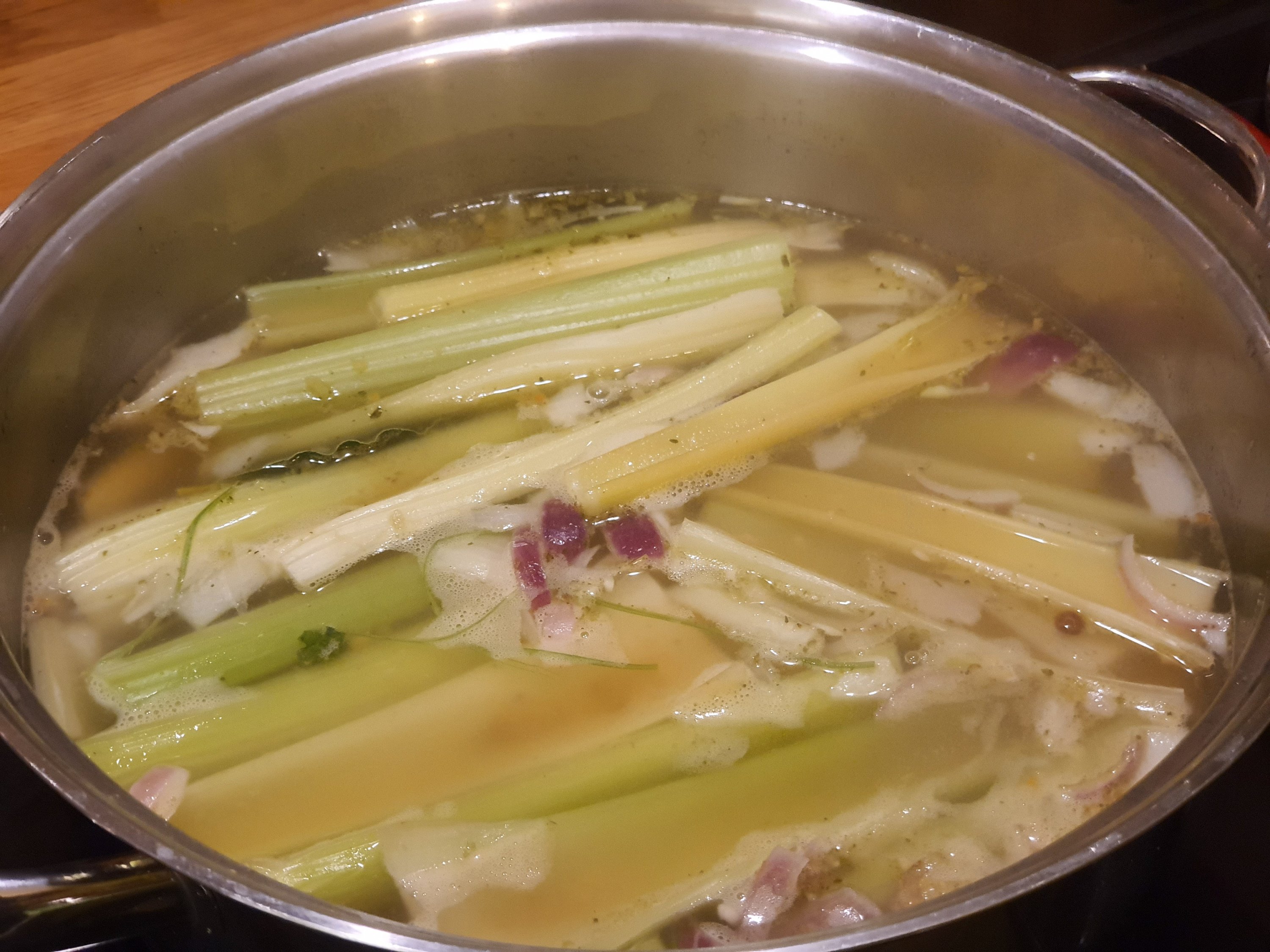
To be honest, I chose celery today because we had half a bunch left from my emergency “Christmas Eve Stuffing Ingredients” shopping at Ray’s Fruit and Veg shop, on Christleton Road. But then in the end we didn’t have enough, so I had to go out to buy another package this afternoon.

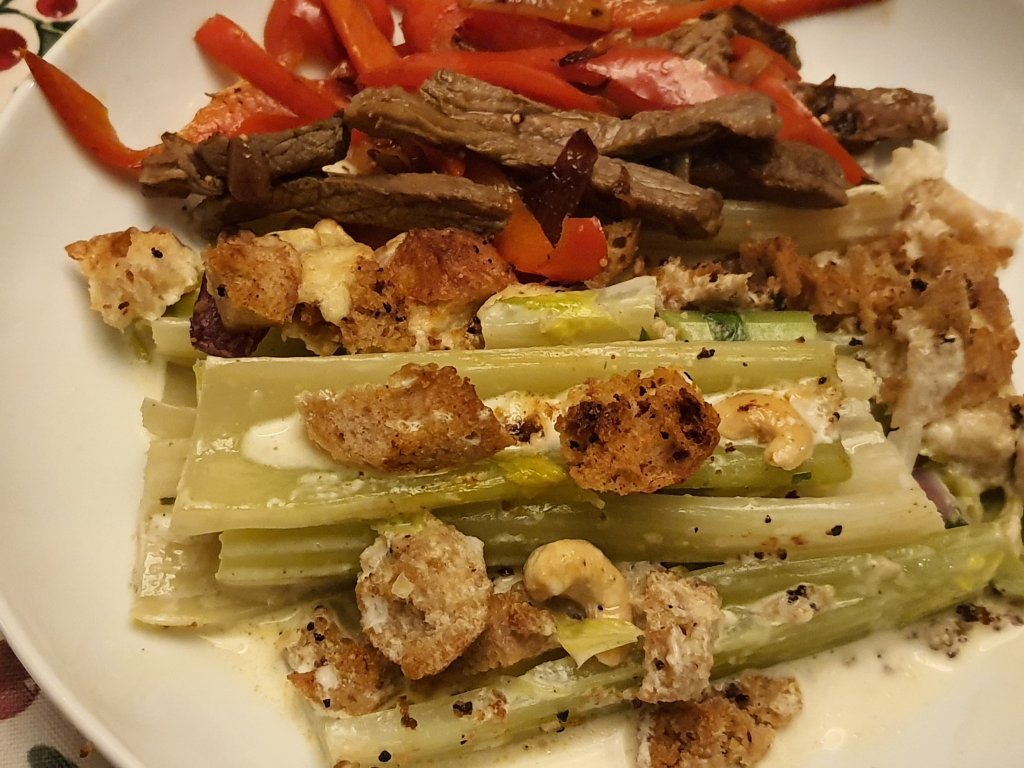
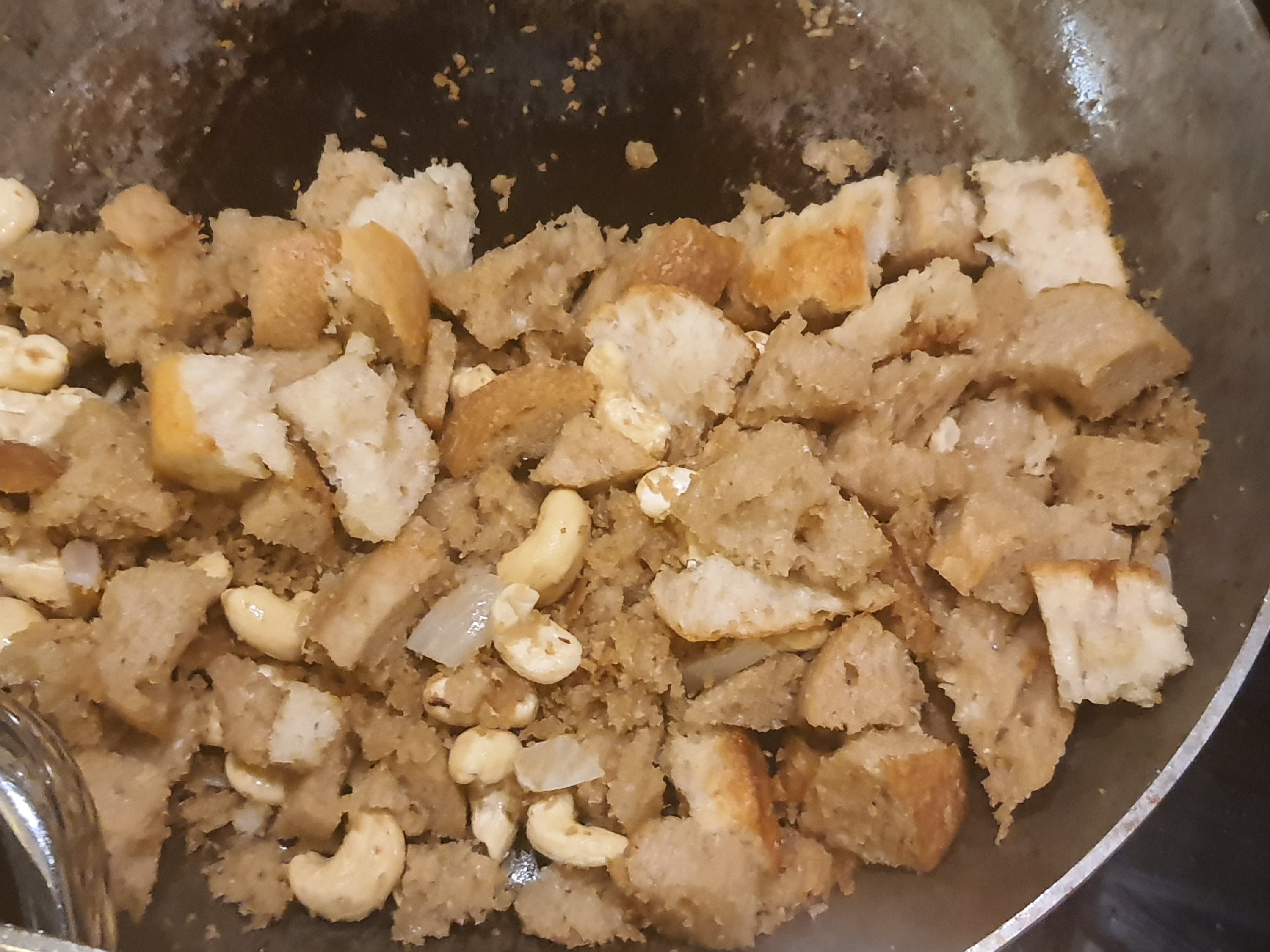
Trawling through the recipes online and in my cookery books, I fancied making a gratin. This was primarily motivated by the need to use up the Christmas Lancashire cloth bound cheese (looks the part, but there’s always alot of it!) and the final remains of a Hobbs Bakery Sourdough loaf (their bread is so good – we bought loads to freeze).

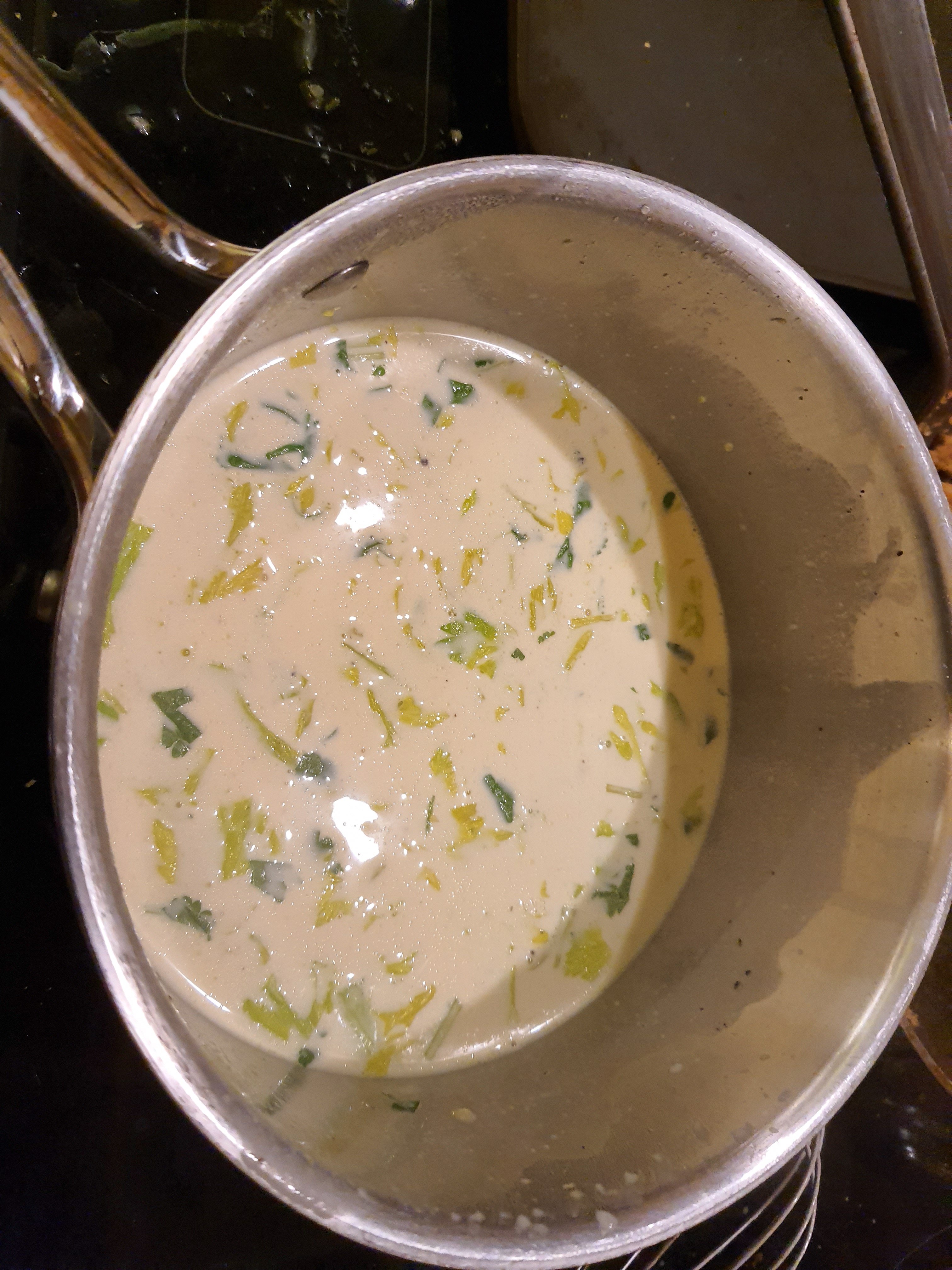
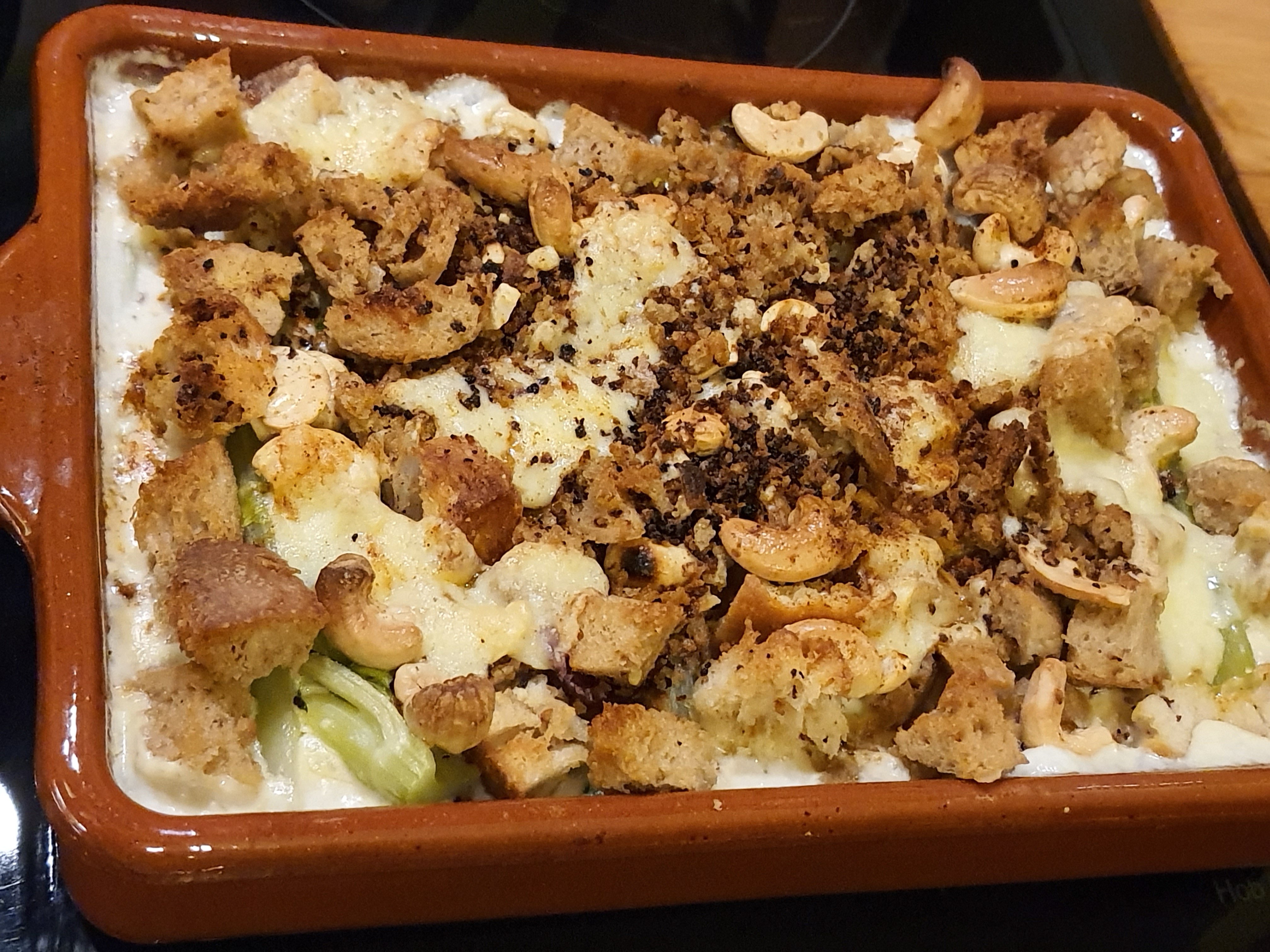
Celery Gratin

Celery and cashew gratin served with Stir-fried beef, onion, red pepper, chilli and mustard seeds

So I did a “mash-up” of two recipes. Which didn’t quite work, although was very tasty. So I’ll give you both recipes, some photos, but not my method. I think frying the celery might have been better than poaching – but maybe I didn’t poach it for long enough – and so much more flavour left in the stem … and I didn’t reduce the sauce quite enough. But Andrew thought if the celery were really tender and lacked the crunch then it wouldn’t feel like authentic celery!

Creamy celery gratin & Hugh F-W Celery Gratin

Here is a recipe for my favourite soup of all time. It comes from one of the first cookery books I bought (a splendid vegetarian/ vegan book) when I had my first job in Bath in the early 1990s, “The CRANKS recipe book”. Then a few years later, when I was in London – back at University, I was a frequent visitor to their takeaway as they had a restaurant very close to Goodge Street Station. Such good lunches. It is missed when I go back up to London now. The recipe melds the flavours of celery with cashews – which is also what I did today in the gratin instead of walnuts.

CRANKS Celery and cashew soup

Highly recommended, but I’ve none to photograph as I’m now out of celery!!!

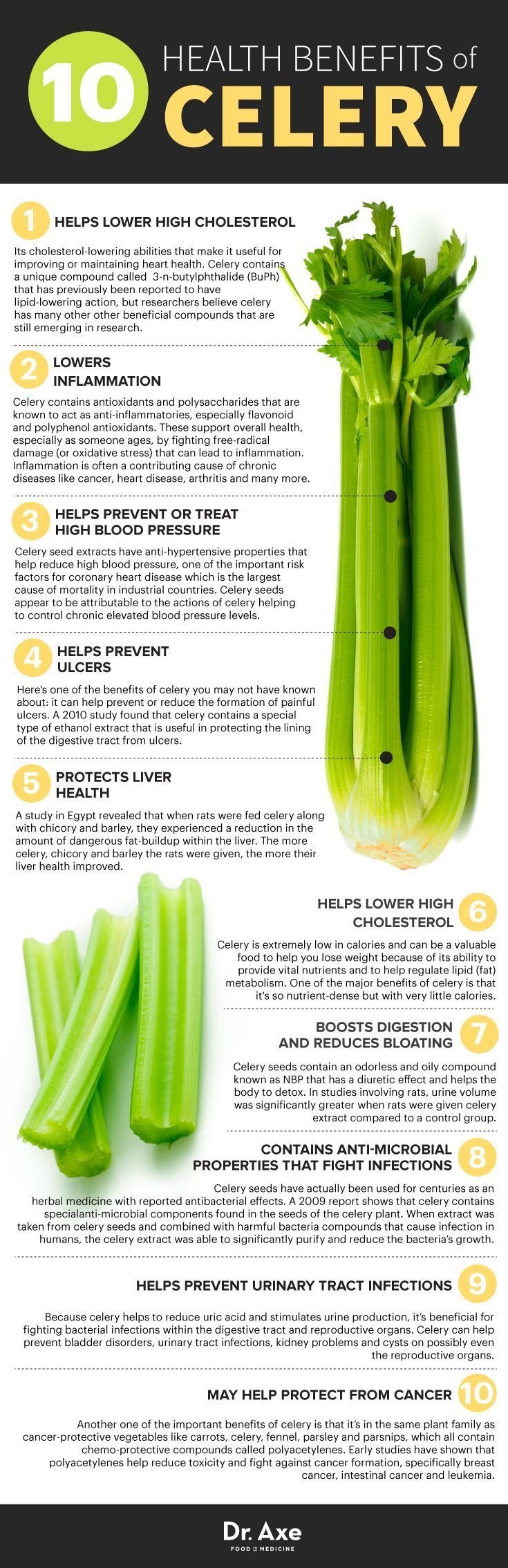
https://draxe.com/nutrition/benefits-of-celery/

Relax with a piece of celery:

In traditional Oriental medicine celery was used to treat hypertension. This is because phthalide compounds in celery can act as a sedative as well as lower blood pressure.

https://lovecelery.co.uk/love-celery/fun-facts
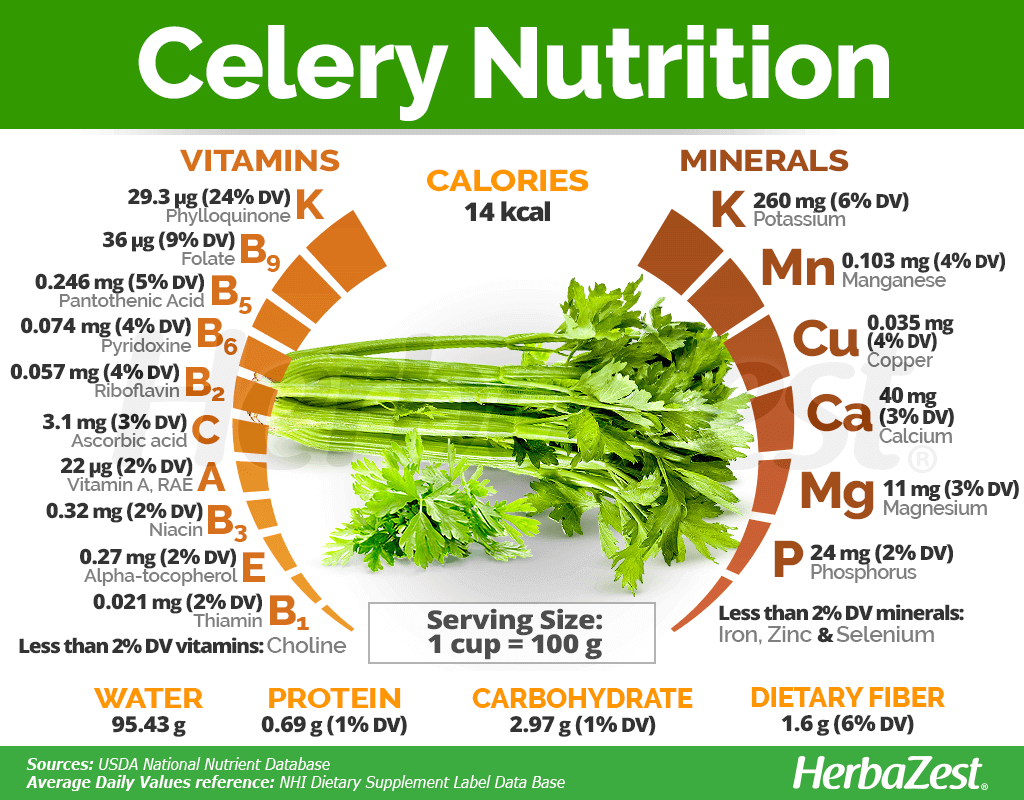
https://www.herbazest.com/herbs/celery
https://www.riverford.co.uk/a-to-z-of-veg/celery
https://mobile-cuisine.com/did-you-know/celery-fun-facts/
http://www.foodreference.com/html/celery-history.html https://draxe.com/nutrition/benefits-of-celery/#What_Is_Celery

Tally for the month

Main Vegetables: aubergine, broccoli (calabrese), Brussels sprouts, butternut squash, celeriac, celery, fennel, radicchio.

Subsidiary Vegetables: onion, shallots, garlic, leek, celery, potato, rosemary, carlin peas, chick peas, kale, chilli, dill, cucumber, mushroom, ramiro pepper, peanuts, corriander, ginger, tamarind, spinach, carrots, green beans, rice, sweet potato, parsley.

Subsidiary Fruit and Nuts: lemon, fig, walnuts, pomegranate seeds, lime, cashew.

Day 7 of 31 Vegetable Challenge

Aubergine

https://home.onehowto.com/article/how-to-grow-eggplants-in-a-garden-3314.html?amp=1

AUBERGINE

Solanum melongena

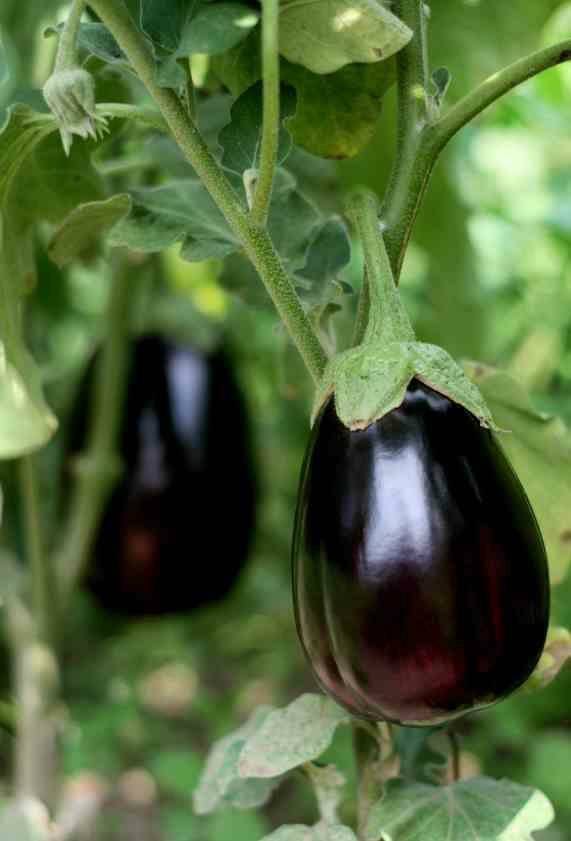
The aubergine (also called eggplant) is a plant and its berry is eaten as a vegetable. The plant is in the Solanaceae plant family which includes nightshade family of plants: the Datura or Jimson weed, aubergine, mandrake, deadly nightshade or belladonna, capsicum (paprika, chile pepper), potato, tobacco, tomato, and petunia.

In fact, as many do in this family, an aubergine contains nicotinoid alkaloids in its seeds (and they have many), which are responsible for the slightly bitter taste of the purple berry (what we consider the vegetable). However, only a tiny amount, just 0.01%. You would have to eat 9 kilos of aubergines to get the same amount of nicotine as in one cigarette.

The most popular variety of aubergine looks like a large, pear-shaped egg, hence the American name ‘eggplant.’ This one has a glossy rich purple skin and sweet, firm flesh. But there are many other varieties found throughout the world. Asia uses a lot of aubergines in their national cuisines. They are also frequently used in Greece, Turkey and the Middle East.
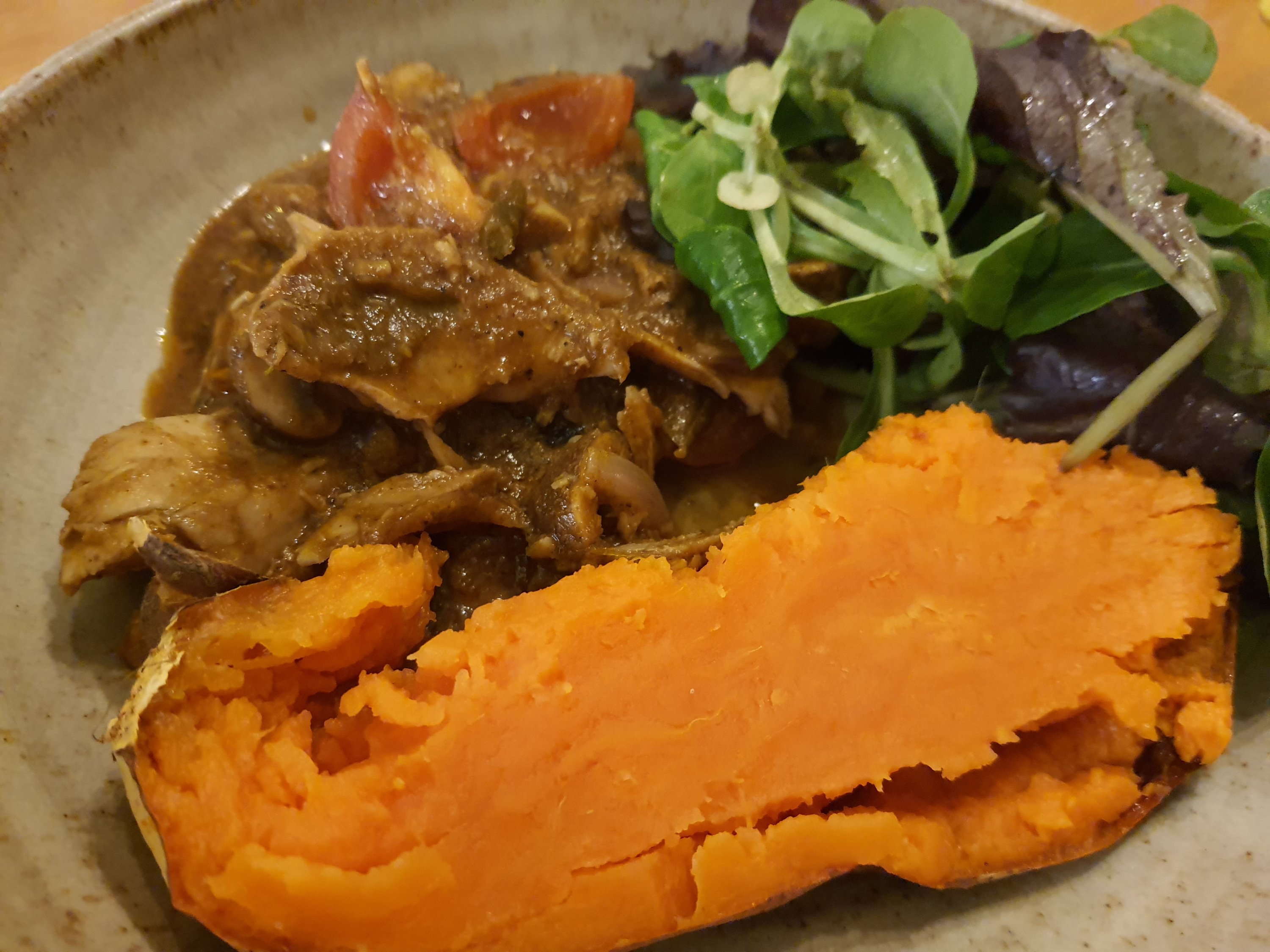
The origin of aubergine is considered to be India where it continues to grow wild. This spiny, bitter, orange, pea-sized fruit has been cultivated throughout India and China for more than 1500 years into the main variety found in the west now. As trade routes opened, aubergines were transported around the world. It is estimated that the aubergine reached Greek soils around 325 BC after the death of Alexander the Great in Babylon. Discovering this new vegetable during his conquest, Alexander the Great wished to bring it back to his country on his return. After his death, members of his army brought seeds of the vegetable back to Greece and specifically to the city of Vergina (Βεργίνα). The Latin/French term aubergine (au·ber·gine) (\ˈō-bər-ˌzhēn\) is estimated around 1505 AD and is coined to Franco-Catalan gastronomist Sergius Rosario Silvestri. Upon arrival to the historical site of Vergina (Βεργινα) and wanting to try the local delicacies, Silvestri came across the plant of aubergine. Not knowing its name, he referred to it as aubergine (au Bergine or au Vergine) which in French means at Vergina or found at Vergina.

Prep & Cooking tips

Unless cooking whole, you’ll need to remove the green calyx at the top before slicing or dicing to your requirements. You can salt the flesh for a while before cooking; some people believe this reduces any bitterness but with the modern varieties it simply serves to draw out excess liquid. This can help it to absorb a little less oil when cooking but it is generally not vital.
Many people have bad memories of undercooked, spongy aubergines. This is easily solved with generous applications of seasoning, oil and heat. Season well and fry or roast them with enough olive oil until the flesh goes golden brown and tender. Less oil is required when roasting. They’ll work wonders stewed down with plenty of tomatoes and North African spice. They can even be roasted or grilled whole before stripping away the scorched skin to reveal the soft flesh inside, in which case no oil is required.

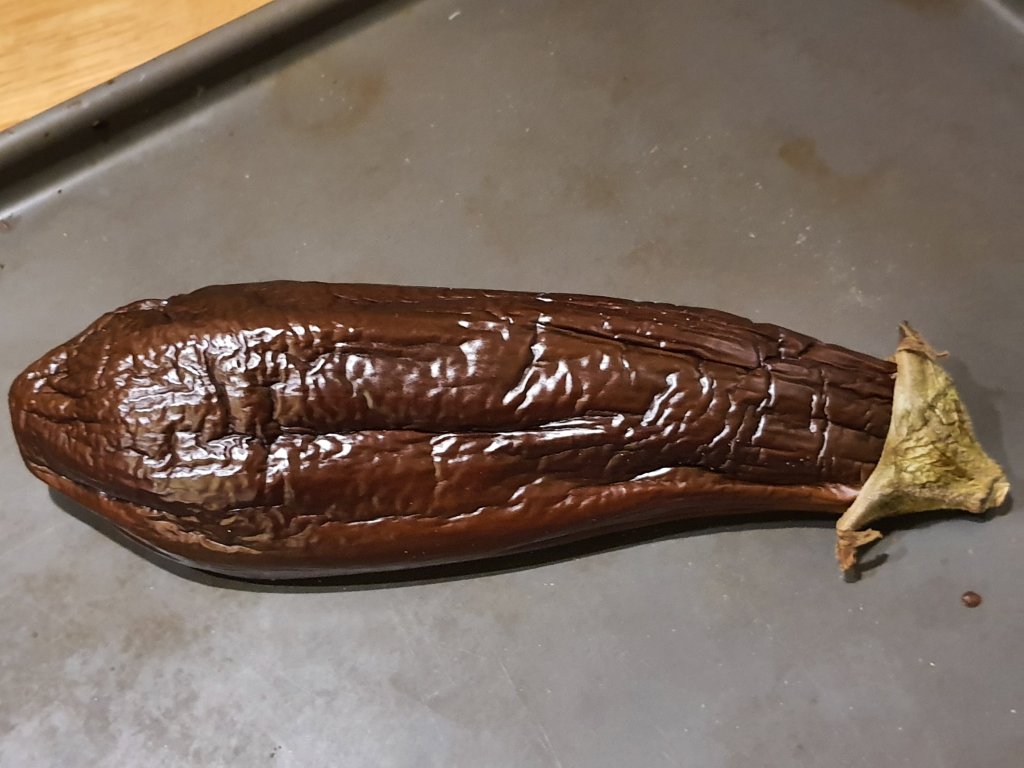
Roasted for 45 mins at 200°C or so. I put them in the oven when I’m cooking something else. This is a great way to get flesh ready to make a Baba Ganoush

Phyto-nutrients

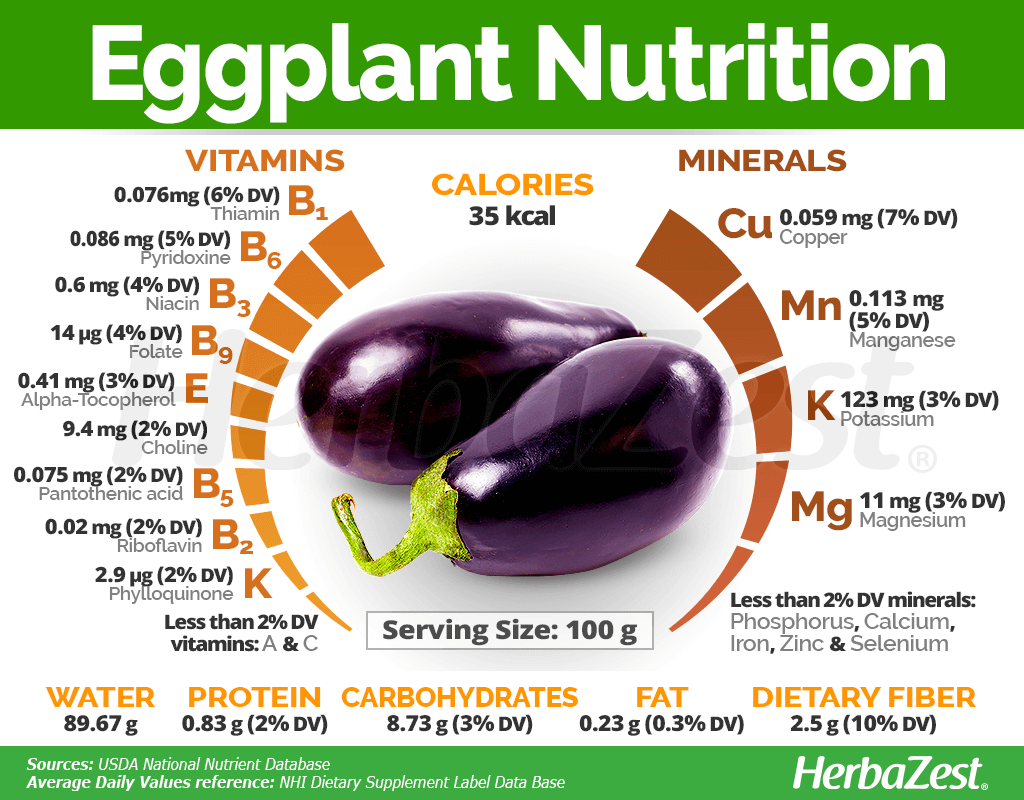
Aubergines are rich in antioxidants, specifically nasunin found in aubergine skin – which gives it its purple colour. A potent antioxidant and free radical scavenger, nasunin has been found to protect the lipids (fats) in brain cell membranes. Cell membranes are almost entirely composed of lipids and are responsible for protecting the cell and helping it to function. The lipid layer is crucial for letting nutrients in, wastes out and receiving instructions from messenger molecules that tell the cell what to do.

It’s possibly quite a health promoting food. There have been some studies that indicate that some phyto-chemicals in the aubergine may help in controlling glucose absorption, beneficial for managing type 2 diabetes and reducing associated high blood pressure (hypertension). Aubergines may also help to lower LDL (bad) cholesterol levels. 

Goes well with:

Asian flavourings (Chilli, Ginger, Mirin, Miso, Soy sauce)
Cheese (Feta, Halloumi, Mozzarella, Parmesan)
Garlic
Lamb
Pomegranate
Sesame (Oil, Seeds, Tahini)
Summer herbs
Tomato
Walnuts

Tamarind paste

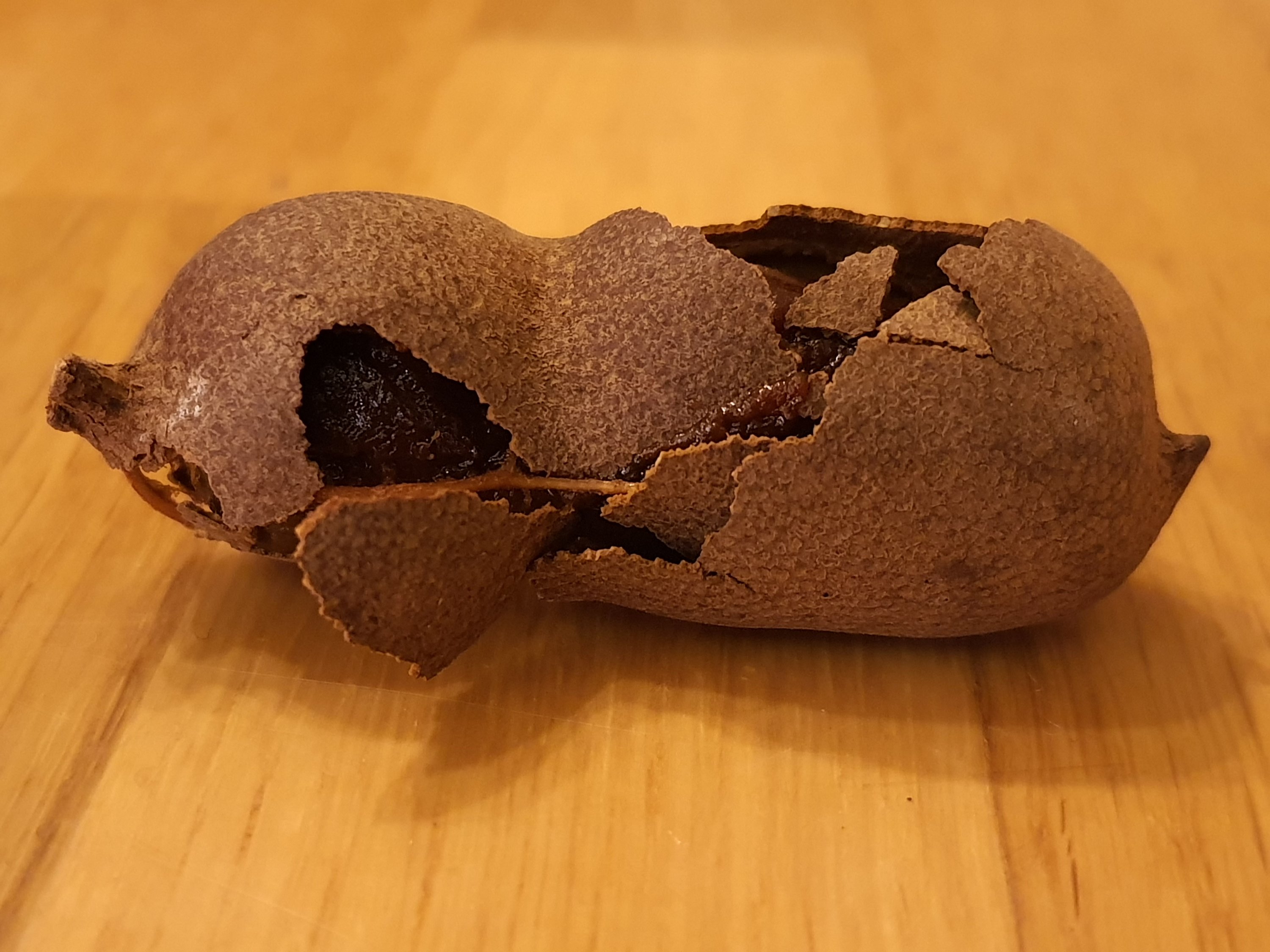
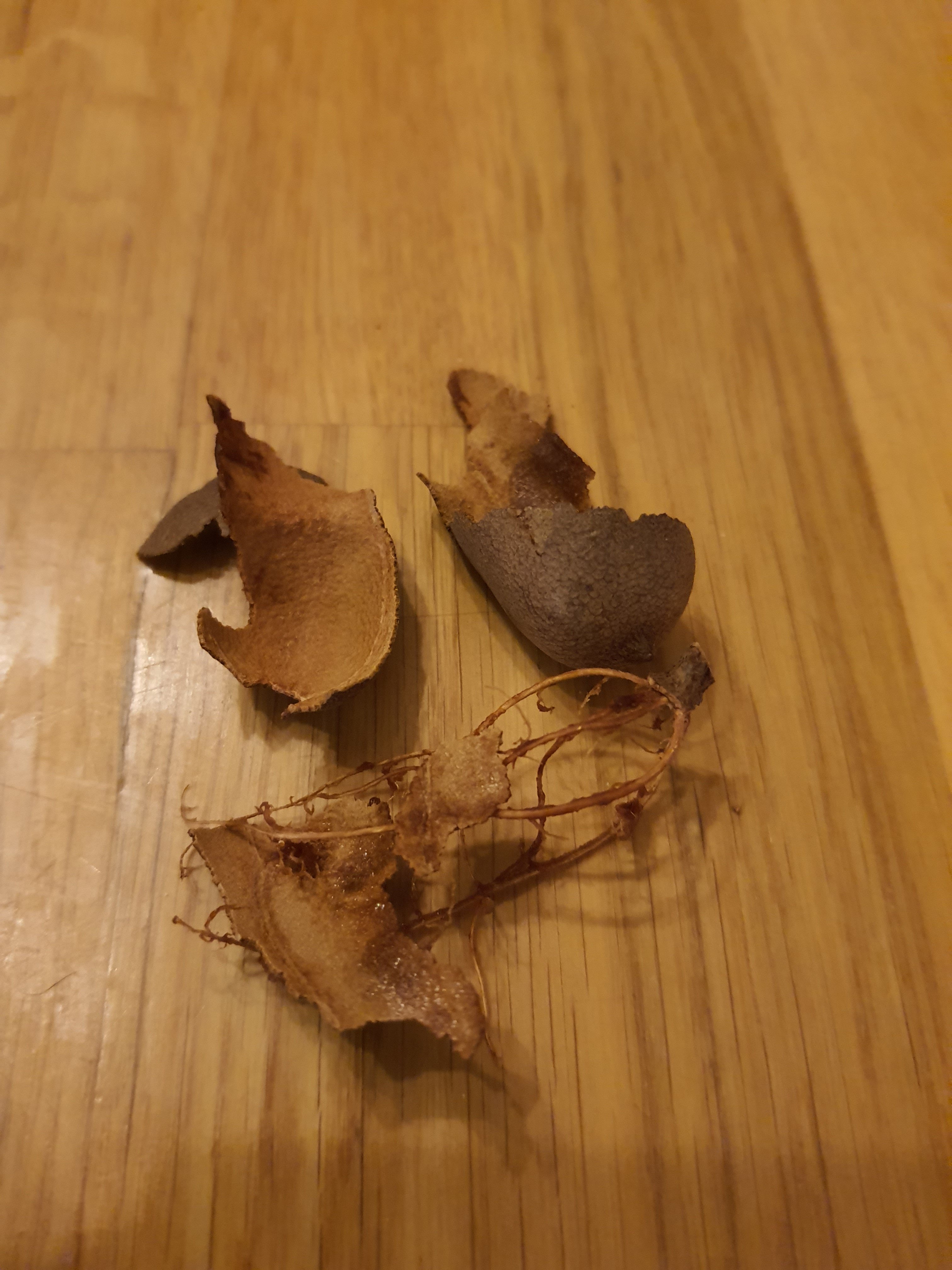
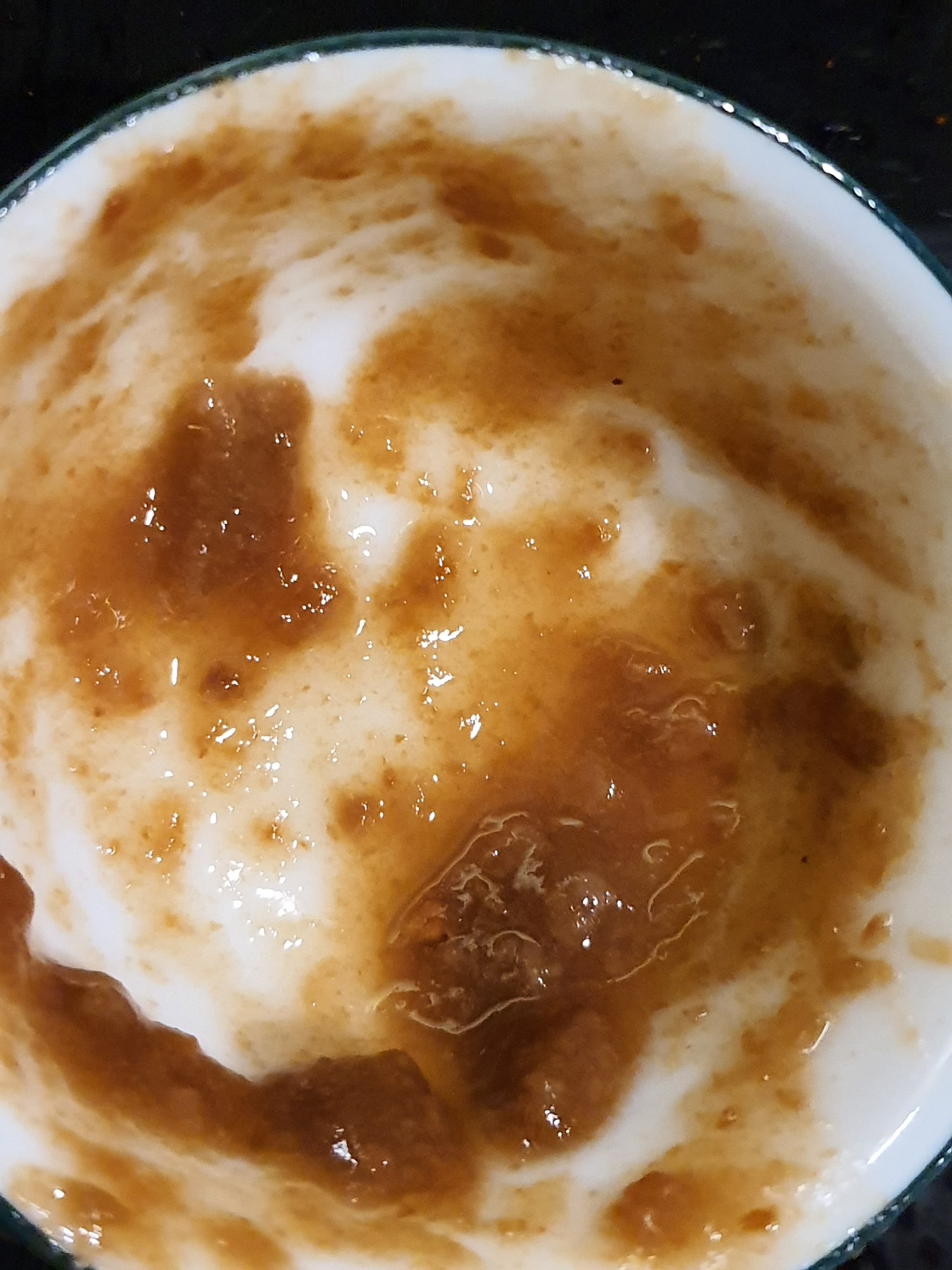
I spotted tamarind pods at Hoole Food Market, so I bought one (just for fun) and the next recipe was chosen as a consequence. I love tamarind. Sour and sweet, it’s unlike anything else I’ve tried. Anyway, what you do is peel away the skin and the “skeleton” from the sticky pod. Put sticky pod in a ramakin and cover with warm water, soaking for an hour or so. Pop out the large seeds (3 in my pod, assume that’s standard) and you a have a sticky jam like paste. I forgot to photograph, so all that’s left in picture are the remnants in the bottom of the dish!

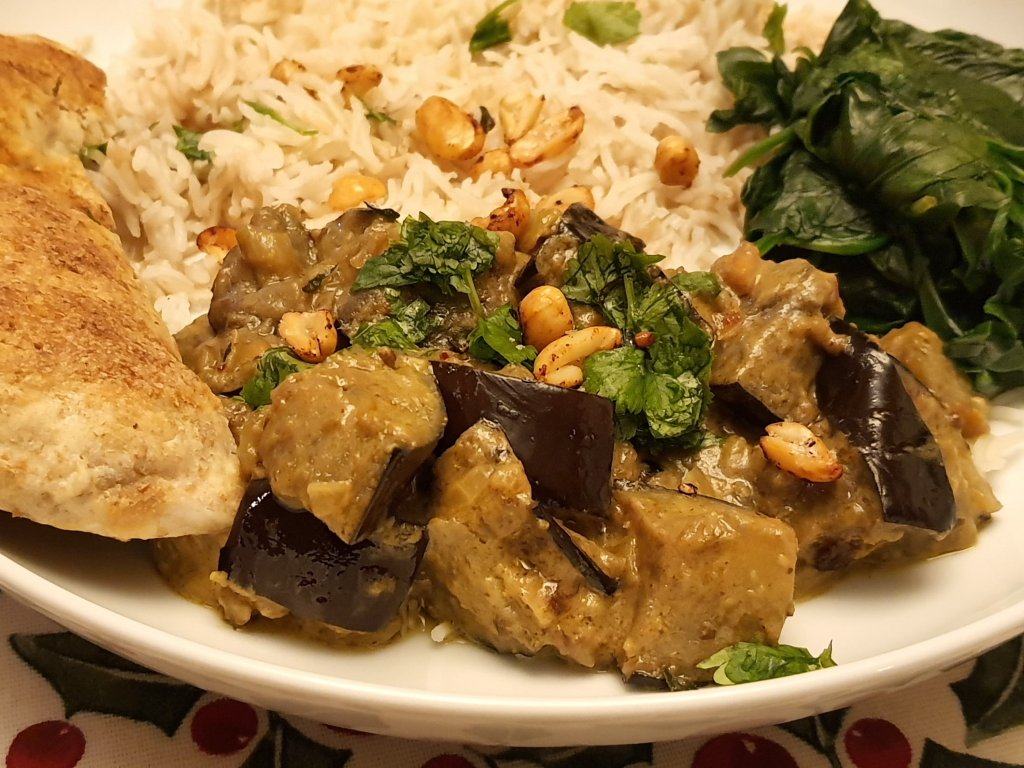
Coconut and peanut aubergine curry

Ingredients (serves 4)

Served with a naan bread, rice, spinach and lime fried peanuts.  Delicious.

Ingredients

oil for frying
aubergines 2, cut into large chunks
onions 2, chopped
garlic 2 cloves, crushed
ginger a 5cm piece, finely grated
cumin seeds 1 tsp
coriander seeds 1 tsp, crushed
turmeric 1 tsp
chilli powder 1/2 tsp
half-fat coconut milk 400ml 
tamarind paste 1 tbsp
peanut butter 1 tbsp
coriander or breads or rice to serve

Method

STEP 1
Plu the aubergine pieces on a baking tray and drizzle with oil, mix so all coated and then spread out so all in one layer. Bake in oven at 200°C until golden and soft – about 20 mins. Turn over half way through.

STEP 2
Heat 1 tbsp oil in a pan. Add the onion to the pan and cook until soft and golden. Add the garlic and ginger and cook for a minute. Add the spices and cook for 2 minutes.

STEP 3
Tip in the coconut milk, tamarind and peanut butter. Simmer gently until the peanut butter dissolves. Add the aubergine and simmer for 15 minutes. Stir through some coriander and serve with bread or rice and a squeeze of lemon.

Opinion: Delicious flavours and texture. However, I might have enjoyed more depth, so next time will chop a fresh chilli, use 3 tamarind pods as they were so sticky but not quite enough and perhaps a little more ginger.

50% of the volume of an aubergine is air!

Sources of information:

Tally for the month

Main Vegetables: aubergine,broccoli (calabrese), Brussels sprouts, butternut squash, celeriac, fennel, radicchio.

Subsidiary Vegetables: onion, shallots, garlic, leek, celery, potato, rosemary, carlin peas, chick peas, kale, chilli, dill, cucumber, mushroom, ramiro pepper, peanuts, corriander, ginger, tamarind, spinach, carrots, green beans, rice, sweet potato.

Subsidiary Fruit and Nuts: lemon, fig, walnuts, pomegranate seeds, lime

Day 6 of 31 Vegetable Challenge

Fennel

https://www.saga.co.uk/magazine/home-garden/gardening/fruit-and-veg/growing-fennel

FENNEL

Foeniculum vulgare

Fennel is cultivated, both in its native range and widely elsewhere, for its edible, strongly flavored leaves and fruits. In Italy they grow the most in the world. Finocchio (fennel in Italian) is found in two forms – the slightly fluffy looking herb fennel and the fat, white bulb commonly known as Florence fennel – which can be found growing wild throughout Italy. Both, along with the potent dried fennel seeds, are very popular in Italian cuisine.

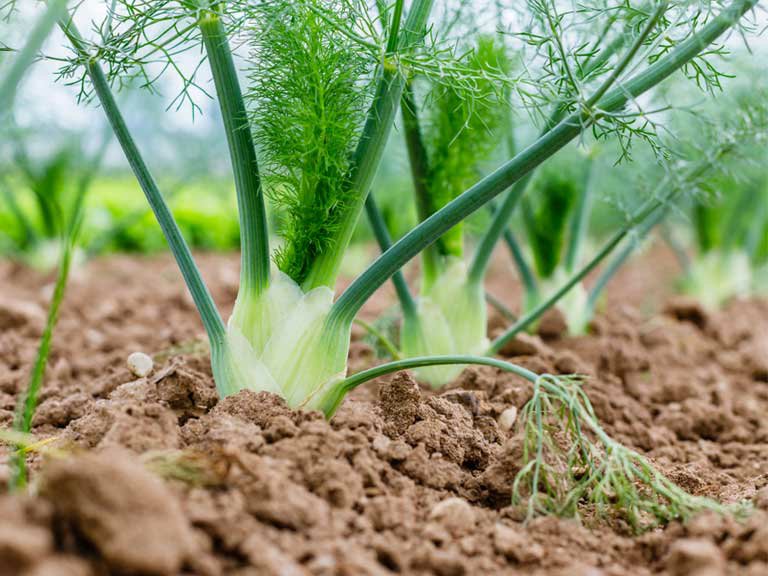
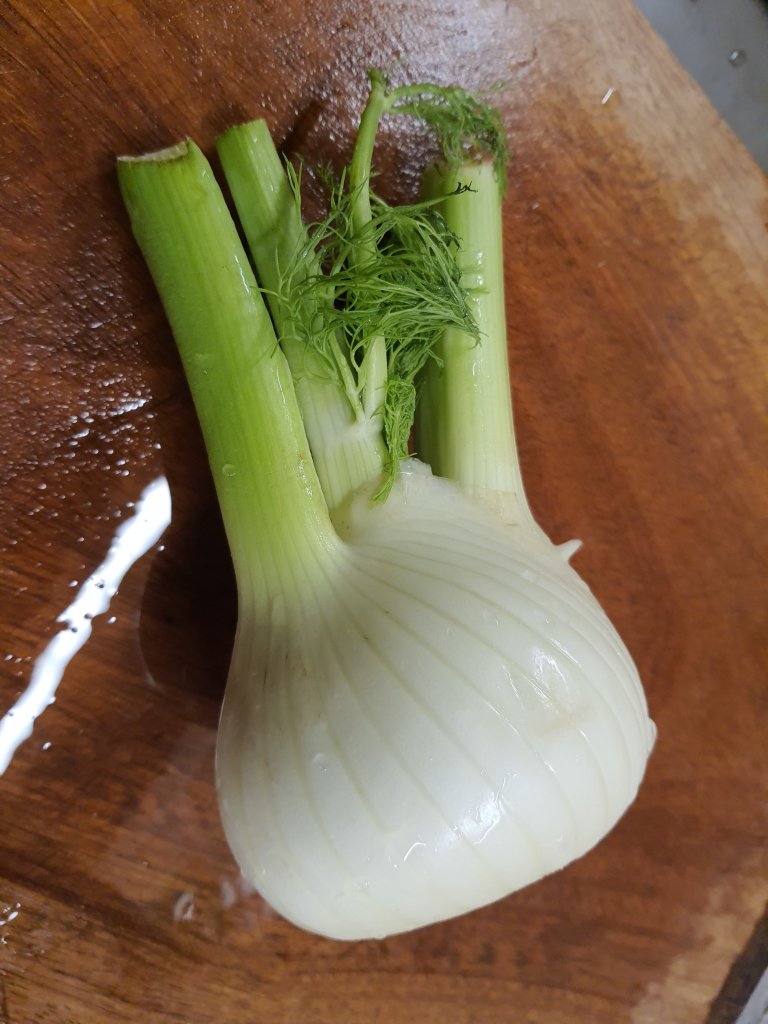
Fennel is a member of the carrot family, though it’s not a root vegetable. The base of its long stalks weave together to form a thick, crisp bulb that grows above ground. Above the bulb, at the tip of the stalks, it has light, feathery leaves that resemble dill. When it goes to seed, fennel also produces small yellow flowers among the leaves. Every part of it is edible, from the bulb to the flowers, and it can be eaten raw or cooked.

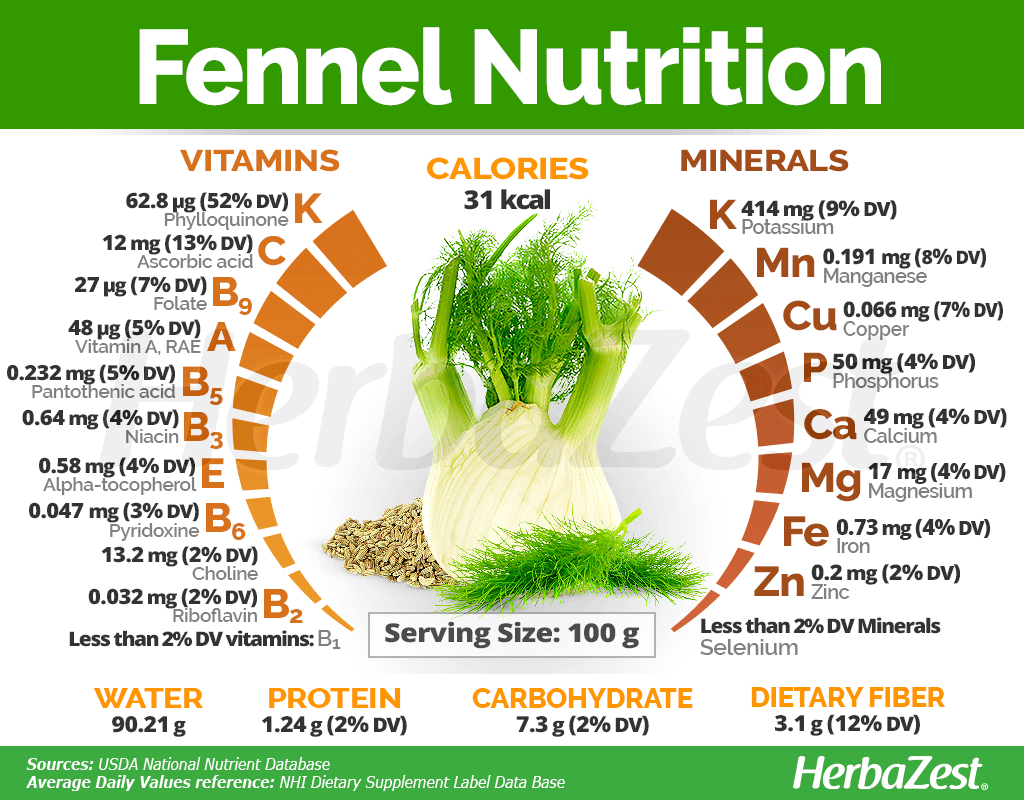
Fennel’s aniseed or liquorice flavour comes from an aromatic compound called anethole, which is also found in anise, star anise and tarragon (among others). The flavour and aroma of fennel is similar to theirs, though usually not as strong.

Though the stalks and leaves are edible, fennel recipes most often call for the bulb. When raw, it has a crisp texture similar to celery and a fresh aromatic anise flavor. It can be eaten raw, sautéed, roasted, or even added to soups and sauces. It caramelizes as it cooks, taking on a sweeter flavor and tender, melt-in-your mouth texture. As with so many vegetables, its character changes depending on how you cut it. How you cut and how you cook it go hand in hand.

Raw fennel bulb, shaved thinly with a mandoline, removing any tough core pieces, is delicious on its own. Marinated in lemon juice, olive oil, and salt it is different again. There are so many raw fennel salad recipes. Thinnly sliced fennel works well if you want to sauté it. The thin slices will melt and brown in the pan, taking on a delicious caramelized flavour.  Roasted fennel does well cut in wedges. Remove the stem and cut the bulb in half vertically and then cut each half into several wedges.

Recipes most often call for the bulb, but don’t throw away the tops! Finely chopped fronds to use as an aromatic garnish for salads, soups, pasta, and the fennel stalks and leaves can be added to a vegetable stock.

This root vegetable originated in the Mediterranean countries of Greece and Italy. It has a rich history of use because of its many nutritious properties. Since the time of Hippocrates, it was used as medicine. The Romans thought of fennel as a sacred ritual object and they used it as a digestive stimulant. The Greeks would use fennel during their ceremonies because it symbolized pleasure and prosperity. And the ancient Chinese and Egyptians used the vegetable as food and medicine.


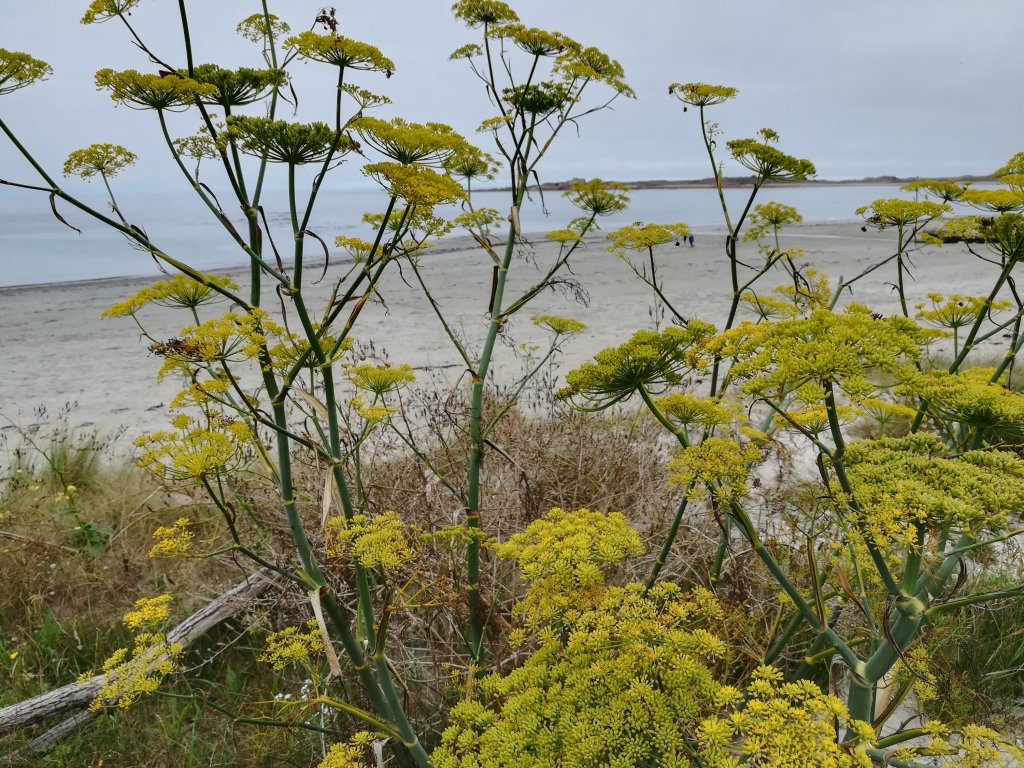
Wild fennel: Greeks call it maratho and it grows all over the Greek islands and the mainland. Marathon, the area south of Athens where in 490 BC Greeks won the famous, decisive battle against the invading Persian army, probably acquired its name because of its abundant fennel fields. A young soldier, Pheidippides, ran the 42 kilometers from Marathon to Athens to announce the triumphant victory, thus inspiring the eponymous run.

Wild fennel, Vazon Bay, Guernsey

As Old English finule, fennel is one of the nine plants invoked in the charms from the eleventh-century Anglo-Saxon magico-medical text Lacnunga  – the “Nine Herbs Charm” (Nigon Wyrta Galdor).

Both the “Nine Herbs Charm” and “Against a Sudden Stitch” (Wið Færstice) appear to have influenced Tolkien’s writing of The Lord of the Rings. The “Nine Herbs Charm” was an incantation uttered over nine powerful plants (mugwort, plantain, chamomile, apple, fennel, chervil, betony, nettle, and lamb’s cress to intensify their ability to counteract nine poisons and nine infections or illnesses from onflygnum, flying infections thought to enter their victim through the mouth and ears. It has been has suggested that Tolkien used this nine vs. nine opposition in Elrond’s assembling of the nine-member Fellowship of the Ring to oppose the nine Black Riders of Mordor.

For centuries, fennel has been used in various Mediterranean countries for cooking and baking. It was added to loaves of bread for added flavor and to make it easier to digest. In North America, fennel was used by the Cherokees to calm digestive issues in infants and was also given to mothers during childbirth. It was also used as part of an eyewash to promote eye health.

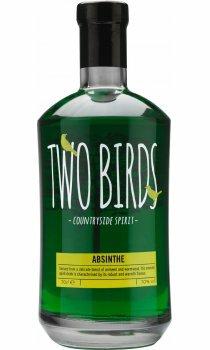
Fennel is also used to make absinthe, an alcohol beverage that’s very high in alcohol (45 to 74 percent ABV) and known for its natural green color. Absinthe is made with medicinal and culinary herbs, including anise and fennel. It originated in Switzerland in the late 18th century and is known for its hallucinogenic properties
Goes well with
Fruit (Apples, Pears, Citrus fruit, Carrots, Olives)
Nuts (Almonds, Hazelnuts, Pine nuts, Walnuts)
Lamb
Pork
Fish and shellfish

Recipes
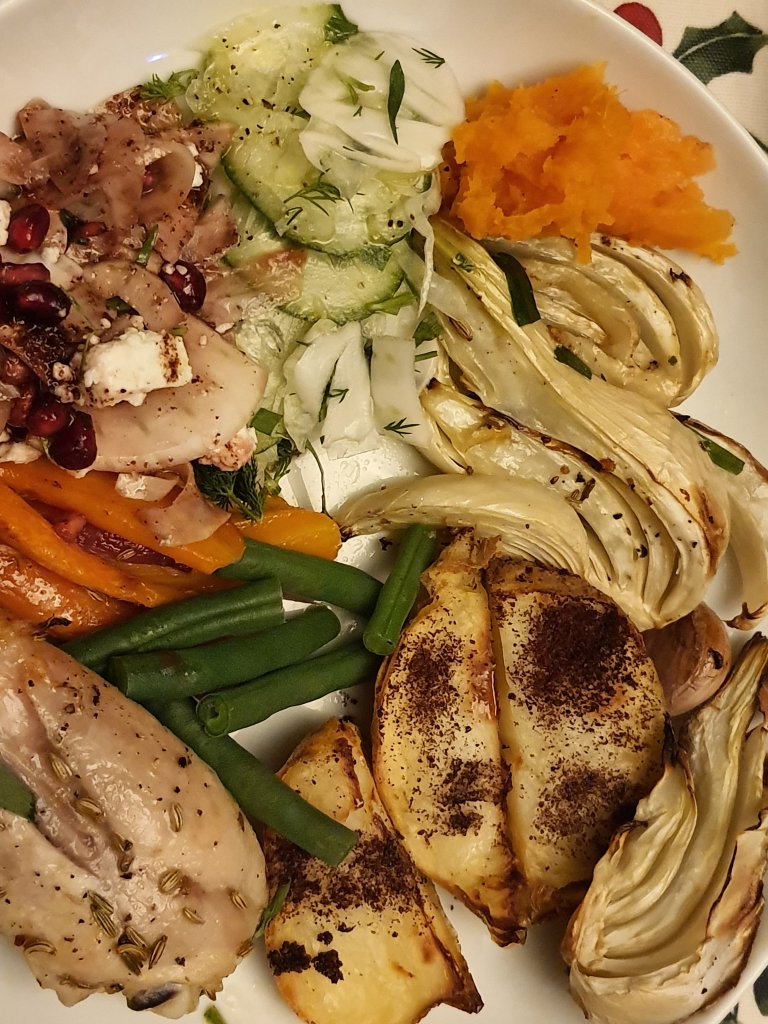
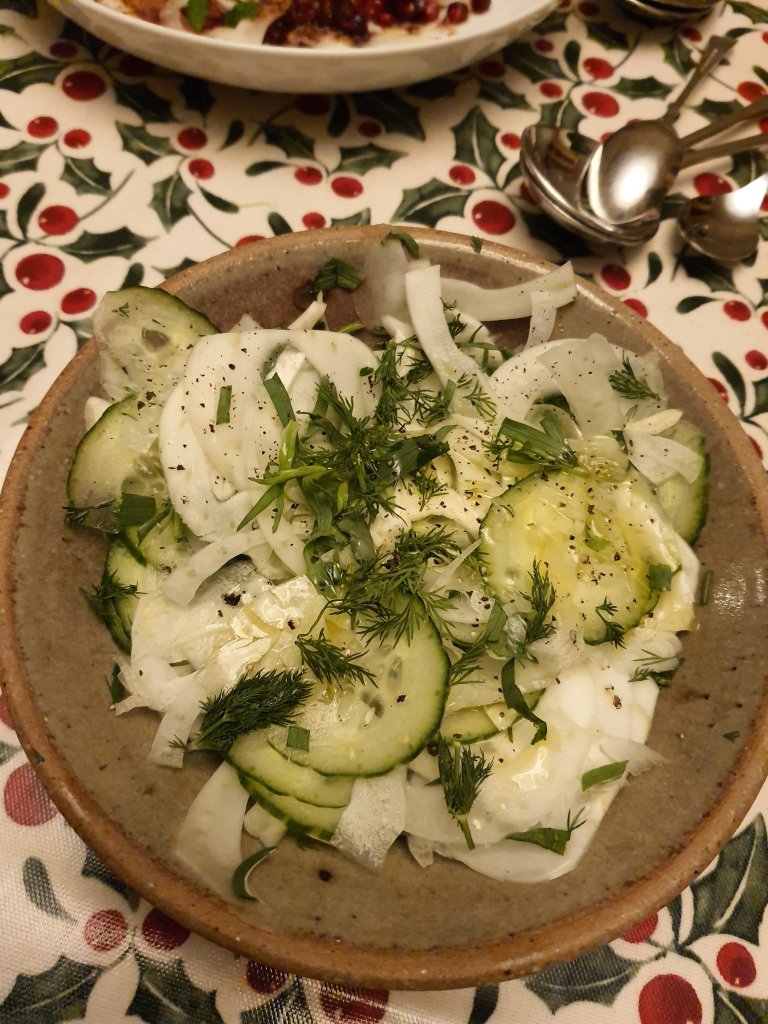
Fennel salad with cucumber and dill

Added tarragon, as I had some Will make this again.
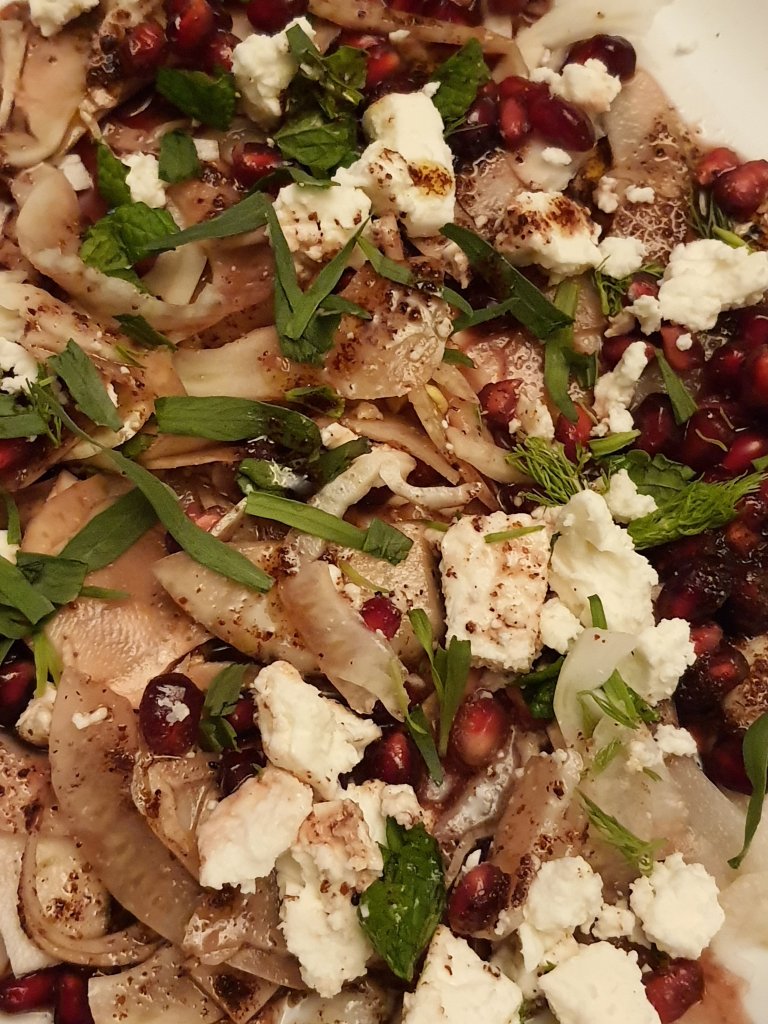
Fennel, Feta & Pomegranate Salad

I thought there was too much pomegranate molasses. But I don’t think I used enough fennel.

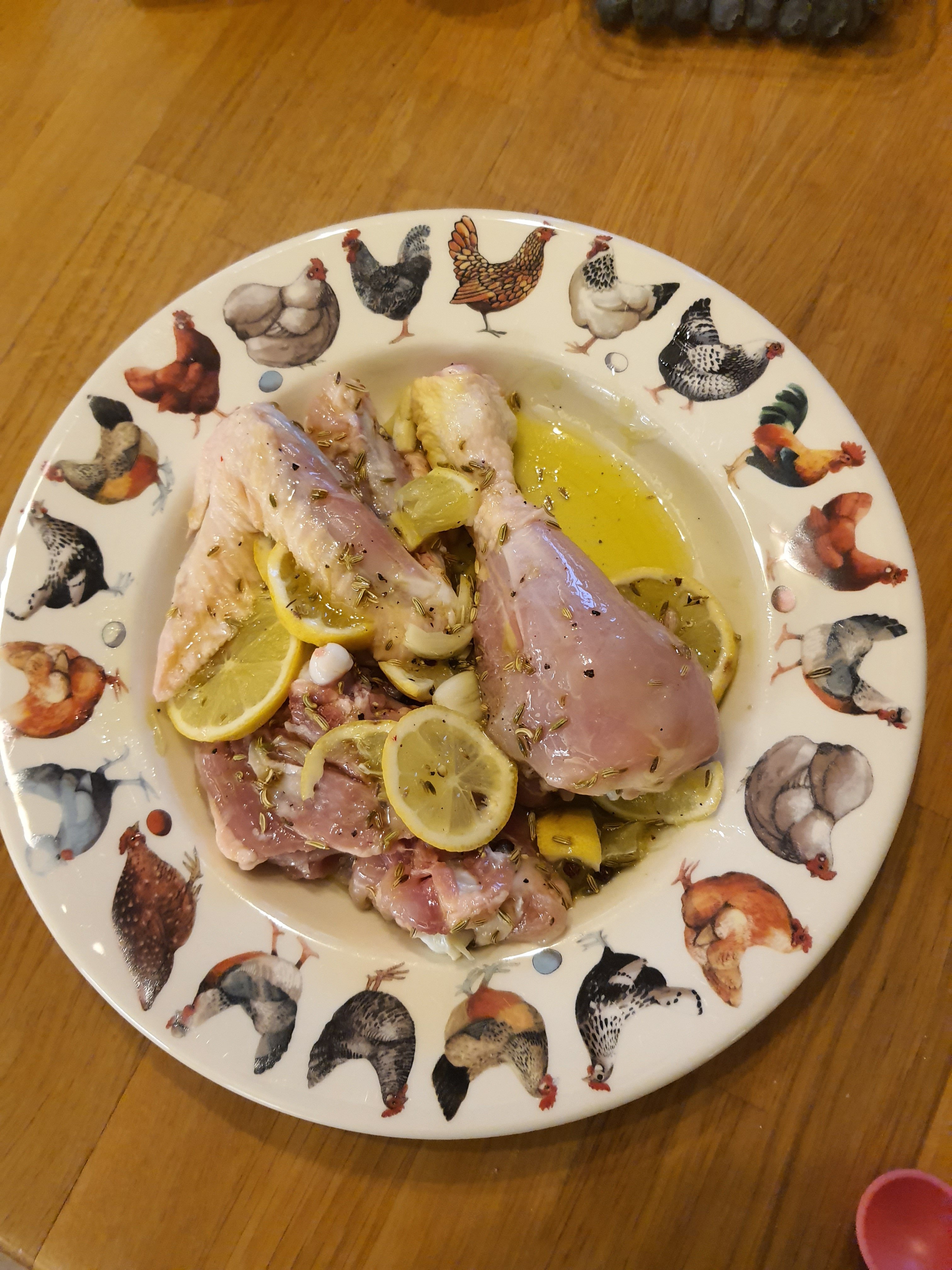
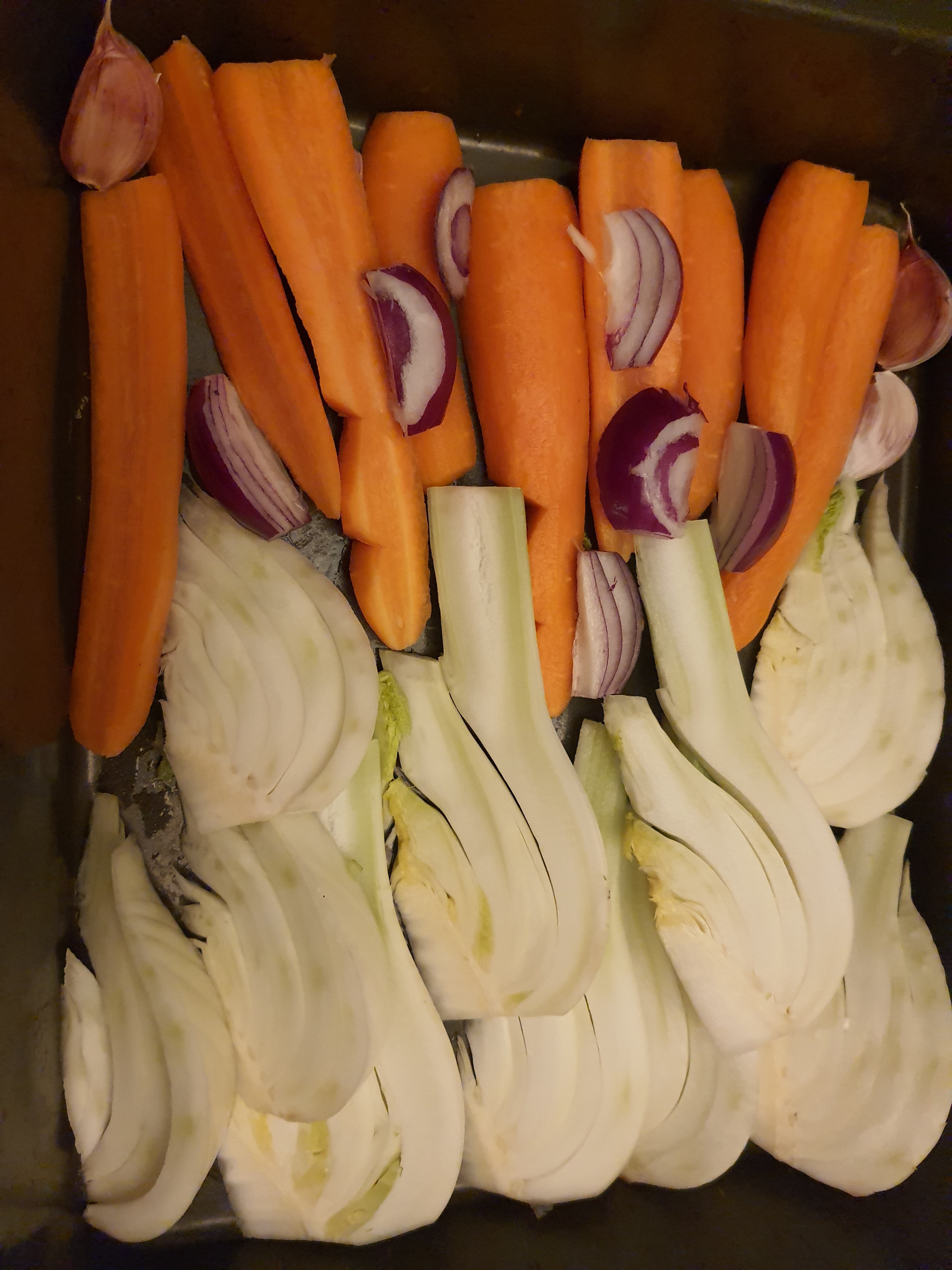
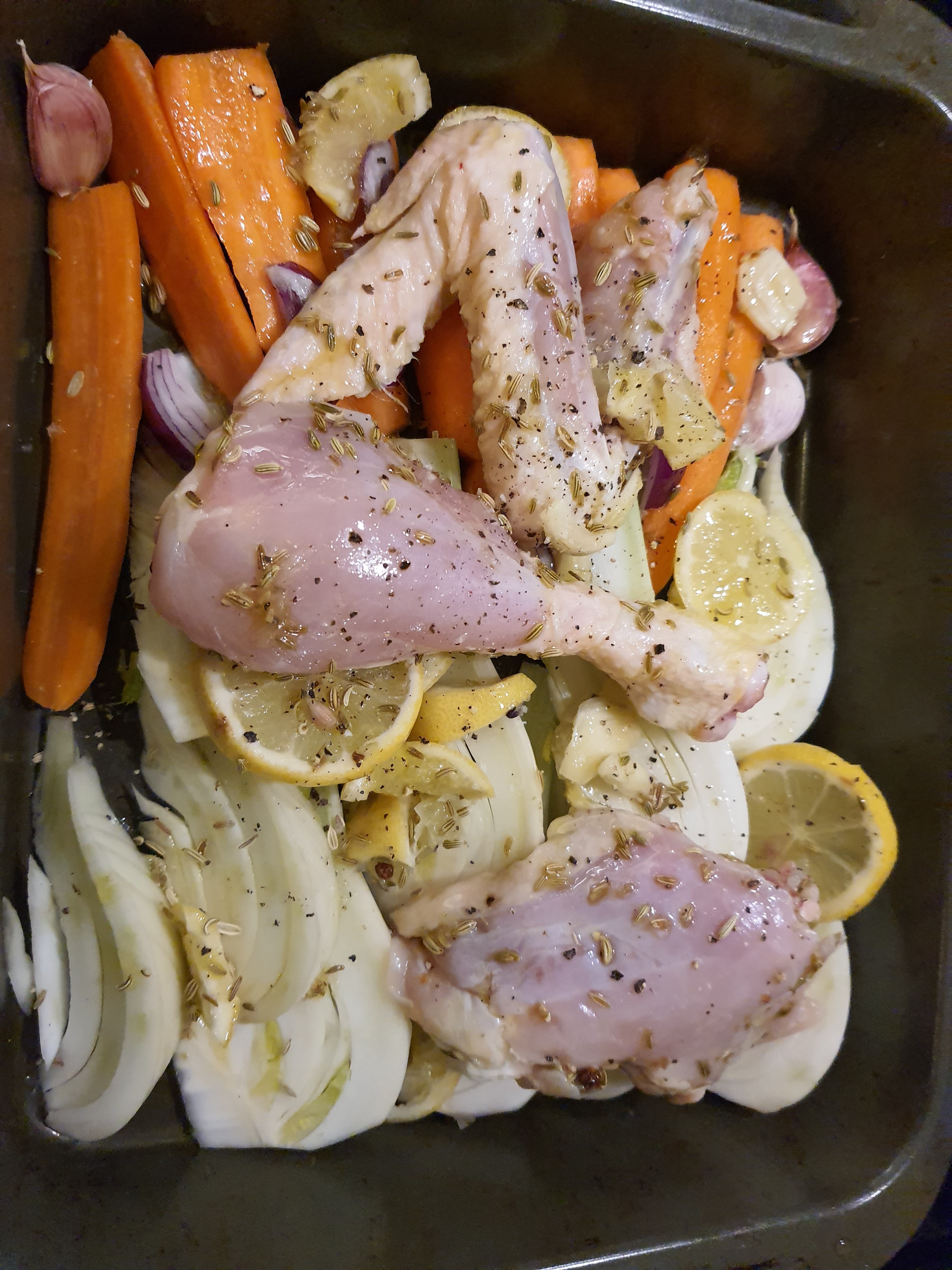
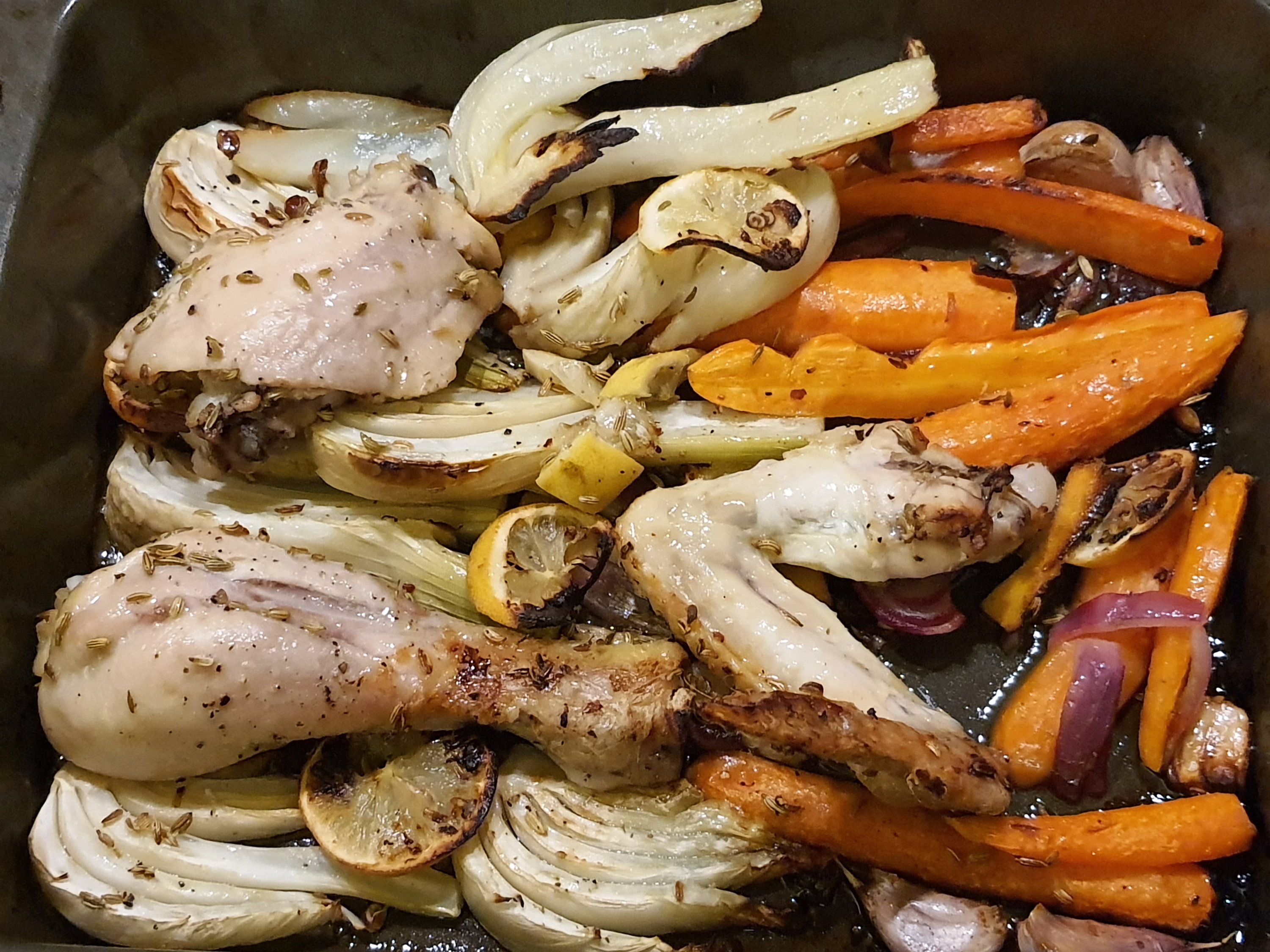
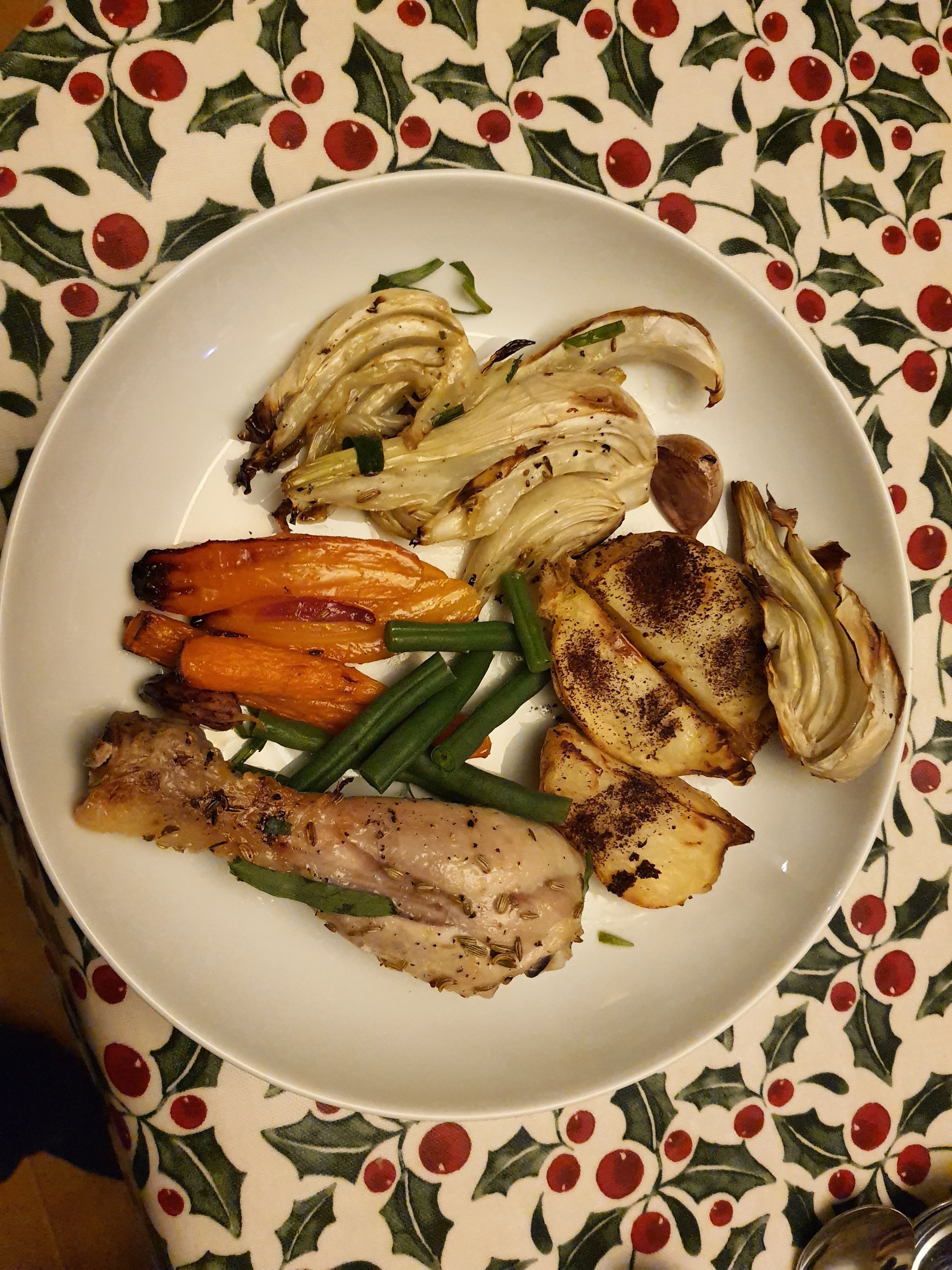
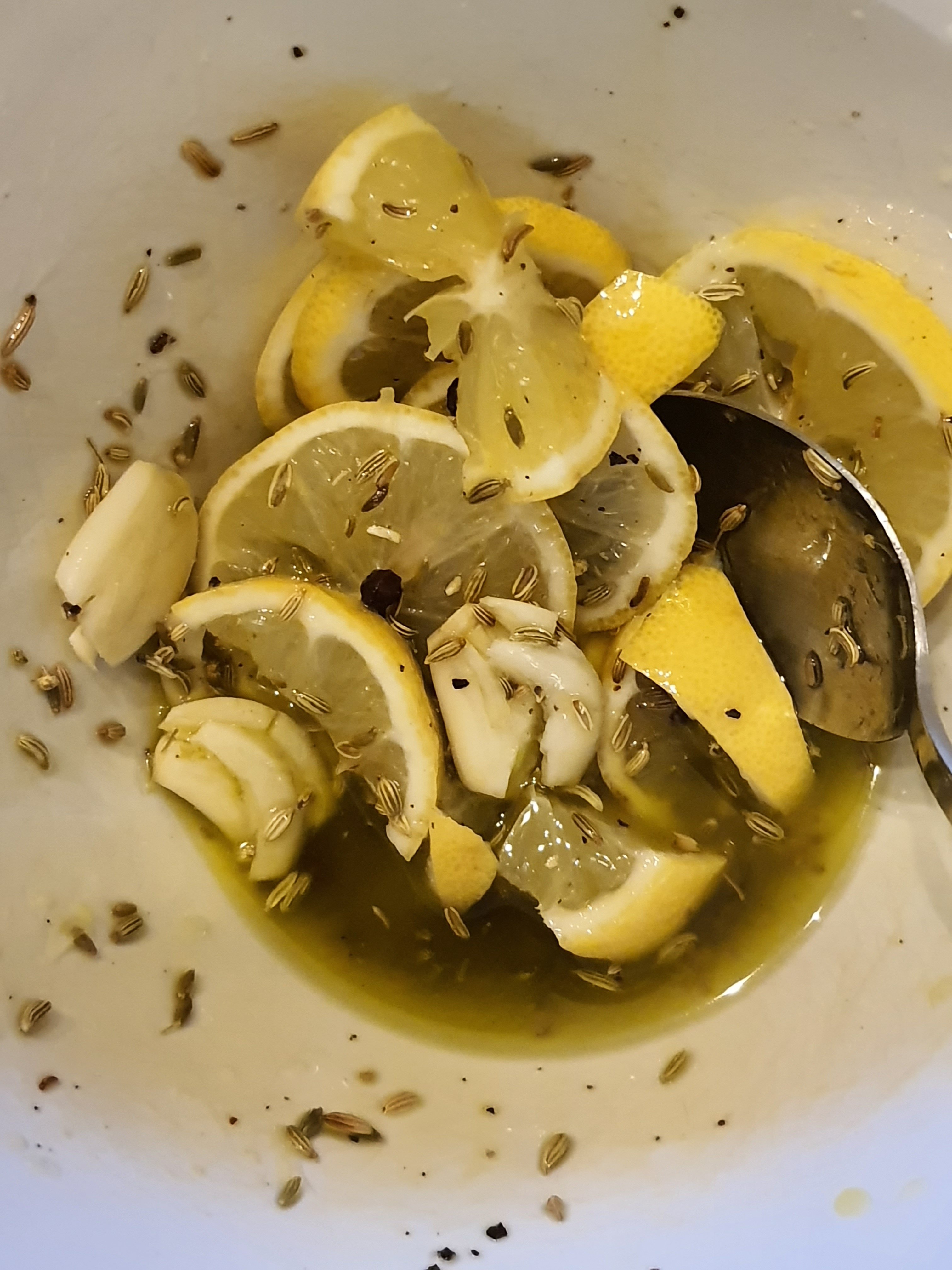
Da Paolino garlic lemon chicken

My variation – I’ll revisit this page with my recipe

Sources: http://www.loveandlemons.com/what-is-fennel/ https://draxe.com/nutrition/fennel-benefits/ https://www.theatlantic.com/health/archive/2009/08/wild-fennel-greeces-mythic-ingredient/23599/ http://cw.routledge.com/ref/tolkien/charms.html https://en.m.wikipedia.org/wiki/Fennel https://www.herbazest.com/herbs/fennel

Design a site like this with WordPress.com
Get started