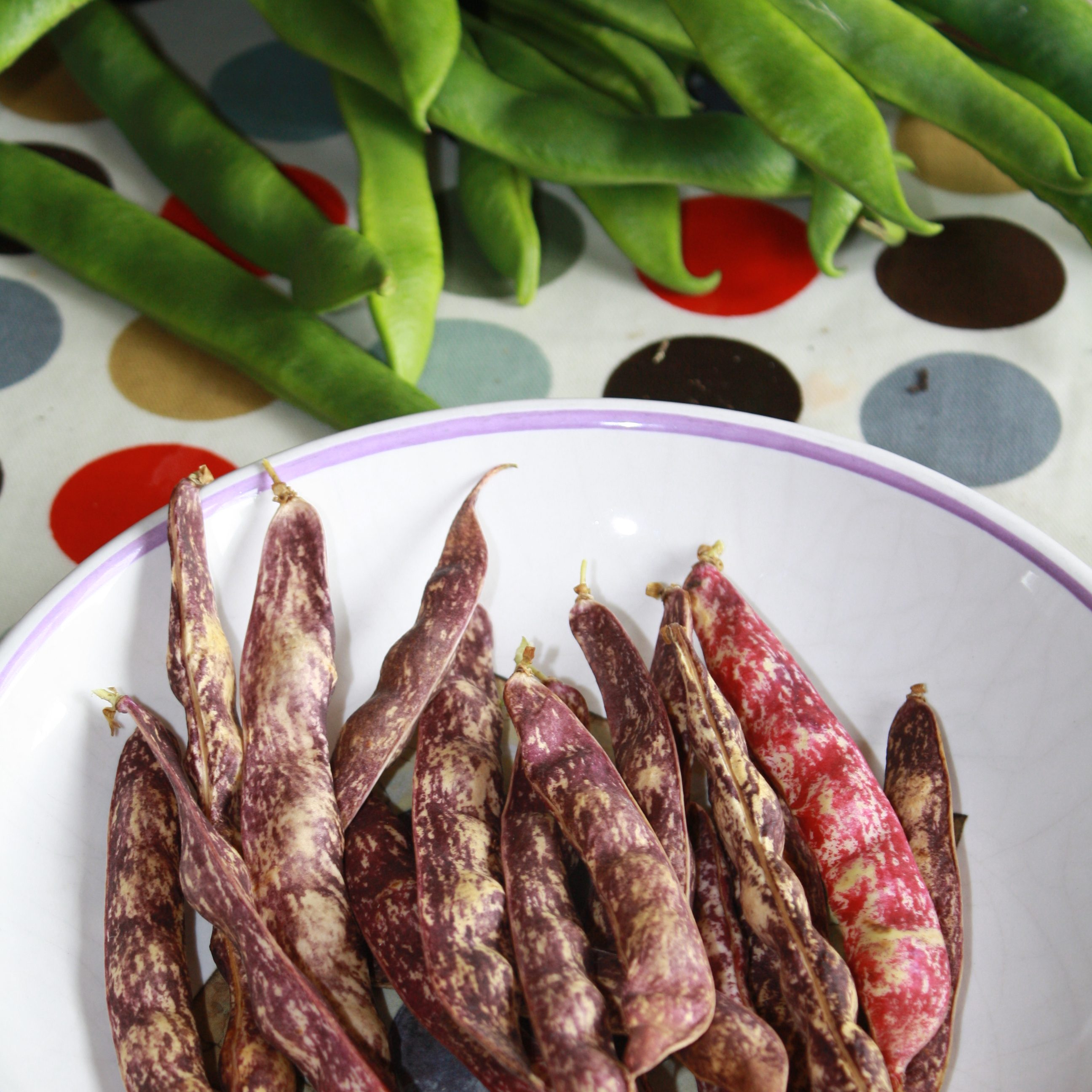
Day 29 – PAK CHOI – Brassica rapa chinensis
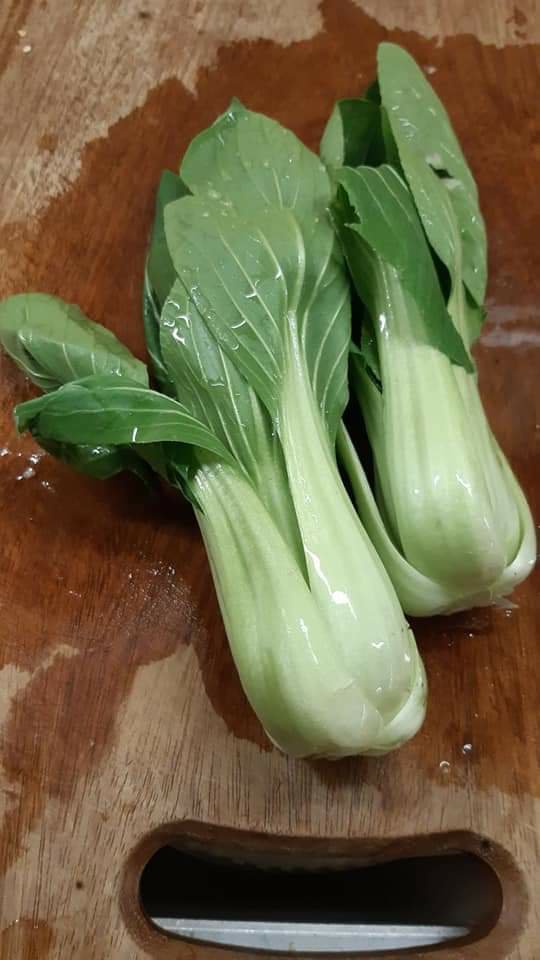
A sweet leafy green most commonly used in stir-fries, the pak choi is a relative of the cabbage (also know as: bok choy, horse’s ear, Chinese celery cabbage and white mustard cabbage). Its flavour is somewhere between mild cabbage and spinach. It’s used abundantly in Asian cuisine.
Pak choi is native to China. Archeologists have discovered 6,000-year-old Chinese cabbage seeds in China’s Yellow River Valley. In the 14th century, Pak choi was transported via trade routes to Korea during the Joseon Dynasty, where it would become a key ingredient in kimchi. To this day it remains one of Asia’s most important vegetables, often pairing with flavours like ginger, garlic, soy sauce, chilli and sesame. But its also got wonderful, succulent crunch that goes well in salads, or can be cooked as a spinach-like side dish.
Wash. If you like you can cut the leaves from the stems, as they cook at different speeds – the leaves cook much quicker, so you could add just towards the end of cooking. Alternatively, if you want to put leaves and stems in the pan at the same time, cut the stems into wide strips and the leaves into finer strips. Very young pak choi can be left whole, or halved or quartered.
And wow, yet another super veg – pak choi is packed with vitamins A and C. 100g of raw pak choi provides more than 75% of the recommended dietary allowance (RDA) of carotenoids (vitamin A), and 75% of C, 57% Vit K and 16% the RDA of folate. With just 19 cal in a usual 100g serving! In fact it’s one of the highest nutritionally ranked vegetables, providing high amounts of more than 21 nutrients, including a wide range of other phytonutrient antioxidants, like quercetin, kaempferol, and isorhamnetin. Some say more micro-nutrient dense than broccoli or kale!!
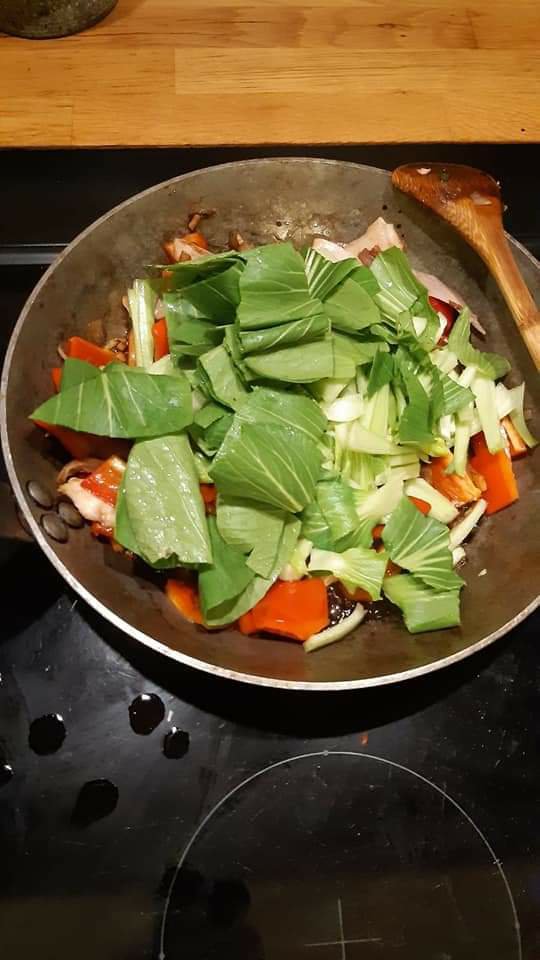
We made Stir fried Pak Choi with Chicken, and we ate it with Thai Black Rice – which i bought in lockdown the first, because it was the only rice on the shelf. Both were totally delicious. With extra ginger too. I love the crunch of Pak Choi (so important in a meal) and the black rice has a great texture – somewhere softer than wholegrain basmaeti but much more texture than white refined rice.

Day 30 – PEAS – Pisum sativum
It is believed that field peas were one of the first crops to be cultivated by man. There has been evidence found by archaeologists of wild pea consumption by humans as far back as 9750BC. The Romans understood the beauty of this ingredient as Apicius (born 25BC) published nice recipes for how to cook dried peas.
Freshly picked garden peas and petits pois are frozen by Birdseye within two and a half-hours of being picked, (retaining all the fresh peas nutrition and preventing sugars being converted to starches). The first peas ever to be frozen commercially were by Clarence Birds Eye who invented the ‘plate froster’ to preserve foods in the 1920s. And in 1969, the first television commercial broadcast in colour was for Birds Eye frozen peas.
Peas are very nutritious. They are a good source of vitamin A, vitamin C, folate, thiamine (B1), iron and phosphorus. They are also rich in protein, carbohydrate and fibre and low in fat. Just one serving of freshly frozen peas contains as much vitamin C as two large apples, more fibre than a slice of wholemeal bread and more thiamine than a pint of whole milk.
The Italians are credited with breeding what became known as “piselli novelli” or new peas, the small peas most of us today call petits pois (little peas), which are sweeter and have softer skins and I think are most definitely superior.
Gregor Johann Mendel (1822-1884), an Austrian monk, worked with peas in laying the foundation of the modern science of genetics.
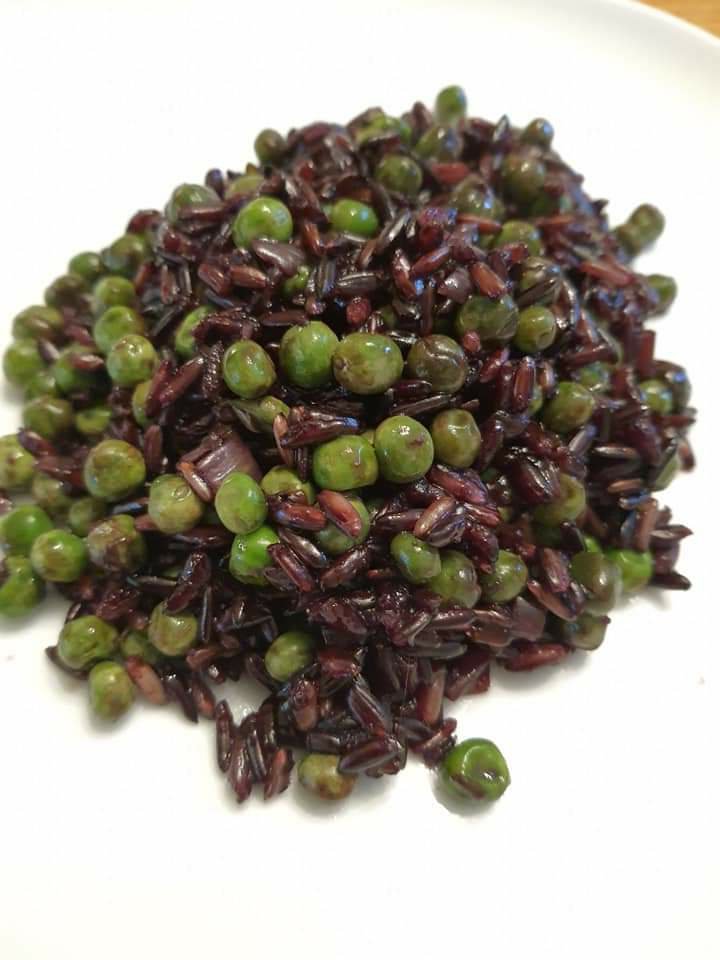
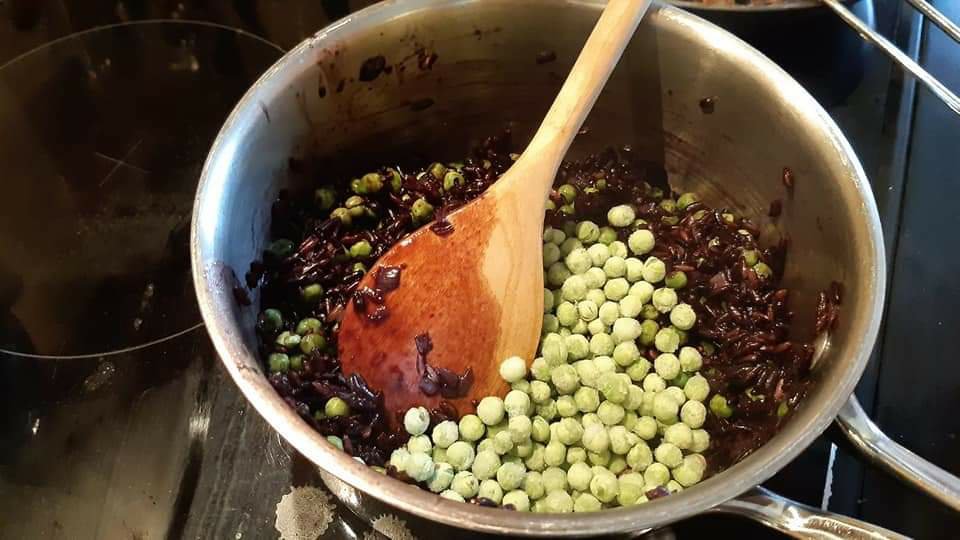
We made a pea risotto using some more of this delicious and highly nutritious black rice I bought in a panic last lockdown in March. Black rice, also called forbidden rice or “emperor’s rice,” – was once reserved for the Chinese emperor to ensure his health and longevity, and forbidden to anyone else. It is a whole-grain rice, rich in anthocyanins, which are pigments that give the rice its unusual color.
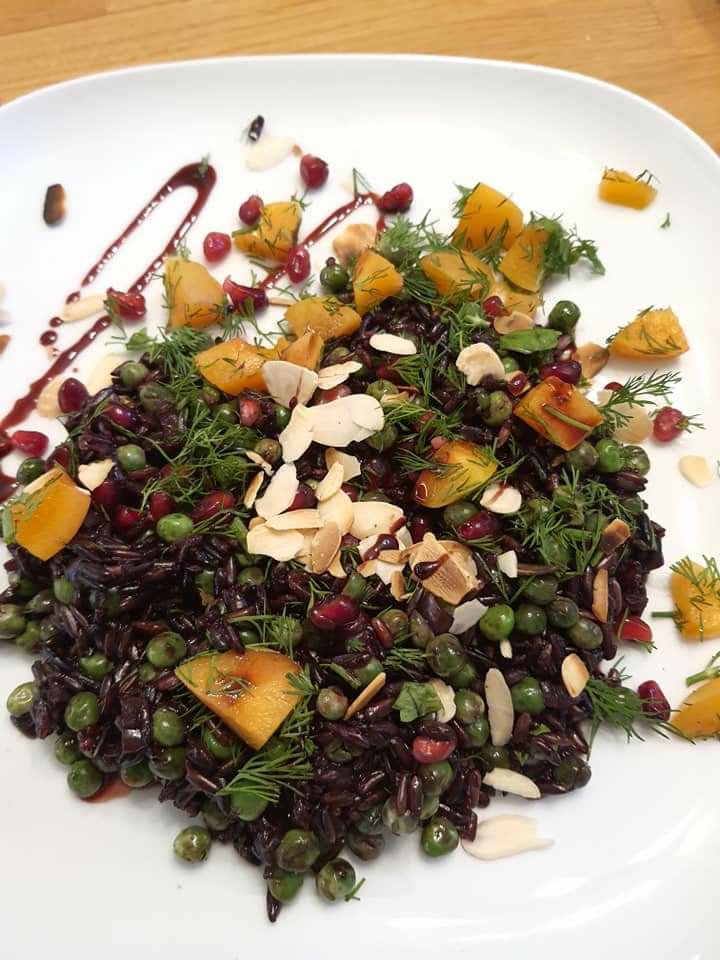
But we didn’t use parsley, but dill and mint. And added pomegranate seeds, apricots and toasted almonds – with a drizzle of pomegranate molasses – to offset the sweetness. Got the idea from a interesting blog: https://blog.foodpairing.com/2013/06/foodpairing-dishes-pea/ and other such finds on the internet!!
Day 31 – Spinach
Spinacia oleracea
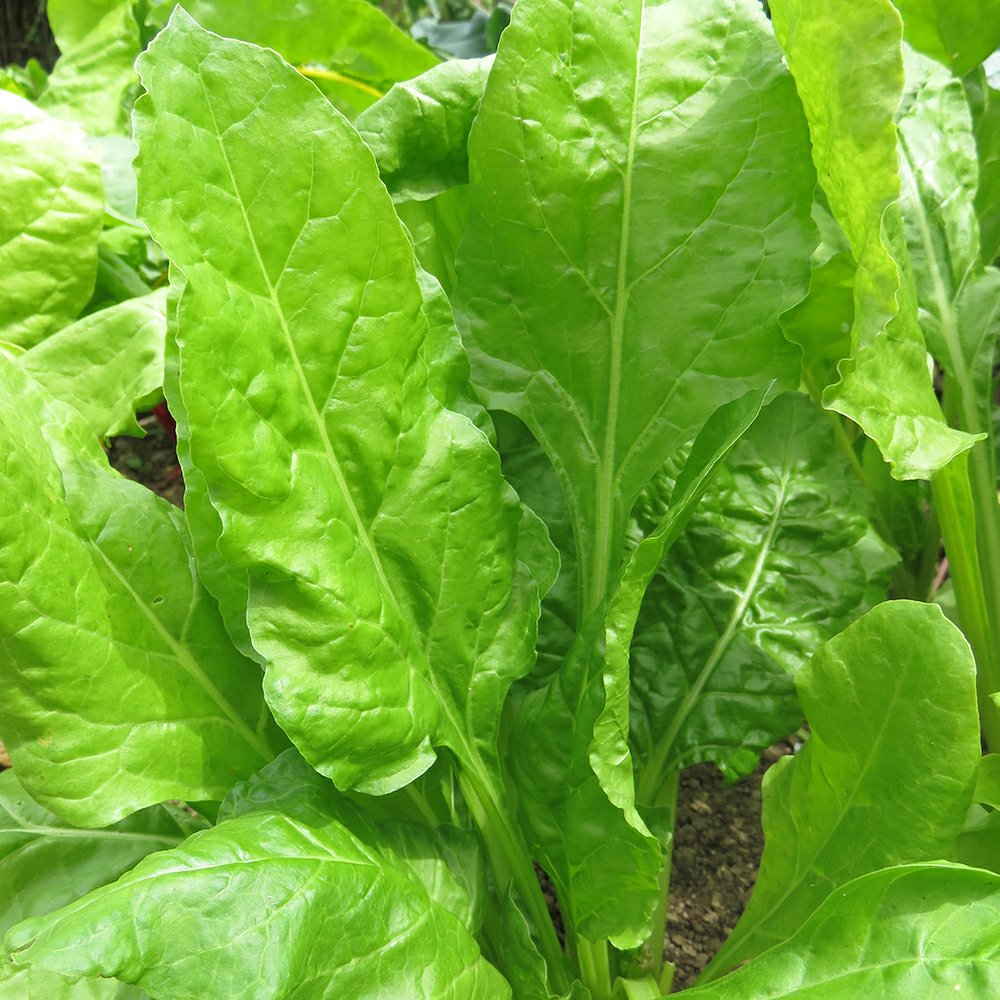
Spinach belongs to the amaranth family and is related to beets and quinoa. Sweet, tender and really rather good for you. Popeye was right!
It’s loaded with nutrients and antioxidants – it is one of the best vegetable sources of iron, an excellent source of calcium, folic acid, fibre, protein, calcium and vitamins A, C and K. Interestingly I read that half of the major nutrients are lost by the eighth day after harvest – so frozen while fresh is rather better for you than most supermarket bought leaves. But home grown or market garden bought must be best. Apparently cooked spinach provides better bioavailability of some the nutrients than raw spinach.
Thylakoids of the spinach cells are what give spinach its green color. These have been found to help satiate appetites, which can help in weight loss.
Spinach is a native plant of Persia (Iran). Arab traders carried spinach into India and then later introduced into China in the 7th century. It was most probably brought to Europe in about the 12th century. Spinach is still widely known in China as “the Persian Green”.
During her reign as queen of France, Catherine de Medici enjoyed spinach so much, it was served at every meal. To this day, dishes made with spinach are known as “Florentine” reflecting Catherine’s birth in Florence.
Medieval artists extracted green pigment from spinach to use as an ink or paint.
March 26th is National Spinach Day.
Goes well with:
Asian flavourings (Chilli, Ginger, Sesame, Soy sauce)
Cheese (especially ricotta and feta)
Cured pork Dairy Dried fruit Garlic Lemon Mustard Olives and olive oil Spices (Cayenne, Chilli, Mace, Nutmeg, Paprika).
I made Saag Paneer (but not enough, so I will have to make it again very very soon).
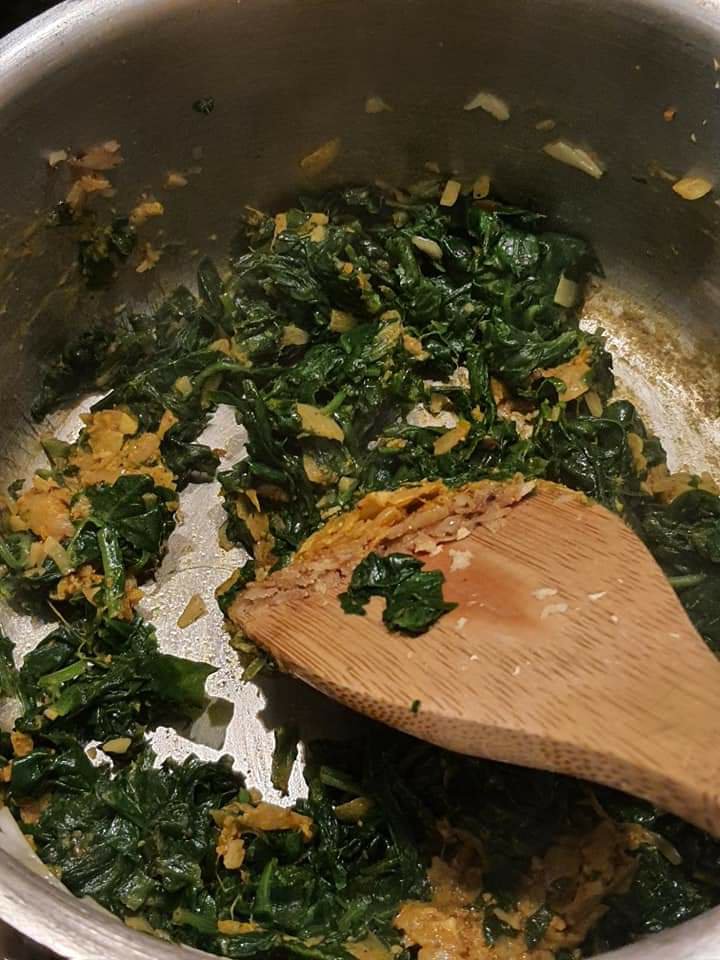
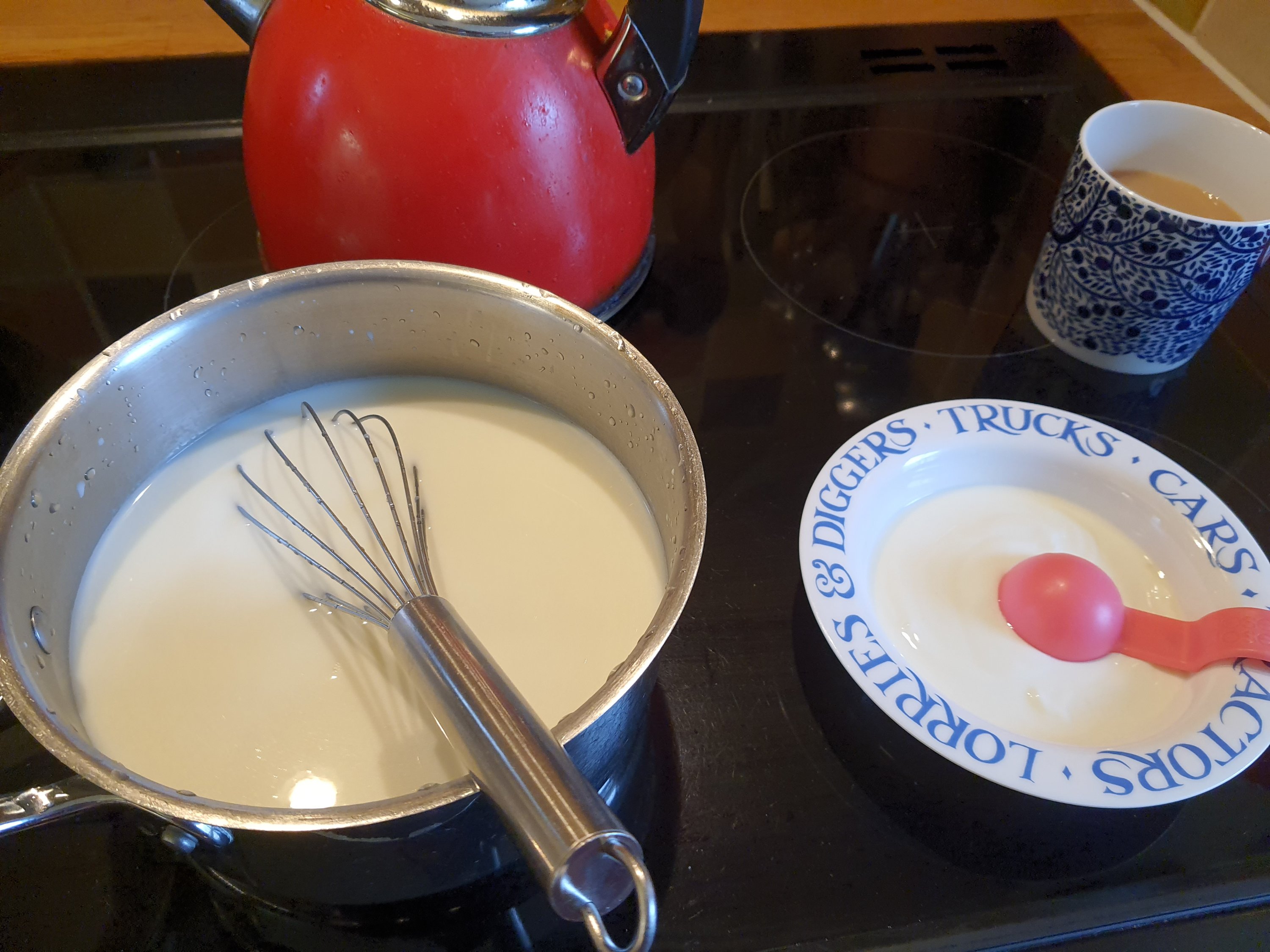
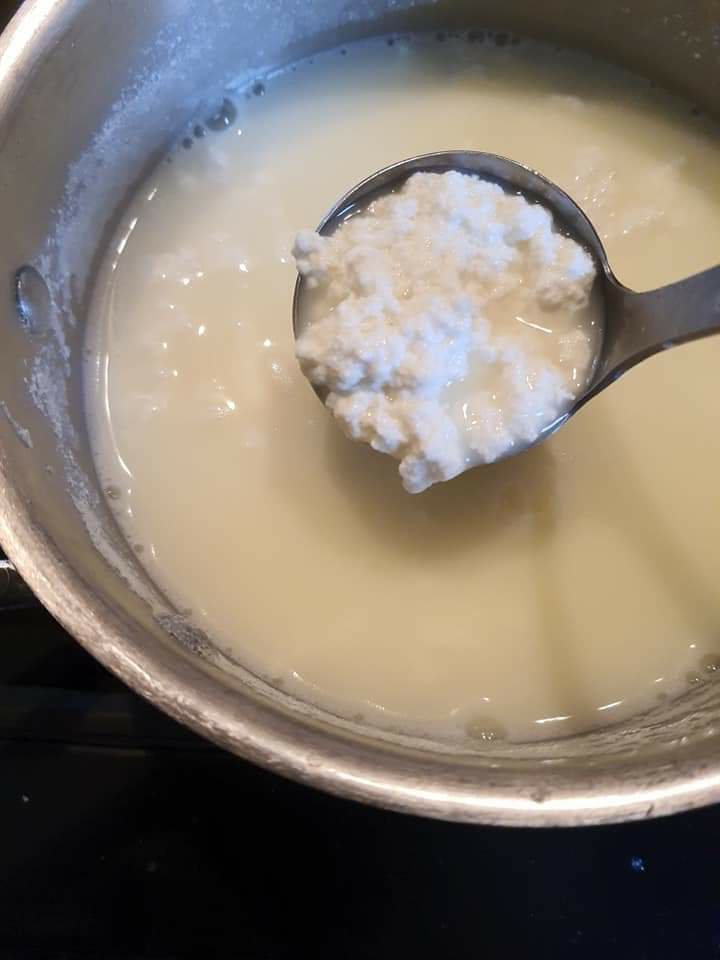
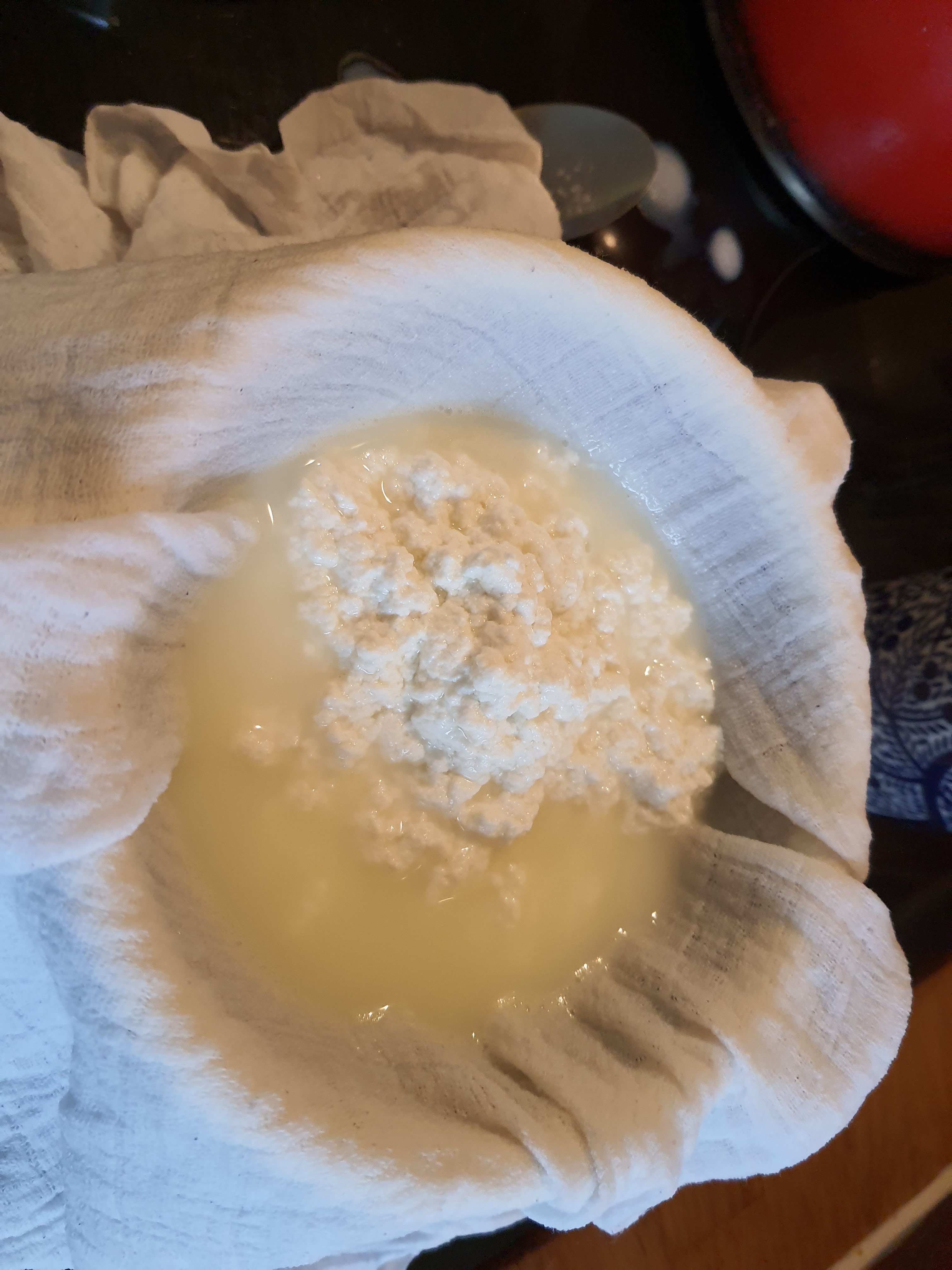
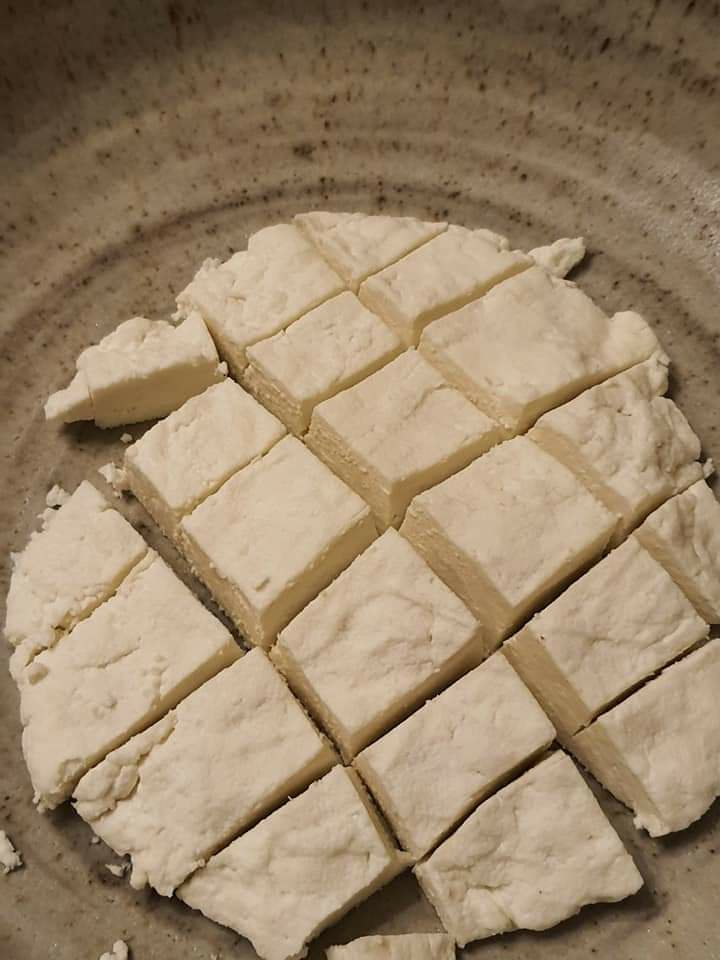
I also made my own paneer. I had no idea that making paneer cheese was so easy. Just need to think ahead as required a few hours draining – but very little effort and much more tasty than shop bought.
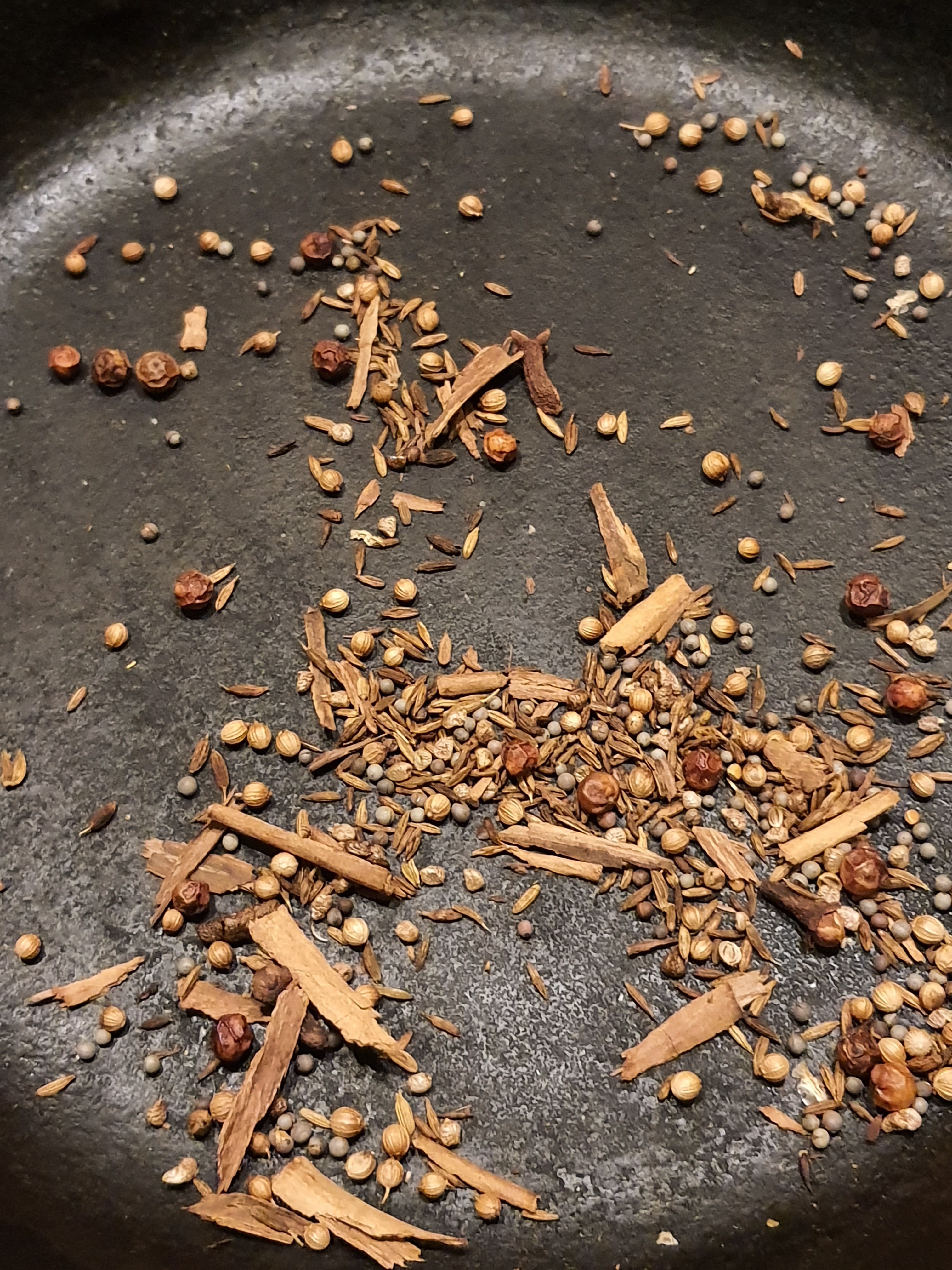
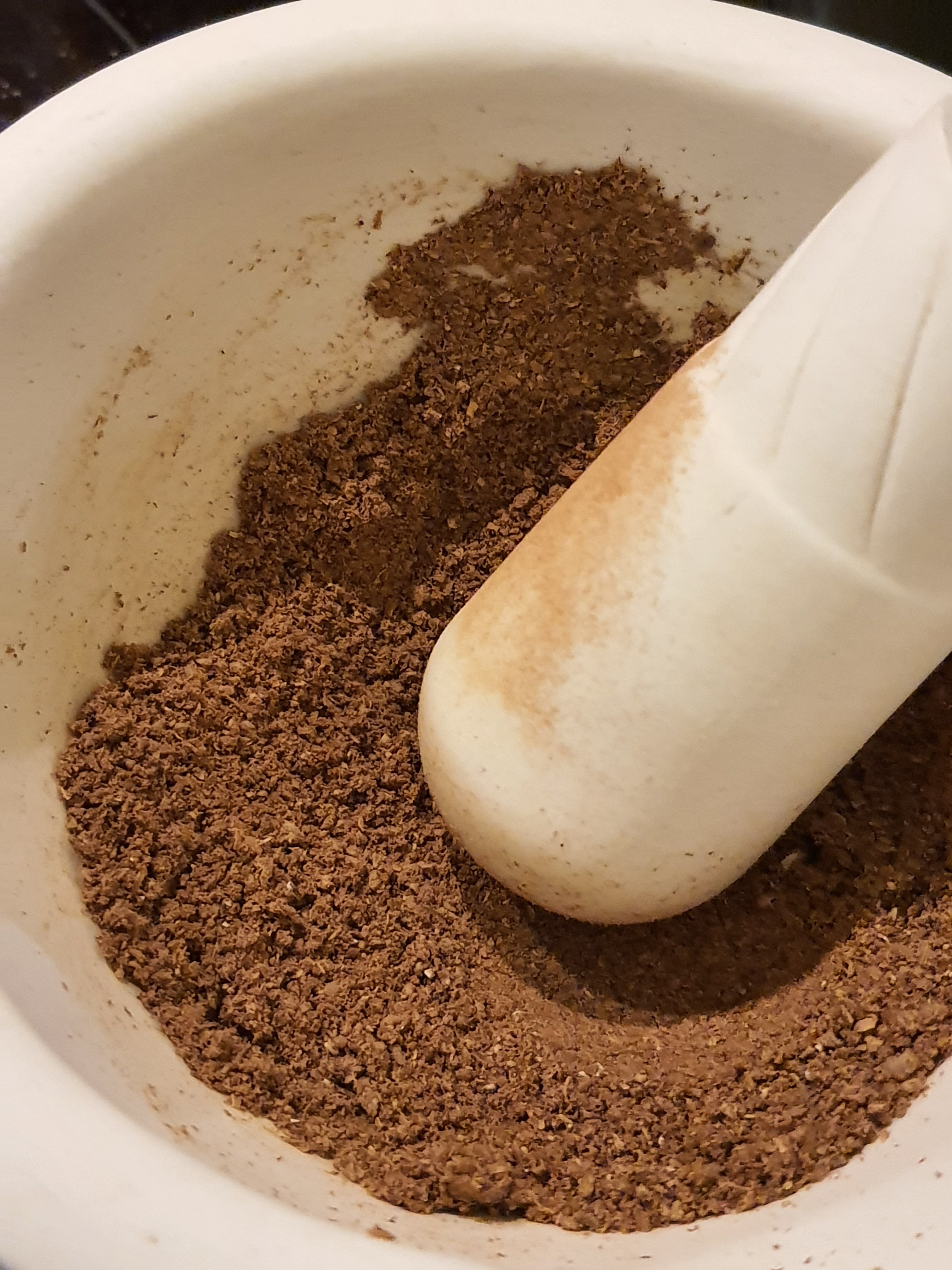
I used a combination of a few different recipes for the Saag Panner, here are two:
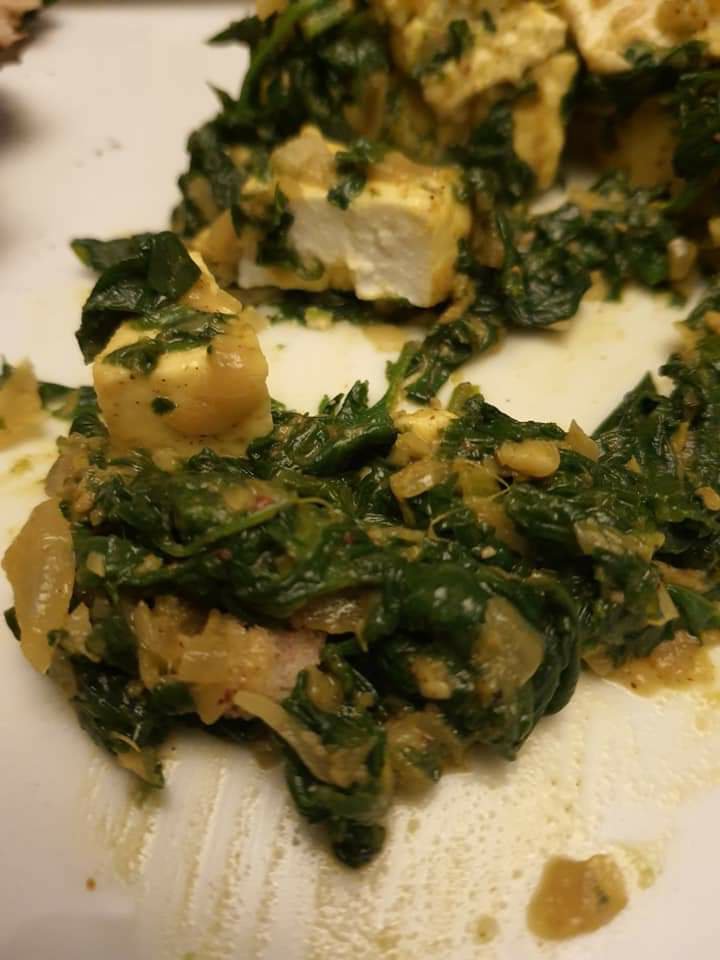
and Asma Khan’s Saag Paneer
I kept the spinach slightly wetter than was suggested and didn’t fry the paneer. I just had a 200g bag of spinach and 150g paneer but I thought that was a tasty ratio – just wished there had been double that.
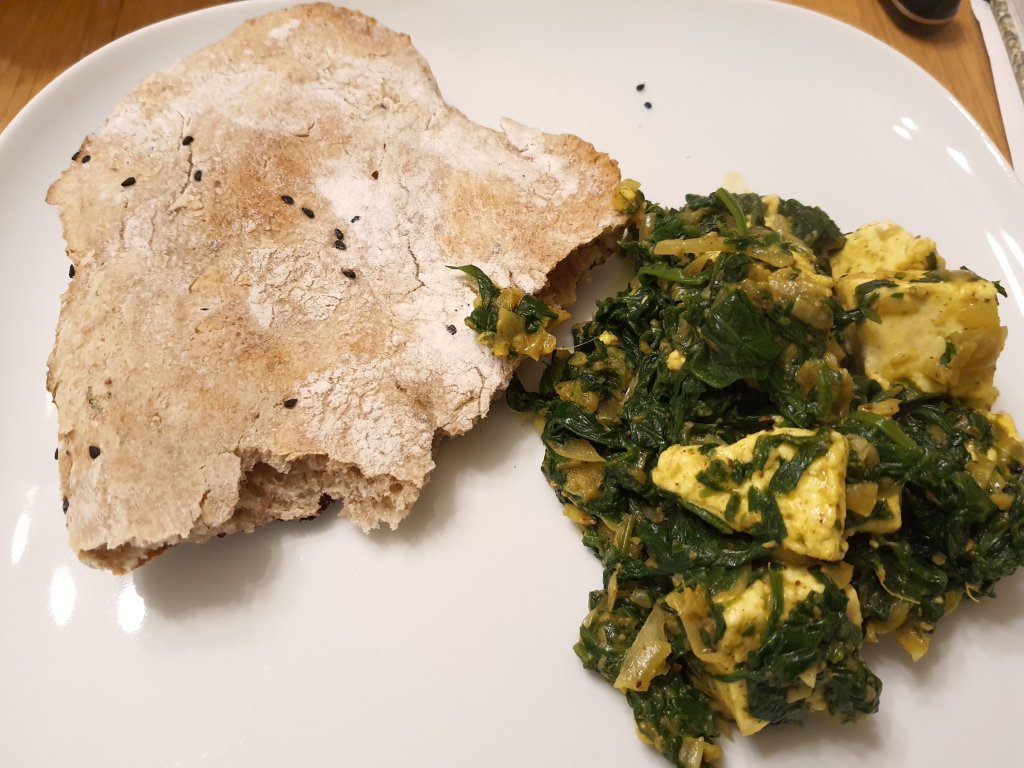
Naan recipe here:
Madhur Jaffrey inspired me. What I make is slightly different than this but this is a great place to start:
 Relishing Life - Eating Well