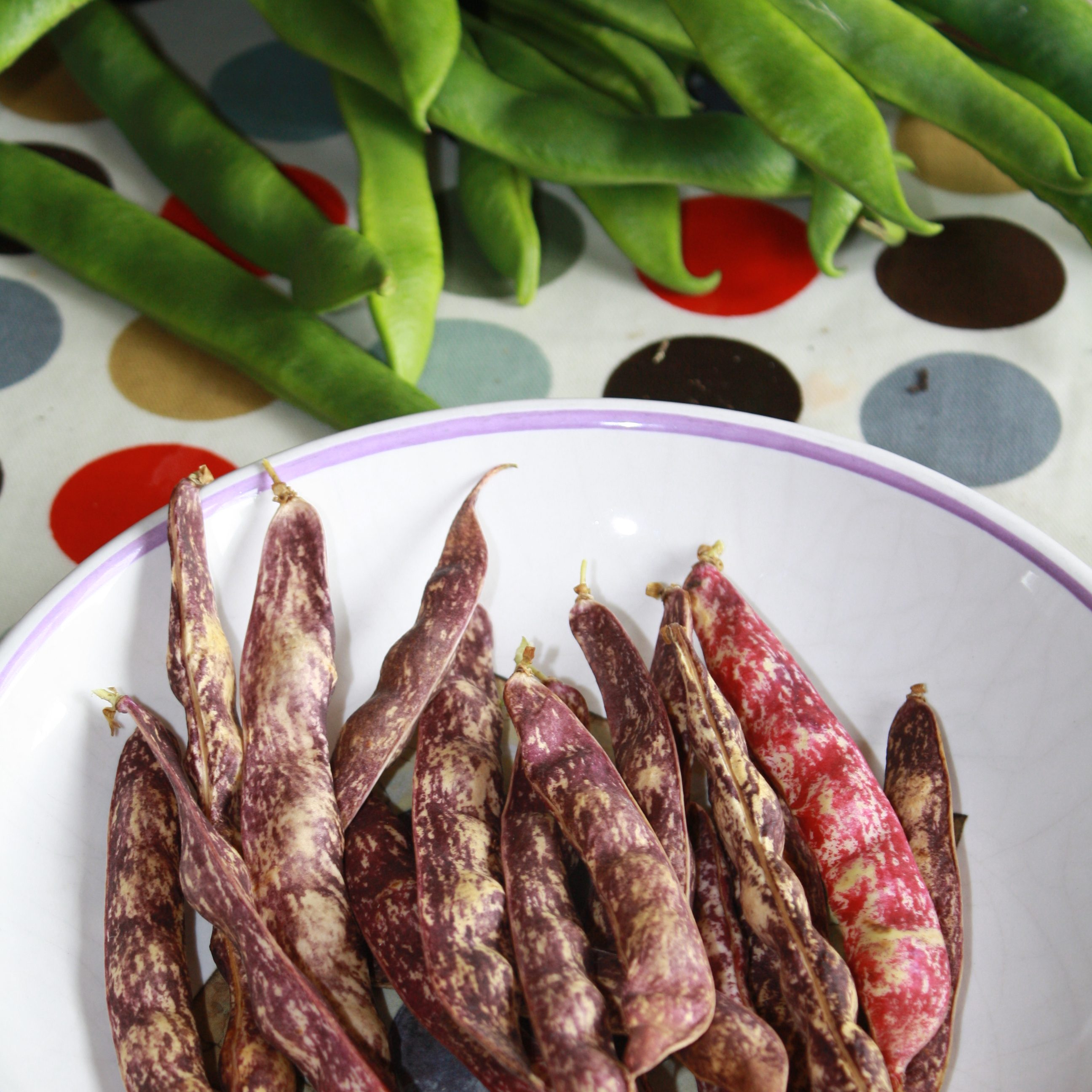
Vegetables, fruit, pulses, nuts, seeds, leaves and flowers.

Variety is the key.
The latest research recommends trying to consume at least ten different plant based items very day and ideally 30+ different plant based items a week.
We should also probably all aim to eat a lot – perhaps even as much as 750g – 1Kg of plants (vegetables and fruit, pulses, nuts, seeds, leaves and flowers) – every day.
Aim for 500-650g+ of vegetables /day (5-10+ vegetables of different colours)
Aim for 250-350g of fruit /day (2-3+ fruits, unless you struggle with the sugars)
This is how many plants I hope to eat each day. It isn’t as difficult as you might think, but this amount can take a while to eat. And they fill you up. They take time to chew – but it’s a good thing to slow down the speed of your consuming a meal. It gives time for the salivary amylase to begin the breaking down process in your mouth and time for the hormone messengers of your body to do their job. For example, ghrenlin levels take time to fall (this is a hormone produced in your stomach which the a role of messenger, to tell your brain that you need to eat).
I usually have fruit at breakfast time and at one other mealtime, usually 3-4 varieties, (often plenty of berries, especially in the summer).
I try to eat around 300g vegetables or salad at each meal, with often the addition of nuts, seeds, pulses and sometimes wholegrains. I try to avoid letting meals be too root vegetable heavy. It’s a good thing to have variety; even a small amount of something added to a dish adds a few of that vegetable’s specific macro and micro-nutrients /polyphenols.
Recording what you have eaten helps to track the ambition of ten varieties. I have included a link to a chart on the blog that you could download to do this, or create your own tracking system. Try to use different coloured vegetables, which may improve your appetite for veg. and increase the range of nutrients in any given meal (found in the rainbow of colours). Using recipe books / websites will help (I often use https://www.riverford.co.uk/recipes/search/index/ as well as https://www.bbc.co.uk/food/recipes ). Weighing your vegetables onto your plate gives you a good idea how big a portion size is needed for specific vegetable, to be able to achieve 300g. You begin to get good at estimating after a while. Eat some raw, cook some; fry, steam, blanch, roast – all these things change flavours and affect texture and may well affect bio-availability during digestion. Perhaps flavour with a healthy fat to improve desirability; fat is recommended to be eaten at each meal for many reasons – not-the-least being that it is an essential requirement of our body and brain’s compostion and function. Make massive salads, using an array of ingredients. A salad will keep a couple of days in the fridge, especially if you have tossed in a little olive oil, although perhaps add condiments or the protein the day you’ll eat them. Flavour any vegetables or salads with herbs and spices or condiments (such a balsamic vinegar, seeds, capers, chilli or lemon zest etc). Besides these things adding robust flavours, they’re full of nutrients themselves.
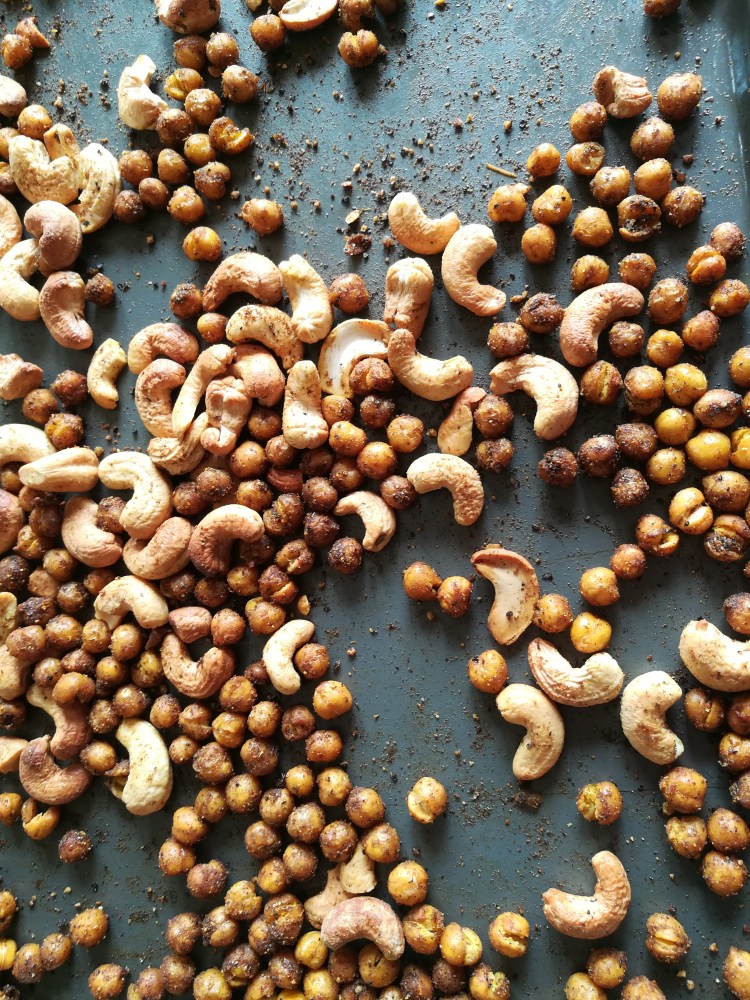
How eating a largely plant-based diet might affect your health.
Plant-foods (as long as they are not overly processed or refined) are an abundant source of nutrients. Each food stuff has their own specific profile of vitamins, minerals, dietary fibre and protein. A plant based diet is also a rich source of polyphenols – the thousands of biologically active molecules that have many roles in our health, many yet poorly understood. Many components of these macro and micronutrients (for example dietary fibre and polyphenols) nourish (feed) our gut bacteria and other microbes (microbiome) – and this is beneficial to our health in many ways. For example, some microbes provide vitamins that are then available for the human host to use, as a byproduct of microbial cell function. Some microbes mediate transport of nutrient across the gut wall into our blood stream. The relationship between the beneficial microbes within our gut and us, their human host, is highly complex and truly symbiotic. This secret world that we have only very recently understood (since the unlocking of the human genome) very likely holds the key to much of our future understanding of physical and mental health and disease. Truely amazing. And this knowledge carries with it a level of personal responsibility and accountability, if we let it. We are infact responsible for what our internal microbiobial community feast on and, as a consequence of our food choices, which of them thrive and which of them stuggle (or die off).
When considering the specific relationship between food and disease, it is difficult to determine cause and effect, because there are so many variables to consider. But what we do know from huge epidemiological studies, that people who eat more plants in their tend to have a lower overall risk of diseases, including high blood pressure (hypertension) and type 2 diabetes. People who eat largely plant-based diet also have a higher life expectancy than those who eat a typical Western diet high in refined carbohydrates, sugar and processed foods. www.ncbi.nlm.nih.gov/pubmed/29659968
A healthy microbiome is a diverse microbiome. The more diverse the diet someone has the more diverse the microbiome, as each microbial type feeds from specific components of the food-stuff released during the digestive process. People who eat around 30 different plants every week have been shown in a huge international epidemiological study to have a much greater microbial diversity than those who eat just 10. The theory is, the more diverse the range of microbes, the more capable, resilient and adaptable the gut will be to alterations in its biology during life (disease, infection, environmental influences etc).
Unfortunately, dietary diversity has been lost during the past 50 years, with changes in industrial farming practices, the health of the soil and processed foods, all of which have reduced the diversity of the food available to us. Also dietary choices that exclude food products from a specific food group, such as animals or plants or grains etc. reduce the microbiome diversity further. Such diets consequently end up eliminating important populations of gut microbes by removing their favorite foods. Today, 75% of the world’s food originates from only twelve plants and five animals .https://www.idrc.ca/en/research-in-action/facts-figures-food-and-biodiversity Antibiotics which are widely used in meat and some fish production, further reduce the diversity of the bacteria living in our gut. Recent investigations of the microbiota profile from the GI tract of people living in hunter gather communities and eating a hugely varied and seasonal diet, has demonstrated quite how diverse a microbiome can be.
You don’t have to be vegetarian to get the benefits of a plant based diet for your gut
It is interesting to note that in the data (2018) from the continuing American Gut Project https://msystems.asm.org/content/3/3/e00031-18 (over 10,000 participants) that it was the number of different plant foods in the particpant’s diets which had the greatest influence on the diversity of their gut bacteria rather than whether they identified as a vegetarian or a meat eater. This means that you don’t have to be vegetarian to get the benefits of a plant based diet for your gut. What is important for both vegetarian/vegans and meat eaters is to get a big variety of plant foods as possible, as it this fact that seems to encourage the growth of different species of helpful microbes. As as an aside, alcohol consumption also affects microbiome diversity. Those who had at least one drink per week had a more diverse microbiome than those who abstained from alcohol.
(Much of this sourced from https://joinzoe.com/2019/07/23/improve-microbiome-diversity-gut-health/ and othes of their BLOG entries)
I intend to blog about “ZOE” (which means ‘Life’ in Greek) in the next few weeks, but their blog entry in July 2019 make for very interesting reading. ZOE is a company that has been set up by Tim Spector (Professor of Genetic Epidemiology at King’s College London – see RESOURCES page) and his colleagues Jonathan Wolf and George Hadjigeorgiou. I have been a great fan of Tim Spector, and his book “The Diet Myth” had a a significant influence on me a few years ago. http://www.tim-spector.co.uk/the-diet-myth/
You may well be unwittingly familiar with their work, as they have utilised their current work with ZOE to quickly create the COVID-19 daily app that you may currently be using to report daily symptoms during the COVID-19 pandemic.
ZOE is decribed as being “born by combining Tim’s scientific knowledge with George and Jonathan’s machine learning and business expertise, together with nutrition researchers from leading academic institutions, including King’s College London and Massachusetts General Hospital … now leading the world’s largest scientific study of nutritional responses … using this wealth of data to develop a consumer product that provides clarity and confidence about how best to eat…There is no one right way to eat – the key lies in understanding how your body responds to food and eating in a way that suits you best.”.
I also recommend this article from their blog: “The more the merrier. Why diversity matters for your gut microbiome.” https://joinzoe.com/2019/07/23/improve-microbiome-diversity-gut-health/
Here’s a taste of it: “Trillions of bacteria and other microbes live in your gut, collectively known as the microbiome and weighing up to 2kg in total. But they aren’t unwanted guests – they help to digest your food and make a vital contribution to health. And, as we’re discovering through our own research studies, they play a vital role in determining your unique personal responses to food. There has been an explosion in research into the community of microbes that live in our gut, known as the gut microbiome, in recent years. Research has linked our gut bacteria to how efficiently our body breaks down food, the health of our immune system and even brain function. Microbes begin to populate our gut on the day we are born. But the microbes that live in our gut are not permanent residents. Like a thriving city, the inhabitants of our microbial habitat come and go over time. But exactly which microbes live in our gut depends on many factors. Diet is an obvious example, and people who eat a wide variety of plant-based foods usually have a more diverse gut microbiome. Intriguingly, genetics seems to play only a minor role – we’ve found that identical twins only share 37% of their gut bacteria,only slightly more than two unrelated people.”
A few of my favourite vegetable recipes:
Web links in green – everything can modified to suit taste or preferences. Many of these things can be made ahead when the oven is already on, and eaten cold with a salad. There will soon be a page of “Great Recipes”. If you would like to contribute a recipe, that would be fabulous. Please send to the link at the bottom of the page. If also just you happened to have a photograph, even better.
Caramelised carrots with gremolata
These are so delicious hot or cold.
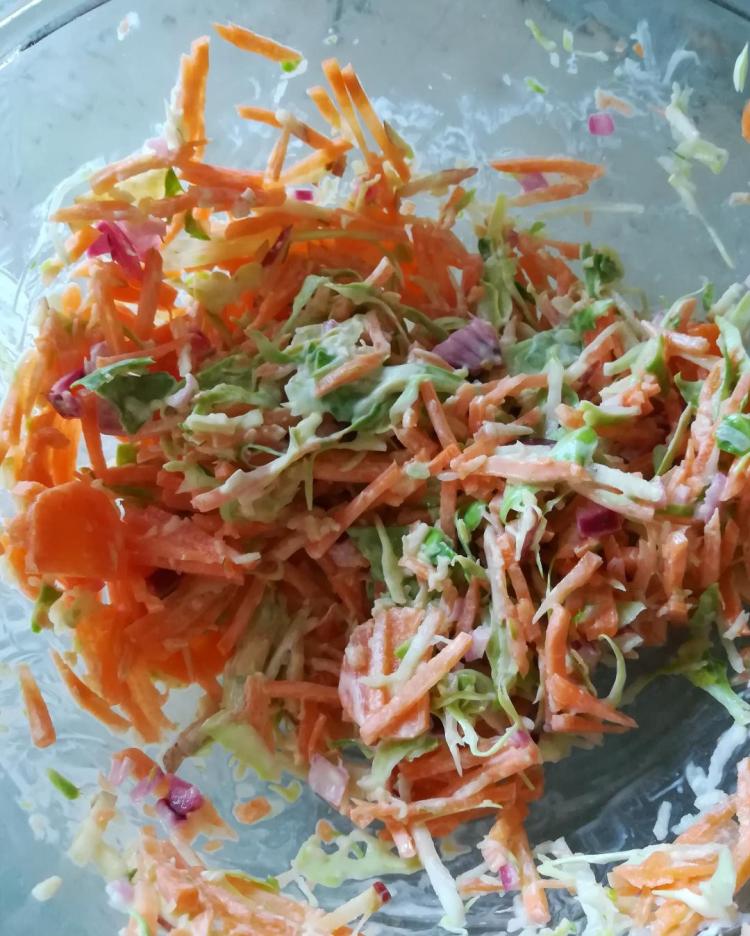
Andrew’s Coleslaw
We eat buckets of this with everything. Lasts a couple of days.
Finely dice a red onion and completely soak in lemon juice (first zesting the rind) for 30- 60mins (it changes the onion from harsh to crunchy and delicious) Using a mandolin or julienne (or finely slice with a knife) whatever vegetables you fancy. We like: Carrots, cabbage (we like Pointed cabbage or Sweetheart cabbage, works with any kind. Red looks fantastic), apple, fennel (when we have it in)
Mix it together with the onion with lemon juice, the lemon zest, some sea salt and pepper and approximately (but to taste. I personally like less than 1/3 mayonaise and more yoghurt) equal amounts of thick yoghurt (we use Yeo Valley full-fat), creme fraiche, mayonnaise. The right amount to coat the vegetables to the amount you like.
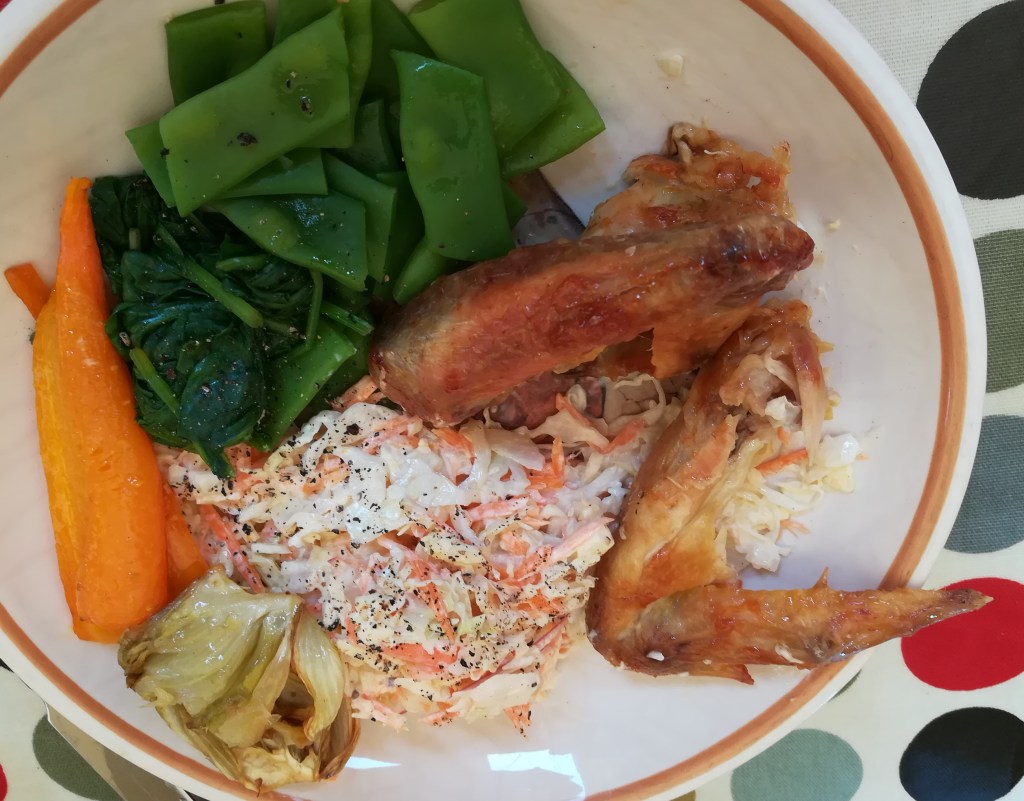
I love a massive bowl of Andrew’s coleslaw, topped with chunks of hot freshly roasted chicken.
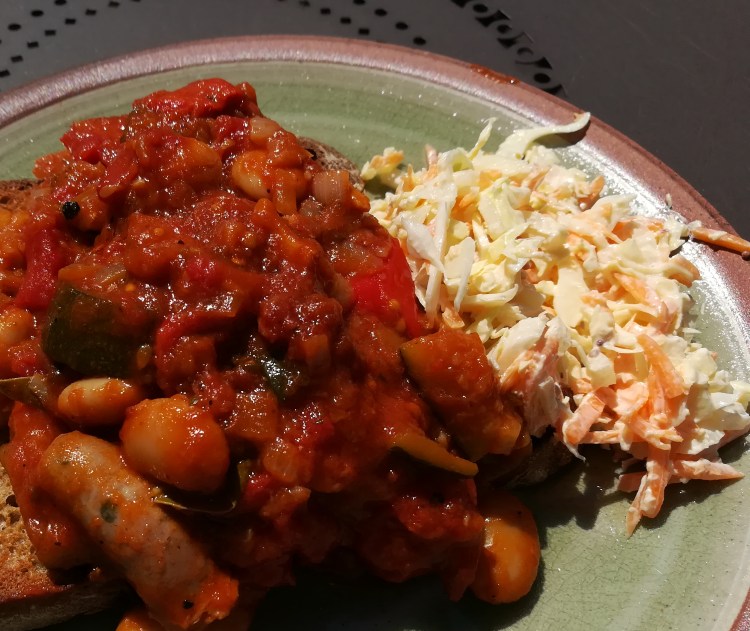
Sweet potato & peanut stew with mushrooms & spinach (with or without red rice)
Do use the creme fraiche or yoghurt, there’s something missing without. I like a squeeze of lime too. And you did read 25g of fresh ginger. It’s a lot but it works beautifully.
Roasted Vegetables
Roasting tray with a wide variety of veg: I like selection from whatever in the fridge: red onion wedges, whole garlic cloves, red pepper chunks (I like halved Ramiro peppers), halved mushrooms or whole portobello, halved leeks, asparagus, green beans, chunks of fennel, courgette, halved chicory, parsnips, brussels sprouts, carrots, beetroot wedges, small chunks of white or sweet potatoes etc.
I drizzle with olive oil (they don’t need a lot, but they to be coated) and often a quality balsamic vinegar and some black pepper. I often throw some rosemary or thyme leaves on top with ten minutes to go. Sometimes I add some mustard or fennel or caraways seeds. Sometime I squeeze fresh ginger over the top. Or lemon/lime zest or quartered lemons. Or a tiny amount of honey.
15 – 30mins at 180 degrees C. Root veg take the full time – depending on the size of chunk; I’ll often add the other veg in after 10 mins.
Roasted veg with: poached eggs and a small grating of Parmesan, with a cold piece of mackerel and some horseradish, with left over cold meat and mustard, with some roasted or toasted cashew nuts or pine nuts or with some fried halloumi cheese or some pomegranate seeds. Andrew makes loads. Gorgeous in a salad cold the next day, maybe with some pumpkin seeds or some prawns.
Tomato Rougaille
A Mauritian Creole dish. I make it with/ without the eggs. It delicious both ways. I sometimes add chunks of red peppers. I often cook it for longer. I never remember the parsley! I eat it with a piece of toasted sourdough rye bread, that I break up and drop on top of the dish when it’s cooked. Or perhaps with a baked sweet potato or a huge bowl full of spinach leaves, with a small amount of grated Parmesan or Mozzarella cheese or maybe a dollop of yoghurt or creme fraiche. Don’t be put off with the amount of olive oil, that’s so much flavour and gut microbes love olive oil! I also make it in a more Mediterranean style, without the ginger, and add garlic when the onions are cooking and then capers, olives and cornichons whilst it’s cooking.
Smoked aubergines with garlic (mirza ghasemi). A Persian dish.
Whole roasted aubergines (45mins at 220 degrees) are absolutely delicious. I could eat them every day, in loads of ways.
You don’t have to use the eggs. Amazing with cold mackerel. I eat it with toast or just pieces of Romano Lettuce.
Roasted cauliflower with lemon, caraway and mint
I used to dislike cauliflower. Roasted it takes on an entirely different flavour. Lovely cold next day, with a salad.
Celeriac and apple soup or Celeriac and chestnut soup with black pudding and sage
(instead of black pudding – perhaps toasted pumpkin seeds, chorizo or bacon).
Delicious and really filling with the chestnuts
Judging amounts
It can be useful to weigh your plate as you add the cooked meal
How much? Lunch of Tomato Rougaille with roasted mushrooms, red onion, fennel and a side salad
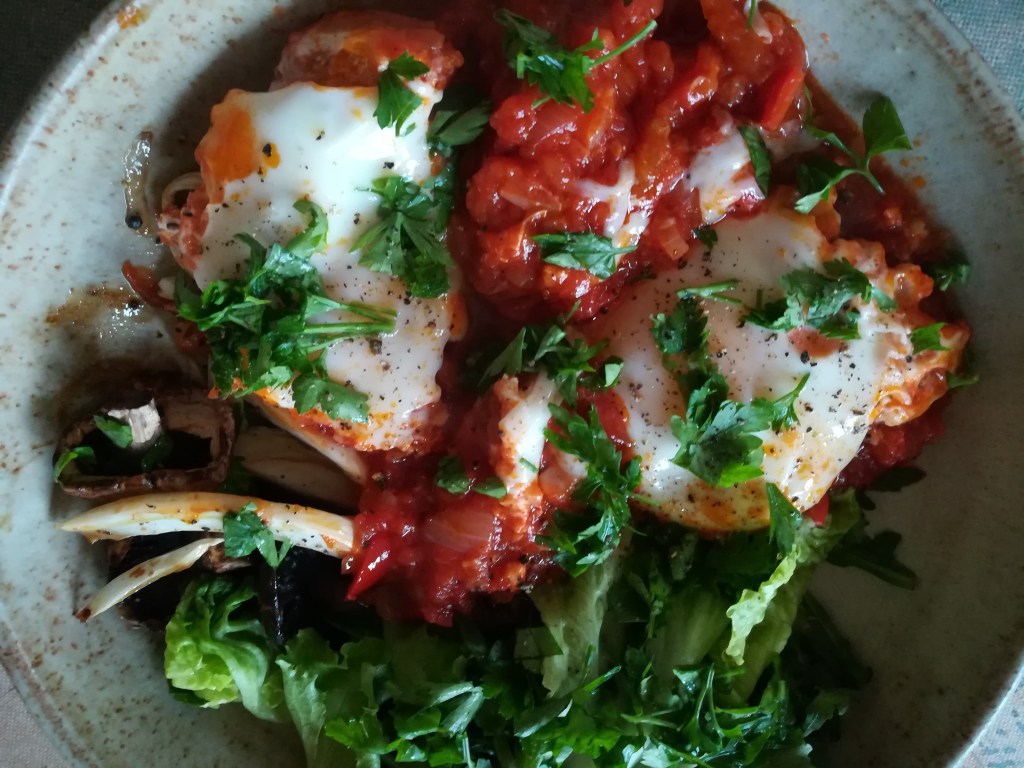
My full plate weighed 525g
100g = 2 eggs 25g = olive oil and pumpkin seeds
100g = baked mushrooms (with balsamic vinegar) and fennel (with lemon juice)
50g = the last of the salad, some chopped parsley and some fresh lemon juice
250g = cooked tomatoes, onions, garlic, fresh and dried chilli, fresh ginger and red peppers
So this meal: 400g of vegetables, 100g of protein-rich foodstuff, 25g of fat
And I ate 13 different plant based ingredients: tomatoes, red pepper, onion, garlic, mixed salad leaves, parsley and thyme, lemon juice, chilli, root ginger, fennel, mushroom, pumpkin seeds. And I loved it. 😋🥰😋
Maximising how full we feel after a meal
Of the three macronutrients (carbohydrates, proteins and fats), proteins are by far the best at making us feel fuller for longer. If you’re always hungry after a particular meal, a lack of protein is a common culprit. The three macronutrients — fats, carbohydrates, and protein — affect your body in different ways. Studies show that protein is by far the most filling. It helps you feel more full, with less food . This is partly because protein reduces your level of the hunger hormone ghrelin. It also boosts the levels of peptide YY, a hormone that makes you feel full. Most people eat enough protein to prevent deficiency. Getting “the right amount” amount of protein is beneficial for managing hunger levels and lessening cravings for potentially unhealthy snacks between meals.
A food craving is different from normal hunger. It is not just about your body needing energy or nutrients but your brain needing a reward. Food cravings can be incredibly hard to control. The best way to overcome them may be to prevent them from occurring in the first place. One prevention method is to increase your protein intake. A study in overweight men showed that increasing protein to 25% of calories reduced cravings by 60% and the desire to snack at night by half. Likewise, a study in overweight adolescent girls found that eating a high-protein breakfast reduced cravings and late-night snacking. This may be in part as a result of an improvement in the function of dopamine, one of the main brain hormones involved in cravings and addiction.
If you are interested in understanding more about food cravings, here is an interesting article:
https://www.livescience.com/54248-controlling-your-hunger.html
Please feel free to write something in the comments, I would love to hear of other’s reading and experience.
 Relishing Life - Eating Well