Day 5 of 31 Vegetable Challenge

Brussels Sprouts

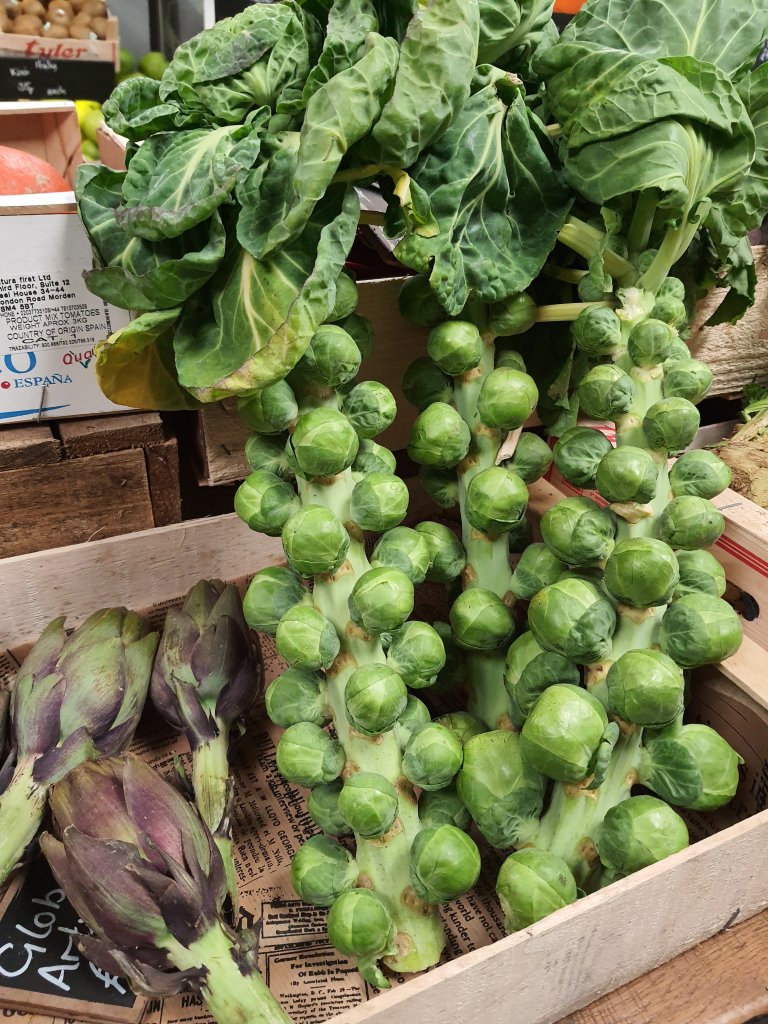
Brussels sprout stalks at Hoole Food Market, Chester

BRUSSELS SPROUTS

Brassica oleracea var. gemmifera

Brussels Sprouts are one of the cruciferous vegetables, part of the brassica family of vegetables (the largest vegetable family known – including cabbages, cauliflowers, broccoli, collards/ spring greens, kale, kohlrabi, turnips, and swede). Cruciferous (“cross-bearing”) from the shape of their flowers, whose four petals resemble a cross. They are unique in that they are a rich source of sulfur-containing compounds called glucosinolates (β-thioglucoside N-hydroxysulfates) that impart a pungent aroma and bitter taste and considerable health benefits. All cruciferous vegetables are packed full of antioxidants and other phytochemicals. Brussels sprouts are one of the stars – now known to top the list of commonly eaten cruciferous vegetables for glucosinolate content.

The Brussels sprout is grown for its edible buds which are typically 1.5–4.0 cm in diameter. They’re at their best from November – January. They are thought to have originated in Rome, where they were developed from a form of kale-like wild cabbage. However they was brought to Europe in the 5th Century and had become very popular by the 16th century in Belgium, after it was cultivated in the 1200’s near its namesake city of Brussels.
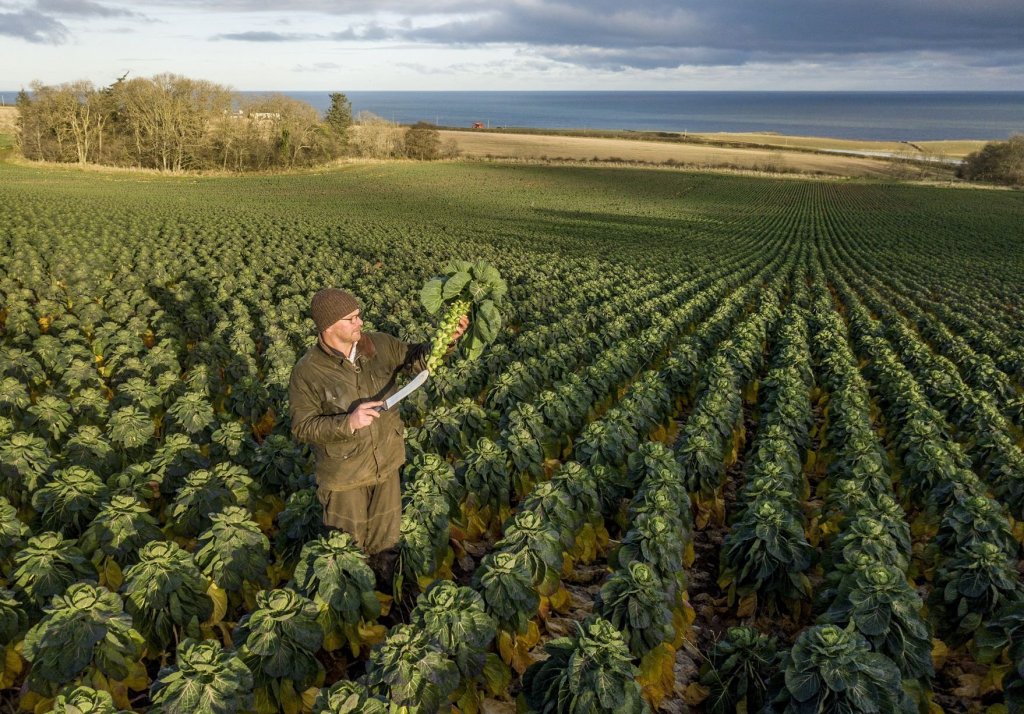
Ian McLachlan, Farming and Facilities Director of R&K Drysdales in the Scottish Borders, one of the UK’s largest Brussels sprouts farms which produces more than 600 million of the vegetables in December alone. https://www.walesonline.co.uk/news/uk-news/gallery/stunning-pictures-sprout-farm-drysdales-17466303

But their popularity in Europe today is highest in the UK. Even though British farmers produce nowhere near the number of sprouts they do in Holland, the “Great British Public” actually consume the most Brussels sprouts in the whole of Europe. It is definitely a festive choice, however, as an impressive two thirds of the overall number of sprouts eaten in the UK are consumed during the Christmas period!

And apparently there is actually a possible genetic reason why you and your family may love sprouts whilst your partner and in-laws hate the little green gaseous bombs? Apparently, according to this article, there’s a gene which controls whether we taste the chemical PTC – a chemical very similar to chemicals found in sprouts… The Brussels Sprouts Gene – TAS2R38

Until a few years ago, I absolutely loathed Brussels sprouts. They made my stomach churn at the thought of them – disgusting. Then one day I was eating lunch in a little cafe in North Yorkshire when I asked what was in the completely delicious orange and nutty coleslaw I had just devoured. WHAT!! WHAT!!!! I was told that I had just eaten raw Brussels sprouts – and I had to acknowledge the fact that I had really enjoyed them!

As a consequence I have given the Brussels sprout a second chance and have discovered that there are many wonderful ways to prepare them. I agree with the writer who says: “Brussel sprouts suffer from a truly undeserved poor reputation” … he says ” When prepared properly by gently steaming, Brussels sprouts have a sweet, nutty flavor and a crisp texture. If overcooked, Brussels sprouts produce a strong foul odor and become mushy in texture. An overcooked Brussels sprout is truly vile, while a steamed Brussels sprout topped with garlic butter or Hollandaise sauce is a gourmet delight”. Personally I prefer them in a coleslaw, or roasted – perhaps with chestnuts or they’re amazing flash fried with garlic alongside a piece of smoked Mackrell. As a legacy of former experiences, I’m not sure I am ready to try them steamed in a Hollandaise sauce. Perhaps I’ll overcome that historical and of so, will report back here one day …

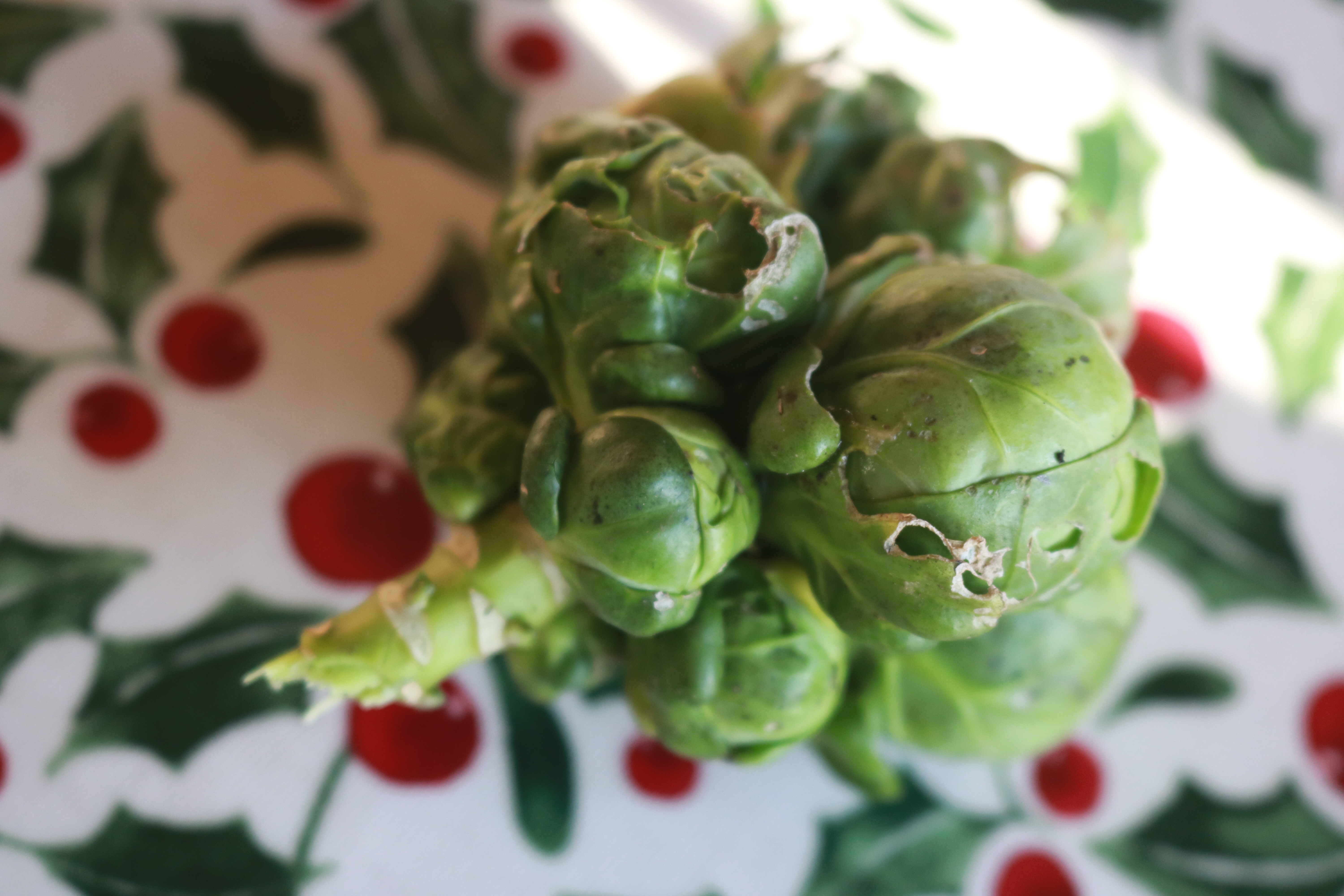
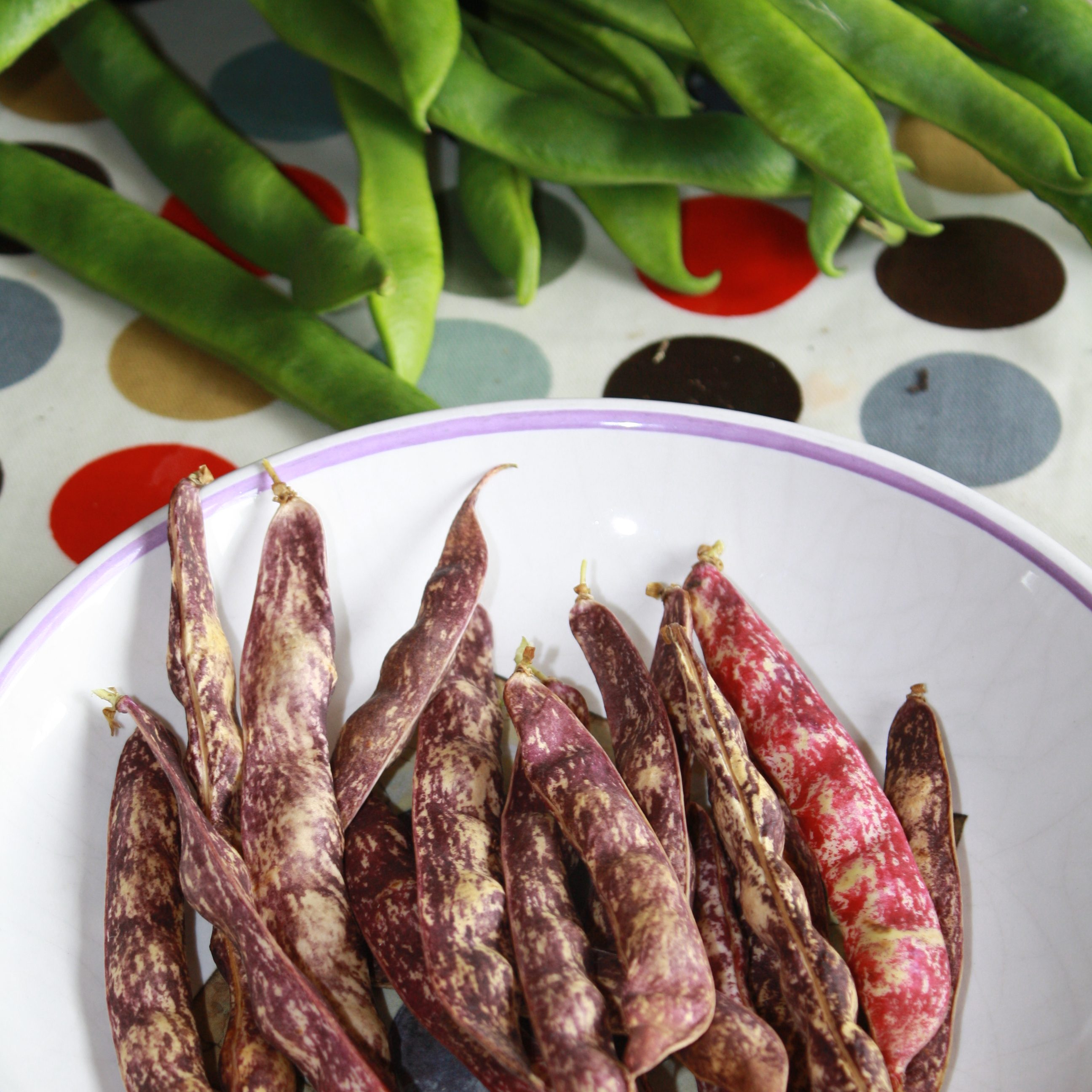
I have attempted to grow Brussels sprouts this year in the garden, although I’ve not had a great crop. I suspect they needed more compost and were outcompeted by the strawberries which are over-running our garden. But here’s the photo before I picked them for today’s recipe (supplemented by my Riverford veg box supplies in the fridge).
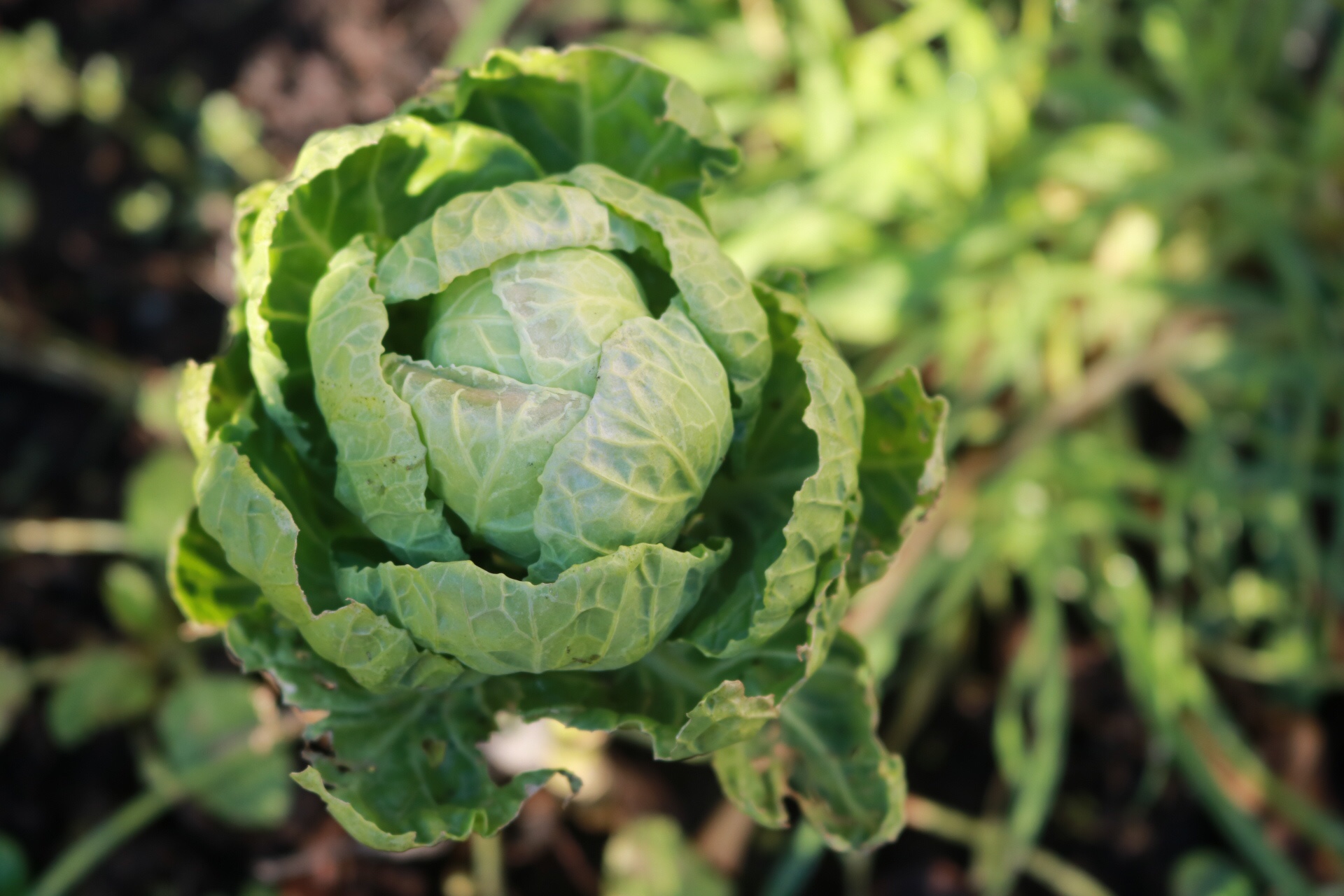
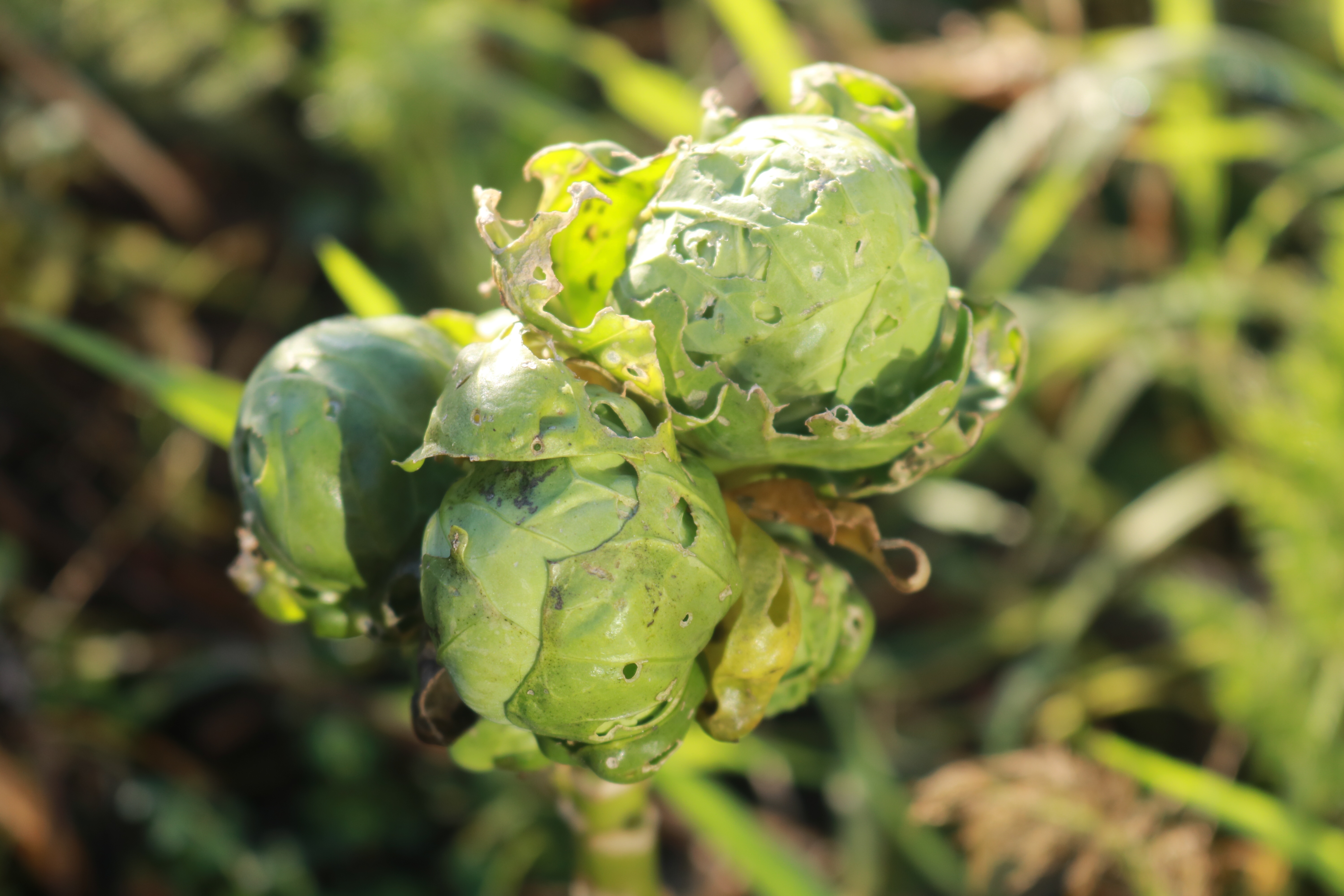
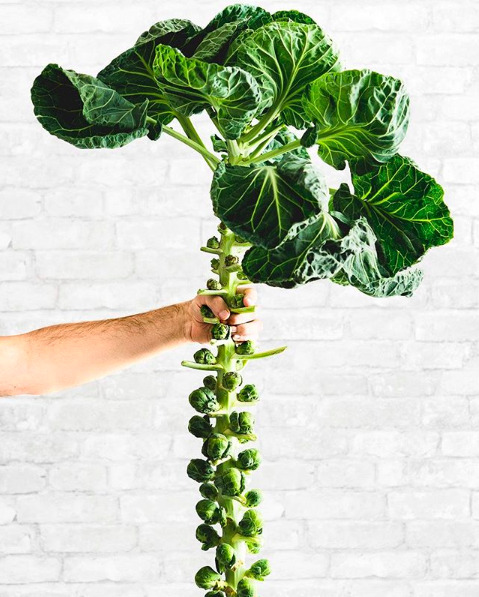
This time not from our garden but image of a fully grown stalk with a splendid crown from: https://thefeedfeed.com/nomageddon/brussels-sprouts-on-the-stalk

Goes well with

Acidic flavours (Lemon, Vinegar)
Anchovies
Cured pork
Dairy
Cheese (hard or blue)
Herbs
Nuts
Mustard
Onion
Spices (Pepper, Carraway, Chilli, Nutmeg, Mustard seeds)

So, on the Eleventh Day of Christmas, I bring you for brunch:

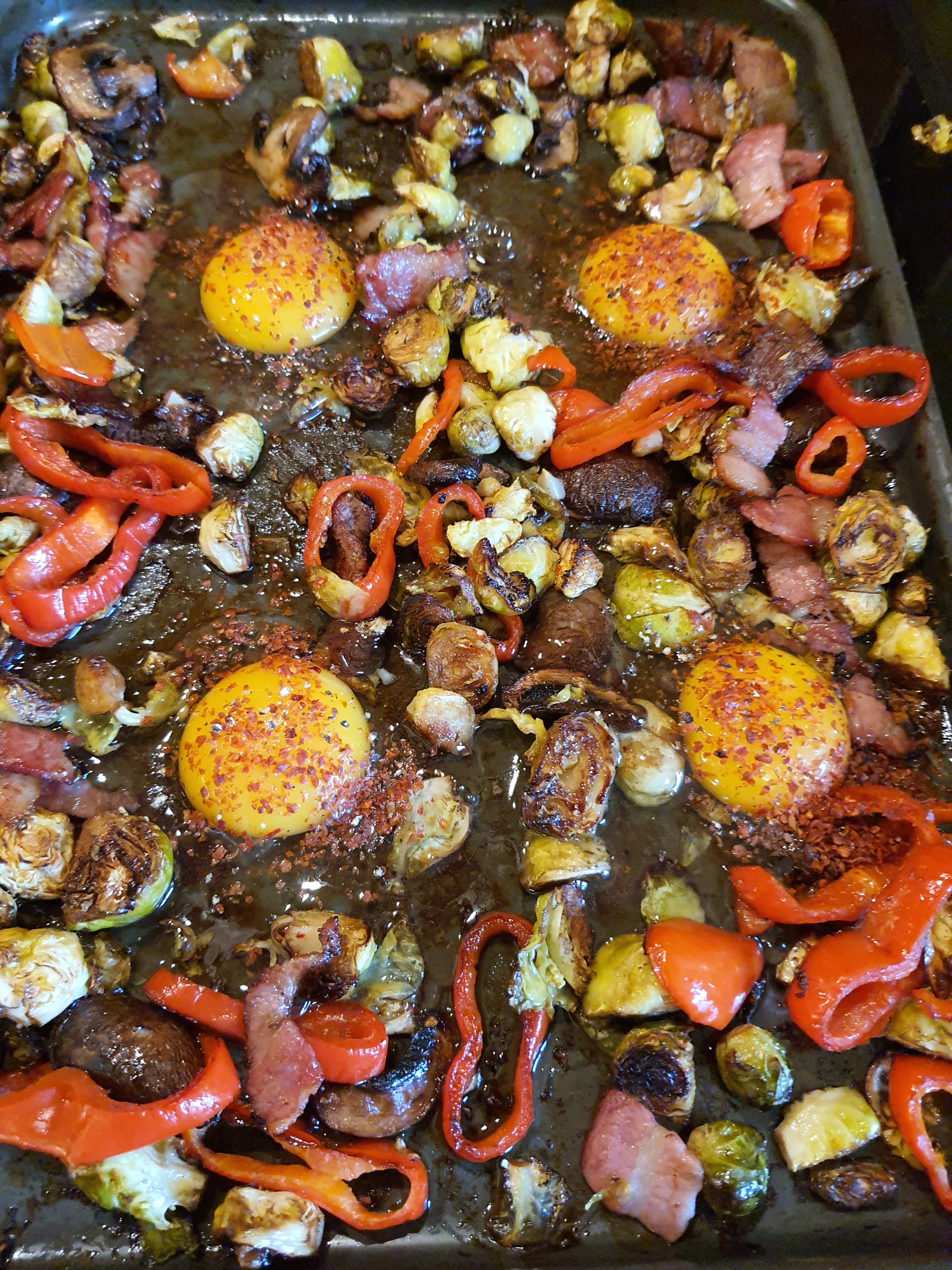
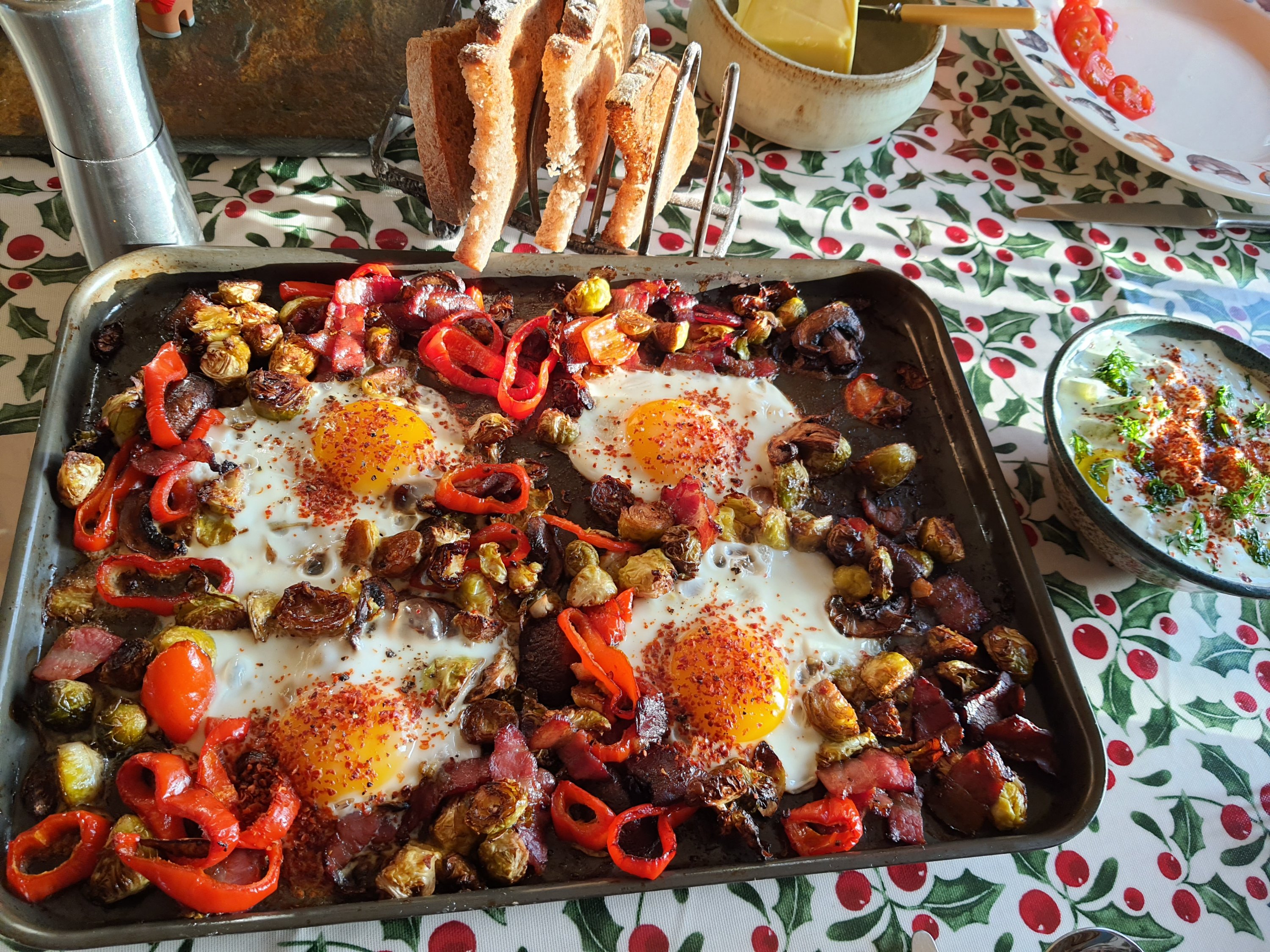
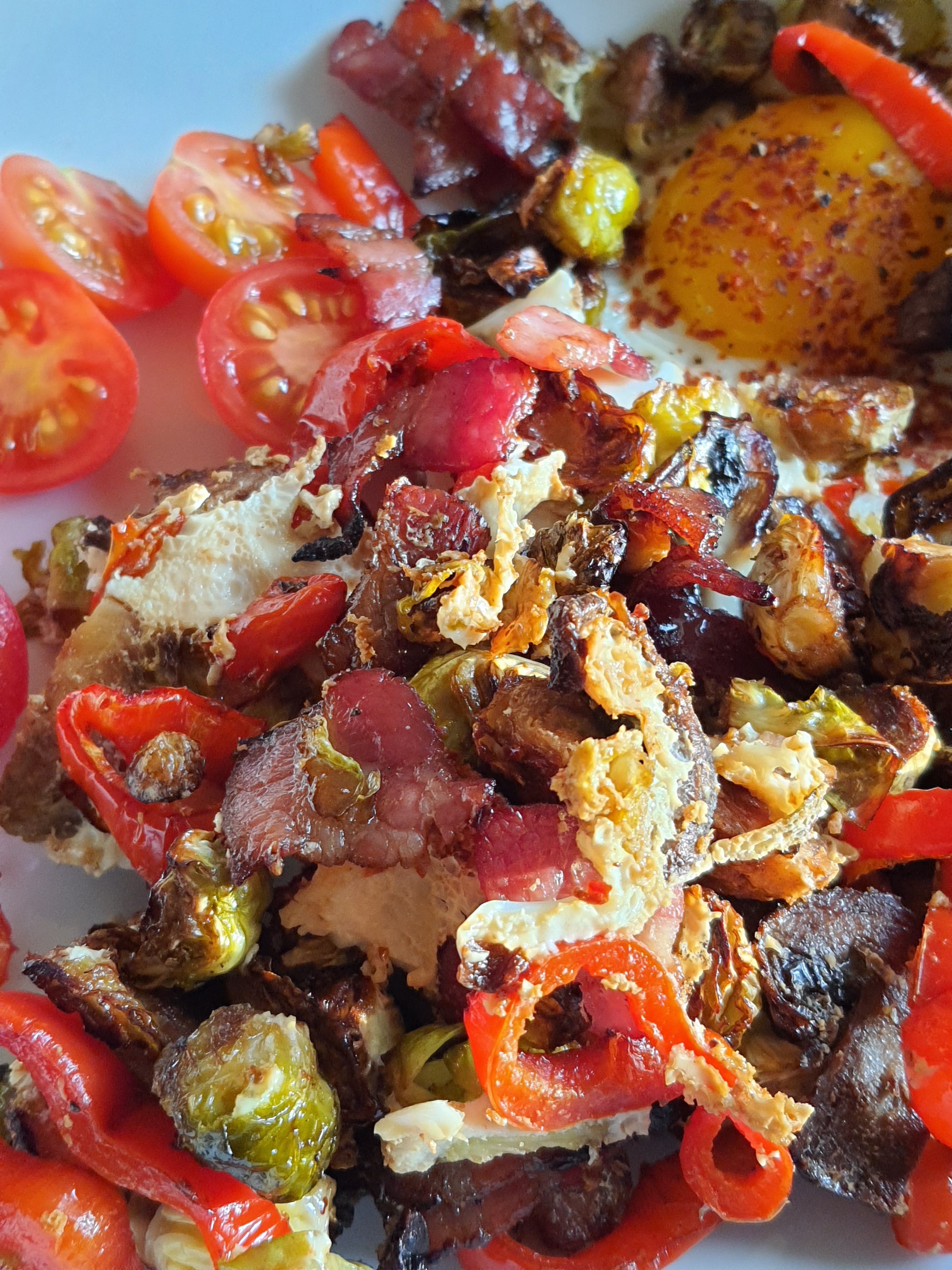
BRUSSELS SPROUTS, EGGS AND BACON with Cacik.

Recipe – with my modifications
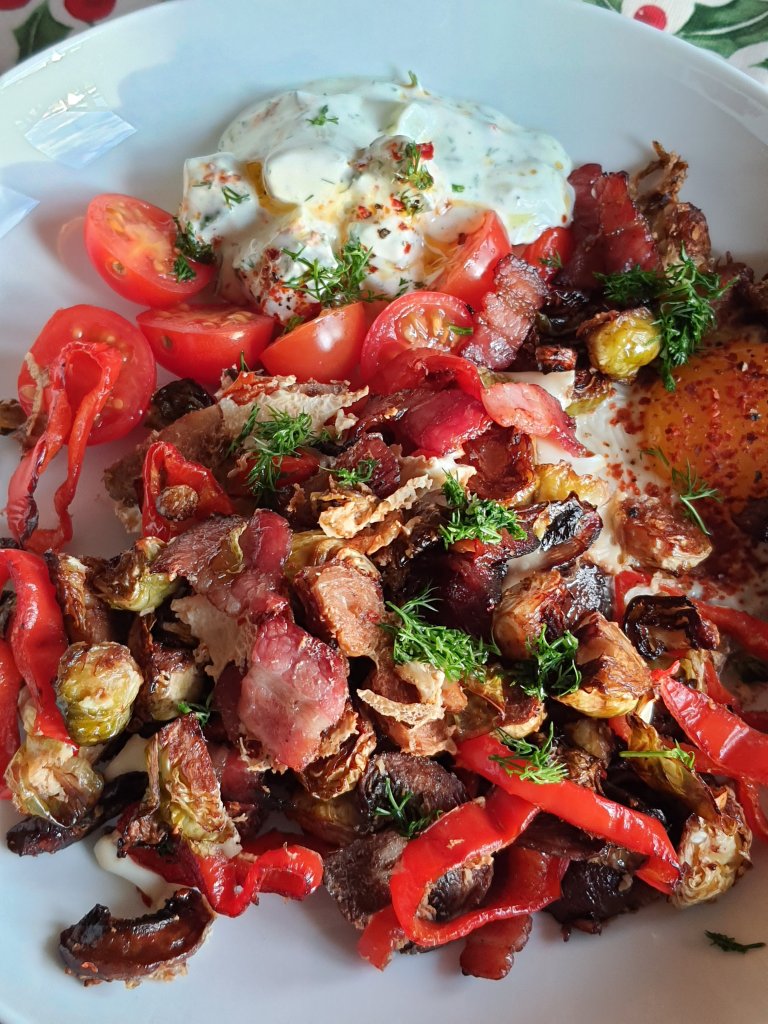
INGREDIENTS:

  • 1 Tbsp balsamic vinegar
  • 1/2 tablespoon olive oil – good glug
  • 1 cloves garlic, diced
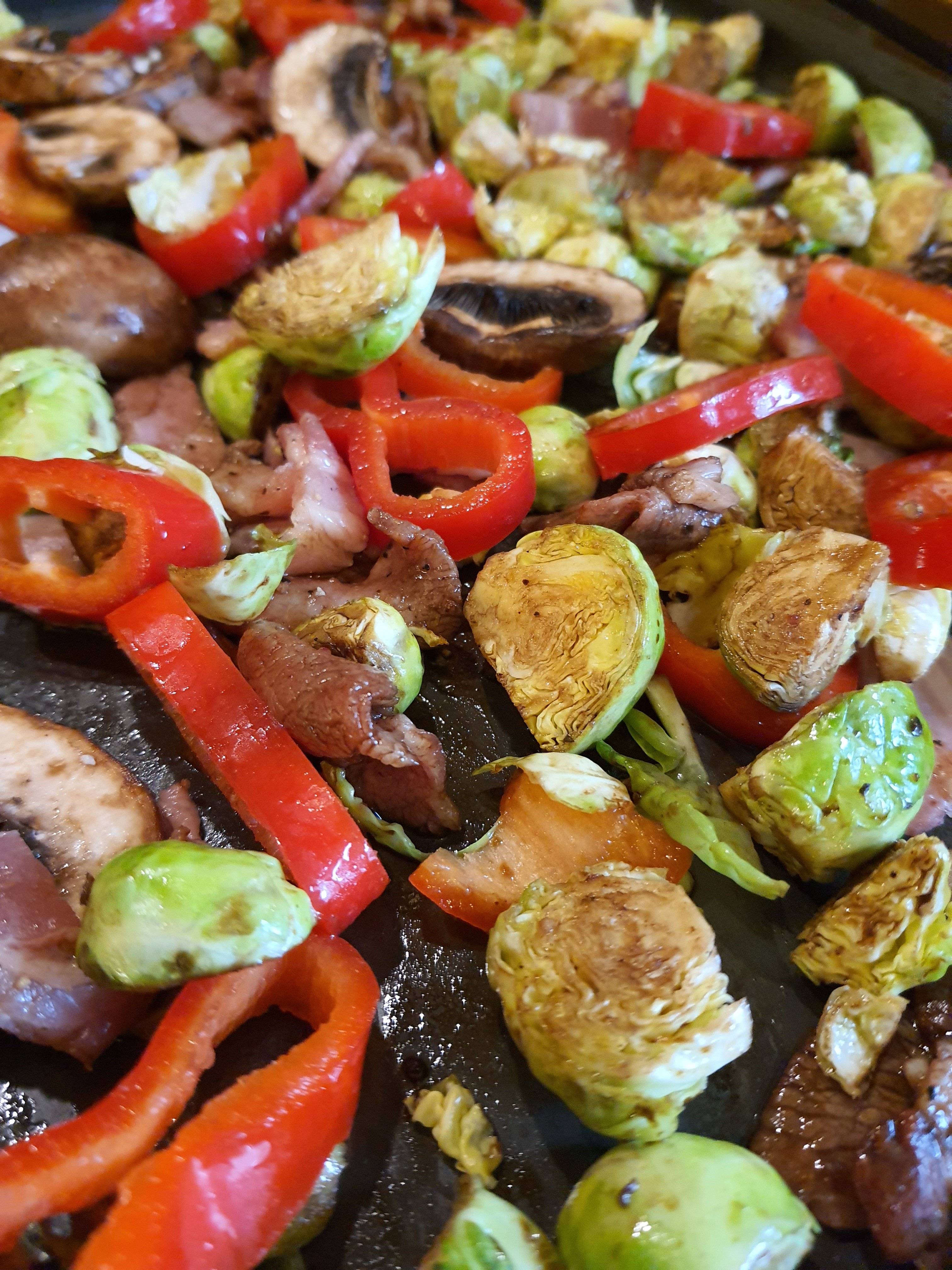
  • 400g brussels sprouts, halved/ quarted large (I only had 200g due to wastage – keeping then too long in the fridge. So I supplemented with mushrooms and sliced ramiro peppers (totalling 200g)
  • 4 slices streaky bacon, diced
  • 4 eggs
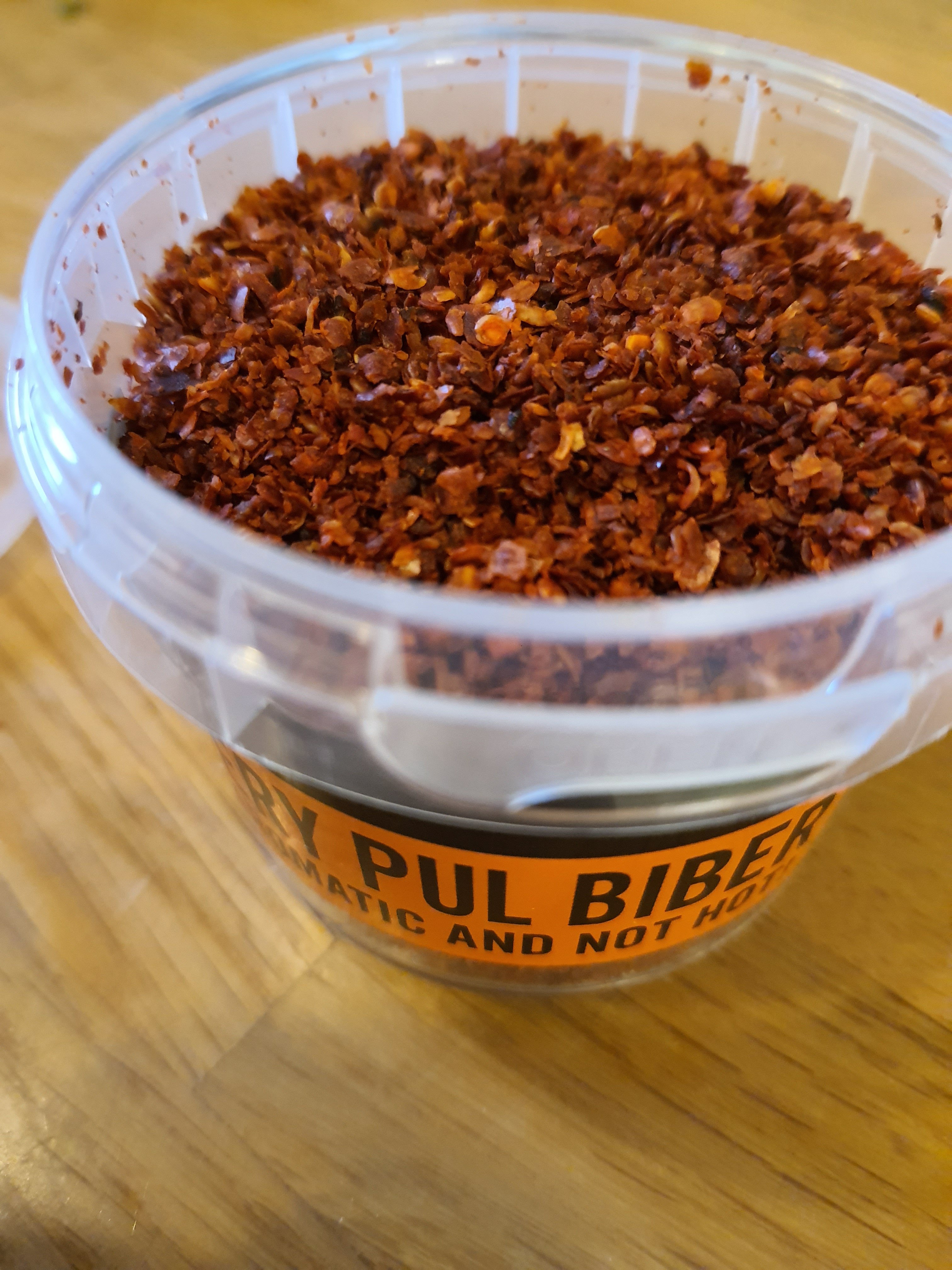
  • 2 tsp pul biber (Aleppo pepper)
  • Salt and freshly ground black pepper
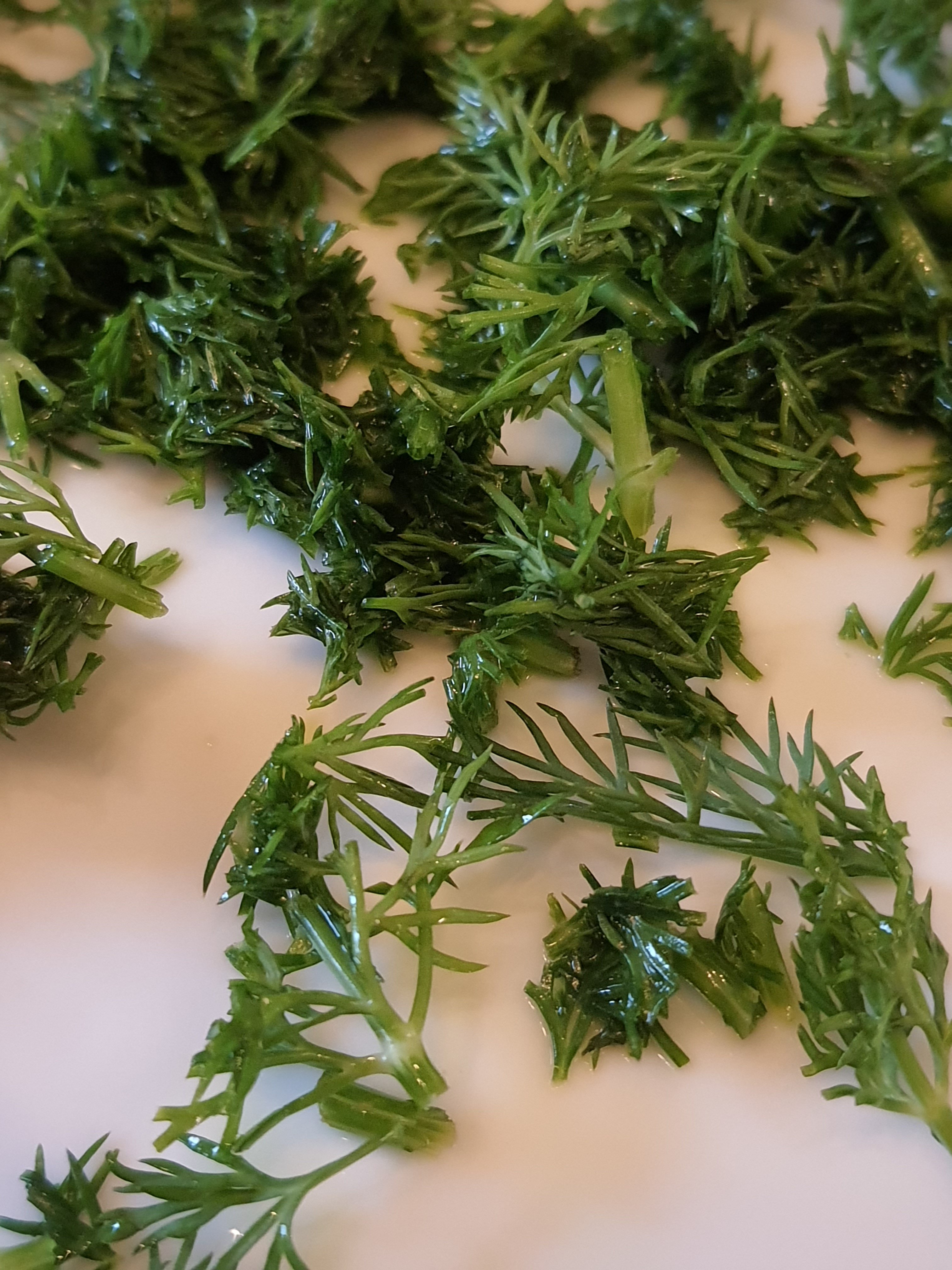
  • 1 Tbsp chopped fresh dill

DIRECTIONS:

  1. Preheat oven to 220 °C
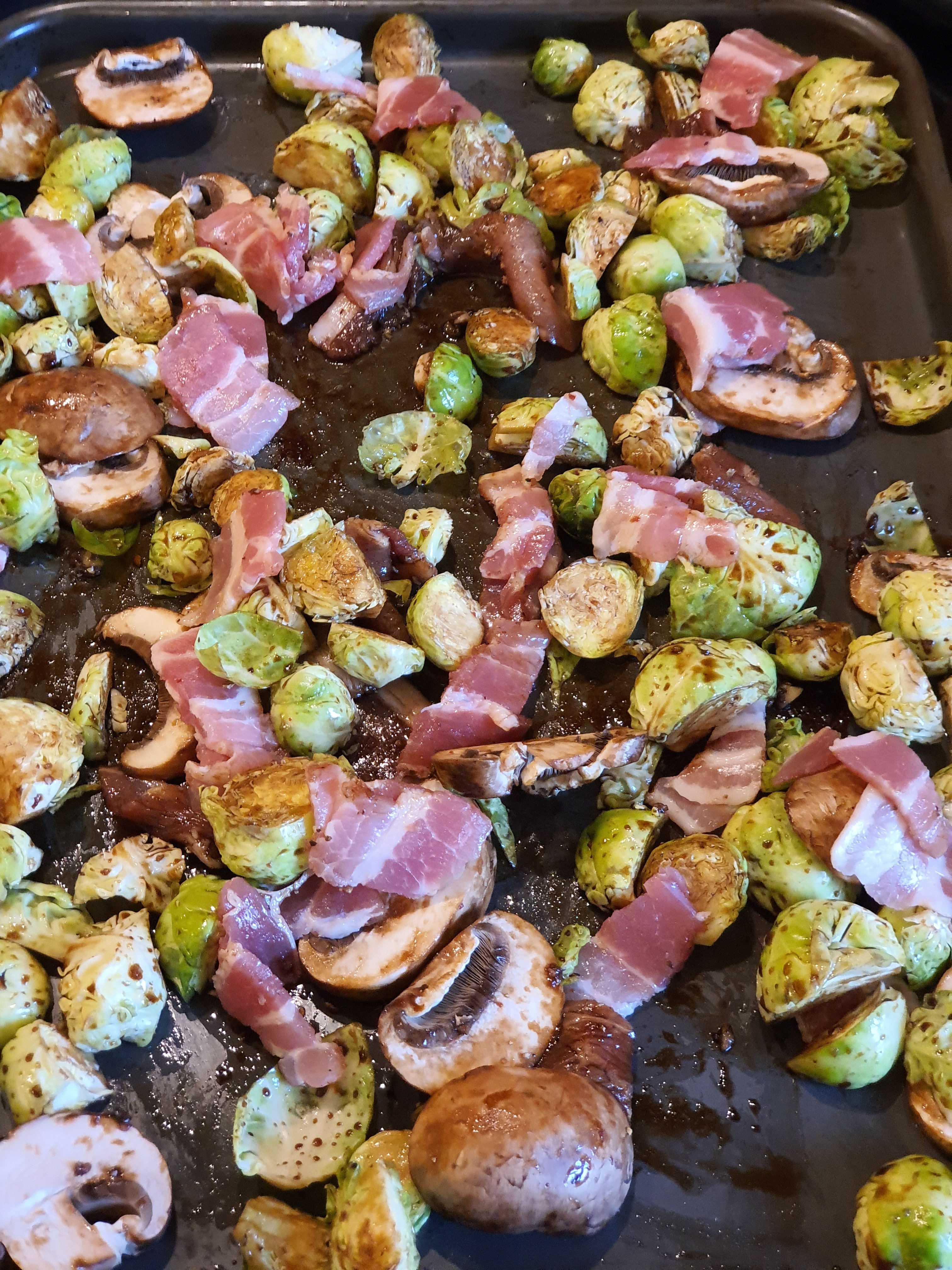
  2. In a small bowl, whisk together balsamic vinegar, olive oil, garlic; salt and pepper, to taste. Add Brussel sprouts, any supplementary vegetables, the bacon and coat well .
  3. Place Brussels sprouts and bacon mixture on a single layer on a baking sheet (with a lip)
  4. Place into oven and bake for 20 minutes, or until tender. Turning regularly.
  5. Remove from oven and create 4 wells, gently cracking the eggs into them – keeping the yolk intact.
  6. Sprinkle eggs pul biber; season further, to taste.
  7. Place into oven and bake until the egg whites have set, an additional 8-10 minutes.
  8. Serve immediately, garnished with herbs if desired, (I used dill).

Cacik with dill
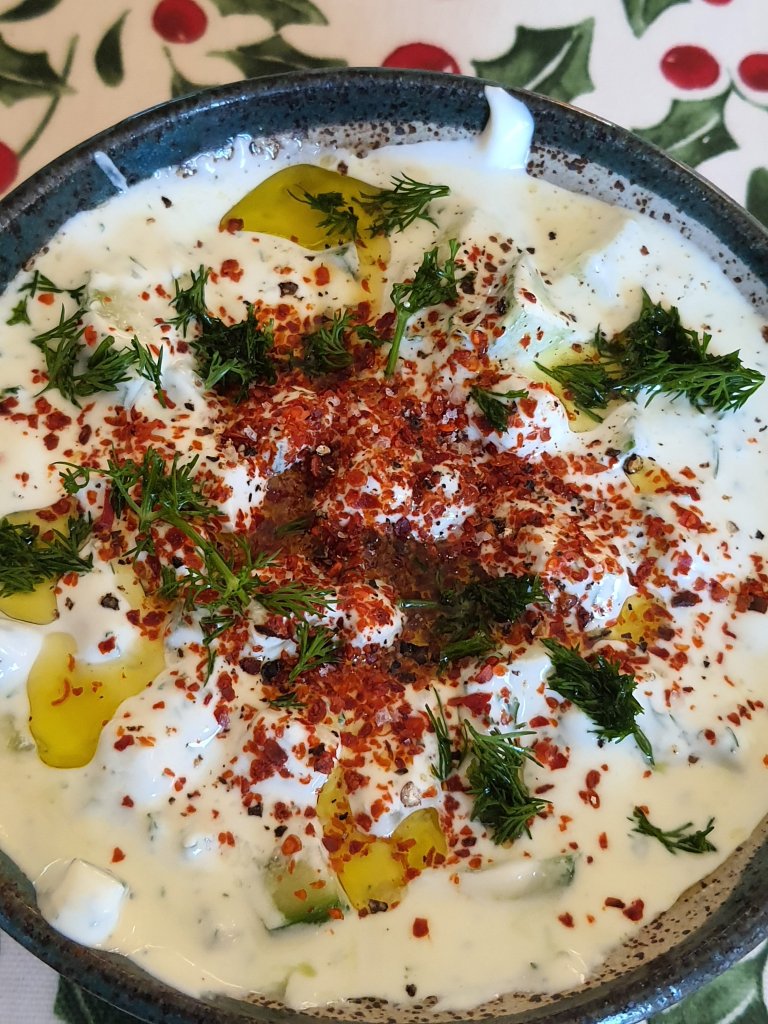
Ingredients (serves 2)

  • 1/2 cucumber, quartered lengthways and coarsely chopped or grated
  • 1/2 garlic clove minced
  • 250g tub Greek yogurt
  • 1/2 x 25g pack dill, fronds chopped
  • 1-2 tbsp extra-virgin olive oil, plus extra to serve
  • sea salt (flakes give some crunch)
  • a pinch of pul biber (my new favourite spice – mind heat, sweet yet savoury)

Mix minced garlic with yoghurt and olive oil. Stir in must of dill dill and all the cucumber. Drizzle with a little more oil, pinch of pul biber, the salt and the reserved dill.
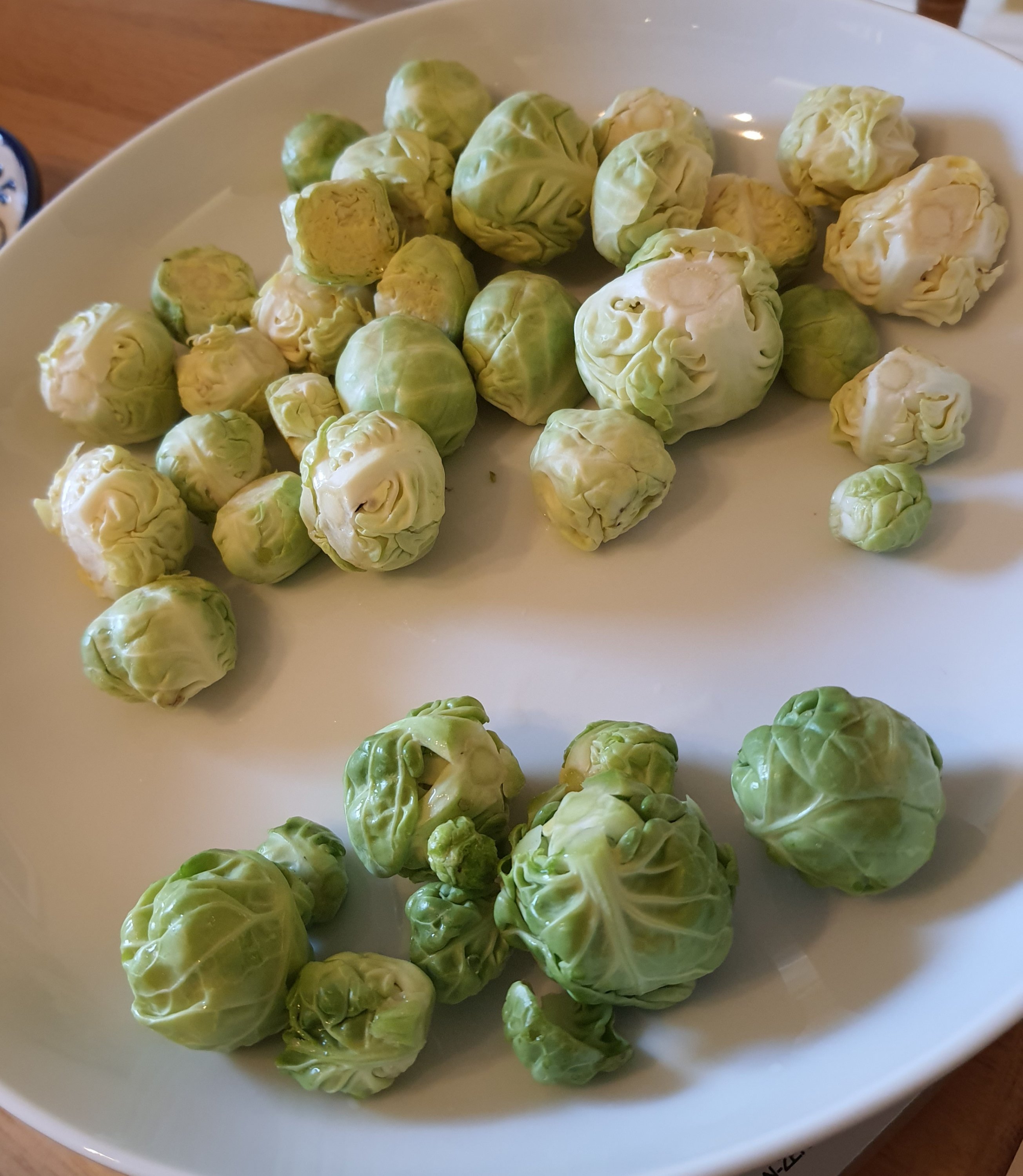
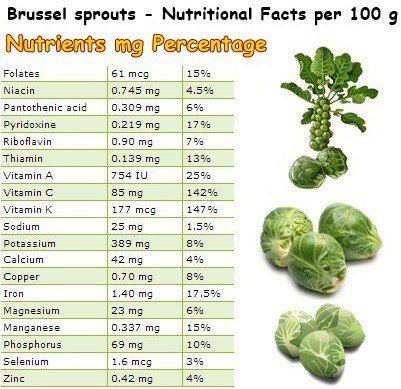
https://www.natureword.com/properties-and-benefits-of-brussels-sprouts/

Other sources of information:

Tally for the month

Main Vegetables:  broccoli (calabrese), Brussels sprouts, butternut squash, celeriac, radicchio

Subsidiary Vegetables: onion, shallots, garlic, leek, celery, potato, rosemary, carlin peas, chick peas, kale, chilli, dill, cucumber, mushroom, ramiro pepper.

Subsidiary Fruit and Nuts: lemon, fig, walnuts
Day 4 of 31 Vegetable Challenge

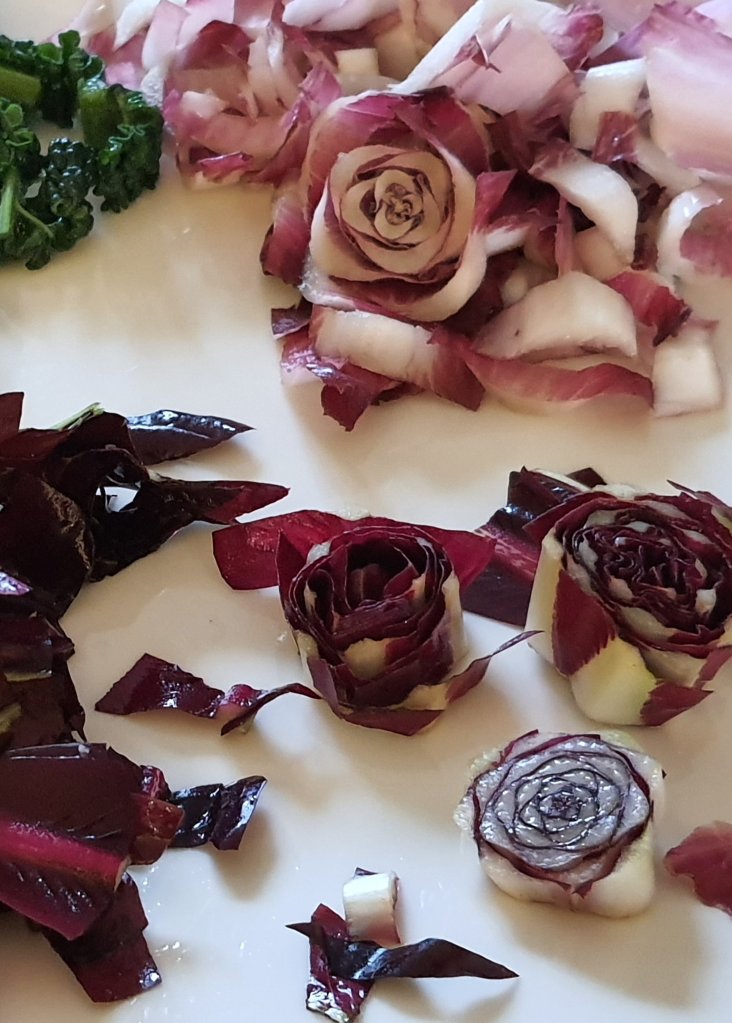
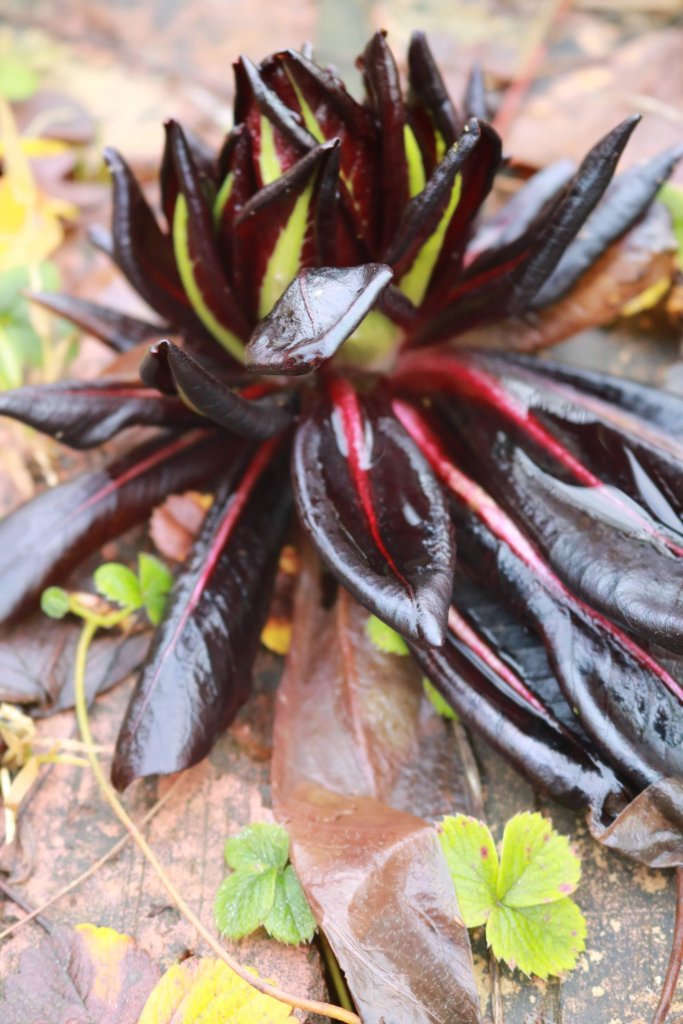
Radicchio

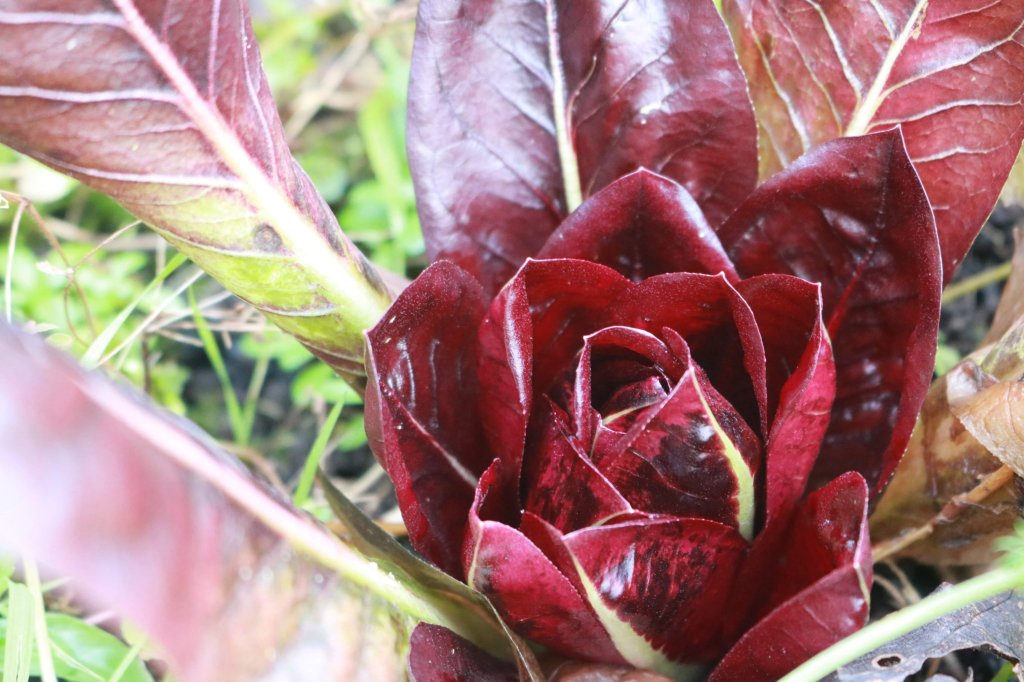
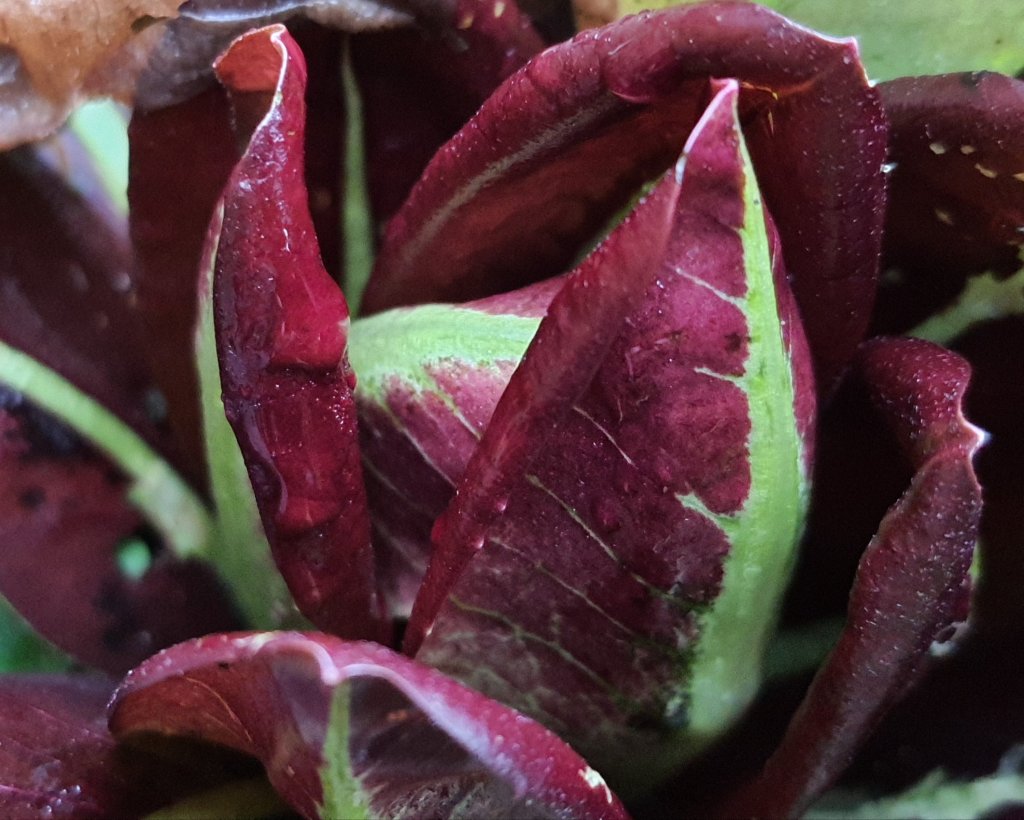
Radicchio, growing in our garden this morning.

RADICCHIO

Cichorium intybus var. foliosum

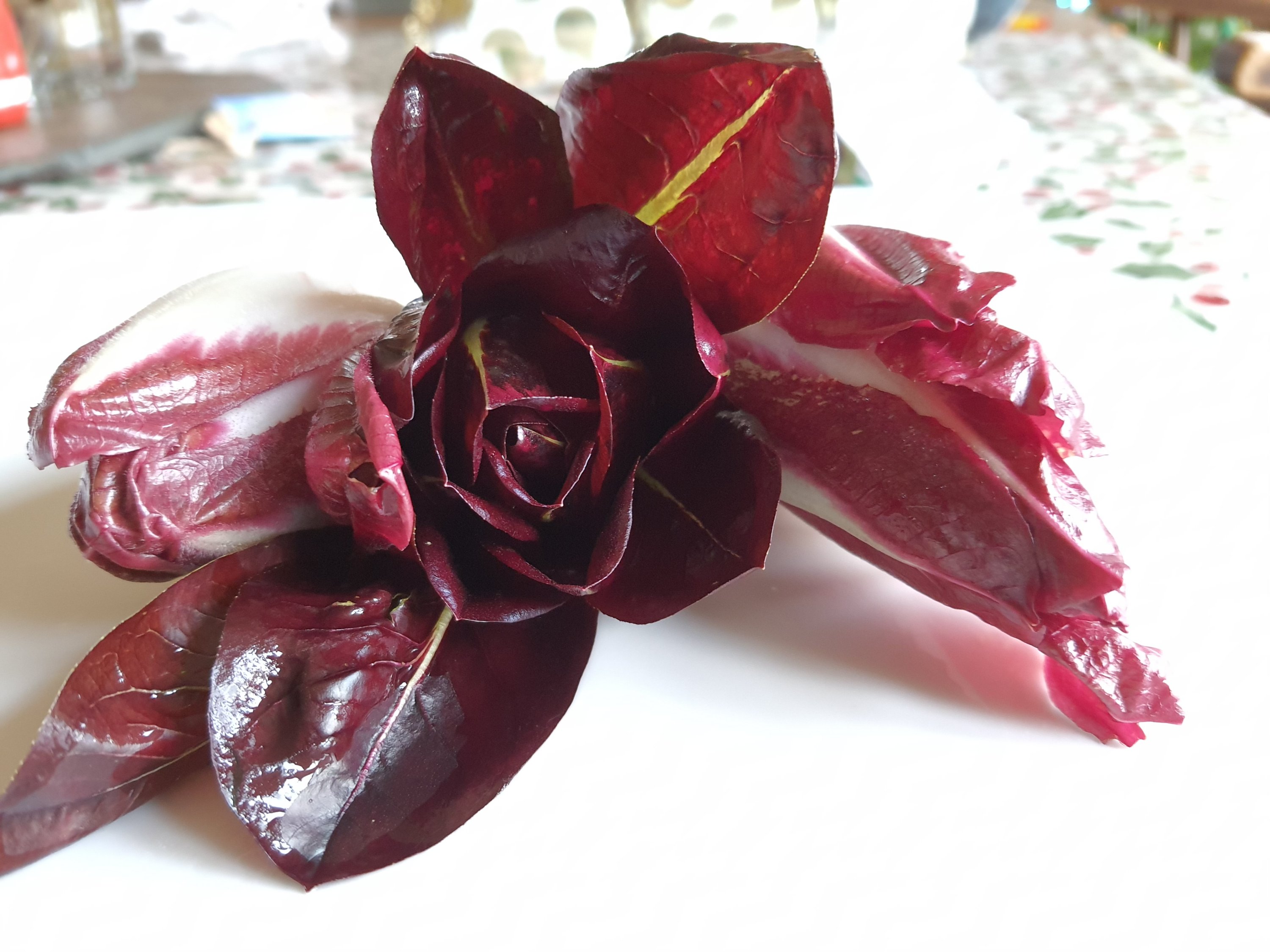
A vibrant winter leaf that features a colorful red and white head with green outer leaves. Italians are crazy about its bold, bitter flavour: raw in salads, or stir fried, griddled or roasted until mellow. The trick is to balance it’s unique tang with sharp, salty and sweet flavours. In season during late winter, early spring.

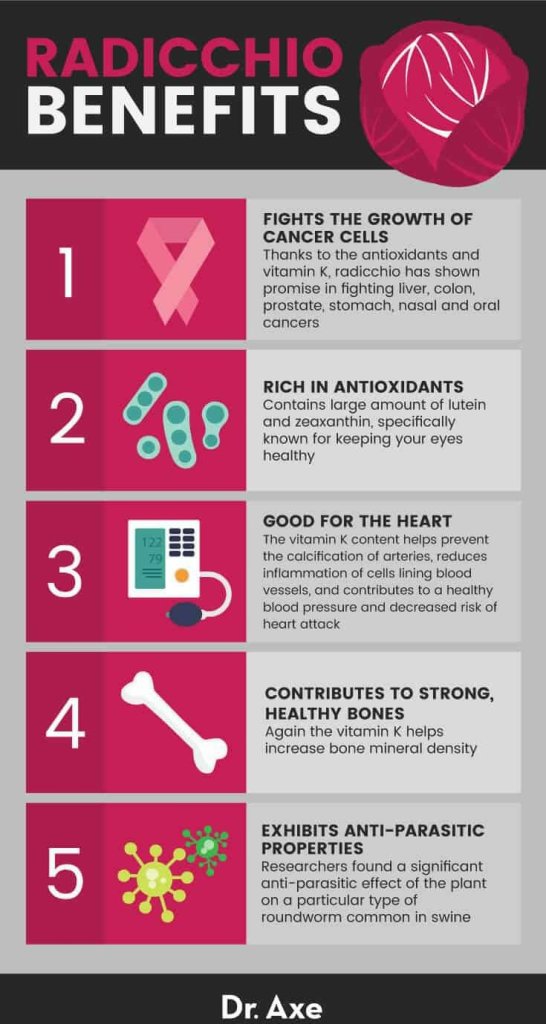
Sabine Eiche writes in her column Raving about radicchio: “Radicchio’s birthplace is Treviso, a city about 42 kilometres north of Venice. Some historians believe the plant came from the Orient, arriving in Venetian territory in the late 15th century. By the 16th century, it was being cultivated in Treviso. Nonetheless, already the ancients were familiar with a kind of wild chicory (radicchi is the Italian name for the weeds that grow wild around the Mediterranean) with medicinal qualities similar to those of the cultivated radicchio. In the first century AD, the Roman naturalist (author, philosopher, naval and army commander of the early Roman Empire) Pliny the Elder mentioned the plant’s ability to purify the blood and fight insomnia. Today, radicchio is praised because it’s rich in polyphenols including anthocyanins, which have antioxidant effects, and because of its relatively high fibre content (inulin is a pre-biotic, in the root of the plant), which aids digestion. The same compounds that account for its healthful properties also give radicchio a slightly bitter taste”.

Radicchio is a bit of a “super veg”. In a study published in the British Journal of Nutrition, Italian researchers tested 40 vegetables for phenolic content – and radicchio was the fourth highest for total phenols.

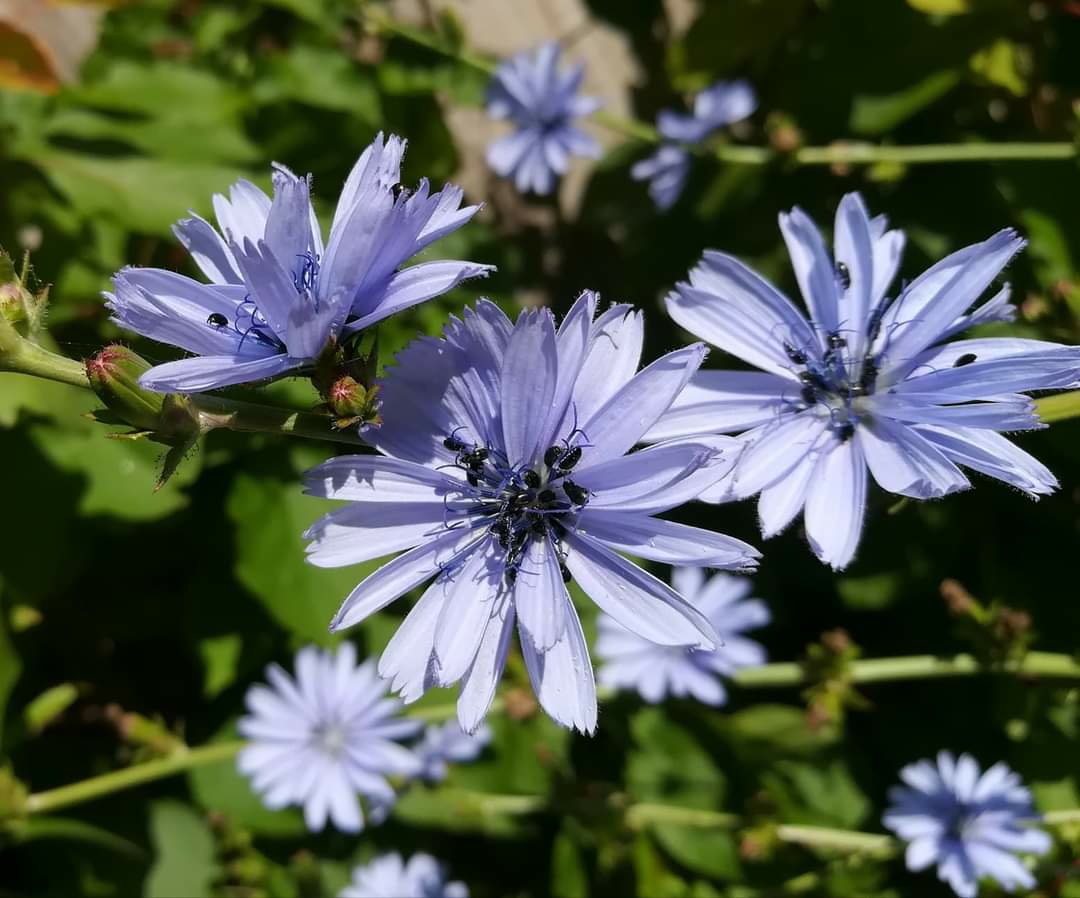
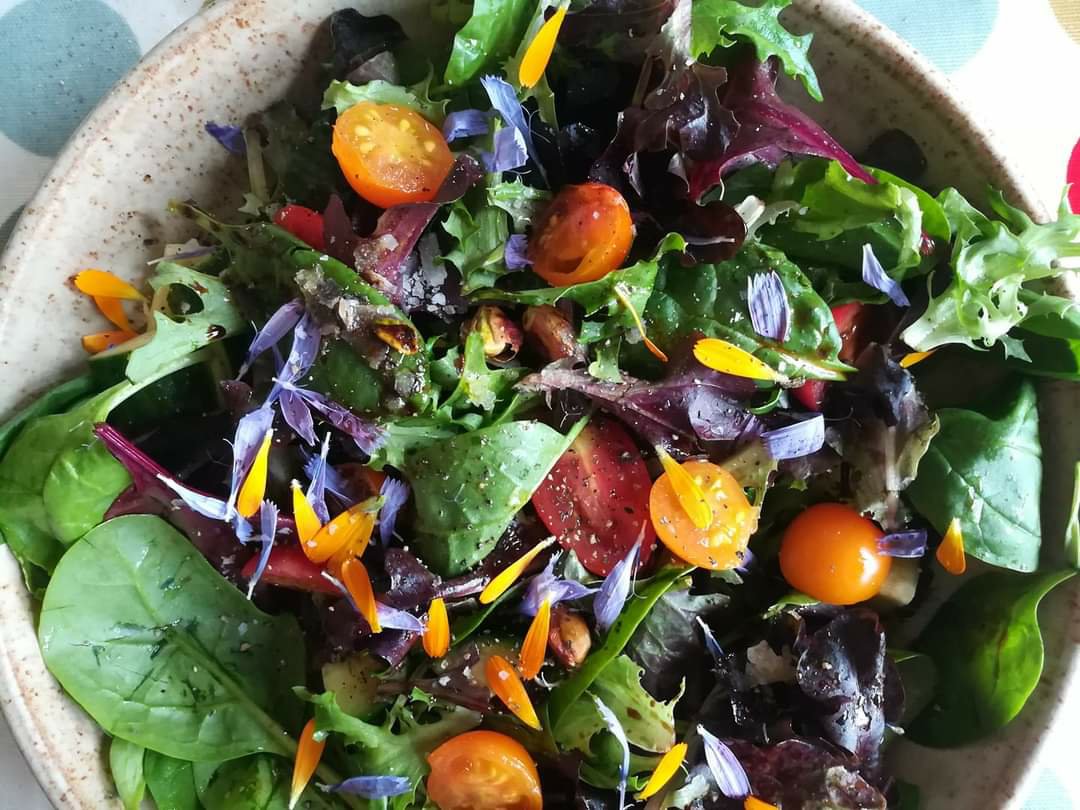
I grow radicchio in the garden, although it’s not been very well tended recently (much is self-seeded), so I have to say not that successfully and most plants are tiny. But if you leave it to “go to seed” it then has very pretty dainty blue flowers that are edible and can be added to salads.

I personally love “bitter” flavours. I don’t know when I acquired the enjoyment, certainly not until my late 20s. I very much enjoy gin and the tonic, Campari, Seville orange marmalade, grapefruit, coffee, horseradish, rocket, celery, hop shoots, chichory root – as a drink of choice (tradionally loved in New Orleans too as a coffee/chichory mix called “Cafe du mond” ) and I adore the bitterness of 85% cocoa chocolate…

I fell in love with the vivid red of radicchio a few years ago with the best I have ever eaten. A Treviso radicchio from a market in Venice. So wonderful to look at – and so delicious served with an Italian creamy cheese and pasta.

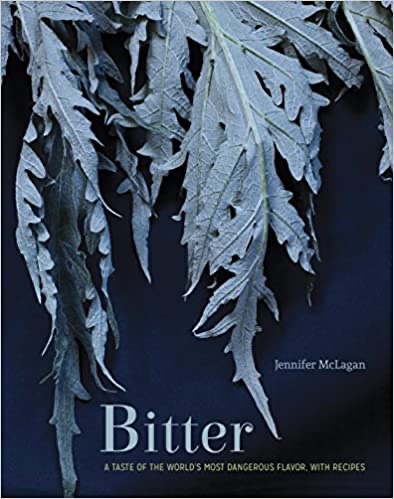
“Bitter. A taste of the world’s most dangerous flavour, with recipes” by Jennifer McLagan is fascinating reading.

“Our ability to taste is an essential trait that can determine whether we live or die. Should we swallow the food or spit it out? We have about ten thousand taste buds in our mouth … which communicate with our brain and our organs, sending them vital information about the food we are consuming. These cells are replaced about every ten days… but they also decline with age, and the older we get the faster they decline… Our sensitivity to taste varies. Some people are “super tasters” and can find certain foods unbearably bitter… others are “non-tasters”…Genetics play a part, but on average the population breaks down into 25% super-tasters, 25% non-tasters, whilst “normal-tasters” (most chefs) make up the middle 50%.” Says Jennifer McLagan.

“Bitter is a nuanced taste, and each of our taste buds has around 25 bitter taste receptors. Some respond to only one bitter taste while others react to more than 50 different bitter chemicals. So grapefruit triggers one receptor and coffee another.”

“Culture, experience, peer pressure and our environment create our food preferences … food is botany over-laid with history, family and identity. These all interact, giving us a distinct sense of taste, and it begins even before we are born… if bitter is not part of our food culture, or has negative cultural connotations, we are more likely to avoid it…(however) our palate is malleable and exposure to new food can help us overcome old prejudices. Simply seeing other people eating and enjoying food will encourage us to try it”.

Radicchio goes well with:

Anchovies
Cheese (Blue, Parmesan, Goat’s)
Cream
Crème fraîche Eggs
Lemon
Mustard
Nuts (Hazelnuts, Walnuts)
Pork (Bacon, Ham)
Sweet fruits (Apple, Fig, Pear, Persimmon, Poached quince)
Vinegar (Especially sweet ones – balsamic, sherry)

Sources include: Riverford a-z veg

Recipe

I’m rather pleased to have “invented” my own recipe today, with a nod of inspiration from Anna Jones  https://www.theguardian.com/food/2018/nov/30/anna-jones-recipe-for-pasta-with-radicchio-fennel-and-rosemary and Eleanor Steafel https://www.telegraph.co.uk/recipe0/tonights-dinner-pasta-radicchio-balsamic-feta/

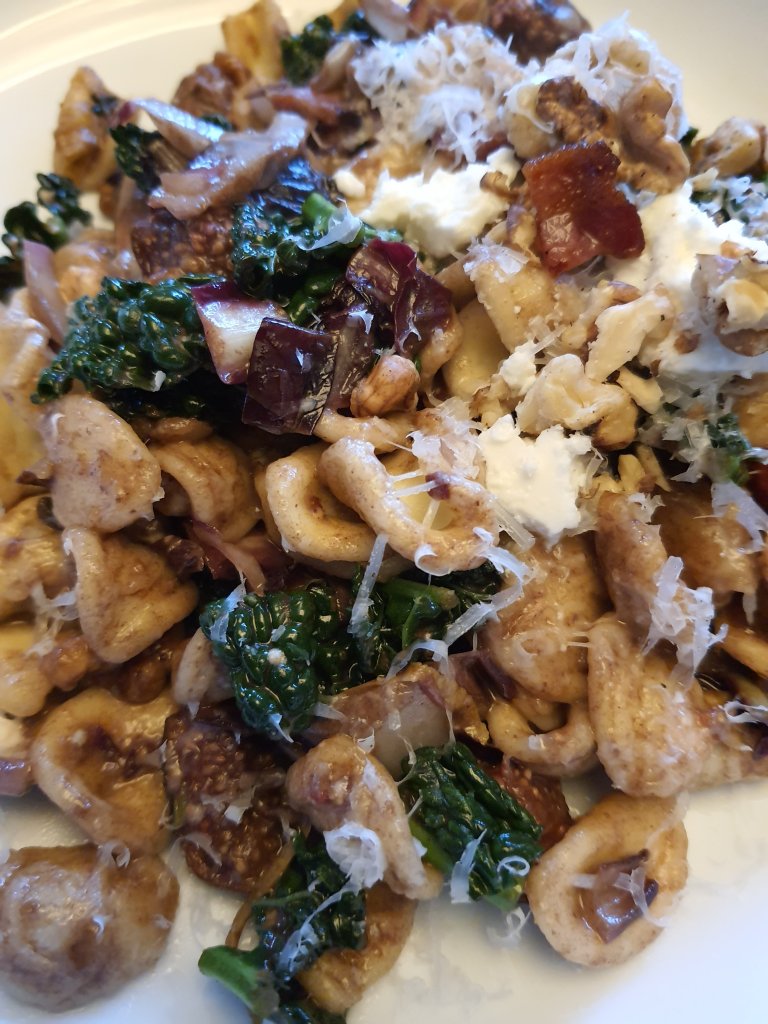
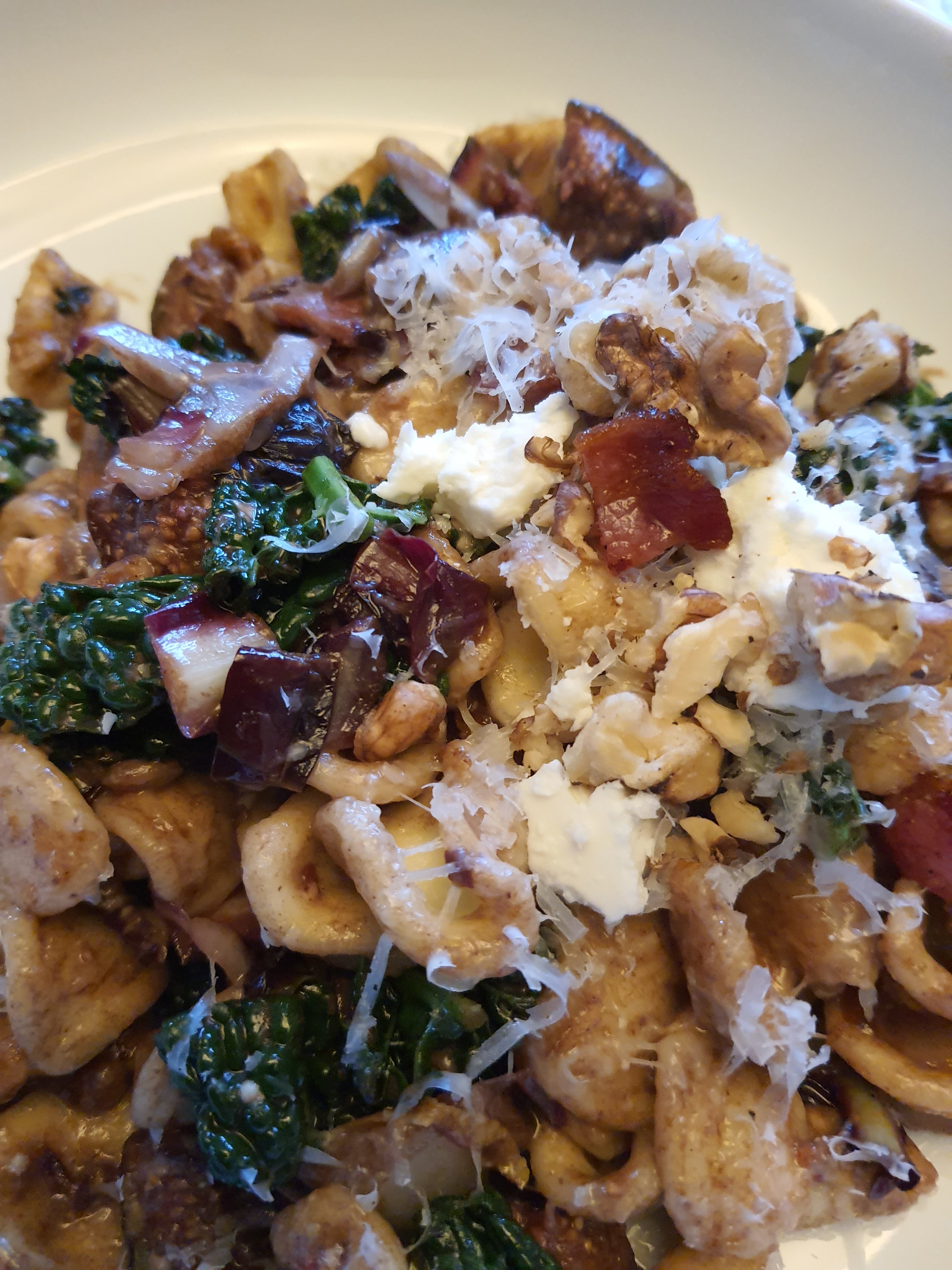
Pasta with radicchio and kale – feta, fig, walnut and lemon with a balsamic dressing.

Ingredients (served 2)

  • 180g medium sized pasta – I’m using Orecchiette (ear pasta – I love the texture!)
  • 2 small/ 1 large head of radicchio/ red chicory sliced across head into 2cm ribbons
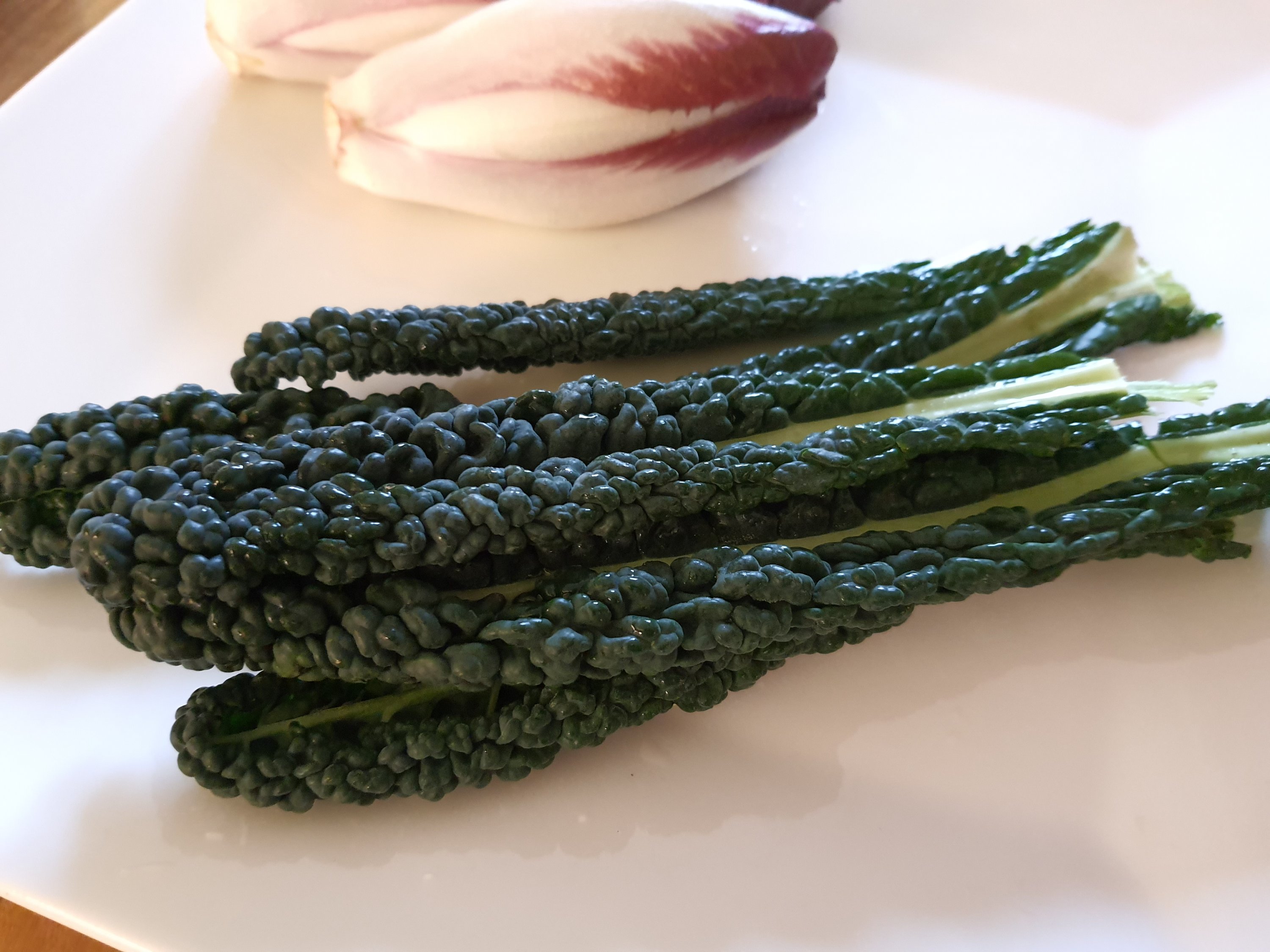
  • Handful of kale (if you have some in the house – I used Cavalo Nero) sliced 2cm thick
  • 25g walnuts
  • 1 large clove of garlic, diced.
  • Olive oil
  • 2 Tbsp thick balsamic vinegar (or thin with spoon of honey)
  • 1 red chilli finely chopped or a pinch chill flakes
  • Zest of a lemon
  • 100g feta cheese – crumbled
  • 2 + roasted figs – chopped into small chunks (optional – I had some in the fridge – and they were a great addition)
  • 2-4 pieces of fried pancetta / streaky bacon crumbled (optional)
  • Rosemary – a little, finely chopped (optional)
  • Parmesan to serve (optional)

Method

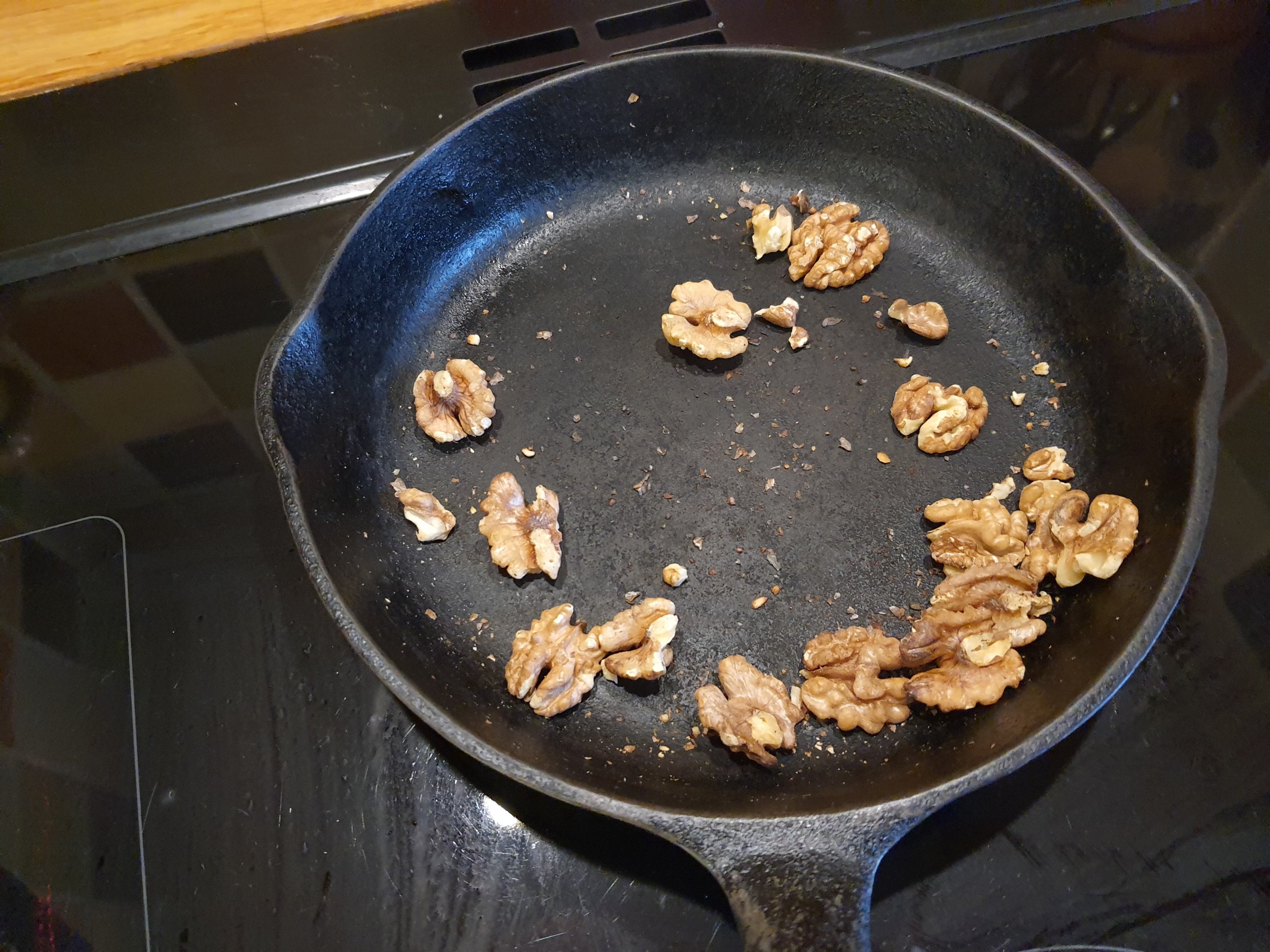
1. Toast the walnuts in a dry pan, shaking regularly. Crumble into smallish chunks.

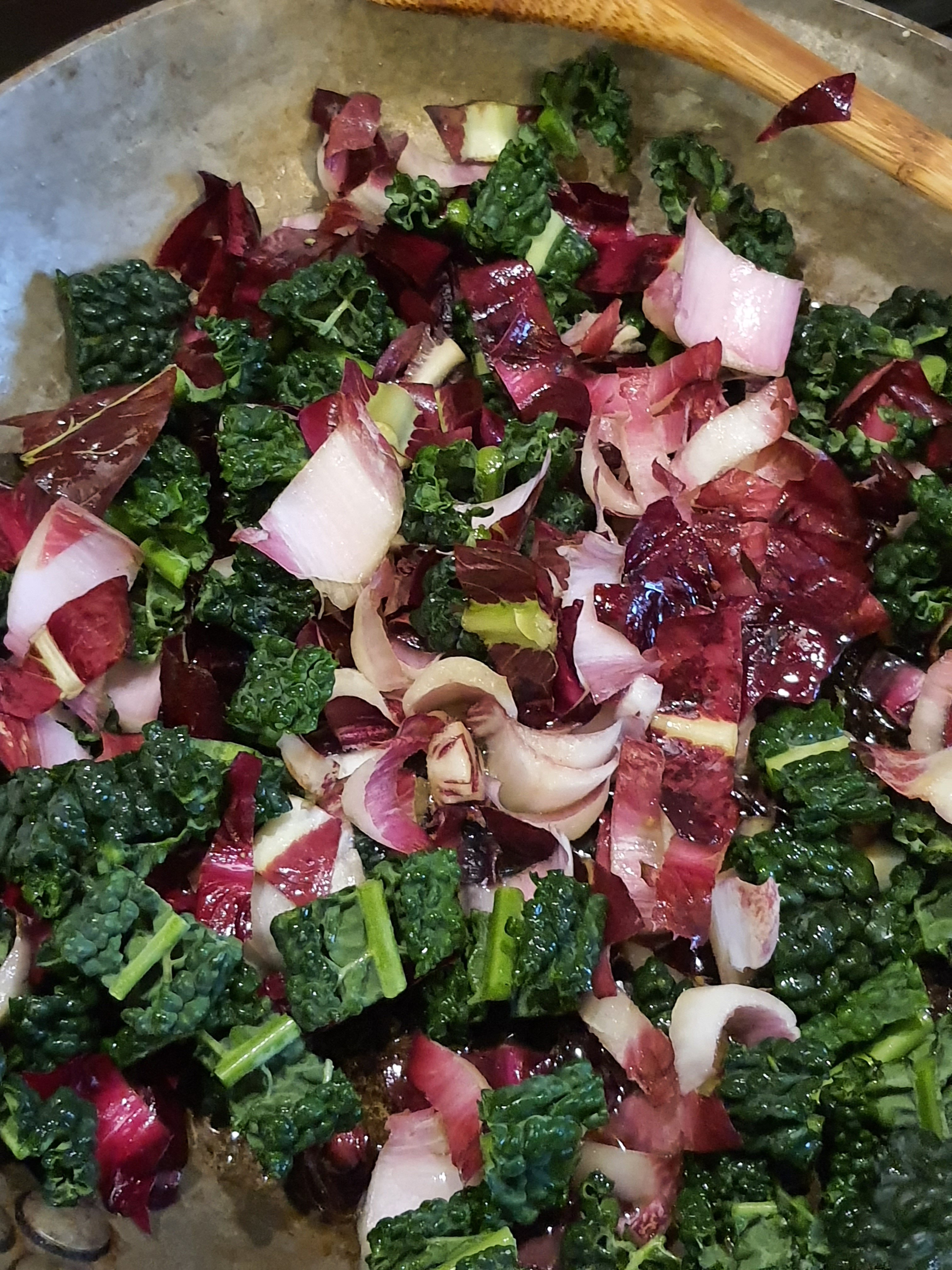
2. Wash and cut the radicchio (and kale if using) into stips. Use as much kale as you would enjoy eating, I think the colours and flavours work well together, but you could just as well use all radicchio.

3. Put the pasta onto cook according to the instructions for al dente.

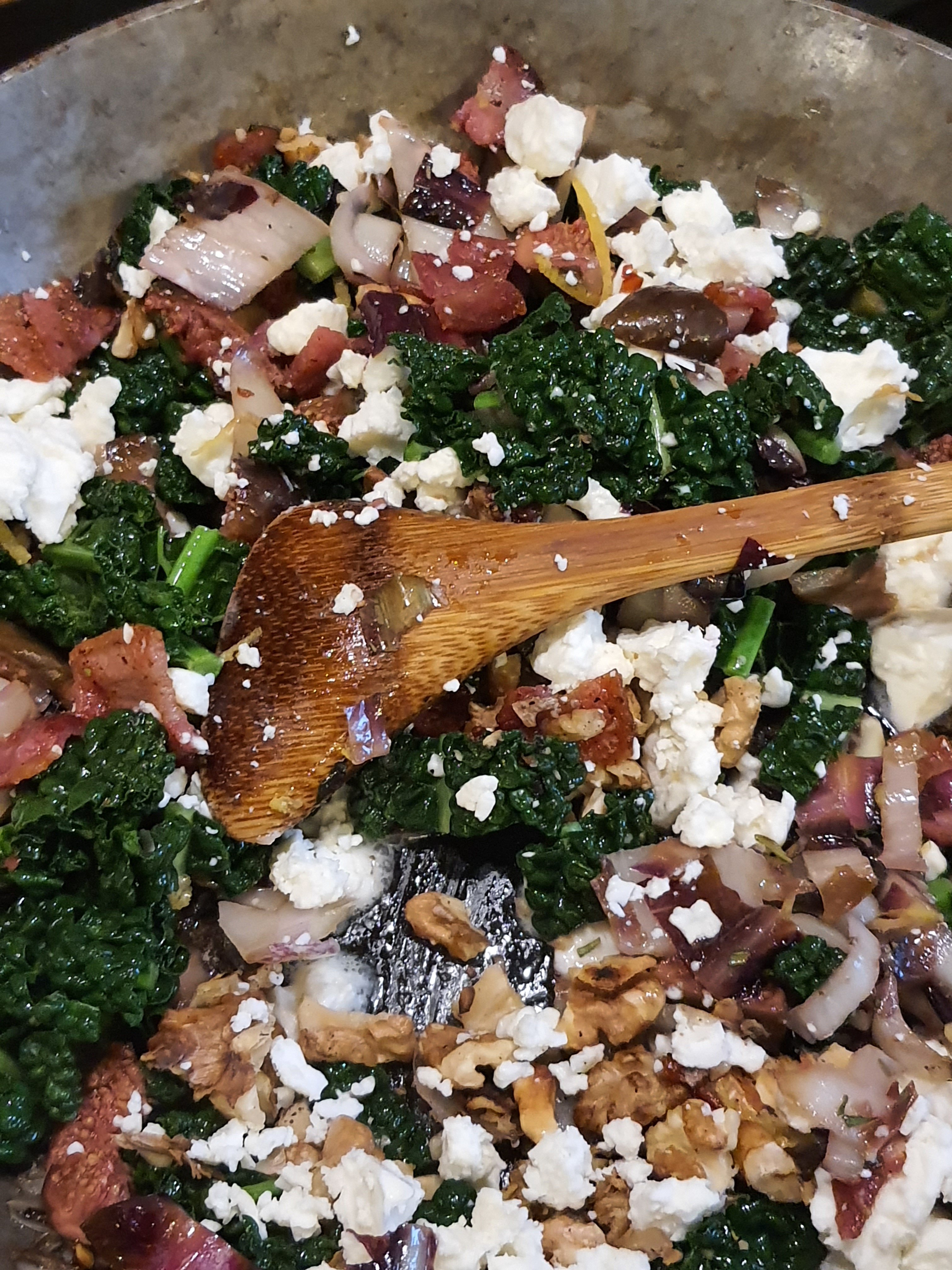
4. Five minutes before the pasta will be ready, fry the diced garlic clove on a medium heat with a glug of olive oil, for a minute, with a pinch chill flakes/ fresh chilli, making sure it doesn’t brown. Add the thicker radicchio first and then after a minute or so add the thinner red leaves and the kale (if using) and the rosemary. Turn regularly until the radicchio is gently browned and the kale is a more vivid green (couple of minutes or so) – for the last few moments stir in the fig, bacon, zest of lemon, balsamic vinegar, the crumbled feta (reserving small amount for garnish) and the walnuts – with a grind or 2 of black pepper.

5. When the pasta is cooked, drain it and return to the hot pan with a couple of tablespoons of the cooking water. Toss into the pasta the radicchio, feta, walnut – adding a dash of olive oil if necessary.

6. Serve in warmed bowls, scattering reserved feta and add parmesan to taste.

Oh my word – so delicious. I could eat this again and again and again …

Nutrition Facts

One serving of radicchio (about one cup or 40 grams) contains about:

  • 9.2 calories
  • 1.8 grams carbohydrates
  • 0.6 gram protein
  • 0.1 gram fat
  • 0.4 gram fibre
  • 102 micrograms vitamin K (128 percent DV)
  • 0.1 milligram copper  (7 percent DV)
  • 24 micrograms folate (6 percent DV)
  • 3.2 milligrams vitamin C (5 percent DV)
  • 0.9 milligram vitamin E (5 percent DV)
  • 121 milligrams potassium (3 percent DV)
  • 0.1 milligram manganese (3 percent DV)

Tally for the month

Main Vegetables:  broccoli (calabrese), butternut squash, celeriac, radicchio

Subsidiary Vegetables: onion, shallots, garlic, leek, celery, potato, rosemary, carlin peas, chick peas, kale, chilli.

Subsidiary Fruit and Nuts: lemon, fig, walnuts
Day 3 of 31 Vegetable Challenge

Winter squash

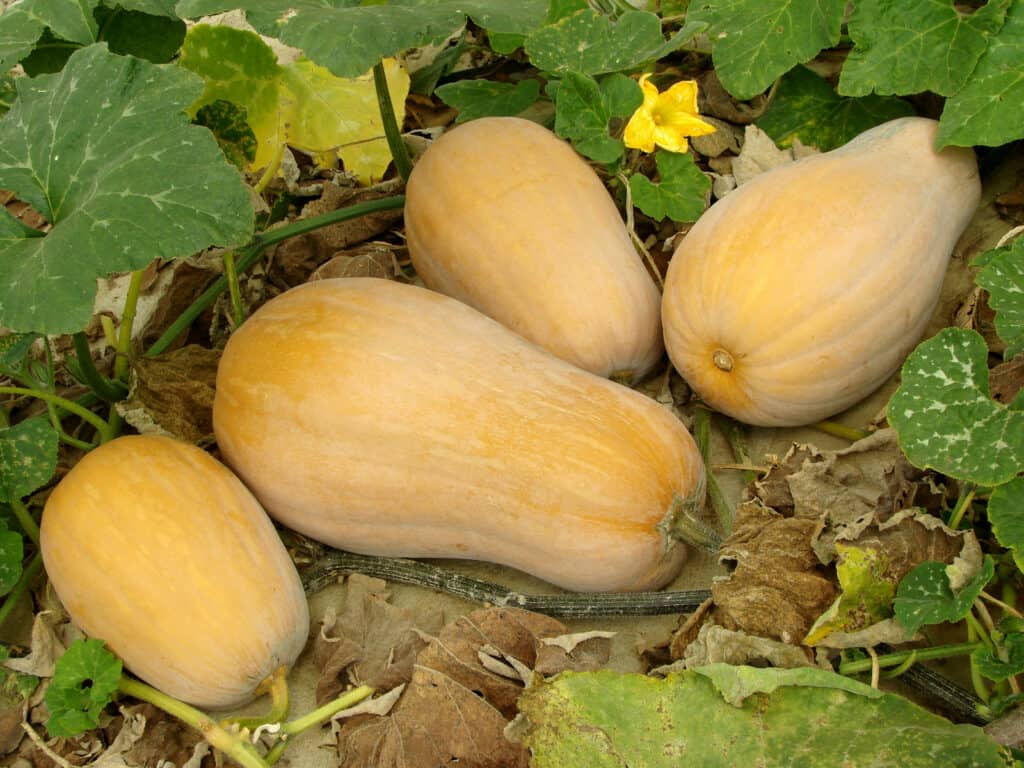
Butternut squash https://harvesttotable.com/how_to_grow_winter_squash/

SQUASH

Cucurbita

Winter squash and pumpkin originate in the Americas, where their ancestors grew wild as climbers, but are now grown around the globe and flourish in the UK.  There are many varieties of squash and pumpkin, some taste better than others.  Although they are botanically a fruit, they function more like a vegetable. All of the fruits in the Cucurbita family tend to be high in essential nutrients.

“Squash” comes from the Narragansett Native American word “askutasquash”, which means “eaten raw or uncooked”. 

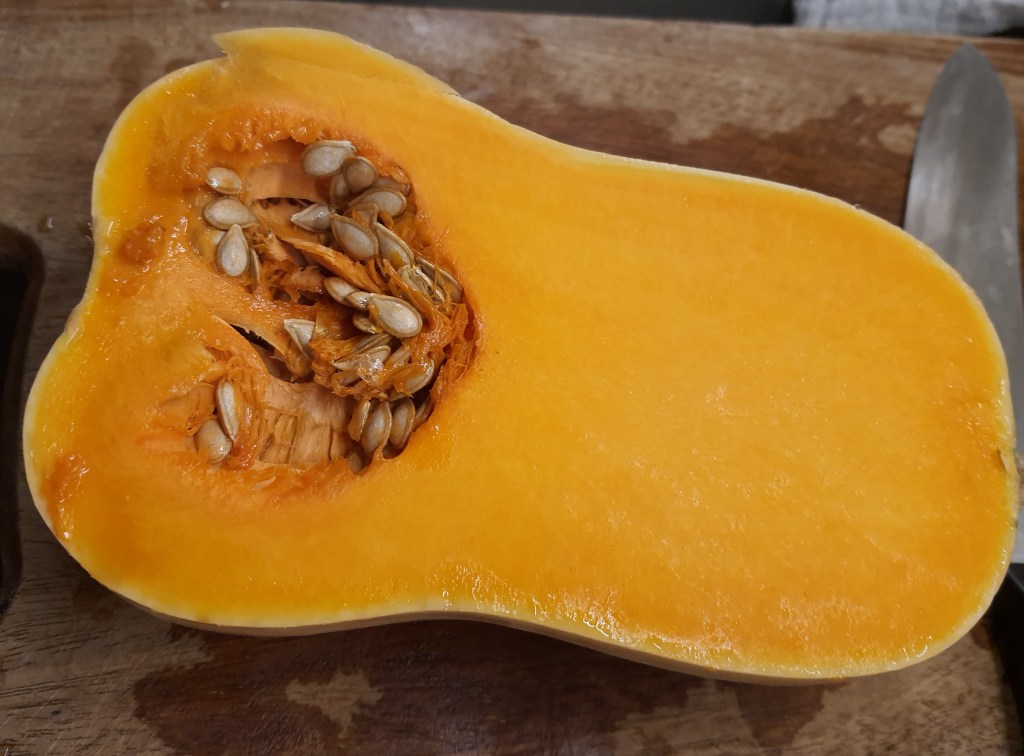
Squash can be eaten raw. You could perhaps shave it into thin ribbons and marinate it in a zesty dressing. Or add it to a veg juice. However, pumpkins, like carrots, are rich in antioxidants like beta-carotene, which are apparently much easier to absorb once they have been heated. (I suspect as with most raw vs. cooked veg, that there’s a play off with different nutrients; some damaged by heating, some released from the cell wall or made bio-available by cooking). Warning – don’t cook any type of squash whole in the oven, as they will probably explode. But cutting in half (with a scary knife) will avoid that and it’s much easier to scoop the flesh off a baked squash than to cut the rind from a raw squash.

Today I’m cooking with one of the most popular and hardy variety of squash: butternut squash – which also happens to be the easiest to peel (some other squash require a cleaver!). It was developed in the 1940s Charles A. Leggett (an insurance agent from Mass, USA, who “fell into” farming squash when his doctor insisted he spend more time outdoors). He combined the Gooseneck squash and Hubbard squash to make a more conveniently shaped and sized squash. When asked what he wanted to call it, Leggett said it was “smooth as butter and sweet as a nut,” leading to its new title as the butternut squash.

Goes well with:

Asian flavourings
Cheese
Dairy
Garlic
Onion
Nuts
Pork
Spices (Chilli, Cinnamon, Nutmeg, Coriander, Cumin, Star anise)
Strong herbs

Sources include: https://www.riverford.co.uk/a-to-z-of-veg

Cooking with Butternut squash

It’s possible to oven roast a butternut squash in advance, if the oven is on for something else and then just use part of it or  put it all in the fridge for later in the week. I don’t know how long it is sensible to leave it in the fridge, once cooked, before eating, but my personal threshold is around 3-4 days (Andrew would probably go as long as 6-7!). 

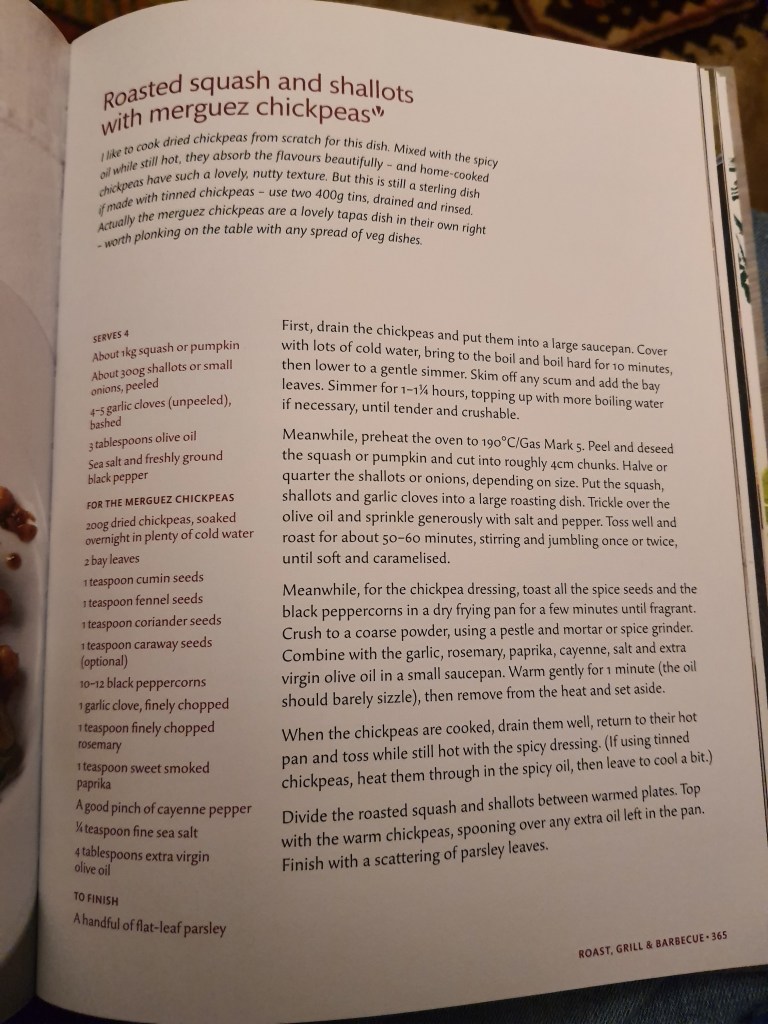
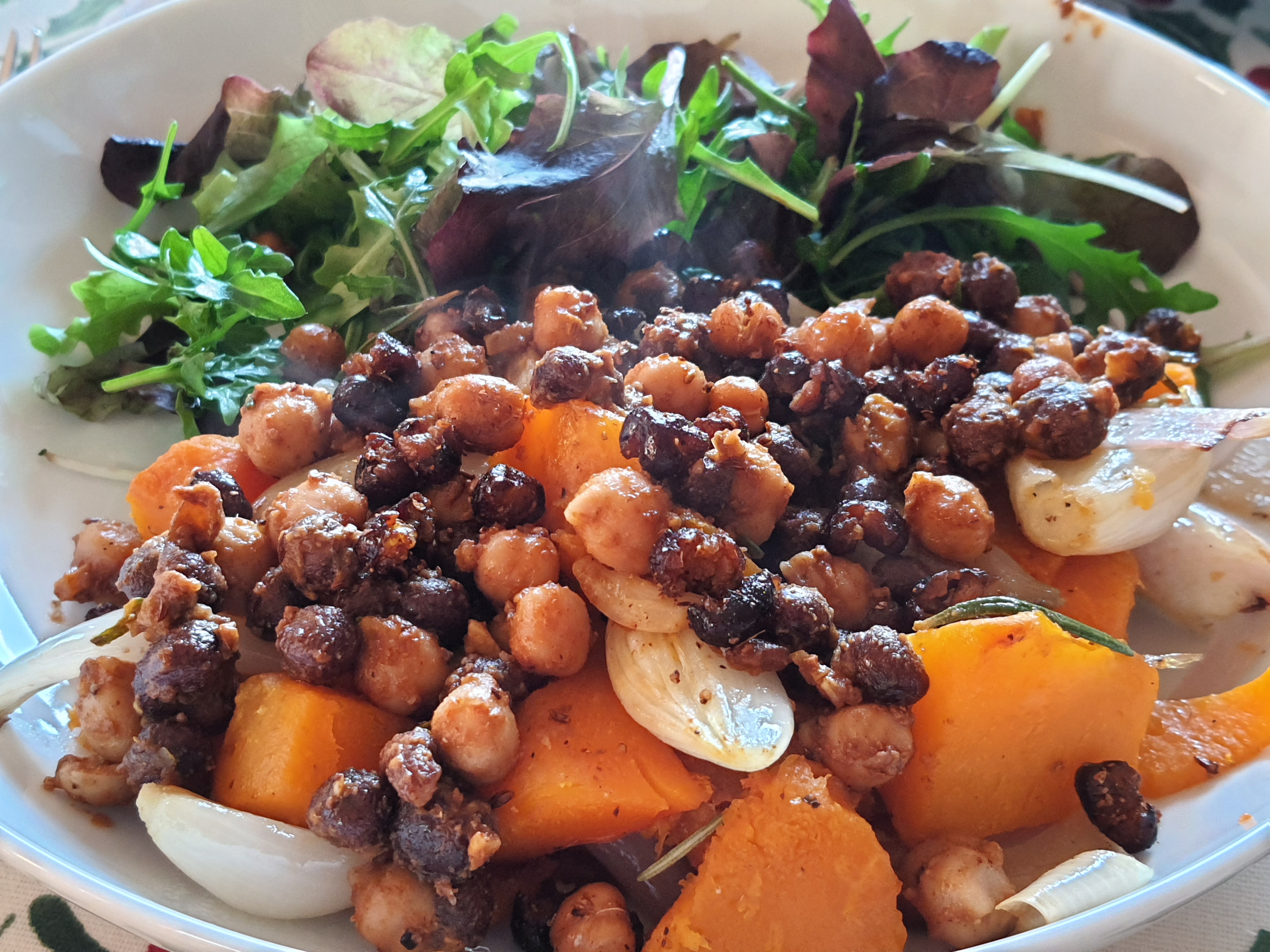
I roasted 3/4 of a butternut squash chopped into 3 x 1/4 pieces a few days ago, and then cubed and roasted the last 1/4 of the squash with rosemary and garlic to accompany our very delicious meal on NYE of Greek Lamb Stew with orzo and feta.  The remaing squash has been refrigerated and today I am making a variation on a recipe from: “River Cottage – Veg everyday” by Hugh Fearnley-Whittingstall. p.365

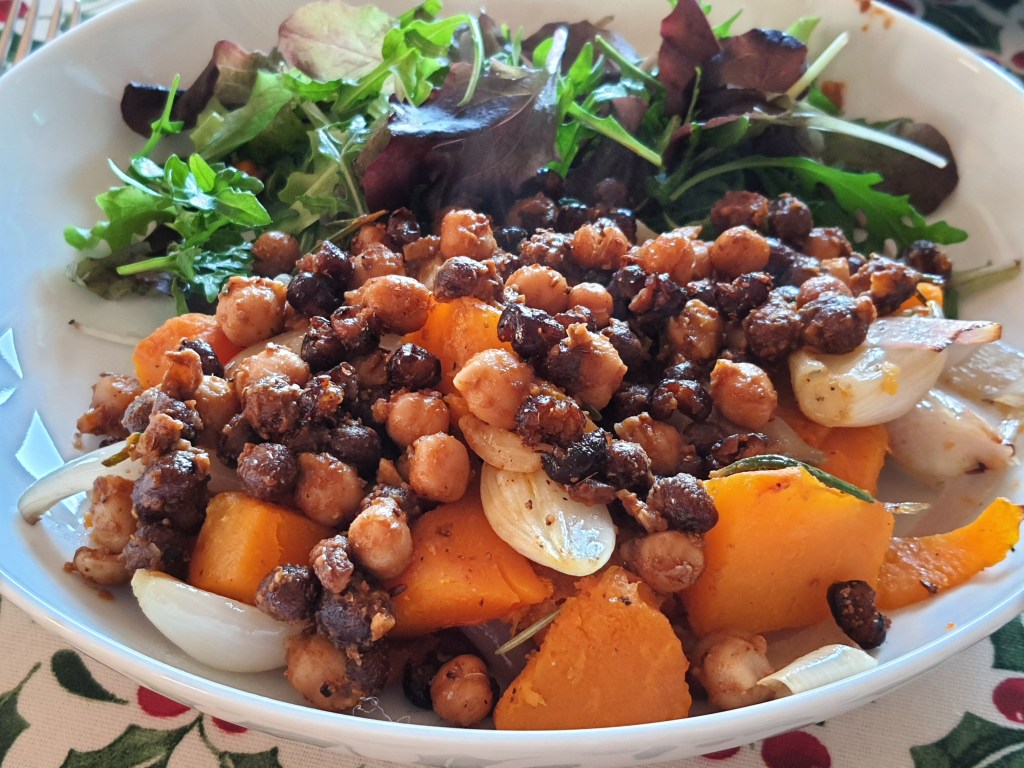
Roasted squash and shallots with merguez chickpeas (and carlin peas two ways).

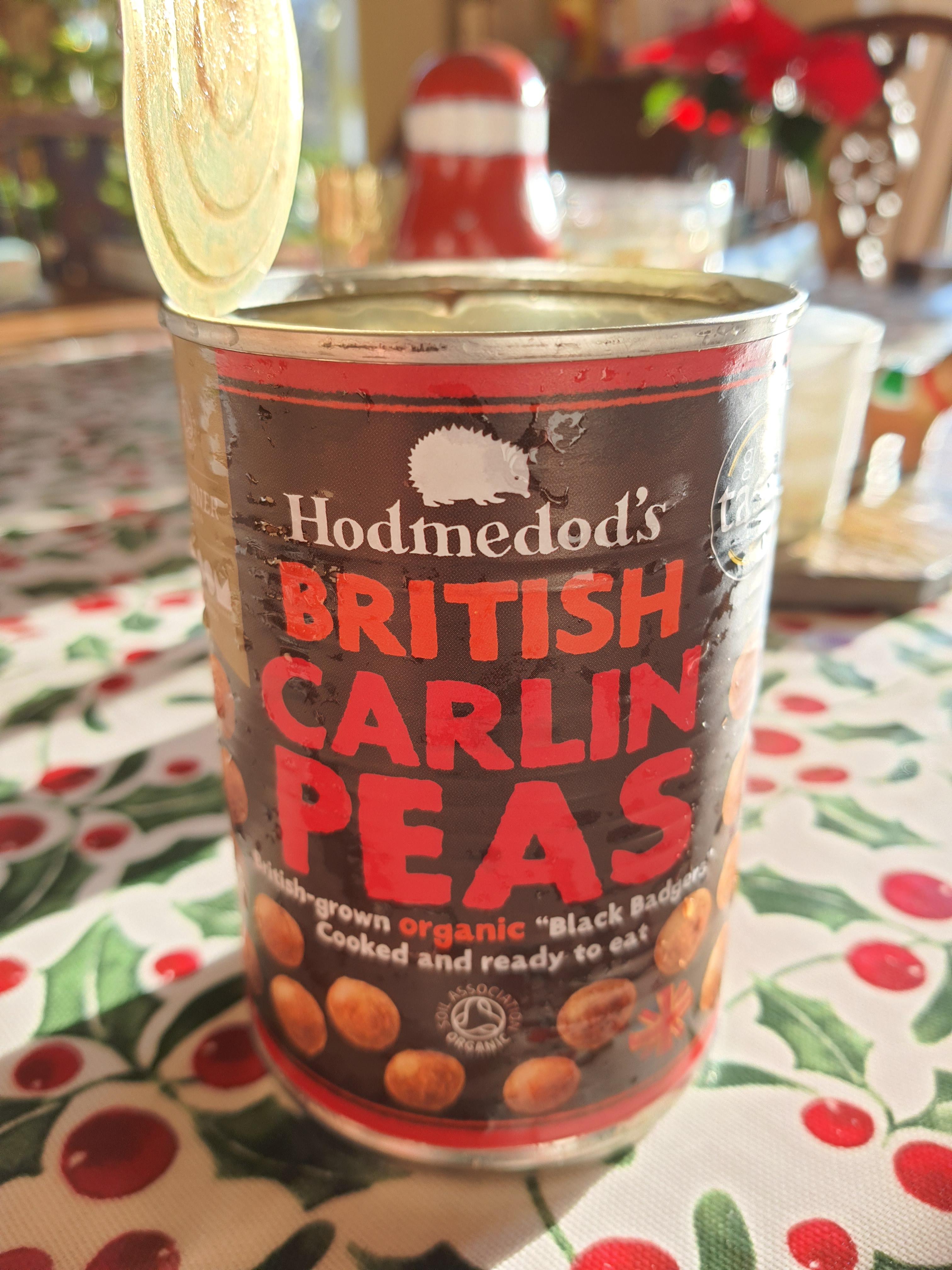
My variation –  recipe above but using just less than 500g pre-roasted butternut squash. Also used a 400g tin of chickpeas and a 400g tin of of “Hodmedod’s British Carlin Peas” (also known as ‘Black Badger’s / maple peas). They are grown in the UK and traditionally eaten in the North East of England and Lancashire on “Carlin Sunday” which is Passion Sunday.

The story is that the custom of eating them is linked to the civil war of 1644 where the Royalist Newcastle was under siege from the Scots.  The lack of food meant that the people on both sides of the Tyne were dying of starvation. Legend has it that a French ship managed to dock at Newcastle with a cargo of maple peas.  Other tales, tell of  a ship, laden with peas, which became stranded at South Shields a fortnight before Easter Day. The peas were washed ashore and salvaged by the locals.

Carlin peas are a great alternative to chickpeas, in fact I prefer them as whole peas (but I’ve not tried them in hummus). Hodmedod’s sell a lot of UK alternative pulses –  many very delicious.

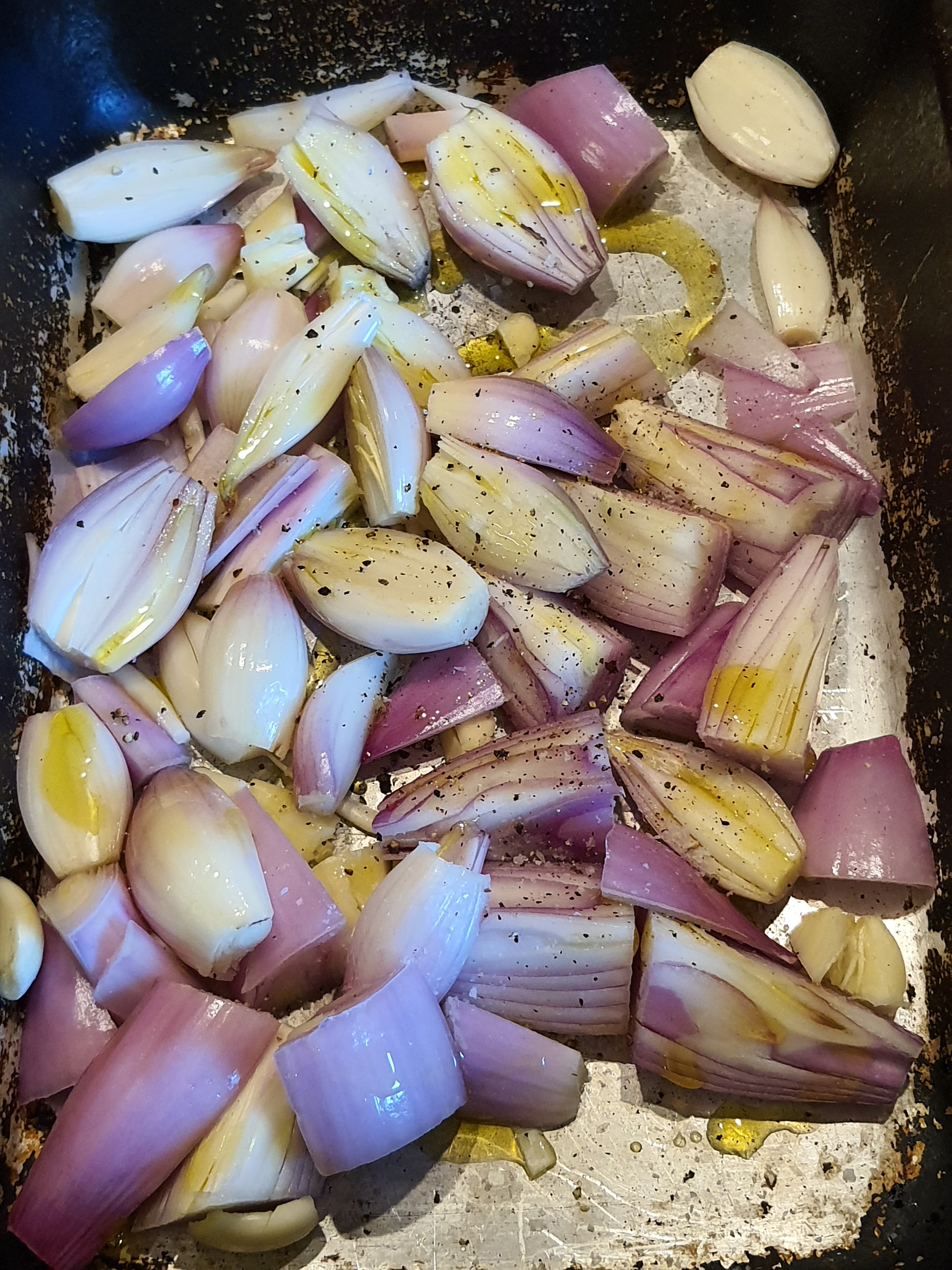
I roasted the shallots (cut in half) with the garlic and a little olive oil, salt and pepper, for 20 mins and then added the pre-roasted butternut squash with some rosemary for the another ten (I can’t believe that I forgot to photograph the squash!!!).

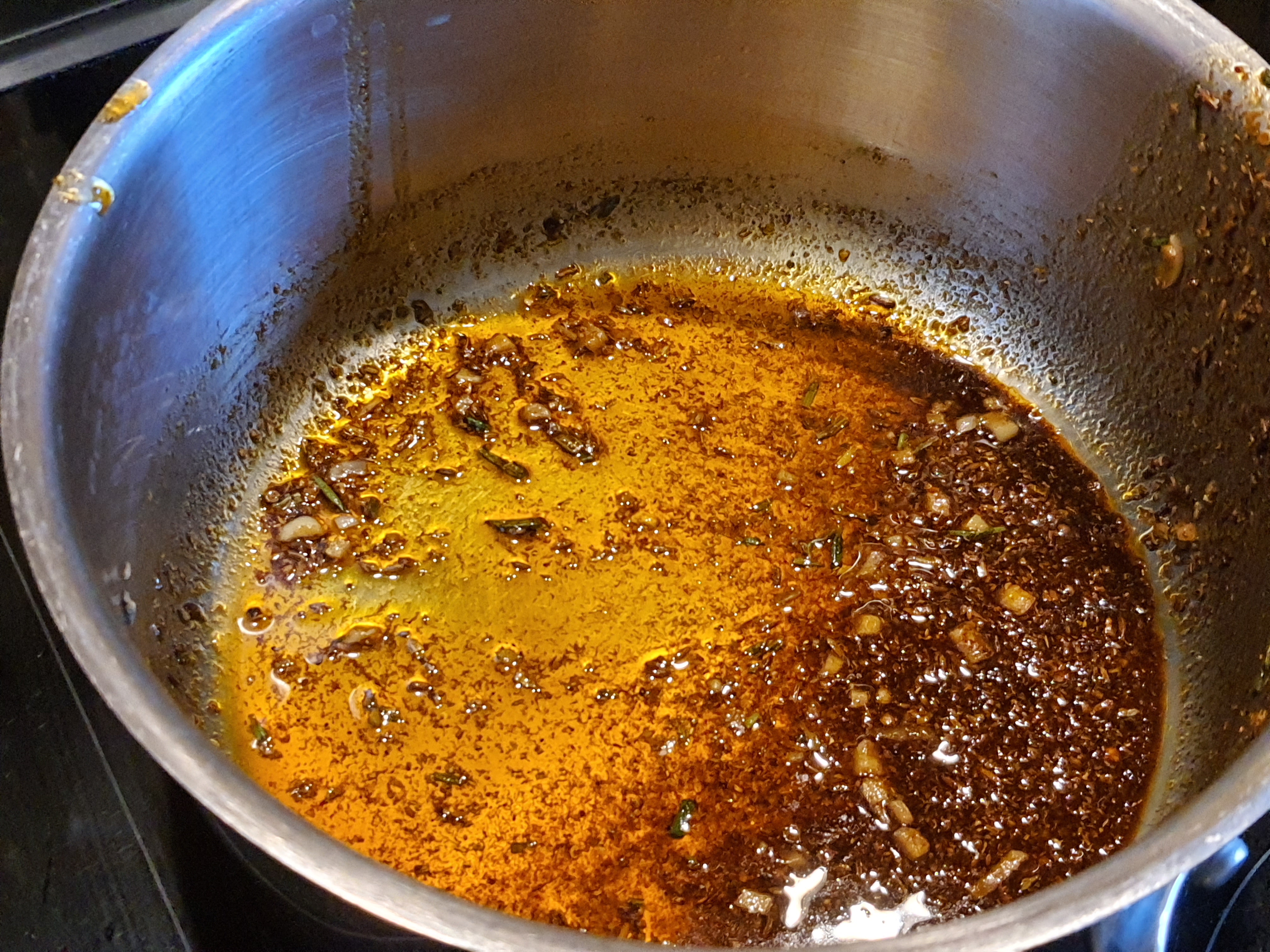
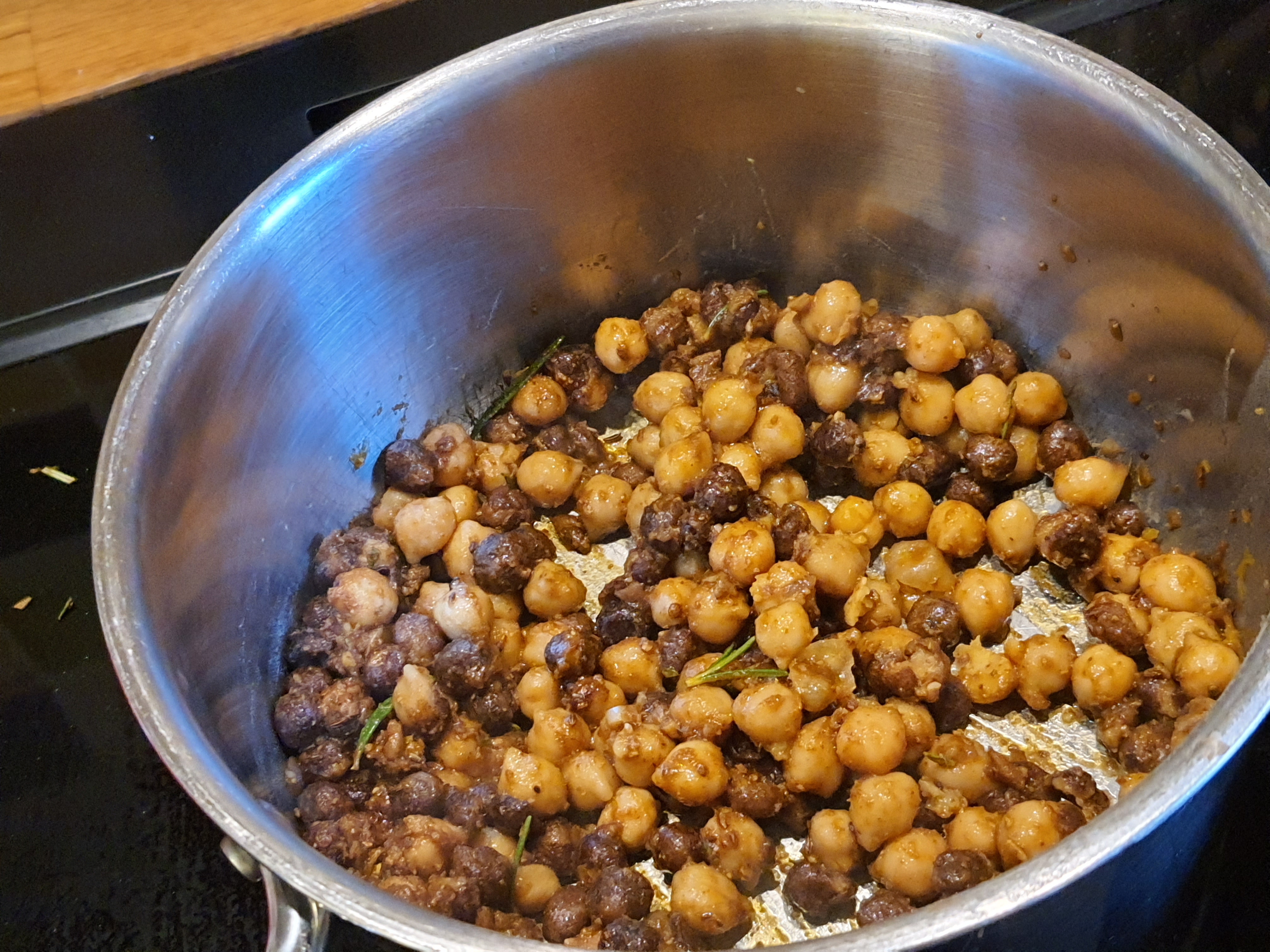
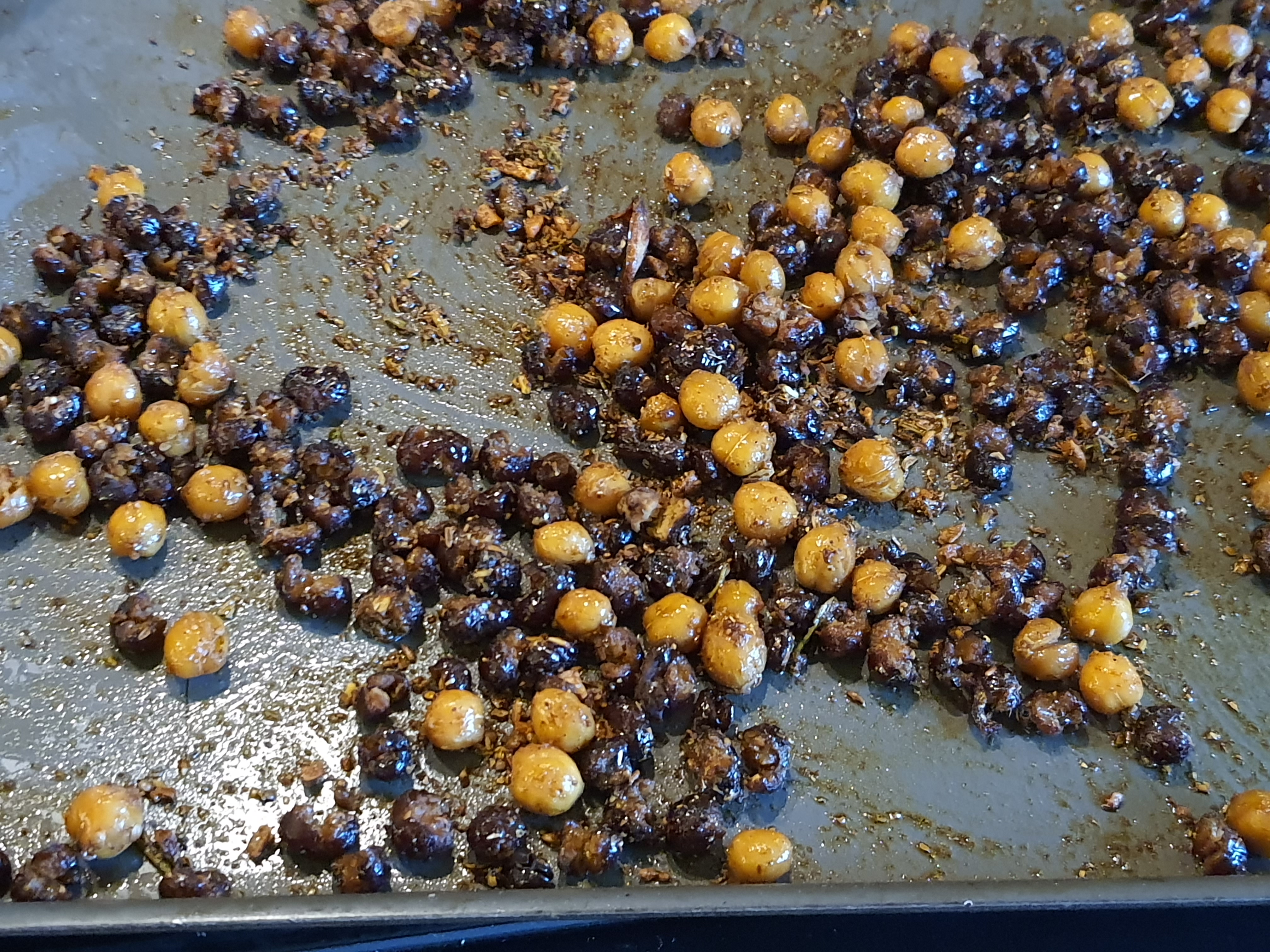
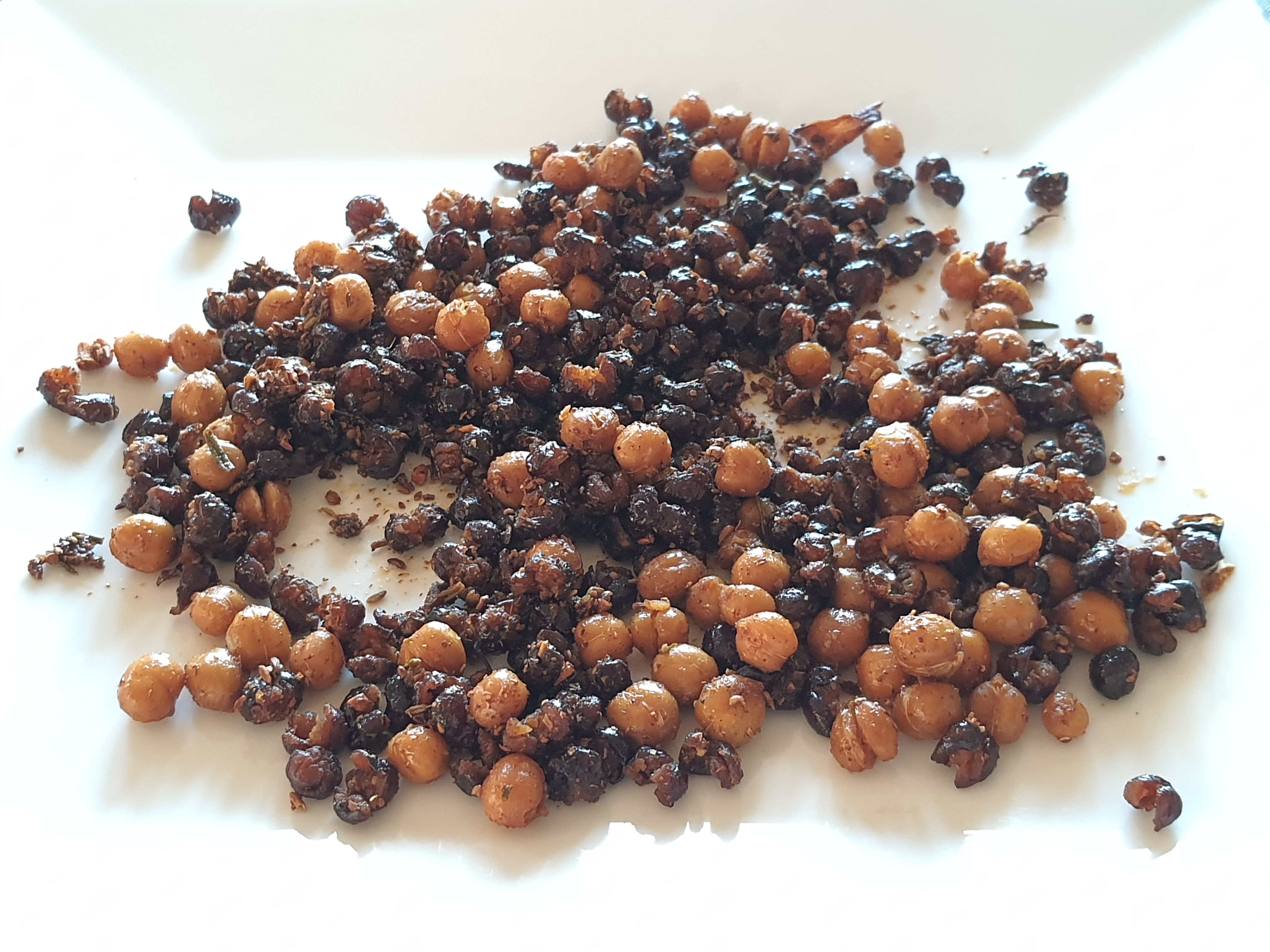
I split the chickpeas/ carlin peas into two dishes – one half I roasted with the flavoured oil (20 mins at 180 degrees – shaking regularly. I love crunch in a meal and I was concerned that there wouldn’t be enough texture in this dish).  The carlin peas toasted brilliantly. I will do that again – definitely.  I love cold toasted pulses as a snack or on top of soup and they keep well for a few days.) and the other half I steamed gently for 10 mins to warm and then stirred in the rest of the flavoured oil.

It was served with a mixed leaf rocket salad and a piece of walnut bread.

I liked it – and will definitely make again. But I’m a fan of stronger flavours, so I drizzled chill, garlic and ginger oil over mine. Next time I would add extra cayenne and smoked paprika. I thought the fennel seeds were perfect (which is just as well, as Andrew went to the shops for them this morning!!)

Other recipes that have caught my eye:

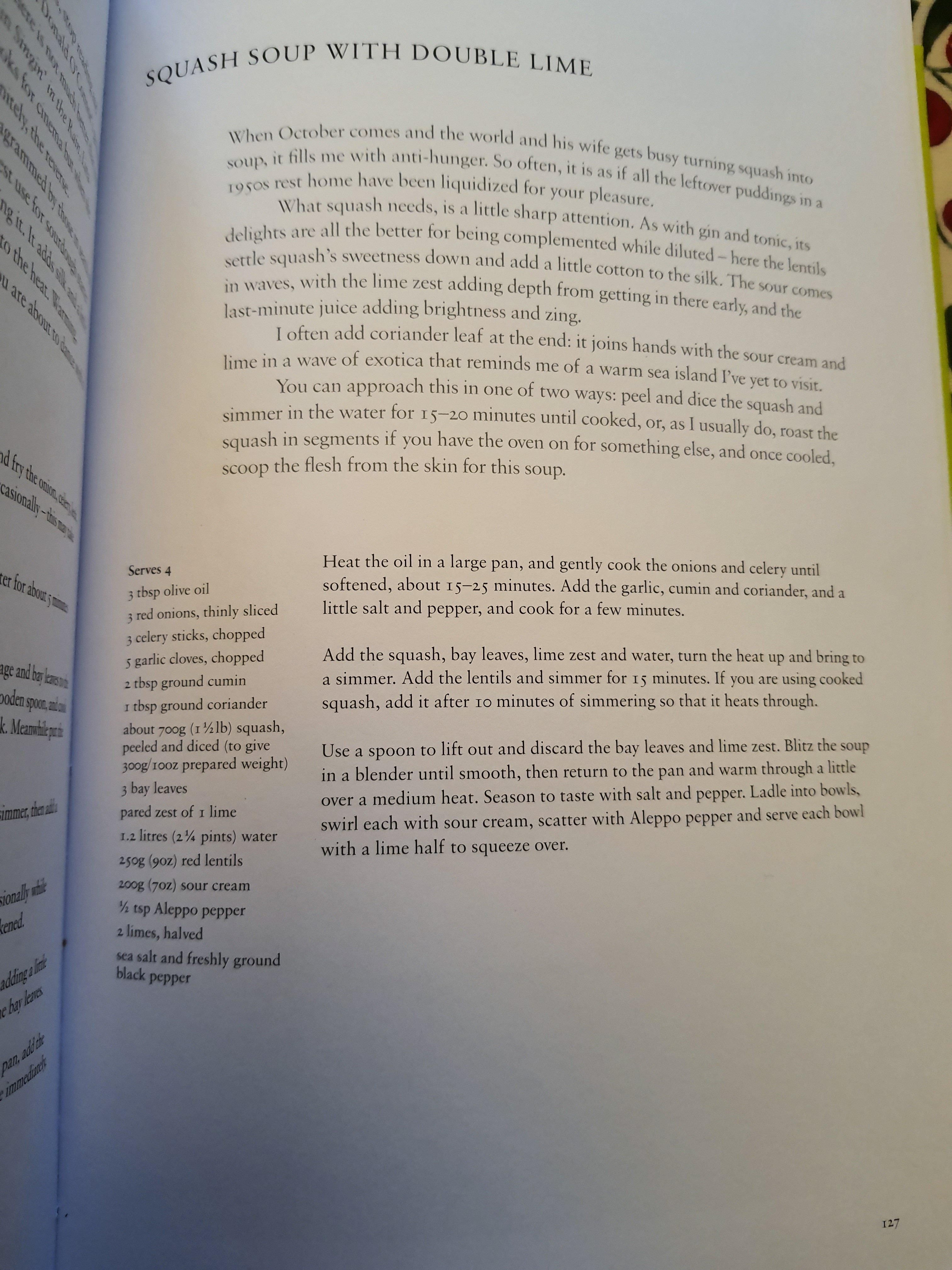
Squash soup with double lime

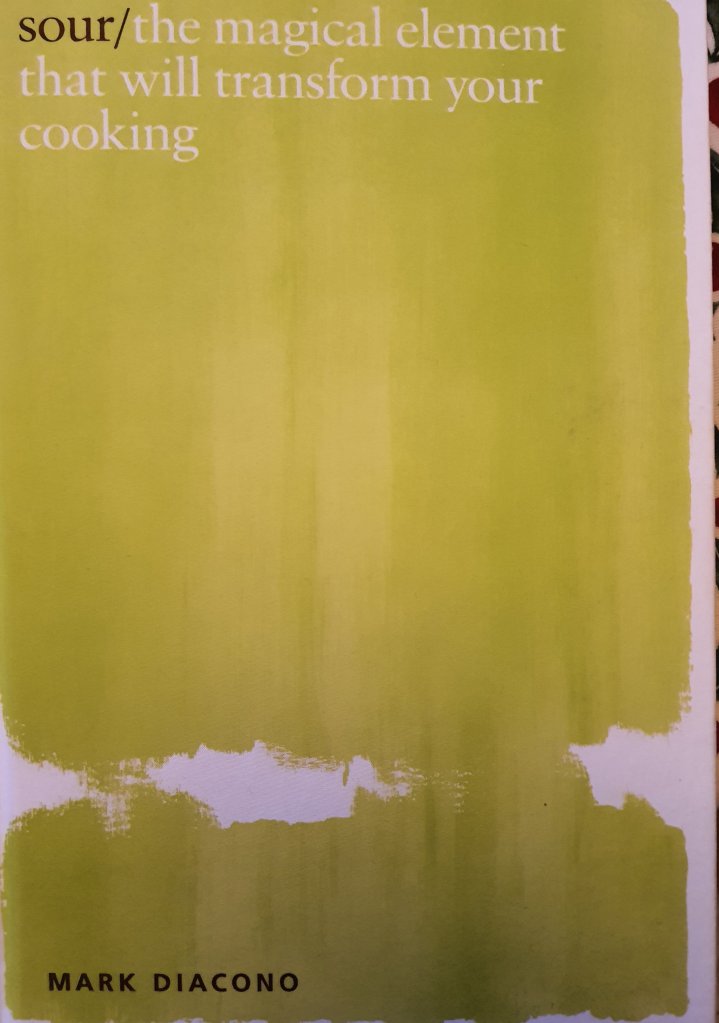
Mark Diacono in the fabulous book: “Sour/ the magical element that will transform your cooking” (He’s full of great ideas with really interesting and unusual flavours much UK grown or foraged from your garden. He runs Otter Farm, food school and plant nursery in Devon. I follow him on FB).

Squash, Kale and Stilton pie

A Riverford recipe. Serve with a crisp green salad topped with toasted walnuts. Other squash and pumpkin will work just as well as butternut or you could use a dieter type of cheese.

Ingredients

  • 1 small (750g-800g) butternut squash, peeled and chopped into 1-2cm dice
  • 1 large red onion, finely diced
  • 2 tbsp rosemary leaves, finely chopped
  • 200g curly kale, washed, leaves stripped from their stalks
  • 4 tbsp double cream
  • 200g blue cheese, crumbled
  • 2 ready-rolled puff pastry sheets
  • 1 egg, lightly beaten
  • salt and pepper

Method

Prep time: 15 min  Cooking time: 1h 15 min

  • Step 1 – Preheat oven to 220°C/Gas 7. Toss the squash in just enough oil to coat and season. Roast in a baking dish for about 30 minutes, or until just tender.
  • Step 2 – Fry the onion and rosemary in 3 tablespoons of oil on a low heat for 10 minutes, stirring now and then, until softened. If it looks like catching at any point, add a splash of water.
  • Step 3 – Cook the kale in the pan of boiling water for 4 minutes, until softened. Drain, refresh in cold water, then drain again and squeeze out any excess moisture. Finely chop.
  • Step 4 – Mix the squash, onion, kale and double cream. Season and cool for 15 minutes. Mix in the blue cheese.
  • Step 5 – Unroll the pastry sheets and cut into quarters. Lay 4 pieces on a lightly greased baking tray, score a 2cm border inside the edge of each and pile the veg within it. Dampen the pastry border with some water. Lay the other 4 pastry pieces over the top. Gently stretch to cover, pressing the edges down well to seal. Pull the edges up and over slightly to confirm the seal. Brush the top with beaten egg and bake for 25-30 minutes, until crisp, puffed and golden.

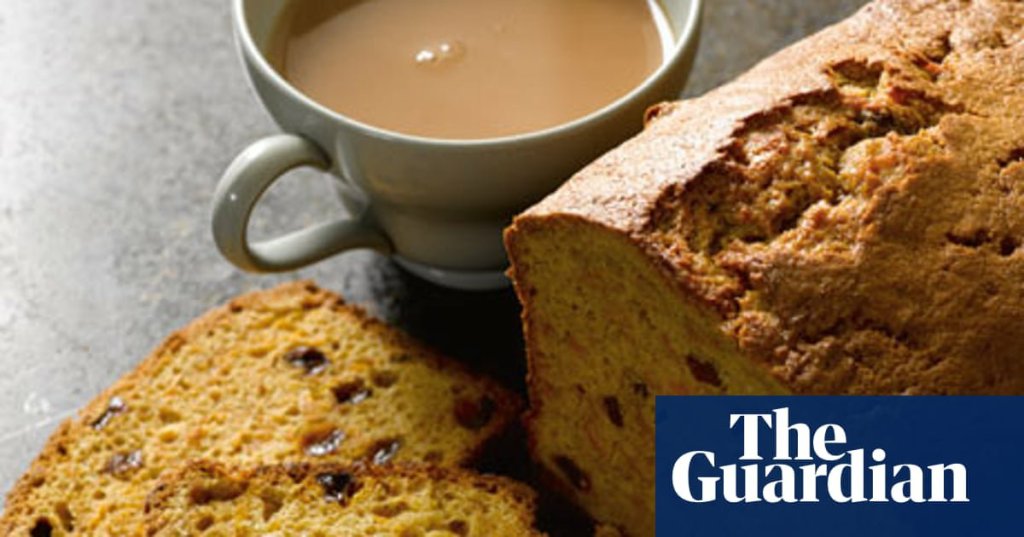
Pumpkin and raisin tea loaf

https://www.theguardian.com/lifeandstyle/2012/nov/09/pumpkin-squash-recipes-fearley-whittingstall

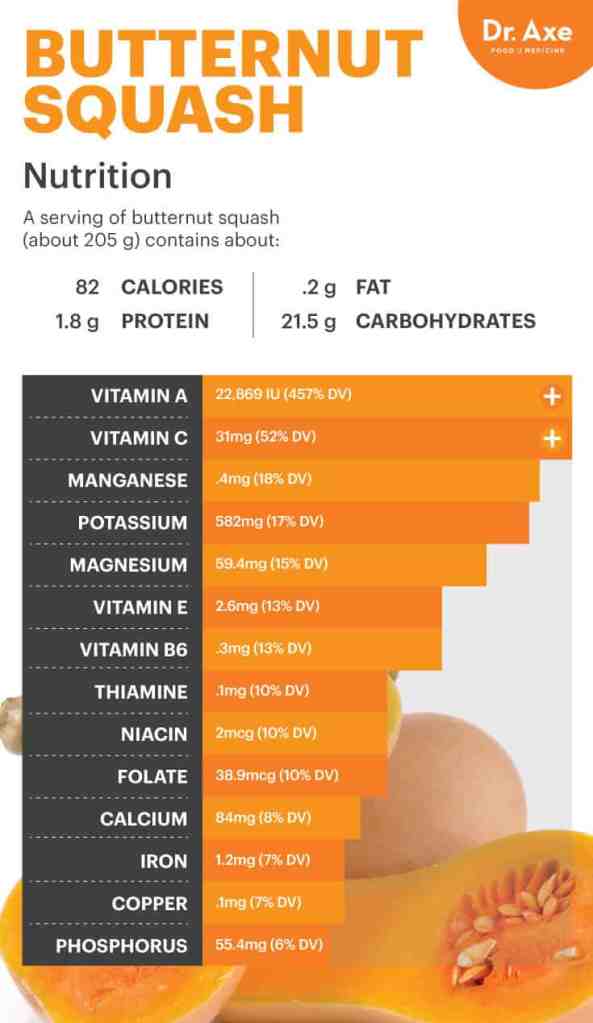
Nutritional composition

https://draxe.com/nutrition/butternut-squash-nutrition/#Health_Benefits

Tally for the month

Main Vegetables:  broccoli (calabrese), butternut squash, celeriac.

Subsidiary Vegetables: onion, shallots, garlic, leek, celery, potato, rosemary, carlin peas, chick peas.

Subsidiary Fruit and Nuts: lemon

Day 2 of 31 Vegetable Challenge

Celariac

http://www.finegardening.com/article/how-to-grow-celeriac

CELERIAC (Celery root)

Apium graveolens var. rapaceum

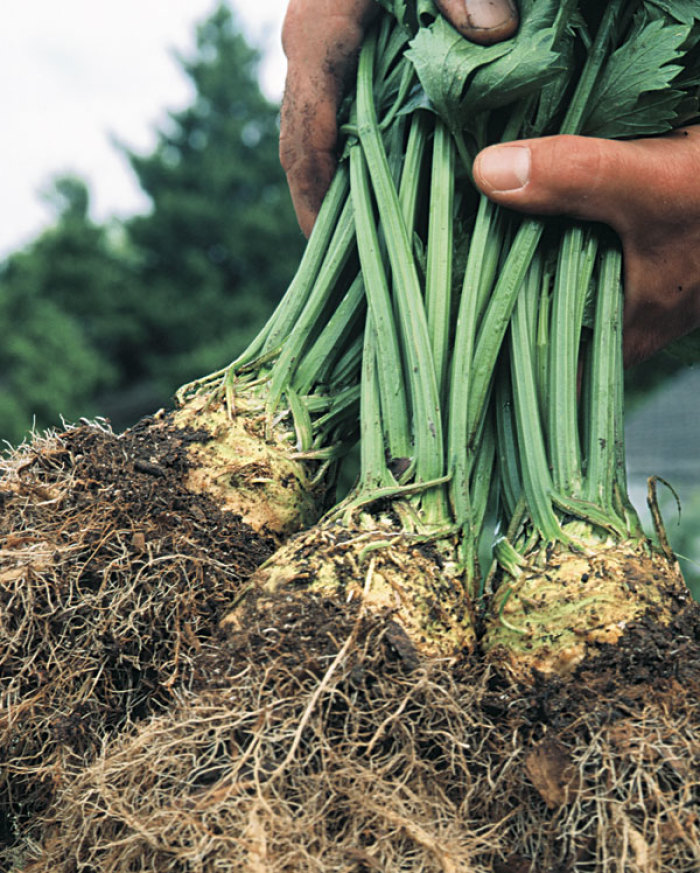
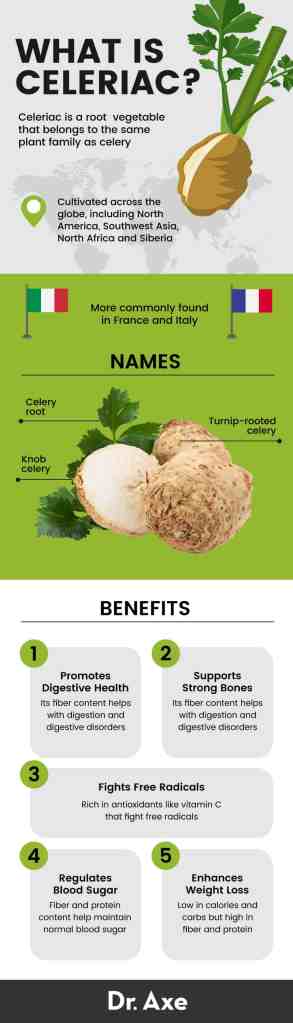
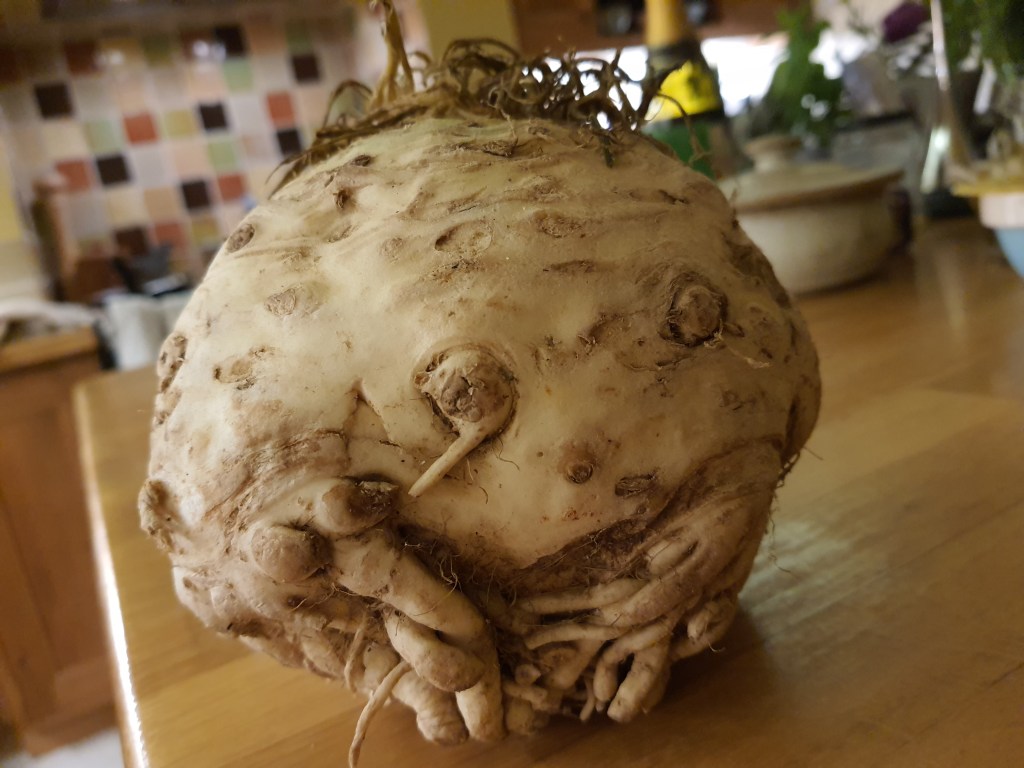
Celeriac (celery root, knob celery or turnip-rooted celery) is a root vegetable that belongs to the same plant family as celery. It is knobbly, much overlooked and rather alien looking. It’s covered in strange appendages, mud-filled crevices and warty protrusions and considered by some to look like a mandrake from Harry Potter’s herbology class. But celery root won’t kill you! It’s delicious and good value.

“Under the craggy skin lies a smoky, earthy fragrance that can be the starting point for hundreds of recipes”. Raw: celeriac has fantastic crunch and a super nutty, celery-like flavour that makes it perfect for salads and slaws, such as French classic crunchy rémoulade. Cooked: it takes on a slight sweetness, perfect for a velvety mash, a warming gratin or a silky soup.

Celeriac is in season in the UK from October through to February.

http://www.greatbritishchefs.com/how-to-cook/how-to-cook-celeriac and https://www.riverford.co.uk/a-to-z-of-veg/celeriac

Goes well with:
Apple and pear
Caraway
Cheese (Blue, Parmesan)
Cream
Fish and seafood (White fish, Mackerel, Scallops)
Herbs
Horseradish
Lemon
Mustard
Nuts
Pork (Roast pork, Bacon, Ham)

From: https://draxe.com/nutrition/celeriac/#What_Is_Celeriac

Nutrition Facts

Celeriac root is very nutritious. It packs a good amount of vitamin K, vitamin C and phosphorus into each serving. It’s also relatively low in carbs, whilst high in fibre (an excellent prebiotic).

One cup (about 156 grams) of raw celeriac contains approximately:

  • 65.5 calories
  • 14.4 grams carbohydrates
  • 2.3 grams protein
  • 0.5 gram fat
  • 2.8 grams dietary fibre
  • 64 micrograms vitamin K (80 percent DV)
  • 12.5 milligrams vitamin C (21 percent DV)
  • 179 milligrams phosphorus  (18 percent DV)
  • 468 milligrams potassium (13 percent DV)
  • 0.3 milligram vitamin B6 (13 percent DV)
  • 0.2 milligram manganese (12 percent DV)
  • 31.2 milligrams magnesium (8 percent DV)
  • 67.1 milligrams calcium (7 percent DV)
  • 1.1 milligrams iron (6 percent DV)
  • 0.1 milligram riboflavin (6 percent DV)
  • 0.1 milligram copper (5 percent DV)
  • 0.5 milligram pantothenic acid (5 percent DV)
  • 0.1 milligram thiamine (5 percent DV)

In addition to the nutrients listed above, this root vegetable also contains a small amount of folate, vitamin E, zinc and selenium.

https://draxe.com/nutrition/celeriac/#What_Is_Celeriac

Prep & Cooking tips:

“Give it a good scrub then set to it with a knife to carve away the knobbly skin and roots. A sharp knife is more practical than a peeler as the root end can be a little gnarled and tangled. A little wastage is inevitable. Either chop the celeriac into chunks for roasting, soup or mash, or slice thinly for a gratin. Slice/grate into matchsticks for using raw in salads and rémoulade. And clean offcuts or skin work wonders in a stock pot”.

This one has hair, a face and hands.

I love celeriac. I had never even heard of it until one appeared in my Riverford weekly veg box a few years ago. Now I look for it eagerly. It is a bit of a pain to prepare and cutting flesh away with the skin can feel wasteful – but it’s so worth the effort.

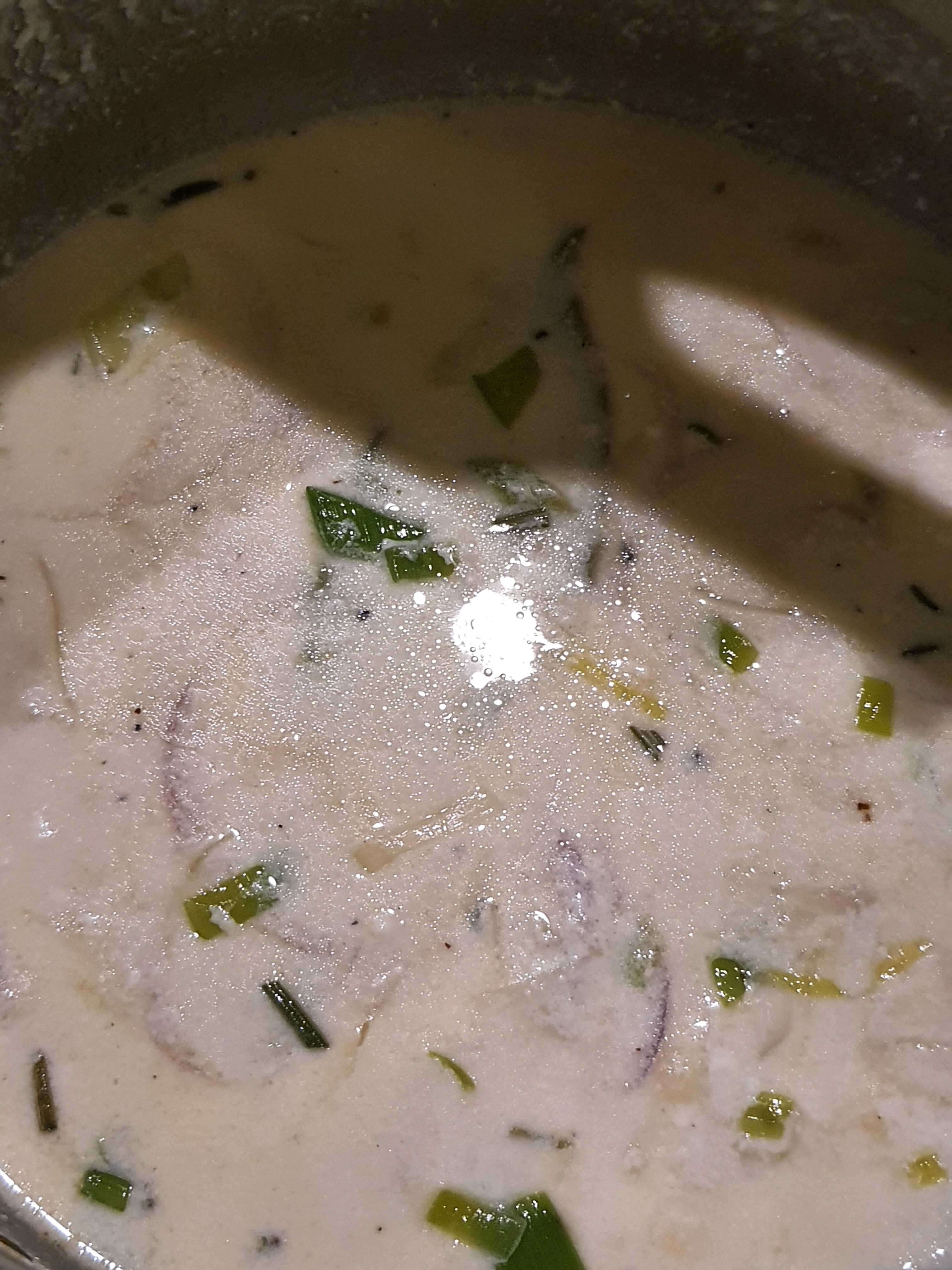
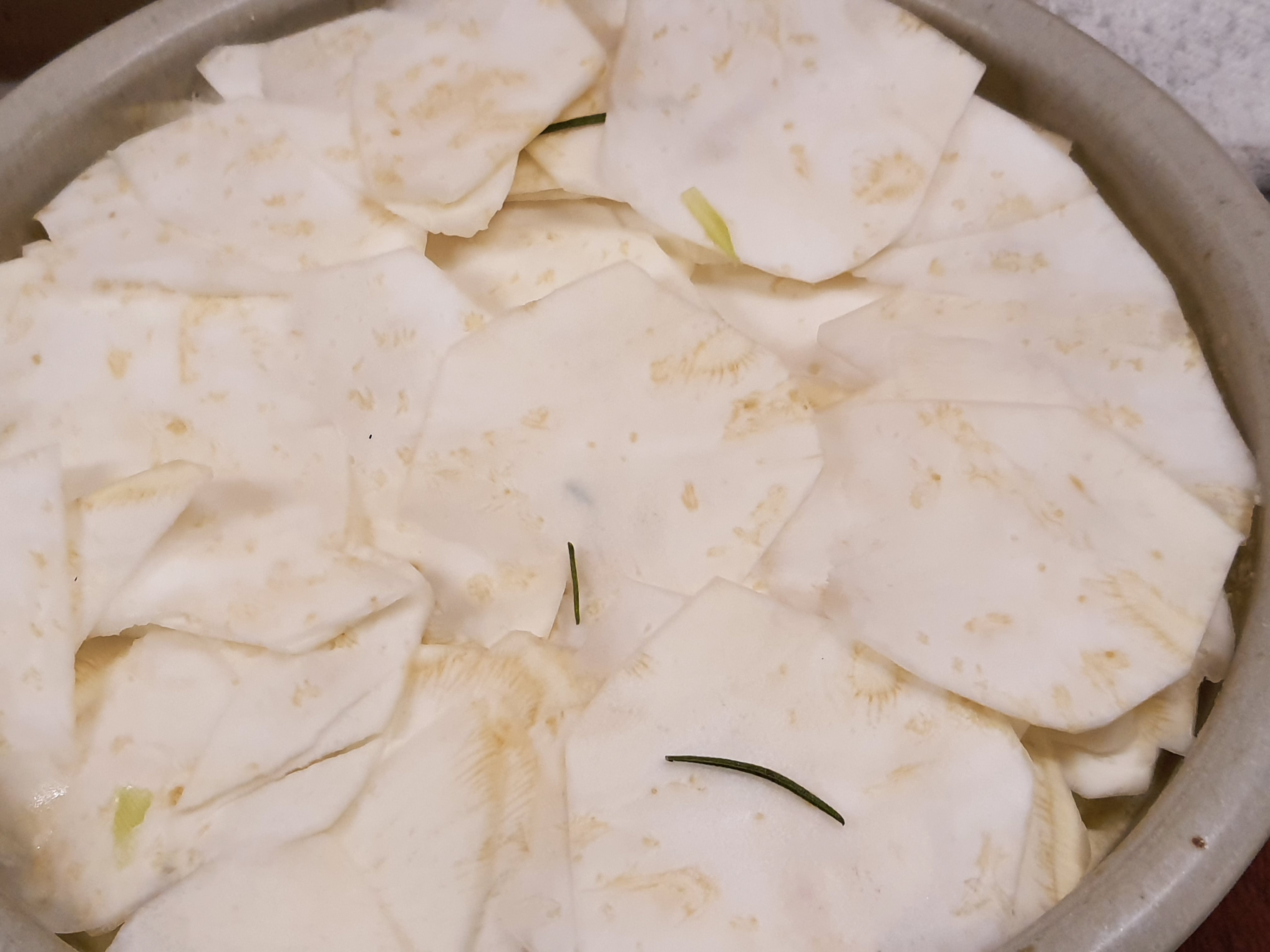
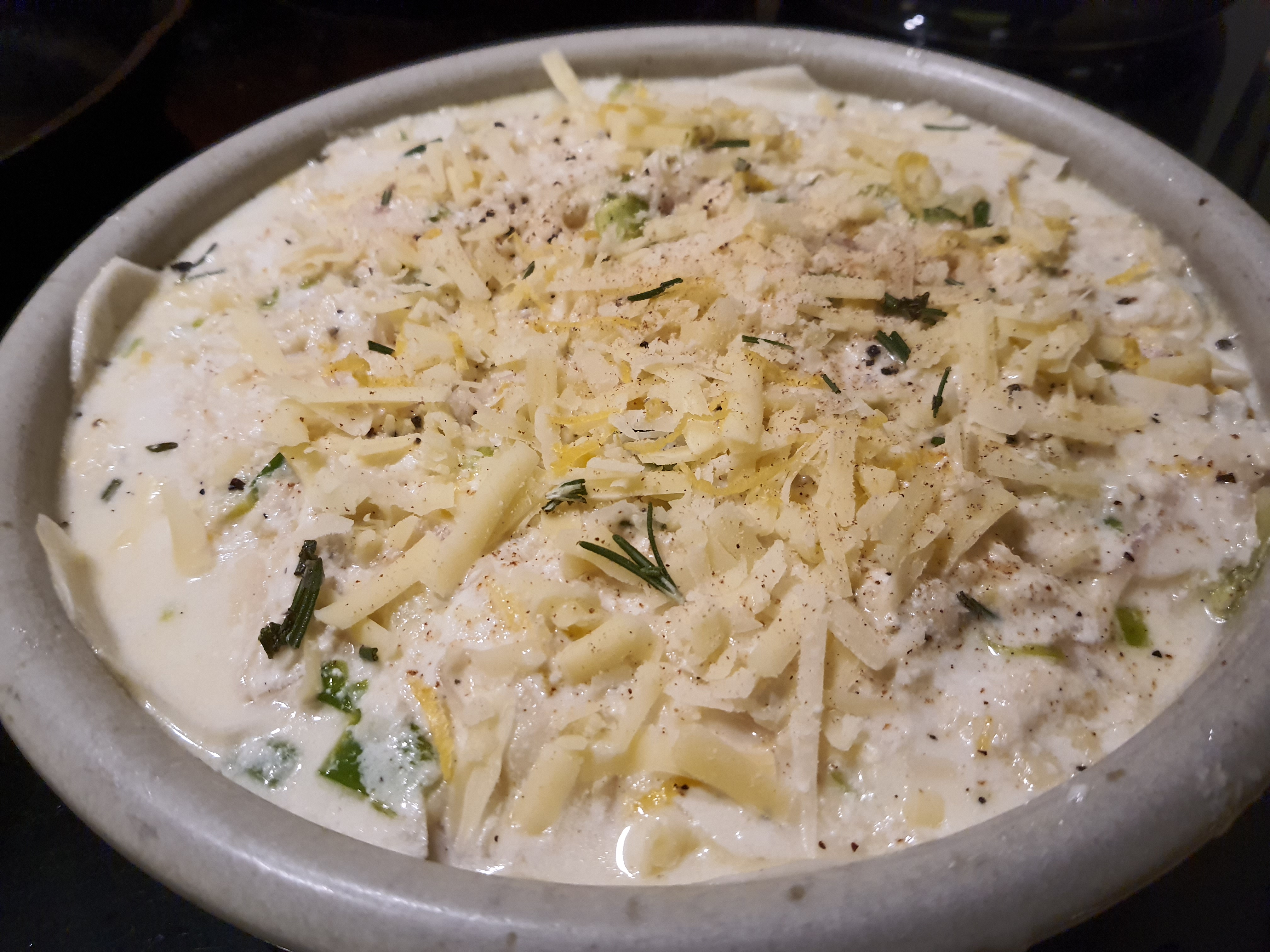
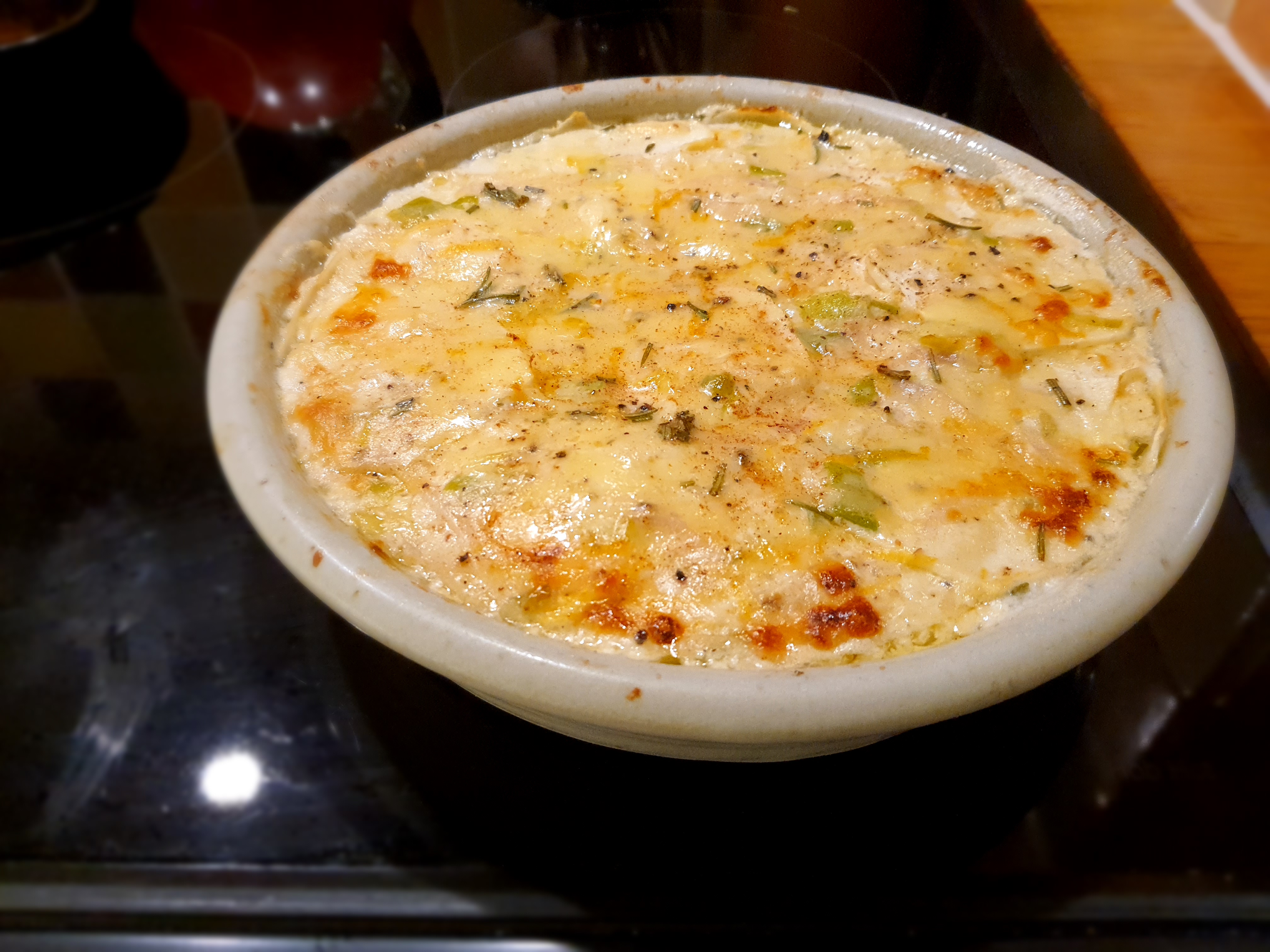
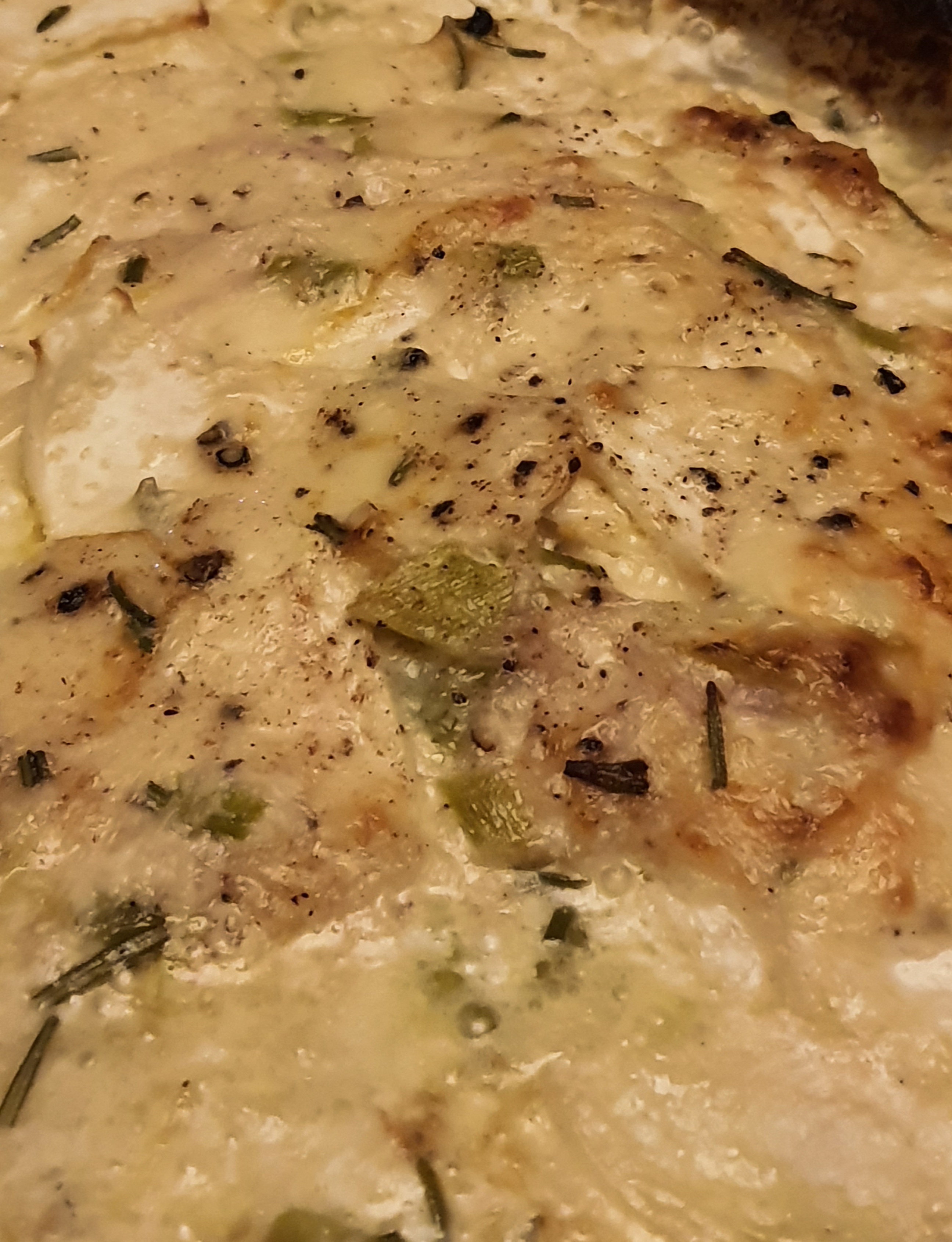
Cheesy celeriac, leek & rosemary gratin

Celariac Gratin, eaten alongside left over NYE feast of Nigella’s Greek Lamb Casserole (and so roasted on a tray with some olives and garlic).

Ingredients

25g butter
2 leeks, outer layer removed, washed of any grit and sliced into rings
small handful rosemary leaves, roughly chopped
1 bay leaf
300ml double cream
300ml milk
1 celeriac (about 500g), peeled, quartered and thinly sliced
100g cheddar or gruyère, coarsely grated

Method

STEP 1
Heat the butter in a saucepan. Add the leeks, rosemary and bay leaf, then cover and cook very gently over a medium-low heat for 15-20 mins until the leeks are soft. Pour over the milk and almost all of the cream, then season and bring to the boil. Remove from the heat and leave to cool a little, then scoop out the bay leaf.

STEP 2
Pour a little of the leek mixture into an ovenproof gratin dish. Arrange a layer of celeriac in the dish, then season. Spoon over some more of the leek mixture and scatter with a little cheese. Repeat the process, alternating between layers of the leek mixture, cheese and celeriac slices, then finish with a drizzle of cream and the last of the cheese. Can be prepared up to a day ahead and kept in the fridge. 

*I also added a tiny bit of grated nutmeg and lemon zest on the top of the dish, before cooking

STEP 3
Heat oven to 180C/160C fan/gas 4. Bake the gratin for 1 hr-1 hr 15 mins until the top is golden and the celeriac is tender when poked with a knife. If the gratin is browning a little too much, cover the dish in foil. Can be chilled, then reheated in a microwave or oven on a low heat with a drizzle more cream.

Two other recipes, to make another day:

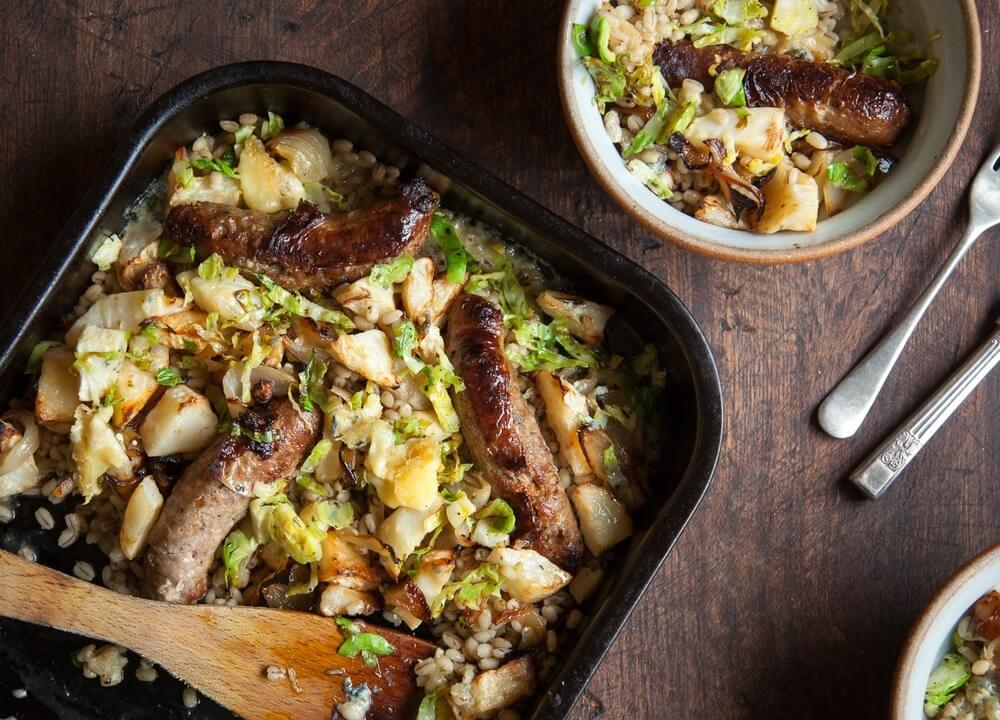
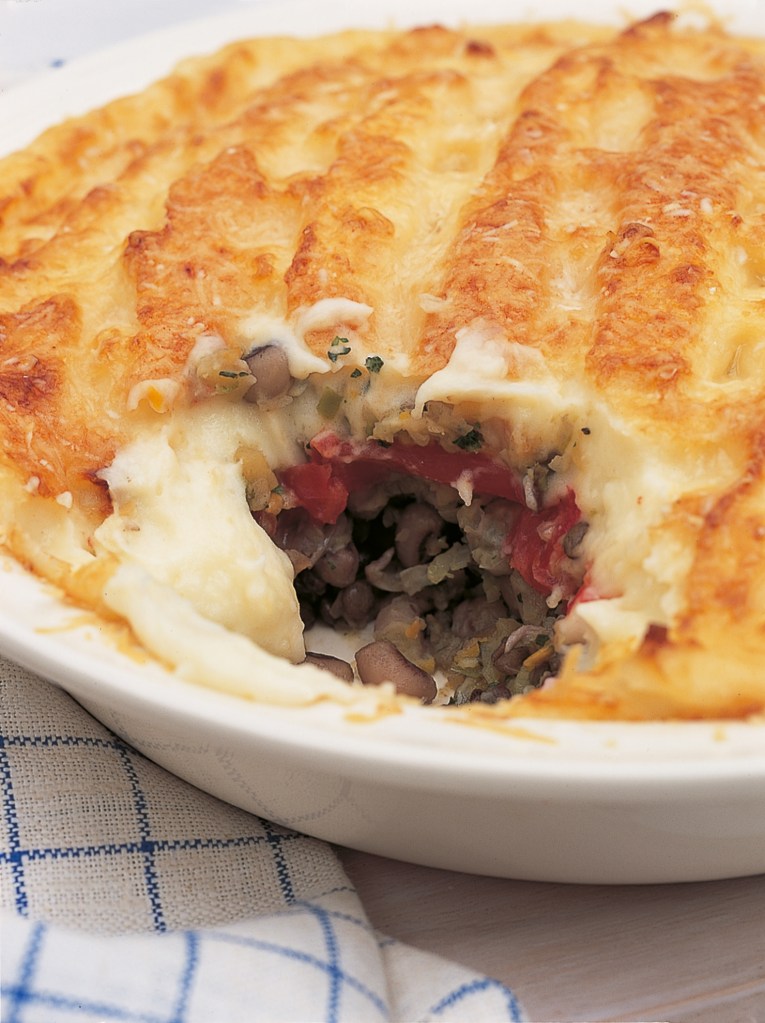
The sausage, barley and cereriac recipe sounds a very interesting combination of flavours and texture. I might well make that with the sprouts in of fridge, later in the week. The third celeriac recipe reminds me of a dear friend Yasmin. When my son was very young, a few mothers would meet regularly at her house with our toddlers, to share the childcare and to share a meal.  Her husband Andy cooked this for us all one day – it was such a special treat. It’s been one of my favourite meals ever since.  

SAUSAGE, CELERIAC AND BARLEY with sprouts and blue cheese

Photo from Riverford website.

Ingredients

oil for frying and roasting
4 pork and apple sausages
2 large or 3 smaller onions
⅔ celeriac
175g pearl barley
500ml chicken stock
1 tsp mixed herbs
200g Brussels sprouts
75g perl las blue cheese
1 lemon
Salt and pepper

Method

Prep time: 10 min
Cooking time: 40 min

Step 1

Preheat oven to 210°C/Gas Mark 5. Heat 1 tablespoon of oil in a frying pan. Add the sausages and fry, turning them now and then, until browned. Remove from the heat. Peel and cut the onions in half, then each half into 5-6 wedges, through the root to hold them together. Transfer the wedges to a roasting tin.

Step 2

Peel and chop two thirds of the celeriac into approx 2cm chunks. Add to the onion. Toss them in just enough oil to coat and season with a little salt and pepper. Add the sausages. Roast the veg and sausages for 30 minutes or so, until the celeriac and onions are tender and starting to colour a little, and the sausages are cooked through. Toss the veg and turn the sausages halfway through, so they roast evenly.

Step 3

Meanwhile, heat the stock in a large pan. Rinse the barley in a sieve or colander and add to the stock with the dried mixed herbs. Cook on a low to medium boil for 25-30 minutes. Stir often and add a splash of water to top up the liquid if needed (this will vary depending on your pan); by the end of cooking you want a sloppy, risotto like consistency.

Step 4

Meanwhile, wash and peel the outer leaves of the sprouts. Cut them in half lengthways, through the stalk, then thinly shred each half, discarding the little stalk bases. Roughly crumble up the blue cheese. When the barley is ready, mix with the roasted celeriac, onion, sausages and blue cheese.

Step 5

Season to taste with salt and pepper (you won’t need much salt as the cheese is quite salty). Add a little squeeze of lemon juice to sharpen the dish. Wash out the frying pan. Add and heat 2 tablespoons of oil. Add the sprouts and briskly stir-fry for 2-3 minutes to wilt them. Stir some into the barley and save some for garnishing. Wash out the frying pan. Add and heat 2 tablespoons of oil. Add the sprouts and briskly stir-fry for 2-3 minutes to wilt them.

Step 6

Stir some into the barley and save some for garnishing. Divide the barley and sausages between 2 serving bowls or plates and top with the remaining fried sprouts.

VEGETARIAN SHEPHERD’S PIE WITH GOATS’ CHEESE MASH

Photo from Delia’s website.

INGREDIENTS

4 oz (110 g) dried black-eyed beans, pre-soaked and drained
8 oz (225 g) tomatoes
1 heaped tablespoon chopped mixed fresh herbs, such as sage, rosemary, thyme and parsley
¼ level teaspoon ground mace
¼ level teaspoon ground cayenne pepper
salt and freshly milled black pepper
3 oz (75 g) green split peas (no need to soak), rinsed
3 oz (75 g) green lentils (no need to soak), rinsed
2 oz (50 g) peeled carrots
2 oz (50 g) peeled swede
2 oz (50 g) peeled celeriac
1 large onion, peeled
1 small green pepper, deseeded
2 oz (50 g) butter, plus a little extra for greasing

For the topping:

4 oz (110 g) soft goats’ cheese
1 lb 8 oz (700 g) potatoes, peeled
2 oz (50 g) butter
2 tablespoons milk
1 oz (25 g) Pecorino cheese, grated
salt and freshly milled black pepper

METHOD

You will need to soak and drain the black-eyed beans.

To do this, wash them under cold, running water and discard any broken ones. If it is convenient, soak them overnight in 2 pints (1.2 litres) cold water. If you need them today and haven’t got time to do this, simply bring them up to the boil (using the same quantity of water), boil for 10 minutes and leave them to soak for two hours before draining. Now put the drained beans into a saucepan with the split peas and lentils.

Add 1¼ pints (725 ml) boiling water and some salt, cover and simmer gently for 50-60 minutes, or until the pulses have absorbed the water and are soft. Then remove them from the heat and mash them just a little with a large fork.

Now pre-heat the oven to gas mark 5, 375°F (190°C), and put the potatoes on to steam.

Next, roughly chop all the vegetables, pile the whole lot into a food processor and process until chopped small. Next, melt the butter in a large frying pan over a medium heat, add the vegetables and cook gently for 10-15 minutes, stirring now and then until they’re softened and tinged gold at the edges.

Meanwhile, skin the tomatoes. Place them in a heatproof bowl and pour boiling water on to them. After exactly a minute (or 15-30 seconds, if they are small), remove them (protecting your hands with a cloth if the tomatoes are hot), slip off their skins and slice them or click on our Cookery School Video on the right to watch.  After that, add the vegetables to the pulses mixture, along with the herbs, spices and salt and freshly milled black pepper to taste. Then spoon the mixture into the baking dish and arrange the tomatoes in overlapping slices on the top. As soon as the potatoes are cooked, place them in a bowl, add the butter, milk and goats’ cheese, whisk to a smooth purée, season with salt and freshly milled black pepper and spread the potato over the rest of the ingredients in the dish.

Finally, sprinkle over the Pecorino and bake the pie on the top shelf of the oven for 20-25 minutes, or until the top is lightly browned.


Tally for the month

Main Vegetables: calabrese broccoli, celeriac

Subsidiary Vegetables: onion, garlic, leek, celery, potato, rosemary

Subsidiary Fruit and Nuts: lemon

Day 1 of 31 Vegetable Challenge

Calabrese Broccoli

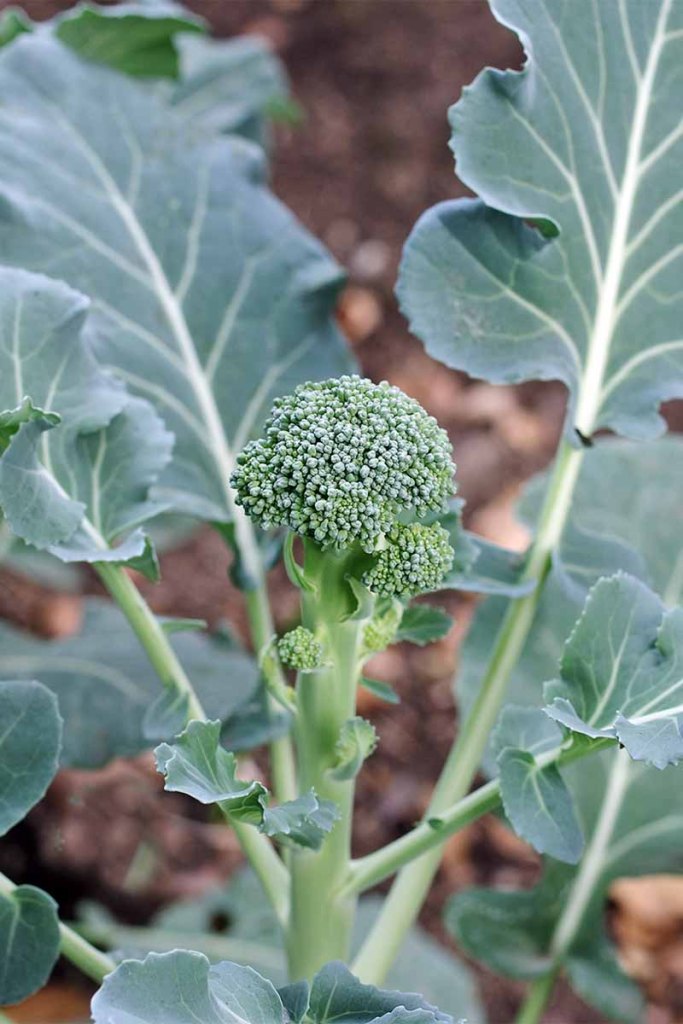
https://gardenerspath.com/plants/vegetables/grow-broccoli/

Calabrese Broccoli

Broccoli is a green vegetable that vaguely resembles a miniature tree. It is an Italian word, derived from the Latin brachial (meaning arm or branch). It belongs to the plant species known as Brassica oleracea.

It’s closely related to cabbage, Brussels sprouts, kale and cauliflower — all edible plants collectively referred to as cruciferous vegetables.

There are three main varieties of broccoli:

Calabrese broccoli, introduced from Calabria in Southern Italy in the eighteen century.
Purple sprouting broccoli, traditionally grown in the UK and in season Jan – May.
Purple cauliflower — despite its name a type of broccoli.

Early forms of broccoli are said to have been highly esteemed by the Romans and described by Pliny in the first century AD.

Broccoli is a nutritional powerhouse full of vitamins, minerals, fibre and antioxidants.

Nutritional profile – one cup of cooked broccoli (Dr Axe):

  • 55 calories
  • 11 grams carbohydrates
  • 4 grams protein
  • 5 grams fiber
  • 100 micrograms vitamin K (276 percent DV)
  • 101 milligrams vitamin C (168 percent DV)
  • 120 milligrams vitamin A (48 percent DV)
  • 168 micrograms folate (42 percent DV)
  • 0.4 milligrams vitamin B6 (16 percent)
  • 0.4 milligrams manganese (16 percent)
  • 457 milligrams potassium (14 percent DV)
  • 105 milligrams phosphorus (10 percent DV)
  • 33 milligrams magnesium (8 percent DV)
  • 62 milligrams calcium (6 percent DV)

Dr Axe: This veggie is very nutrient-dense and an excellent source of phytochemicals called isothiocyanates, sulforaphanes and indoles. It also provides vitamin A, vitamin C, calcium, vitamin K, magnesium and potassium.Benefits of eating it include help with cancer prevention, heart health, weight management, eye and skin health, gut and digestive support, healthy bones and teeth, and slowed effects of aging.

Goes well with (Riverford):

Anchovies
Asian flavourings (Sesame, Soy sauce, Ginger)
Blue cheese
Eggs
Mediterranean flavours (Garlic, Olives, Lemon, Orange, Chilli)
Mustard
Nuts (Almonds, Hazelnuts, Pine nuts, Parmesan)
Pork (Bacon, Pancetta, Lardons, Dried or cured ham)

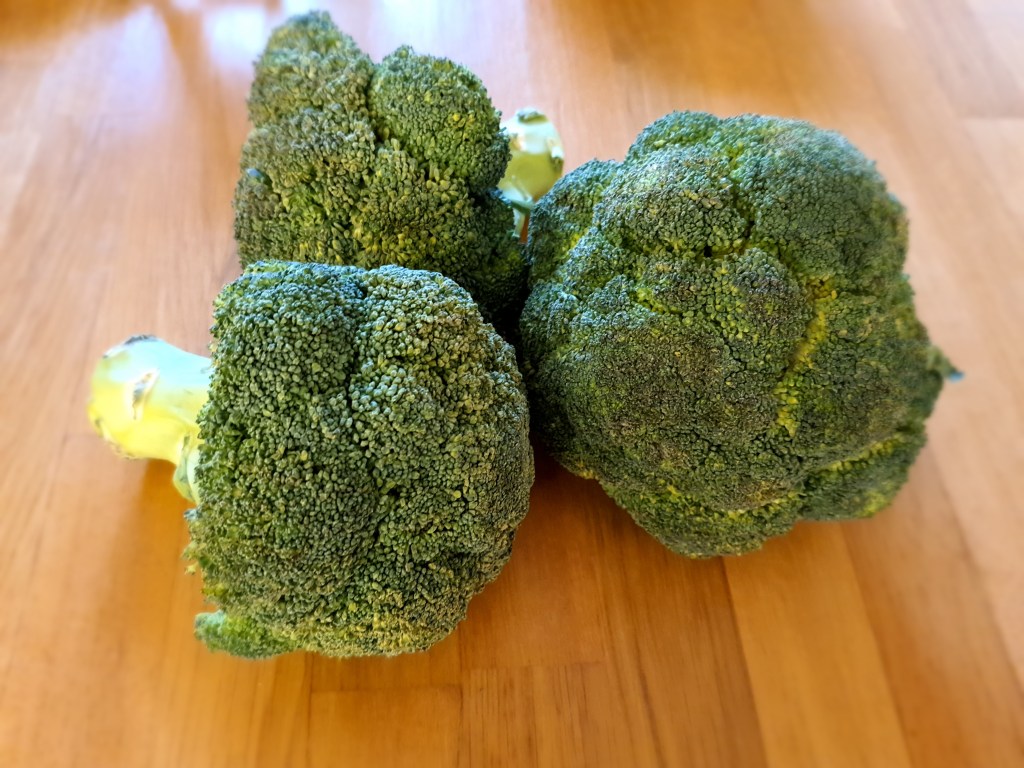
AND we had three weeks worth of calabrese broccoli in the fridge, from our veg box delivery.  Sometimes it’s hard to get excited about broccoli, hence the glut …


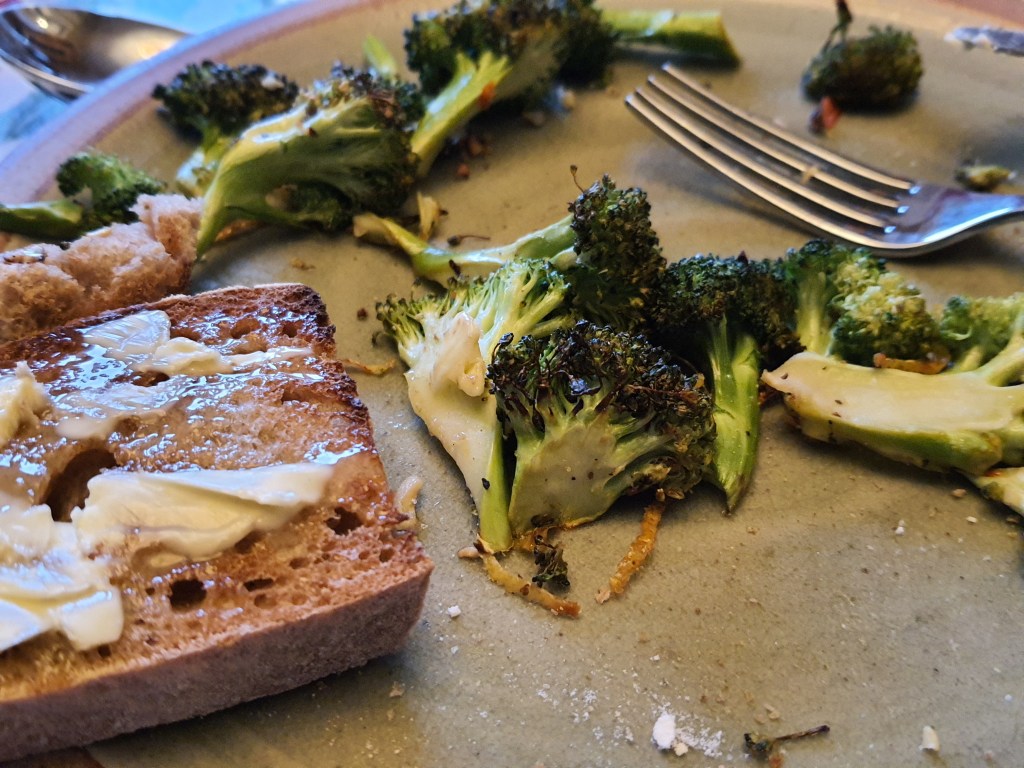
So I found 2 recipes to use all three heads. Both were completely delicious. The roasted broccoli even surprised Andrew, who’d had that facial expression akin to overcoming mild disgust before he tucked in; “Actually this is really delicious. I’m really surprised”.

https://www.riverford.co.uk/recipes/roasted-broccoli-lemon-chilli-garlic

Ingredients
250g head of calabrese broccoli
zest and juice of ½ lemon
1 thumb-sized red chilli, finely chopped
2 garlic cloves, finely chopped

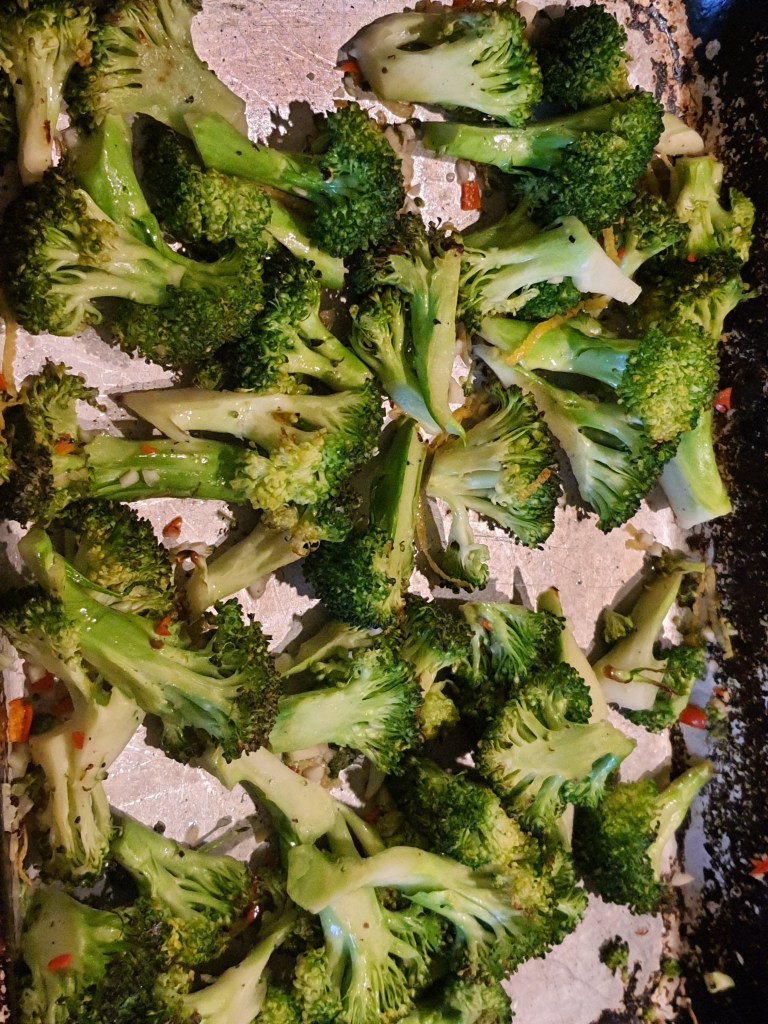
ROASTED BROCCOLI with lemon, chilli and garlic.

Method

Prep time: 15 minCooking time: 8 min

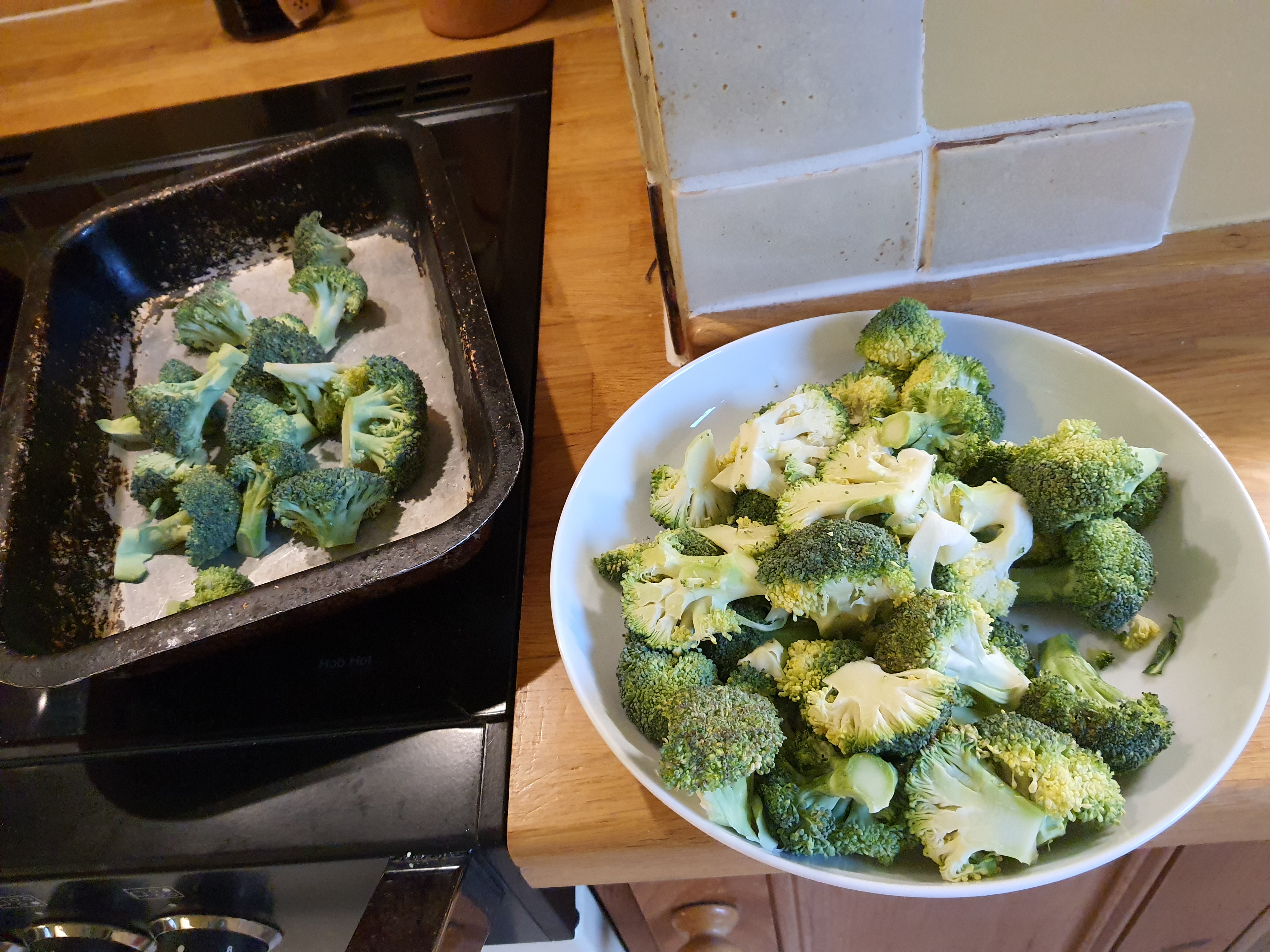
  • Step 1 – Heat the oven to 220°C/Gas 8. Split the broccoli down into manageable, bite-sized florets. Make sure each floret has a long piece of stalk attached, cut pencil-thick.
  • Step 2 – Put the broccoli onto a shallow oven tray, toss in some light olive oil and season with salt. Roast for 4 minutes. Add the chilli, garlic and lemon zest, mix well, then pop back in the oven to continue roasting for a further 3-4 minutes or until the broccoli is done.
  • Step 3 – Finish with a dash of lemon juice and more salt if needed.

Comment: delicious flavour, slightly charred. I used a whole lemon, zest and juice, because I love lemons. We ate a big pile for a NYD lunch, on its own was great with just a piece of buttered sourdough toast. Perhaps would work well with an omelette, bacon or cheese or a bowl of pasta with a drizzle of oil and a few toasted nuts, for a more substantial meal.

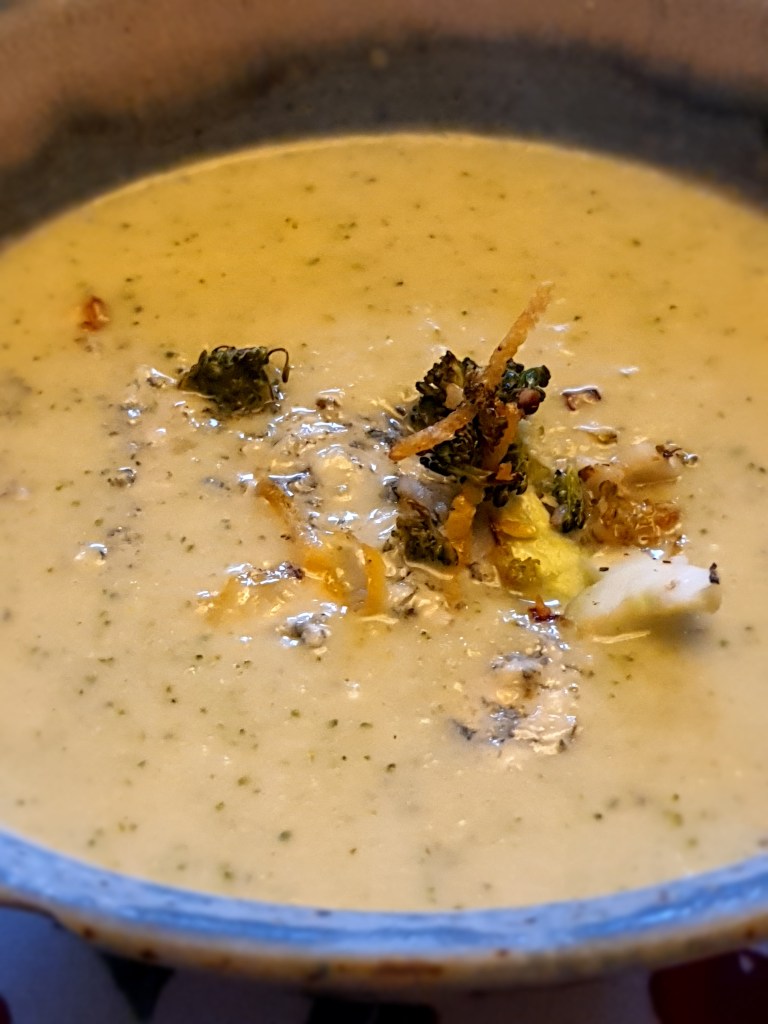
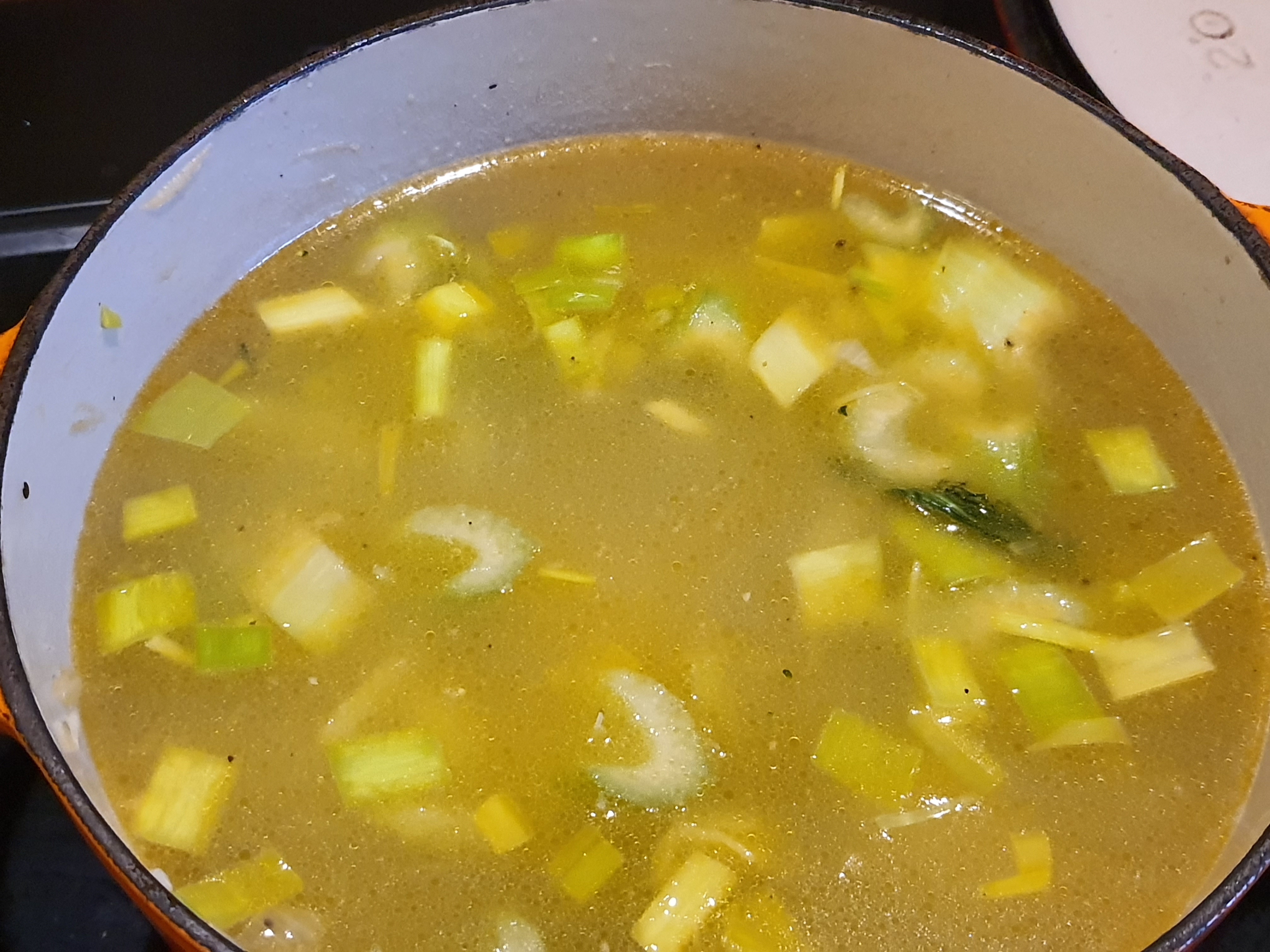
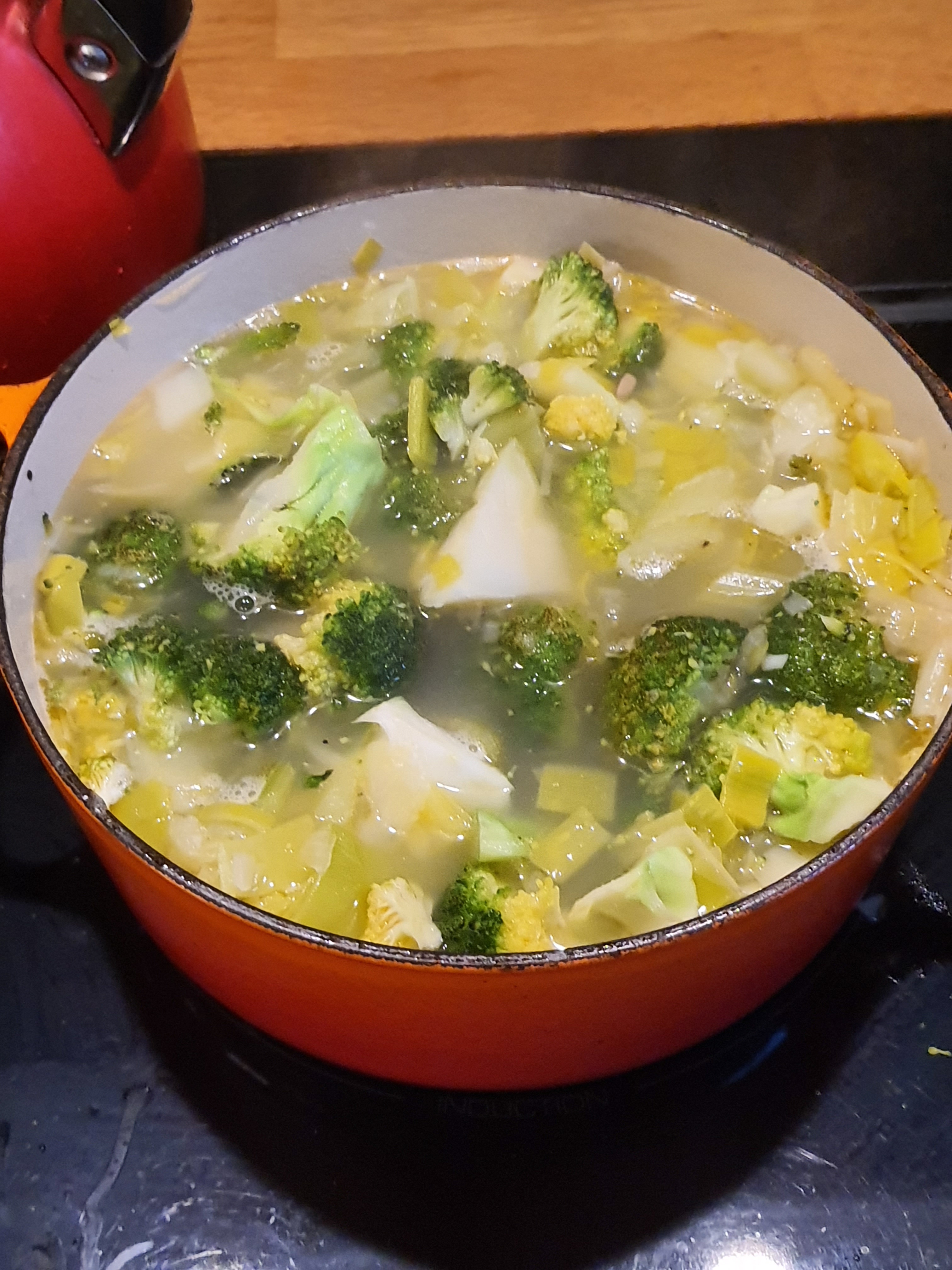
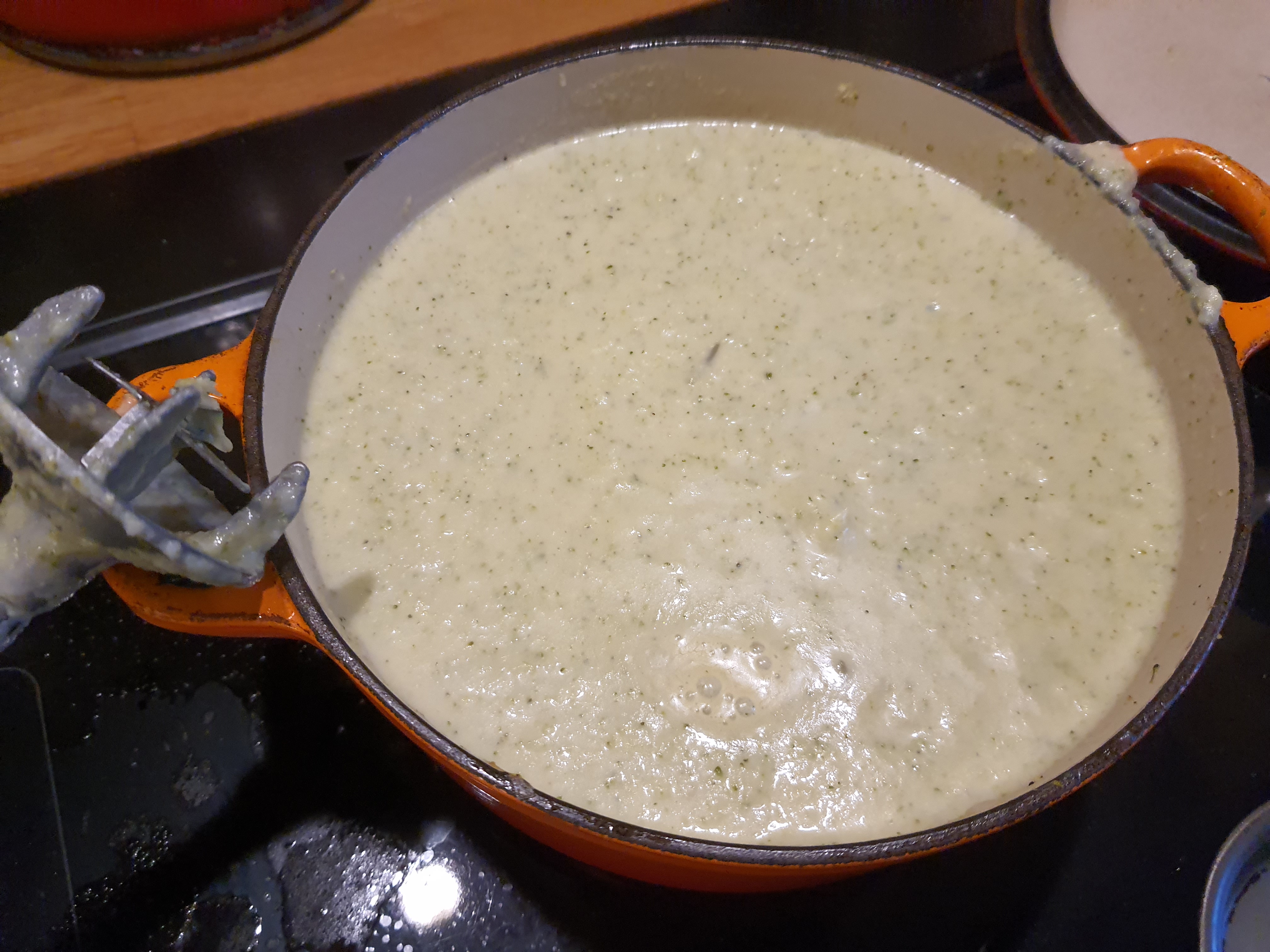
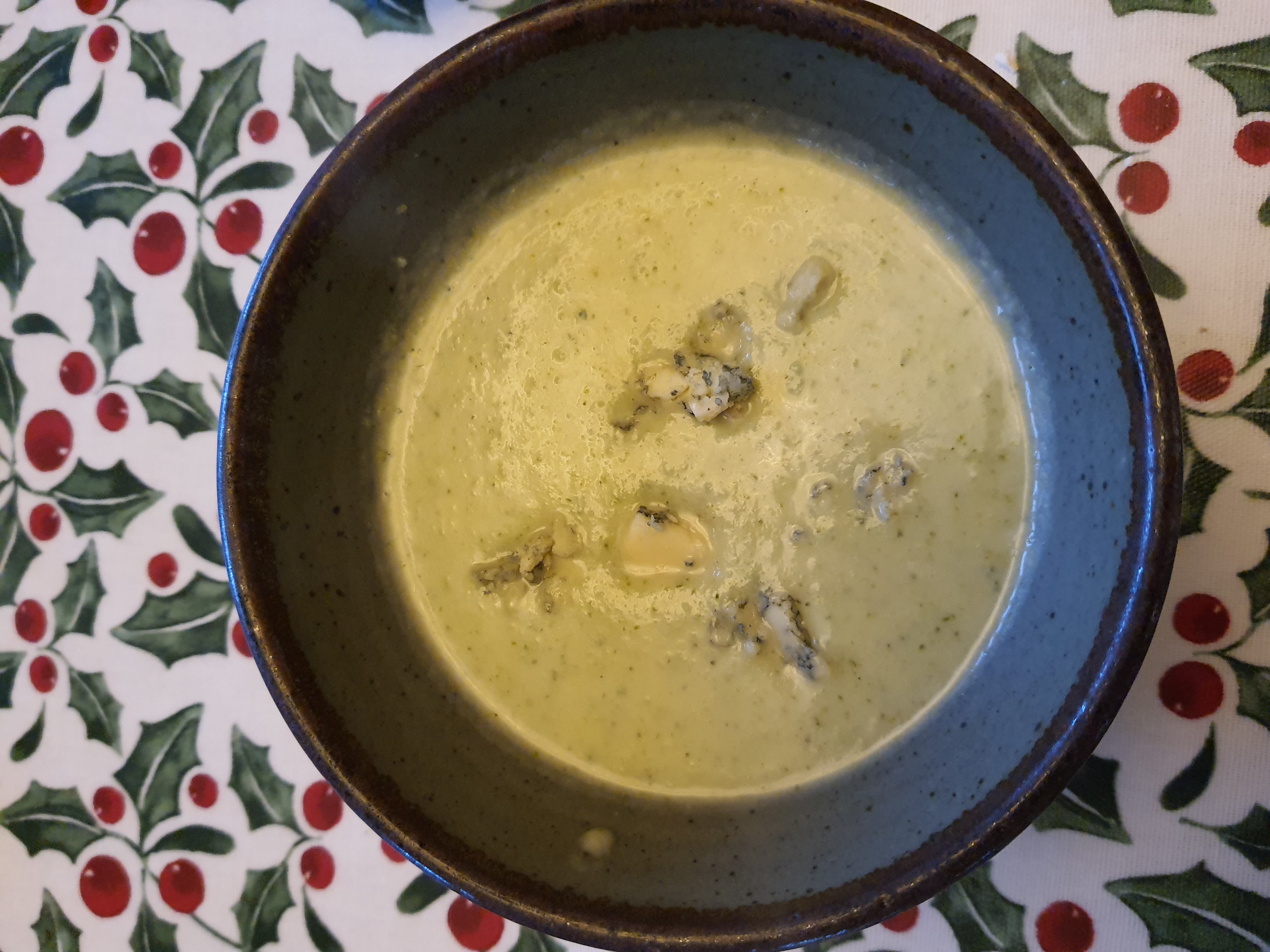
http://www.bbcgoodfood.com/recipes/broccoli-stilton-soup

Ingredients
2 tbsp rapeseed oil
1 onion, finely chopped
1 stick celery, sliced
1 leek, sliced
1 medium potato, diced
1 knob butter
1l low salt chicken or vegetable stock
1 head broccoli, roughly chopped
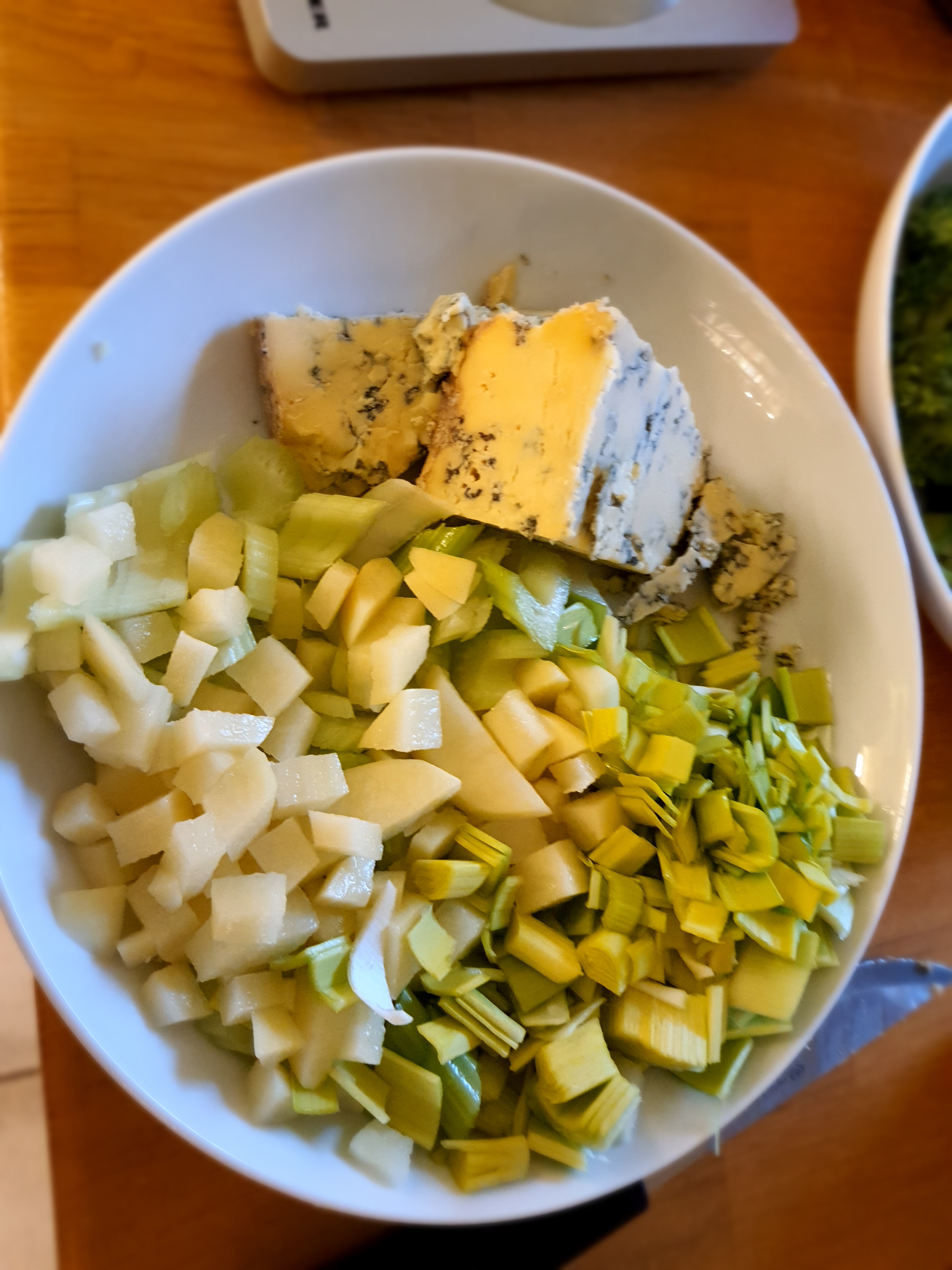
140g stilton, or other blue cheese, crumbled

Method

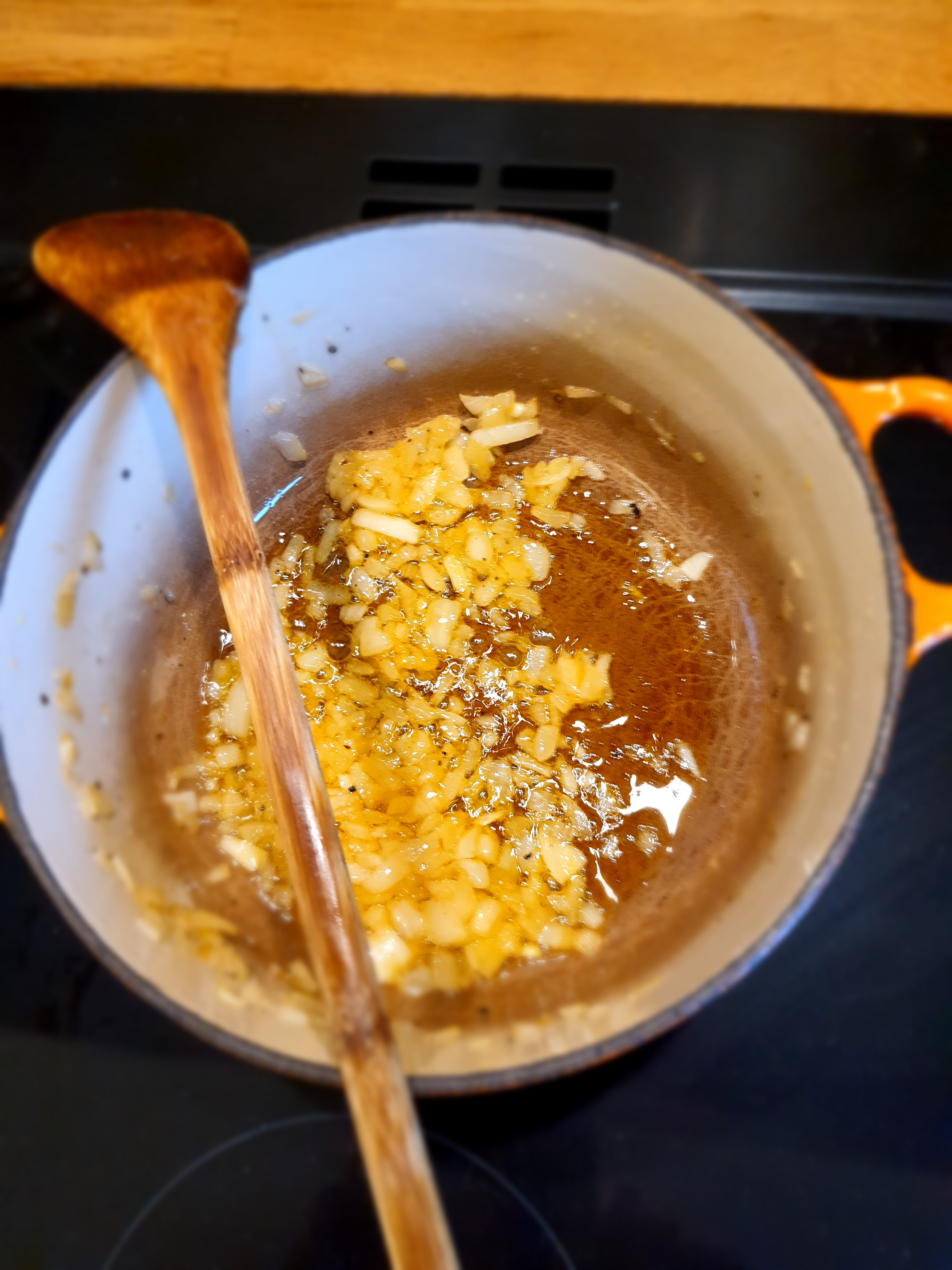
  • STEP 1 – Heat 2 tbsp rapeseed oil in a large saucepan and then add 1 finely chopped onion. Cook on a medium heat until soft. Add a splash of water if the onion starts to catch.
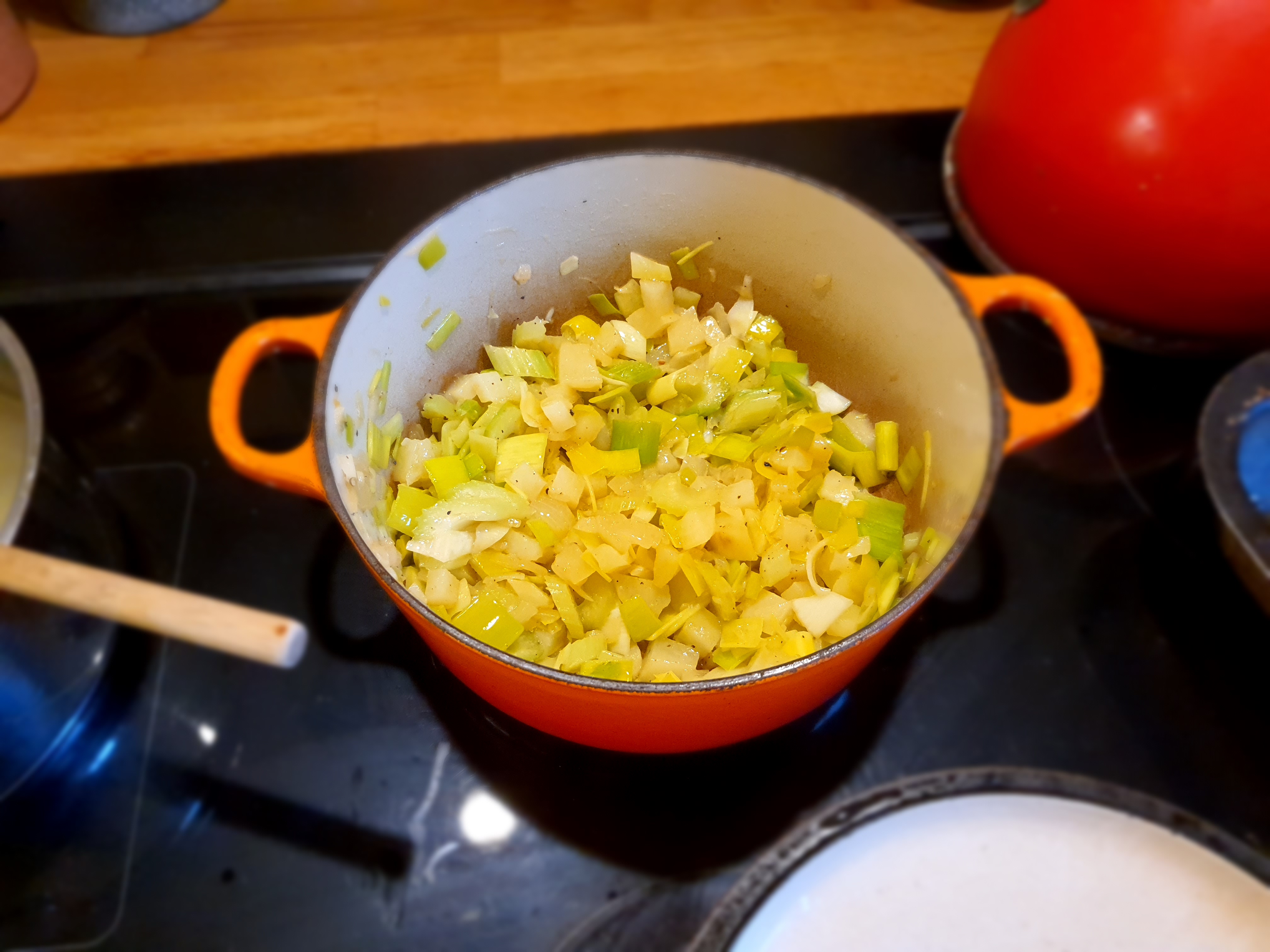
  • STEP 2 – Add 1 sliced celery stick, 1 sliced leek, 1 diced medium potato and a knob of butter. Stir until melted, then cover with a lid. Allow to sweat for 5 minutes then remove the lid.
  • STEP 3 – Pour in 1l of chicken or vegetable stock and add any chunky bits of stalk from 1 head of broccoli. Cook for 10-15 minutes until all the vegetables are soft.
  • STEP 4 – Add the rest of the roughly chopped broccoli and cook for a further 5 minutes.
  • STEP 5 – Carefully blitz until smooth.
  • STEP 6 – Stir in 140g crumbled stilton, allowing a few lumps to remain. Season with black pepper and serve.

Comments: It was really creamy with the blue cheese. I’m not the biggest fan of Stilton, but this is the way to use up left overs from a Christmas cheese board. I could have eaten the whole litre had I not just finished half a head of roasted broccoli!! I drizzled a little chilli and ginger oil on mine and sprinkled a few of the roasted florrets. That’s because I can’t get enough chilli. I also love my Bamix blender stick. It is over 12 years old and still brilliant. Swiss made you see – we have this thing about Swiss made in our house, it just must be good!!

Tally for the month

Main Vegetables: calabrese broccoli

Subsidiary Vegetables: onion, garlic, leek, celery, potato

Subsidiary Fruit and Nuts: lemon

Definition of a Vegetable

31 Vegetable Challenge

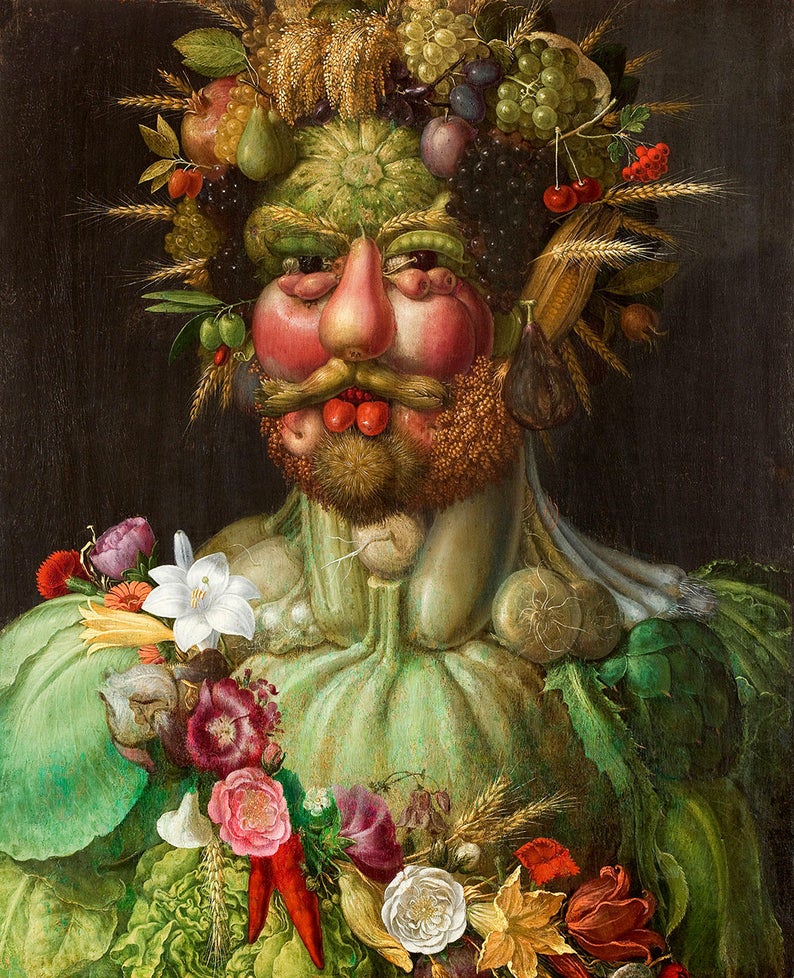
Vertumnus

Vertumnus – the Roman god of the seasons, growth, gardens, fruit trees and metamorphosis in nature.

This is a portrait of the Holy Roman Emperor Rudolf II, whom the artist Giuseppe Arcimboldo has portrayed as Vertumnus was painted after Arcimboldo returned to Milan (1590) and draws on flowers as well as fruits and vegetables from all four seasons, including apples, pears, grapes, cherries, plums, pomegranates, figs, beans, peas in their pods, corn, onions, artichokes and olives.

Firstly, I thought I had better find out what actually defines a vegetable!

“Vegetables are the parts of plants that are consumed by humans or other animals as food. The original meaning is still commonly used and is applied to plants collectively to refer to all edible plant matter, including the flowers, fruits, stems, leaves, roots, and seeds. The alternate definition of the term is applied somewhat arbitrarily, often by culinary and cultural tradition. It may exclude foods derived from some plants that are fruits, flowers, nuts, and cereal grains, but include savoury fruits such as tomatoes and courgettes, flowers such as broccoli, and seeds such as pulses” (wikipedia)

So defining vegetables, herbs, fruit and nuts can actually be quite a contentious issue!

BBC reporter Henry Nichols asked Wolfgang Stuppy (Seed Morphologist, Royal Botanic Gardens, Kew) whether vegetables really exist: “No, the term vegetable doesn’t exist in botanical terminology.” So according to a botanist then there is no such thing as vegetables there are just plants. Radishes and carrots on sale at the greengrocers are not vegetables they are merely the roots of radishes and carrots. Botanically speaking, onions and garlic are bulbs. Potatoes and Jerusalem artichokes are tubers. Asparagus are stems. Lettuces are leaves. Cauliflower and broccoli are inflorescences. Apple and pears are fruit.

So vegetable as a culinary term: “Vegetable took on its current sense just a few centuries ago and essentially means a plant material that is neither fruit nor seed,” (On Food and Cooking by Harold McGee) “The tomato is technically a fruit because it contains seeds. It’s a vegetable because it’s part of a plant and used as a savoury ‘vegetable’ in cooking”.

But ask a lawyer to define a vegetable, they might say it depends where you live… There was a decision by the Supreme Court of the United States that, under U.S. customs regulations, the tomato should be classified as a vegetable rather than a fruit. (Nix versus Hedden, 1893).

Vegetables, herbs, fruit and nuts have always been essential to humanity. They are the basis of the food chain – even for meat eaters – and provide a range of colour, texture, flavour and aroma when creating meals. All plant based foods are an abundant source of beneficial nutrients including vitamins, minerals, dietary fibre, protein and polyphenols (which are biologically active molecules that feed our gut bacteria (microbiome).

Feeding our microflora will benefit our health in many other ways. Some microbes provide vitamins that are then available for the human host to use, as a byproduct of microbial cell function. Some microbes mediate transport of nutrient across the gut wall into our blood stream. The relationship between the beneficial microbes within our gut and us, their human host, is highly complex and truly symbiotic. This secret world that we have only recently began to comprehend very likely holds the key to much of our future understanding of physical and mental health and disease. Truely amazing. And this knowledge carries with it a level of personal responsibility and accountability, if we let it.

The more diverse the diet someone has the more diverse the microbiome, as each microbial type feeds from specific components of the food-stuff released during the digestive process. People (omnivores and solely plant-based eaters) who eat around 30 different plants every week have been shown in a huge international epidemiological study to have a much greater microbial diversity than those who eat just 10. The theory is, the more diverse the range of microbes, the more capable, resilient and adaptable the gut will be to alterations in its biology during life (disease, infection, environmental influences etc). This means that you don’t have to be vegetarian/vegan to get the benefits of a plant based diet for your gut.

However, to cut to the chase…

For the purpose of this challenge my definition of vegetable is:

"Part of a plant that is, on the whole, considered to be savoury".

So that defines it clearly.
Or not!

Whatever your opinion on my choices, I’m looking forward to the challenge of 31 of them!
Watch this space!

(Resources: http://www.bbc.co.uk/earth/story/20150917-do-vegetables-really-exist and Tim Spector’s https://joinzoe.com/blog and Giuseppe Arcimboldo (who painted his royal patron, the Holy Roman Emperor Rudolf II in 1590).

The 31 Vegetable Challenge, January 2021

For the month of January, I challenge myself to eat 31 different vegetables; each one a significant component of a meal.

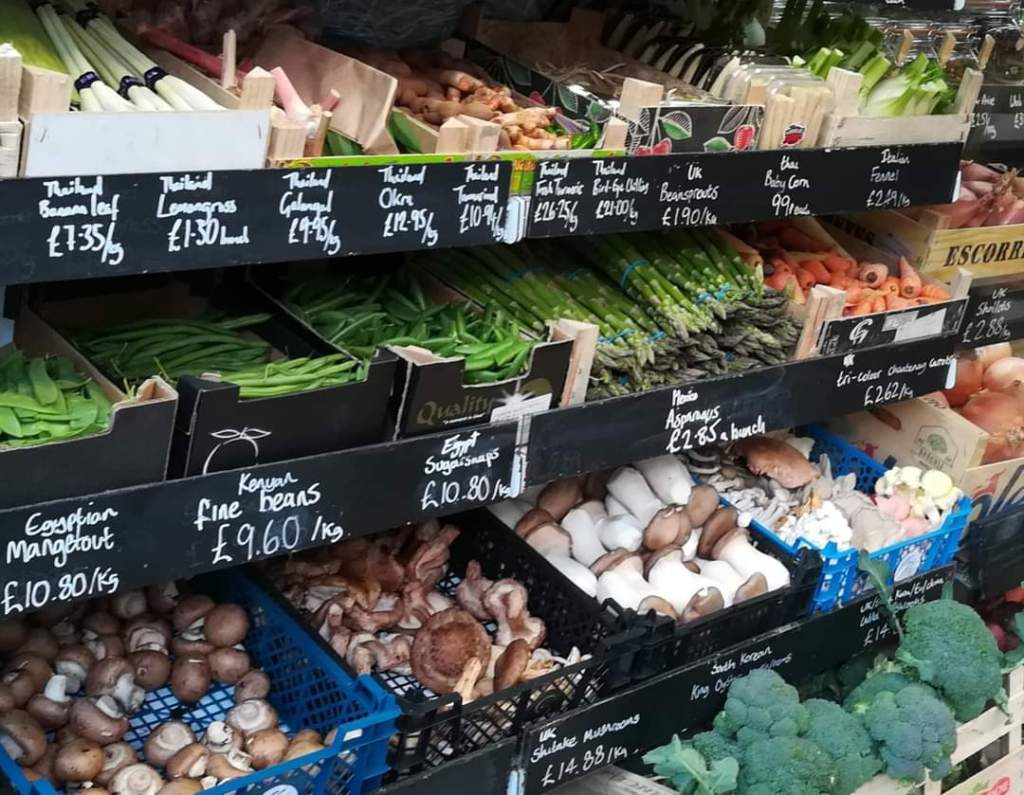
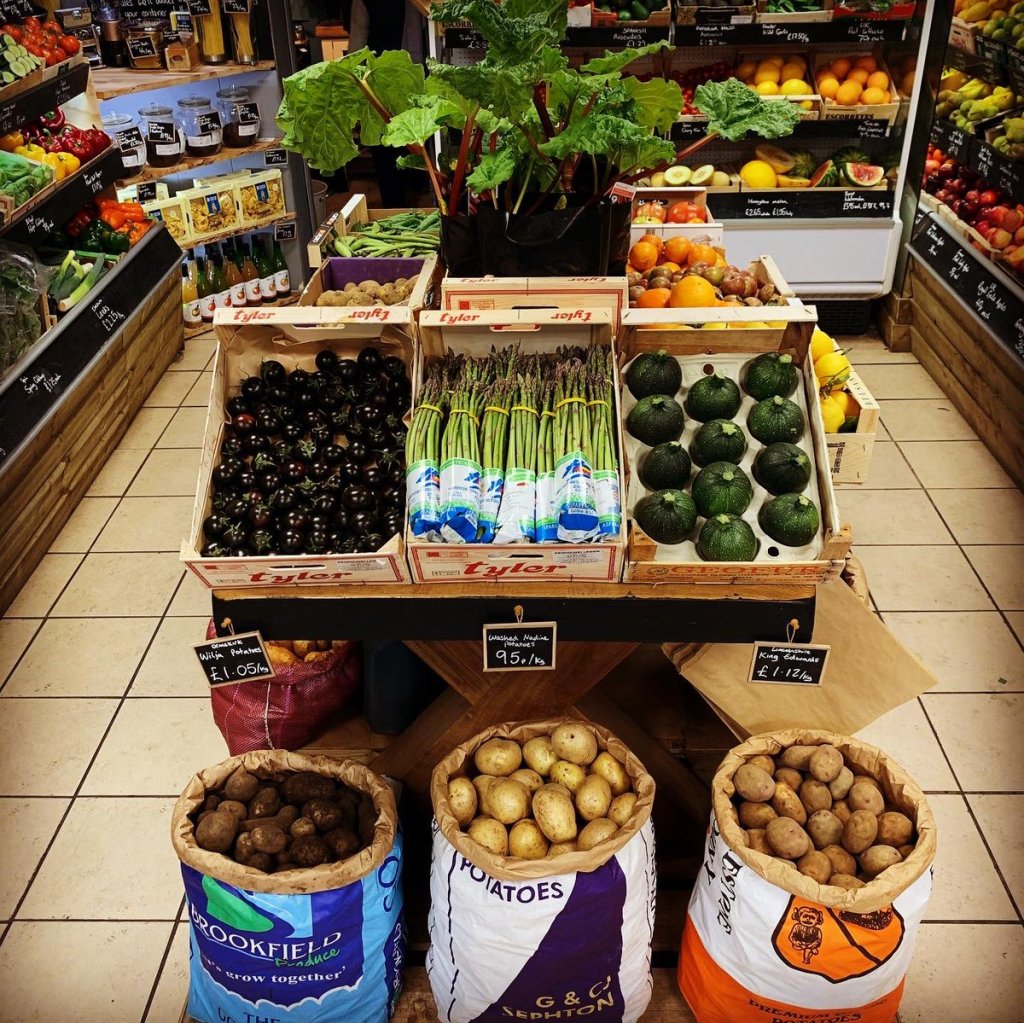
Hoole Food Market, Faulker Street, Hoole, Chester
Source: http://www.hoolefoodmarket.co.uk

My challenge is to aim to photograph and describe the vegetable and meal every day for the month of January – but no penalties. Just 31 vegetables by the 31st!

Good morning, on the very last day of December 2020. I haven’t written a blog post for a very long time; this year has been an extreme challenge for so many of us. But I’m hoping that 2021 will bring fresh opportunities for me to write and fresh opportunities for me to challenge my eating.

The month of January was named after the Janus, the Roman god of beginnings and endings. He was the Roman god of doors, gates, and transitions. The god with two faces, for his ability to turn one face to reflect upon the past and a yet another face freshly pointed upon the future. The god who held a key in his left hand, to the metaphorical doors or gateways between what was and what is to come—the liminal space of transitioning out of one period of time and into something new.

 The God Janus by Sebastian Münster, 1550. Wikimedia Commons

For the ancient Romans, the association between Janus and the calendar was cemented by the construction of 12 altars in Roman, one for each month of the year.

Janus’s temple was in the Forum Holitorium (Italian: Foro Olitorio; English: Vegetable-sellers’ Market) – which was the site of a commercial marketplace where fresh goods of vegetables, herbs and oil were delivered via the Tiber River and placed on sale.

Remains of the temple of Janus, much lying beneath the Church of San Nicola in Carcere. Source: https://fr.m.wikipedia.org/wiki/Forum_Holitorium

Three temples from the Republican period, standing next to each other, gave a more solemn aspect to the Forum. The upper one, almost against the Theatre is the temple of Janus, the middle one is the temple of Juno Sospita, he smallest is the temple of Spes.
Source: https://www.maquettes-historiques.net/P13h.html
The Forum Holitorium (lower center). Source: https://en.m.wikipedia.org/wiki/Forum_Holitorium

So, I’ve discovered on writing this that my challenge has gone full circle. I started 2020 in January with a challenge to photograph 31 gates, doorways or entrances in memory of the Roman god Janus and to post on Facebook. I now plan to start 2021 photographing 31 vegetables I have eaten.

One relating to the other, looking forward and looking backwards. I raise my glass of wine in memory of the dual faced roman god Janus.

Roman coin showing the two-headed Janus. Wikimedia Commons

Wishing you a Happy New Year early, in case you’d like to join me in my challenge.

And if you’d like ideas of vegetables or to record which vegetables you’ve eaten, there’s a chart on my resources page.

Sources of information: https://www.andersonlock.com/blog/god-doors/ and https://theconversation.com/who-was-janus-the-roman-god-of-beginnings-and-endings-86853

Eating the flowers – Foraging in the garden and beyond

Foraging in the garden (and beyond) for edible flowers and leaves, Foraging and gardening resources, Recipes: Wild garlic pesto, Dandelion cordial, Nettle bread.

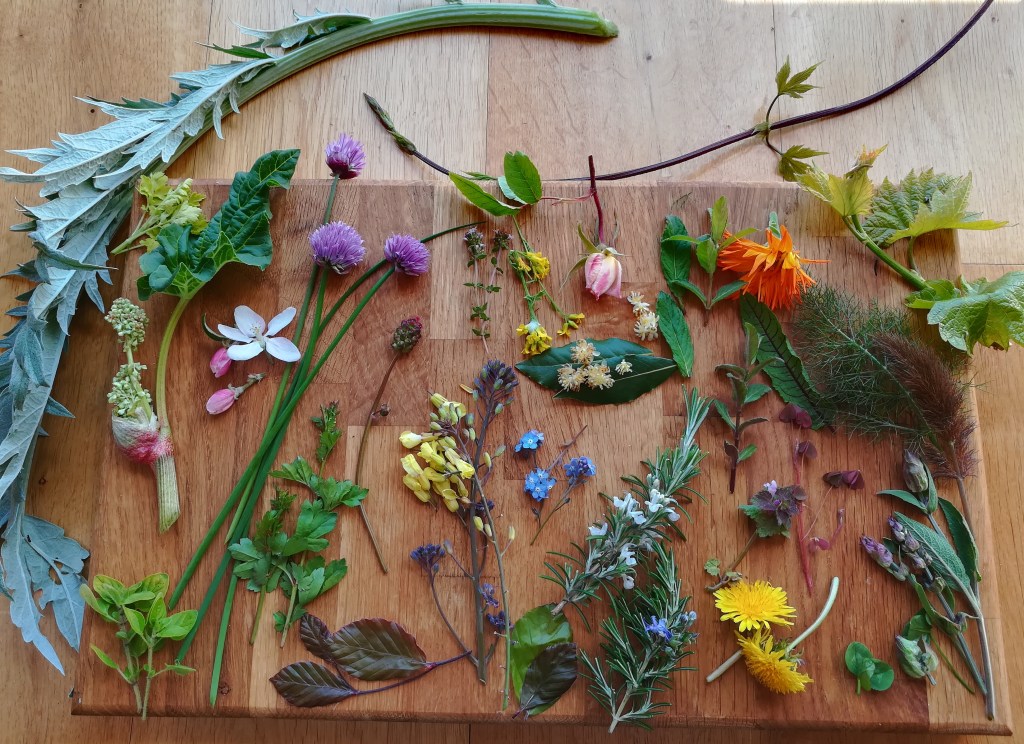
Everything is edible – and from our back garden
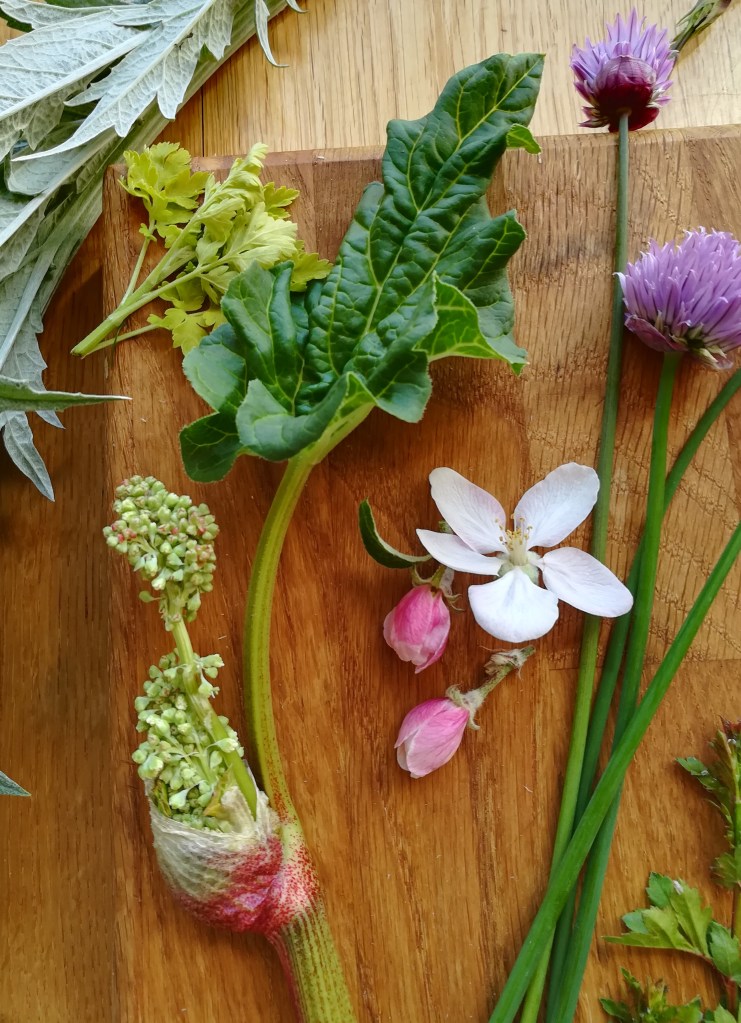
Cardoon stem, Feverfew, Rhubarb flower, Marjoram, Apple blossom, Chives, Hawthorn leaves and flowers, Beech leaves, Salad burnet, Purple sprouting broccoli flowers, Thyme leaves and flowers, Landcress flowers, Bay leaf and flowers, Forget-me-not, Rose, Rosemary leaf and flowers, Mint leaves, Marigold, Sorrel, Dead Nettle, Dandelion, Oxalis leaf, Hops growing tip and leaf, Vine leaf, Fennel leaf, Clover leaf and Sage flower.

.

“Have nothing in your garden that you do not know to be useful and believe to be beautiful”

Mis-quoted of Willam Morris

.

My 7-year-old son and I were in the garden, doing “school”. I explained to him that when we had planned the back garden 7 years ago, it was to be almost entirely edible and that I had aspired for the garden to be beautiful, with as many edible leaves and flowers as possible. Over the years many plants have self-seeded, and they have been allowed to stay if they are good pollinators; so the space is always evolving. We set ourselves the challenge to identify as many seasonal edible leaves and flowers as possible (from plants not eaten very widely).

Many of them are arranged on the board above, some of them are described below.

.

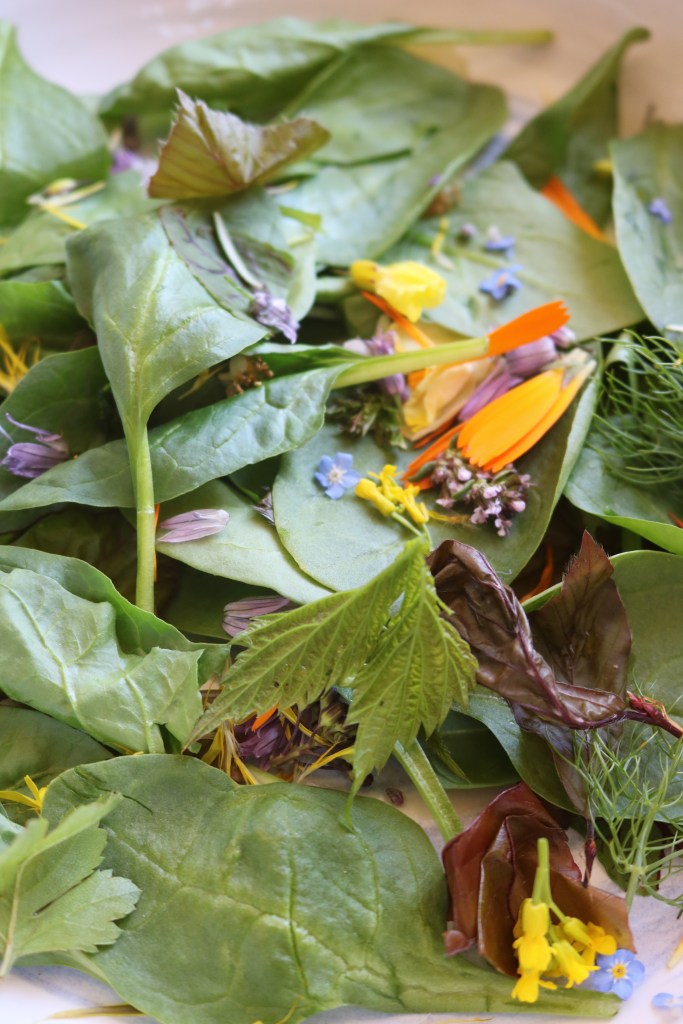
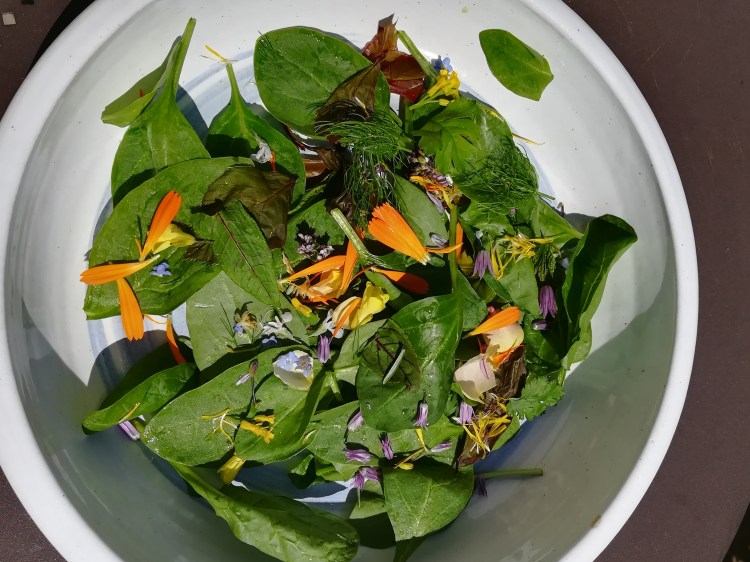
A salad, foraged from plants in our garden

Marigold, Calendula officinalis

A subtle peppery flavour.

“Throw a handful of petals across just about any dish for instant sunshine. At home with sweet and savoury dishes, they have tradionally been used for their colour above all else. Ground up – a good alternative to saffron, turning sauces or butter golden. Their oil can be made into a golden salad dressing. Scatter petals over salads and fruit, or floating in a drink”.

Advice from Lia Leendertz in her book: Petal, Leaf, Seed.

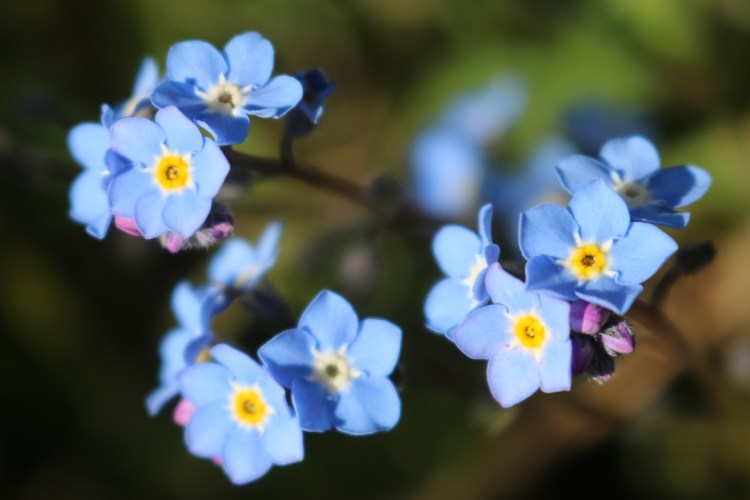
Forget-me-not, Myosotis scorpioides

Nothing particular about their flavour; descibed as “fresh”.

A perfectly designer flower that looks beautiful floating in a drink, or candied on a cake.

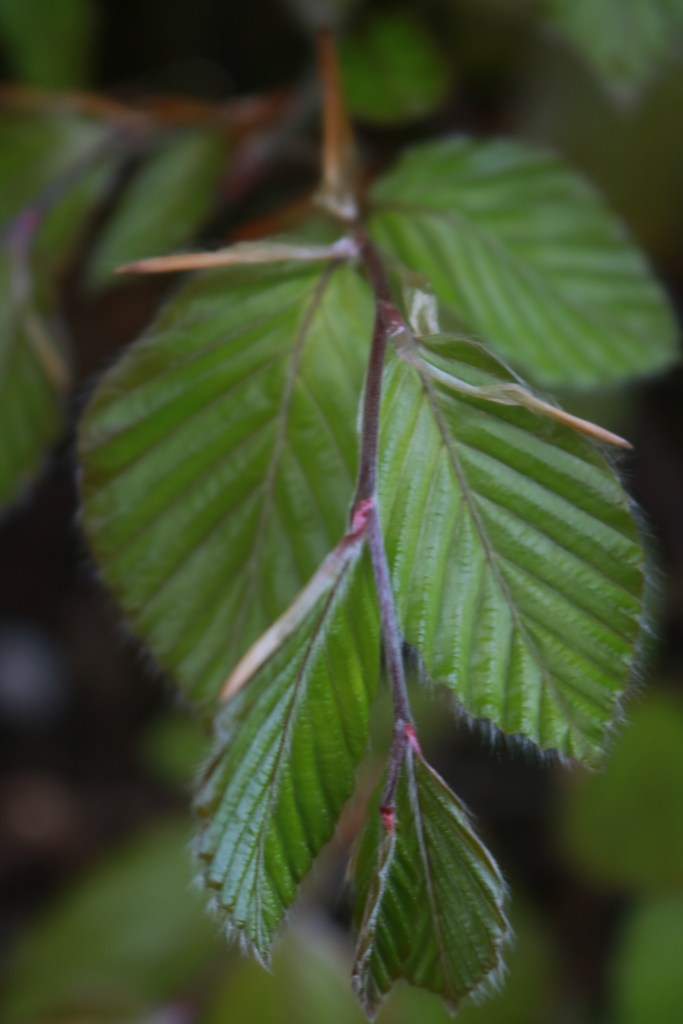
Beech leaves, Fagus sylvatica

This was an delightful discovery. I had read about them in Martin Crawford’s book Creating a Forest Garden. Working with nature to grow edible crops.

He describes the young leaves as having a lemony flavour, which my son and I would agree with. We both liked the flavour and the texture. Crawford recommends picking the leaves within 3 weeks of leafing for the best flavour, so you may have to wait until next year.

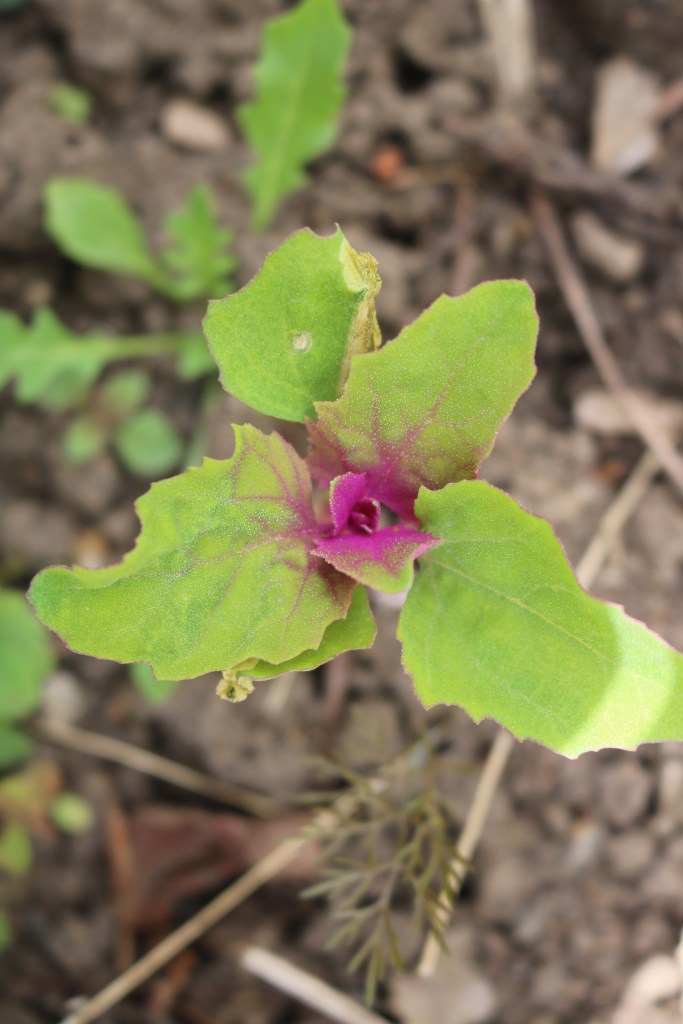
New Zealand Tree Spinach (Chenopodium giganteum ‘Magenta Spreen’)

Alys Fowler writes about NZ tree spinach: “The flowering sprouts have a blue-green leaf and a dusky purple midrib and veins. The tree spinach is a brilliant bright green with each new set of leaves blushed a shocking magenta. Eventually the tree spinach will reach 1m or more … The tree spinach, as its name suggests, is a spinach substitute. It is fantastic melted in butter and keeps its magenta when cooked. It can also be eaten very young raw in salads. Once it’s tall, it does become a lot coarser.

You can sow it either as seed (which there is still time to do now) or buy a young plant and let it do the job for you. One word of warning: it will reappear everywhere. It is not exactly a thug, but if you’re not prepared to eat it, that’s an awful lot of weeding. If you sow it as seed, consider sowing it in modules or seed trays and planting it out as this will give you more control as to where to grow it. If you want full-height plants, it needs to go at the back of the border. I planted mine this way and harvested very little, allowing it to set seed, and then I uprooted the plant and shook it wherever I thought it might look nice next year. You can pinch out the growing tip for a bushier plant.”

I bought one plant maybe 5 years ago, and every year it appears again. I think it is very pretty but we have only eaten it when it was small.

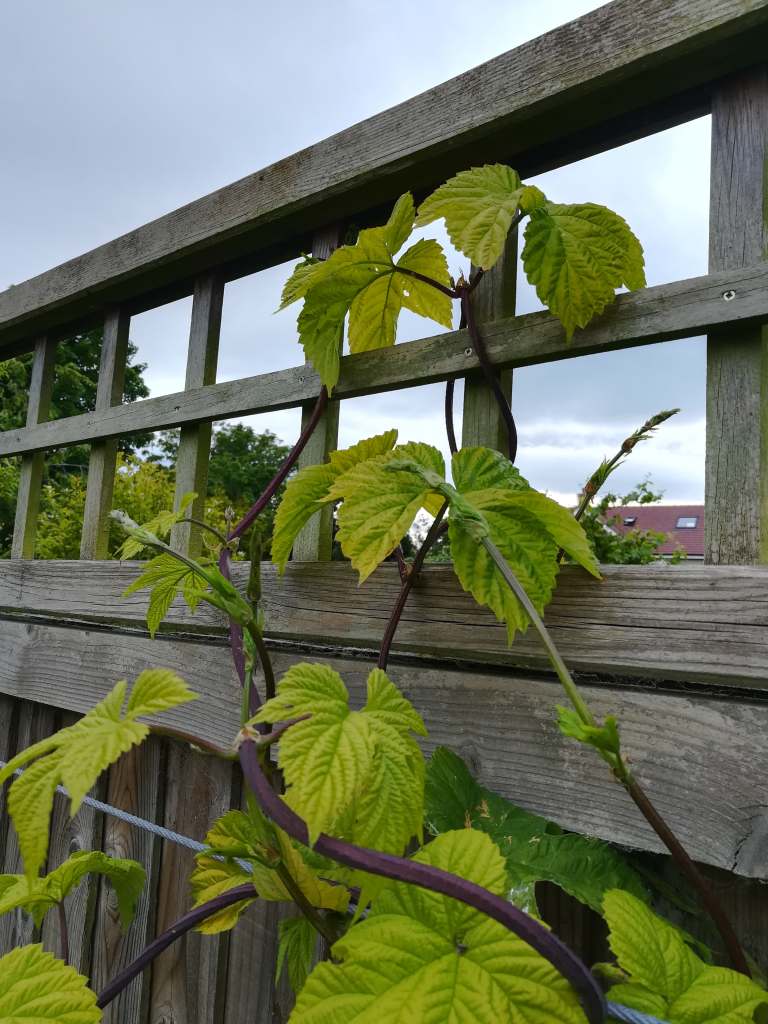
Hop, Humulus lupulus

Hops are best know for the role of their cone-like fruit (which appear in September) in brewing beer, first started in Holland and Germany and then incorporated into British brewing practices. Their role in the kitchen also has a connection with the brewing business in the past. During the pruning of the cultivated hop vines in May (often done by gangs of volunteer labour), the pruned shoots (top 10cm) were tied in bundles and cooked as asparagus. The practice was mentioned by Pliny, the Roman author and naturalist. They are often eaten in Italy, along with many other green stem wild vegetables, with egg – as a frittata.

As described by Richard Mabey in his book Food for Free.

Hop leaves, small fresh ones, can be eaten as spinach or in a salad – more of a slight bitterness and hoppy flavour. I’m looking forward to eating the hop flowers, apparently quite a delicacy.

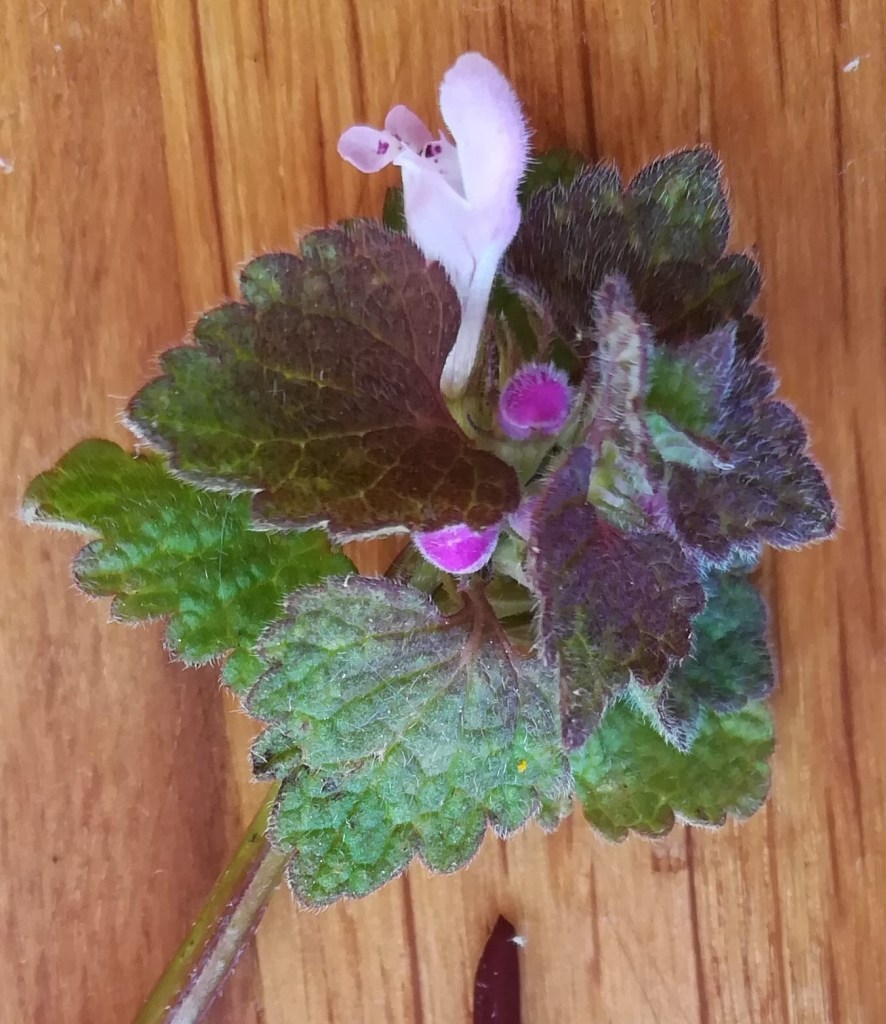
Dead nettle, Lamium purpureum

Dead nettle, although superficially similar to true nettles in appearance, is not related and does not sting (hence the name “dead-nettle”). Purple dead-nettle is actually in the mint family. It is highly favoured by the bumble bee and and makes a very early appearance as a nectar plant. They are found almost anywhere; gardens, meadows, woodlands.

The whole purple dead-nettle is edible.  It has a mild, slightly grassy/ somewhat floral flavor, and the purple tops are even a little sweet.  The small ones are considered by some a real delicacy. I very much liked it, I had not known they were edible until now and have removed many from vegetable beds over the years. They can be eaten in many ways: salads, pesto, soups, tempura batter or stir-fry.

It is likely that this plant was introduced to Britain with early agriculture and evidence for it has been found in Bronze Age deposits.

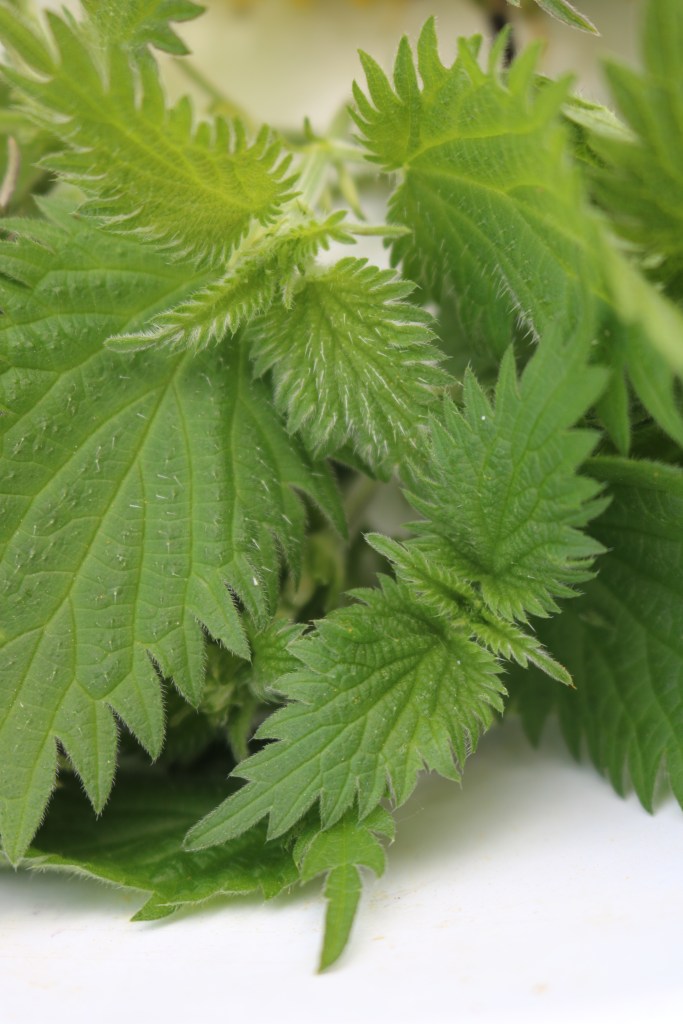
Stinging Nettle, Urtica dioica

“Nettles: Barbed and bristled and undeniably stingy as they are, these plants are nevertheless a gift to anyone who favours cooking with local, seasonal, fresh ingredients. They thrust themselves up from the barely warm ground as early as February (nettle soup on Valentine’s Day is a tradition in our house), then grow with untrammelled enthusiasm right through the spring and summer … the fresh, young growth of March and April is the crop to go for. Pick only the tips – the first four or six leaves on each spear – and you will get the very best of the plant. Keep your eye out throughout the late summer and autumn, though, because young crops of freshly seeded nettles will grow wherever they get a chance…the strimmer is the nettle gourmet’s friend: nettles that have been mown down will reliably put up a burst of fresh growth.

Not only does this plant taste good, but you can almost feel it doing you good as you eat it. Particularly rich in vitamin C and iron, a tea made by steeping nettle leaves has long been a tonic. But I prefer to eat the leaves themselves. The flavour is irrefutably “green”, somewhere between spinach, cabbage and broccoli, with a unique hint of nettliness: a sort of slight, earthy tingle in the mouth. If you like your greens, you’ll like nettles”. Hugh Fearnley-Whittingstall, (article link is in green) includes a number of nettle recipes.

I descibe how to blanch them, to remove the sting, in the recipe section below. I was so excited to discover how easy it was to cook them and wondered how and why I never had done before!

https://i0.wp.com/www.compoundchem.com/wp-content/uploads/2015/06/The-Chemistry-of-Stinging-Nettles-2016.png?w=1323&ssl=1
“Explorations of everyday chemical componds” won the Association of British Science Writers’ Dr Katharine Giles Science blog award in 2018

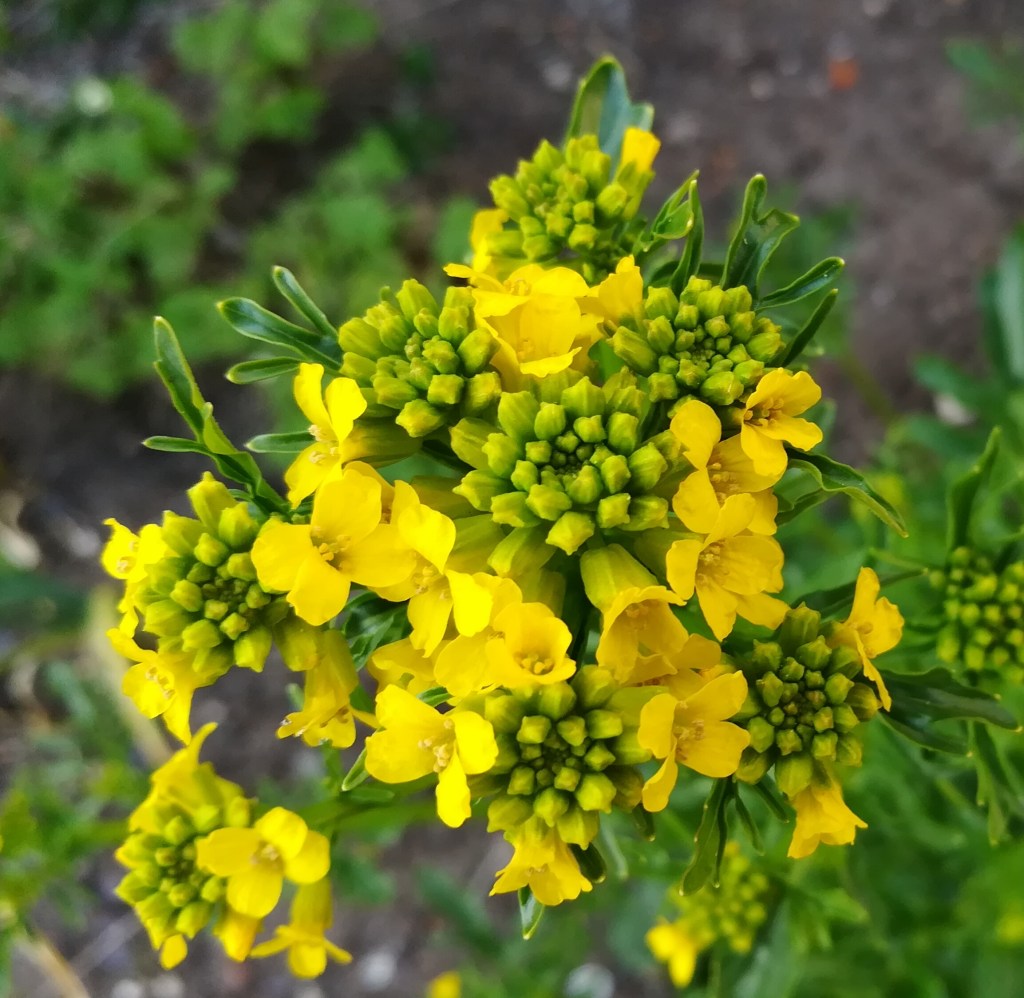
Landcress or Wintercress flower buds, Barbarea verna

This flower is so vibrant, they look amazing in a salad. They taste like a little bite of watercress, and texturally they have a juicy bite.

Land cress is often cultivated as a salad plant, when it is usually treated as an annual. It can supply leaves all year round from successional sowings. In hot weather plants soon run to seed unless they are kept shaded and moist, but that is when the flower buds form.

Wild Food Girl reports “I find all I have to do is drop the wintercress into boiling water in an open pot for one or two minutes, rinse with cold water to stop the cooking, and then it’s ready for whatever preparation I want … I like to use the leaves or the unopened bud clusters and top 2 inches or so of soft stem. It’s slightly more bitter if the clusters have started to spread apart, but it’s nothing a dash of lemon juice can’t fix. They are also thick and juicy. Truth be told, I really have come to crave wintercress.”

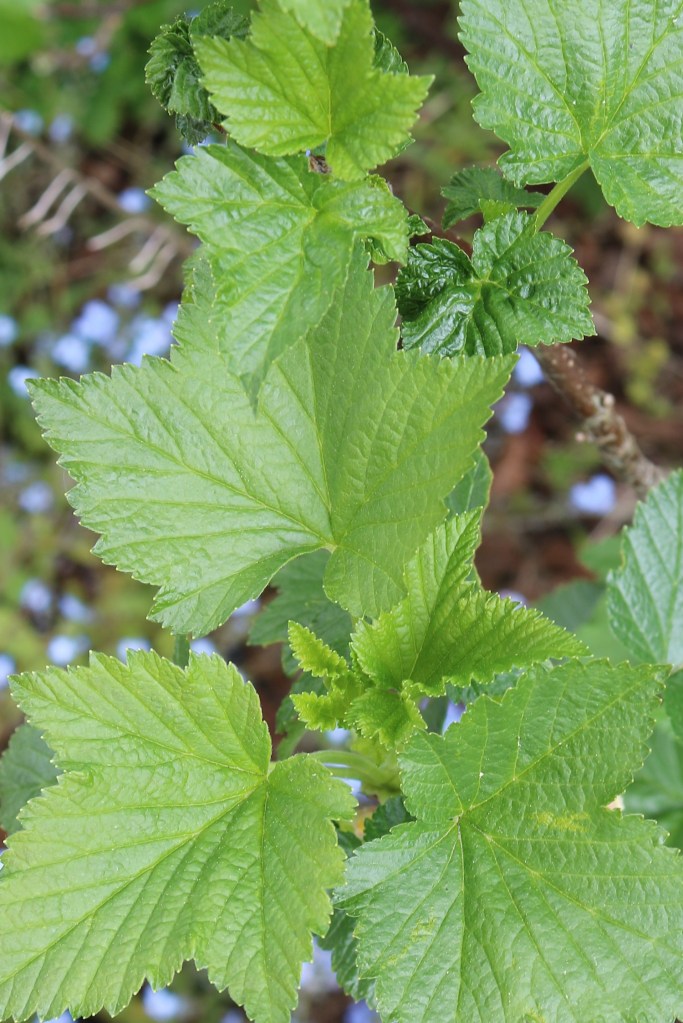
Blackcurrant leaf

“Blackcurrant leaves are an excellent place to start for inspiration (when eating garden leaves). Standing in a blackcurrant fruit cage in a fog of heady berry-scent, you can quite easily assume that it comes from the berries themselves. Crumple a leaf in your hand though, and smell the delicious jammy-blackcurrant notes. When steeped in any warm liquid, they obligingly release their flavour, making the leaves an unexpected – but wonderful – flavouring agent for cordials, sorbets and jellies, as well as this delicious Blackcurrant leaf ice cream recipe.” Rachel Walker, in The Food I Eat blog; Cooking with Leaves.

These were such an exciting find. The scent and taste of the leaf is so like an intensely concentrated blackcurrant syrup – far more than eating a berry itself. They are so delicous eaten from the bush, although we only have one bush so have had to limit myself. They haven’t made it to a salad yet.

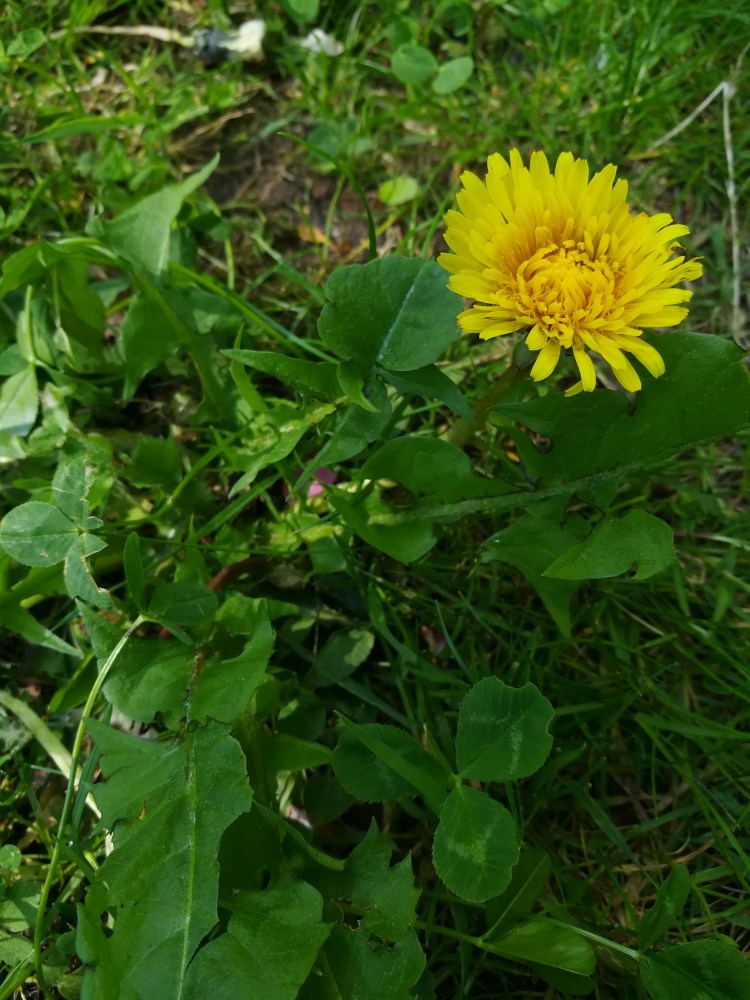
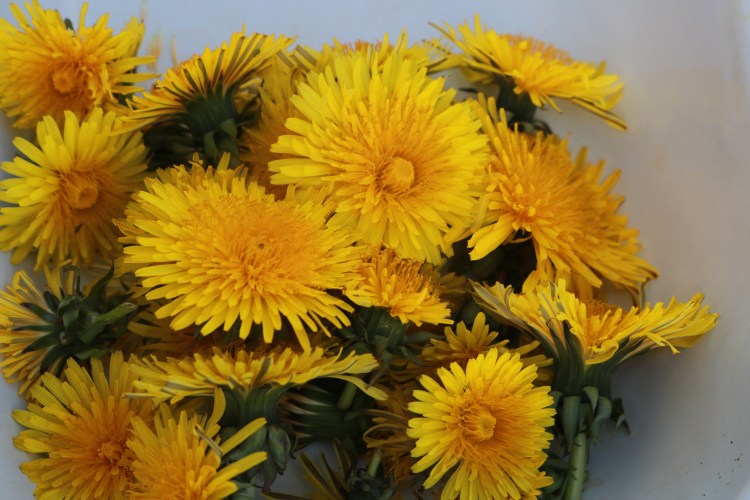
Dandelion, Taraxacum officinalis

Derek Markham descibes: “The quintessential garden and lawn weed, dandelions have a bad reputation among those who want grass that looks as uniform as a golf course, but every part of this common edible weed is tasty both raw and cooked, from the roots to the blossoms. Dandelion leaves can be harvested at any point in the growing season, and while the youngest leaves are considered to be less bitter and more palatable raw, the bigger leaves can be eaten as well, especially as an addition to a green salad. If raw dandelion leaves don’t appeal to you, they can also be steamed or added to a stir-fry or soup, which can make them taste less bitter. The flowers are sweet and crunchy, and can be eaten raw, or breaded and fried, or even used to make dandelion syrup or wine. The root of the dandelion can be dried and roasted and used as a coffee substitute, or added to any recipe that calls for root vegetables.”

According to Jennifer McLagan in her cookery book Bitter, eat dandelions raw with a hot fatty dressing to mitigate their bitterness and soften their sturdy leaves. Braising also softens them and mellows their bitterness. Easy to prepare, just rinse well and trim the thick stems. They are rich in vitamins A and C and iron.

The name comes from the French expression dents de lion or ‘lions teeth’, in reference to the shape of the plant’s leaf.

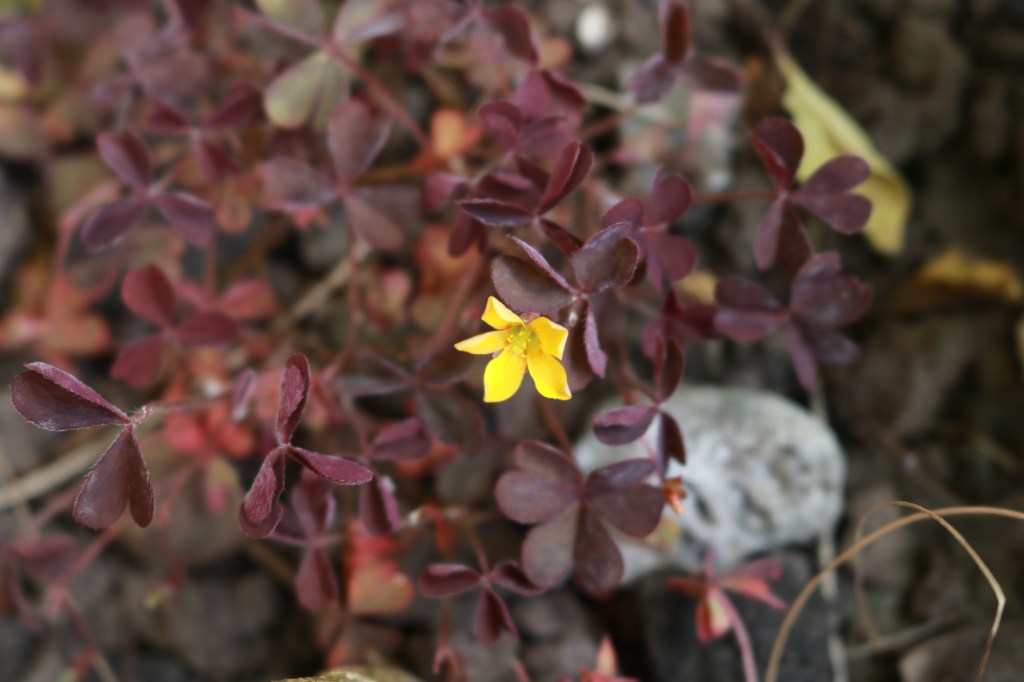
Creeping wood sorrel or Oxalis, Oxalis corniculata

Oxalis corniculata has a creeping habit and small yellow flowers followed by upright seed capsules. A purple-leaved colour variant is quite common. Leaves are edible, raw or cooked. They can be added to salads, cooked as a vegetable with other milder flavoured greens or used to give a sour flavour to other foods. Flowers can also be eaten. They have a pleasantly sour lemony taste. The leaves contain between 7 – 12% oxalate so use sparingly, but it’s unlikely you’d pick more than a few as the leaves are very small and fiddly to harvest.

Interestingly (perhaps!) according to one source a slimy substance collects in the mouth when the leaves are chewed, this is used by magicians to protect the mouth when they eat glass. The boiled whole plant yields a yellow dye.

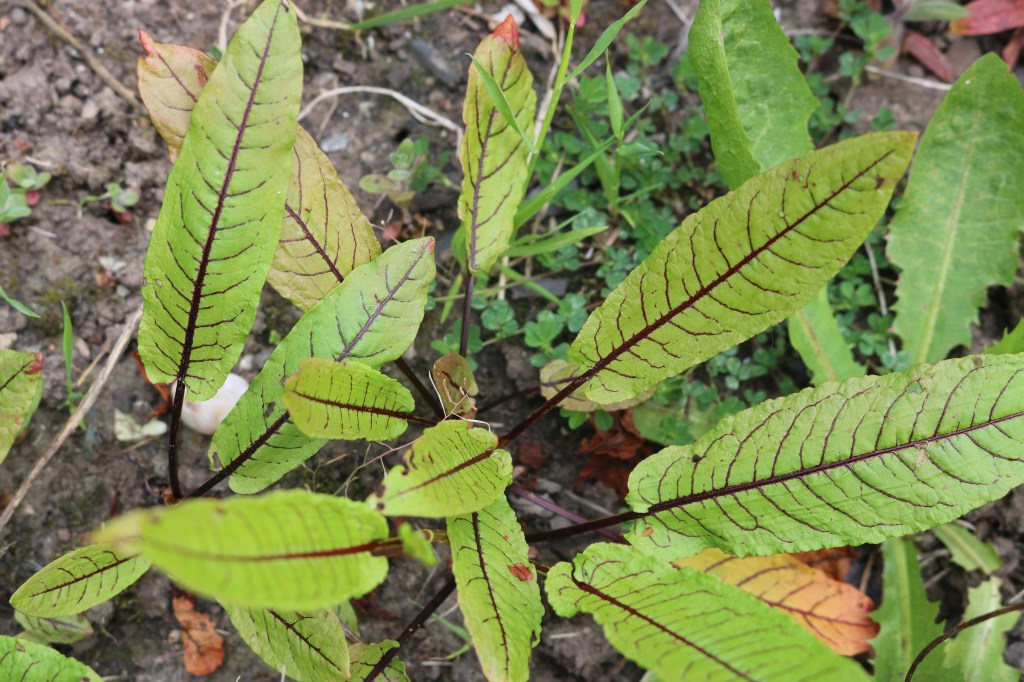
Sorrel, Rumex sanguineus

There are a few varieties of sorrel, mine is a red veined and also known as the “bloody dock”. The type of sorrel most often used in french cookery is greener, but I think mine is a pretty ground cover. The leaves have a lemony taste – due to the oxalic acid, so some caution is adviced and it has been suggested that you don’t eat sorrel soup (or rhubarb and other oxalic acid containing plants) every day of the week!!

“This bright green leaf is startlingly, puckeringly sour and lemony, but with a wonderful lightness: it tastes green, it tastes of spring … It is quite possibly the easiest crop in the world to raise (though really not that easy to buy). It’s one of my favourite leaves to eat and cook with in spring and early summer. Sorrel’s spear-shaped leaves are among the first to unfurl themselves from the warming ground in February or March, and provide the perfect antidote to the hearty, earthy flavours of winter. It can function as a herb, a salad leaf or a vegetable, giving you either a thread of lemony flavour or a real, mouth-filling whack of it, depending on how much you use … In larger quantities, sorrel’s acidity requires a little tempering … it adds such a lovely edge to creamy and delicately flavoured foods – everything from creme fraiche or oil to potatoes, pulses, eggs or chicken.” Hugh Fearnley-Whittingstall, in the Guardian

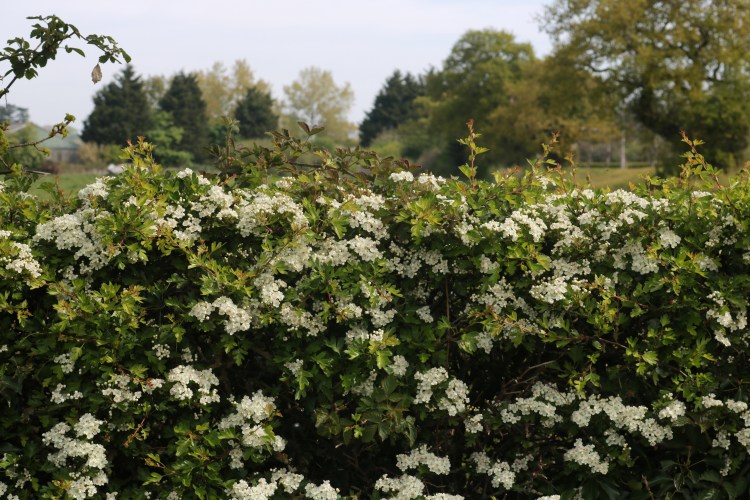
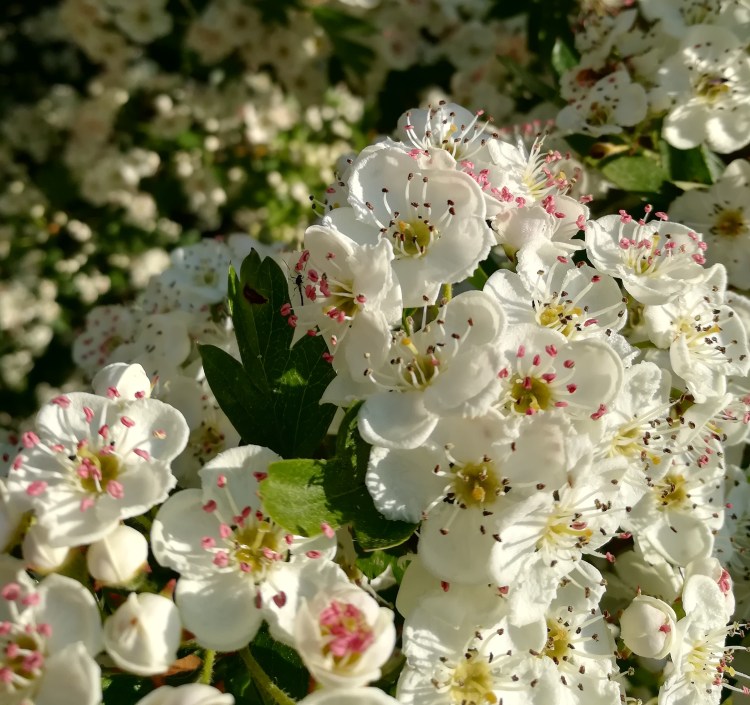
May Flower or Hawthorn, Crataegus monogyna

According to Rosamond Richardson in her book Hedgerow Cookery (which I bought at Marple Library for 50p in a sale of their books when I was a teenager. I have also recently discovered she was a family friend of a friend of ours, and he recalls her great enthusiam): “In folklaw the budding of the may tree signifies the end of winter and heralds the coming of spring: hence the origin of May Day (which used to fall on what is now May 12th – when the flowering is at its peak – until 1752 when the Julian calendar changed to the Gregorian calendar and 11 days were ‘lost’). Tradionally, young girls bathed in the hawthorn dew on May Morning in the hope of becoming more beautiful, as recorded in the nursery rhyme:

The fair maid who the first of May 
Goes to the field at the break of day, 
And washes in dew from the Hawthorn tree, 
Will ever after handsome be. 

Above all the Hawthorn is a symbol of rebirth and life. Which is a lovely thought, as the prolific hawthorn blossom for a few miles of the roadside is deeply etched in my memory, as I came home from the hospital with my first-born child on the 12th May.

Hawthorn is the most commonly planted hedge shrub in Britain: ‘haw’ is from an old English word for hedge.

Very young hawthorn leaves have always been eaten and are traditionally known as ‘bread and cheese’ (possibly because they were eaten with bread). They work well in a salad (apparently good with potato and beetroot) and have taste mildly nutty. The blossom has a pleasant flavour, if picked in sunshine and full bloom. They can be made into wine or a liqueur.

Flowers of Herbs

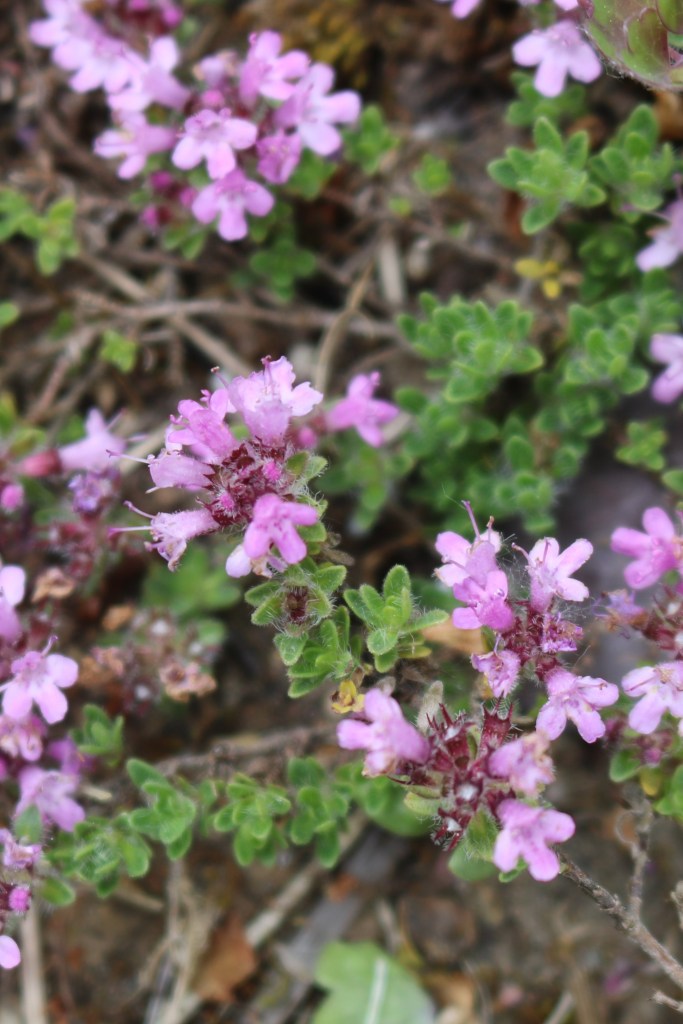
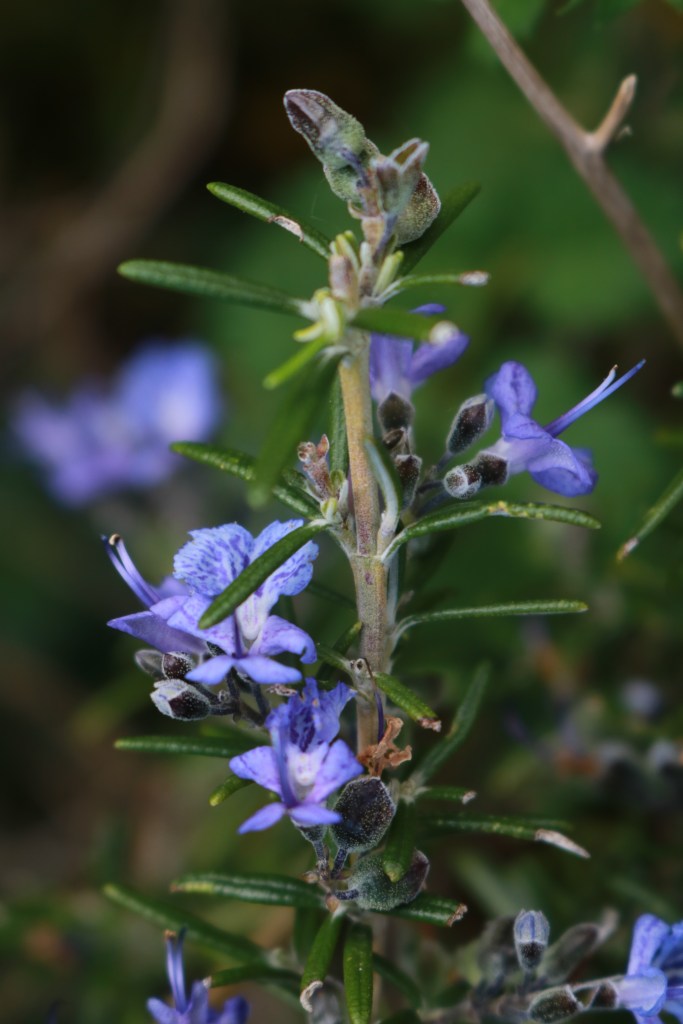
Many of the flowers of herbs are delicious in their own right. Many of the tiny flowers or florets are a slightly milder form of their leaves and something more; a beautiful little parcel of flavour. At this time of year, I very much like thyme flowers in a drink and chive florets are stunning in a salad.

Thyme, Thymus vulgaris
Rosemary, Salvia rosmarinus
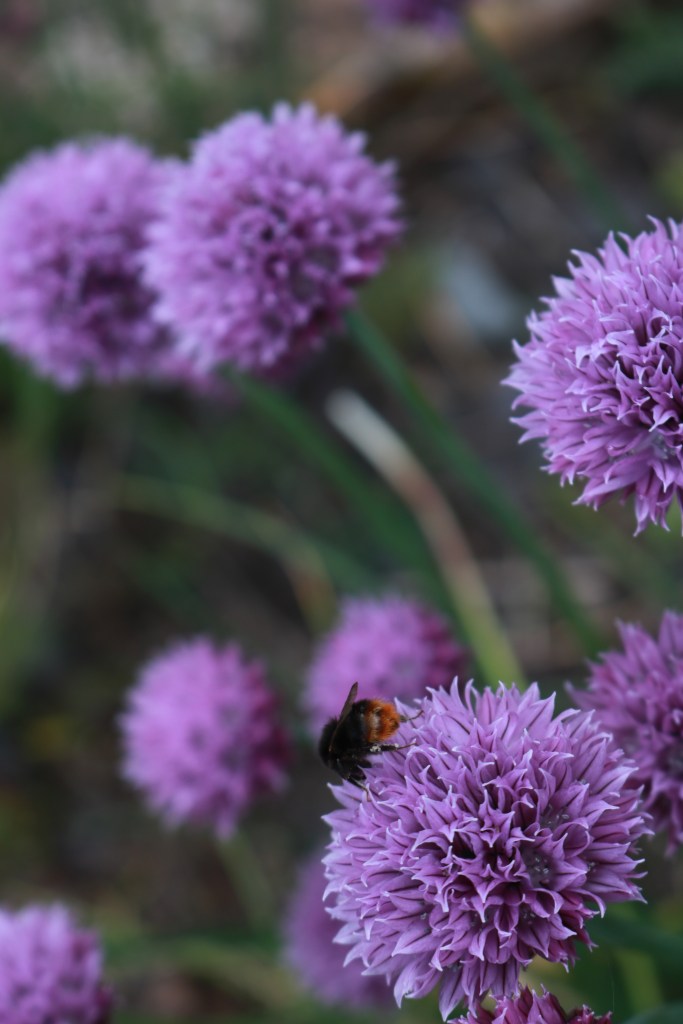
Chive, Allium schoenoprasum

Sally Next writes: “I used to be a bit sceptical about all this new-fangled fashion for eating flowers. Well. Then I ate a rosemary flower. And found out about the flavour, and why people who eat flowers tend to eat rather a lot of them. I’m left with the feeling that for the last 20 years or so of my veg-growing life I’ve missed out on the best bit of my crop.”

Other flowers in the garden that you can eat in the spring

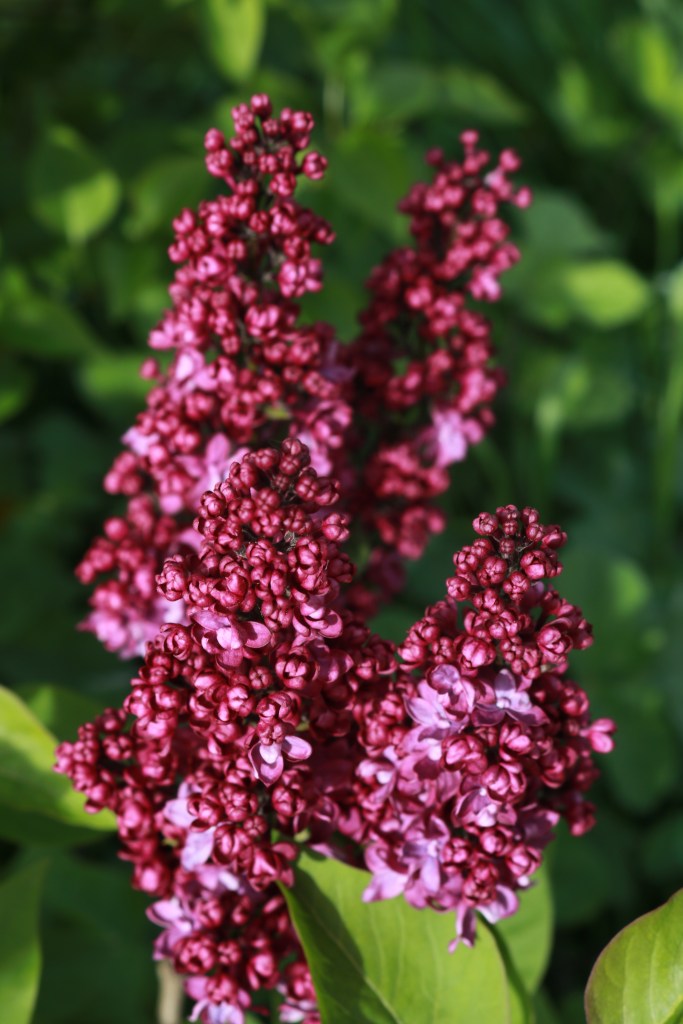
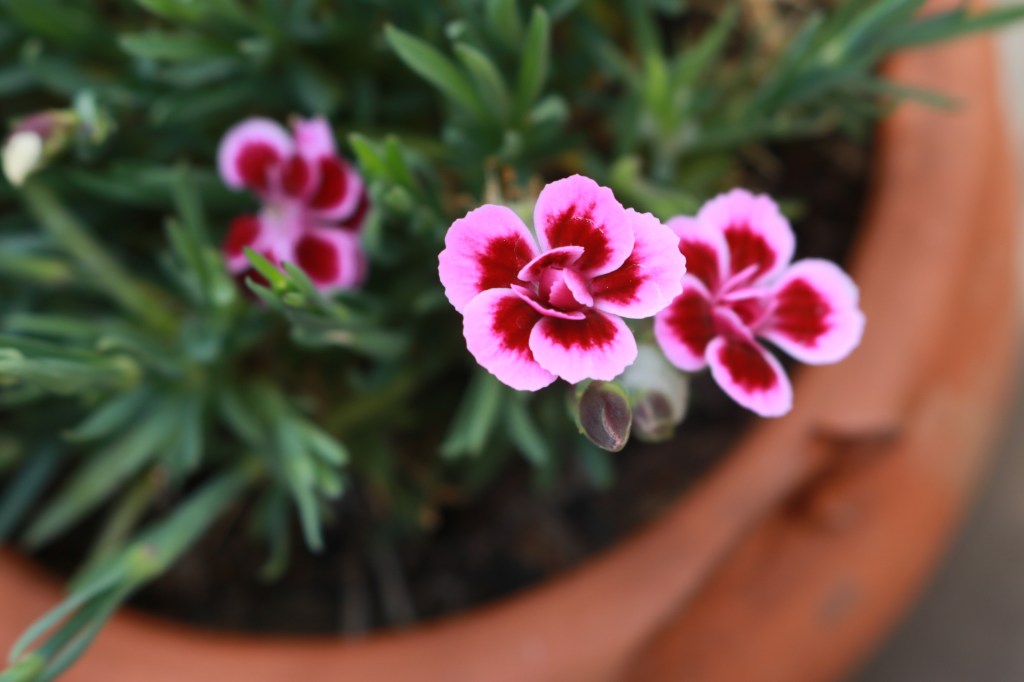
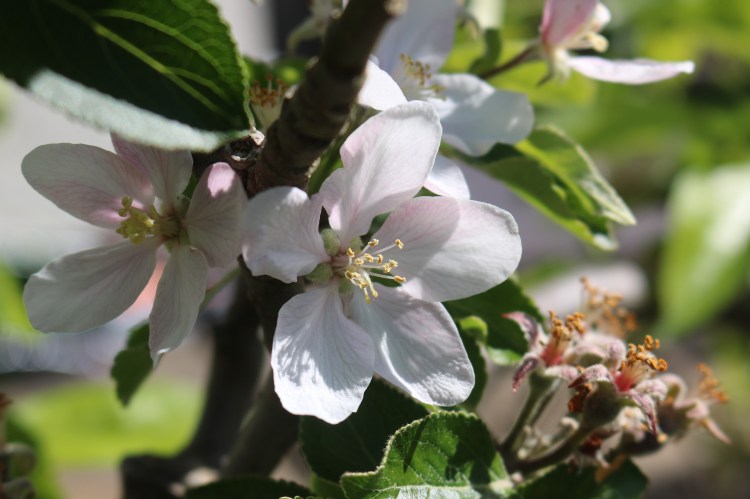
Rose petals are well-known in Middle Eastern cuisine, but the rose was used for centuries in English cooking until it felt out of favour. There are many roses that grow well in Britain that are highly scented and suitable to use in cooking and baking, or flavouring alcohol or distilling to make rosewater. I had never eaten apple blossom until this project – and loved it (not too much because of cyanide, which is also in the pips – but you’d have to eat an awful lot and they are high in antioxidants and minerals). Lilac is considered a love it/hate it flavour. I adore the scent of lilac and to me it was as tasty as it smelt in a couple of the blossoms that I snaffled from my local streets on my “COVID-19 daily walk” and foul from another couple – you’d need to know your bush! A friend suggested that she might make a flavoured vodka – which sounds a great idea. As does a Peony vodka, which I was sure that I’d read about in Mark Diacono’s blog (he tries all kinds of things and I really enjoy his Otter Farm Facebook posts. You can search for his vodka infusions in the search bar). But I did find this recipe for a Peony syrup – but I haven’t tried it myself. My four plants haven’t flowered yet this year, so they don’t make the hall of fame in this blog, but as I am home ‘so much’ at the moment, I am going to make the syrup when they do. You can find out more about edible flowers in the Edible Flower Guide from the seed company Thompson and Morgan or from one of the books listed in the resources section. Lia Leendertz’s book Petal, Leaf, Seed. Cooking with treasures of the garden is packed full of ideas, as incidentally are her almanacs.

A foraged garden salad

And so we feasted on the fruits of our labours… our combined favourites were: beech leaf, blackcurrant leaf, apple blossom, landcress flower, hop growing tip and dead nettle. Almost everything!!

A salad of bought spinach leaves with the added array of colour and flavour of our foraging experience.
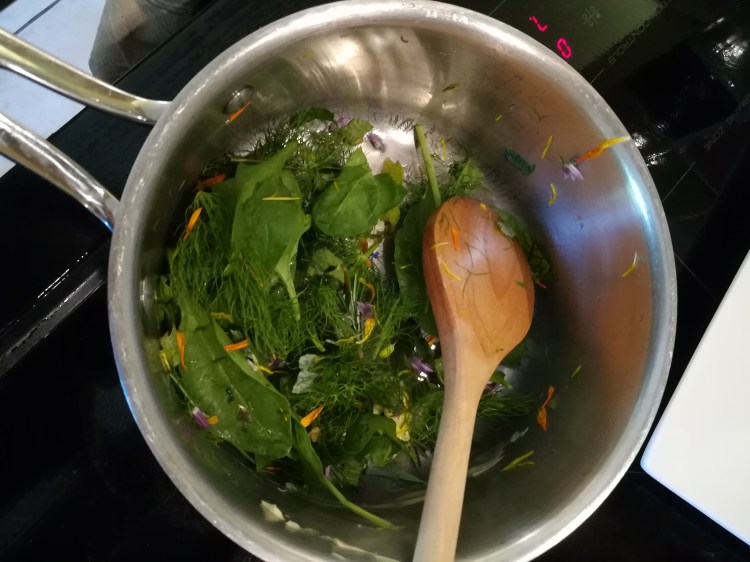
Lightly sauted in butter by my son, as that was what he fancied trying. It was lovely, apart from the bay leaf, which he wanted to include. Best left for infusing I think!

Plants for a future (PFAF) a database of edible plants

If you try this yourself please don’t rely on my information; use a reputable idenfication guide and perhaps double check edibility on the PFAF database (see resources page for further information about PFAF and their suggestions of top edible plants).

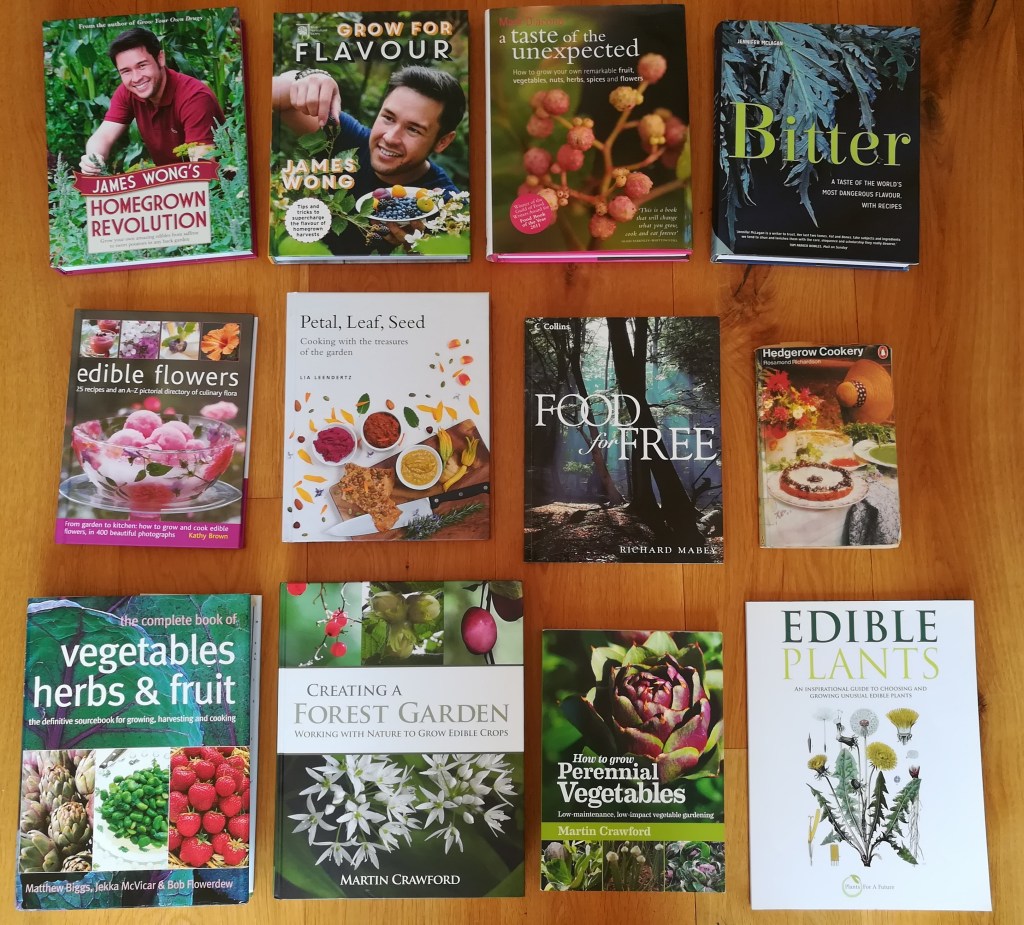
Books: foraging and unusual gardening

These are some of my favourite books, and others including The Forager’s Calendar by John Wright, as well as a number of blogs and websites – will be listed soon in the Download section.

Foraging beyond our garden

A few days ago, during “lockdown”, I was fortunate to be told about a free online zoom session being run by Woodland Classroom. It was a fabulous inspiring hour. The couple shared information about: identification, location, photographs, food uses, tinctures, teas, alcoholic drinks and claimed medicinal benefits. I look forward to attending one of their courses near Wrexham in North Wales (when the limitations due to COVID 19 are lifted). There are so many plants that are easy to find and sound very tempting to eat. They highlighted that the taste for ‘wild food’ can sometimes take a little while to aquire; so many of us are used to the taste of the supermarket breed for cultivation vegetables, which are often relatively bland and flavour may be lost in cold-storage. I have owned a number of foraging books for a while, but I have never been very confident going out to pick from the countryside – aside from elderflowers, blackberries and sloes. My son and I went for a short walk to our local nature reserve and came home with: nettles (to make a second loaf), garlic mustard, hawthorn leaves and flowers and an elderflower.

Picking wild flowers and the law

Advice from the organisation Plant Life, which is a British conservation charity working nationally and internationally to save threatened wild flowers, plants and fungi .

“Contrary to widespread belief, it is not illegal to pick most wildflowers for personal, non-commercial use. In a similar vein, it’s not illegal to forage most leaves and berries for food in the countryside for non-commercial use. Legislation under the Wildlife and Countryside Act (1981) makes it illegal “to uproot any wild plant without permission from the landowner or occupier” in Britain. The term ‘uproot’ is defined as “to dig up or otherwise remove the plant from the land on which it is growing”. Picking parts of a plant (leaves, flower stems, fruit and seed) is therefore OK, as long as you don’t remove or uproot the whole plant.

However, you should not pick any plant on a site designated for its conservation interest, such as National Nature Reserves (NNRs) and Sites of Special Scientific Interest (SSSI’s) in Britain and Areas of Special Scientific Interest (ASSI’s) in Northern Ireland. Permission for picking from these sites requires prior consent from the appropriate statutory conservation agencies (English Nature, Natural Resources Wales, Scottish Natural Heritage or the Environment and Heritage Service, Northern Ireland). It is illegal to pick, uproot or remove plants if by-laws are in operation which forbid these activities, for example on Nature Reserves, Ministry of Defence property or National Trust land.

In addition, both the Wildlife and Countryside Act and the Wildlife (Northern Ireland) Order include a list of highly threatened plants that are especially vulnerable to picking, including plants like Deptford pink, alpine sow-thisle, wild gladiolus and several orchids and ferns (as well as fungi, lichens and bryophytes). No part of these Schedule 8 species can be intentionally picked or uprooted without a licence from the appropriate statutory conservation agency. These plants are also protected against sale.

Finally, picking of wildflowers is also specifically covered under the 1968 Theft Act (England and Wales): “A person who picks mushrooms growing wild on any land, or who picks flowers, fruit or foliage from a plant growing wild on any land, does not (although not in possession of the land) steal what he picks, unless he does it for reward, or for sale or other commercial purpose”. However, the same restrictions apply to picking on land designated for its conservation interest as described above.”

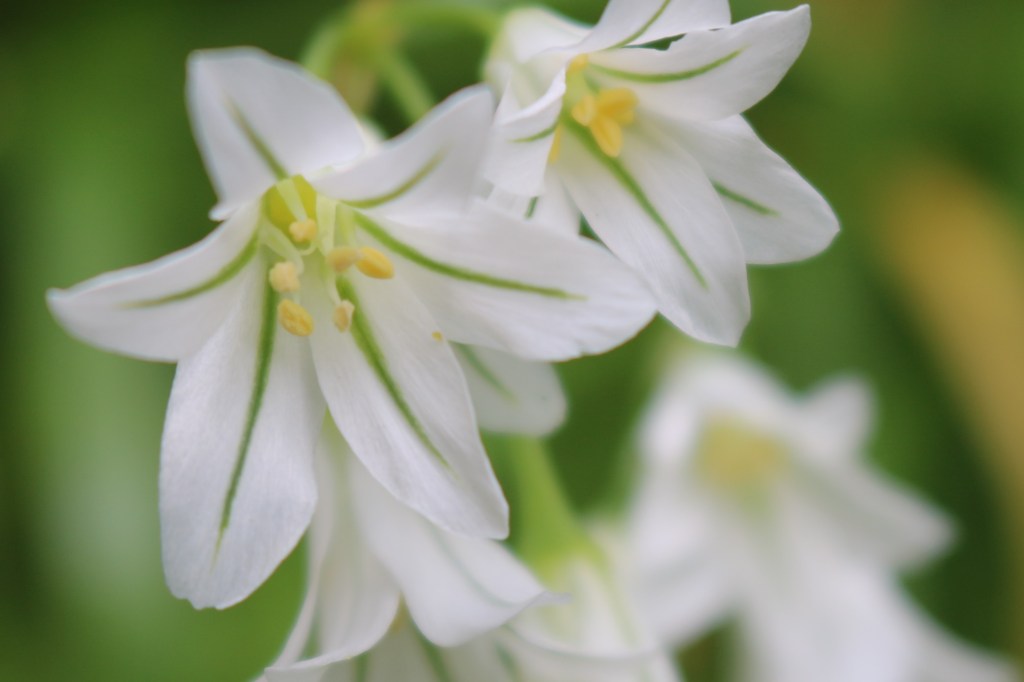
Snowbell or Three-cornered leek, Allium triqetrum

I spotted a clump of these by the side of my friend Jane’s driveway. I recognised it as I had taken the first photograph on the SW coastal footpath in Cornwall one May, as I thought it so beautiful – but also suspected it was edible as it smelt like wild garlic! I haven’t yet tried one, but I intend to plant some in my garden for next year.


“All of the plant is edible. The young plants can be uprooted when found in profusion and treated as baby leeks or spring onion, the leaves and flowers can be used in salads or the leaves in soups or stews, the more mature onion like roots can be used as onion or garlic …The flower stem is like the leaves but more triangular in profile than the leaves, hence the common name, Three-Cornered Leek. ” from wildfooduk.com

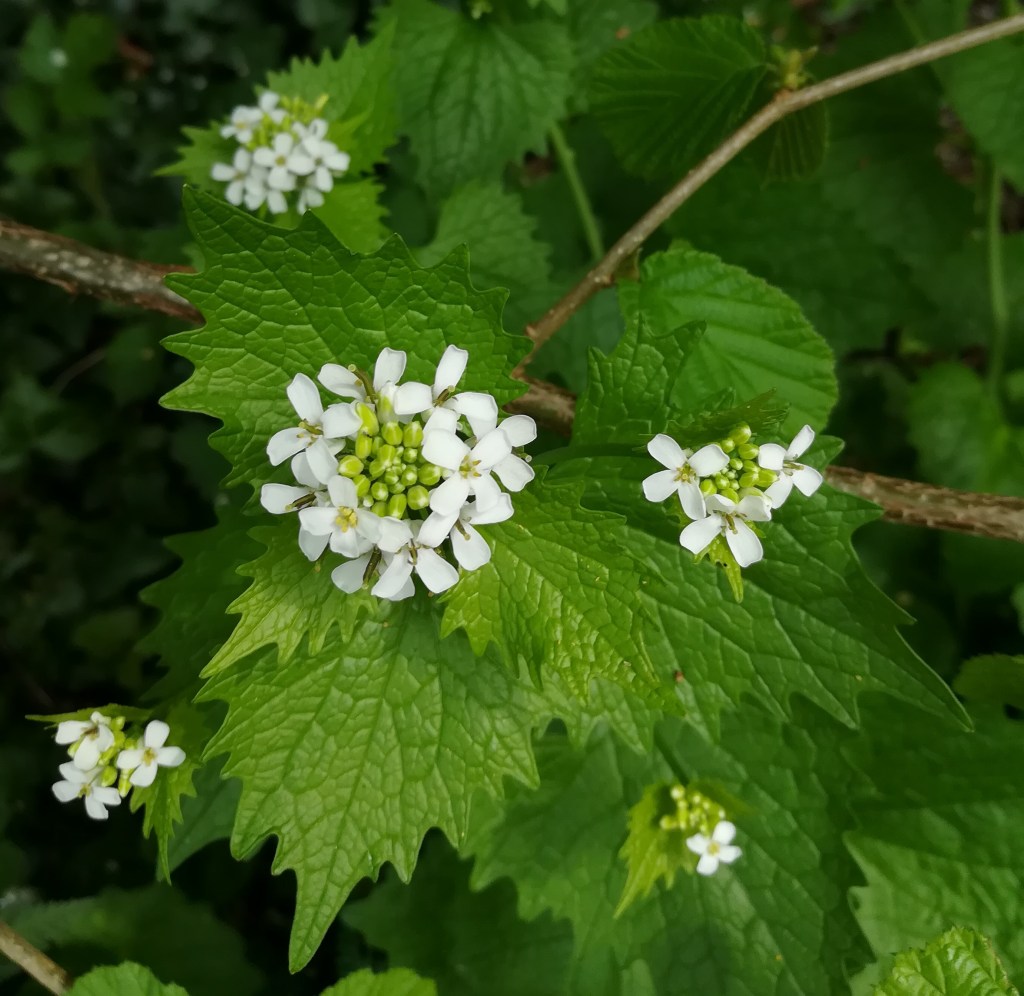
Jack-by-the-hedge, Hedge garlic, Garlic mustard, Alliaria petiolata

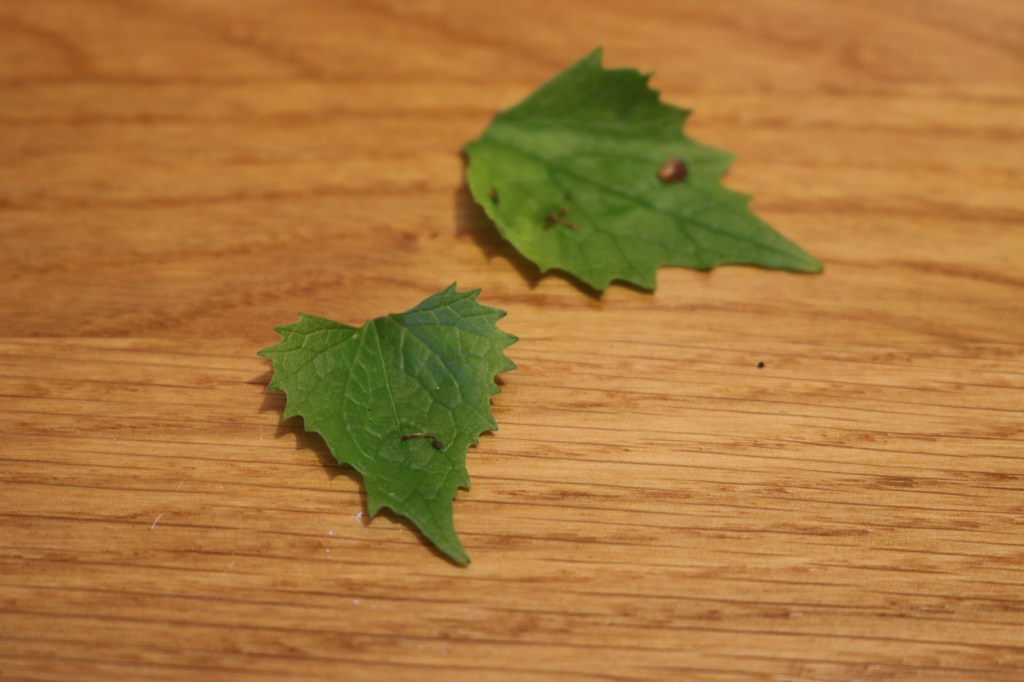
Jack-by-the-hedge smells mildly of garlic and tastes of mustard. Culpepper recommends the use of young leaves in salads. The leaves can be finely chopped and added to a butter, or put in a cheese sandwich. They would make a good pesto.

Jack-by-the-hedge leaves

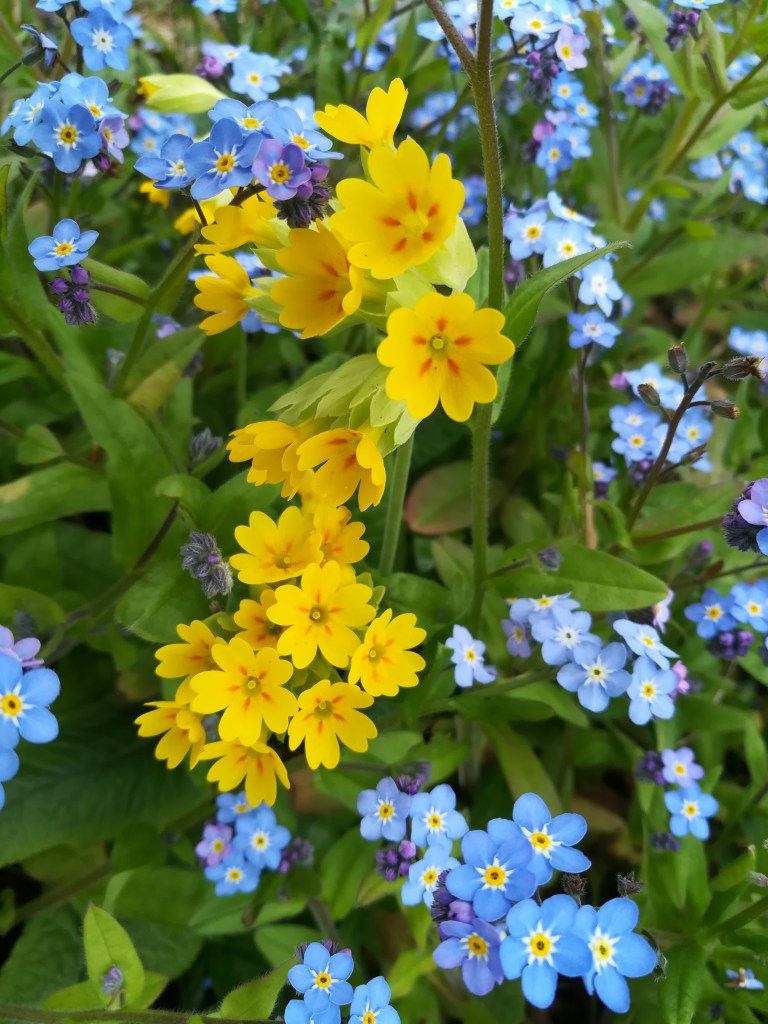
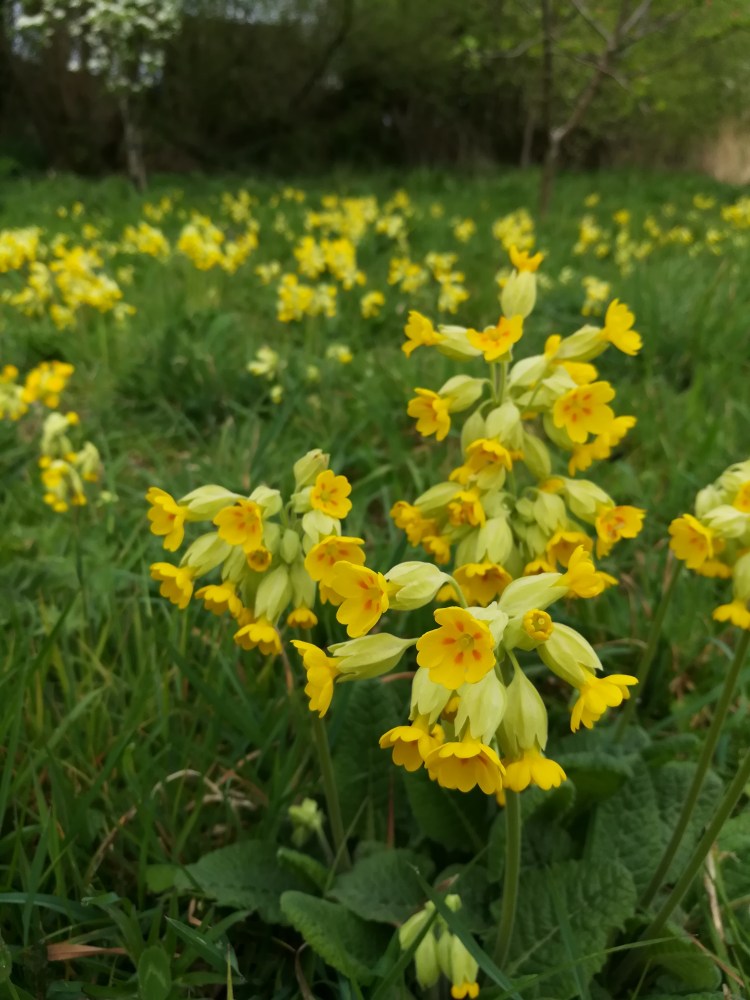
Cowslip, Primula veris

Cowslips are synonymous with spring and Easter. The botanical name means “the first little one in spring”. At one time cowslips were found in vast numbers along verges and in meadows, but they have declined in the wild, so it is best to grow them yourself. I have one plant in my garden, and it is still flowering today after many weeks.

The flowers and leaves are edible and rich in Vitamin C.  The leaves are often used in Spanish cooking; they have a slightly citrusy flavour. Here in the UK the plant has traditionally been used to make jam, wine, tea and ointment. Cowslip wine was said to steady the nerves due to its analgesic properties. The plant contains an oil known as ‘primula camphor”, containing many flavonoids (phytonutrients, often found to have health benefits). Nowadays the flower is more often used as a salad decoration or floating in a drink. 

William Shakespeare refers to the cowslip on a number of occasions in his plays, one of them being “A Midsummer Night’s Dream” when Puck first meets the fairy (Act 2 Scene 1), the fairy replies:

Over hill, over dale
Thorough bush, thorough briar
Over park, over pale
Thorough flood, thorough fire
I do wander everywhere
Swifter than the moon’s sphere
And I serve the Fairy Queen
To dew her orbs upon the green.
The cowslip tall her pensioners be

In their gold coats, spots you see,

Those be rubies, fairy’s favours
In those freckles live their saviours
I must go seek dewdrops here
And hang a pearl in every cowslip’s ear.

Old British myths claimed that fairies sought refuge inside cowslips in times of danger. Cowslips were dedicated to the goddess Frigga/Freya in Norse mythology and they played a part in the remedies of Celtic druids. The flowers resemble a bunch of keys and are sometimes called Herb Peter – St Peter’s emblem is the keys of heaven. 

Recipes

Guest recipe of Wild Garlic Pesto with photograph from Anthea Wratten. Thank you. It sounds delicious, and I suspect there are many wild greens that could be substituted for the wild garlic (perhaps the triquetal leeks), as their season is almost over.

“This is delicious thrown through pasta, swirled through soups and stews or served as a condiment to baked potatoes or a perfectly roast chicken. Try using it as a salad dressing or popping a few dabs into your favourite sandwich. Will keep for at least a week in the fridge. Feel free to replace the hazelnuts with any nut of your choosing, likewise any salty hard cheese can work too. Makes 1 large jar.” Riverford Recipes

Wild garlic pesto, inside an omlette. Anthea Wratten

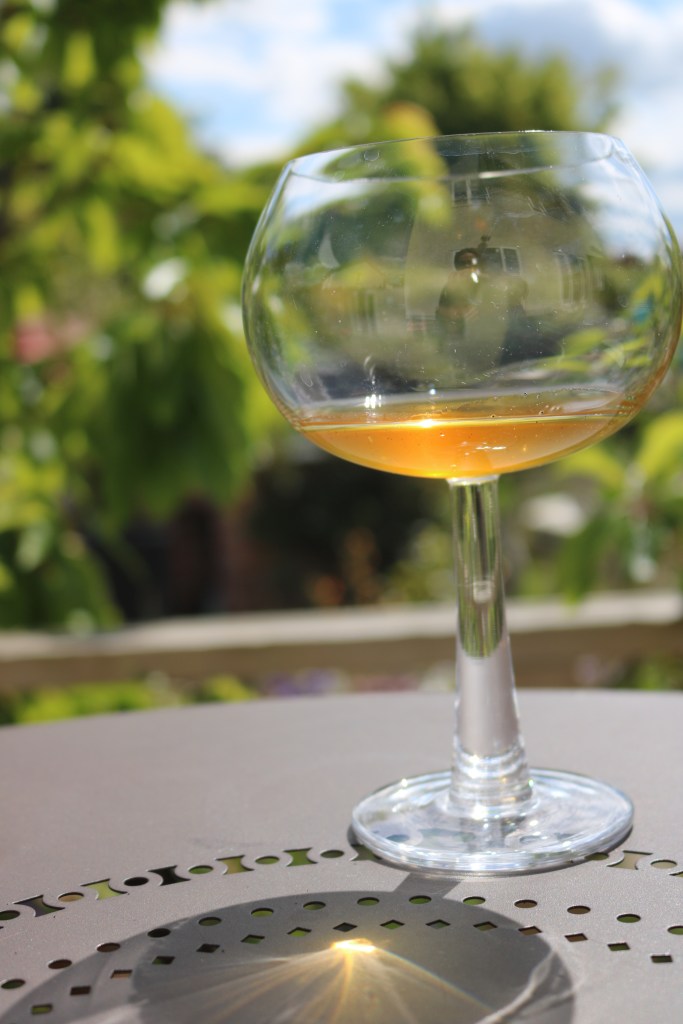
Dandelion cordial

  • Dandelion flower heads (100g)
  • Water (350ml)
  • Sugar (300g)
  • Slice of lemon
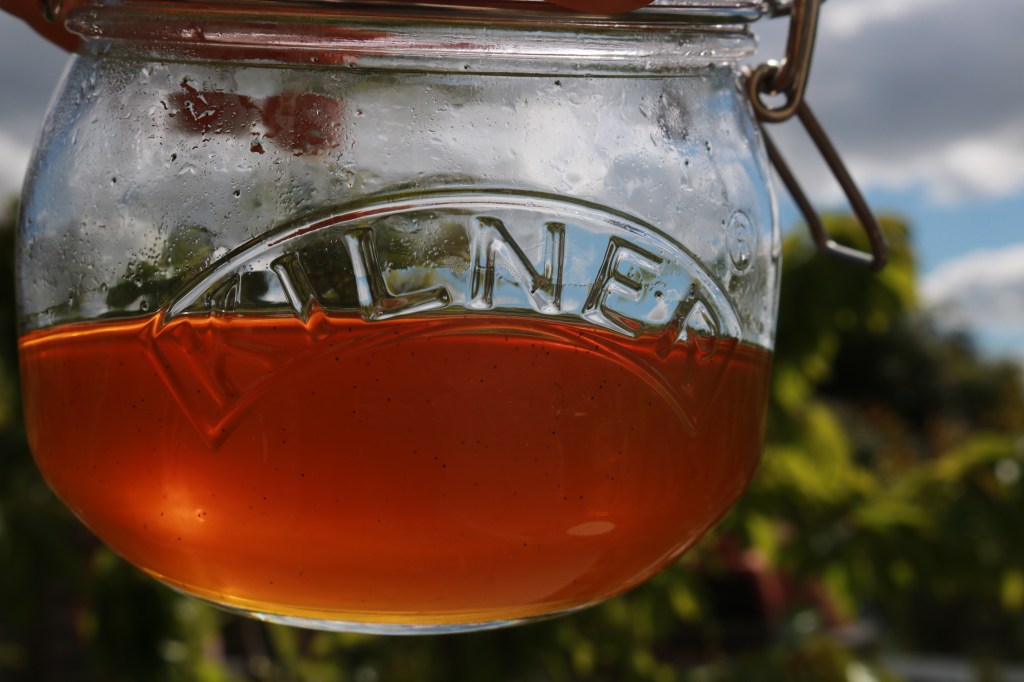
  • Piece of vanilla pod (optional)
  1. Select a big bunch of dandelion, all bright and open (as the light-level drops, the flowers close up).
  2. Rinse in water, and leave for a couple of minutes to allow any little insects to leave!
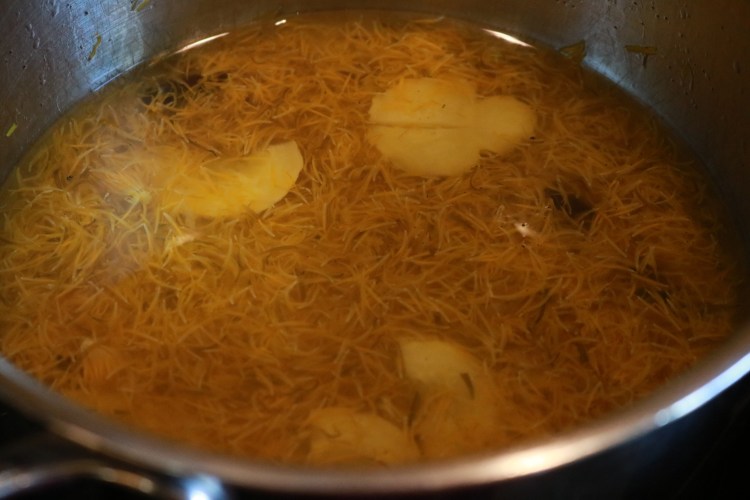
  3. Remove the petals and place in a saucepan with the water, trying to avoid adding the green part of the flower as it will change the colour of the drink.
  4. Simmer with the lid on for 15 minutes.
  5. Switch off the heat and leave to infuse overnight.
  6. Strain using a sieve (or muslin) and weigh the fluid.
  7. Add as much sugar as there is dandelion infusion.
  8. Heat gently to disolve the sugar and then boil for 10-15 minutes until you reach your prefered consistancy of syrup.
  9. Pour into a sterilised jar and keep in the fridge.

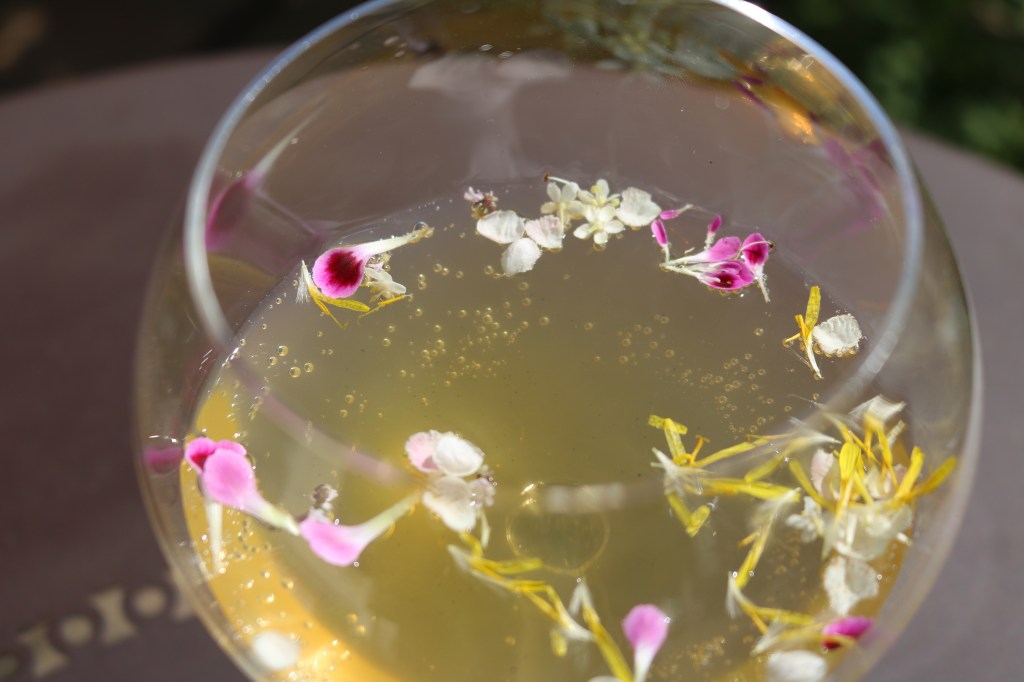
Dandelion cordial with tonic. Floating flowers: pinks, dandelion, elderflower, apple blossom, thyme flower.

Blanching Nettles

We cut the tips and the top 4-6 leaves of all the nettle plants I could find in our garden, washed them briefly and then dropped them into boiling water for 30 seconds. We removed with tongs, and dropped into very cold water, to prevent them cooking further and so retain their vivid green colour.

This quick heat denatures the sting. Incidentally you can still use the blanching water for cooking, the nettle water is not contaminated. After blanching, you grit your teeth and pick them up to chop them, discovering it is OK and now feels as if you are handling any herb.

Nettle Bread

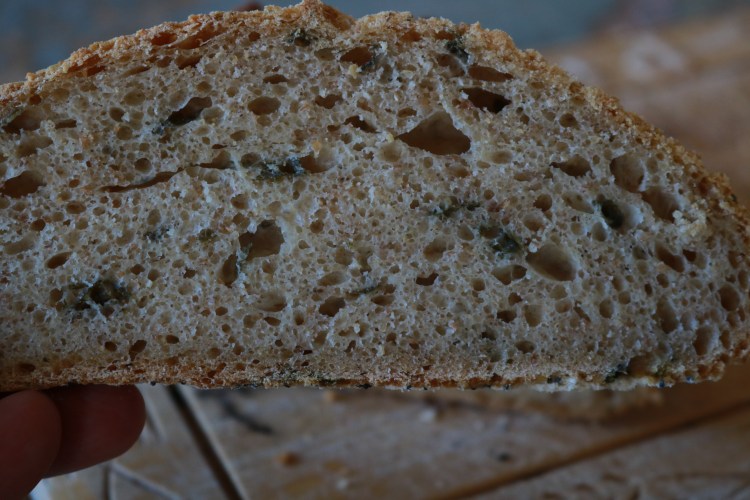
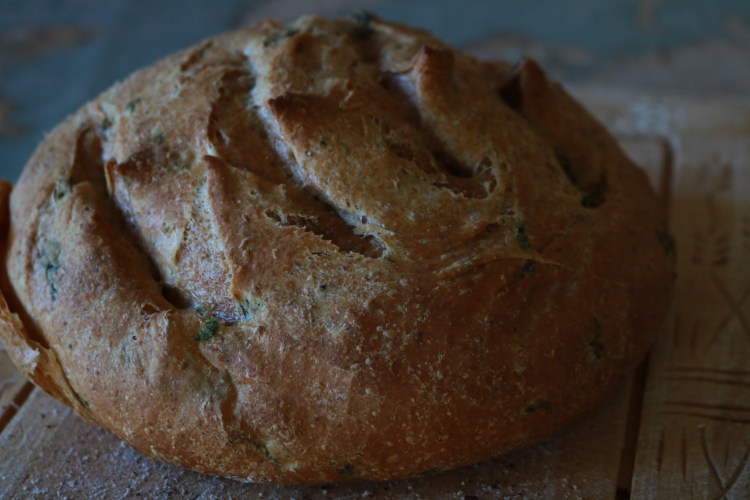
I mixed a large bunch of chopped blanched nettle tops into the risen bread dough that I had prepared and left to prove. Baked as usual. I can’t wait to forage some more.

Comments and Guest posts

I would be delighted if anyone would like to comment, or start a conversation about anything they have read. Or if anyone would like to send me a recipes, photographs or any other information that I could include in a future post.

Savouring the fruit of your labours

My “active choice” eating plan, Michael Pollan’s 7 words on eating, Developing fruit in the garden, Mindful eating, Nurturing a sourdough (day 2-4) and recipe for Spiced rosemary roasted nuts.

Morello cherries in the making

An ‘ACTIVE CHOICE’ eating plan

Having explored lots of ideas regarding eating plans, searching for an effective framework for myself, the ideas listed below are a summary of what have been the most helpful. They are ideas that have worked for me, but I am not bound by them, and as life evolves so does the framework.

My conclusion, from all my reading and experience in practicing, is what matters most when aspiring to change your eating habits, is that what you choose to eat (or not) be a considered ‘active choice’ – a decison made and not as a consequence of an inner-critic shaming the non-compliance of any plan, obligation or guilt. The most effective change is made by learning how to make an ACTIVE DECISON about food choices. But that is a skill that takes time to aquire and a skill that is constantly challenged by one’s changing cirmcumstances. For me, permission to be flexible is key for me to be able to follow a plan long-term; for others rigid rules help them to stick within a framework, to deviate from a plan would mean that they would be more likely to quit trying altogether. Whichever route works for any given individual, deliberately choosing to take time to reflect about how and why you eat as you do will bear fruit. That fruit may be in weight loss, in gut and skin health, in less frquent coughs and colds, in clarity of thought and in mental wellbeing, to name a few. But fruit takes time to develop. Observe it whilst it does and then in the end, when the fruit ripens, you’ll all the more relish and enjoy the positive achievement.

I started out on my ‘journey’ using a very rigid framework, the Bright Line Eating plan (BLE – information on the resources page), which worked extremely well for me for a few weeks and allowed me to begin to break emotional eating habits. There are four Bright Lines to aspire not to cross: No flour, no sugar, weighing and measuring what you consumed and pre-planning what you are to eat (and only eat) at three regular meal times. As a consequence of following the plan fairly rigidly, I was able to form a new relationship with food. As a consequence I now have less addictive behaviour towards what I eat and I then slowly developed more “active choice” in what I eat or don’t eat. My personal guidelines are a development from the basic BLE framework, but significantly influenced by other reading – especially Tim Spector, Michael Pollan and Michael Mosely (all listed in the resource section). My framework works well for me, especially within a family setting, and also because there were too many foods that bring me moments of joy that a stricter more formal plan tends to exclude.

“The most dangerous of these (diet) myths is the notion that we all respond to food the same way, that when we eat food or follow certatin diets our bodies behave like the bodies of identical lab rats. They don’t. … The truth is that each of us responds to food differently even if the food and the environment are identical … Our bodies vary entirely in how they respond to everything, from food to exercise to environment, and this variation affects how much fat we deposit and how much weight we gain as well as our food preferences … the variation is due in part to our genes, but also to the different microbes that populate our guts … it is clear that the more diverse your diet, the more diverse your microbes and the better your health at any age.” Tim Spector in The Diet Myth

Every individual’s needs, preferences, addictive behaviours and emotional influences will be different. I am solely describing what has worked for me. I believe the biggest influence on my body has been the huge increase in vegetable, fruit and plant based foods consumed, alongside significantly reducing the amount of processed foods (for me: shop bought biscuits, cakes and bread) and drinking less alcohol. I am convinced that if I desired to lose weight more quickly, I could do so easily by also reducing my calorie intake. Michael Mosley with his 800 calorie and time restrictive eating plan achieves amazing results, with many examples of significant changes for those with Metabolic Syndrome, Pre-diabetes and many diagnosed Type 2 Diabetes. However, I know that if I were always hungry then I might well struggle with an overwelming compulsion to eat. For me I fare better on a plan that I enjoy, even if it effects a slower transition. When eating in the way that I am suggesting, I am rarely hungry and neither over-full and I thoroughly enjoy my food. I can more often than not make an active choice about whether I will choose to eat something or not. So if and when I actively choose to eat a piece of cake, I choose a really worthwhile piece of cake and then actively take a moment to really savour that cake. That is freedom.

Apples

What to EAT – my daily eating plan:

This is what I generally aim to eat on a daily basis. It takes into consideration my body type, metabolic needs and desire to reduce weight; it ignores calorie counting. It is significantly weighted to vegetables and fruit. I aim to be mindful of the eating experience and to be comfortably satisfied at the end of a meal:

“Eat food, not too much, mostly plants.” Michael Pollan in In Defence of Food: The Myth of Nutrition and the Pleasures of Eating: An Eater’s Manifesto

  • 500-650g of vegetables per day (5-10+ vegetables and salad)
  • 280-350g of fruit per day (2-3+ fruits)
  • 200-250g protein-rich food per day (some protein with every meal)
  • 100-200g wholegrains per day (cooked/ hydrated weight and not always every meal)
  • At least 25g fat* at my lunchtime and evening meals

HOWEVER sometimes there may be a desire for social connection or special celebration, both of which are expressed in our culture with the sharing of food or FEASTING. Also on occasions I may choose not to eat, INTERMITTENT FASTING.

*Fat. Ideally I like to use at least 1 tbsp cold pressed extra virgin olive oil daily and I often eat walnuts, as well as some other high quality uncooked or barely cooked oils – as oil or in their whole form (eg. avocados, butter or quality grass-fed animal fat, nuts, seeds, oily fish like anchovy, coconut). This influence is from Tim Spector and Assem Malhotra (see resource section).

Michael Pollan’s 7 words on eating

Michael Pollan (see resources) who is one of my heroes, says everything he’s learned about food and health can be summed up in seven words: “Eat food, not too much, mostly plants.”

Probably the first two words are most important. “Eat food” means to eat real food – vegetables, fruits, whole grains, fish and meat – and to avoid what Pollan calls “edible food-like substances.”

Here are a few of his suggestions:

  1. Don’t eat anything your great grandmother wouldn’t recognize as food.
  2. Don’t eat anything with more than five ingredients, or ingredients you can’t pronounce.
  3. Don’t eat anything that won’t eventually rot. “There are exceptions … but as a rule, things that never go bad aren’t food”
  4. It is not just what you eat but how you eat. “Always leave the table a little hungry”. Pollan says. “Many cultures have rules that you stop eating before you are full. In Japan, they say eat until you are four-fifths full. Islamic culture has a similar rule, and in German culture they say, ‘Tie off the sack before it’s full.'”
  5. Families traditionally ate together, around a table and not a TV, at regular meal times. It’s a good tradition. Enjoy meals with the people you love.
  6. Pay more, eat less.
  7. Eat less

There is a PDF list of his food rules in the Downloads section, but I recommend reading the whole book “Food Rules – An Eater’s Manual” – it’s a fun read, as are all of his books.

My active intentions:

  • Aim to prepare when I can with a specific meal plan for the day, including the amounts of a food stuff that I intend to eat, and aspire to write it down, preferably the night before when I am not hungry. I bought a beautiful Moleskine book to use for my plans, so it’s a pleasure to write them when I can. I finds that it holds me accountable to myself, but also I acknowledge that sometimes I will not manage to follow the plan exactly. It’s necessary to accept that fact but then for me to take a moment to reflect on why that might have happened; because of a pragmatic decision or because of an emotional based response.
  • Aim for three meals a day, reasonably spaced and fairly balanced in the amount of food consumed at meals.
  • Aim to try and have a full 10-12 hours without eating or drinking anything (except water) as it is thought highly beneficial for your gut health (eg. 8pm-7am) and your blood sugar metabolim. Entirely skipping a meal occasionally is also thought a good idea. (‘Time Restricted Eating’ and ‘Intermittent Fasting’, see Michael Mosley in resources, and I will write a whole blog post on this at some point soon).
  • Aim NOT to snack (if as many fruit and vegetables as suggested are eaten, you don’t feel hungry.) BUT if I do snack – try modify amount of food eaten at the next meal. If I feel peckish before a meal, have a drink of water.
  • Aim to be aware of what I am drinking and set sensible limits for caffeine and alcohol consumption.
  • Aim to drink water
  • Aim to record (simply, with a tick) at the end of the day, which fruit, vegetable and planted based foods have been eaten that day. Aiming for 10 different plants based foods a day with a goal of over 30 different plant based foods a week (it might be worth trying to achieve this in a month initially). I have made a chart, which is in the download section, and which could modified to make it more suitable for an individual. As highlighted in the last blog post, we all are host to billions of specific microbes that are useful to us, each community thriving on different nutrients. These nutritions are widely available to the microbes when you eat a broad plant-based eating plan. What you eat – is what your microbes eat. Variety is key. If your microbial population is a healthy one, the likelihood is that you too will be healthy.
Strawberries

Helpful GUIDELINES (multiple sources):

  • Try not to deviate from your plan, BUT if you have, consider why you have done.
  • Don’t write a food plan when you’re hungry.
  • Don’t keep sampling your food all the time whilst you’re cooking, you’ll eat much more than you think you have done.
  • As a rule, don’t have second helpings.
  • Don’t eat up other people’s leftovers!
  • Know your limits for caffeine (perhaps try reducing them).
  • Define your limits for sensible alcohol consumption; be determined not to compromise.
  • Avoid highly processed foods (especially: sugar, wheat, soya, rice).
  • Limit how much sugar you consume, and where you do, be thoughtful about where on the list of ingredients sugar is ranked (indication of amount) or when adding yourself, consider how much and how refined the sugar is (some alternatives to refined sugar – maple, coconut blossom, honey, molasses, unrefined cane sugar).
  • Aim to cooked from scratch (or part-scratch) when it is feasible, as then you are fully aware of the quality of ingredients that have been used to create a meal.
  • Use recipe books for inspiration but don’t be bound by them. There is very often room for flexibility with ingredients.
  • Keep a range of basic ingredients (with flavour) in your kitchen that will inspire you. They will be different for everybody – for me it’s a ‘crisis’ if I don’t have a range of spices (must for black pepper, cinnamon, ginger and chilli), olive oil, balsamic vinegar, tomato paste, mustard, horseradish, capers, olives, garlic, red onion, almonds, walnuts, lemons and parmesan cheese). Often even when camping …
  • Aim to buy produce fresh, and where possible reasonably locally grown, or high quality frozen produce.
  • Aim to buy meat and fish of high provenance, being aware of what they themselves have consumed in their lifetime (which may include: genetically modified food, antibiotics, pesticides, cheap bulking foods such a soya etc) – Micheal Pollan.
  • Aim to ensure a regular intake of foods containing all 3 essential omega 3 oils – ALA, EPA, DHA (these are essential for cellular function and all 3 are not widely available in our western diet, especially with a dietary choice that excludes oily fish).
  • Aim to consume virgin olive oil regularly – Tim Spector.
  • Be aware of the effects of intensive farming or processing at high temperatures on potential nutritional status of foodstuff.**
  • Be aware of the environmental and ethical impact of your food choices.
  • Consider missing meals occasionally to allow your digestive system some time to fully process what you have consumed – Michael Mosley.
  • Weigh yourself at whatever interval suits you, but aim to standardise your measurement. For example, weighing yourself naked on the same scales, first thing in the morning. Record it in a book.
  • Measure your height and “girth” at regular intervals, maybe a few times a year. Hips, Waist, Chest, Neck. Record it in a book. Objective knowledge can be very useful in understanding what is going on in your body.

Active ‘mindful’ awareness:

Aim to be actively aware of (thinking about, mindful of, in the moment):

  • Thoughts about food or compulsions to eat, but without passing judgement
  • Hunger patterns
  • Feelings of being over-full or bloated
  • Feeling of being comfortably satisfied
  • Feeling or sensations of being actually hungry
  • Uncomfortable sensations of too much caffeine
  • Uncomfortable effects of alcohol
  • Note any cravings and time of day, or other external factors; considering any triggers of any “emotional” eating
  • Consider why you might be eating beyond being hungry
  • Being aware of any social pressures that might influence your eating
  • Be mindful of when you truly enjoy the experience of eating, and consider why.
Blueberries

Notes:

**Walnuts are one best plant based sources of omega 3 alpha-linolenic acid (ALA). Best sources of Omega 3 are found in oily fish. But walnuts been found to have significant effect on improved health outcomes in many studies, including:
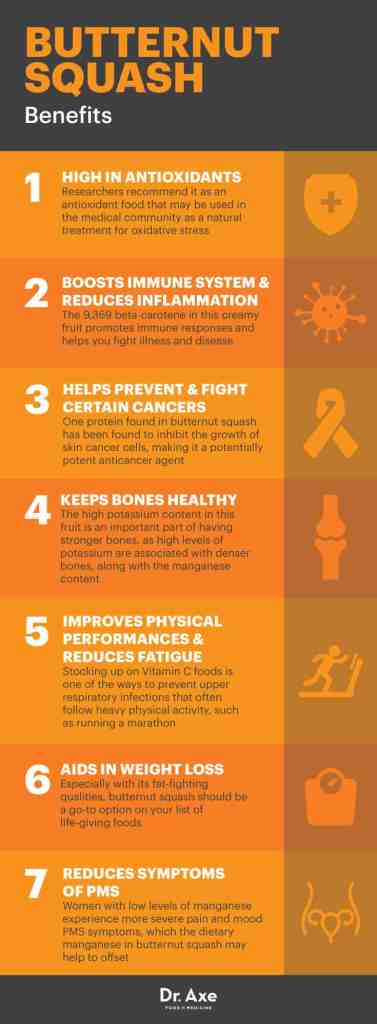
https://www.sciencedaily.com/releases/2015/05/150511124849.htm

*** An example of the effect of processing food is wheat flour, which can be standard milled at high speeds with metal discs (the flour reaches a high temperature which will have denatured some of the bioactive compounds found within the flour, often then vitamins are then replaced in the flour as an “additive”) or it can stoneground (where there is a small temperature increase in process and little is denatured in the process). It is interesting to note that it is more difficult to create a sourdough starter from an intensively grown standard milled wheat than it is from an organic stoneground wheat, which it is relatively easy to create an active sourdough starter.

Emma Mills – mindful meditation and food

I have just stumbled across online: “RELISH – The Complete Guide To Mindful Eating From Emma Mills”, which is an online programme. Emma Mills is a meditation, mindfulness and wellbeing author. Her website looks very interesting, and she has many blog entries on mindful eating. I will update this section when I have had time to explore some of her writing. https://www.emmamillslondon.com/category/food-cooking/

Fermenting foods

Update on the wholewheat sourdough starter from the last blog entry (Days 2-4):

Day 2 – gluten becoming more stretchy. Added 30g flour and 30g water.
Day 3 – quite a few bubbles. Smells fruity? Perhaps a little more like nail polish remover.
Likely to be too much lactic acid from the bacteria, inhibiting the yeast growth. Added 45g flour and 45g water

Day 4 – I think it had risen and then as the yeasts had exhausted sugars in the flour, it had fallen before 24 hours.
Removed all but 165g sourdough starter, added 90g flour and 45 g of water. Thickening up to be more like bread dough consistancy.

Spiced rosemary roasted nuts
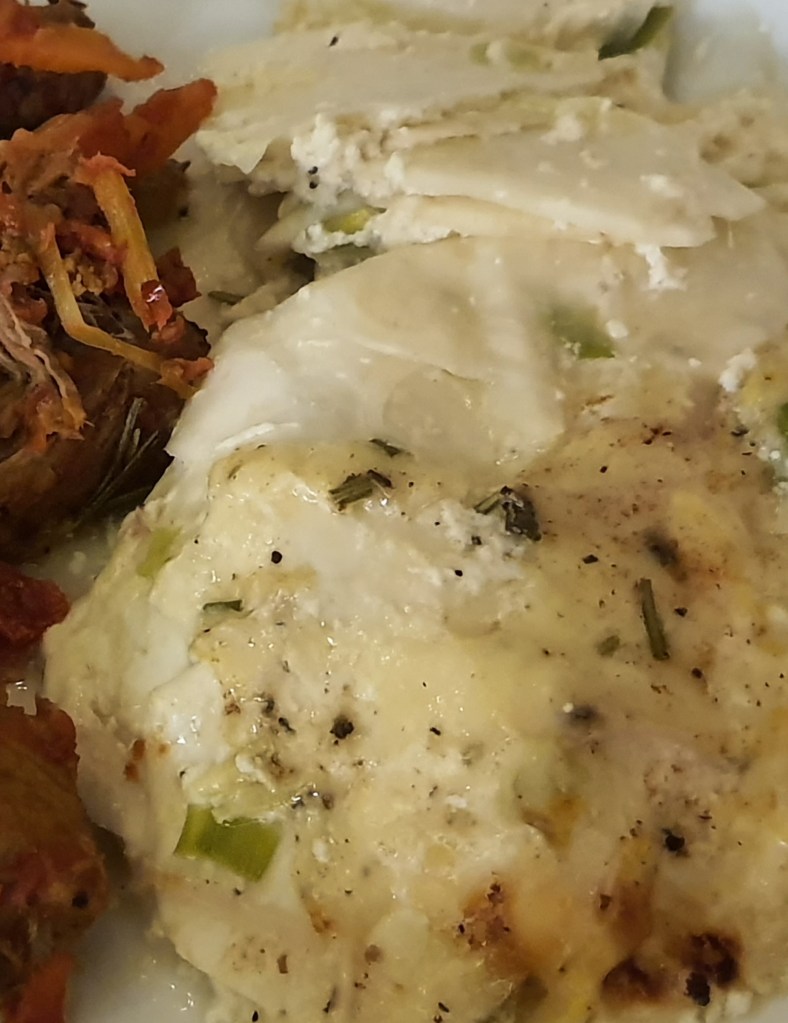
Add a few to a salad for flavour (protein or fat), or eat with an omelette.

  • 1 heaped cup (approx 150g) of unsalted raw nuts – whatever mix you like. (I used my own mix of almond, pistachio, macadamia, walnut and cashew)
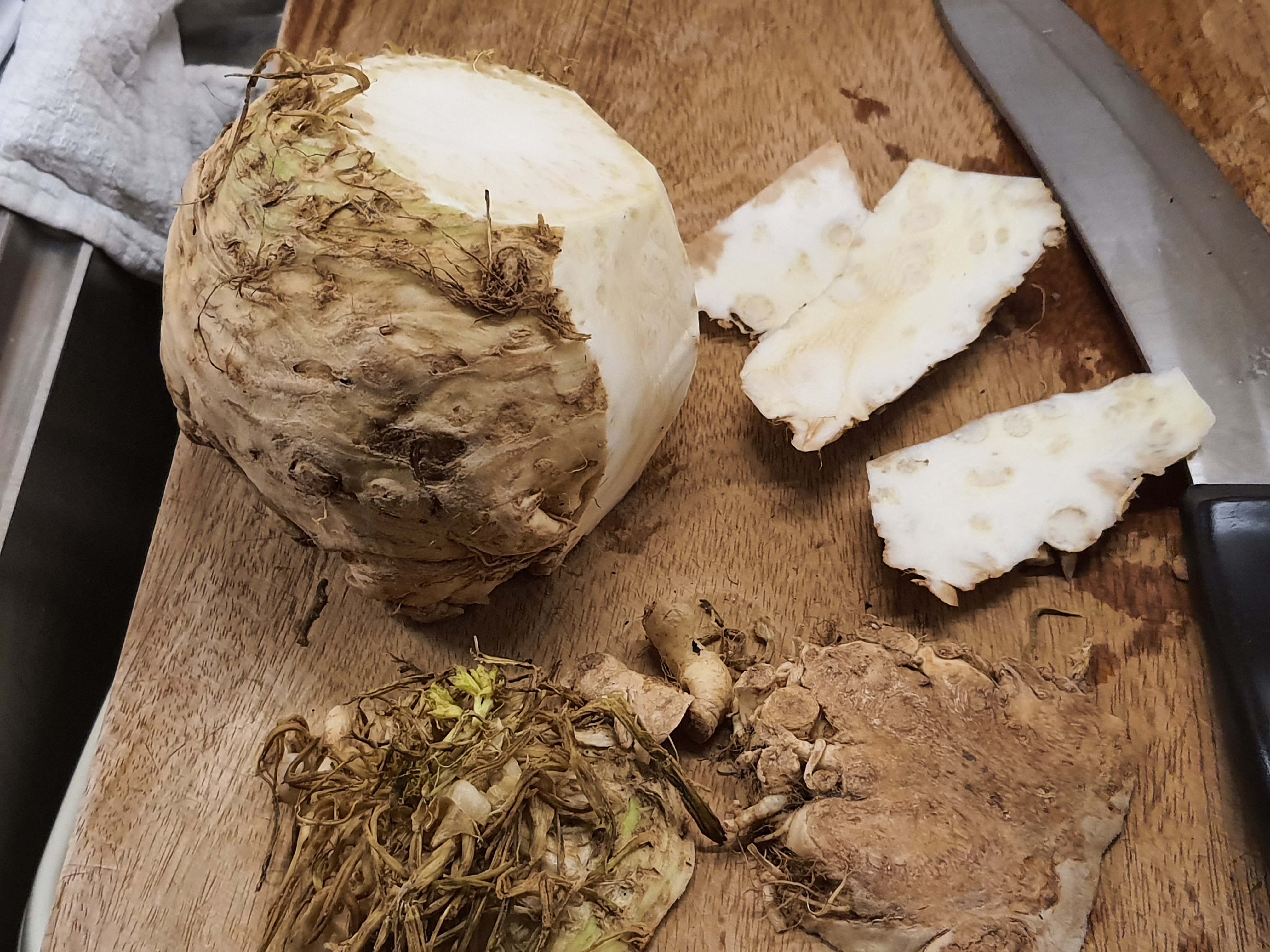
  • 1 Tbsp unsalted butter
  • 1 Tbsp (heaped) fresh chopped rosemary (plus few sprigs for the tray)
  • 1-2 tsp soft brown sugar or maple syrup
  • 1 tsp ground cumin
  • 1/2 tsp nigella seeds (optional)
  • 1/2 tsp garlic granules
  • 1/2 tsp sea salt
  • 1/4 tsp cayenne pepper
  • 1/4 tsp freshly ground black pepper

Variations: you could use whatever spices you like, more or less of them (to personal taste) or add seeds to the mix

Preheat oven to 180oC

  • Mix together nuts, spices and sugar (if using).
  • Heat butter until melted in microwave (or pan), add chopped rosemary to infuse for a minute. Then add maple syrup of using.
  • Mix butter mixture into nuts, coating everything well.
  • Place flat on baking tray with rosemary sprigs and cook for 10-15 minutes until toasted and lightly browned, turning once or twice during the time.
  • Cool on tray for 15 mins, turning occasionally.

Keeps well in an airtight tin.

And finally… our beautiful friend can happily have their cake and eat it now.

Rhubarb and the Zester

Rhubarb (Rheum hybridum)

Rhubarb is a versatile vegetable.  In my opinion it is also handsome, delicious and eagerly anticipated. Technically it is a vegetable, although in 1947 New York it was legally declared to be a fruit. There is a wealth of recipes for ways to prepare it, way beyond rhubarb crumble; sweet, savoury and alcoholic.  I have very much enjoyed rhubarb with mackerel and I bet it’s delcious with duck instead of plum sauce. This lamb recipe just looks beautiful: www.bbcgoodfood.com/recipes/russian-shashlik-rhubarb-sauce. Can’t wait for my second helping of rhubarb and ginger compote for my breakfast this morning.

This is actually my sister’s rhurbab plant in Yorksshire, as it has a little mor substance than ours does this year!

Mary Prior (historian) describes in her book Rhubarbaria: Recipes for Rhubarb:  “From its home in the northern climes of Asia – Mongolia, Siberia and the foothills of the Himalayas – rhubarb came first to Europe in classical times as a dried root with medicinal qualities. Thus was it was initially proposed to a British public. ‘It purifieth the bloud and makes yong wenches look faire and cherry-like, ‘ says Gerard in his Herbal in 1597. It wasn’t until the 18th century that the fruit or vegetable was introduced to English tables” from whence it became a quintessentially British flavour.
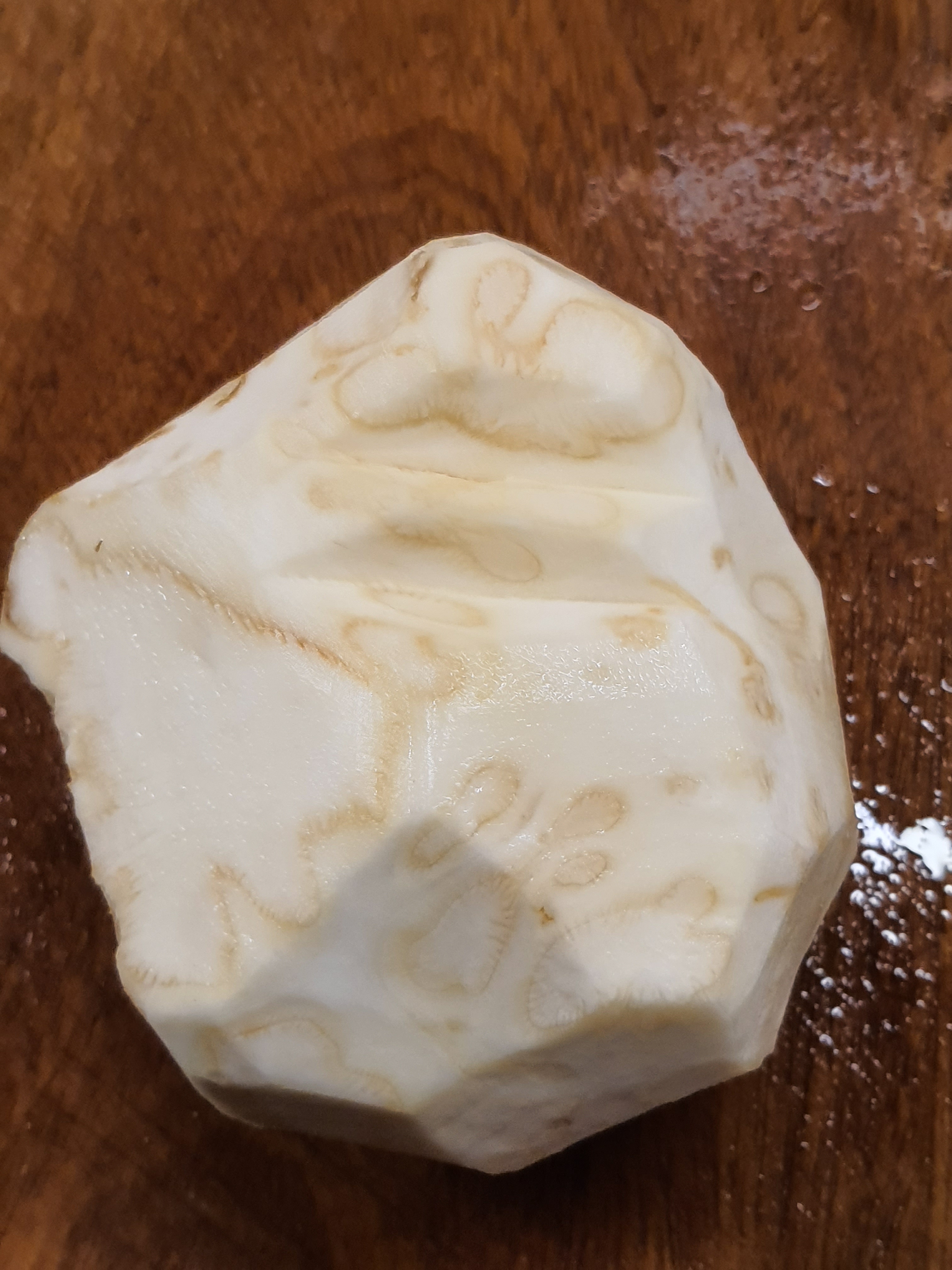
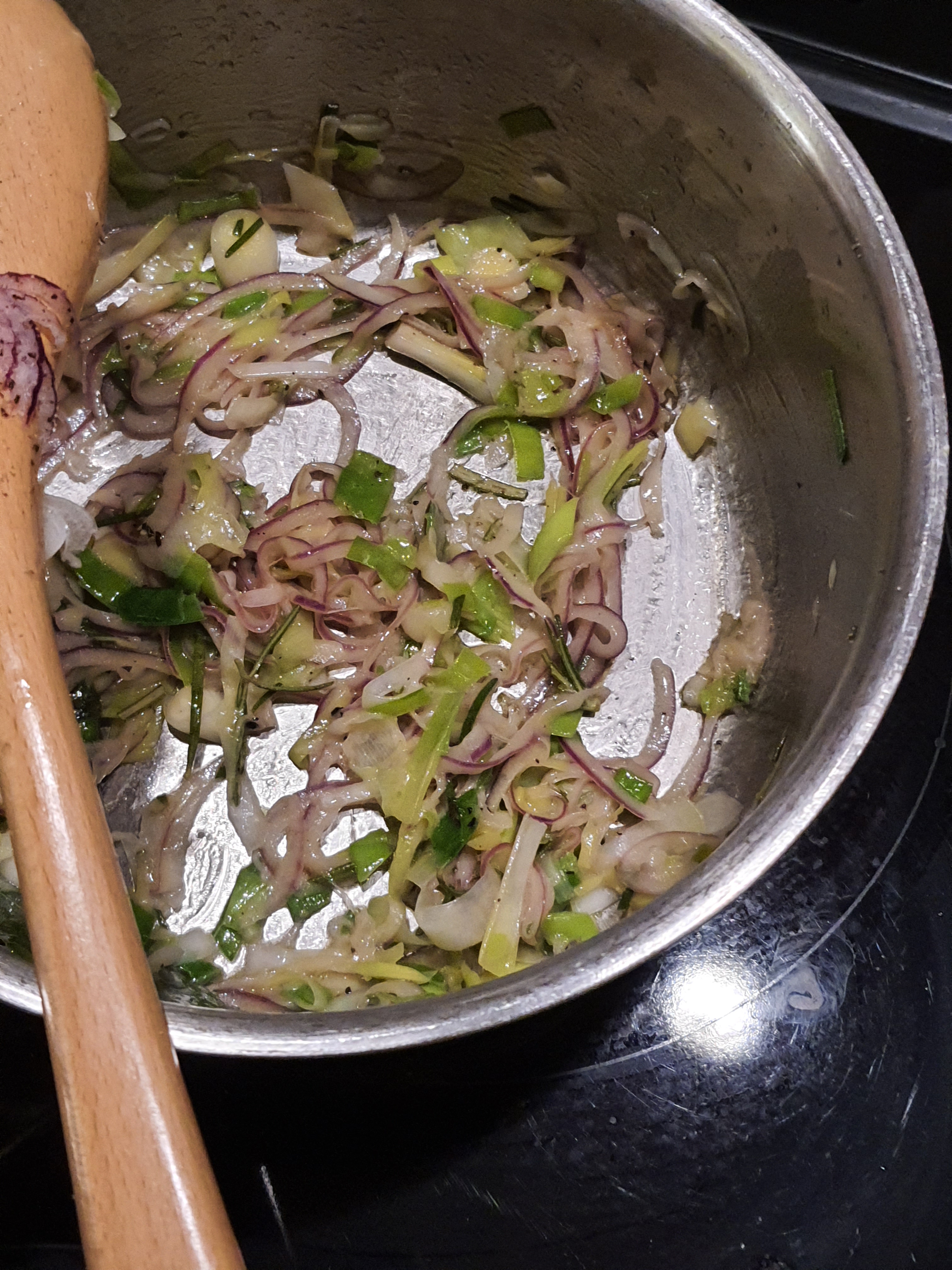
Rhubarb is a perennial plant.  It is very easy to grow, just needs a decent slot in the garden somewhere – it may spread up to a metre. It’s rather ornamental, so it could go almost anywhere in the garden. I’ve seen photos of it inter-planted with pulmonaria, which was pretty. It prefers full sun – but will thrive in semi-shade. Once planted, it is best to leave picking for a year, so that the plant’s roots can build strength. My rhubarb plant is a ‘Timperley Early’ variety and these stalks can be pulled from March until June.  Apparently, it is best to harvest the stalks by pull and twist, rather than cutting, as it invigorates the root to produce more stems. There are other varieties that will begin growing later and keep going until August. I tried to force mine last year, by covering the plant as it re-emerged in February.  ‘Forcing’ blanches the stems, making them sweeter and more tender.  However, the plant then benefits from a year’s recovery.  It is probably part of the reason why mine is sadly rather spindly this year, but it may be that it has become increasingly shaded by the tree under which it is growing … and I suspect it also needs a really good feed with some compost (and coffee grounds) and a quality manure. Rhubarb is very nitrogen hungry.
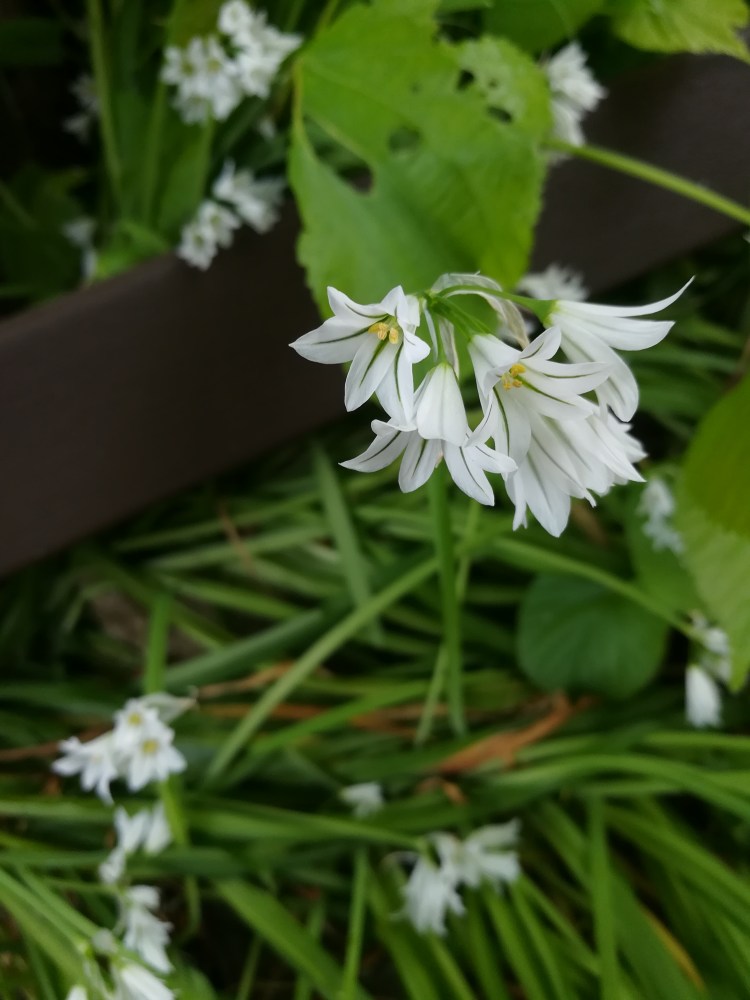
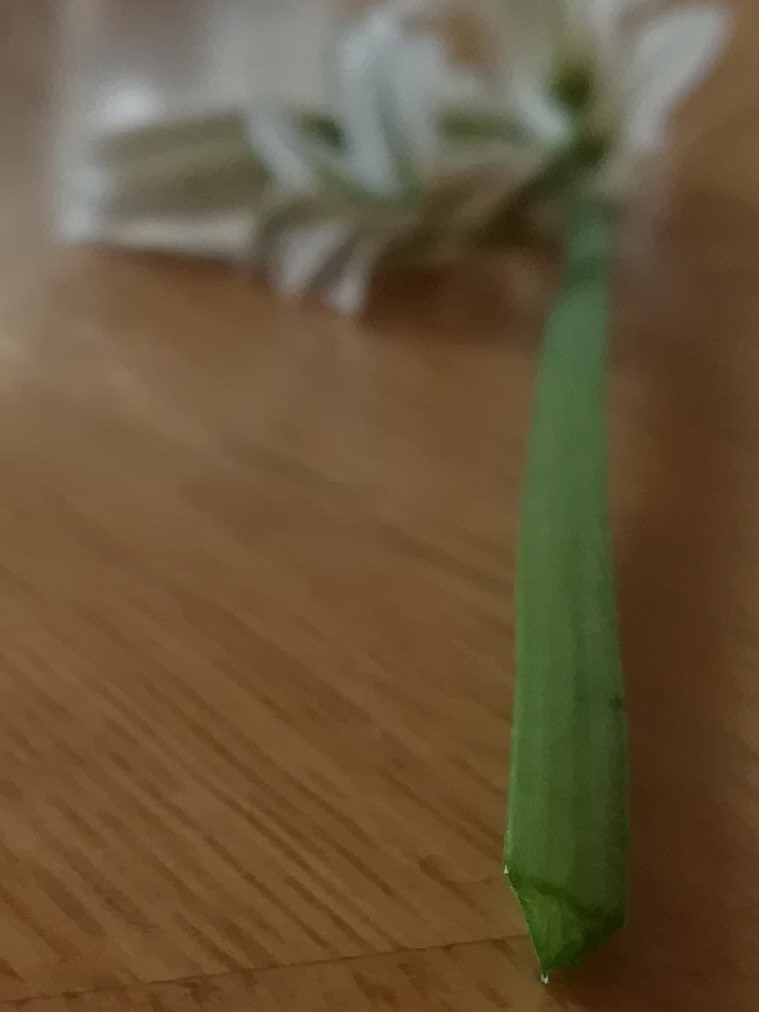
The leaf stalks and flowers are the only edible parts of the plant. The leaves are poisonous, containing high levels of oxalic acid, which can affect calcium metabolism if eaten in huge quantities. The almost open flowers are considered a delicacy in the Far East and are lightly fried (apparently easily overcooked). I didn’t know that until this week, so my son and I tried our small flower stir-fried. It was pleasant; not overly sour with a slightly lemony tang. However, if you let the plant flower it will use its energy to create seeds and the plant will produce less stems. So, it’s best to pick them off when you see them. The tiny individual flowers that make up the rhubarb flower head do not contain any oxalic acid, the substance that makes rhubarb so sour, but the flower stem does. The stem is a branching structure that goes right inside the head so it’s impossible to get it all out, but if you just cut off the most accessible bits, the small leaves and the papery bract which surrounds the flower head, you’ll have got rid of most of it.

https://scottishforestgarden.wordpress.com/2013/05/08/eating-rhubarb-flowers/

Plants For A Future. A fantastic resource and information centre for edible and otherwise useful plants: PFAF.org. It is a charity based in Devon. I use it to check out every unusual plant that I might be considering eating. Listing for Garden Rhubarb: https://pfaf.org/user/Plant.aspx?LatinName=Rheum+rhaponticum

Nutritional Information (USDA data)

Rhubarb (raw)

100g contains:

  • 21 calories
  • 4.5 g carbohydrates
  • 0.9 g protein
  • 0.2 g fat
  • 1.8 g fibre
  • 35.7 micrograms vitamin K (24%) – much needed healthy bones
  • 8 mg vitamin C 
  • 0.2 mg manganese 
  • 86 mg calcium (although not very bioavailable)
  • 288 mg potassium 
  • 12 mg magnesium

Rhubarb also has high antioxidant properties. It is very rich in many compounds that have a pro-health effect on the human body. Polyphenols are natural plant substances that can be an important component in the prevention of various diseases.   Research seems to show that polyphenol levels do vary between varieties and the point in the season when the stalks are picked. Interestingly, research has also shown that polyphenol content is generally greater in cooked rhubarb than raw rhubarb. In this study the highest polyphenol levels were found in slow-cooked and baked rhubarb.

https://doi.org/10.1016/j.foodchem.2009.07.030

Recipes:

Compote of roasted rhubarb, cardamom and ginger with orange

(A hybrid recipe – which I guess makes it one of mine!)

I washed and chopped 6 sticks of rhubarb into chunks. Added 3 balls of stem ginger, the zest and juice of an orange and 4 cardamom pods lightly split open, 3 small scoops of butter and a Tbsp of dark brown muscovado sugar. Covered the dish.

Baked in oven 190°C for 15 mins.

I added one sliced orange with all peel, outer pith and seeds removed.

Baked uncovered for another 10 mins, until the rhubarb was soft (will depend on the thickness of your stems – mine were rather thin).

Oat and almond crunch topping

“Approximately” 2 Tbsp rolled oats and 1 Tbsp ground almonds. Mixed with 2-3 Tbsp of the cooked juice from the rhubarb mix. You could add a little coconut oil (dessert spoon) if you wanted, I didn’t. I added 1tsp ground cardamom and a decent shake (what was left!) in the packet of flaked almonds. But you could equally well add a different nut or spice, or neither. Cardamom is thought to complement rhubarb, and I happen to love cardamom.

Roasted for about 10 mins at 180°C until nicely browned; I added the flaked almonds after 5 mins and a stir.

To serve: creme fraiche or plain yoghurt and perhaps some zest of an orange.

The Zester

The zester is one of my favorite tools in the kitchen.

Lemon, lime, orange, grapefruit – zest is a fabulous lift to many a meal or garnish a zing for a salad or breakfast yoghurt.

I love my zester, but this is an example of very poor ergonomic use of one. Only photo in focus, so a “how not to” hurt your hand with repetition photo!

Fermenting foods

I plan to explain why fermented foods are so good for you in later blog posts.  Fermented foods need time to develop themselves and their flavours, by harnessing the creative powers of friendly microbes all around. When things are bubbling, the photographs will be much more interesting.

So before I go into any more details, I thought I’d start off a Wholewheat Sourdough Starter with the friendly microbes present in flour.

Wholewheat Sourdough Starter – Day 1
30g wholewheat flour,
30g water,
Stir.
Cover.
Put in airing cupboard.

I like to use a stoneground organic wholewheat flour, which is thought to have a high amounts of yeasts and to start the sourdough I use a bottle of mineral water, to avoid the added chlorine which might affect the natural yeasts before they have multiplied. But it will very likely work with conventional flour and tap water – there are as many opinions of how to start a starter as there are microbes available to create it!

Resources

I have added a list of books that I have enjoyed to the Resources page on the blog – see menu.

Design a site like this with WordPress.com
Get started