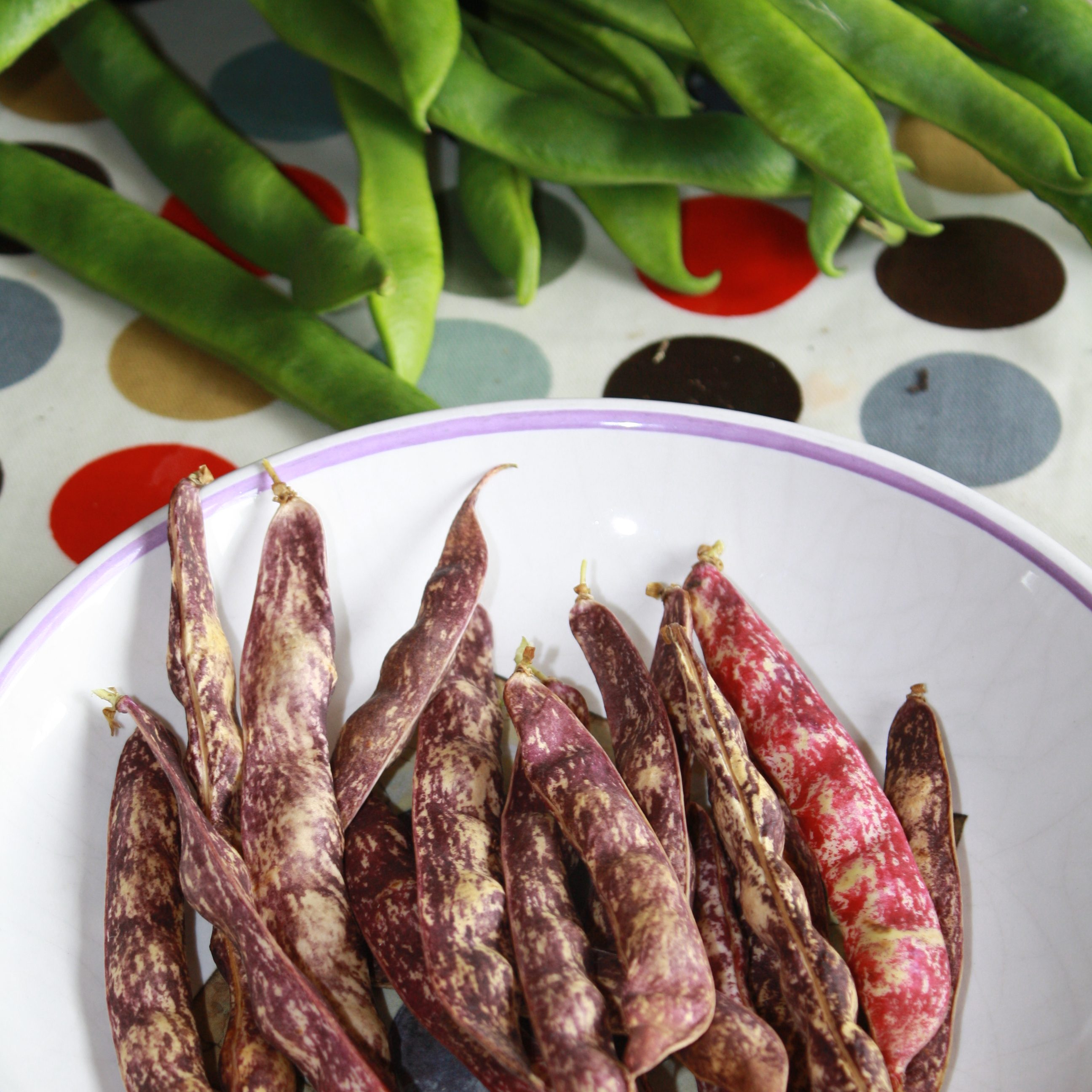
Catch up day … continuing on from January 1-31 … Days 32 and 33
So this challenge of mine is evolving. From 31 vegetables in January to 365 Plants in 2021. The rules of the challenge are still rather fluid. I decided to write down every plant I could think of, to get some sort of seasonal structure in place – and was astounded exactly how many 365 really was! After much searching and seeking of advice I have come up with a list from which to draw inspiration. A vague plan for seasonality, planting, foraging and when it’s acceptable (in my head) to buy air-freighted exotic fruit, vegeables and spices. I suspect my rules are entirely a ‘moveable feast’.
Do I allow different varieties of potato or apples … can I use the flower of a plant, the body of the same plant and its seeds on the separate days over the year … does it have to have a separate scientific name (I’ve used three variations of brassica oleracea already!). They I decided perhaps they could have a separate entry if they would be labelled differently at the supermarket – except perhaps for something with a flower that is edible and I enjoy both flower and plant – and then maybe root …
It’s all rather Mad Hatter’s Tea Party!
*Rules to be concluded on 31/12/21*
I’ve been posting daily on Facebook all year, but now I’m intending to venture into the worlds of Twitter and Instagram! It’s all rather exciting. Every day starts with “what’s today about?” On Friday “today’s plant” swapped at 4pm when I decided the quince I was cooking with wasn’t that exciting. I had an old quince that wasn’t even turning pink with poaching- so perhaps it would be better to wait for the autumn and the quince’s season.
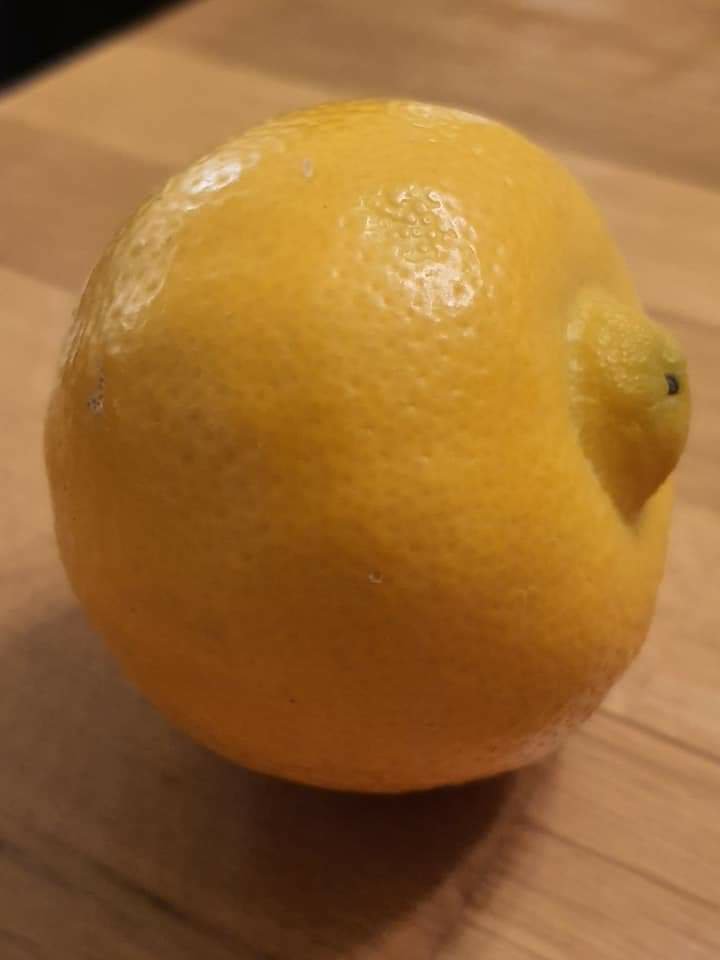
Day 32 – Bergamot orange
Citrus bergamia.
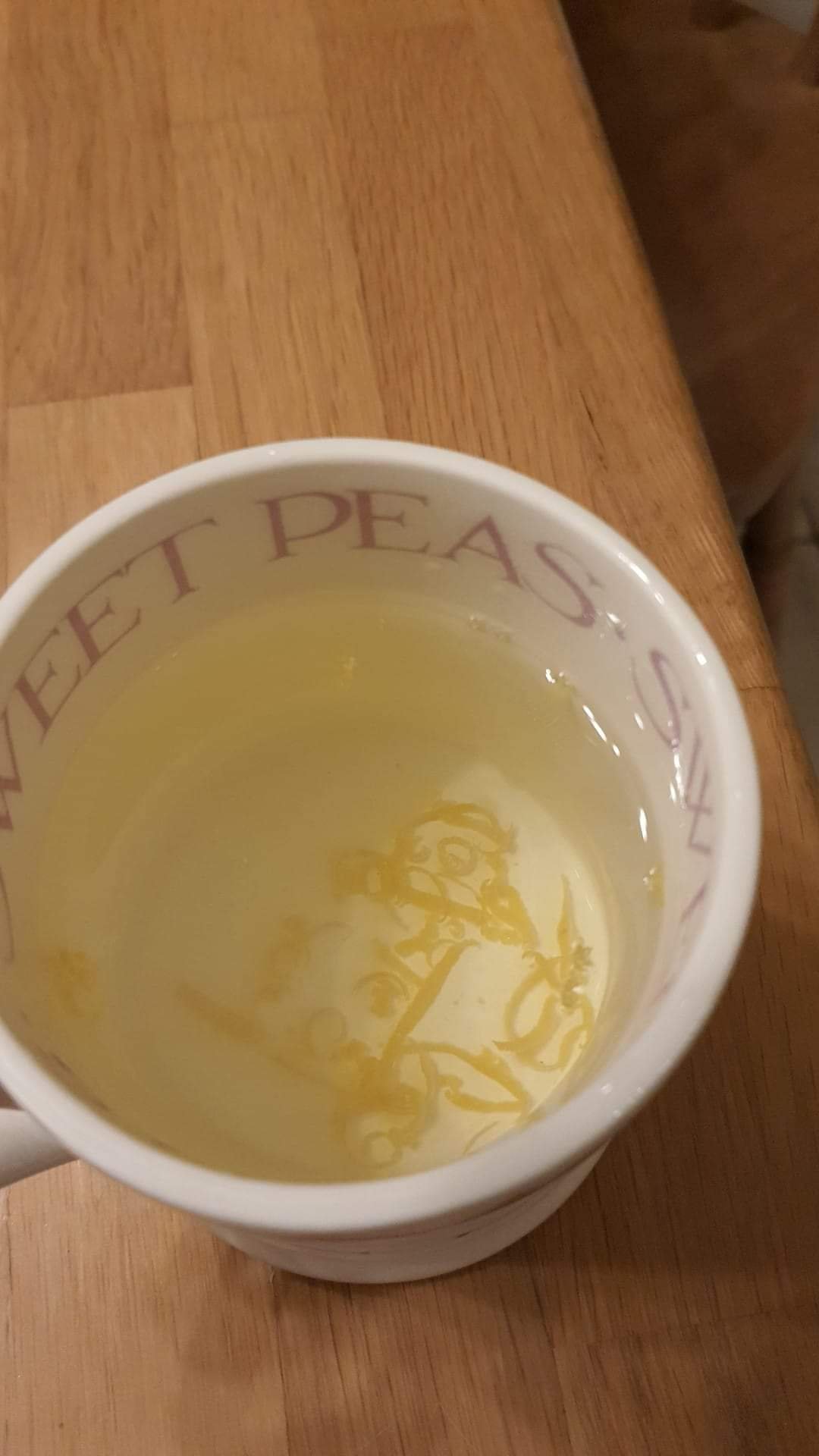
Zest and juice, as a hot drink.
One of the delights of cold winter months, as in season November-February. Smells amazing. I first came across them 5+ years ago.
Due to its bitterness, the fruit of the bergamot itself is not generally used directly in cooking, but rather the rind or the juice as flavouring. The moment you release the oils in the zest, the scent evokes Earl Grey tea (a black Chinese tea leaves from the Camellia sinensis flavoured with bergamot oil). The actual origin of Earl Grey tea are a little hazy but Howick Hall tell the story the tea was a custom blend by a Chinese mandarin to compliment the 2nd Earl Grey’s well water on his estate, Howick. Accordingly, the tea master used bergamot in the recipe to soften the taste of lime that was in the water. The Earl’s wife, Lady Grey, began serving the Chinese tea master’s new recipe exclusively when she entertained as a political hostess. This was quickly followed by her asking British merchants in London if it could be recreated and marketed to London society who adored the recipe and then made it famous
I was rather interested in this research to learn how often the perfume industry also uses the essential oil of bergamot. In fact it is a key ingredient in Eau de Cologne – a spirit-citrus perfume launched in Cologne in 1709 by Giovanni Maria Farina, an Italian perfume maker from Santa Maria Maggiore Valle Vigezzo. In 1708, Farina wrote to his brother Jean Baptiste: “I have found a fragrance that reminds me of an Italian spring morning, of mountain daffodils and orange blossoms after the rain”. He named his fragrance Eau de Cologne, in honour of his new hometown.
Bergamot is a citrus fruit mostly grown in orchards that lie on the Ionian coast in the province of Reggio Calabria in the south of Italy. The fruit grown in this microclimate has been awarded Protected Designation of Origin status (PDO) and it is where around 80% of all bergamot oranges are grown. How the first bergamot trees arrived in Italy is shrouded in speculation – possibly originally brought over from Persia by traders in the 1400s. Other scholars believe that the home of bergamot is China or Spain or Greece or even the city of Pergamum in Asia Minor from which the name of the plant would derive and now nearby to the modern city of Bergama, Turkey. Some think that the most likely origin of its name is “beg – armundi”, a Turkish word meaning ” Lord’s pear”, due to the pear-like shape of the bergamot fruit. It is thought to have been a hybrid of the bitter orange and lime. It grows green and then turns yellow as it ripens.
The bergamot orange is still grown in Turkey, in Antalya in southern Turkey for its marmalade and also in southern France and the Ivory Coast for the essential oil. The fruit is not generally grown for juice consumption. However, in Mauritius where it is grown on a small-scale basis, it is largely consumed as juice by the locals.
Which rather intrigued me and lead me to convoluted speculation in the small hours. In short, could my great great great great grandfather James Duncan of Aberdeenshire (who worked as a gardener at Howick Hall in Northumberland for the 2nd and 3rd Earl Grey before being recommended by the 3rd Earl Grey to the British Governor of Mauritius to take up the role of Director of the Royal Botanic Gardens, Pamplemousses in 1849 – restoring the former French garden glory and creating one of the largest and most important botanic gardens in Asia – strategic to the British Empire as a place to grow a spare plant route home from exploration in Asia) … possibly have anything to do with the small scale farming of bergamot oranges in Mauritius considering his connection with Earl Grey …
But then, to my delight and surprise, to discover yet again another plant with magical properties!! The very bitter flavour of bergamot is the natural compound citrus polyphenol, which has been shown to benefit the cardiovascular system when taken in high doses. Two compounds in bergamot, brutieridin and meltidin, have been studied for their statin-like effects. Both are classified as flavone glycosides, a group of natural antioxidant compounds that typically occur in small amounts in various plants, from fruits and vegetables to herbs. As a class, the flavone glycosides show a lot of beneficial activity; some are known to fight cancer, others appear to enhance brain function. This category of natural compounds is attracting increasing scientific attention.
“Statin-like Principles of Bergamot Fruit (Citrus bergamia): Isolation of 3-Hydroxymethylglutaryl Flavonoid Glycosides”
The American Chemical Society and American Society of Pharmacognosy
J. Nat. Prod. 2009, 72, 7, 1352–1354
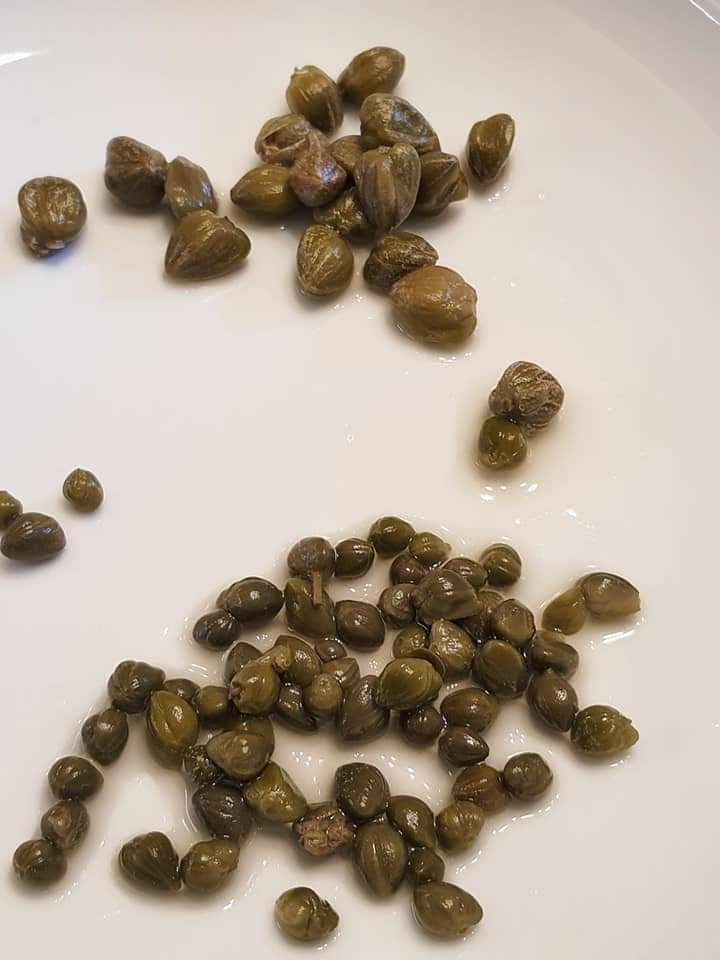
Day 33 – Capers
Capparis spinosa
Linguine alla puttanesca.
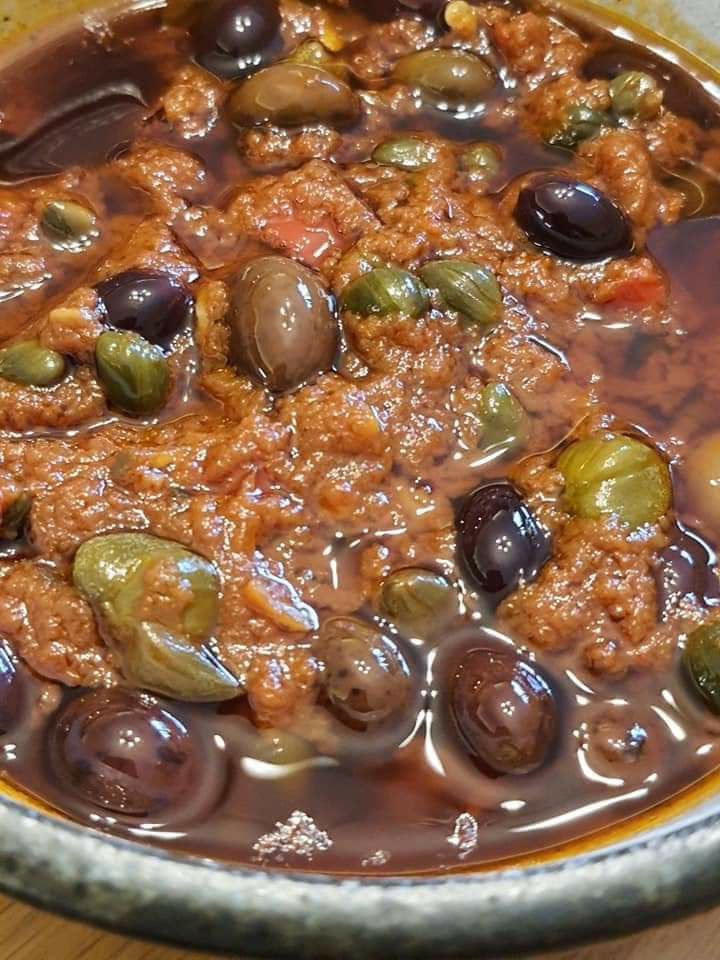
To caper” is defined in the Cambridge dictionary as “to run and jump about in an energetic, happy way”… the zing of pungent yet sprightly capers!
Capers are the pickled small flower buds of the Capparis shrub, also know as Flinders rose, which grows wild in the Mediterranean region and some parts of Asia. They are cultivated in many countries including France, Spain, Italy, Morocco, Algeria as well as in Asia and Australia. The Capparis shrub is a prickly perennial plant that bears rounded, fleshy leaves and large white to pinkish-white flowers. It grow vigorously in poor, rocky, well-drained soil – in hot, arid or semi-arid areas that provide plenty of sun (usually on the sea coast).They find a home in the cracks and crevices of stone pathways and walls (such as in the Wailing Wall in Jerusalem!).
The immature flowers buds are the most valuable part of the plant. Buds must be handpicked and harvested just before blooming.They’re too small and delicate to be plucked by machine, so they’re harvested individually; the bushes visited every 10 to 12 days to catch the individual flower buds in the optimum stage of ripeness – which is what makes them so expensive. After being picked, they are washed and sun-dried, then pickled in vinegar, brine, oil, wine, or coarse sea salt. These curing processes not only preserve capers but brings out their flavour. Like olives, capers are unpalatable fresh, so they need to be cured to be enjoyed.
Smaller flower buds have a better flavour and they are more expensive than large, more strongly flavoured flower buds. French capers are said to have a more peppery flavor and are most frequently cured in vinegar. Sicily is considered to produce the best capers in the world; prized for having superior flavour and texture attributed to the rich volcanic soil in which they grow. On the southern Italian islands famous for their capers, such as Pantelleria and Salina, capers are cured exclusively in sea salt.
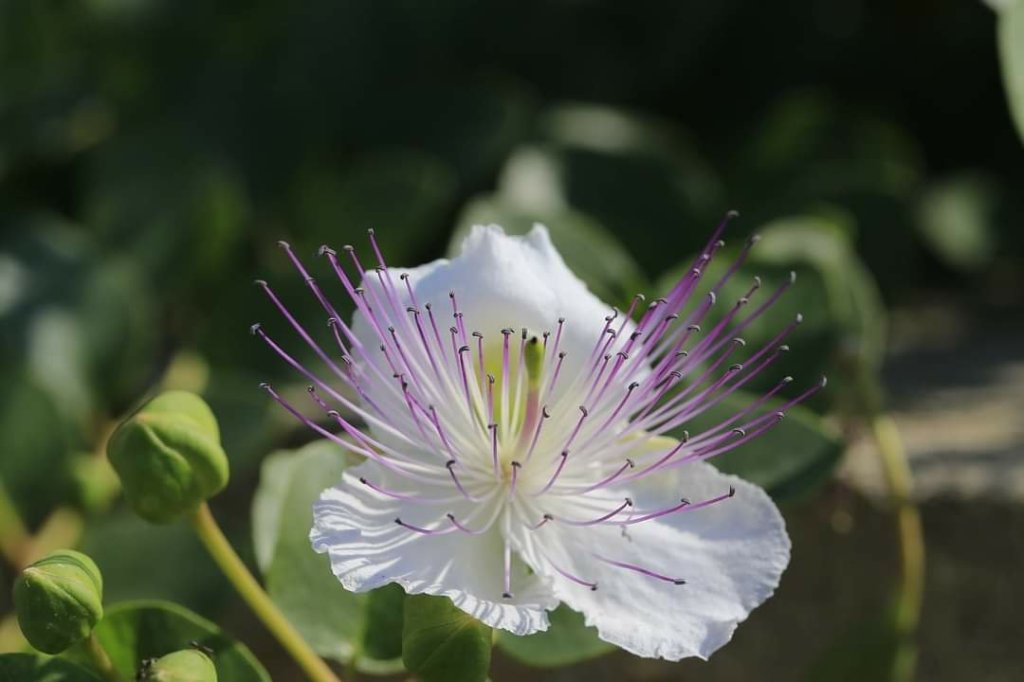
Caper flowers are beautiful with delicate white petals that surround an eruption of purple stamens but are short-lived, lasting only a few hours on the vine before wilting. When the immature bud is not picked, it eventually develops into the caperberry fruit. The berry is larger than the biggest caper, about the size of an olive, and attached to a long, cherry-like stem. Caperberries are an olive green. Each berry contains 200 to 300 tiny seed. They are often presented alongside cured meats or fish on a tapas plate in Spain.
Capers are categorized and sold by their size, defined as follows, with the smallest sizes being the most desirable: non-pareil (up to 7 mm), surfines (7–8 mm), capucines (8–9 mm), capotes (9–11 mm), fines (11–13 mm), and grusas (14+ mm). Larger capers are stronger in flavour and more acidic.
Capers are most often associated with Mediterranean cuisines, but enjoyed worldwide for the distinctive piquant burst of flavour and texture. They are added to a great variety of recipes, including pasta, stews and sauces (such as the very necessary tartare sauce). They’re also cooked with roasted vegetables (Ottolenghi does a lovely one) and a variety of main dishes and as a pizza topping. The burst of salt and acid is a great complement to fish, especially rich ones such as salmon, as well as lamb.
Its culinary use dates back thousands of years, where it’s mentioned as a food in the Sumerian Epic of Gilgamesh, (possibly the oldest written story known, which was found on ancient Sumarian clay tablets and which date back to c. 2700 B.C.). They are also mentioned by Apicus, a Roman who is said to have written the very first cookery book in the 1st Century and by Dioscorides (c.40-90 AD), a pharmacologist who served as a surgeon in Nero’s armies as a “marketable product of ancient Greeks”.
The caper bush is distantly related to the cabbage family and has its pungent sulphur compounds. Capers contain isothiocyanates, the compound that gives cress, mustard and horseradish its bite and they share the same peppery, mustardy flavor. Capers are one of the highest plant sources of flavonoid compounds rutin (or rutoside) and quercetin. These, amongst other compounds isolated from immature buds of the Caparis shrub, have anti-bacterial, anti-inflammatory and analgesic properties. The spicy buds contain healthy levels of vitamins such as vitamin-A, vitamin-K, niacin, and riboflavin. Furthermore, minerals like calcium, iron, and copper are present in sufficient amounts in them. Capers have numerous health benefits and have been valued for these properties since ancient times. Ancient Romans and Greeks used tea made of stem and root of the caper bush in treatment of fibromyalgia and rheumatism. Caper are said to aid in digestion and reduce flatulence and have been used to treat anemia and improve the skin.
It’s just you’d have to eat quite a lot of them to get significant benefits, they are definitely an ingredient to be used in moderation (especially considering the about of salt used in the curing process!)
Capers are a distinctive ingredient in Italian cuisine, especially in Sicilian, Aeolian and southern Italian cooking. Which is why I chose to make one of my favourite pasta sauces – puttanesca. I’ve included 2 recipes below, but there are many to choose from. If you use tinned tomatoes it takes longer than the pasta cooking time to reduce, so I like to use my pre-made sofrito or passata and tomato paste. I don’t always use anchovies.
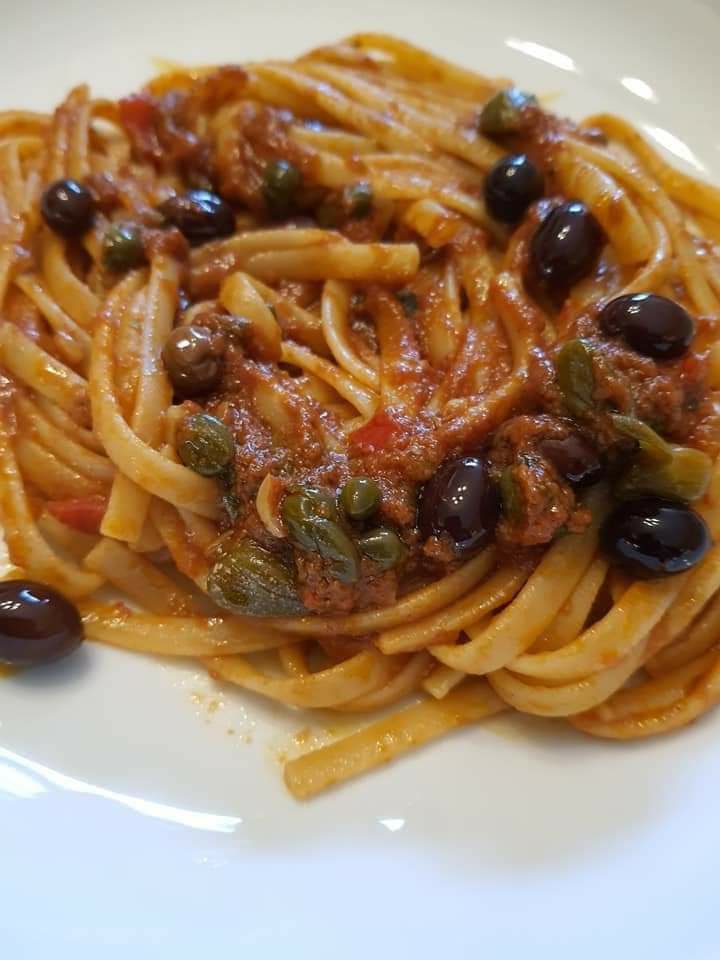
https://www.buonissimo.it/lericette/5778_Sugo_alla_puttanesca/amp/
https://www.theguardian.com/lifeandstyle/wordofmouth/2014/sep/25/how-to-cook-perfect-pasta-puttanesca-recipe
Tartare sauce has been found in cookbooks since the 19th century. The name derives from the French sauce tartare, named after the Tatars (Ancient spelling in French of the ethnic group: Tartare) from the Eurasian Steppe, who once occupied Ukraine and parts of Russia. Although it is unlikely that the Tatars ever made or consumed Tartar sauce, the actual origin of the sauce is found East of France. But I did also read that the name probably appeared as a reference to the coarse texture of the sauce—since the Tatars were known for their barbarian behaviour! The sauce was also initially served as an accompaniment to steak tartare, which is made with finely chopped raw beef or horse meat, and the dish probably influenced the origin of the name. Sauce tartare is usually served with fried fish or seafood, meat, and other types of fried dishes.
I don’t like to go on holiday without a pot of superior tartare sauce, which I present as we sit on the beach (or damp car) somewhere, eating fresh local fish and chips. I could quite probably eat the whole pot!
Resources:
https://foodprint.org/real-food/capers/p
https://www.loveandlemons.com/what-are-capers/
https://www.thespruceeats.com/what-are-capers-1807002#varieties
 Relishing Life - Eating Well
Very interesting material. You do such a good job of making everyhing interesting.
LikeLike