Mushrooms
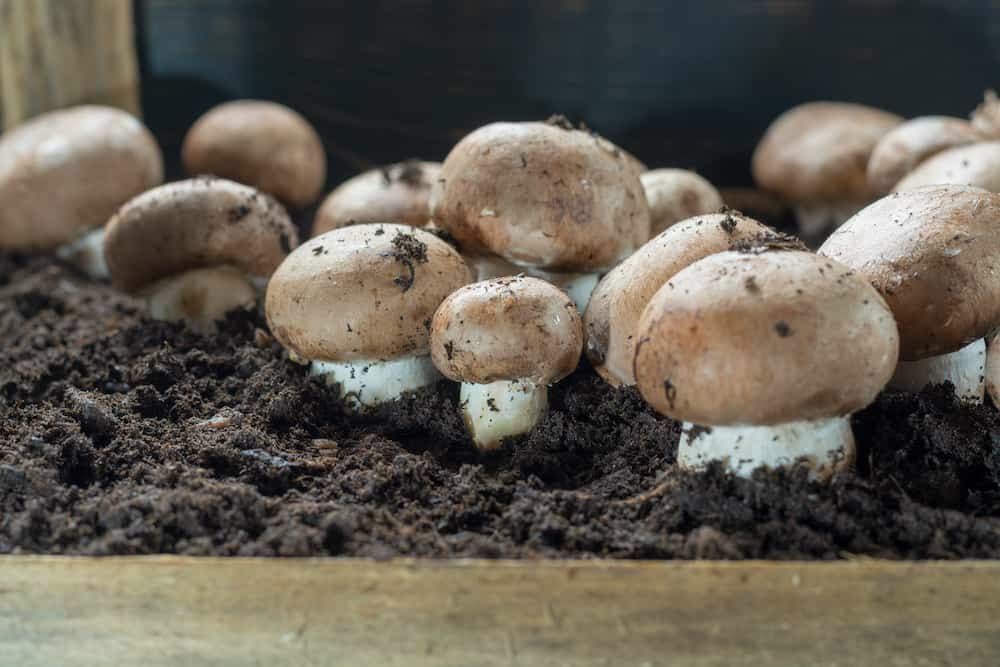
MUSHROOM
Agaricus bisporus
Mushrooms are the fleshy, spore-bearing fruiting body of a fungus.
I realise that mushrooms aren’t plants. In fact, they are more like humans than plants. “Animals and fungi share a common ancestor and branched away from plants at some point about 1.1 billion years ago. It was only later that animals and fungi separated on the genealogical tree of life, making mushrooms more closely related to humans than plants.” John Staughton.
But in cooking we use them as we would a vegetable, so for the purpose of this blog they are included alongside the other culinary “vegetables”, in all their guises!
It’s a little daunting writing about mushrooms. People dedicate their whole life to the study of them. I’ve chosen a few facts and some recipes. But I have to say I’m now drawn to know more and intend to read the two books listed below. I hope you’ll find it interesting. But for me, not only have we had two good meals, but my 8 year old son (who is really quite a restricted eater – although he is strangely drawn to bitter and sour flavours) is engaged and encouraging of my “31 Vegetable Challenge”, came with me to the greengrocer, choose all the mushrooms we bought and then helped me cook and then ate some chestnut mushrooms for the first time. He loved them and has eaten further times since. Mushrooms and omlette – two lockdown food successes in our house. And worth the time spent planning a menu and writing this blog!
The Agaricus bisporus is actually the most widely cultivated mushroom, the white button mushroom is its most common form – and seen across the world. The word “mushroom” is most often applied to those fungi that have a stem (stipe), a cap (pileus), and gills (lamellae) on the underside of the cap. However the culinary “mushroom” also describes a variety of other gilled fungi, with or without stems, therefore the term ” “mushroom” is also used to describe the fleshy fruiting bodies of some Ascomycota (such as morels, truffles or the lobster mushroom).
Commerially mushrooms are often grown in the dark (sometimes in caves and in recent times frequently with UV light to increase the level of Vitamin D within the mushroom), but there are also many locally grown or wild foraged mushrooms available to buy, which grew outdoors in soil or on another food source. You can even find your own mushroom inoculated log kits to grow your own mushrooms at home.
“Earthy and savoury, mushrooms add a special depth and heartiness to your dishes”. Riverford A-Z veg.
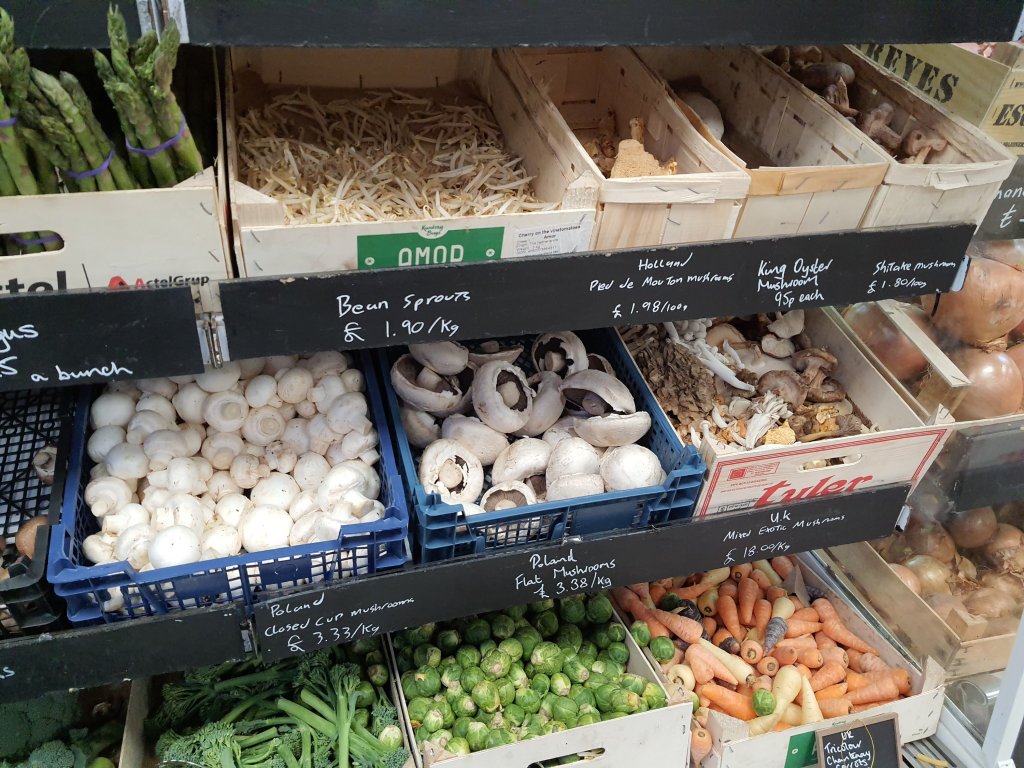
An eclectic mix of mushroom information
- According to an ancient Greek myth, Perseus on his way back from a journey, to drink the water of a river, used the “hat” of a mushroom. For that reason he founded a colony in that same spot and called it Mycene, which is the Greek word for “mushroom”.
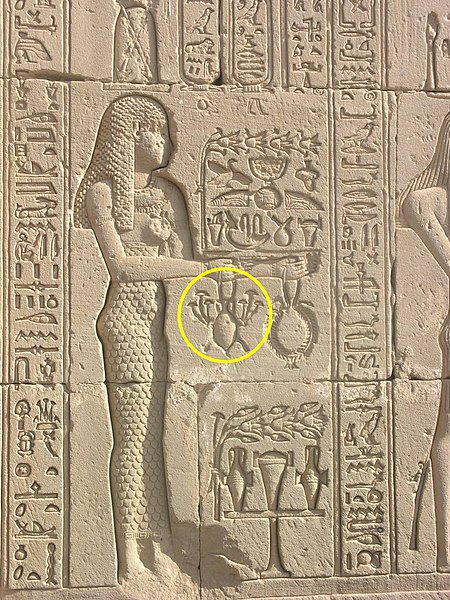
- Hieroglyphics found in the tombs of the Pharaohs suggest that the ancient Egyptians believed the mushroom to be “the plant of immortality.” The mushroom’s distinct flavor so intoxicated these demi-gods, that they decreed mushrooms to be food for royalty alone, and prohibited any commoner from handling the delicacies.
- Just as animals, mushrooms take in oxygen for their metabolism and “exhale” carbon dioxide as a waste product. And as in humans, they can produce Vitamin D upon exposure to sunlight and UV radiation.
- Mushrooms grow from spores, not seeds, and a single mature mushroom will drop as many as 16 billion spores.
- All mushrooms are fungi but not all fungi are mushrooms. And not all mushrooms are edible. The Kingdom of Fungi also includes yeasts, slime molds, rusts and several other types of related organisms. There are an estimated 1.5 to 2 million species of fungi on planet Earth, of which only about 80,000 have been properly identified. Theoretically, there are 6 species of fungi for every 1 species of green plants.
- The study of mushrooms is Mycology, the person who studies mushrooms is a Mycologist while the person who loves and eats Mushrooms is a Mycophagist. The production of food from fungi is called Fungicultutre.
- Button mushrooms are actually the same as Portobello mushrooms at just a different stage of maturity: button mushrooms, which are white, are the toddlers; cremini mushrooms, which are brown, are the teenagers; and portobellos, which are brown and much larger versions of their younger selves, are the adults.
Mushrooms, the taste of unami.
Umami is the fifth taste (unami alongside the sweet, sour, bitter, and salty taste buds). Scientists identified umami taste receptors on the human tongue in 2002; umami is an inherent taste universally enjoyed. Umami, which literally means “essence of deliciousness” in Japanese, was actually first named by Japanese scientist Dr. Kikunae Ikeda in 1908, while enjoying a bowl of kelp broth called kombu dashi.
Unami has also been described as ‘brothy’ or ‘meaty’ – or ‘true savoriness’.
When you taste umami, you taste the amino acid glutamate – part of a string of amino acids found in all proteins. Foods that contain a high level of glutamate include: mushrooms, aged cheese (eg Parmesan), marmite, tomatoes, seaweed, fermented foods such as miso or soy sauce and roasted meats – to name a few.
“Umami is everywhere; it’s not some crazy Japanese idea. You love umami and you crave umami, whether you know it or not. The foods you love, the foods that you think of as comfort foods, more often than not they are loaded with umami.” David Kasabian, “The Fifth Taste: Cooking with Umami”.
The use of glutamate in cooking has a long history. Fermented fish sauces, which are rich in glutamate, were used widely in ancient Rome. Glutamate-rich fermented barley sauces were used in medieval Byzantine and Arab cuisine, and fermented fish sauces and soy sauces have histories going back to the third century in China.
Interestingly the amniotic fluid surrounding a developing baby in utero (and by around week 16, the growing baby has developed taste receptors which allow it to sample various tastes from the mother’s amniotic fluid) as well as breast milk, both have very high levels of glutamate. So unami is significant flavour compound experienced from the very beginning!
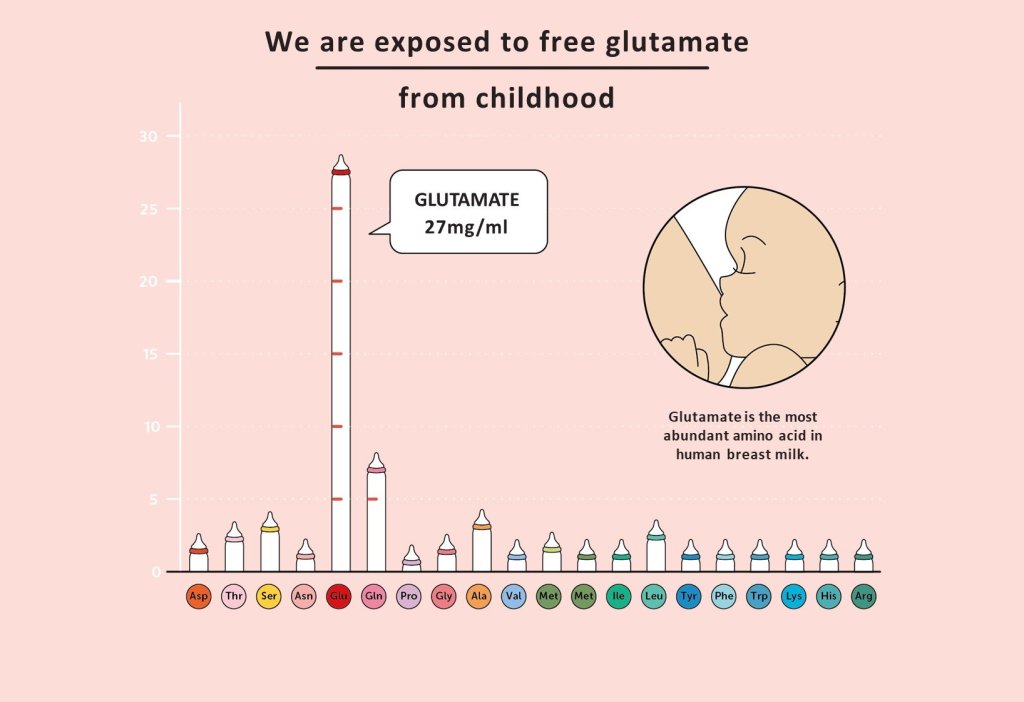
https://www.ajinomoto.com/aboutus/umami/umami-and-infants
Mushrooms have a high level of glutamate. Shitake mushrooms containing one of the highest levels, especially in their dried form at 1060mg/100g whilst common Mushrooms (agaricus bisporus), the most cultivated fungus in the world, contain 40-110 mg/100g. The umami scores in foods are found to increase due to maturation. Tomatoes and cured ham are typical of this. Due to maturation, the glutamate in tomatoes increases and reaches its highest when tomatoes turn very red. https://www.umamiinfo.com/richfood/foodstuff/mushroom.html
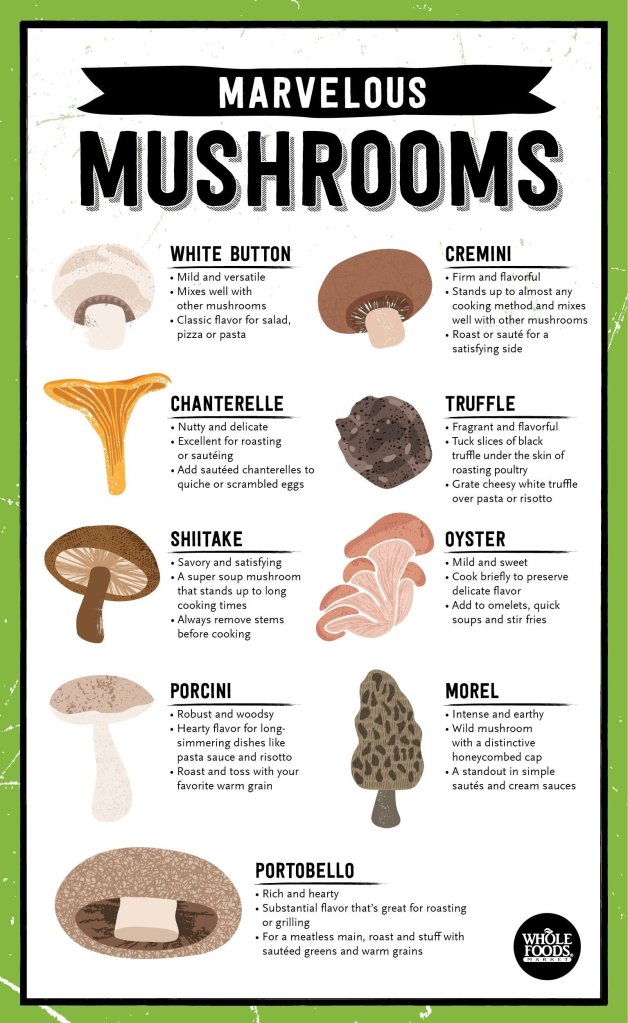
15 Different mushrooms and how to cook with them
This chart comes from an excellent webpage, highlighted above, written by Peter Basildon, with some great information and photographs to identify what you have just bought at the shop!
Recipes
Stir fried mixed exotic mushrooms, in butter and garlic
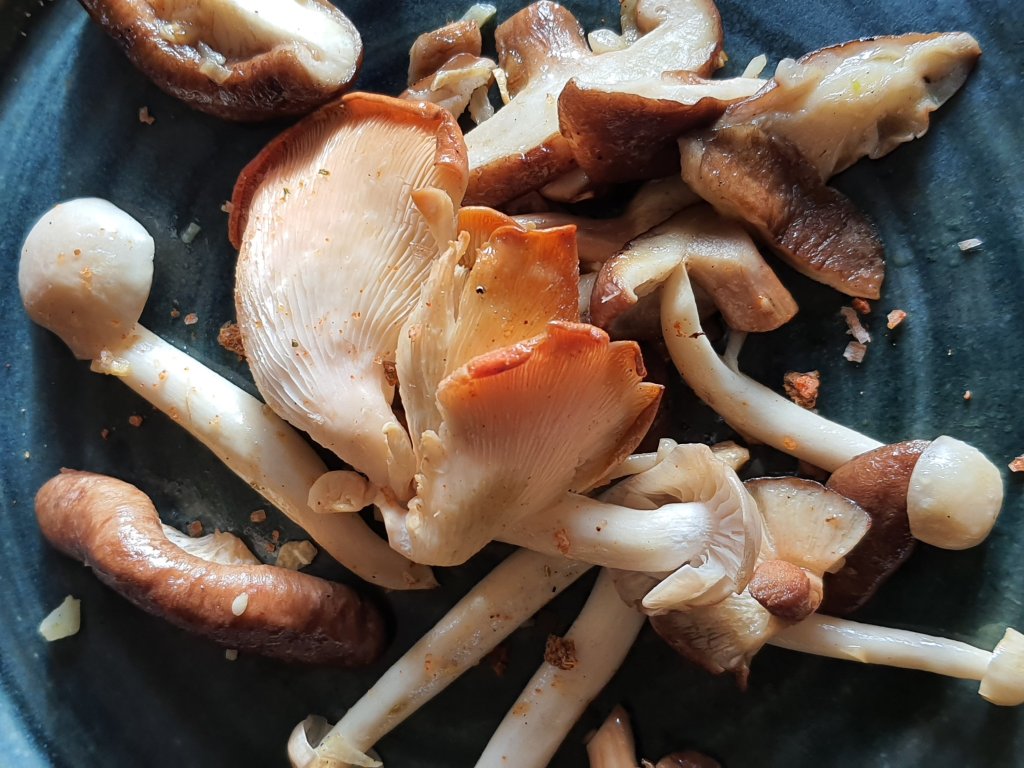
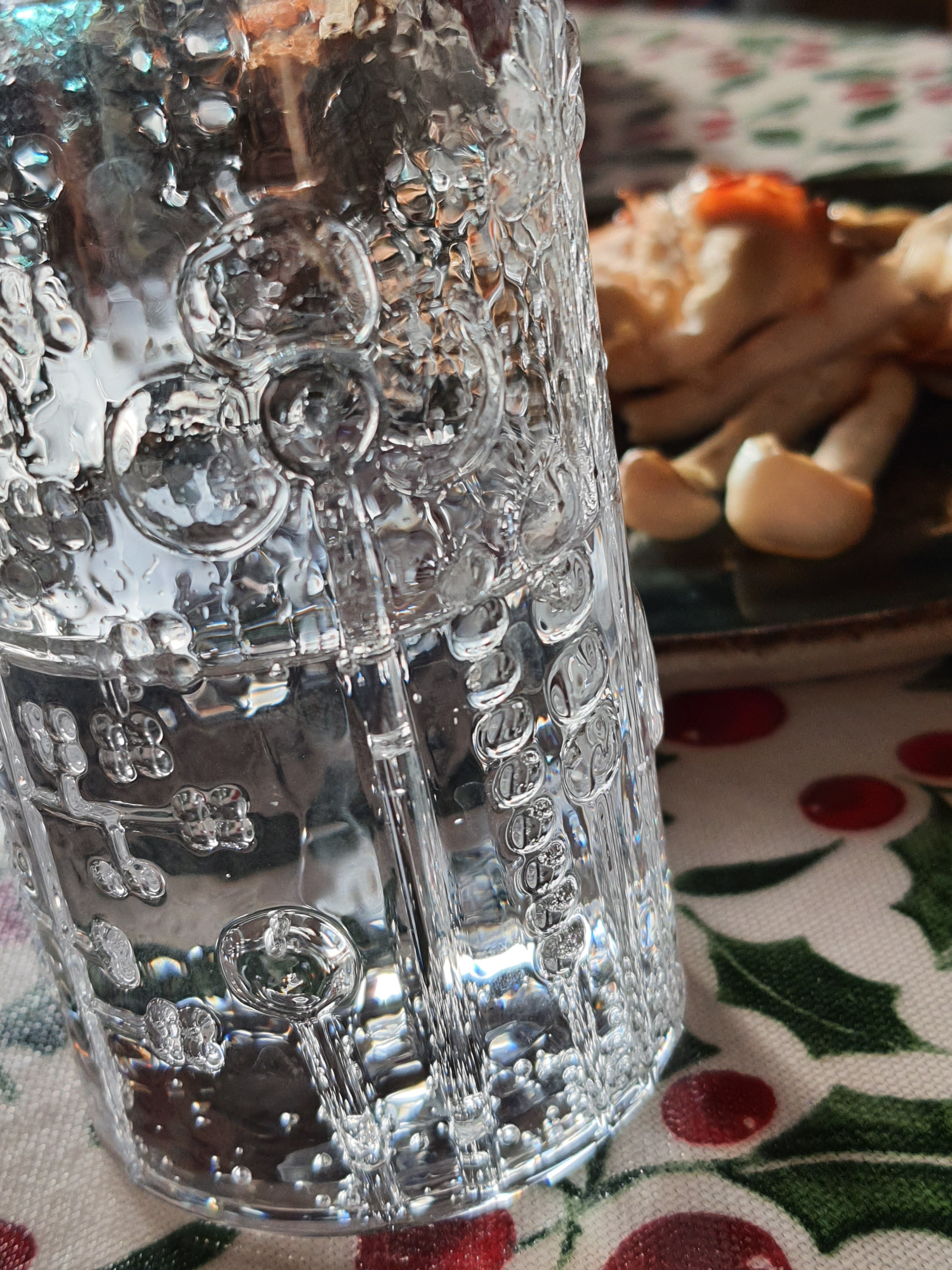
The simplest and quickest of lunches. Or to snack on with a cold glass of tonic water whilst another other mushroom dish is cooking!
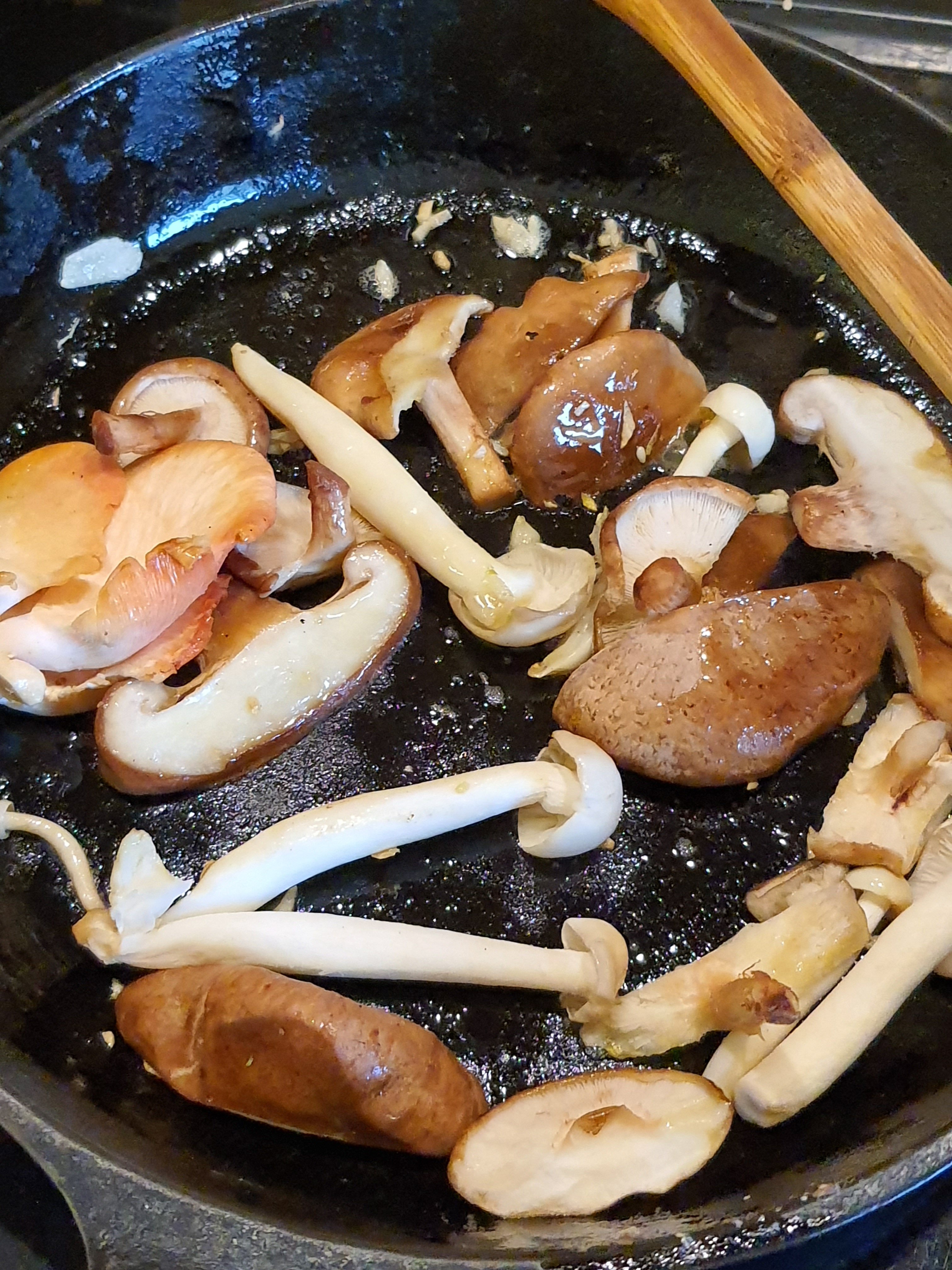
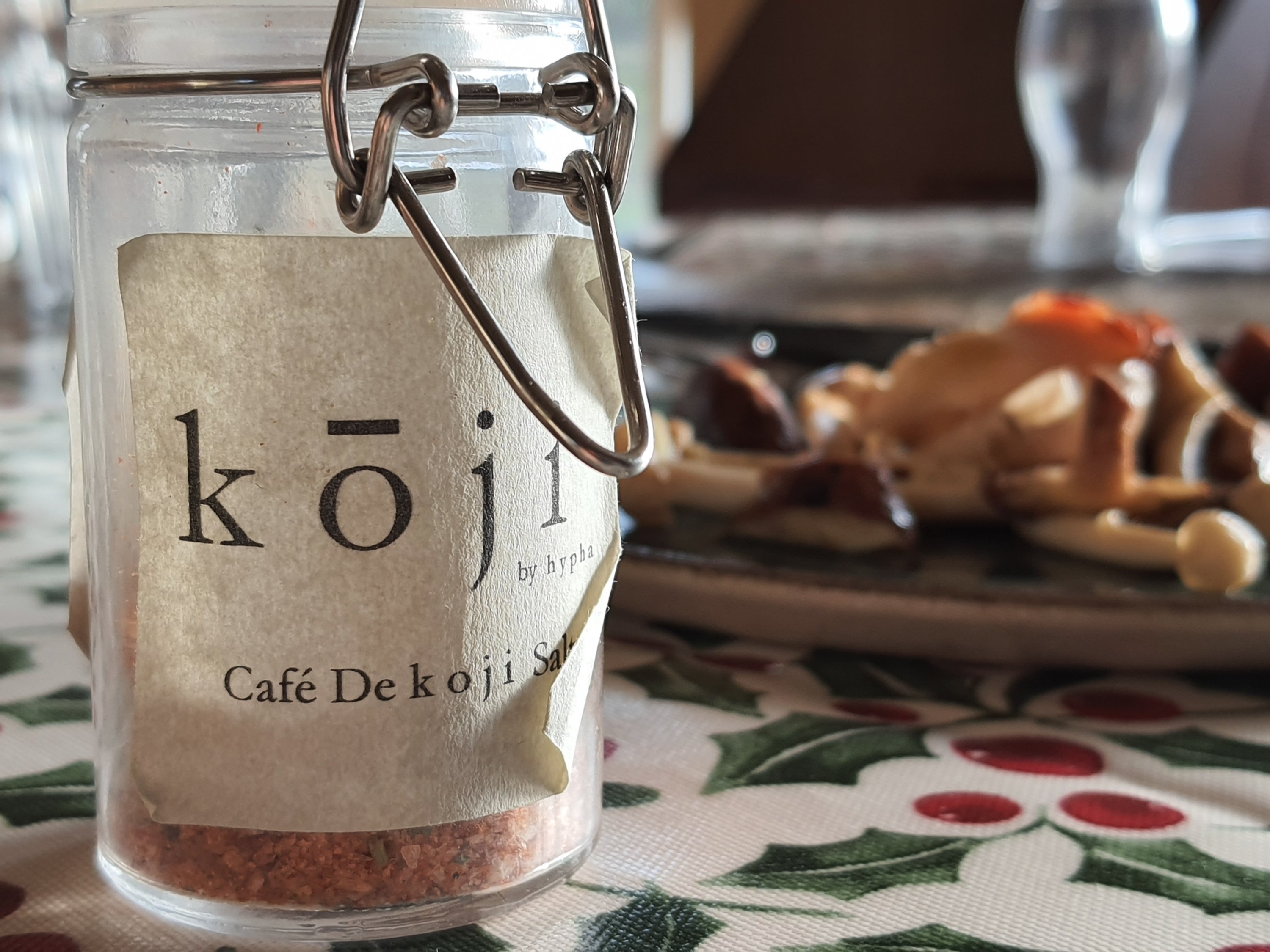
Heat oil in pan and add chopped garlic. Fry for a minute. Add mushrooms and a little butter and black pepper to taste, possibly thyme. Fry, turning carefully – i have wooden tongs which I’m very pleased with) until cooked to your liking. Sprinkle with small amount of salt to taste.
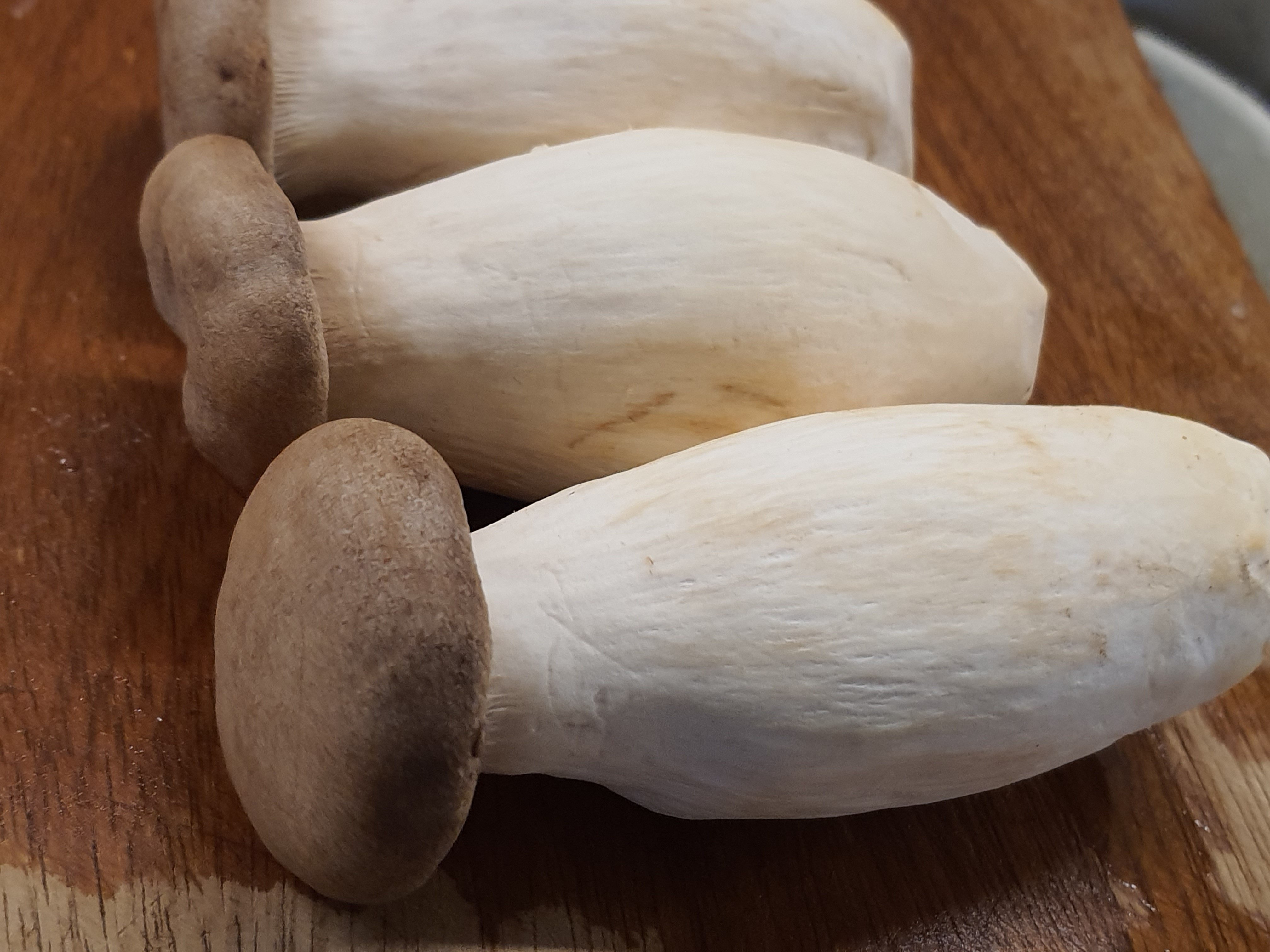
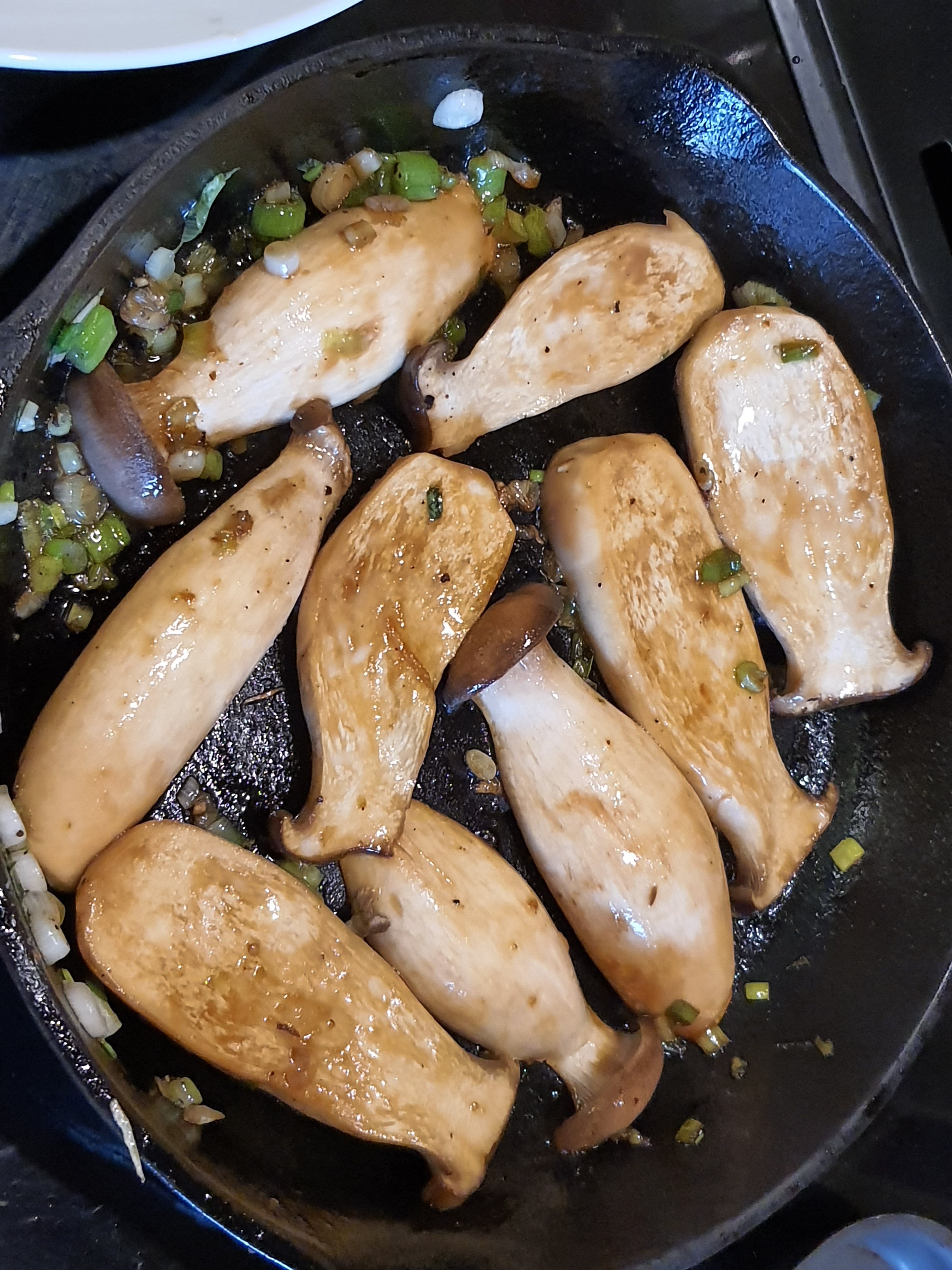
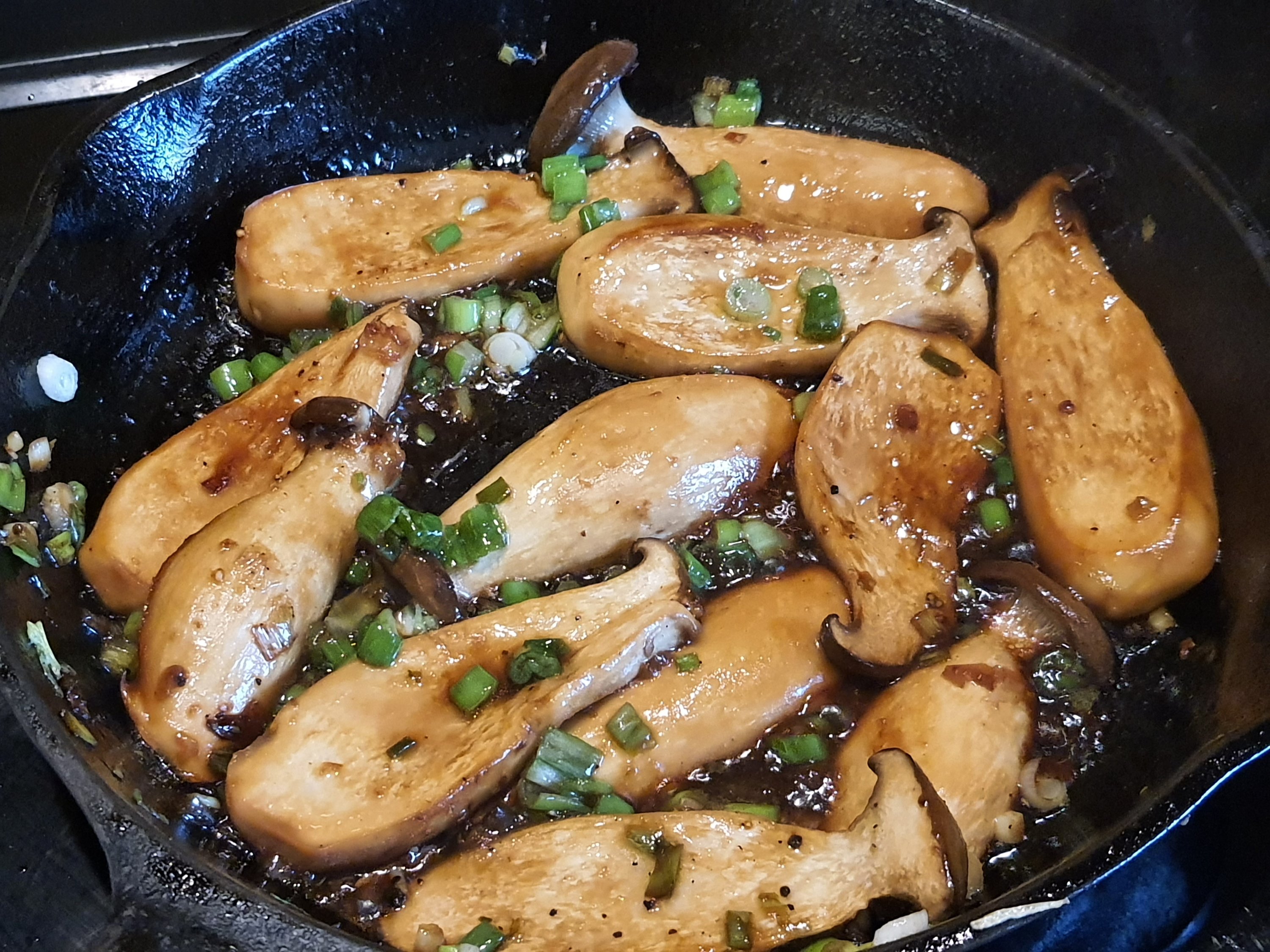
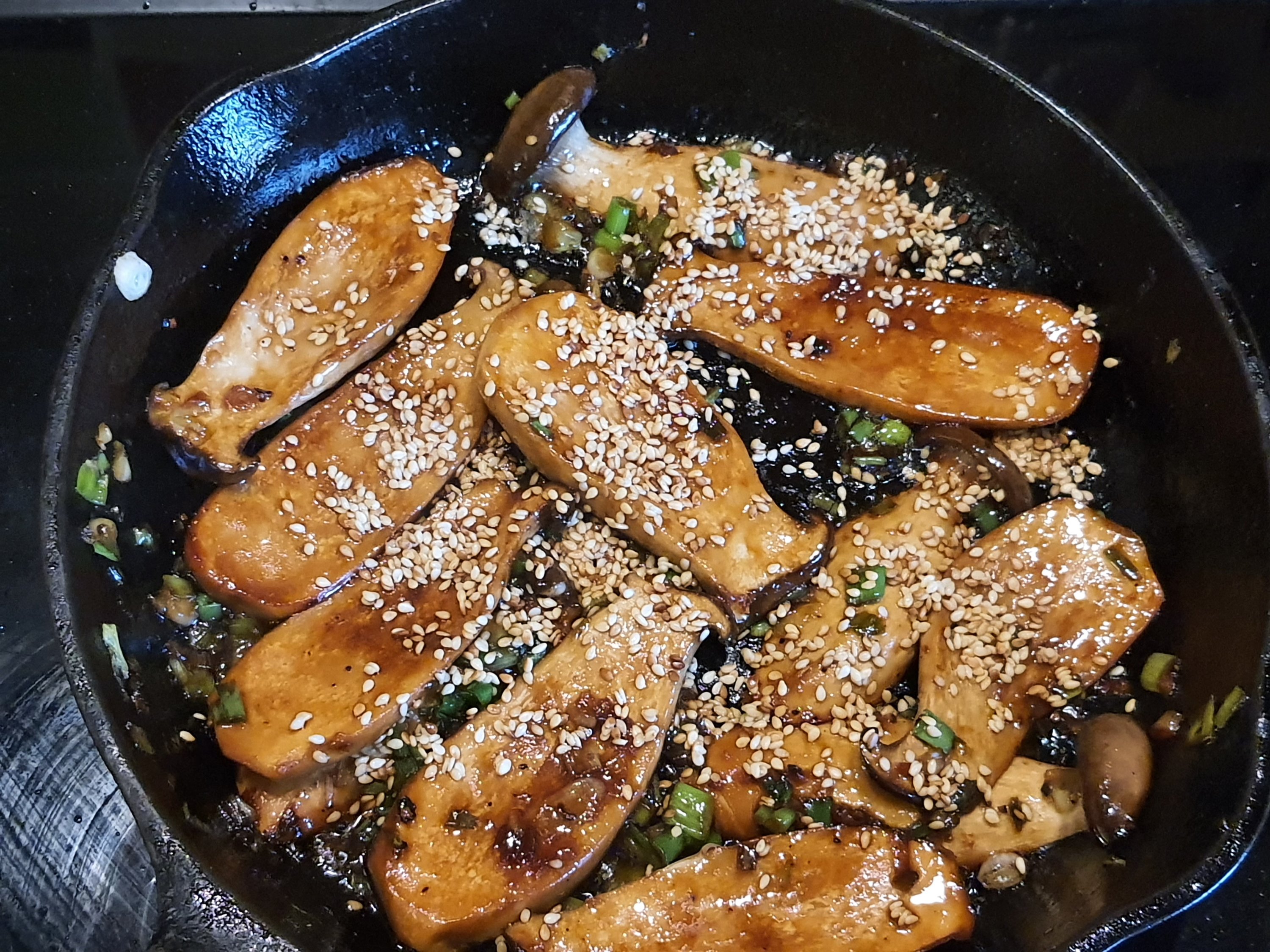
Teriyaki King Oyster Mushroons
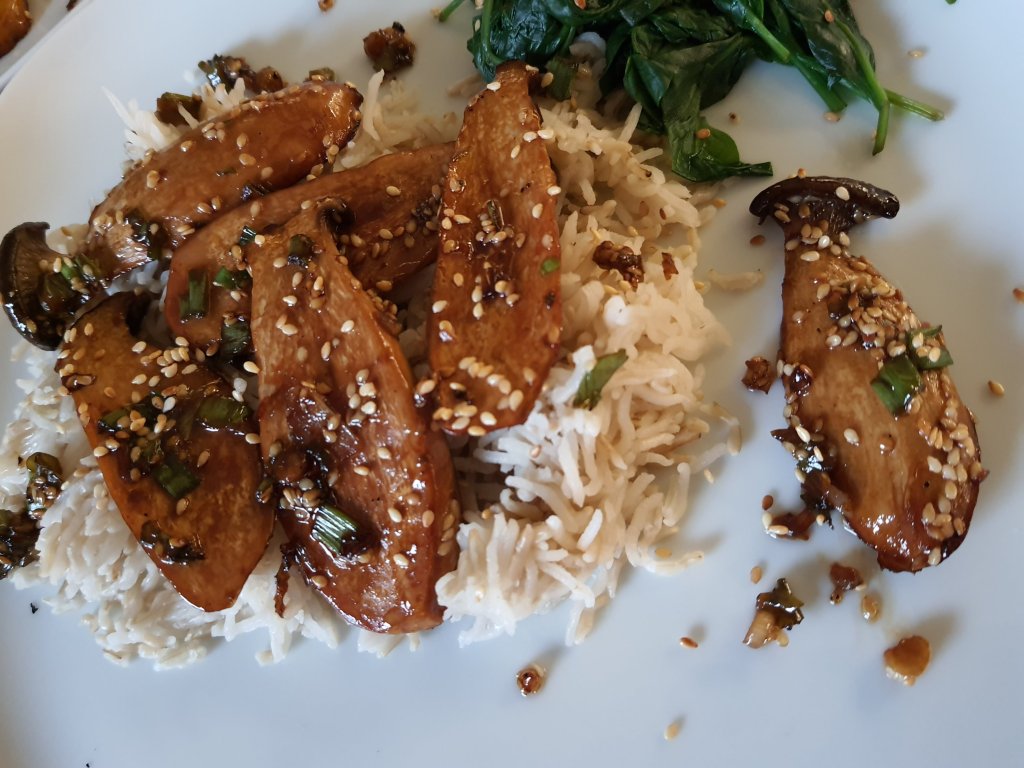
These were what we had for lunch today and they were completely delicious. Really meaty but entirely vegan. That’s the magic of unami. The recipe is web-linked from the title above.
I used a shop bought teriyaki sauce. I wish I’d been a little more patient and fried a little longer and that I had bought black sesame seeds and jasmine rice for a more authentic experience – but it was still very tasty and I’ll make them again soon.
In fact, so far so good – that’s ten of ten days of new recipes and I’d happily make them all again.
Baked Garlicky Mushrooms
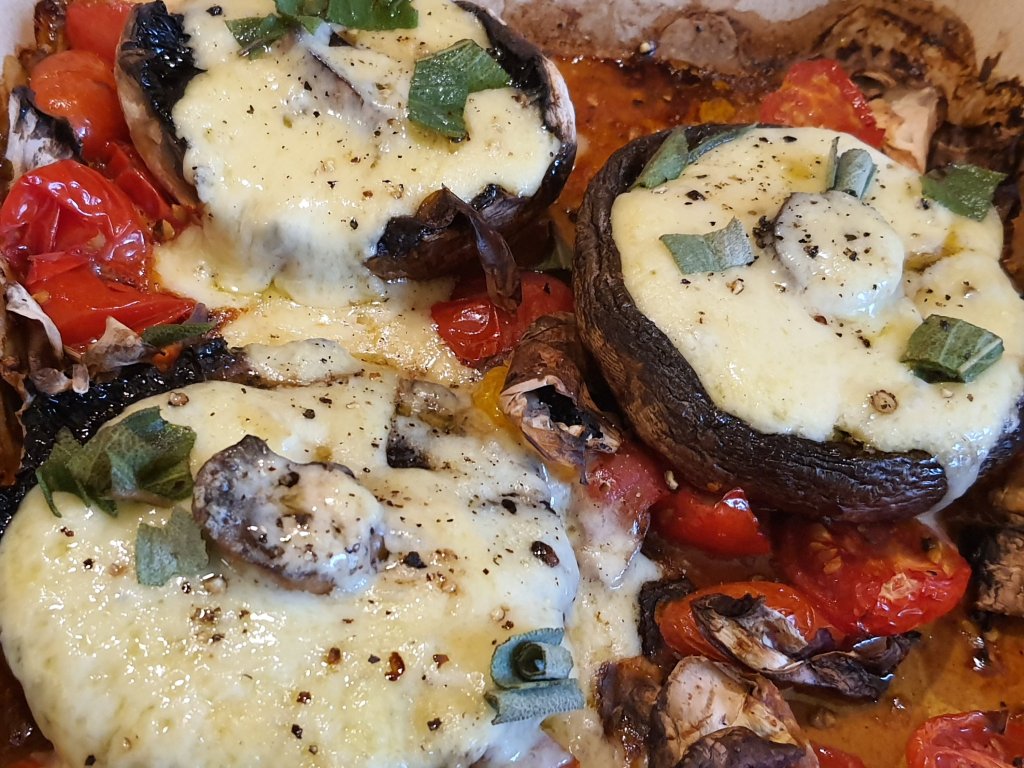
Ingredients (serves
- 4 cloves of garlic
- bunch of fresh sage
- 350 g ripe mixed-colour cherry tomatoes
- 4 large portobello mushrooms
- 40 g Cheddar cheese (I used Lanacshire)
Method
- Preheat the oven to 200ºC/400ºF/gas 6.
- Peel and very finely slice the garlic. Pick the sage leaves. Halve the cherry tomatoes.
- Peel the mushrooms, reserving the peel. Place it all (peel included) in a 25cm x 30cm roasting tray and drizzle with 1 tablespoon each of olive oil and red wine vinegar. Add a pinch of sea salt and black pepper and toss together.
- Pick out 12 perfect garlic slices and sage leaves for later, and sit the mushrooms stalk side up on the top. Bake for 10 minutes.
- Remove the tray from the oven, crumble the cheese into the mushroom cups and sprinkle over the reserved garlic and sage.
- Return to the oven for 15 more minutes, or until the cheese is melted and everything’s golden, then dish up.
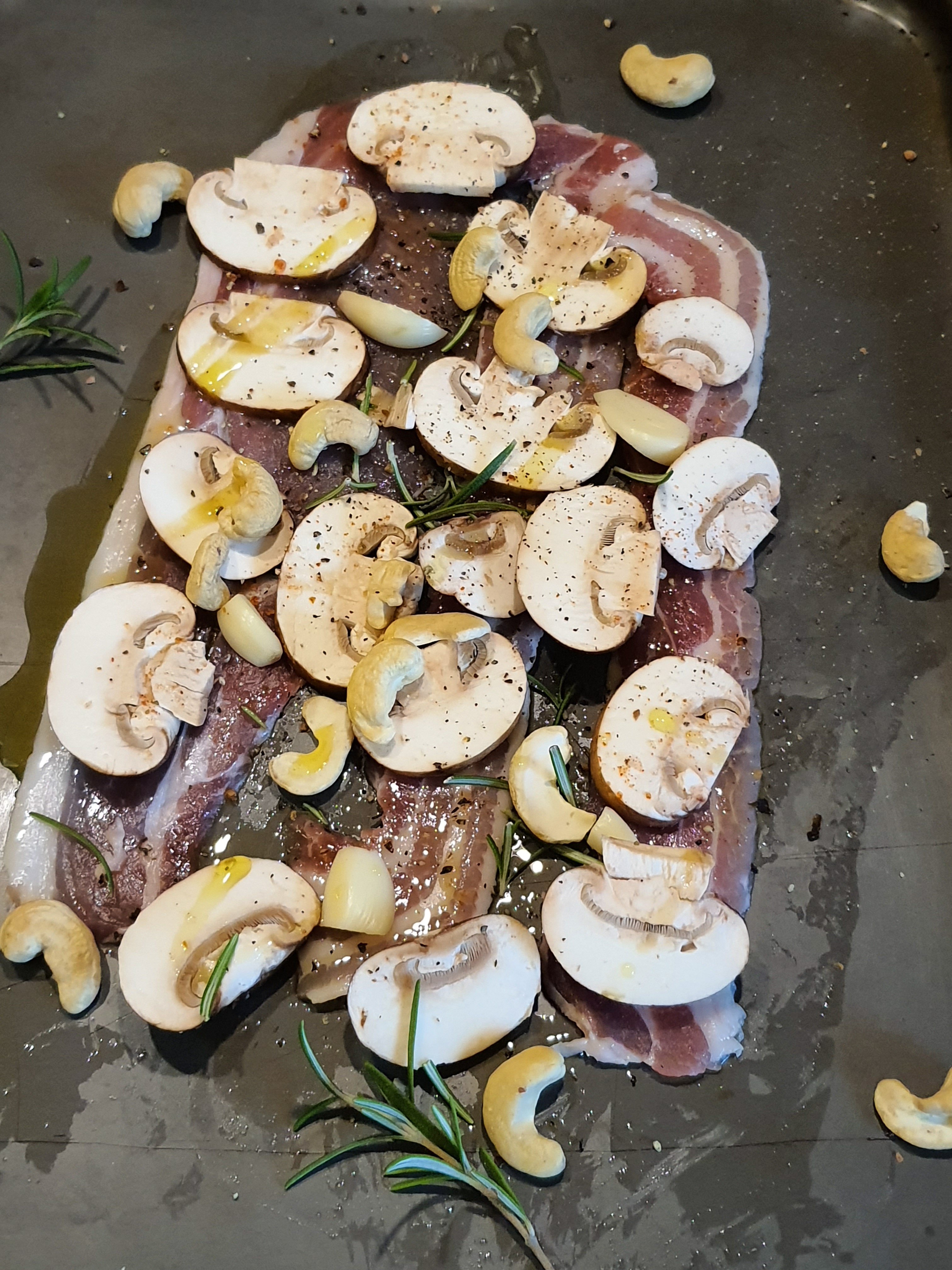
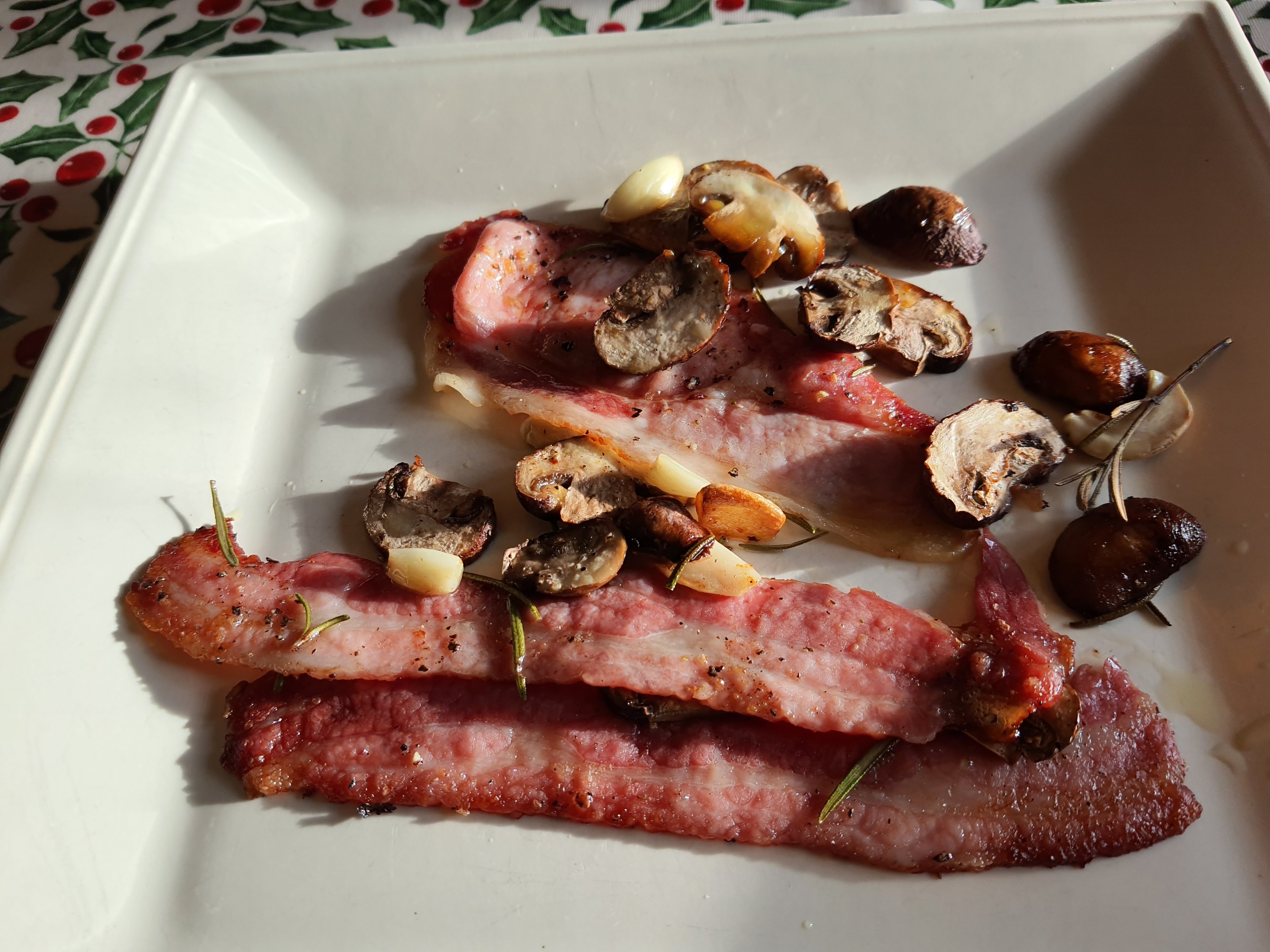
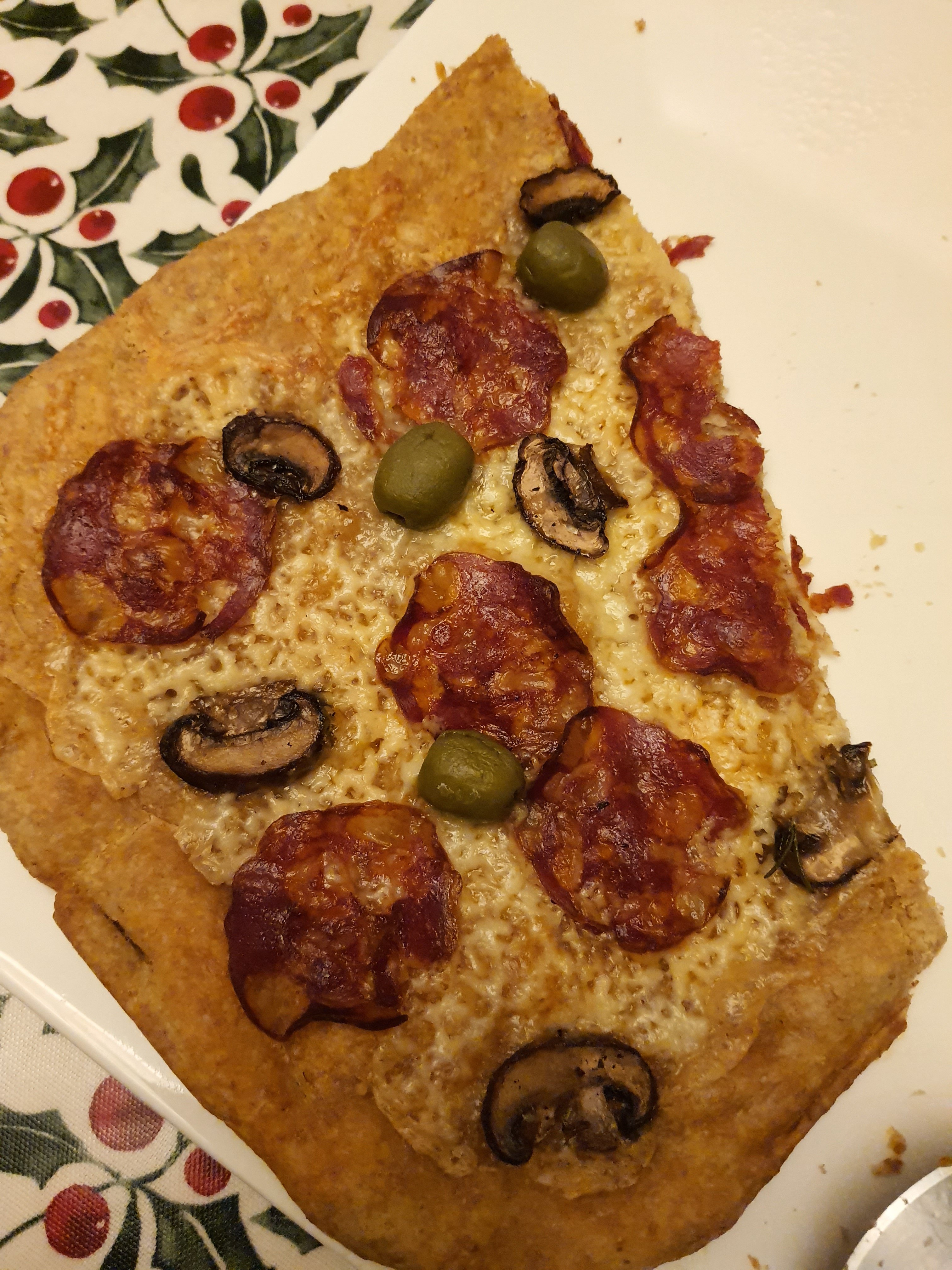
Baked mushroom … on a pizza with truffle oil or on bacon with garlic, cashews and rosemary
Both of these popular with my son – favourites for last week’s lockdown lunches!
Interestingly Reading
Two authors, both mycologists. About perhaps how mushrooms might change our view on the world … and maybe even save it from destruction. I shall be looking in the library for these when lockdown is over. And thirdly chapter 19 “Gathering: The Fungi,” in an excellent book, that I would highly recommend. “The Omnivore’s Dilema – A Natural History of Four Meals”, by Michael Pollan.
Mycelium Running by Paul Stamets. “A manual for the mycological rescue of the planet – growing more mushrooms may be the best thing we can do to save the environment. Apparently Microscopic cells called “mycelium”–the fruit of which are mushrooms–recycle carbon, nitrogen, and other essential elements as they break down plant and animal debris in the creation of rich new soil. What Stamets has discovered is that we can capitalize on mycelium’s digestive power and target it to decompose toxic wastes and pollutants (mycoremediation), catch and reduce silt from streambeds and pathogens from agricultural watersheds (mycofiltration), control insect populations (mycopesticides), and generally enhance the health of our forests and gardens (mycoforestry and myco-gardening).”
And refered to by Michael Pollan, in his book How to Change Your Mind: What the New Science of Psychedelics Teaches Us About Consciousness, Dying, Addiction, Depression, and Transcendence: “Fungi constitute the most poorly understood and underappreciated kingdom of life on earth. Though indispensable to the health of the planet (as recyclers of organic matter and builders of soil), they are the victims not only of our disregard but of a deep-seated ill will, a mycophobia that Stamets deems a form of “biological racism.” Leaving aside their reputation for poisoning us, this is surprising in that we are closer, genetically speaking, to the fungal kingdom than to that of the plants. Like us, they live off the energy that plants harvest from the sun. Stamets has made it his life’s work to right this wrong, by speaking out on their behalf and by demonstrating the potential of mushrooms to solve a great many of the world’s problems”.
Entangled Life by Merlin Sheldrake: “In this captivating adventure, Sheldrake explores the spectacular and neglected world of fungi: endlessly surprising organisms that sustain nearly all living systems. They can solve problems without a brain, stretching traditional definitions of ‘intelligence’, and can manipulate animal behaviour with devastating precision. In giving us bread, alcohol and life-saving medicines, fungi have shaped human history, and their psychedelic properties, which have influenced societies since antiquity, have recently been shown to alleviate a number of mental illnesses. The ability of fungi to digest plastic, explosives, pesticides and crude oil is being harnessed in break-through technologies, and the discovery that they connect plants in underground networks, the ‘Wood Wide Web’, is transforming the way we understand ecosystems. Yet they live their lives largely out of sight, and over ninety percent of their species remain undocumented. Entangled Life is a mind-altering journey into this hidden kingdom of life, and shows that fungi are key to understanding the planet on which we live, and the ways we think, feel and behave. The more we learn about fungi, the less makes sense without them”.
“Gathering: The Fungi” Michael Pollan continues his exploration of the personal food chain, in which he attempts to prepare a meal made from ingredients he has directly and independently collected. Pollan has already shared his hunting experiences, and he now sets out into the forest to collect mushrooms. Although Pollan is a gardener, he discovers that there are many surprising differences between gardening and mushroom gathering. He also shares the unique characteristics of mushrooms…Mushroom hunting involves a great deal of mystery. For example, it is difficult to find mushrooms, and mycophiles (lovers of mushrooms) must develop an eye for finding fungus—or “get their eyes on”—before they will be able to worry about identification. In fact, finding mushrooms can be so difficult that most mushroom hunters prefer to keep their mushroom locations a secret. Pollan admits that he struggled to find a guide before Angelo Gallo agreed to take him along on a hunt for chanterelles”. https://www.enotes.com/topics/the-omnivores-dilemma/chapter-summaries/chapter-19-summary
Nutritional information
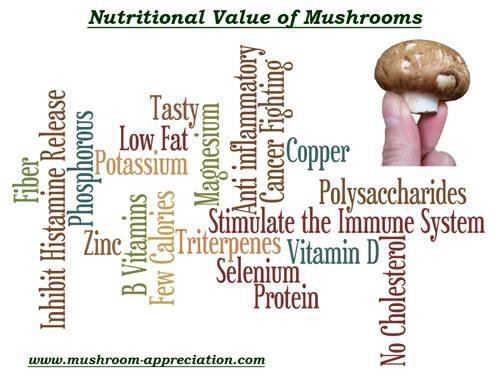
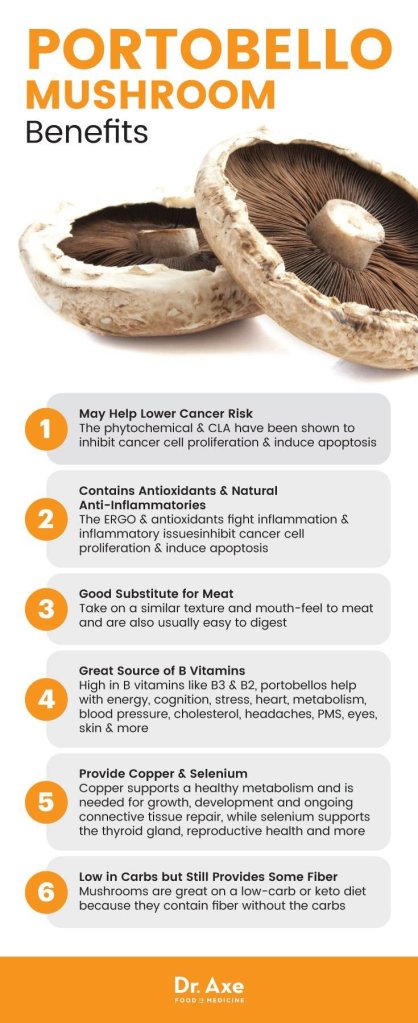
Possible health benefits
Goes well with:
Asparagus
Bacon
Beef Dairy (Butter, Cream, Cheese – in almost all its forms)
Earthy spices (Cumin, Nutmeg, Carraway, Black pepper)
Eggs – fried, scrambled, poached
Game
Garlic and onions
Herbs (Rosemary, thyme, sage, parsley, dill, chervil. Chives and coriander make a perfect garnish.)
Lemon – a small squeeze is the perfect finish
Asian flavourings (Miso, soy, chilli)
Nuts (Hazelnuts, Walnuts)
Potatoes
Toast
SOURCE: https://www.sciencekids.co.nz/sciencefacts/food/mushrooms.html#:~:text=A single Portabella mushroom can,meat” of the vegetable world.
https://www.anticorestaurant.com/10-mushroom-fun-facts/
https://mobile-cuisine.com/did-you-know/mushroom-fun-facts/
http://www.foodreference.com/html/a-mushrooms-ff0408.html
http://www.thepretendchef.com/mushroom-health-benefits-facts/0i
https://www.bbcgoodfood.com/howto/guide/health-benefits-mushrooms
Tally for the month
Main Vegetables: aubergine,broccoli (calabrese), Brussels sprouts, butternut squash, celeriac, celery, fennel, mushroom, onion, radicchio.
Subsidiary Vegetables: onion, shallots, garlic, leek, celery, potato, rosemary, carlin peas, chick peas, kale, chilli, dill, cucumber, mushroom, ramiro pepper, peanuts, corriander, ginger, tamarind, spinach, carrots, green beans, rice, sweet potato, spring onion.
Subsidiary Fruit and Nuts: lemon, fig, walnuts, pomegranate seeds, lime, sesame seeds.
 Relishing Life - Eating Well
