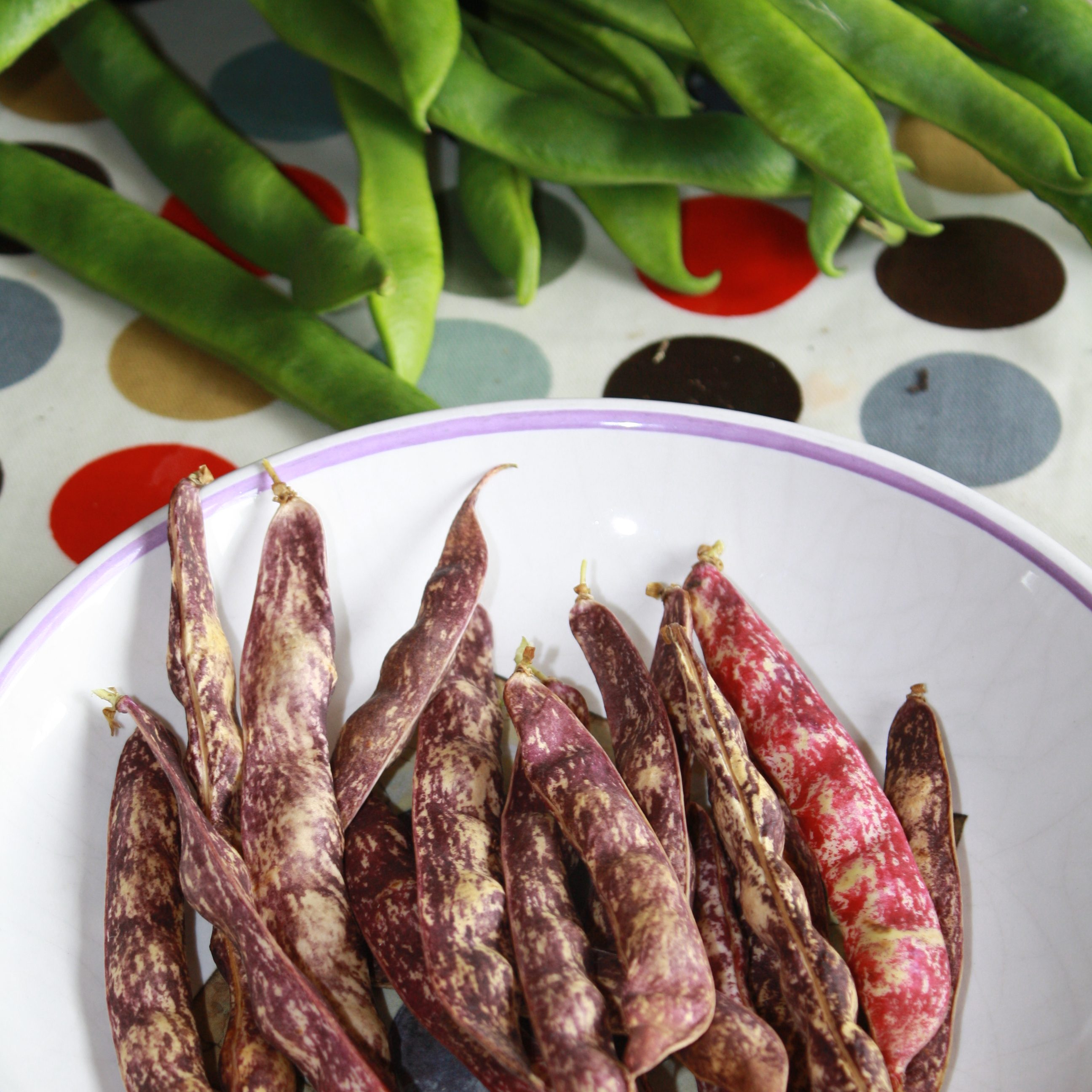
Radicchio
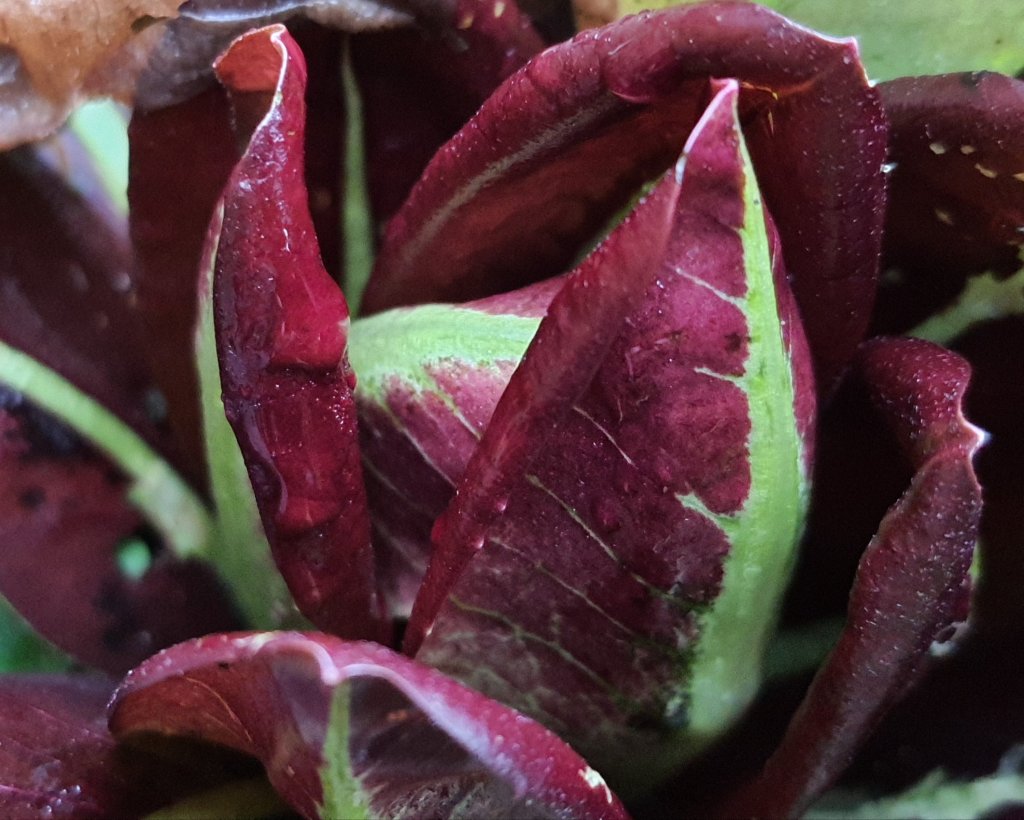
RADICCHIO
Cichorium intybus var. foliosum
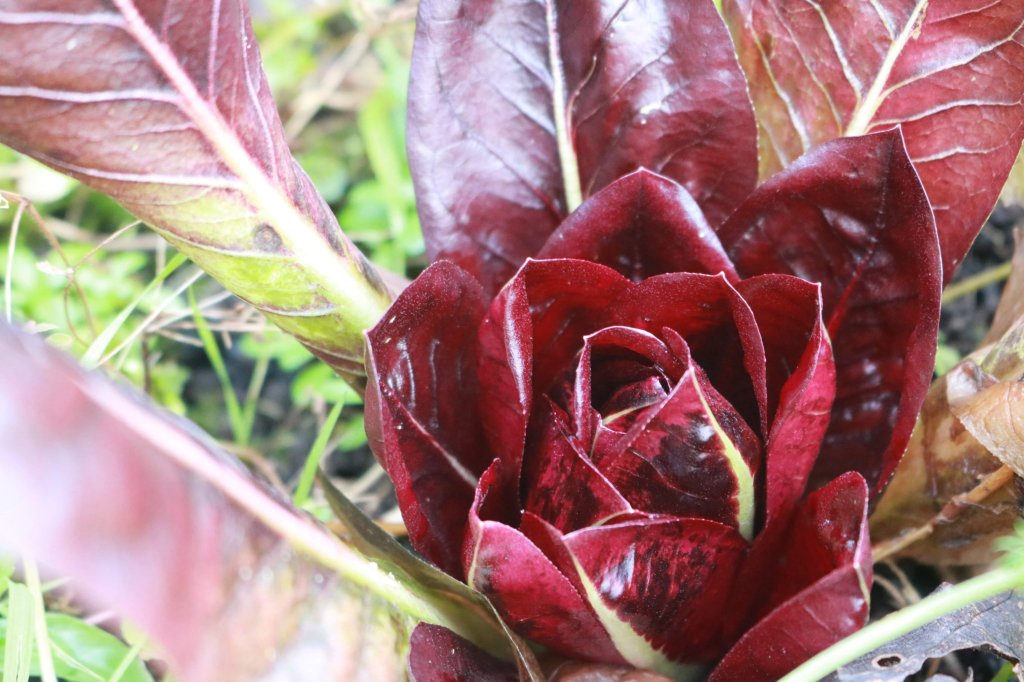
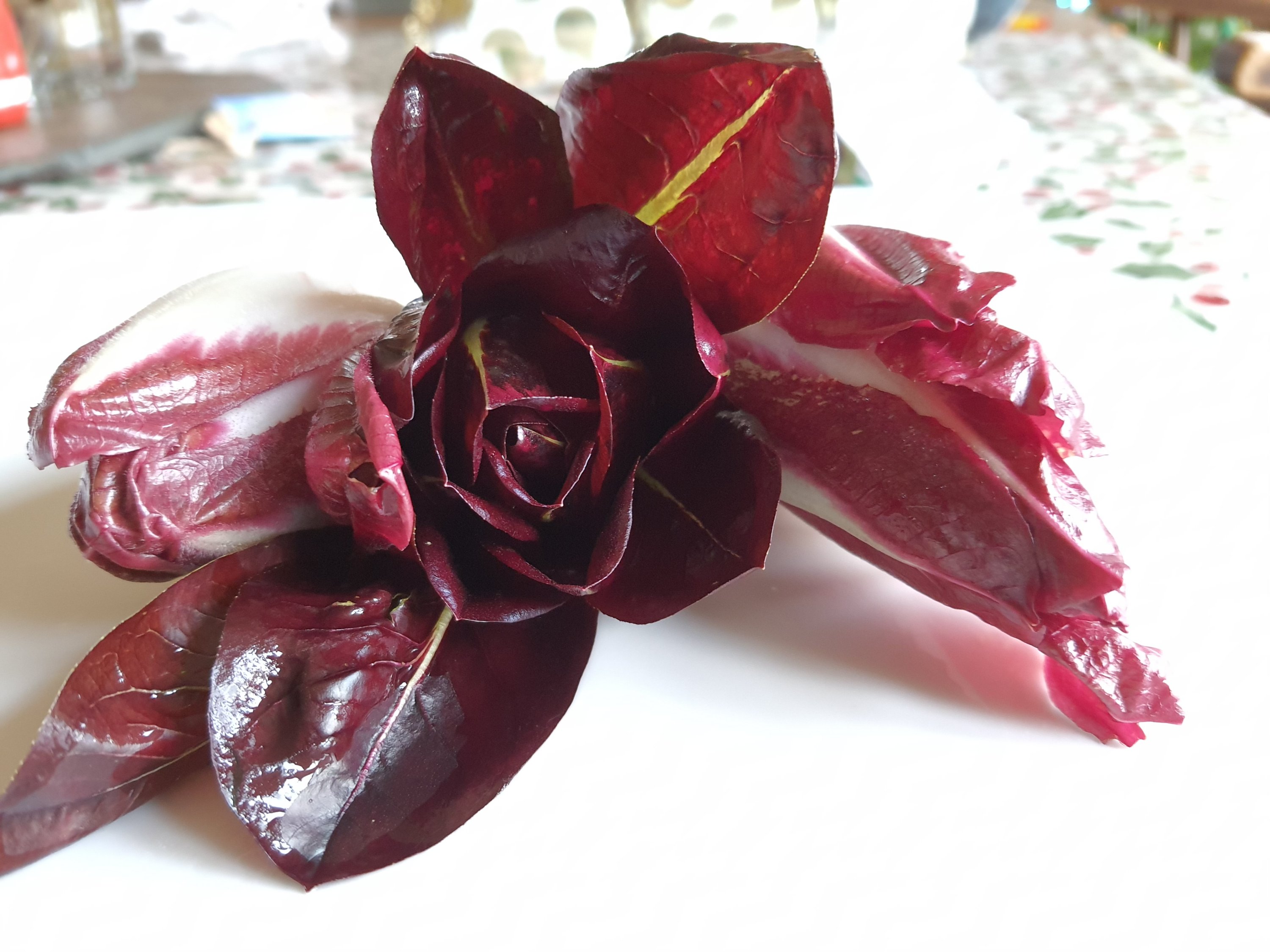
A vibrant winter leaf that features a colorful red and white head with green outer leaves. Italians are crazy about its bold, bitter flavour: raw in salads, or stir fried, griddled or roasted until mellow. The trick is to balance it’s unique tang with sharp, salty and sweet flavours. In season during late winter, early spring.
Sabine Eiche writes in her column Raving about radicchio: “Radicchio’s birthplace is Treviso, a city about 42 kilometres north of Venice. Some historians believe the plant came from the Orient, arriving in Venetian territory in the late 15th century. By the 16th century, it was being cultivated in Treviso. Nonetheless, already the ancients were familiar with a kind of wild chicory (radicchi is the Italian name for the weeds that grow wild around the Mediterranean) with medicinal qualities similar to those of the cultivated radicchio. In the first century AD, the Roman naturalist (author, philosopher, naval and army commander of the early Roman Empire) Pliny the Elder mentioned the plant’s ability to purify the blood and fight insomnia. Today, radicchio is praised because it’s rich in polyphenols including anthocyanins, which have antioxidant effects, and because of its relatively high fibre content (inulin is a pre-biotic, in the root of the plant), which aids digestion. The same compounds that account for its healthful properties also give radicchio a slightly bitter taste”.
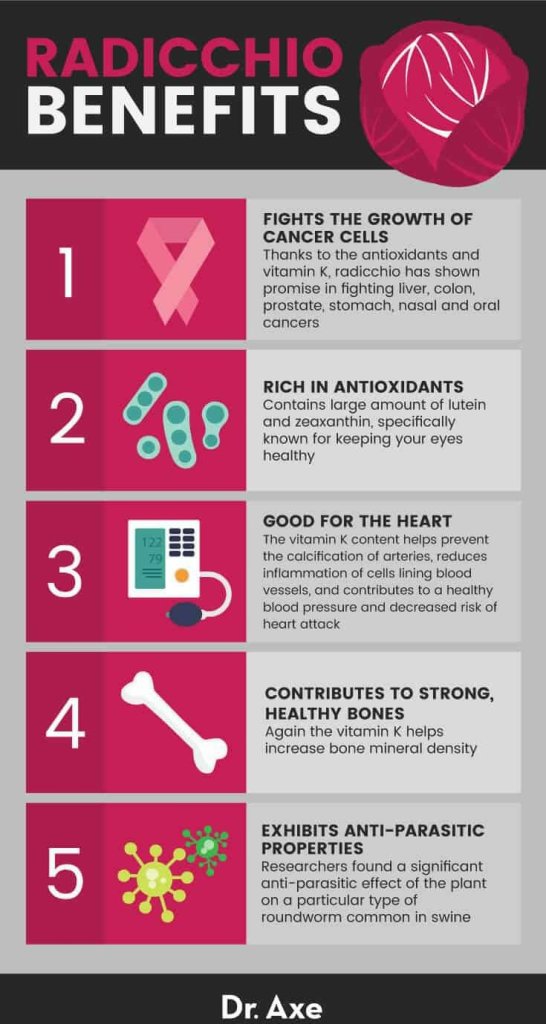
Radicchio is a bit of a “super veg”. In a study published in the British Journal of Nutrition, Italian researchers tested 40 vegetables for phenolic content – and radicchio was the fourth highest for total phenols.
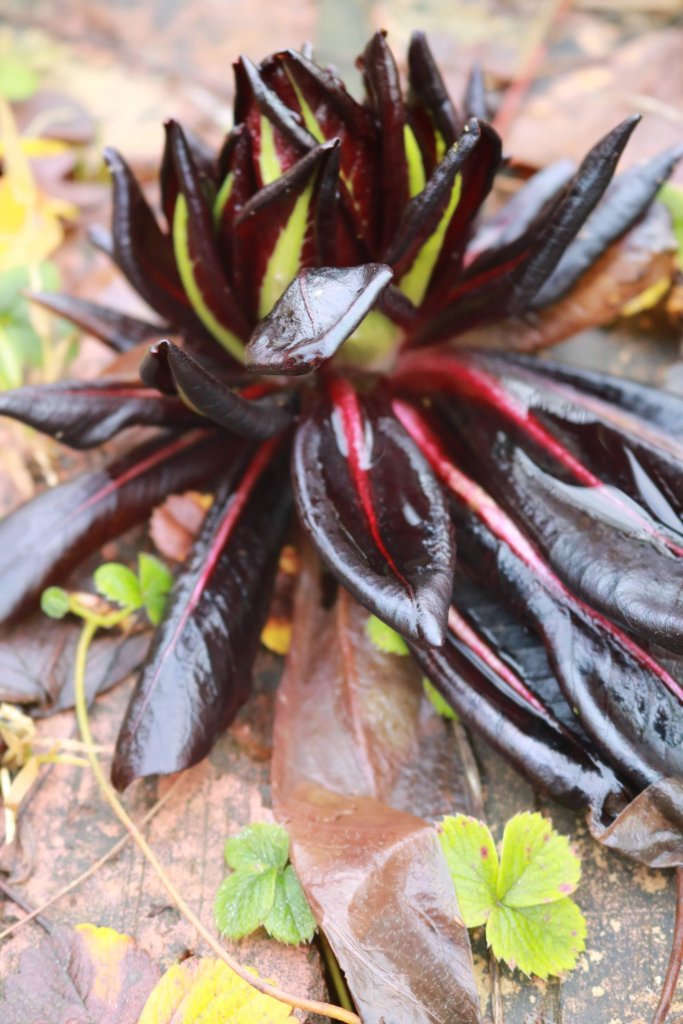
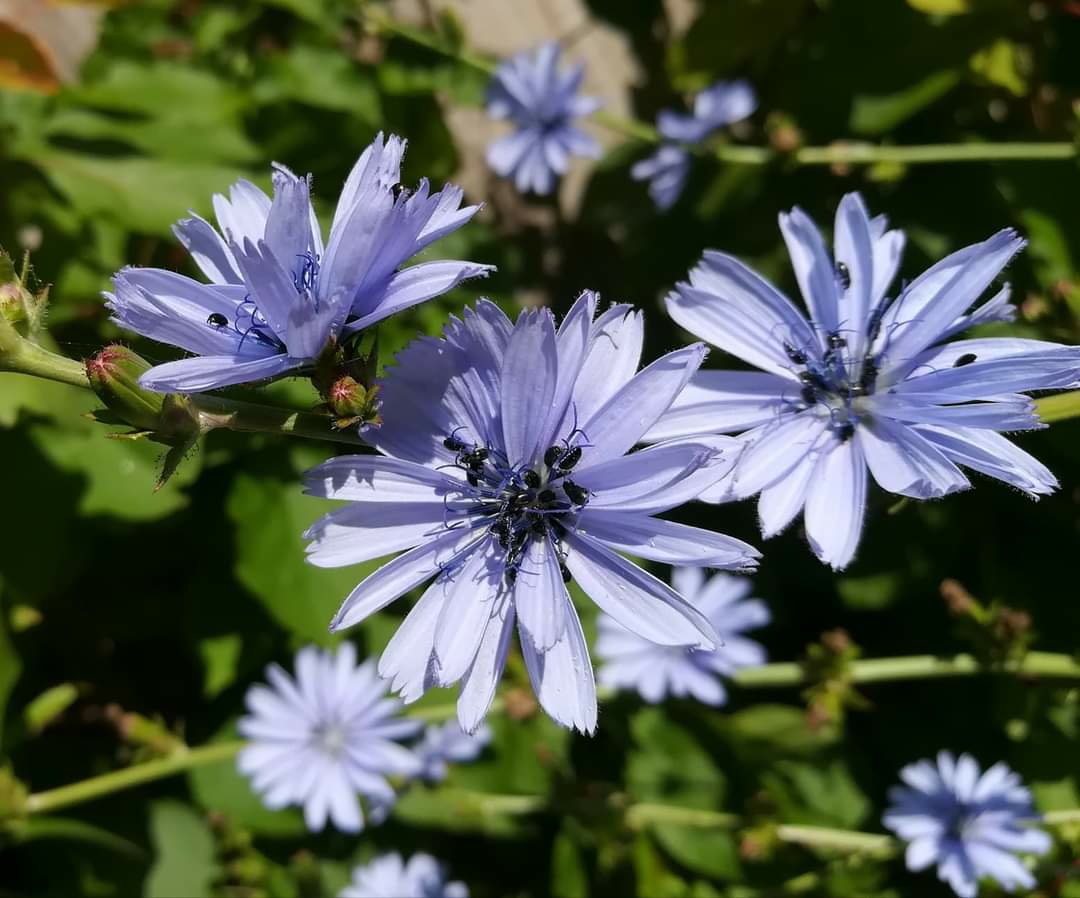
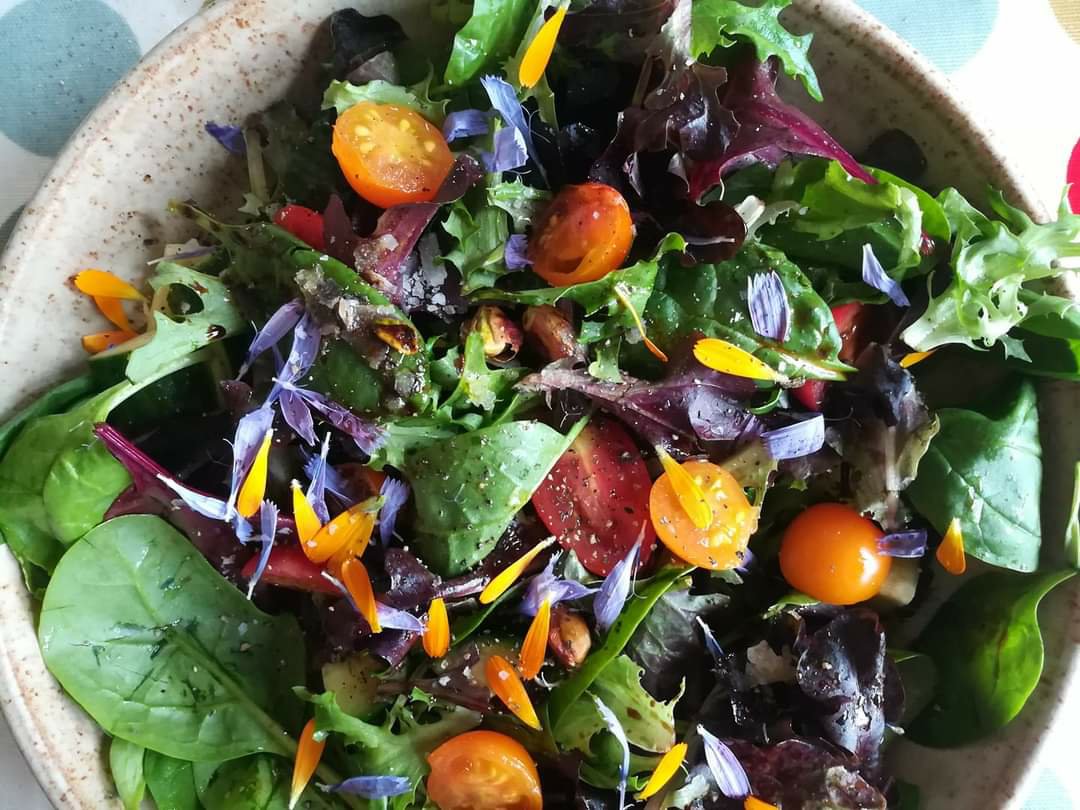
I grow radicchio in the garden, although it’s not been very well tended recently (much is self-seeded), so I have to say not that successfully and most plants are tiny. But if you leave it to “go to seed” it then has very pretty dainty blue flowers that are edible and can be added to salads.
I personally love “bitter” flavours. I don’t know when I acquired the enjoyment, certainly not until my late 20s. I very much enjoy gin and the tonic, Campari, Seville orange marmalade, grapefruit, coffee, horseradish, rocket, celery, hop shoots, chichory root – as a drink of choice (tradionally loved in New Orleans too as a coffee/chichory mix called “Cafe du mond” ) and I adore the bitterness of 85% cocoa chocolate…
I fell in love with the vivid red of radicchio a few years ago with the best I have ever eaten. A Treviso radicchio from a market in Venice. So wonderful to look at – and so delicious served with an Italian creamy cheese and pasta.
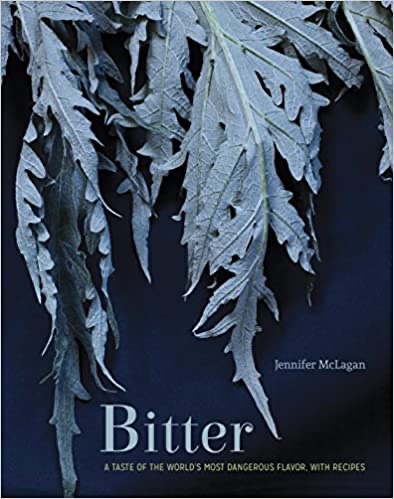
“Our ability to taste is an essential trait that can determine whether we live or die. Should we swallow the food or spit it out? We have about ten thousand taste buds in our mouth … which communicate with our brain and our organs, sending them vital information about the food we are consuming. These cells are replaced about every ten days… but they also decline with age, and the older we get the faster they decline… Our sensitivity to taste varies. Some people are “super tasters” and can find certain foods unbearably bitter… others are “non-tasters”…Genetics play a part, but on average the population breaks down into 25% super-tasters, 25% non-tasters, whilst “normal-tasters” (most chefs) make up the middle 50%.” Says Jennifer McLagan.
“Bitter is a nuanced taste, and each of our taste buds has around 25 bitter taste receptors. Some respond to only one bitter taste while others react to more than 50 different bitter chemicals. So grapefruit triggers one receptor and coffee another.”
“Culture, experience, peer pressure and our environment create our food preferences … food is botany over-laid with history, family and identity. These all interact, giving us a distinct sense of taste, and it begins even before we are born… if bitter is not part of our food culture, or has negative cultural connotations, we are more likely to avoid it…(however) our palate is malleable and exposure to new food can help us overcome old prejudices. Simply seeing other people eating and enjoying food will encourage us to try it”.
Radicchio goes well with:
Anchovies
Cheese (Blue, Parmesan, Goat’s)
Cream
Crème fraîche Eggs
Lemon
Mustard
Nuts (Hazelnuts, Walnuts)
Pork (Bacon, Ham)
Sweet fruits (Apple, Fig, Pear, Persimmon, Poached quince)
Vinegar (Especially sweet ones – balsamic, sherry)
Sources include: Riverford a-z veg
Recipe
I’m rather pleased to have “invented” my own recipe today, with a nod of inspiration from Anna Jones https://www.theguardian.com/food/2018/nov/30/anna-jones-recipe-for-pasta-with-radicchio-fennel-and-rosemary and Eleanor Steafel https://www.telegraph.co.uk/recipe0/tonights-dinner-pasta-radicchio-balsamic-feta/
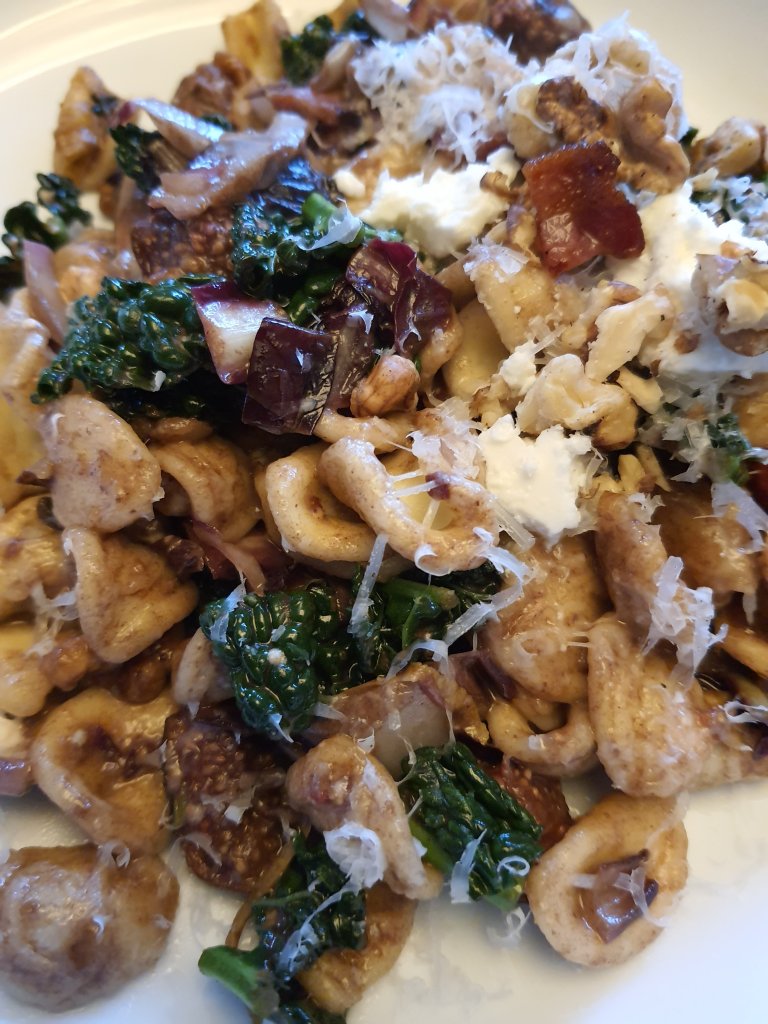
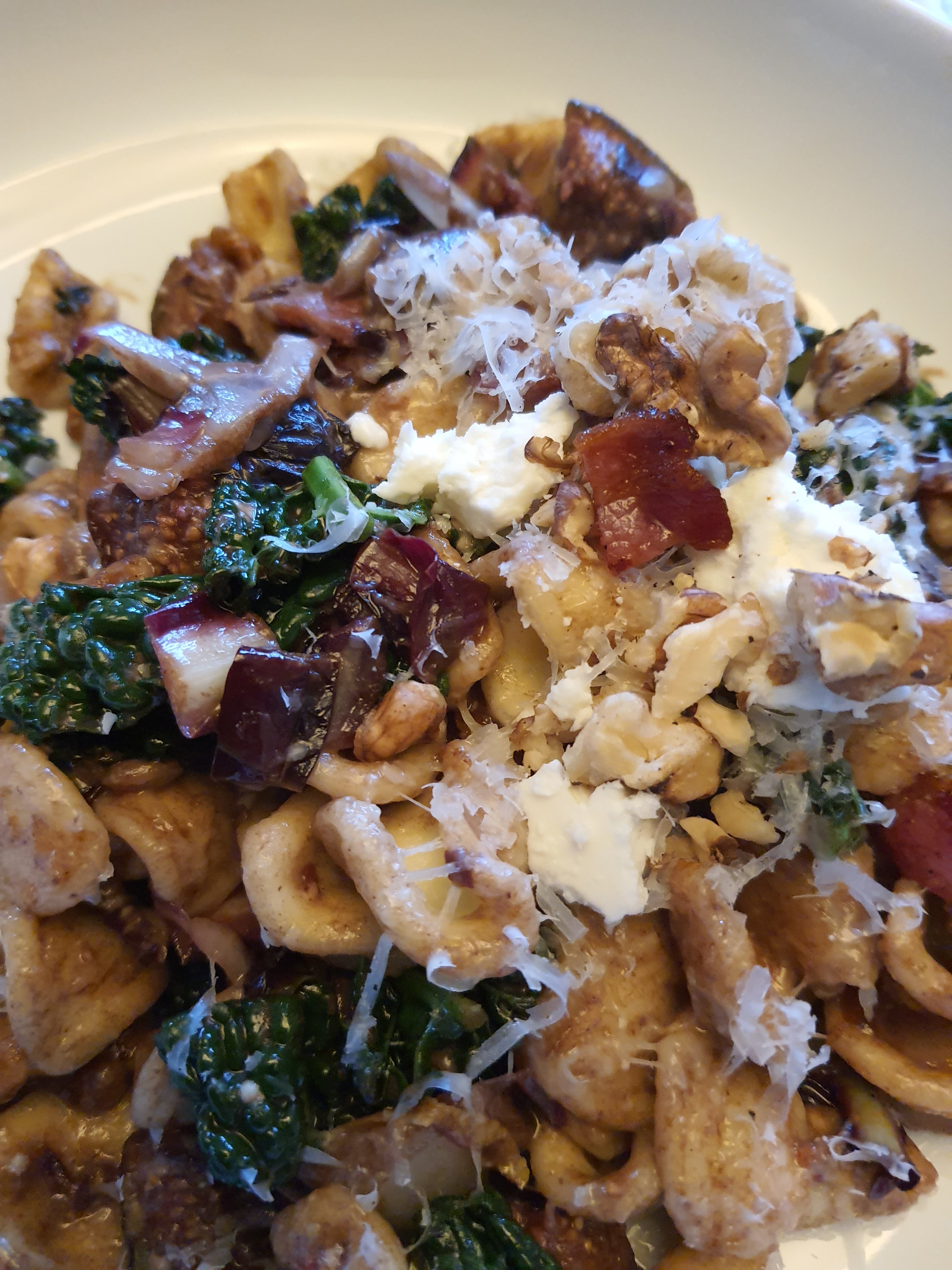
Pasta with radicchio and kale – feta, fig, walnut and lemon with a balsamic dressing.
Ingredients (served 2)
- 180g medium sized pasta – I’m using Orecchiette (ear pasta – I love the texture!)
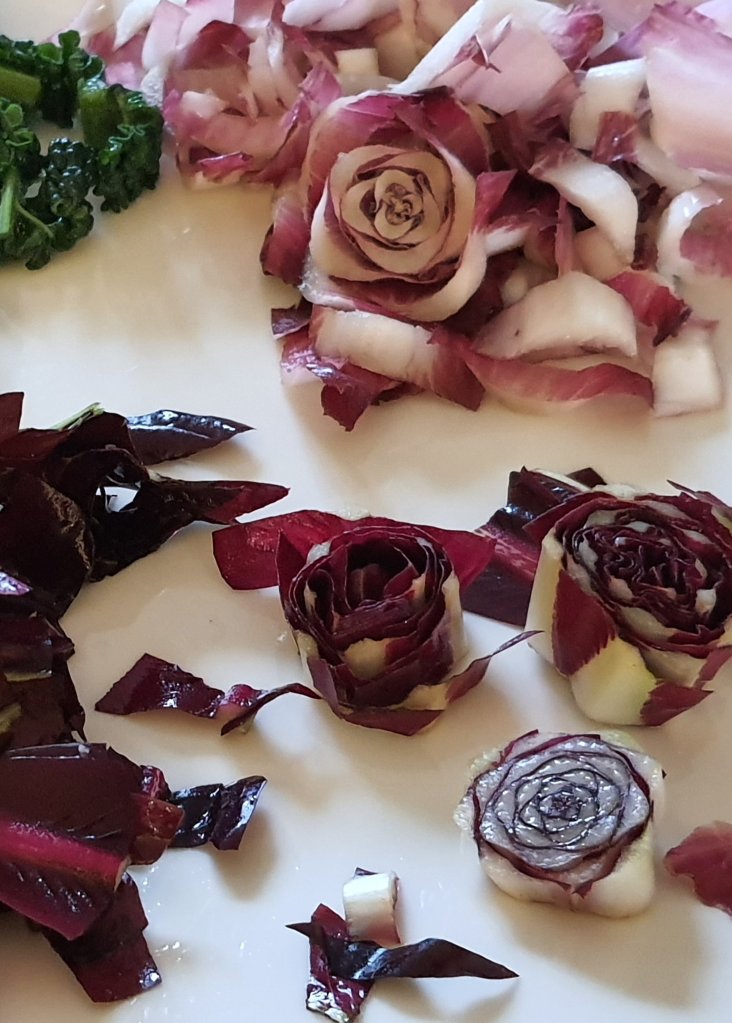
- 2 small/ 1 large head of radicchio/ red chicory sliced across head into 2cm ribbons
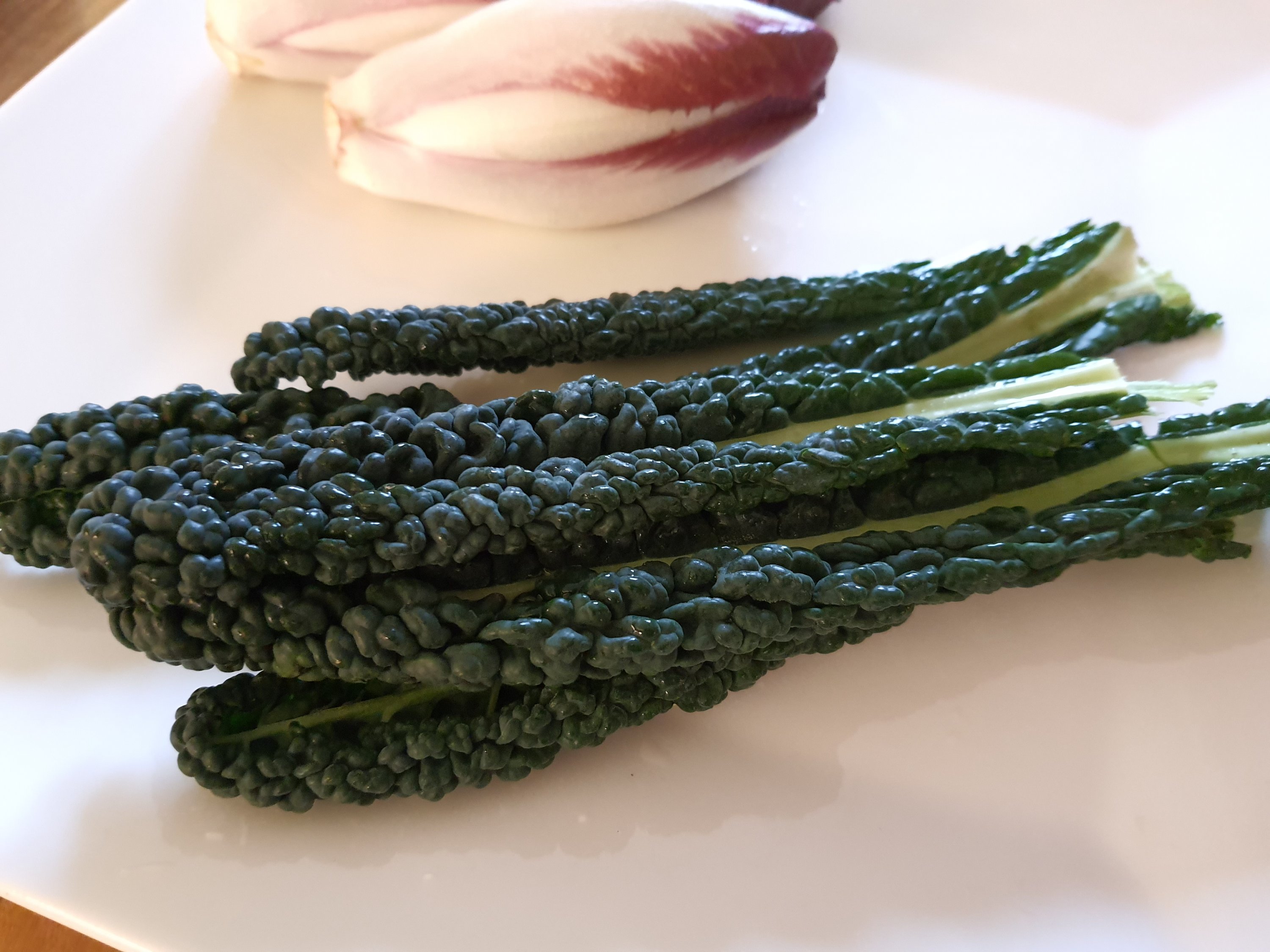
- Handful of kale (if you have some in the house – I used Cavalo Nero) sliced 2cm thick
- 25g walnuts
- 1 large clove of garlic, diced.
- Olive oil
- 2 Tbsp thick balsamic vinegar (or thin with spoon of honey)
- 1 red chilli finely chopped or a pinch chill flakes
- Zest of a lemon
- 100g feta cheese – crumbled
- 2 + roasted figs – chopped into small chunks (optional – I had some in the fridge – and they were a great addition)
- 2-4 pieces of fried pancetta / streaky bacon crumbled (optional)
- Rosemary – a little, finely chopped (optional)
- Parmesan to serve (optional)
Method
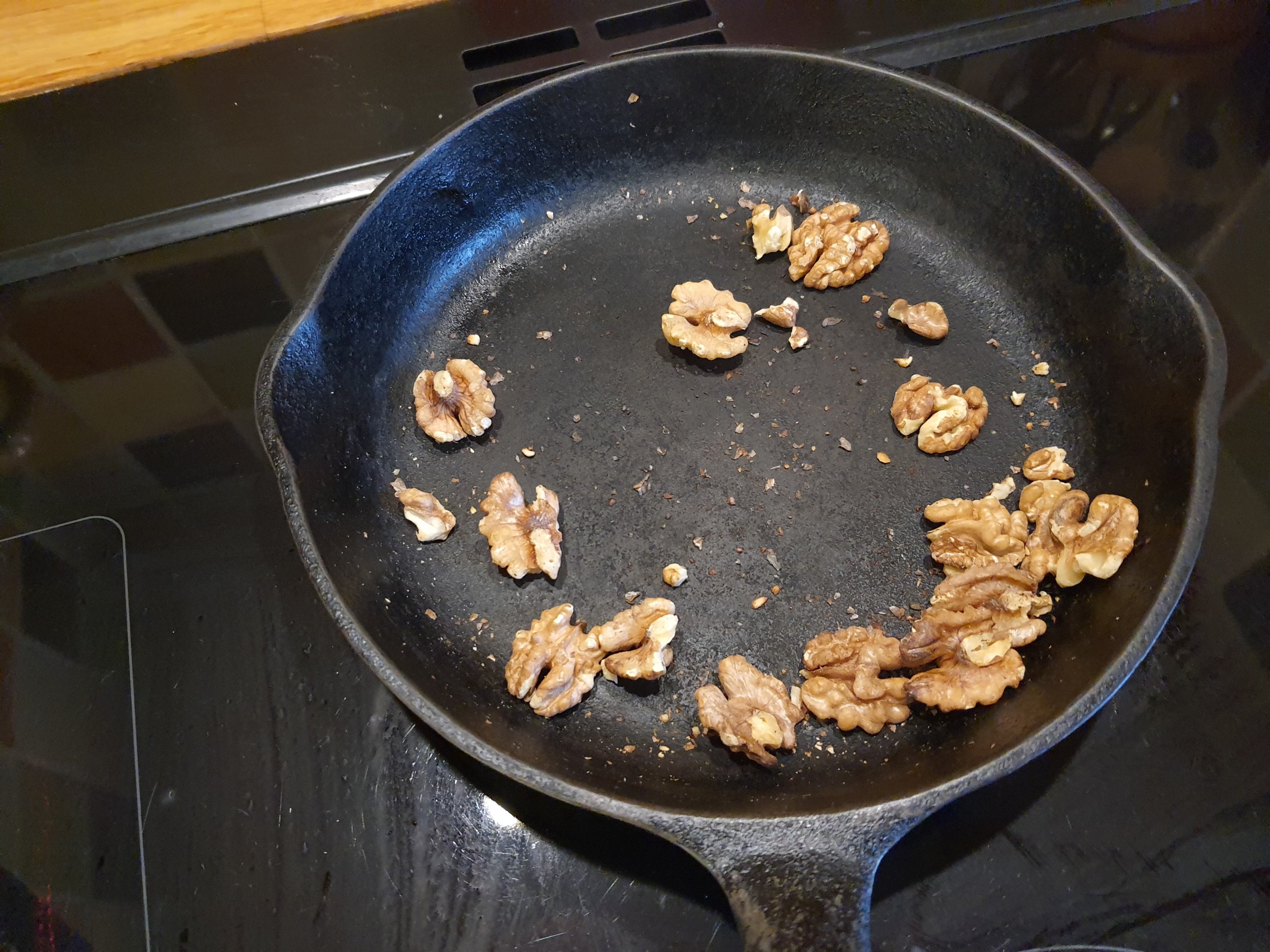
1. Toast the walnuts in a dry pan, shaking regularly. Crumble into smallish chunks.
2. Wash and cut the radicchio (and kale if using) into stips. Use as much kale as you would enjoy eating, I think the colours and flavours work well together, but you could just as well use all radicchio.
3. Put the pasta onto cook according to the instructions for al dente.
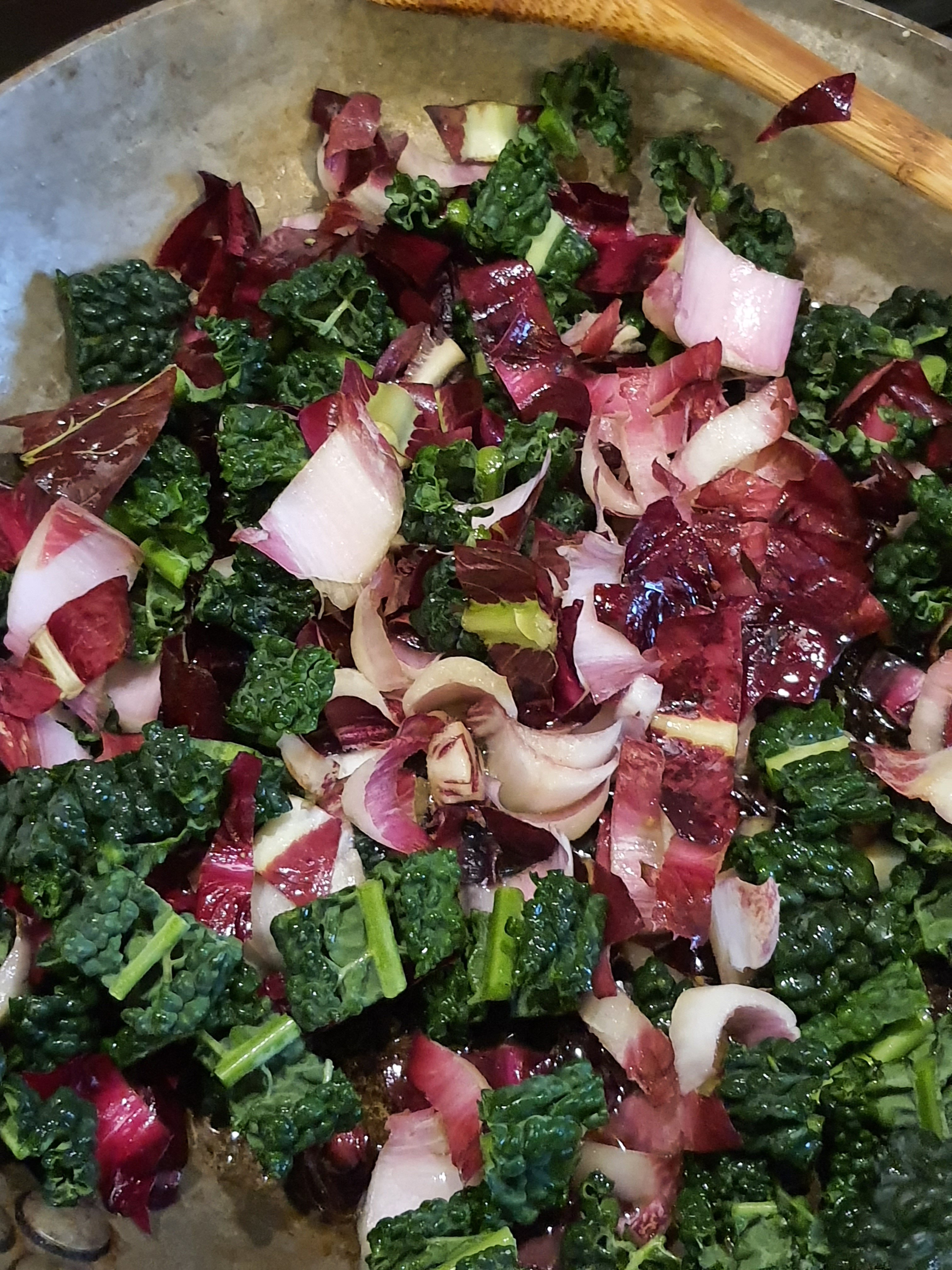
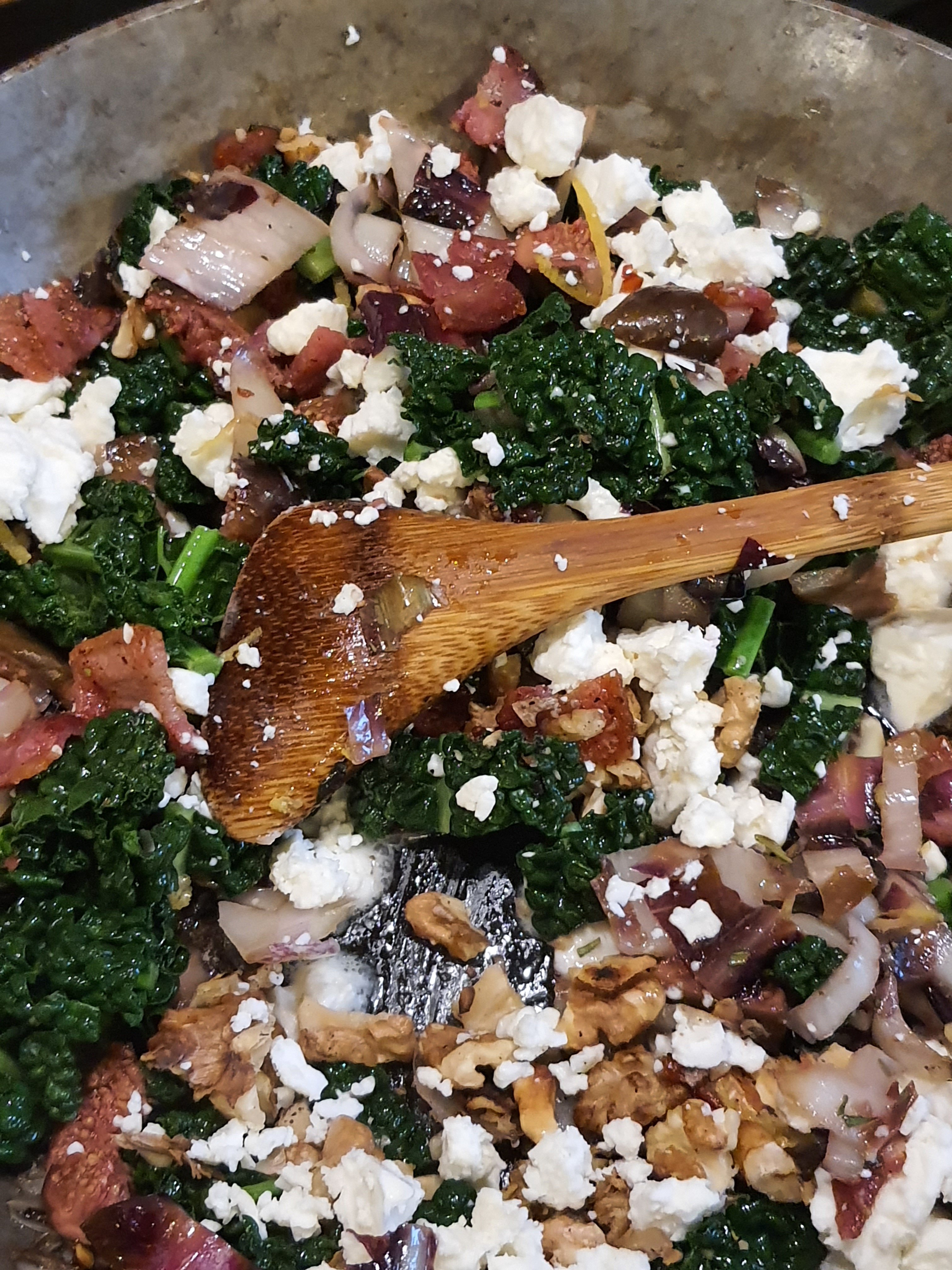
4. Five minutes before the pasta will be ready, fry the diced garlic clove on a medium heat with a glug of olive oil, for a minute, with a pinch chill flakes/ fresh chilli, making sure it doesn’t brown. Add the thicker radicchio first and then after a minute or so add the thinner red leaves and the kale (if using) and the rosemary. Turn regularly until the radicchio is gently browned and the kale is a more vivid green (couple of minutes or so) – for the last few moments stir in the fig, bacon, zest of lemon, balsamic vinegar, the crumbled feta (reserving small amount for garnish) and the walnuts – with a grind or 2 of black pepper.
5. When the pasta is cooked, drain it and return to the hot pan with a couple of tablespoons of the cooking water. Toss into the pasta the radicchio, feta, walnut – adding a dash of olive oil if necessary.
6. Serve in warmed bowls, scattering reserved feta and add parmesan to taste.
Oh my word – so delicious. I could eat this again and again and again …

Nutrition Facts
One serving of radicchio (about one cup or 40 grams) contains about:
- 9.2 calories
- 1.8 grams carbohydrates
- 0.6 gram protein
- 0.1 gram fat
- 0.4 gram fibre
- 102 micrograms vitamin K (128 percent DV)
- 0.1 milligram copper (7 percent DV)
- 24 micrograms folate (6 percent DV)
- 3.2 milligrams vitamin C (5 percent DV)
- 0.9 milligram vitamin E (5 percent DV)
- 121 milligrams potassium (3 percent DV)
- 0.1 milligram manganese (3 percent DV)
Tally for the month
Main Vegetables: broccoli (calabrese), butternut squash, celeriac, radicchio
Subsidiary Vegetables: onion, shallots, garlic, leek, celery, potato, rosemary, carlin peas, chick peas, kale, chilli.
Subsidiary Fruit and Nuts: lemon, fig, walnuts
 Relishing Life - Eating Well