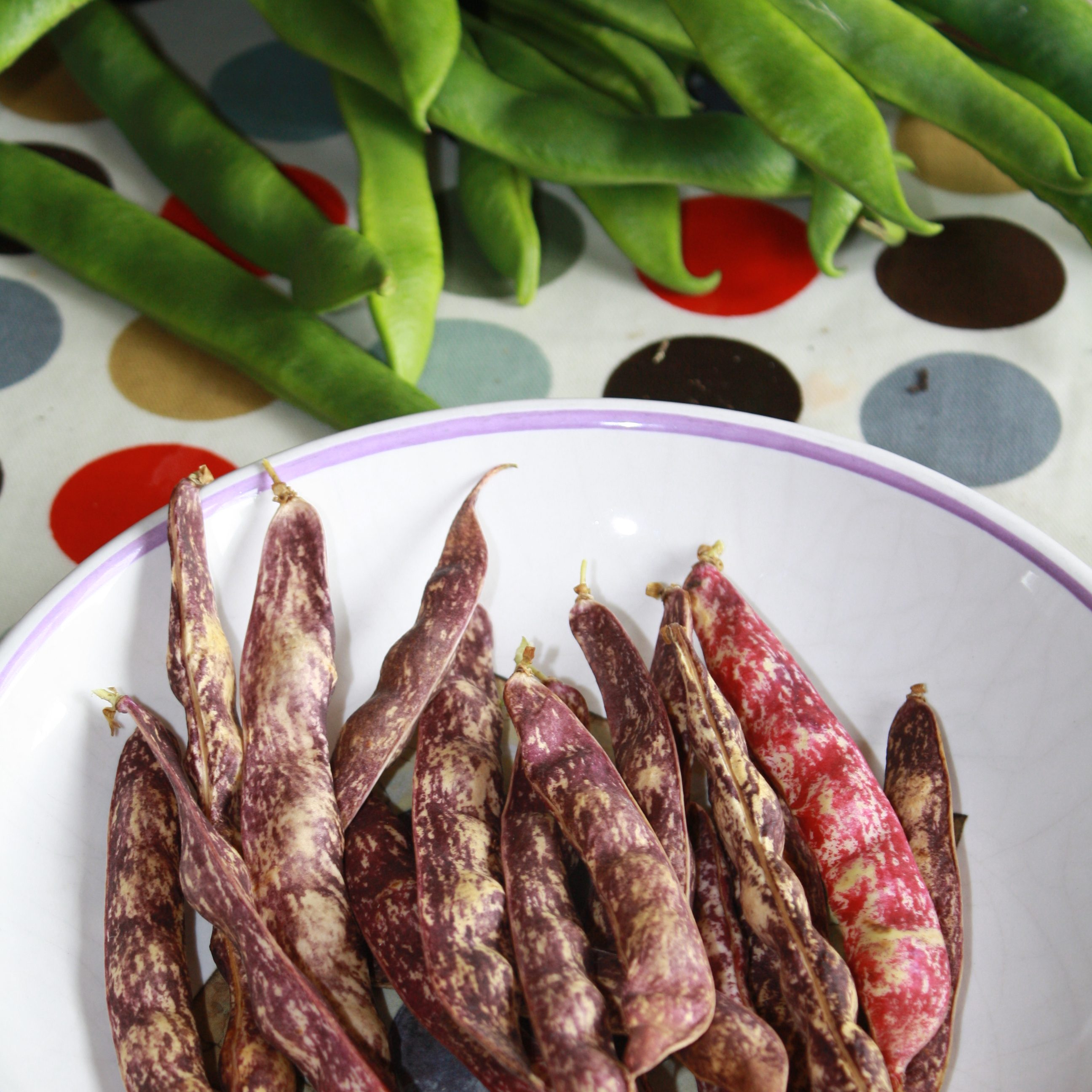
31 Vegetable Challenge
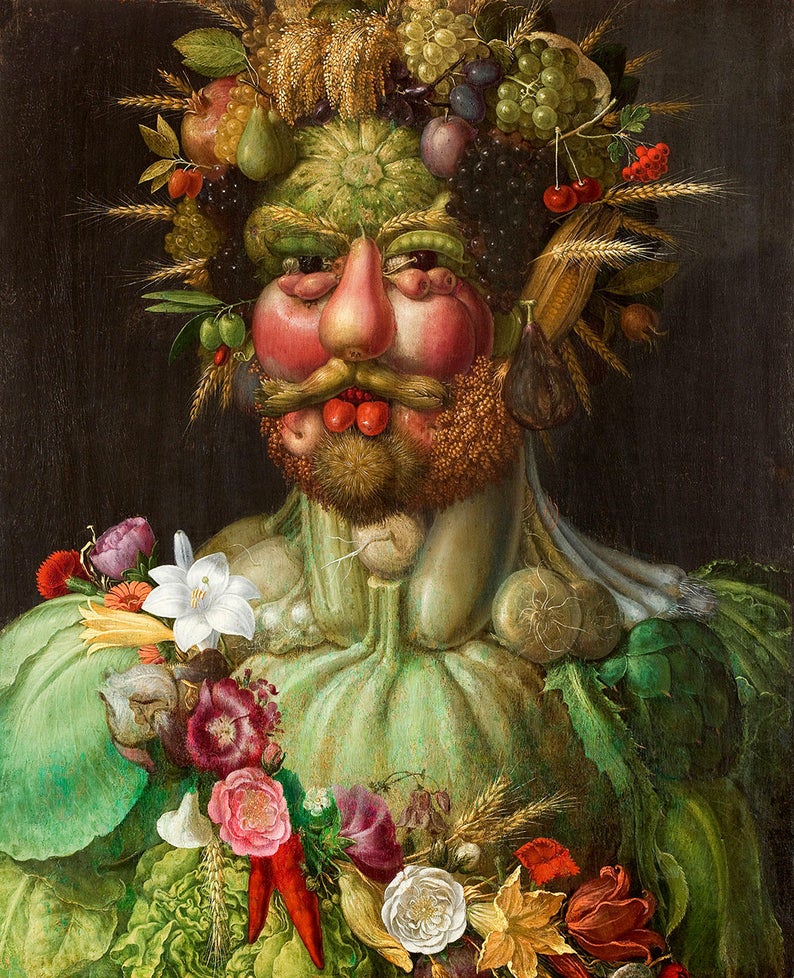
Vertumnus – the Roman god of the seasons, growth, gardens, fruit trees and metamorphosis in nature.
This is a portrait of the Holy Roman Emperor Rudolf II, whom the artist Giuseppe Arcimboldo has portrayed as Vertumnus was painted after Arcimboldo returned to Milan (1590) and draws on flowers as well as fruits and vegetables from all four seasons, including apples, pears, grapes, cherries, plums, pomegranates, figs, beans, peas in their pods, corn, onions, artichokes and olives.
Firstly, I thought I had better find out what actually defines a vegetable!
“Vegetables are the parts of plants that are consumed by humans or other animals as food. The original meaning is still commonly used and is applied to plants collectively to refer to all edible plant matter, including the flowers, fruits, stems, leaves, roots, and seeds. The alternate definition of the term is applied somewhat arbitrarily, often by culinary and cultural tradition. It may exclude foods derived from some plants that are fruits, flowers, nuts, and cereal grains, but include savoury fruits such as tomatoes and courgettes, flowers such as broccoli, and seeds such as pulses” (wikipedia)
So defining vegetables, herbs, fruit and nuts can actually be quite a contentious issue!
BBC reporter Henry Nichols asked Wolfgang Stuppy (Seed Morphologist, Royal Botanic Gardens, Kew) whether vegetables really exist: “No, the term vegetable doesn’t exist in botanical terminology.” So according to a botanist then there is no such thing as vegetables there are just plants. Radishes and carrots on sale at the greengrocers are not vegetables they are merely the roots of radishes and carrots. Botanically speaking, onions and garlic are bulbs. Potatoes and Jerusalem artichokes are tubers. Asparagus are stems. Lettuces are leaves. Cauliflower and broccoli are inflorescences. Apple and pears are fruit.
So vegetable as a culinary term: “Vegetable took on its current sense just a few centuries ago and essentially means a plant material that is neither fruit nor seed,” (On Food and Cooking by Harold McGee) “The tomato is technically a fruit because it contains seeds. It’s a vegetable because it’s part of a plant and used as a savoury ‘vegetable’ in cooking”.
But ask a lawyer to define a vegetable, they might say it depends where you live… There was a decision by the Supreme Court of the United States that, under U.S. customs regulations, the tomato should be classified as a vegetable rather than a fruit. (Nix versus Hedden, 1893).
Vegetables, herbs, fruit and nuts have always been essential to humanity. They are the basis of the food chain – even for meat eaters – and provide a range of colour, texture, flavour and aroma when creating meals. All plant based foods are an abundant source of beneficial nutrients including vitamins, minerals, dietary fibre, protein and polyphenols (which are biologically active molecules that feed our gut bacteria (microbiome).
Feeding our microflora will benefit our health in many other ways. Some microbes provide vitamins that are then available for the human host to use, as a byproduct of microbial cell function. Some microbes mediate transport of nutrient across the gut wall into our blood stream. The relationship between the beneficial microbes within our gut and us, their human host, is highly complex and truly symbiotic. This secret world that we have only recently began to comprehend very likely holds the key to much of our future understanding of physical and mental health and disease. Truely amazing. And this knowledge carries with it a level of personal responsibility and accountability, if we let it.
The more diverse the diet someone has the more diverse the microbiome, as each microbial type feeds from specific components of the food-stuff released during the digestive process. People (omnivores and solely plant-based eaters) who eat around 30 different plants every week have been shown in a huge international epidemiological study to have a much greater microbial diversity than those who eat just 10. The theory is, the more diverse the range of microbes, the more capable, resilient and adaptable the gut will be to alterations in its biology during life (disease, infection, environmental influences etc). This means that you don’t have to be vegetarian/vegan to get the benefits of a plant based diet for your gut.
However, to cut to the chase…
For the purpose of this challenge my definition of vegetable is:
"Part of a plant that is, on the whole, considered to be savoury".
So that defines it clearly.
Or not!
Whatever your opinion on my choices, I’m looking forward to the challenge of 31 of them!
Watch this space!
(Resources: http://www.bbc.co.uk/earth/story/20150917-do-vegetables-really-exist and Tim Spector’s https://joinzoe.com/blog and Giuseppe Arcimboldo (who painted his royal patron, the Holy Roman Emperor Rudolf II in 1590).
 Relishing Life - Eating Well
Yes I like that definition ‘ on the whole considered savoury’ that explains those nasty snarpips x
LikeLike
Ohhhh. Can’t wait to do snarpips.
LikeLike