Rhubarb (Rheum hybridum)
Rhubarb is a versatile vegetable. In my opinion it is also handsome, delicious and eagerly anticipated. Technically it is a vegetable, although in 1947 New York it was legally declared to be a fruit. There is a wealth of recipes for ways to prepare it, way beyond rhubarb crumble; sweet, savoury and alcoholic. I have very much enjoyed rhubarb with mackerel and I bet it’s delcious with duck instead of plum sauce. This lamb recipe just looks beautiful: www.bbcgoodfood.com/recipes/russian-shashlik-rhubarb-sauce. Can’t wait for my second helping of rhubarb and ginger compote for my breakfast this morning.
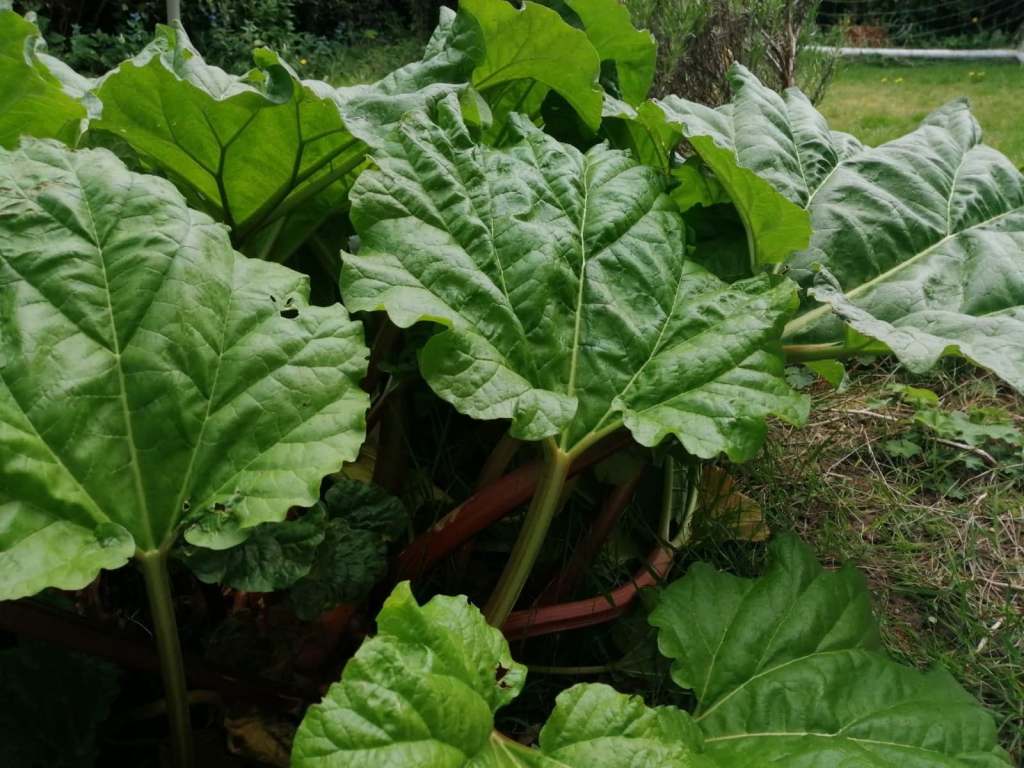
Mary Prior (historian) describes in her book Rhubarbaria: Recipes for Rhubarb: “From its home in the northern climes of Asia – Mongolia, Siberia and the foothills of the Himalayas – rhubarb came first to Europe in classical times as a dried root with medicinal qualities. Thus was it was initially proposed to a British public. ‘It purifieth the bloud and makes yong wenches look faire and cherry-like, ‘ says Gerard in his Herbal in 1597. It wasn’t until the 18th century that the fruit or vegetable was introduced to English tables” from whence it became a quintessentially British flavour.
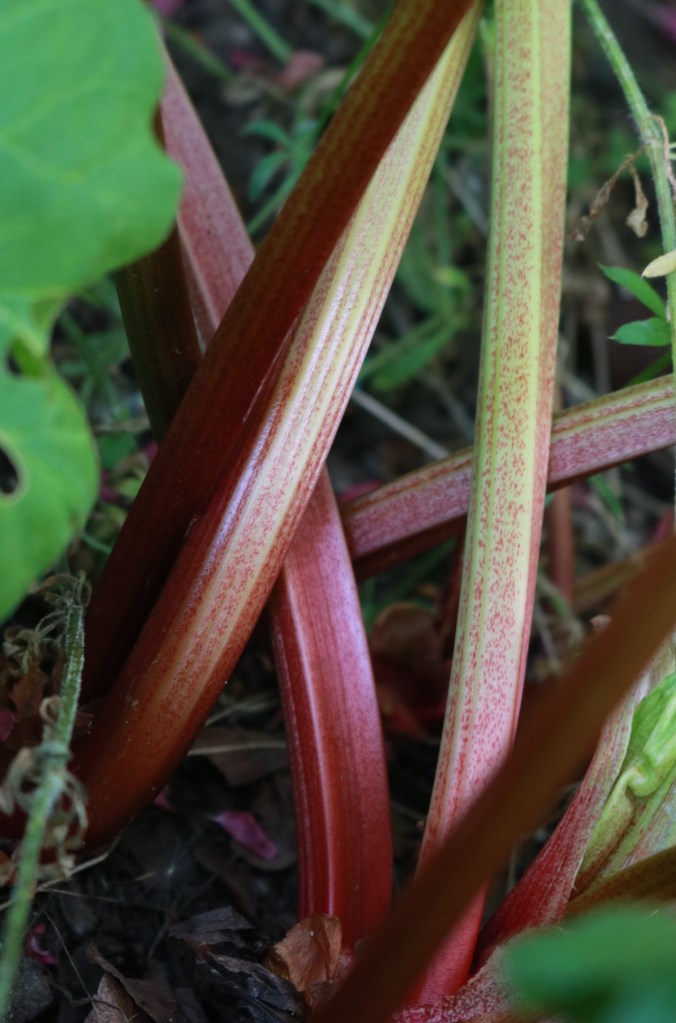
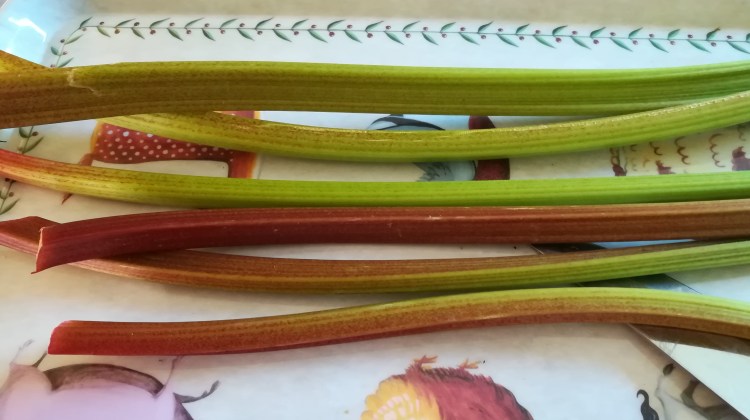
Rhubarb is a perennial plant. It is very easy to grow, just needs a decent slot in the garden somewhere – it may spread up to a metre. It’s rather ornamental, so it could go almost anywhere in the garden. I’ve seen photos of it inter-planted with pulmonaria, which was pretty. It prefers full sun – but will thrive in semi-shade. Once planted, it is best to leave picking for a year, so that the plant’s roots can build strength. My rhubarb plant is a ‘Timperley Early’ variety and these stalks can be pulled from March until June. Apparently, it is best to harvest the stalks by pull and twist, rather than cutting, as it invigorates the root to produce more stems. There are other varieties that will begin growing later and keep going until August. I tried to force mine last year, by covering the plant as it re-emerged in February. ‘Forcing’ blanches the stems, making them sweeter and more tender. However, the plant then benefits from a year’s recovery. It is probably part of the reason why mine is sadly rather spindly this year, but it may be that it has become increasingly shaded by the tree under which it is growing … and I suspect it also needs a really good feed with some compost (and coffee grounds) and a quality manure. Rhubarb is very nitrogen hungry.
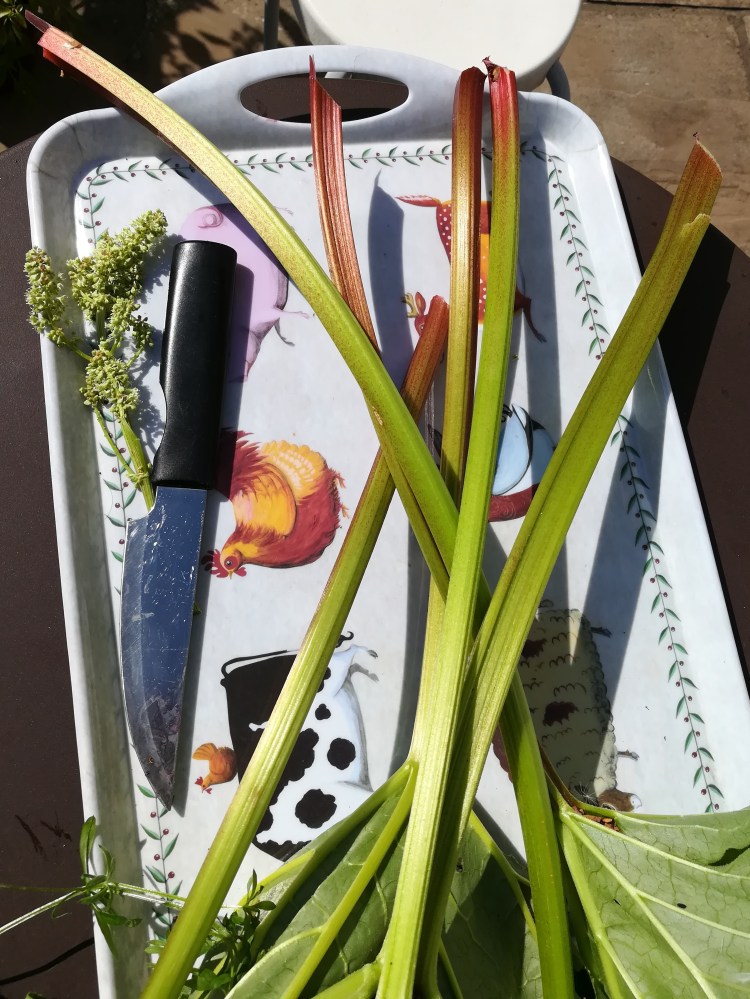
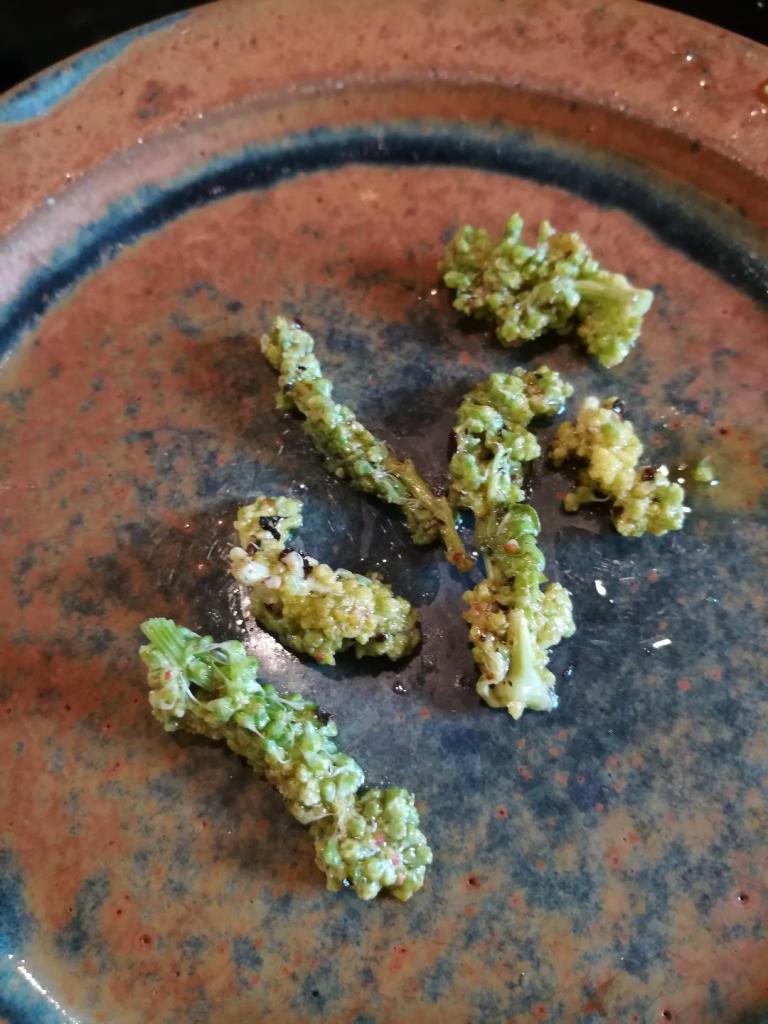
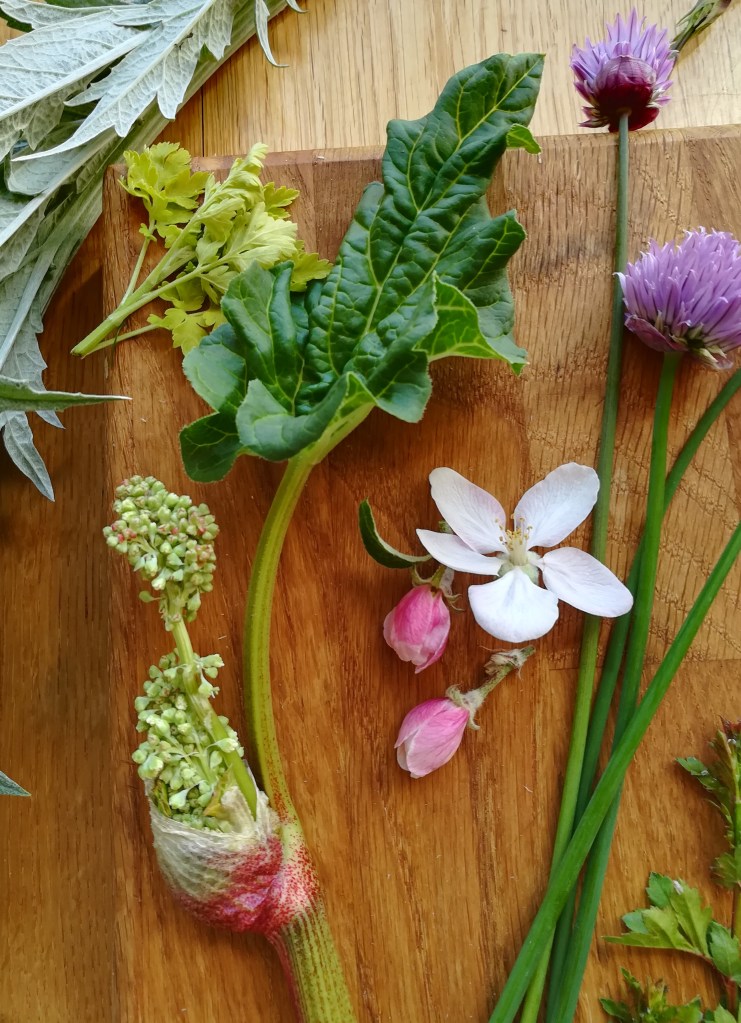
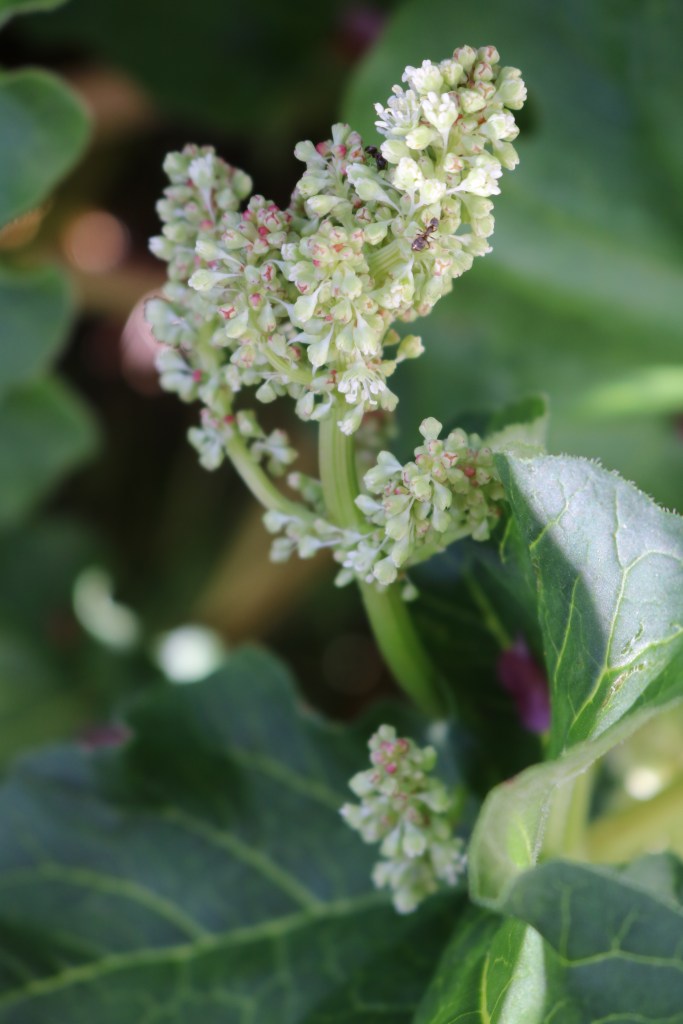
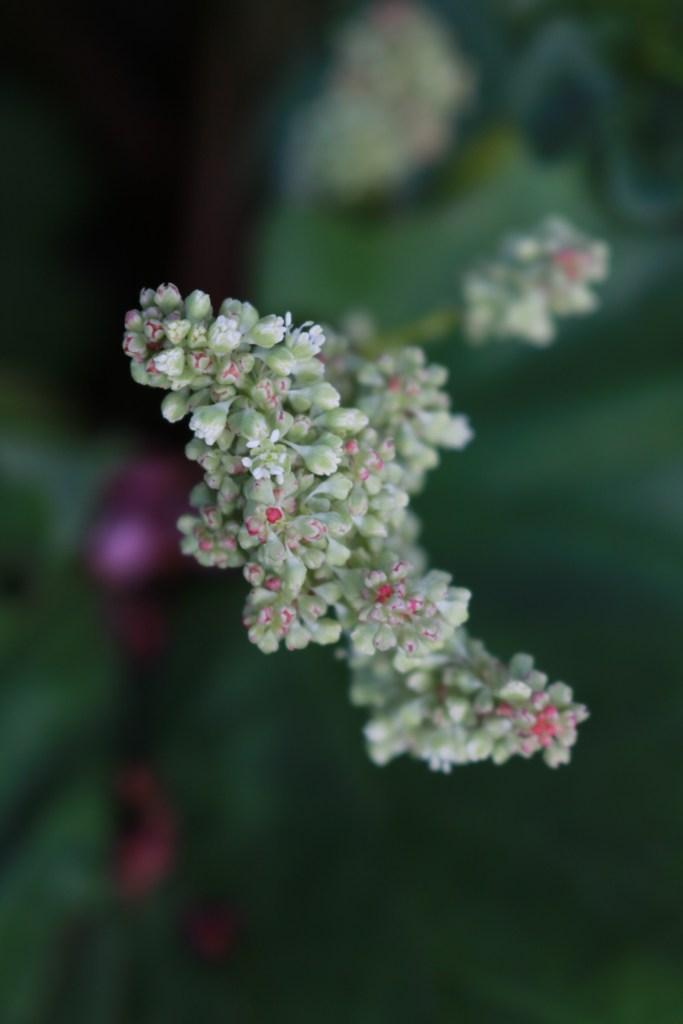
The leaf stalks and flowers are the only edible parts of the plant. The leaves are poisonous, containing high levels of oxalic acid, which can affect calcium metabolism if eaten in huge quantities. The almost open flowers are considered a delicacy in the Far East and are lightly fried (apparently easily overcooked). I didn’t know that until this week, so my son and I tried our small flower stir-fried. It was pleasant; not overly sour with a slightly lemony tang. However, if you let the plant flower it will use its energy to create seeds and the plant will produce less stems. So, it’s best to pick them off when you see them. The tiny individual flowers that make up the rhubarb flower head do not contain any oxalic acid, the substance that makes rhubarb so sour, but the flower stem does. The stem is a branching structure that goes right inside the head so it’s impossible to get it all out, but if you just cut off the most accessible bits, the small leaves and the papery bract which surrounds the flower head, you’ll have got rid of most of it.
https://scottishforestgarden.wordpress.com/2013/05/08/eating-rhubarb-flowers/
Plants For A Future. A fantastic resource and information centre for edible and otherwise useful plants: PFAF.org. It is a charity based in Devon. I use it to check out every unusual plant that I might be considering eating. Listing for Garden Rhubarb: https://pfaf.org/user/Plant.aspx?LatinName=Rheum+rhaponticum
Nutritional Information (USDA data)
Rhubarb (raw)
100g contains:
- 21 calories
- 4.5 g carbohydrates
- 0.9 g protein
- 0.2 g fat
- 1.8 g fibre
- 35.7 micrograms vitamin K (24%) – much needed healthy bones
- 8 mg vitamin C
- 0.2 mg manganese
- 86 mg calcium (although not very bioavailable)
- 288 mg potassium
- 12 mg magnesium
Rhubarb also has high antioxidant properties. It is very rich in many compounds that have a pro-health effect on the human body. Polyphenols are natural plant substances that can be an important component in the prevention of various diseases. Research seems to show that polyphenol levels do vary between varieties and the point in the season when the stalks are picked. Interestingly, research has also shown that polyphenol content is generally greater in cooked rhubarb than raw rhubarb. In this study the highest polyphenol levels were found in slow-cooked and baked rhubarb.
https://doi.org/10.1016/j.foodchem.2009.07.030
Recipes:
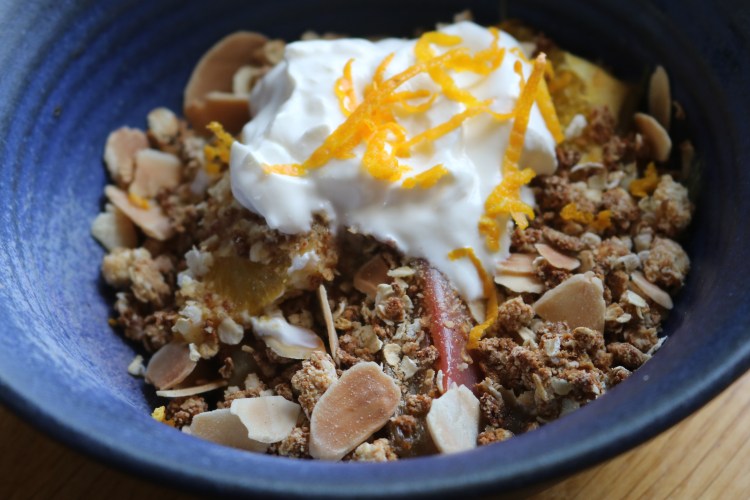
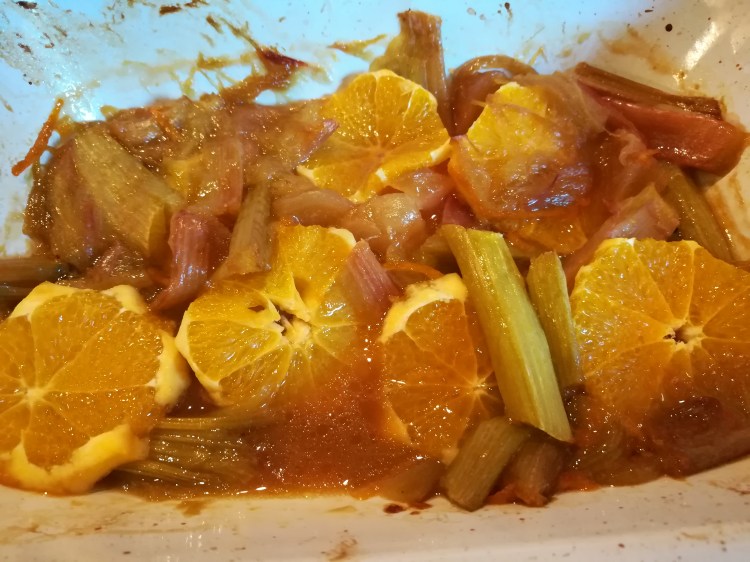
Compote of roasted rhubarb, cardamom and ginger with orange
(A hybrid recipe – which I guess makes it one of mine!)
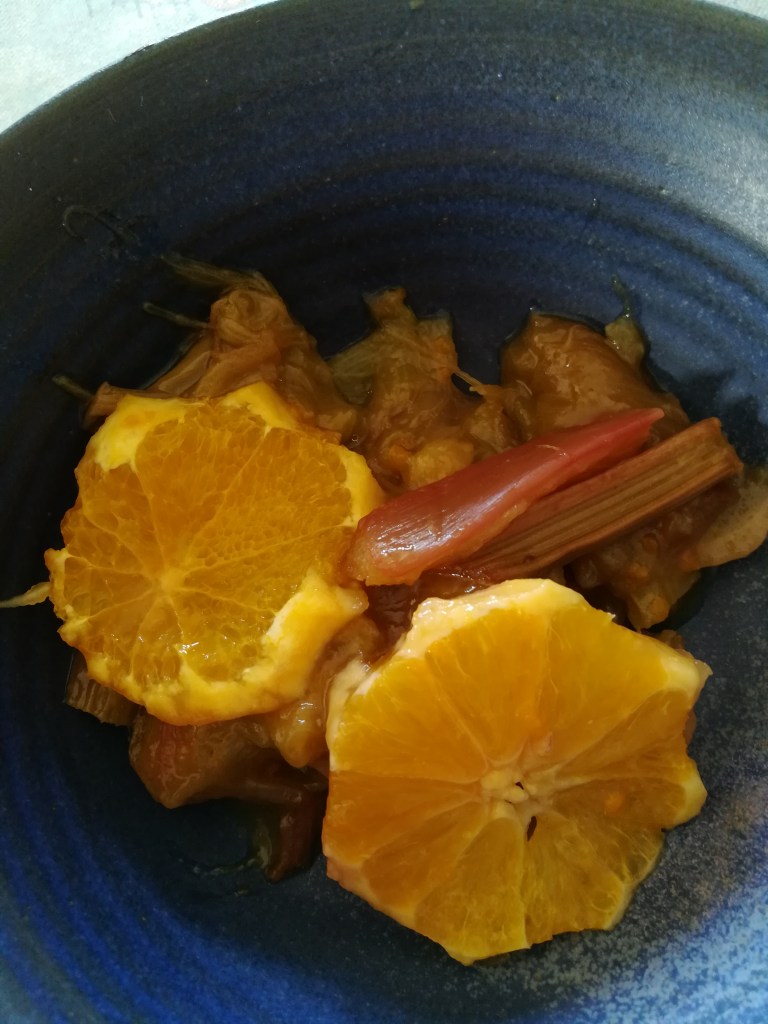
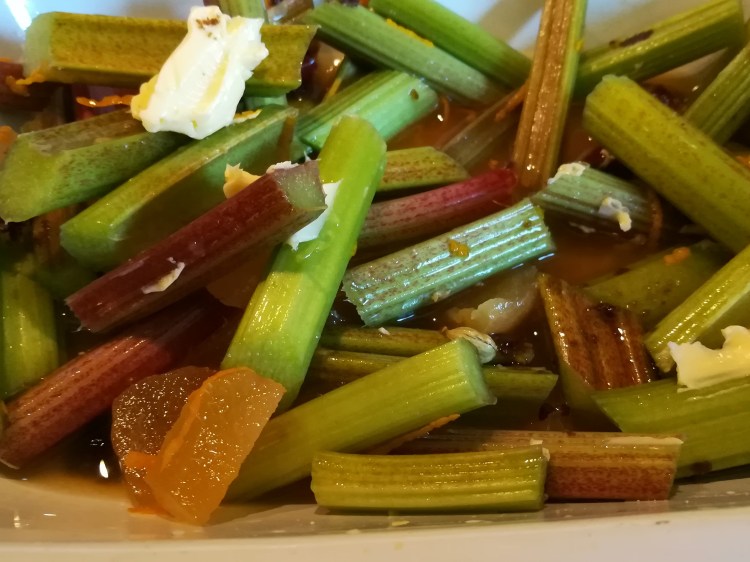
I washed and chopped 6 sticks of rhubarb into chunks. Added 3 balls of stem ginger, the zest and juice of an orange and 4 cardamom pods lightly split open, 3 small scoops of butter and a Tbsp of dark brown muscovado sugar. Covered the dish.
Baked in oven 190°C for 15 mins.
I added one sliced orange with all peel, outer pith and seeds removed.
Baked uncovered for another 10 mins, until the rhubarb was soft (will depend on the thickness of your stems – mine were rather thin).
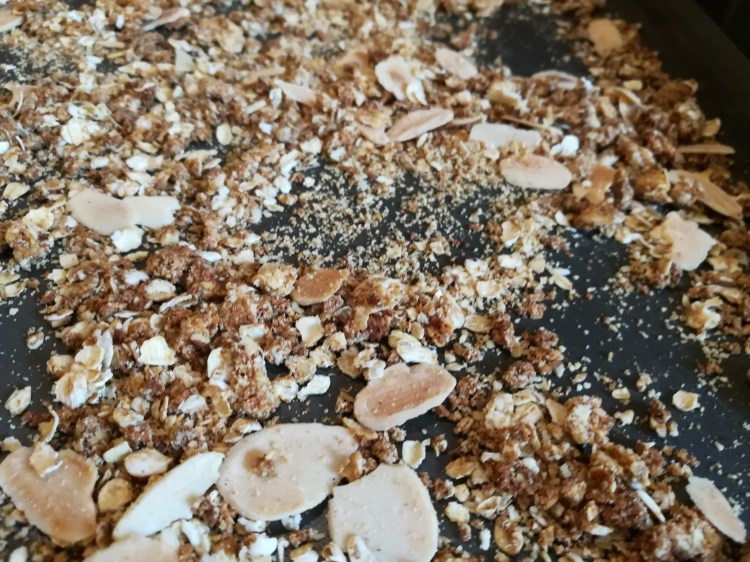
Oat and almond crunch topping
“Approximately” 2 Tbsp rolled oats and 1 Tbsp ground almonds. Mixed with 2-3 Tbsp of the cooked juice from the rhubarb mix. You could add a little coconut oil (dessert spoon) if you wanted, I didn’t. I added 1tsp ground cardamom and a decent shake (what was left!) in the packet of flaked almonds. But you could equally well add a different nut or spice, or neither. Cardamom is thought to complement rhubarb, and I happen to love cardamom.
Roasted for about 10 mins at 180°C until nicely browned; I added the flaked almonds after 5 mins and a stir.
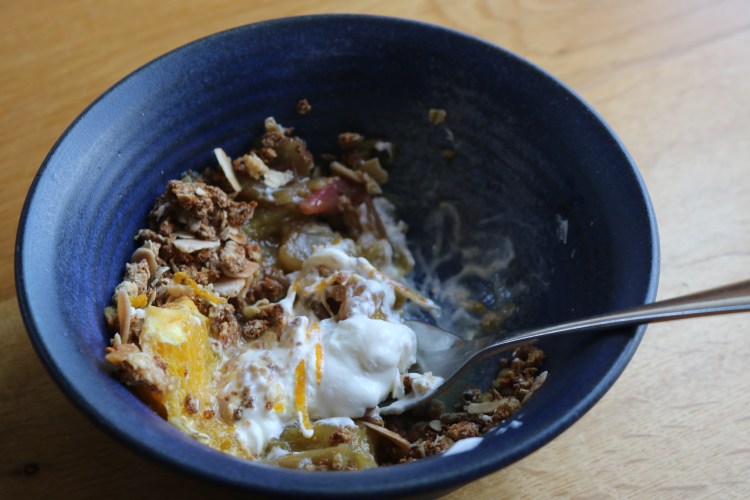
To serve: creme fraiche or plain yoghurt and perhaps some zest of an orange.
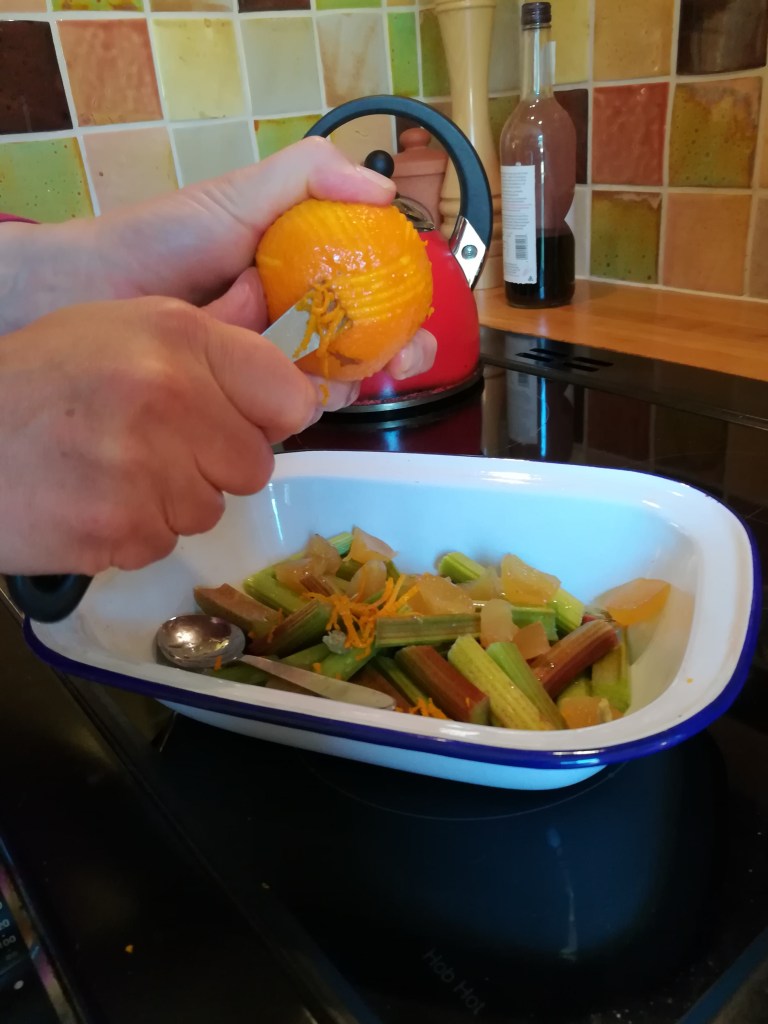
The Zester
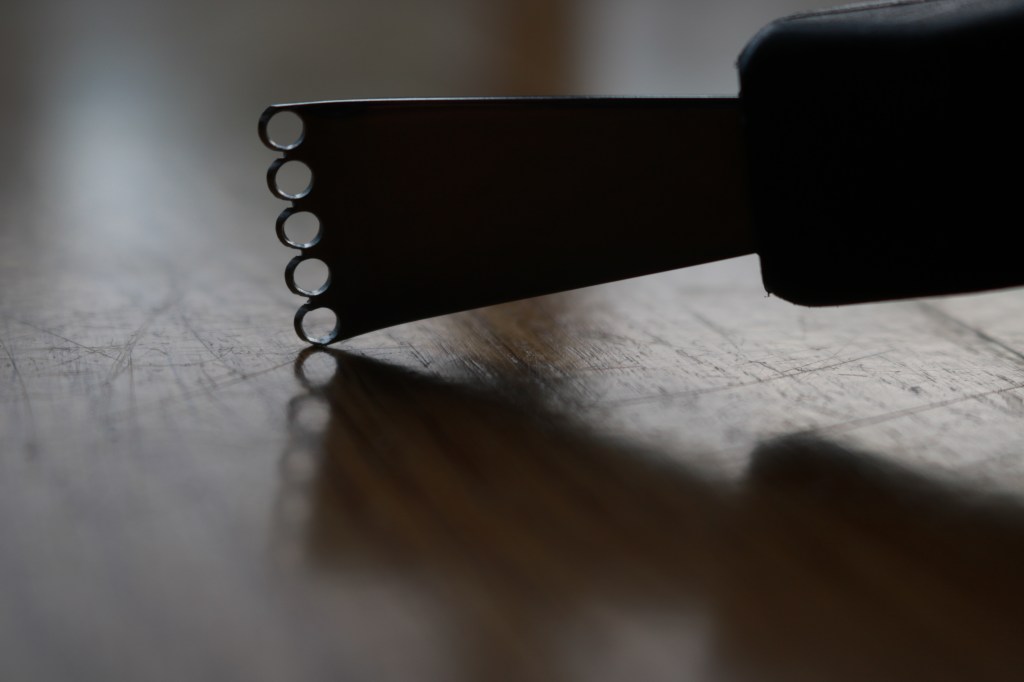
The zester is one of my favorite tools in the kitchen.
Lemon, lime, orange, grapefruit – zest is a fabulous lift to many a meal or garnish a zing for a salad or breakfast yoghurt.
Fermenting foods
I plan to explain why fermented foods are so good for you in later blog posts. Fermented foods need time to develop themselves and their flavours, by harnessing the creative powers of friendly microbes all around. When things are bubbling, the photographs will be much more interesting.
So before I go into any more details, I thought I’d start off a Wholewheat Sourdough Starter with the friendly microbes present in flour.
Wholewheat Sourdough Starter – Day 1
30g wholewheat flour,
30g water,
Stir.
Cover.
Put in airing cupboard.
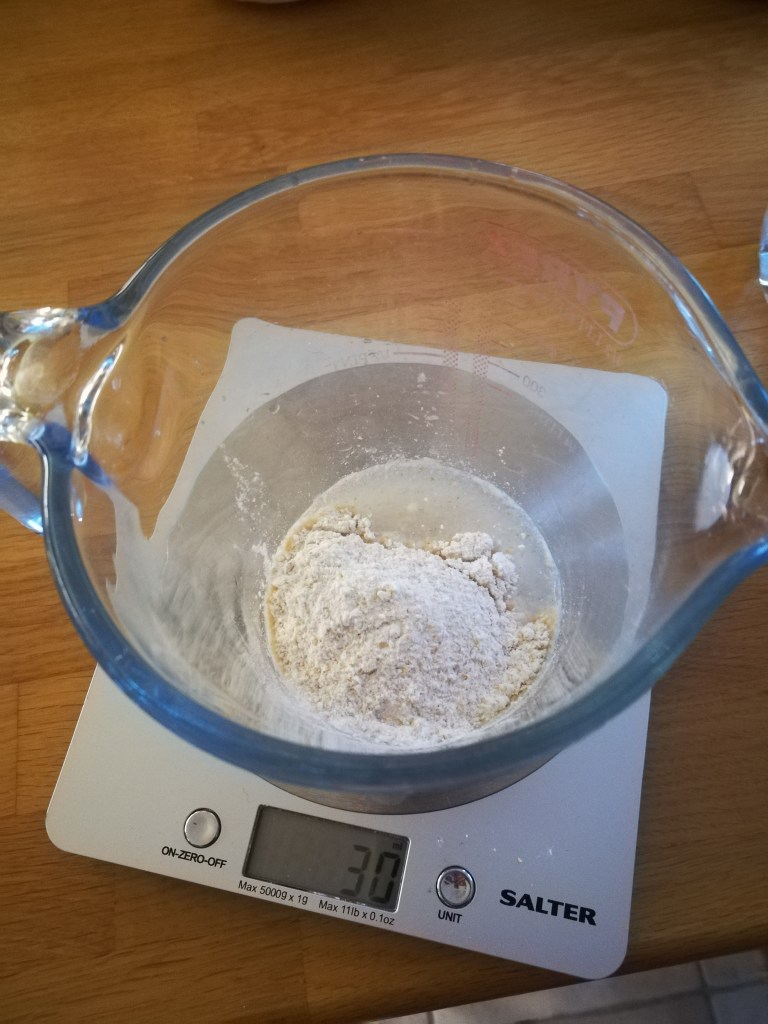
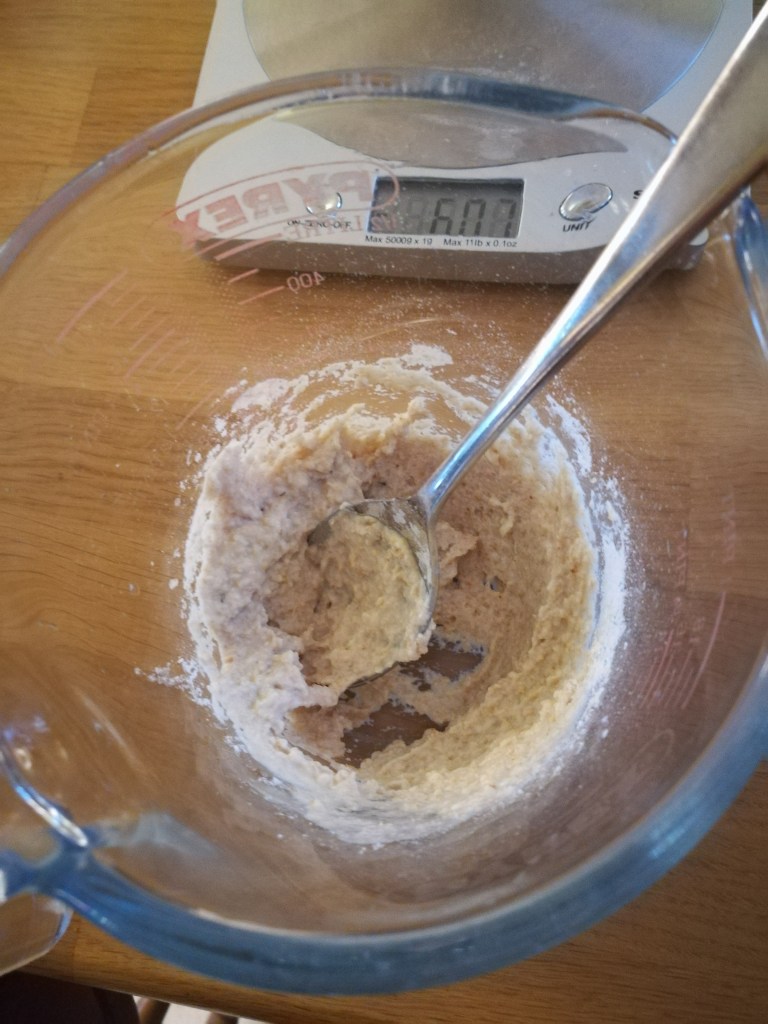
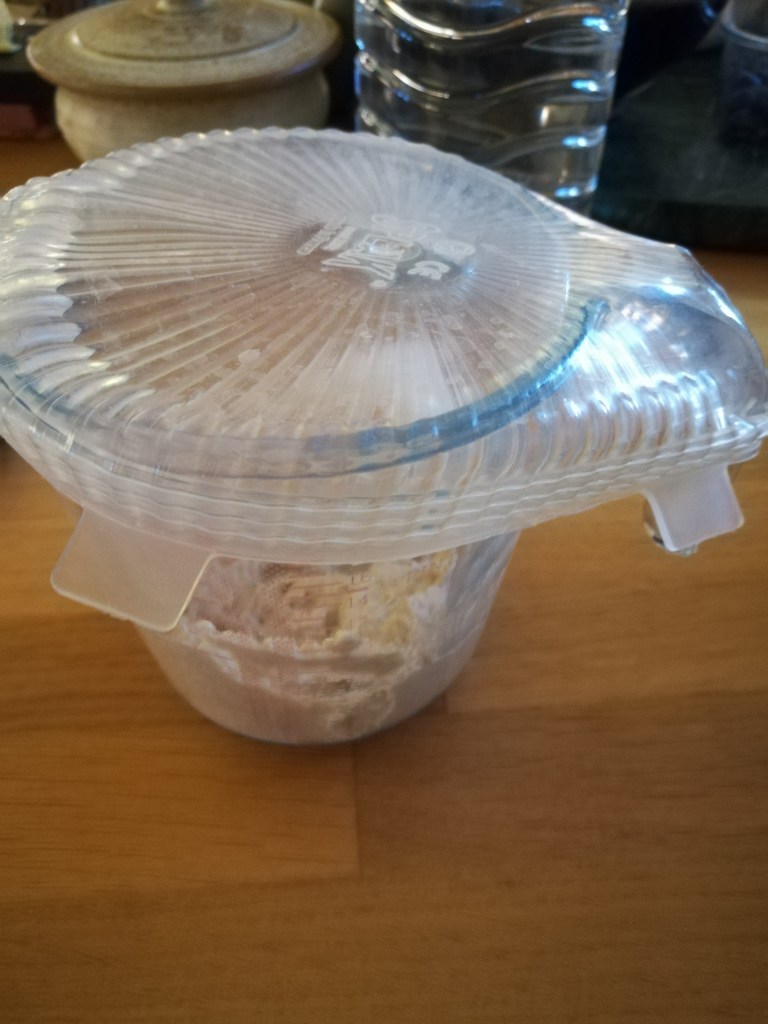
I like to use a stoneground organic wholewheat flour, which is thought to have a high amounts of yeasts and to start the sourdough I use a bottle of mineral water, to avoid the added chlorine which might affect the natural yeasts before they have multiplied. But it will very likely work with conventional flour and tap water – there are as many opinions of how to start a starter as there are microbes available to create it!
Resources
I have added a list of books that I have enjoyed to the Resources page on the blog – see menu.
 Relishing Life - Eating Well